Every 10 hours, a human rights defender, journalist or trade unionist is killed or disappeared. Every hour, a child dies in armed conflict. One in five people have experienced discrimination in the past year. These stark figures emerge from new data released by UN Human Rights. The human rights indicators offer a global snapshot of the state of human rights under four key Sustainable Development Goal (SDG) indicators linked to SDG16 and SDG10.
“Behind every data point is a real life lived — or lost,” said UN High Commissioner for Human Rights Volker Türk. “These new global human rights data show that discrimination, violence and exclusion are systemic and continue to affect those already at the margins.”
Violence against human rights defenders has reached record levels, with at least 5,995 killed since 2015. Discrimination remains widespread and deeply structured, with persons with disabilities facing a high burden at nearly one in three affected, alongside elevated gender-based discrimination against and, for the first time analyzed by our Office, sexual and gender minorities reporting two to three times higher rates than the general population.
Civilian deaths in armed conflict, while declining by 23 per cent in 2025 from an unprecedented peak in 2024, remain catastrophic. Despite these alarming trends, progress in data collection is expanding: discrimination data are now available in 124 countries, up from 15 in 2015, and with a growing range of population groups and grounds of discrimination covered. However, progress in establishing national human rights institutions that comply fully with international standards has stalled, with no overall increase in 2025, signalling that visibility and accountability mechanisms have not kept pace with the scale of the crisis.
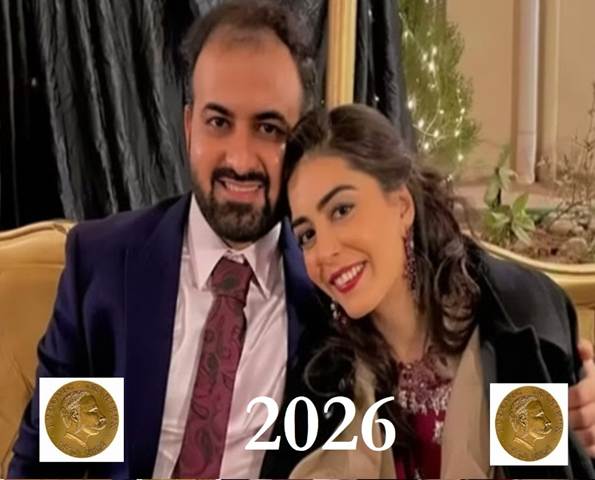
On 16 June 2026, media reported that lawyers Imaan Zainab Mazari and her husband, Hadi Ali Chattha, have been awarded the 2026 Ludovic Trarieux International Human Rights Prize in recognition of their work for human rights and marginalised communities.
The statement noted that, in recent years, Imaan and Chattha had carried out their work “against a backdrop of growing pressure on lawyers and human rights defenders in Pakistan, according to international organisations and observers”.
“By awarding the 2026 Ludovic Trarieux International Human Rights Prize, the jury recognised the professional and personal contribution of Imaan Mazari and Hadi Ali Chattha to the defence of the rule of law, fundamental freedoms and access to justice,” the statement said.
At least 358 defenders killed in 28 countries for their peaceful work in 2025
Courageous human rights defenders (HRDs) around the world often chart the course in the struggle against injustice but need the international community’s support to sustain their lifesaving work amid an increasingly hostile landscape, Front Line Defenders said as it launched its flagship report on 15 June 2026.
The report also reveals statistics gathered and verified by the HRD Memorial – which Front Line Defenders coordinates – documenting the killings of at least 358 HRDs in 28 countries in 2025. The countries with the highest number of killings documented were Colombia (165), Mexico (43), Palestine (43), Brazil (22) and Honduras (13). Defenders working on land, environmental and peasant communities rights (23.46%); HRDs working on Indigenous peoples’ rights (17.03%); and those documenting violations in conflict (9.78%) were the most commonly targeted. (See pp. 6-13 for complete data.)
“From drastic funding cuts and raging conflicts, to creeping repression even in countries that once supported them, 2025 saw some incredibly challenging times for human rights defenders around the world,” said Alan Glasgow, CEO of Front Line Defenders. “Defenders show tremendous resilience to uphold human rights – we owe them a debt of gratitude and support to keep their fight alive.”
Wide-ranging risks to HRDs
According to Front Line Defenders’ data, arbitrary arrest/detention continued to be one of the most commonly reported violations against HRDs around the world, in addition to threats/other harassment, surveillance, legal action and death threats (see pp. 14-21 for a more detailed breakdown, including by region and by gender).
Globally, the five most targeted areas of human rights defence were: LGBTIQ+ rights (9.5%); freedom of expression (9.4%); women’s rights (6.9%); human rights movements (6.1%) and freedom of assembly / protest movements (5.4 %). While they account for smaller proportions individually, land, environmental and Indigenous Peoples’ rights account for 8.7% of the total when considered collectively.
Regionally, the most commonly reported violations against HRDs were: arbitrary arrest or detention in the Middle East and North Africa (32.5%) and Asia-Pacific (16.1%); death threats in the Americas (24.2%); threats or other harassment in sub-Saharan Africa (15.3%); and legal action in Europe and Central Asia (14.9%). Front Line Defenders also documented a wide range of digital threats against HRDs, including online surveillance/censorship, social media online threats of violence or harassment, phone surveillance, interrogation and having their devices confiscated or destroyed.
The combination of the more repressive environment and reduction in funds was felt in practice: human rights defenders had to stop their work and shutter their organisations.
Voices of determination
The report includes numerous voices of HRDs speaking directly about the challenges they face.
Among them are contributions from HRDs in Guatemala, DRC, Malaysia, Tunisia, Ecuador, Eswatini/Swaziland, Occupied Western Sahara, and Egyptian HRDs facing transnational repression while in exile in Europe.
Lutfiye Zudiyeva, a prominent Crimean Tatar woman human rights defender and journalist who has been criminalised for her work, penned a foreword to the report in which she said: “For this movement to be sustainable and to effect long-term systemic change, we need consistent support from the international community, from governments, and from citizens. HRDs should be supported, and be able to live and work without fear, knowing that they are not alone.”
On 4 May 2026 the Tahrir Institute for Middle East Policy (TIMEP) remembered eight women organizers from the region who fought for a better region and in whose stories we find inspiration:
Lina Ben Mhenni
“I am the activist of all causes.”Lina Ben Mhenni was a Tunisian blogger, educator, and activist whose voice rose to prominence as Tunisia’s Jasmine Revolution unfolded. Born in Tunis in 1983 and raised in a politically engaged family, she used her blog A Tunisian Girl to document censorship, women’s rights, and state repression well before the revolution began. When protests erupted after Mohamed Bouazizi’s self-immolation in December 2010, she became a leading voice reporting from inside the country. Traveling to Sidi Bouzid, Kasserine, and Regueb, she documented police brutality, sharing photos and testimonies online despite a strict media blackout. After the revolution, she continued advocating for human rights, freedom of expression, and justice for victims and their families. She also launched initiatives to support prison libraries, delivering over 45,000 books across Tunisia. Recognized internationally, she was nominated for the Nobel Peace Prize in 2011. She passed away in 2020 at the age of 36 after a long battle with lupus. [see also https://humanrightsdefenders.blog/2020/01/29/in-memory-of-tunisian-human-rights-defender-lina-ben-mhenni/]
Sarah Hegazi
Sarah Hegazi was an Egyptian queer feminist and human rights defender. As a member of the Bread and Freedom Party in Egypt, she advocated for political prisoners, opposed the death penalty, and supported movements for freedom across the MENA region, including in Palestine, Syria, Lebanon, and Sudan. Her activism was intersectional, grounded in class struggle and solidarity. In 2017, she raised a rainbow flag at a Mashrou’ Leila concert in Cairo—an act that made her a target for state repression. As part of the anti-LGBTQI+ crackdown that followed, Sarah was arrested, detained, and subjected to torture. Sarah was fired from her job and experienced severe depression and post-traumatic stress disorder. Out of fear for her safety amid continued targeting, bullying, and repression, Sarah was forced to flee Egypt in 2018. She traveled to Canada where she sought political asylum. While living in exile apart from her loved ones, and the country and community most dear to her, Sarah took her life on June 13, 2020. She was 30 years old.
Bahjaa Abdelaa Abdelaa
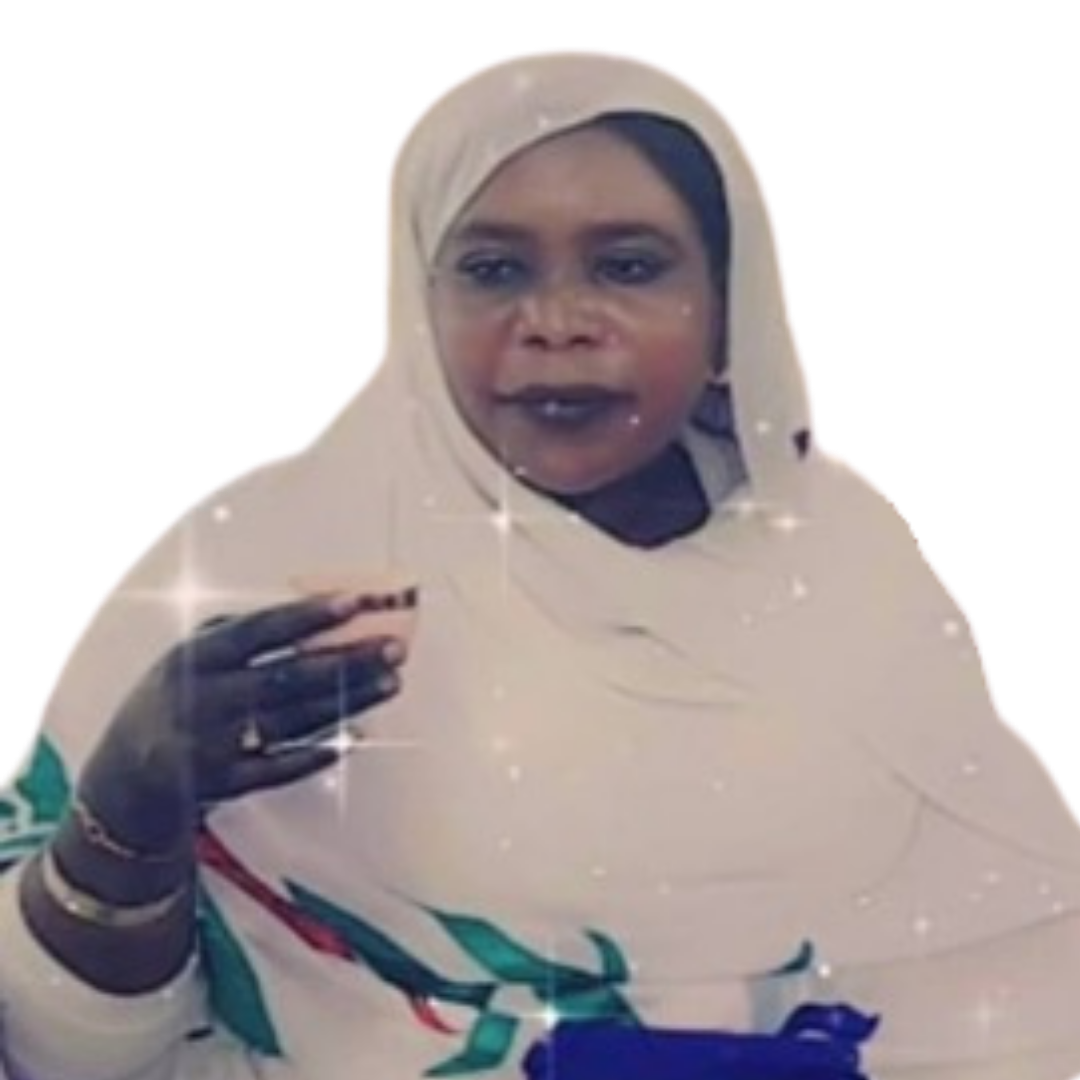
Bahjaa Abdelaa Abdelaa was a Sudanese human rights defender who worked tirelessly in support of Sudanese women. Born in Nyala, South Darfur, she was also an economist who graduated from the University of Khartoum in 2020. She was a member of the Women Revolutionary Group, which was created to advocate for women’s rights, gender equality, and social justice, as well as to support survivors of rape and sexual violence in Darfur. Bahjaa became known for her monitoring and documentation work, highlighting the pervasiveness of sexual violence during conflict. She was also part of the Darfur Collation of Women Human Rights Defenders (TMD). As the war raged in Sudan, and after receiving death threats due to her human rights work, on October 26, 2023, Bahjaa was shot and killed by unidentified gunmen while attending a relative’s funeral at Kalma camp for internally displaced people in Nyala. She was 26 years old.
Giselle Khoury
Known as the “grande dame of Arab journalism” for her pointed interview style, Giselle Khoury was a Lebanese journalist and television personality whose career spanned almost four decades, defined by her commitment to freedom of expression and pluralism. She began at LBC in 1985, later joined MBC, and also contributed to the launch of Al-Arabiya. She became known for hosting major political programs such as Bil Arabi and Studio Beirut, where she interviewed leading political figures from across the region. Her work continued with BBC Arabic and Sky News Arabia. As one of the first women Arab journalists to host such high-profile programs, she helped reshape the media landscape. After the 2005 assassination of her husband, journalist Samir Kassir, she co-founded the Samir Kassir Foundation to support independent journalism, monitor press freedom, and nurture new generations of media professionals. She passed away in October 2023 at the age of 62 after a battle with cancer.
Bassma Kodmani
Bassma Kodmani was a Syrian academic, advocate, and political figure, whose career bridged research, policy, and activism. She co-founded the Arab Reform Initiative (ARI), a collaborative think tank “to articulate a home-grown agenda for democratic change in the Arab region,” serving as Executive Director from 2005 to 2019. When Syrians peacefully took to the streets in 2011, Bassma took a temporary leave from ARI to serve as Head of Foreign Relations and spokesperson with the Syrian National Council, the opposition body organizing for a democratic alternative at the time, until her resignation in 2012. In 2016, she participated in the Geneva peace talks as part of the delegation of the democratic opposition. Holding a PhD from Sciences Po, Bassma authored and edited multiple works on Middle Eastern politics and conflict and was a renowned political thinker. Her vision for a Syria that embraces the equal participation of all Syrians is one that continues to inspire younger scholars today. She died of breast cancer at the age of 64.
Shireen Abu Akleh
“I chose journalism to be close to people. It might not be easy to change the reality, but at least I can bring their voices to the world.” Shireen Abu Akleh was a Palestinian-American journalist and one of the most recognizable voices in the Arab world. Born in Jerusalem in 1971, she spent over 25 years covering the realities of life under Israeli occupation. After studying journalism at Yarmouk University, she began at Voice of Palestine radio and Radio Monte Carlo before joining Al Jazeera in 1997. At a time when few Palestinian women worked as field reporters, she became a leading correspondent. She rose to prominence during the second intifada in 2000, reporting from the ground and centering the lived experiences of Palestinians—from political prisoners to families affected by displacement and violence. On May 11, 2022, Shireen was shot and killed in a targeted attack by Israeli Defense Forces, while wearing a press vest and while covering a raid in Jenin. Her funeral, which was attacked by Israeli police forces, drew hundreds of mourners and widespread solidarity.
Salwa Bugaighis
Salwa Bugaighis was a Libyan lawyer, human rights advocate, and political figure. She was active in the 2011 Libyan Revolution, which ultimately overthrew Muammar Gaddafi. Based in Benghazi, she built her career defending political prisoners and advocating for justice under an authoritarian regime. From the start of the uprising, she was on the front lines, helping to organize protests and becoming a member of the National Transitional Council. She later resigned in protest over the lack of women’s representation. She continued her work through national dialogue initiatives aiming to bridge divisions across Libya’s fragmented society. Bugaighis was known for her outspoken criticism of armed groups and extremists. Even in the face of threats and violence, she remained committed to building democratic institutions and a more inclusive Libya. In June 2014, after returning home following her vote in the country’s parliamentary elections, she was assassinated in a targeted attack in which gunmen stormed her home, shot and stabbed her, and abducted her husband. She was 51 years old. [see also: https://humanrightsdefenders.blog/2020/11/12/libyan-human-rights-defender-hanan-al-barassi-gunned-down-in-benghazi/]
Yanar Mohammed
Yanar Mohammed was a prominent Iraqi feminist and human rights defender. In 1998 while living in Canada, she founded the Defense of Iraqi Women’s Rights, which in 2004, became the Organization of Women’s Freedom in Iraq (OWFI). At this point, Yanar had relocated back to Iraq, and the group created the first shelters for women fleeing domestic violence, sex trafficking, and threats of honor killings. In the years since, OWFI has operated a network of safe houses and shelters around the country and helped hundreds of women. Yanar served as editor of the feminist newspaper Al-Mousawat and participated in protests in Tahrir Square. She regularly advocated for marginalized groups in Iraq, including displaced communities and LGBTQI+ individuals. For years, Yanar received death threats for her work, at times having to restrict her movement. In March 2026, unidentified gunmen shot her outside her home in Baghdad. She was 66 years old. See https://humanrightsdefenders.blog/2026/03/06/on-2-march-2026-woman-human-rights-defender-yanar-mohammed-was-killed-in-baghdad/.
On 8 June 2026 the Nobel Women’s Initiative (NWI) invited applications for the 2026 Sister-to-Sister Young Feminist Leadership Program.DEADLINE 26 June, 2026
For over a decade, the Sister-to-Sister Young Feminist Leadership Program has been a cornerstone of NWI’s strategy to foster a world where feminist peace and security prevail.
The Sister-to-Sister program brings together young feminist leaders — sisters — in an intensive virtual program which fosters crucial solidarity, support, sisterhood, and skills-building to better equip activists for the challenges ahead. This year’s program theme is:
“Peace in the Age of AI: Building Feminist Futures.”
Artificial intelligence is reshaping how power and violence are exercised — from AI-driven disinformation, deepfakes and coordinated online harassment used to silence women in public life, to the rise of autonomous weapons systems transforming the future of conflict. The information ecosystem is a critical site of power, and it is deeply gendered. Women are both on its frontlines and leading efforts to reshape it.
Women journalists, peacebuilders, content creators, communicators, and human rights defenders are increasingly targeted at the intersection of these threats, where narrative warfare online and AI-enabled security risks converge. These technologies are not neutral — they reflect and amplify existing inequalities and feminist leadership in shaping how they are governed has never been more urgent.
Building on the work of NWI Nobel Laureates — particularly Maria Ressa, whose journalism and advocacy have been at the forefront of defending truth, accountability and democratic space in the digital age — the 2026 Sister-to-Sister cohort will move from analysis to action.
We at NWI know first-hand that when young women are grounded in their histories, communities and lived realities, they rise with courage, clarity and fierce commitment to equality for all. Guided by the lived experiences of NWI’s Nobel laureates and inspired by Maria Ressa’s visionary leadership, this year’s program reflects our commitment to cultivating the next generation of feminist leaders equipped to navigate, challenge and reshape the digital world.
Twenty five young, feminist activists will take part in a 6-week intensive virtual learning program from 24 August to 28 September 2026. The program is designed to:
Broaden understanding of how artificial intelligence is reshaping power, conflict, peace — and the specific ways these technologies impact women and feminist movements.
Build knowledge and critical analysis of AI-driven disinformation, digital security threats, autonomous weapons, and the gendered dimensions of emerging technology.
Strengthen tools and strategies for navigating the digital information ecosystem, including digital safety, counter-disinformation tactics and adaptive feminist leadership.
Explore how AI can be leveraged to advance feminist peacebuilding — from amplifying women-led movements, to strengthening early warning systems and expanding access to justice.
Enhance collective learning and peer exchange by deepening mutual trust, sisterhood, and solidarity among young women activists confronting intersecting challenges.
Deepen feminist networks for support and collective action and through this network build resilience and long-term capacity for change.
To ensure selected Sisters are able to fully participate, an honorarium will be provided to selected participants at the end of the program. This honorarium is intended to contribute to internet access, work space, transportation, care responsibilities and other potential barriers to participation.
To be considered, candidate applications are due before 11:59pm ET, on 26 June, 2026. Applications should include:
A personal letter or video (max 2 minutes or 1 page) outlining how the candidate has been contributing to feminist peace, digital rights, social and/or environmental justice; the primary challenges in their context (contextually / personally / professionally); and how they hope the program will benefit them and their work.
Current resume, with up to date, detailed experience (paid, volunteer, academic).
Reference letter from a feminist peace, social or digital rights activist or organization, with contact details for follow up.
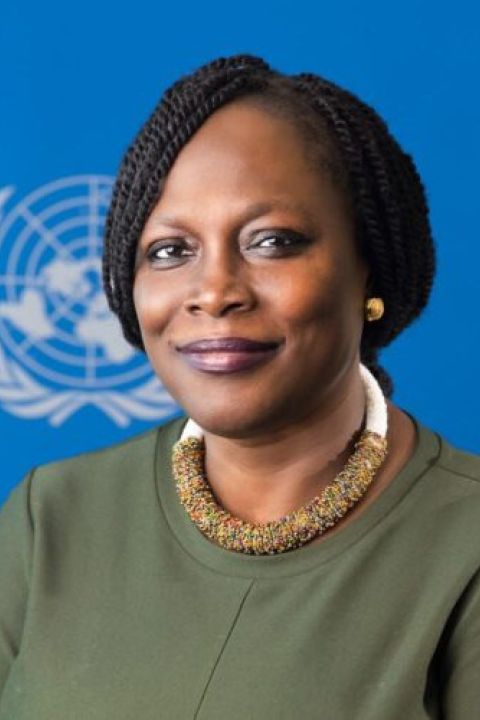
Ms. Awa Dabo has extensive experience in human rights, crisis recovery, peacebuilding and prevention, humanitarian affairs and development. She has held several senior level positions within the UN, at country and headquarters levels, most recently as Director and Deputy Head of the UN’s Peace Building and Peace Support Office (DPPA/DPO), where she has been leading and managing efforts to develop peacebuilding strategies and initiatives, and building a strong interface with internal and external partners.
Ms. Dabo previously served as Chief of Country Oversight and Support, for the United Nations Development Programme (UNDP) Regional Bureau for Africa, Senior Adviser and Head of the Crisis and Fragility Policy and Engagement Team for the Crisis Bureau of UNDP, Country Director for UNDP in Tanzania, and Regional Programme Manager and Team Leader at UNDP’s Bureau for Crisis Prevention and Recovery.
Ms. Dabo, who started her UN career as a UN Volunteer (UNV), also worked with other UN and non-UN entities, including the UN Office for the Coordination of Humanitarian Affairs (OCHA), the Office of the UN High Commissioner for Human Rights (OHCHR), and the African Society of International and Comparative Law.
Ms. Dabo holds an LLM in International Human Rights Law from the University of Nottingham, United Kingdom. In addition to her native English, Krio and Mandinka, she is fluent in Pidgin and Wolof.
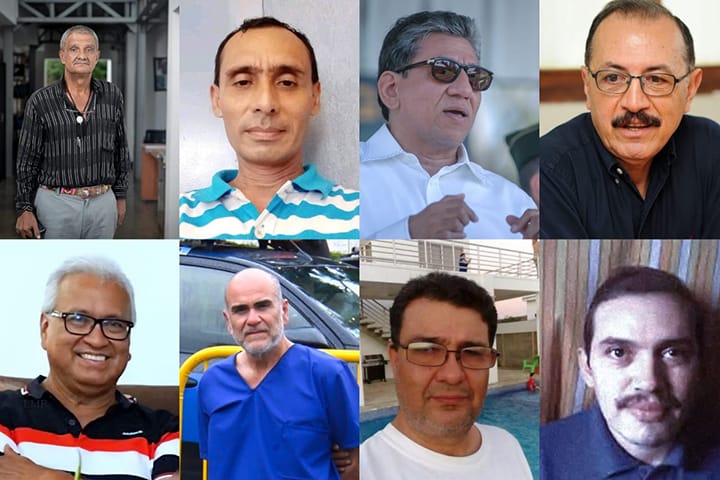
On 3 June 2026 UN experts expressed dismay at the death in custody of Indigenous Miskitu leader and lawmaker Brooklyn Rivera, and the allegations of enforced disappearance of seven members of his family who had come to claim his remains.
“It is outrageous that repeated warnings and calls for protection have gone unheeded. We consider it an act of cruelty that the Nicaraguan Government is reportedly not allowing Brooklyn Rivera’s family to make decisions about funeral rites and the burial of his remains,” the experts said. [see also: https://humanrightsdefenders.blog/2026/03/14/where-is-nicaraguan-indigenous-leader-brooklyn-rivera/]
They called for a prompt, effective, thorough, independent, impartial and transparent investigation into the circumstances of Rivera’s death in line with international standards, in particular the Minnesota Protocol, and for those responsible to be held accountable.
UN human rights mechanisms have followed this case since 2023 and have repeatedly raised concerns for Brooklyn Rivera’s life, physical integrity, health, and well-being. On 22 August 2025, the human rights experts wrote to the Government of Nicaragua about Rivera’s alleged arbitrary detention and enforced disappearance. They also requested proof of life from Nicaraguan authorities, following rumours of his death in custody. There was no response.
“The reported serious violations committed against Brooklyn Rivera and his family must stop. The Nicaraguan Government must reveal the fate and whereabouts of the seven missing family members and release them immediately,” the experts said.
They urged authorities to immediately respect the rights of Rivera’s family, including granting them access to all relevant information and records, ensuring their participation in decisions regarding his remains, and allowing funeral rites to be carried out in accordance with the family’s wishes and Miskito traditions.
The case of Brooklyn Rivera comes against the backdrop of a grave and sustained deterioration of the human rights situation in Nicaragua. On 1 May 2026, Human Rights Council’s experts warned of a pattern of enforced disappearances, incommunicado detention and detention conditions that could amount to torture or other cruel treatment. In March 2026, the report of a Group of Experts on Nicaragua described repression and persecution by authorities as systematic, amounting to, prima facie, crimes against humanity.
“Rivera’s case cannot be separated from the broader and deeply troubling human rights context in Nicaragua, including the repression of dissent, attacks on civic space, and the persecution of Indigenous leaders, human rights defenders and those perceived as opponents,” the experts said.
The arrest and subsequent enforced disappearance of Rivera occurred after his return from participation in the United Nations Permanent Forum on Indigenous Issues in 2023, the experts noted.
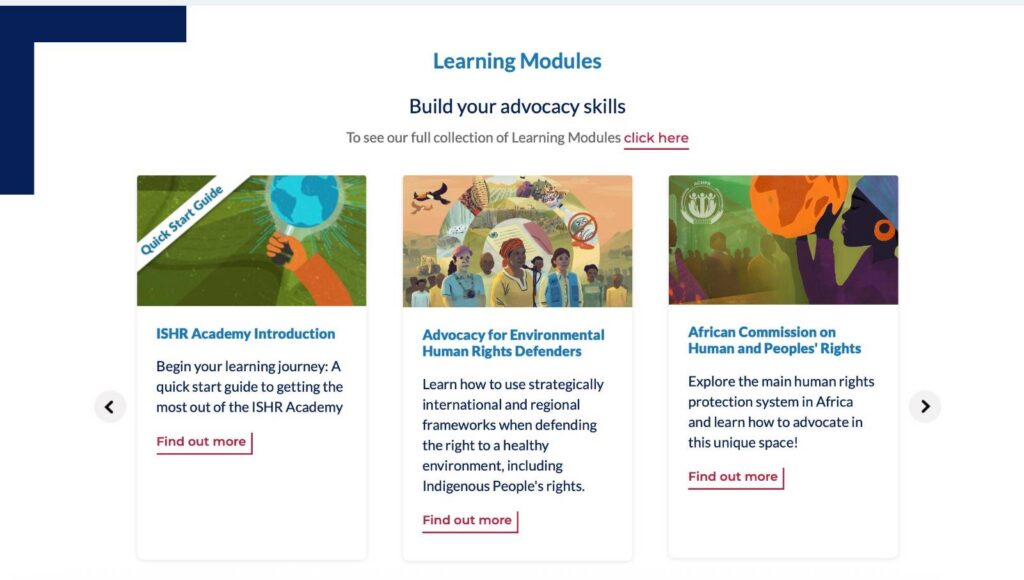
ISHR introduces a new on-line course on advocacy for environmental human rights defenders, a practical, self-paced resource for activists, community leaders, and allies to defend the right to a clean, healthy and sustainable environment using UN and regional mechanisms.
Environmental human rights defenders are those who protect our planet and defend the right to a clean, healthy and sustainable environment. They are Indigenous Peoples, farmers, scientists, journalists and young activists from all over the world.
Despite their vital role, more than 2,253 of them were killed, harassed, or persecuted between 2012 and 2024 according to Global Witness. More recently, the Business and Human Rights Centre found that the most dangerous sectors in which to pursue activism to defend rights are mining, agribusiness and fossil fuels.
Behind those numbers are stories of resistance and solidarity.
Why a new course for environmental human rights defenders?
The past few years saw an increased number of positive developments for the protection of the environment and environmental human rights defenders.
This includes the recognition of the right to a clean, healthy and sustainable environment, the Human Rights Council’s Resolution 40/11 recognising the role of environmental defenders, the Escazú Agreement enshrining the latter’s rights in Latin America and the Caribbean, and the creation of the Special Rapporteur on Environmental Defenders under the Aarhus Convention. All these developments also require defenders to understand how and when to use these mechanisms.
I became an environmental human rights defender by coincidence. I need practical tools like this to help me navigate spaces for my advocacy. The ISHR Academy is really a useful one! Christopher Opio, Uganda
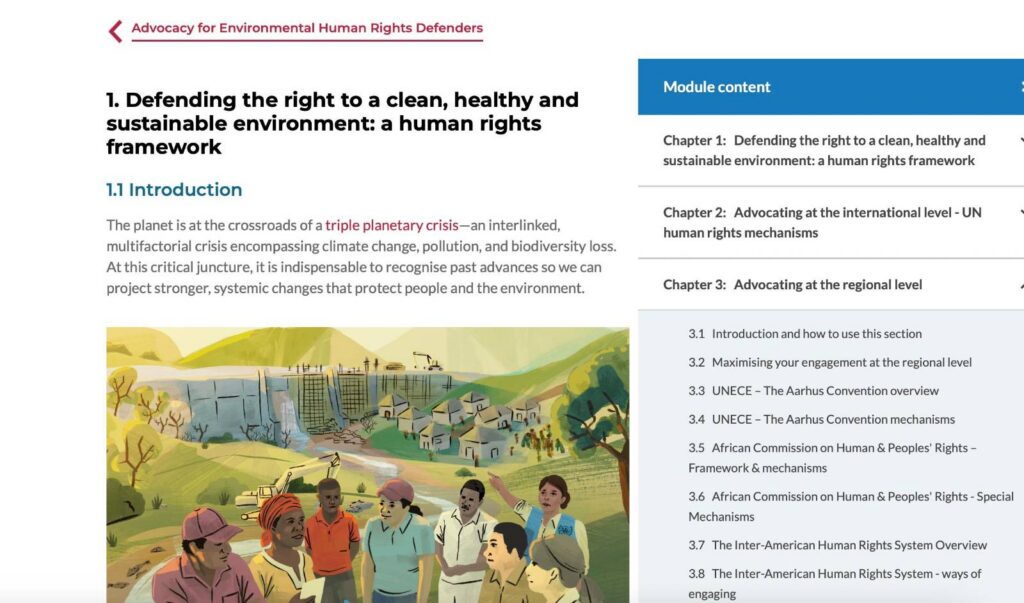
Chapter 1 examines the legal and conceptual foundations of the right to a clean, healthy and sustainable environment, the role of environmental human rights defenders in addressing the triple planetary crisis, including accountability of States and non-State actors.
Chapter 2 provides strategic and practical guidance to advance environmental justice through UN human rights mechanisms like the Human Rights Council, the Special Procedures, the Treaty Bodies or the Expert Mechanism on the Rights of Indigenous Peoples, and translate local defence into international advocacy.
Chapter 3 dives into regional mechanisms and other tools, in particular, for the protection of environmental human rights defenders. This includes rapid response mechanisms in Europe and Latin America, and other options designed for African and Asia-Pacific defenders through regional institutions and tools.
Free, self-paced, modular and flexible, each chapter can be taken independently, enriched with case studies, videos, and additional resources. You set the pace according to your needs.
How do I know if this is for me?
You know that bringing international attention could create pressure for change, but you don’t know where to start? You have an idea of who the Special Rapporteur on climate change is, the International Covenant of Economic, Social and Cultural Rights does, but don’t know the steps to engage with them?
The pathway walks you through exactly this.
Whether you are a community leader facing displacement, an environmental lawyer seeking international leverage, a representative of a grassroots organisation whose government has stopped listening, a young advocate learning to navigate international spaces, or an NGO supporting defenders on the frontline — this pathway was built for you.
Environmental human rights defenders are often the first to raise the alarm. I often meet people who face pressure or harassment for defending environmental rights and without knowing that international tools can support them. In this module, I will explain what my mandate can do and how defenders can engage with it.
Astrid Puentes Riaño, UN Special Rapporteur on the right to a healthy environment
By the end of this pathway, you will be able to:
Understand who environmental human rights defenders are, the contexts they operate in, and the legal frameworks for their protection
Identify international and regional advocacy avenues, within the UN and beyond, to advance the right to a clean, healthy environment
Plan strategic engagement with mechanisms based on your context, and hold governments and non-State actors accountable.
The shock of the cancellation of RightsCon in Zambia this year is still reverberating amongst human rights defenders who are grappling with the implications for their advocacy work. Like other networks across the globe, APC was impacted by this turn of events that disrupted the plans of many of its members, as well as staff; it wasn’t just a financial blow, but the loss of an opportunity to meet and strategise face-to-face, to network with donors and other organisations, and raise awareness about key advocacy issues that needed to be pushed forward on the global digital rights agenda.
While RightsCon 2025 was hosted in Taipei, Taiwan, AccessNow attributed the cancellation at least in part to behind-the-scenes pressure from China for Taiwanese participants to be excluded from the event in Zambia. This wasn’t necessarily something new for civil society. APC member in Taiwan Open Cultural Foundation (OCF) explained that Taiwanese civil society has seen China react strongly even to seemingly non-political international events when it believes its sovereignty claims or geopolitical interests are being challenged. JCA-NET, a member based in Japan, also pointed to several similar restrictions on participation in events in the past: “It is not uncommon for major powers to block foreign participation in important international conferences,” the organisation’s Toshi said. “Last year, the United States blocked PLO Chairman Abbas from attending the UN General Assembly. Japan also refused to issue visas to some participants for the 2023 IGF in Kyoto.”
But having an international event of this size “postponed” by a government just days before it was due to start – which the Special Rapporteur Gina Romero called a “clear violation of the rights to freedom of assembly, association, and expression” – was, for many, unprecedented. It was, as one APC member from South Asia summed up, a “sobering reminder that digital rights work does not happen in a neutral space.”….
“Political deviations have become extreme and a consensus over the universality of human rights no longer exists,” said Pavel Antonov from Bluelink, an organisation based in Bulgaria and advocating for digital rights in the European Union. “National governments can no longer be trusted on their commitments. It’s a wake-up call for human rights defenders around the world.”
…“This happened to Zambia now, but this could easily happen in the US or an EU member state,” warned Antonov.
And the signs are there. “I work in the private sector for economic reasons but also for political reasons,” said one anonymous APC associate also based in the EU. “I do not work in the NGO space or in human rights anymore as I am an immigrant in an EU country with a very restricted civic space. If I expressed my views about Palestine and certain other conflicts I might lose funding and residence. I am not happy to be a victim of chilling effects, but my family and children are currently more important. A talk at the University in my city was cancelled today and raided by the police.” The question then becomes: Where do activists find a sense of certainty, of at least something they can rely on? Who can they trust?
For many in APC, the answer lies in putting faith in their own political commitment to building bottom-up structures driven by communities. “As a fundamental principle, we should not equate the state with the diverse people living within its borders,” said Toshi. “It is important to prioritise these diverse people above all else, rather than the state.”
Part of this re-thinking how solidarity could best be actualised also raises the question of how expensive it is to participate in conferences such as RightsCon – especially in the context of the currently strained funding environment.
“The cancellation of RightsCon imposes a significant financial burden on civil society organisations across the board, but in particular the ones in the Global South,” said Betancourt. It is not only organisations in the Global South who are struggling to find the resources to participate in the many forums that happen each year. While JAC-NET had competing advocacy priorities, and the language of the event was a barrier, RightsCon was simply too expensive for them to attend in-person despite being based in Japan.
For some this offered a moment to pause and reflect, a chance to ask: Can things be done differently? There was a need to “become more collaborative within the digital rights movement itself, particularly in how limited resources are used,” said Ramanujam.
“As civil society organisations, we must work to avoid duplicating efforts, build on each other’s strengths, and work more strategically based on our different positions and capacities within the broader ecosystem.”
“I would like to see international and regional digital rights organisations and networks come together and figure out how regional and global rights convenings can build on each other,” said Chat Garcia Ramilo, APC’s Director. She mentioned several annual regional convenings “spearheaded by like-minded civil society organisations” to illustrate her point. Apart from the Digital Rights Asia-Pacific Assembly, which attracts activists, academics, techies and policy makers in that region, three of them were held in Africa alone: the Forum on Internet Freedom in Africa (FIFAFRICA), the Digital Rights and Inclusion Forum, and Bread & Net, which bills itself as the leading digital rights ”unconference” in West and North Africa. …
Most in the APC community nevertheless also emphasised how important forums such as RightsCon amongst others including the Internet Governance Forum (IGF) were for organising around digital rights.
“We need to continue finding, creating and advocating for these spaces, acknowledging and supporting the range of expressions and reactions, even if we don’t fully agree with all parts of it,” another member from the region said. “These spaces are crucial to exchange ideas, learn from each other, get inspired but also to demonstrate collective power.”
As we assess the impact of this year’s RightsCon cancellation, the APC network is also reflecting on the lessons learned and the tools already at our disposal to help us move forward. Overall, a call to share learnings and strengthen joint action emerged as a common thread across many reflections within the APC network.
Sharing a glimpse of what the APC community would have brought to RightsConIn a push to create alternative spaces for community exchange, when we reached out to our network for this article, we also asked: ”If RightsCon had gone ahead, what key message would you have highlighted in your sessions/interventions?”While we will not be able to reflect the full, compelling agenda and APC’s priorities for this year’s event, here we present some of the insights shared:https://www.canva.com/design/DAHKtmLB-cA/6UrGaUUEYVmbrqCoFmq10Q/view?em
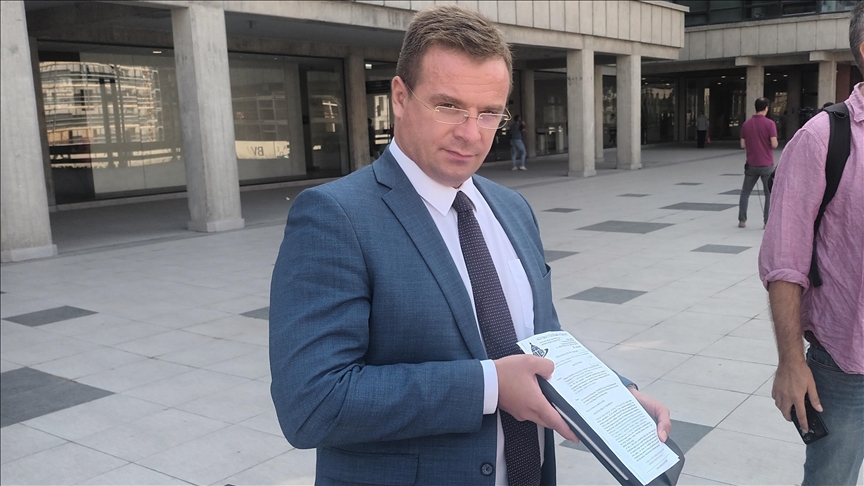
On 15 April 2026 The ICJ condemned the continued deprivation of liberty of Serbian lawyer Cedomir Stojkovic and the criminal proceedings against him on charges of incitement to violent overthrow of the constitutional order and disclosure of official secrets, which appear to constitute reprisals for the exercise of his right to freedom of expression. On 4 April 2026, Serbia’s Bar Association (Advokatska komora Srbije) expressed concern that the political nature of the charges against him and the three-year period covered by the indictment “give rise to the suspicion that his detention, along with other measures imposed against attorney Stojkovic, are being used as a means of coercion, rather than as a means of ensuring the unobstructed conduct of criminal proceedings.” The Bar Association demanded that Stojkovic be released pending trial.
“The prosecution of a lawyer for social media posts expressing criticism of the authorities is incompatible with Serbia’s obligations under international human rights law and standards,” said Temur Shakirov, ICJ Europe and Central Asia Programme Director. “The Serbian authorities must release Stojkovic and ensure that lawyers can exercise their right to freedom of expression without fear of reprisal.”
The political nature of the charges, the breadth of the indictment covering social media posts over a three-year period, and the severity of the restrictive measures imposed on him, including pre-trial detention, house arrest and a prohibition on posting on social media and on participating in public life, give rise to serious concern that he is being prosecuted to punish him for his public criticism of the Serbian authorities.
Stojkovic was arrested on 29 December 2025 and held in pre-trial detention for 30 days before being transferred to house arrest on 27 March 2026. He remains subject to restrictive measures, including a prohibition on posting on social media and on participating in public life. The charges relate to 17 social media posts published over approximately three years, which the Higher Public Prosecutor’s Office in Belgrade has characterized as incitement to violent overthrow of the constitutional order and disclosure of official secrets.
On 24 March 2026, the UN Special Rapporteur on the independence of judges and lawyers addressed a communication to the Serbian Government expressing concern that several provisions of a series of amendments and newly adopted laws relating to the judiciary and the prosecution authorities “may not be in line with international human rights standards related to the independence of the judiciary and the right to a fair trial, including: the impartiality of the prosecution service, the separation of powers, and the ability of judges and prosecutors to perform their functions free from undue influence, pressure or interference.”