Posts Tagged ‘Hossein Ronaghi’

PEN: Number of Jailed Writers Tops 400 for First Time in 2025

May 14, 2026

On 12 May 2026 PEN America sounded the alarm on a deepening global crackdown on free expression, reporting in its Freedom to Write Index that more than 400 writers are behind bars for the first time since the Index launched in 2019.

In 2025, a total of 401 writers were jailed across 44 countries – up from 375 writers in 40 countries the year before. Over the past seven years, the number of jailed writers worldwide has risen by 68 percent, underscoring a steady and alarming escalation in the suppression of dissent.

China remains the world’s leading jailer of writers, with 119 cases – making it the only country to exceed 100 writers held behind bars. The sharpest increase came from Iran, where authorities carried out 17 new arrests, driving numbers back toward the peak levels seen during the 2022 ‘Woman, Life, Freedom’ protests. The spike signals a renewed and aggressive campaign to silence critical voices. The escalating suppression in Iran intensified in the aftermath of the June 2025 war with Israel, sweeping up both newly targeted writers and long-persecuted dissident voices. Among those arrested were online commentator Hossein Ronaghi, who was detained in June; a group of scholars and translators detained in November, including economists Parviz Sedaghat and Mohammad Maljoo, sociologist Mahsa Asadollanejad, and writer and translator Shirin Karimi; and human rights defenders and authors Narges Mohammadi and Sepideh Gholian, who were violently re-arrested while speaking at a memorial service in December.

Iran was one of three countries among the top 10 jailers of writers that were simultaneously engaged in armed conflict in 2025, along with Russia and Israel/Occupied Palestinian Territory. Authorities in these three countries repeatedly targeted writers who used anti-war language or themes in their poetry, music, scripts, commentaries, articles, or literary output, a key pattern that emerged in the 2025 data. 

In Israel/Occupied Palestinian Territory, six writers have been detained by the Israeli government over anti-war statements. Palestinian writers and commentators Mohamed Al-Atrash, Nawaf El-Amer, Radwan Qatanani, Rula Hassanein,and scholar Anwar Rostom were detained on charges of incitement or with no charges at all, in addition to Jewish-Israeli journalist and commentator Israel Frey who was investigated for terrorism, because of their commentary on the war, the genocide, and the occupation. 

In Russia the government held 18 writers in prison or detention in 2025, most targeted for their anti-war expression or suspected involvement in anti-war activity. In March, a Russian military court sentenced historian and columnist Alexander Skobov to 16 years in prison for his anti-war posts on social media. Other writers opposed to the war have fled into exile to avoid prosecution or jailing for their dissenting viewpoints.Overall, the top 10 top jailers of writers are China and its autonomous regions, including Xinjiang, Tibet, and Hong Kong (119); Iran (53); Saudi Arabia (27); Vietnam (24); Türkiye (22); Israel and the Occupied Palestinian Territory (21); Russia (18); Belarus (17); Egypt (13); and Myanmar (10).  [https://iranfocus.com/human-rights/57848-record-number-of-imprisoned-writers-worldwide-iran-ranks-second-with-53-jailed-writers/]

Several countries appeared in this year’s Index for the first time including Togo, Mozambique, and the United States. The U.S. case centers on the weeks-long detention of Sami Hamdi, a British opinion writer and columnist, who was detained in what PEN America views as part of the U.S. government’s weaponization of Immigration and Customs Enforcement (ICE). Hamdi, an outspoken critic of Israel, was on a speaking tour and had just attended a conference when ICE officers stopped him at San Francisco International Airport and held him in custody for two weeks.

The fact that the United States is in our Freedom to Write Index for the first time should be a sharp wake-up call for everyone in the country who claims to value free expression,” said Liesl Gerntholtz, managing director of the Freedom To Write Center. “No government can misuse its own detention and immigration systems to silence or intimidate independent voices and call itself a democracy.” 

For more information and to download the full report visit the 2025 Freedom to Write Index.
https://pen.org/press-release/2025-freedom-to-write-index

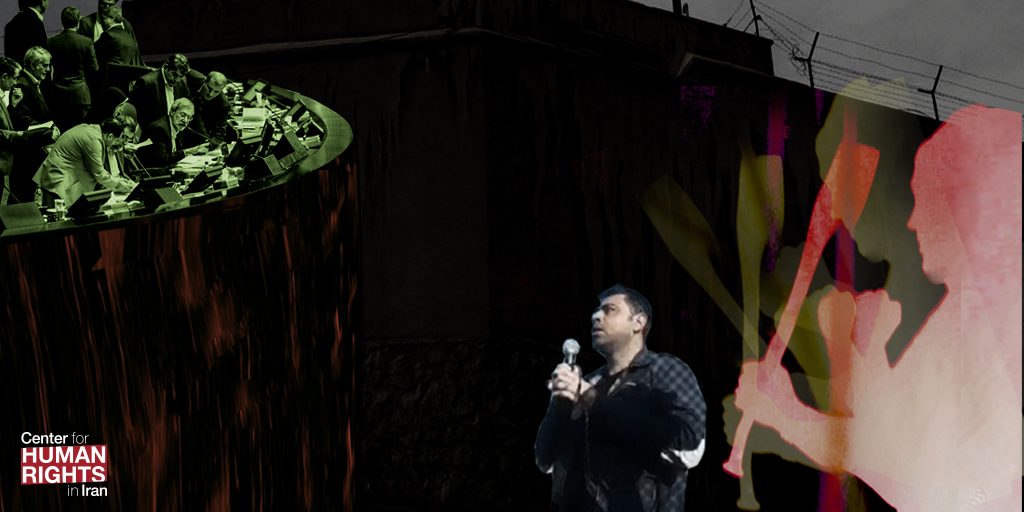
Iranian activist Esmail Bakhshi goes public with his torture claim and hits a nerve even inside Iran

January 11, 2019
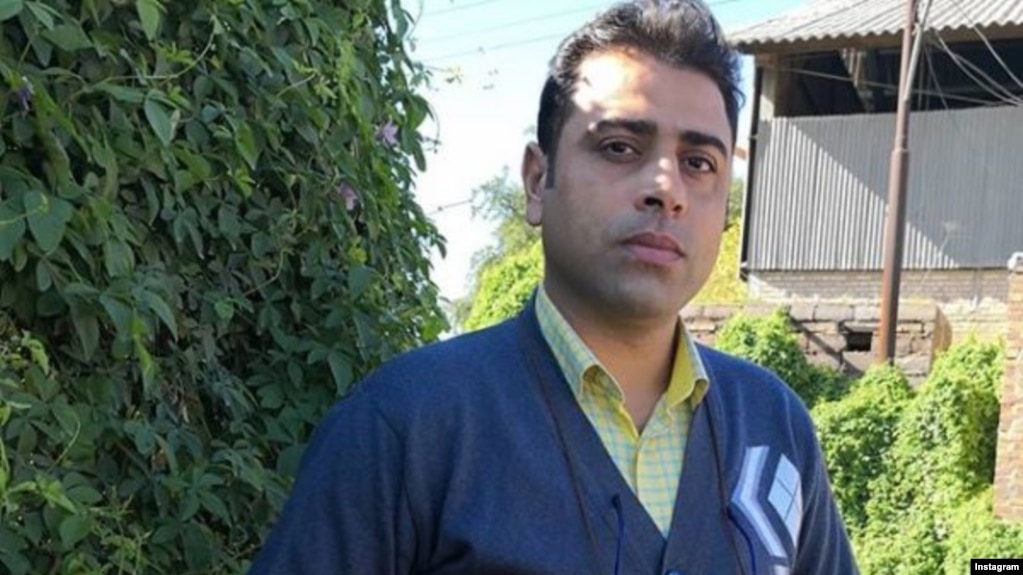
Iranian activist Esmail Bakhshi was arrested in November for organizing weeks-long protests at a sugar factory.

Iranian activist Esmail Bakhshi has been out of jail for a month, but says he still bears the physical and psychological scars from being tortured “to the verge of death” during his 25-day jail stay in Khuzestan Province. Bakhshi was arrested on November 20 for his role in weeks-long protests over unpaid salaries at a local sugar factory. He was charged with disruption of public order and collusion against national security and spent weeks in jail before his release on bail on December 12. After detailing his sufferings on Instagram (public letter), Bakhshi challenged Intelligence Minister Mahmud Alavi, a mid-ranking cleric, to a live TV debate concerning the alleged torture of detainees. “As a cleric, and from the moral and human rights point of view, tell us what is the sentence for those who torture prisoners? Is torturing prisoners permissible? If it is, to what extent? Does the ministry you run have the right to secretly monitor private telephone conversations?

Now Bakhshi’s claims have shined a light into the greater issue of prisoner mistreatment and torture, which rights group say is widespread, and have prompted parliament to launch an investigation. Iranian media reported that a parliament committee has been authorized to investigate Bakhshi’s claims after lawmakers requested a probe. Ali Motahari, an outspoken member of parliament, wrote a column in the reformist Etemad daily on January 6 in which he said Bakhshi’s claims were a “source of shame” and demanded answers from the Intelligence Ministry (“The letter …. should be a wake-up call for all those with a conscience and defenders of citizens’ rights who must follow up this matter until it reaches a clear conclusion.” ).

Since the publication of the labor activist’s letter, Bakhshi’s lawyer has indicated that her client has come under intense pressure to retract his statements about being tortured.

On January 6, 2019, Judiciary Spokesman Gholam-Hossein Mohseni Ejei claimed the authorities would investigate if Bakhshi lodged a formal complaint.

“After mentioning torture Esmail Bakhshi has come under intense pressure aimed at forcing my client to deny what happened,” Zilabi said on January 7.

The suggestion that the Intelligence Ministry could be sued has brought reactions from former political prisoners and prisoners of conscience who have suffered torture at the hands of the state. They noted that it is practically impossible to bring torturers to justice and in most cases it was the victims who received punishments for publicizing the torture.


After I was released [from more than a month in detention in early December 2004] I gave interviews and spoke to judicial authorities about being tortured,Fereshteh Ghazi, an Iranian reporter living in exile in the US, tweeted on January 6.  “Then I was summoned by [the Tehran Prosecutor at the time, Saeed] Mortazavi and in the presence of my lawyer he told me I had to file a lawsuit, which I did. He said now that the suit had been filed I had to prove my case or else he would lock me up for a long period. So I became a defendant in my own suit.”

Taghi Rahmani, a reporter and political activist who lives in Paris after serving 15 years in Iran’s prisons, tweeted: “In 1991 I was beaten during interrogation. In fact Judge [first name unknown] Haddad had entered the room and witnessed most of the beating. When my attorney [Abdolfattah] Soltani brought up the beatings in court, Judge Haddad sued Soltani and he was sentenced to four months in prison…

Attorney Ali Mojtahedzade suggested that to assure the public that torturers could be sued and brought to justice, the judiciary should first conclude the prosecution of those responsible for previous atrocities, such as the deaths of Iranian-Canadian photojournalist Zahra Kazemi and blogger Sattar Beheshti during detention.

..Another former political prisoner, Hossein Ronaghi commented: “Sattar Beheshti had said that his interrogator had hung him on the ceiling and beat him. He was terrified about being tortured again”.  [see also: https://humanrightsdefenders.blog/2013/08/23/observatory-expresses-grave-concern-over-health-of-iranian-hrd-hossein-ronaghi-maleki/]

[The February 2018 report of the UN Secretary-General on Iran stated: “The Secretary-General remains concerned about continuing reports indicating that the practice of torture and ill-treatment in the Islamic Republic of Iran persists. Such reports point to a pattern of physical or mental pressure applied upon prisoners to coerce confessions….” The UN Special Rapporteur on human rights in Iran also expressed concern in his September 2018 report.]

Observatory expresses grave concern over health of Iranian HRD Hossein Ronaghi-Maleki

August 23, 2013

On 23 August 2013, the Observatory for the Protection of Human Rights Defenders, a joint programme of FIDH and OMCT, expresses its deep concern about the Iranian blogger and human rights activist Hossein Ronaghi-Maleki, whose health status has been deteriorating. On August 9, 2013, Mr. Hossein Ronaghi-Maleki started a hunger strike to protest the authorities’ ongoing refusal to allow him to continue his medical treatment out of Evin prison in Tehran. His mother, Ms. Zolaykha Mousavi, also started a hunger strike on August 20, 2013 to draw attention to his plight. Ronaghi-Maleki has been suffering from kidney and heart problems and bladder inflammation. Since the beginning of his hunger strike, he has suffered kidney bleeding, blood pressure oscillations and arrhythmic heart beats. He has already undergone several operations on his kidneys that were damaged after being repeatedly tortured during his detention, including 13 months in solitary confinement. He has been serving a 15-year prison sentence after being arrested on December 13, 2009 and convicted on charges of “membership of Iran-Proxy Internet Group”, “spreading propaganda against the system”, “insulting the Iranian Supreme Leader and the President”. logo FIDH_seul

OMCT-LOGO

via Iran : IRAN: Grave concern over health status of human … – FIDH.