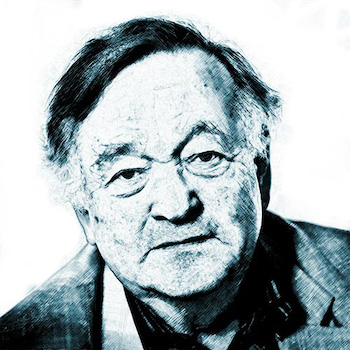
Benedict Rogers in Hong Kong Watch of 1 September 2026 asks the same kind of question I aksed many years ago in a symposium about NGOs [see Chapter 4, titled “From human rights projects to strategies: The search for coherence,” in the book NGOs in China and Europe: Comparisons and Contrasts edited by Yuwen Li – 2012].
Benedict Rogers writes iner alia: Within the past week, the Chinese regime has convicted a Hong Kong barrister and a trade unionist for the crime of organizing a peaceful vigil to commemorate the Tiananmen massacre and sentenced a Chinese artist to three years in prison for satirical sculptures of the long-dead leader Mao Zedong, responsible for the deaths of millions of Chinese civilians during his rulen.In so doing, Xi Jinping’s dictatorship has proven once again its thin-skinned paranoia, its neurotic fear of dissent and humor, and its ruthless determination to silence freedom of expression and bury history and truth.
Hong Kong lawyer Chow Hang-tung, aged 41, and trade unionist Lee Cheuk-yan, aged 69, representing the now-defunct Hong Kong Alliance in Support of Patriotic Democratic Movements of China, were convicted on Aug. 21 of the crime of “inciting subversion” — simply for having organized candle-lit vigils to remember the 1989 Tiananmen massacre. They now face up to ten years’ imprisonment.
Both have already been in jail for the past five years and have now been convicted under Hong Kong’s draconian national security law imposed on the city by Beijing in 2020.
The United Nations Special Rapporteur for human rights defenders, Andrea Bolanos Vargas, said she is “deeply concerned” about Chow and Lee’s verdict, and called for their immediate release. She said: “Peacefully preserving memory and calling for truth, justice and accountability are human rights activities and must never be criminalized.”
These two cases are just the latest examples of Beijing’s intensifying intolerance of dissent. They follow the 20-year prison sentence imposed on Hong Kong media entrepreneur and devout Catholic Jimmy Lai, aged 78, earlier this year, and the imprisonment of hundreds of other pro-democracy campaigners, human rights defenders, journalists, bloggers, and religious practitioners in Hong Kong and across China….
All these cases combined raise an important question. If China is — as Xi Jinping and the Chinese Communist Party want us to believe — the world’s new superpower, why is it so terrified of a barrister and a trade unionist and a media entrepreneur lighting candles, or an artist making satirical sculptures?
If the regime in Beijing is as strong as they suggest, why are they so scared of Christians gathering to pray, Tibetans meditating on the Dalai Lama’s teachings, Uyghurs fasting during Ramadan, or Falun Gong practitioners practising physical exercises similar to yoga and promoting “truthfulness, compassion, and forbearance?” And why does it consider it a crime to promote understanding of different ethnic and religious cultures?
The truth is, the regime in Beijing hates humour, is scared of jokes, and is terrified of any opinion or belief that diverges from total loyalty not only to the Chinese Communist Party’s ideology but also to its key leaders, contemporary and historical. Any perceived mockery of Mao is deemed an insult to Xi, any attempt to remind the world about the tragedy of Tiananmen is seen as an assault on today’s regime, and any practice of religion or spirituality is regarded as a rejection of the regime’s attempts at self-deification.
In other words, this is a fragile regime, scared of its own shadows, its own murderous history, and its own people. Such a regime may be able to lock up brave dissidents, lawyers, trade unionists, journalists, artists, and religious believers for a time. It may be able to shut down free expression and freedom of religion for a while. But it can never silence the souls of its people, for whom the courage of Chow Hang-tung, Lee Cheuk-yan, Gao Zhen, and so many others stands as a light in the darkness.
This article was published inUCA Newson 31 August 2026.
Today was the funeral of one my best friends and, more importantly, one of the most significant architects of the international human rights system as it developed in the last 50 years. Theo (Theodoor Cornelis) van Boven, was born in Voorburg on 26 mei 1934 and died peacefully in Maastricht on 9 mei 2026.
I have had the honor to work with him for many years [our lives intertwined over a long period of time and on different locations] and wrote about him several times. Most recently “Courageous Leaders and NGO Initiatives” in Ramcharan and others (ed), The Protection Roles of Human Rights NGOs, Essays in honour of Adrien-Claude Zoller, Brill Nijhoff, Leiden, 2023 (ISBN 978-90-04-51677-9), pp 614-636.
So, here a large part of the section on this great man: This section is about a man who was crucial in getting the United Nations and NGO partners to deal with human rights protection. Much has been written about his work and the enormous contribution Theo van Boven made to the UN human rights machinery as we now know it. .. Nowadays the United Nations has an elaborate machinery to deal with human rights violations. The system is far from perfect and still too often subject to political pressures and selectivity but there are now a great many thematic and country mandates, emergency sessions and there is an International Criminal Court against impunity. Wind back 40 years and none of this existed. The violations were there for all to see but not for the United Nations, which preferred to consider this part of the ‘internal affairs of sovereign states’. The man who would make it his life’s mission to change this, Theo van Boven, got in 1977 the position from where to do it: Director of Human Rights in the UN.
His teenage years were eaten up by the second world war. His memories of that period, his strict protestant background and his law studies in Leiden led him to enter an area that was not so obvious at the time: international human rights. He studied in the USA, wrote there a thesis on freedom of religion and soon afterwards, around 1960, he found himself as a young diplomat shaping the human rights policy of the Netherlands. A decade later the protest against the Vietnam war, the violations by the Greek colonels, the coup d’état in Chile and President Carter’s new policy on human rights pushed human rights suddenly higher on the political agenda. Theo had become an expert member of the UN Sub-commission on Human Rights and was one of the engineers of the first UN effort to investigate large-scale human rights violations, namely Chile. I myself met him when he was still a young professor lecturing on human rights in Amsterdam. Then – in the summer of 1977, the same month I started at the ICJ – he was appointed Director of the small human rights secretariat of the UN in Geneva. Here he started his work to bring dictators to accountability and to give the UN a capacity to deal with gross and systematic violations of human rights. Something that is now taken for granted but it would cost Theo his job.
Unlike his predecessors, Theo van Boven did not put all his faith in quiet diplomacy and he regularly talked about the need for the UN to address gross and systematic violations, about the mobilisation of shame and stated that the UN should care about victims. He also started to receive the victims – and the NGOs who represent them – in his office. This led to an incident that would be comic if it was not for the consequences. J. Matarollo was an Argentinean exile lobbying against the generals in his homeland who were killing left-wing opponents by the thousands. Theo agreed to hear him and told his secretary (inherited from his predecessor) to call Matarollo to give him an appointment in the early of hours of the next day. She faithfully called the Argentinean embassy assuming that he was a diplomat as these were the kind of people that normally met with the Director. The next day there was no Matarollo but an angry Note Verbale from Argentinean Ambassador Martinez accusing Theo of meeting with terrorists.
In the UN he did not conform to the image of the traditional diplomat, e.g. by pinning an anti-apartheid button on his suit, but even more so by publicly stating that NGO reports about dead bodies floating down a river in Guatemala were true, or by denouncing disappearances in Chile and Argentina. When in 1980 the government in the USA changed and Ronald Reagan and his team decided to play down violations by right-wing regimes, especially in Latin America, Theo did not flinch and openly criticised their support to these dictatorships. “Naming and shaming” by a UN official was unusual and not easily accepted by the diplomatic community. The Latin American regimes – led by Argentina and silently encouraged by the US – started a campaign to oust Van Boven as Director of Human Rights.
To complicate matters for van Boven, the new UN Secretary-General must have felt little sympathy for this particular Director, as J. Perez de Cuellar had earlier, in 1980, been appointed as Special Representative by the previous Secretary General to go to Uruguay and look into the human rights situation. His report was such a whitewash that it was heavily criticized in the Commission on Human Rights. How correct this reaction had been was shown when the famous pianist Estrella – whom de Cuellar claimed to have visited in the Libertad prison – came to Geneva and told the I.C.J and others that there had been no such visit.
In the meantime in 1980 Theo had put great energy – together with some key NGOs in creating a Working Group on Enforced Disappearances. As a mechanism focusing only on Argentina was politically not feasible, the new idea was to create a thematic mandate on the phenomenon of disappearances in the knowledge that Argentina was going to be the main target. At the decisive session the tension was enormous as the outcome of the vote was very uncertain. The Jordanian Chairman of that session had to deal with endless procedural issues, many of them proposed by Uruguay (egged on by Argentina which was only an observer). Finally, late at night the Chair felt that the resolution creating the mandate could be passed without a vote and moved to do so, but the Uruguayan Ambassador again started to put up his name plate as a sign that he wanted the floor. The Chairman quite unusually interrupting, looked directly at the Uruguayan Ambassador and said: “I URGE my brother from Uruguay NOT to do this..” The name plate slowly turned downwards again and the Chair immediately declared the resolution adopted. The NGOs and tens of Mothers and Grandmothers of the Plaza de Mayo in the public galleries started a spontaneous applause and quite a tear was shed. ..
In early 1982 the issue of Theo van Boven’s tenure as Director came to the fore. His contract had to be renewed which normally was a routine matter, but not this time. The issue came to an explosion when Theo’s opening speech to the Human Rights Commission was sent on a Friday evening to the UN Secretariat in NY for information and at the same time given to the UN Office of Information in Geneva for distribution at the time of delivery the next Monday morning. The UN Office of Information decided to make the statement available to the media that very Friday evening (with the usual proviso: “check against delivery”). The Representative of Guatemala in Geneva obtained a copy of the statement and vehemently objected to the statement. The SG’s office demanded that Theo should refrain from mentioning countries by name – which Theo refused not only out of principle but also because the press would notice the difference on Monday and assume that there had been pressure to remove the names.
As a family friend bringing the kids back from a ski outing, I happened to overhear Theo on the phone to New York agreeing to a ‘compromise’: he would mention at the beginning of his speech that certain passages were done in his ‘personal capacity’. A few days later Theo was suddenly informed that his contract would anyway not be prolonged. His announcement at a dramatic session of the Human Rights Commission grew quickly into an international diplomatic incident.
As I was on the verge of leaving the ICJ, I had some time on my hands. So I got the idea – warmly supported by Niall McDermot – to publish a book with a selection of Theo’s major speeches from the last five years. One of his Special assistants, Bertie Ramcharan, who had written a good part of them, was very helpful and we managed to get a book out within only 6 weeks. The first copy was flown in to Geneva by the publisher and presented to Theo at a public farewell which the ICJ had organised for him. NGOs, some UN staff and students showed up in such large numbers at the university hall that the fire brigade had to refuse access to late comers. Speech after speech – including by Saddrudin Aga Khan – cantered on Theo role in getting the UN machinery on human rights to deal with violations more concretely and on his support for human rights NGOs…
With Ian Guest and many others, I remain convinced that Theo’s dismissal from the UN was the result of pressure by Latin American dictatorships with support from the Reagan administration. As stated in People Matter, he was “hired and fired for the same reason: his deep commitment to human rights”.
After his dismissal Theo and his family returned to the Netherlands where many were very disappointed that there was no real interest in giving him an equivalent position in the foreign affairs department and he ‘ended up’ in the new University of Maastricht as professor of international law, where together with others such as Cees Flinterman he bent the research programme into his favourite direction: human rights. He continued his involvement in international activism in a variety of functions: with NGOs (e.g. European Human Rights Foundation, IMADR, International Alert), and with the UN (e,g. the Sub-commission on Human Rights, Special Rapporteur on Compensation 1990 -1993, Special Rapporteur on Torture 2001-2005, first Registrar of the UN Yugoslavia Tribunal). In 1998 he became the Head of the Dutch Delegation to the Rome Conference which created the International Criminal Court (ICC).
In 1985 he was called to Buenos Aires as a witness to testify against the nine military leaders (including Videla) for their human rights violations in the period 1976 en 1983. The UN had advised him not to go but he felt that he should do anything to end the impunity of these perpetrators. Theo’s testimony – he was called already on the 2nd day – was seen as crucial in establishing that the leaders of the Junta must have known about the massive violations. Theo took the same position with regard to the father of princess Maxima Zorreguieta (the wife of the king of the Netherlands). As Minister of Agriculture Jorge Zorreguieta must have known about the atrocities and should at least have taken distance instead of denying any knowledge. A position which Theo took in 2001 and was still heard defending in 2012.
In the light of Theo van Boven’s recurring clashes with Argentina it must have given him great moral satisfaction when on 26 November 2009 he received a degree honoris causa from the University of Buenos Aires as well as the highest decoration from the Government.
ICTJ stated: “Van Boven’s commitment to the pursuit of justice was relentless. He spoke up about impunity and accountability in contexts of repression such as the military dictatorships in Argentina and Chile, where he also championed the cause of the disappeared, even when political pressure limited others from doing so. Today, ICTJ honors his voice, his perspective, and his deep-rooted legacy. Inspired by his resolve, we will continue our commitment to uphold human dignity above all else in the pursuit of justice and lasting peace all over the world, however long it takes.“
In this episode of Democracy Tomorrow, Scott Leckie celebrates the life and legacy of Theo van Boven, a pioneering international human rights lawyer and former head of the UN Centre for Human Rights. Joined by Professor Cees Flinterman and Hans Thoolen, they reflect on van Boven’s courageous defence of victims, his role in advancing international human rights law, and his commitment to justice, accountability and human dignity. The discussion also explores the future of the human rights movement, the United Nations, global democracy and the importance of defending our shared humanity.
SAVE THE DATE for the 31st Martin Ennals Award Ceremony: 26 November 2025 at 18:30 CET. (Doors open at 18:00 CET).
I will certainly be there as Chair of the Jury of he MEA but [SPOILERS ALERT] it will be the last time I attend in this function. After more than 10 years, it is time someone else takes over. The Ceremony, as usual, is co-hosted by the City of Geneva, and will take place at the Salle communale de Plainpalais in Geneva. Happy to see that the participation of the UN High Commissioner for Human Rights is expected.
Please note that entry to the venue is on a first first-come, first-served basis.
The event will also be livestreamed on the MEA’s media platforms.
No-one will have missed the recent media hype surrounding the opposite candidacies of US President Trump and UN rapporteur Francesca Albanese for this year’s Nobel Peace Prize. This blog with its focus on human rights defenders and their awards would be amiss in not taking note, even if the Nobel Prize is foremost a peace prize not necessarly a human rights award. [see also my piece of 2012 https://global.comminit.com/content/nobel-prize-peace-not-necessarily-human-rights]
So, it is not excluded that the ‘making peace at any cost’ considerations will prevail, but my bet is that the Peace Prize Committee will be careful in ignoring the massive support from the world’s human rights community who have massively come out against the Trump administration’s sanctions against Albanese. Human rights should trump ‘peace’ on this occasion.
Nominations for a Nobel Peace Prize for Francesca Albanese are gathering steam. See the links below:
The Council of Europe has adopted on 12 March 2025 the first-ever international treaty aiming to protect theprofession of lawyer. This is to respond to increasing reports of attacks on the practice of the profession, whether in the form of harassment, threats or attacks, or interference with the exercise of professional duties (for example, obstacles to access to clients).
Lawyers play a key role in upholding the rule of law and securing access to justice for all, including to vindicate possible human rights violations. Therefore, public confidence in justice systems also depends on the role played by lawyers.
The Council of Europe Convention for the Protection of the Profession of Lawyer covers lawyers and their professional associations, whose role is vital in defending lawyers’ rights and interests as a profession. The Convention addresses entitlement to practise, professional rights, freedom of expression, professional discipline and specific protective measures for lawyers and professional associations.
Under the Convention, states must ensure that lawyers can carry out their professional duties without being the target of any form of physical attack, threat, harassment or intimidation or any improper hindrance or interference. Where such circumstances could amount to a criminal offence, parties must conduct an effective investigation. Parties must also ensure that professional associations can operate as independent, self-governing bodies.
The Convention will be opened for signature on 13 May, on the occasion of the Council of Europe Foreign Affairs ministers’ meeting in Luxembourg.At least eight countries, including six member states of the Council of Europe, must ratify it for it to enter into force. Compliance with the Convention will be monitored by an expert group and a committee of the parties.
In El Salvador, the suspects in the murder of four Dutch journalists will finally stand trial 42 years after the fact. The former Salvadorian Minister of Defense and two army officers will appear in court, NOS reports. See
On 29 December 2023 Akram Miknas posted a piece on gdnonline attacking the Nobel Peace Prize. It is not my role to “defend” the Peace Prize, but the misconception underlying much of the piece is such that it is worth putting the record straight:
“Wish it were feasible to revoke the Nobel Peace Prize! Especially when some individuals upon whom this supreme honour is bestowed, show, by their subsequent actions and behaviour, that they are more suited to a ‘prize’ or ‘badge’ of shame associated with war and destruction or violence and bloodshed“
The author then raises the cases of Menachem Begin, Shimon Peres, and Aung San Suu Kyi, who are seen as violators. He could have added others such as Le Duc Tho, de Klerk, Arafat and Kissinger or more recently Abiy Ahmed Ali.
…”These examples make us question the logic of bestowing the Nobel on individuals or groups for peace, when their actions are anything but peaceful! In fact, after having received this honour, they have been involved in terrible acts that have stained them with the blood of their victims.”
…..Indeed, many of these Nobel Peace Prize laureates, are, in reality, perpetrators of war crimes. As far back as 2012 I published a piece ‘Nobel Prize is for Peace not necessarily Human Rights‘ which states that the Prize is a PEACE prize and was in certain cases awarded ‘merely’ because they stopped violating human rights. See: https://www.comminit.com/content/nobel-prize-peace-not-necessarily-human-rights
The author makes the sensible point of asking for a critical reassessment of the award selection process: “One key criterion should be that recipients must refrain from intertwining human rights advocacy with political activities. Failure to adhere to this condition should warrant the withdrawal of the award in the future. This measure ensures that the accolade is granted solely based on an individual’s commitment to human rights without any influence from political affiliations or perspectives.”
The author’s call to “to establish alternative awards that are …specifically designed to champion the causes of the vulnerable. It should recognise individuals who are committed to tirelessly working for peace, justice and the promotion of humane values within societies. These awards should gain appreciation and support from individuals and organisations dedicated to fostering positive change in oppressed communities.” is fine but hardly necessary as there are at least 200 such awards, see: https://www.trueheroesfilms.org/thedigest.
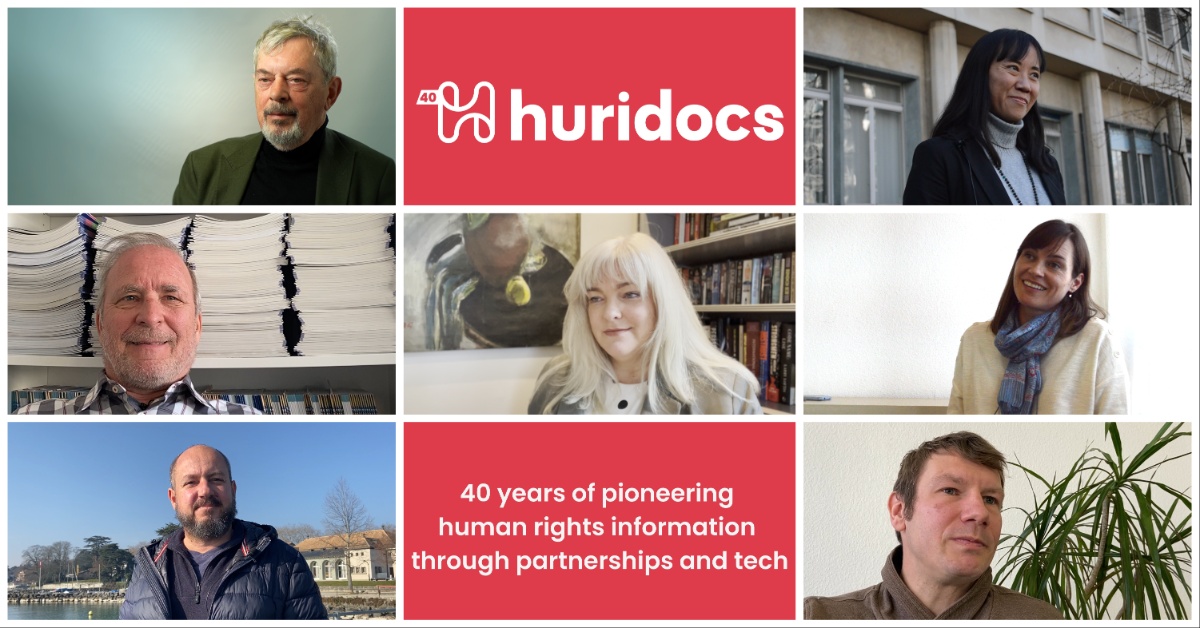
Join in exploring the vital role the NGO HURIDOCS plays in shaping the landscape of human rights today. Hear from past and present directors, board chair and senior documentalist about our ongoing impact (admittedly including my good self).
As HURIDOCS celebrates 40 years of commitment to human rights, it shared a video which is not only a retrospective, but a testament to its ongoing role and impact in the world of human rights information.
In this video, the HURIDOCS team sat down with individuals who have been instrumental in shaping HURIDOCS throughout its history. This includes our co-founder, our senior documentalist, a dedicated board member, and past and present directors, all sharing their unique insights.
“Information has always been the key to human rights work and that is still the case. Being organised, sharp, learning from our history and not being afraid to go into the future fighting for truth, justice and human rights with all of the tools that are available to us. That is the civil society we want to see, that is the civil society we want to support!”
From left to right: Neri Colmenares, Abdul Aziz Muhamat, Juwairiya Mohideen, Nemonte Nenquimo and Intisar Al-Amyal. (True Heroes Films)
A new online tool has been launched to champion human rights defenders and bring greater recognition to their work. Launched this month by True Heroes Films, a Geneva-based media organisation which uses digital storytelling to raise the profile of human rights defenders around the world, the Digest of Human Rights Awards includes over 2,800 winners of 220 prestigious awards.
The Digest, while raising awareness about the work of human rights defenders, also aims to serve as a useful tool for both the media and the human rights world to go beyond the often fleeting publicity that surrounds award ceremonies and ensure their work is not forgotten.
Hans Thoolen, co-founder of True Heroes and the Martin Ennals Award, told Geneva Solutions that the idea for the digest came out of a research project he undertook in 2013 into the value of human rights awards.
Awards help bring greater recognition to a cause, boosting an individual’s profile and granting them greater protection, be it through prize money or the support of NGOs. However, many awards remain relatively unheard of and receive very little publicity, which Thoolen said is “absolutely crucial” to their value.
“Journalists are incorporated into the broad human rights movement. Without publicity, human rights defenders would be working mostly for nothing,” said Thoolen. “They need public attention for their cause and what they are trying to change. Without it, nobody would know what they are doing.”
In fact, the Digest reveals journalists make up the largest professional group of award recipients, with more than 400 laureates from the media. The database also provides images of the laureates and biographies of their life and work, as well as details of the awards themselves.
“Human rights awards generally try to achieve three main objectives,” explained Thoolen. “One is recognition at a psychological level, which should not be underestimated. Many human rights defenders are not very popular in their own society, sometimes not even within their own family, so when they get recognition that can be a very important boost to their mental health. ”
The value of awards also lies in “concrete support”, be it in the form of prize money or training opportunities, or the chance to connect with others working in the same field. They also provide protection for the laureates, which is another reason publicity is essential – to make it known that the world is watching. Although this publicity can bring with it some risks, Thoolen explains that his long career working in the human rights world has shown him that these are outweighed by the benefits.
“The feedback we get from lawyers is always the same: the [human rights defenders] have already taken enormous risks by going public. They are not afraid, and clearly the publicity helps them. ”
Showcasing the work of thousands of people from all different backgrounds, championing everything from women’s rights to freedom of speech, Thoolen also hopes the Digest will serve as a “hall of fame” for role models to inspire the next generation of human rights defenders.
“Most people get into human rights work when they’re hit by something, but usually it’s not by reading the Universal Declaration of Human Rights,” said Thoolen. “What inspires people is seeing and hearing a person: a human rights defender. They are the entry point into the much broader human rights movement. ”
The piece then gives some recent winners of prestigious human rights awards featured in the Digest:
Abdul Aziz Muhamat – Martin Ennals Award, 2019.
Juwairiya Mohideen – The Front Line Defenders Award, 2020.