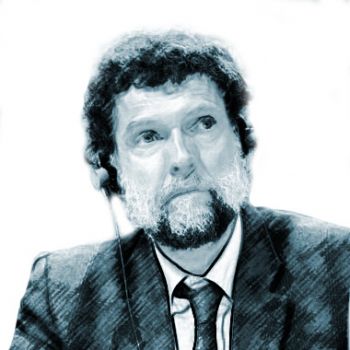
An acquittal and two binding European judgments failed to unlock Turkish activist Osman Kavala’s cell, so after nearly nine years, Europe’s top human rights judges on Tuesday handed Ankara a final, two-part order: Free him and erase the conviction.
The European Court of Human Rights (ECtHR) on Tuesday 25 August 2026 ordered Turkey to release imprisoned philanthropist Osman Kavala without delay and said his criminal conviction should be treated as null and void, delivering a sweeping judgment in a case that has strained Ankara’s relations with European institutions for years.
The court’s 17-judge Grand Chamber found that the criminal proceedings against Kavala were used predominantly to punish and silence him over activities connected to the 2013 Gezi Park protests and his work as a human rights defender. It also said his case reflected a wider systemic problem in Turkey involving the prosecution and detention of political opponents, human rights defenders and journalists as well as structural weaknesses in judicial independence.
The Strasbourg-based court found violations of Kavala’s rights to liberty, a fair trial, freedom of expression and freedom of assembly and association. It also found that Turkey had improperly restricted those rights for purposes not permitted under the European Convention on Human Rights and that Kavala’s life sentence without the possibility of parole violated the prohibition on inhuman or degrading punishment.
It concluded that the flaws in the proceedings were so serious that Kavala’s conviction amounted to a “flagrant denial of justice,” meaning the conviction could not provide a lawful basis for keeping him imprisoned. The court said his detention since its first ruling in his favor in December 2019 had therefore violated his right to liberty.
Kavala, 68, has been imprisoned since 2017. A Turkish court sentenced him in April 2022 to aggravated life imprisonment — effectively life without parole — after convicting him of attempting to overthrow the government by allegedly financing and organizing the Gezi Park protests.
Tuesday’s ruling also questioned whether the courts handling Kavala’s case were sufficiently independent and impartial. The ECtHR pointed to a disciplinary investigation opened against three judges shortly after they acquitted Kavala in 2020, repeated transfers and mergers of his cases, statements by senior government officials portraying him as guilty before his conviction and broader problems involving the appointment, transfer and discipline of judges.
The court stopped short of saying Turkey’s judiciary as a whole acts on government orders. But it said the structural shortcomings it identified could facilitate direct or indirect executive influence over judicial decisions, particularly in politically sensitive cases.
The Turkish government has repeatedly denied accusations of political interference in the judiciary and maintains that the country’s courts operate independently. President Recep Tayyip Erdoğan has also rejected previous European court rulings in Kavala’s case.
The court also awarded Kavala 70,000 euros ($82,000) in damages and 43,300 euros in legal costs.
Grand Chamber judgments are final and legally binding on Turkey as a member of the Council of Europe. Their implementation is supervised by the Council of Europe’s Committee of Ministers.
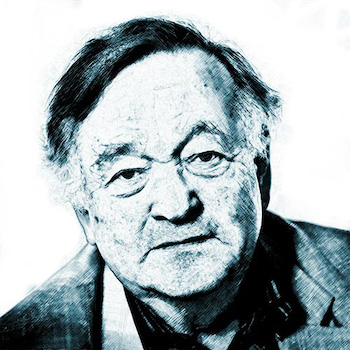
Today was the funeral of one my best friends and, more importantly, one of the most significant architects of the international human rights system as it developed in the last 50 years. Theo (Theodoor Cornelis) van Boven, was born in Voorburg on 26 mei 1934 and died peacefully in Maastricht on 9 mei 2026.
I have had the honor to work with him for many years [our lives intertwined over a long period of time and on different locations] and wrote about him several times. Most recently “Courageous Leaders and NGO Initiatives” in Ramcharan and others (ed), The Protection Roles of Human Rights NGOs, Essays in honour of Adrien-Claude Zoller, Brill Nijhoff, Leiden, 2023 (ISBN 978-90-04-51677-9), pp 614-636.
So, here a large part of the section on this great man: This section is about a man who was crucial in getting the United Nations and NGO partners to deal with human rights protection. Much has been written about his work and the enormous contribution Theo van Boven made to the UN human rights machinery as we now know it. .. Nowadays the United Nations has an elaborate machinery to deal with human rights violations. The system is far from perfect and still too often subject to political pressures and selectivity but there are now a great many thematic and country mandates, emergency sessions and there is an International Criminal Court against impunity. Wind back 40 years and none of this existed. The violations were there for all to see but not for the United Nations, which preferred to consider this part of the ‘internal affairs of sovereign states’. The man who would make it his life’s mission to change this, Theo van Boven, got in 1977 the position from where to do it: Director of Human Rights in the UN.
His teenage years were eaten up by the second world war. His memories of that period, his strict protestant background and his law studies in Leiden led him to enter an area that was not so obvious at the time: international human rights. He studied in the USA, wrote there a thesis on freedom of religion and soon afterwards, around 1960, he found himself as a young diplomat shaping the human rights policy of the Netherlands. A decade later the protest against the Vietnam war, the violations by the Greek colonels, the coup d’état in Chile and President Carter’s new policy on human rights pushed human rights suddenly higher on the political agenda. Theo had become an expert member of the UN Sub-commission on Human Rights and was one of the engineers of the first UN effort to investigate large-scale human rights violations, namely Chile. I myself met him when he was still a young professor lecturing on human rights in Amsterdam. Then – in the summer of 1977, the same month I started at the ICJ – he was appointed Director of the small human rights secretariat of the UN in Geneva. Here he started his work to bring dictators to accountability and to give the UN a capacity to deal with gross and systematic violations of human rights. Something that is now taken for granted but it would cost Theo his job.
Unlike his predecessors, Theo van Boven did not put all his faith in quiet diplomacy and he regularly talked about the need for the UN to address gross and systematic violations, about the mobilisation of shame and stated that the UN should care about victims. He also started to receive the victims – and the NGOs who represent them – in his office. This led to an incident that would be comic if it was not for the consequences. J. Matarollo was an Argentinean exile lobbying against the generals in his homeland who were killing left-wing opponents by the thousands. Theo agreed to hear him and told his secretary (inherited from his predecessor) to call Matarollo to give him an appointment in the early of hours of the next day. She faithfully called the Argentinean embassy assuming that he was a diplomat as these were the kind of people that normally met with the Director. The next day there was no Matarollo but an angry Note Verbale from Argentinean Ambassador Martinez accusing Theo of meeting with terrorists.
In the UN he did not conform to the image of the traditional diplomat, e.g. by pinning an anti-apartheid button on his suit, but even more so by publicly stating that NGO reports about dead bodies floating down a river in Guatemala were true, or by denouncing disappearances in Chile and Argentina. When in 1980 the government in the USA changed and Ronald Reagan and his team decided to play down violations by right-wing regimes, especially in Latin America, Theo did not flinch and openly criticised their support to these dictatorships. “Naming and shaming” by a UN official was unusual and not easily accepted by the diplomatic community. The Latin American regimes – led by Argentina and silently encouraged by the US – started a campaign to oust Van Boven as Director of Human Rights.
To complicate matters for van Boven, the new UN Secretary-General must have felt little sympathy for this particular Director, as J. Perez de Cuellar had earlier, in 1980, been appointed as Special Representative by the previous Secretary General to go to Uruguay and look into the human rights situation. His report was such a whitewash that it was heavily criticized in the Commission on Human Rights. How correct this reaction had been was shown when the famous pianist Estrella – whom de Cuellar claimed to have visited in the Libertad prison – came to Geneva and told the I.C.J and others that there had been no such visit.
In the meantime in 1980 Theo had put great energy – together with some key NGOs in creating a Working Group on Enforced Disappearances. As a mechanism focusing only on Argentina was politically not feasible, the new idea was to create a thematic mandate on the phenomenon of disappearances in the knowledge that Argentina was going to be the main target. At the decisive session the tension was enormous as the outcome of the vote was very uncertain. The Jordanian Chairman of that session had to deal with endless procedural issues, many of them proposed by Uruguay (egged on by Argentina which was only an observer). Finally, late at night the Chair felt that the resolution creating the mandate could be passed without a vote and moved to do so, but the Uruguayan Ambassador again started to put up his name plate as a sign that he wanted the floor. The Chairman quite unusually interrupting, looked directly at the Uruguayan Ambassador and said: “I URGE my brother from Uruguay NOT to do this..” The name plate slowly turned downwards again and the Chair immediately declared the resolution adopted. The NGOs and tens of Mothers and Grandmothers of the Plaza de Mayo in the public galleries started a spontaneous applause and quite a tear was shed. ..
In early 1982 the issue of Theo van Boven’s tenure as Director came to the fore. His contract had to be renewed which normally was a routine matter, but not this time. The issue came to an explosion when Theo’s opening speech to the Human Rights Commission was sent on a Friday evening to the UN Secretariat in NY for information and at the same time given to the UN Office of Information in Geneva for distribution at the time of delivery the next Monday morning. The UN Office of Information decided to make the statement available to the media that very Friday evening (with the usual proviso: “check against delivery”). The Representative of Guatemala in Geneva obtained a copy of the statement and vehemently objected to the statement. The SG’s office demanded that Theo should refrain from mentioning countries by name – which Theo refused not only out of principle but also because the press would notice the difference on Monday and assume that there had been pressure to remove the names.
As a family friend bringing the kids back from a ski outing, I happened to overhear Theo on the phone to New York agreeing to a ‘compromise’: he would mention at the beginning of his speech that certain passages were done in his ‘personal capacity’. A few days later Theo was suddenly informed that his contract would anyway not be prolonged. His announcement at a dramatic session of the Human Rights Commission grew quickly into an international diplomatic incident.
As I was on the verge of leaving the ICJ, I had some time on my hands. So I got the idea – warmly supported by Niall McDermot – to publish a book with a selection of Theo’s major speeches from the last five years. One of his Special assistants, Bertie Ramcharan, who had written a good part of them, was very helpful and we managed to get a book out within only 6 weeks. The first copy was flown in to Geneva by the publisher and presented to Theo at a public farewell which the ICJ had organised for him. NGOs, some UN staff and students showed up in such large numbers at the university hall that the fire brigade had to refuse access to late comers. Speech after speech – including by Saddrudin Aga Khan – cantered on Theo role in getting the UN machinery on human rights to deal with violations more concretely and on his support for human rights NGOs…
With Ian Guest and many others, I remain convinced that Theo’s dismissal from the UN was the result of pressure by Latin American dictatorships with support from the Reagan administration. As stated in People Matter, he was “hired and fired for the same reason: his deep commitment to human rights”.
After his dismissal Theo and his family returned to the Netherlands where many were very disappointed that there was no real interest in giving him an equivalent position in the foreign affairs department and he ‘ended up’ in the new University of Maastricht as professor of international law, where together with others such as Cees Flinterman he bent the research programme into his favourite direction: human rights. He continued his involvement in international activism in a variety of functions: with NGOs (e.g. European Human Rights Foundation, IMADR, International Alert), and with the UN (e,g. the Sub-commission on Human Rights, Special Rapporteur on Compensation 1990 -1993, Special Rapporteur on Torture 2001-2005, first Registrar of the UN Yugoslavia Tribunal). In 1998 he became the Head of the Dutch Delegation to the Rome Conference which created the International Criminal Court (ICC).
In 1985 he was called to Buenos Aires as a witness to testify against the nine military leaders (including Videla) for their human rights violations in the period 1976 en 1983. The UN had advised him not to go but he felt that he should do anything to end the impunity of these perpetrators. Theo’s testimony – he was called already on the 2nd day – was seen as crucial in establishing that the leaders of the Junta must have known about the massive violations. Theo took the same position with regard to the father of princess Maxima Zorreguieta (the wife of the king of the Netherlands). As Minister of Agriculture Jorge Zorreguieta must have known about the atrocities and should at least have taken distance instead of denying any knowledge. A position which Theo took in 2001 and was still heard defending in 2012.
In the light of Theo van Boven’s recurring clashes with Argentina it must have given him great moral satisfaction when on 26 November 2009 he received a degree honoris causa from the University of Buenos Aires as well as the highest decoration from the Government.
ICTJ stated: “Van Boven’s commitment to the pursuit of justice was relentless. He spoke up about impunity and accountability in contexts of repression such as the military dictatorships in Argentina and Chile, where he also championed the cause of the disappeared, even when political pressure limited others from doing so. Today, ICTJ honors his voice, his perspective, and his deep-rooted legacy. Inspired by his resolve, we will continue our commitment to uphold human dignity above all else in the pursuit of justice and lasting peace all over the world, however long it takes.“
In this episode of Democracy Tomorrow, Scott Leckie celebrates the life and legacy of Theo van Boven, a pioneering international human rights lawyer and former head of the UN Centre for Human Rights. Joined by Professor Cees Flinterman and Hans Thoolen, they reflect on van Boven’s courageous defence of victims, his role in advancing international human rights law, and his commitment to justice, accountability and human dignity. The discussion also explores the future of the human rights movement, the United Nations, global democracy and the importance of defending our shared humanity.
Although the preferred job location is Bangkok, Thailand (Hybrid), remote work is possible for candidates with the legal right to work in their country, provided the location aligns with the organization’s operational and budgetary considerations.
Start date: March 2025 – Closing date 16 Feb 2025
The International Commission of Jurists (ICJ) is a worldwide organization of judges and lawyers united in affirming international law and rule of law principles that advance human rights. Its strategic goals for 2021-2025 are: (1) to develop, defend, and strengthen international institutions, instruments, and standards on rule of law and human rights; (2) to improve domestic implementation of, and compliance with, international law and standards; (3) to bolster the effectiveness and independence of judges and lawyers; and (4) to improve access to justice for all and accountability. Headquartered in Geneva, Switzerland, ICJ has a presence in Africa, Latin America, Asia & the Pacific, Europe & Central Asia, and the Middle East.
To lead the implementation of the ICJ’s work on human rights in the digital space at the global and regional levels, we are seeking a full-time Legal Adviser. Key requirements for this role include expertise and working experience related to human rights in the digital space, excellent legal skills and sound political judgment, and proven ability to develop and carry out legal advocacy strategies.
KEY RESPONSIBILITIES
Reporting directly to the Senior Director, Legal and Policy Office, the Legal Adviser is expected to:
• Provide leadership and contribute to the design and implementation of ICJ work related to human rights in the digital space, including the work at the country, regional and global levels;
• Lead and implement work on a global project aimed at developing policy and legal action on protecting human rights in the digital civic space;
• Implement the programme work on human rights in digital space in a way that advances the strategic directions of the ICJ.
REQUIREMENTS
University degree in law with advanced studies in international human rights law.
Proven experience working in the area of international human rights law.
Expertise and working experience related to human rights in the digital space, including in the areas of freedom of expression, right to privacy, non-discrimination and equality, sexual and gender-based violence, and human rights and businesses enterprises.
Excellent legal skills and sound political judgment and proven ability to develop and carry out legal advocacy strategies.
Advanced expertise in general international human rights law
Practical legal and advocacy experience on the implementation of international human rights standards; litigation experience desirable.
English native speaker level; knowledge of Spanish, French, and/or Arabic an asset.
Demonstrated analytic and writing ability, including substantial report-writing experience;
Excellent written and oral communication skills;
Excellent interpersonal skills and ability to work as part of a multi-cultural team;
Demonstrated commitment to human rights and the rule of law;
Availability to start in March 2025 is required.
How to apply
Interested applicants should provide the materials outlined below to recruitment@icj.org by 16 February 2025, midnight Central European Time (CET). Early applications are encouraged as they will be reviewed on a rolling basis, the ICJ reserves the right to close this vacancy earlier if a sufficient number of quality applications has been received.
The first World Congress on Enforced Disappearances will convene from 15 – 16 January in Geneva, marking a pivotal step in the global fight to prevent and eradicate this egregious human rights violation.
This event will bring together governments, victims, civil society organisations, and international bodies to foster dialogue and chart a collective path forward to end enforced disappearances worldwide. Over the course of the two-day event, panel discussions will be held on topics such as international responsibility for the forcibly disappeared, strengthening search procedures, and protecting victims, rights defenders, lawyers and journalists.
Details of the programme are available online. The event will take place at the Geneva International Conference Centre (CICG). Onsite registration is open at the venue.
The Working Group on Enforced or Involuntary Disappearances comprises five independent experts from all regions of the world. The Chair-Rapporteur is Ms. Gabriella Citroni (Italy); and the Vice-Chair is Ms. Grażyna Baranowska (Poland); other members are Aua Balde (Guinea-Bissau); Ms. Ana Lorena Delgadillo Perez (Mexico); and Mr. Mohammed Al-Obaidi (Iraq).
On 28 November, 2024 the International Commission of Jurists announced Carlos Ayala as its new President
Ayala brings decades of experience defending the rule of law, advocating for constitutional justice, and championing the rights of marginalized groups
The International Commission of Jurists (ICJ) proudly welcomes Carlos Ayala as its new President, taking over from Robert Goldman after seven years in the role. A distinguished legal scholar and human rights advocate, Ayala brings decades of experience defending the rule of law, advocating for constitutional justice, and championing the rights of marginalized groups.
Ayala, born in Caracas in 1957, has dedicated his career to advancing human rights. From his early days as a law student at Universidad Católica Andrés Bello, Ayala developed a profound sense of defending rights and social justice, which he carried through his graduate legal studies at Georgetown University and later in his legal practice. He is tenured professor and chair of Constitutional Law and a member of the board of the Ibero-American Institute of Constitutional Law. His commitment has spanned defending indigenous land rights in Venezuela to addressing transitional justice issues across Latin America. Notably, Ayala was instrumental in the landmark decision against blanket amnesty laws for human rights violators in Peru, a victory that set critical international legal precedents.
He has been President of the Inter-American Commission on Human Rights, as well as Rapporteur on the Rights of Indigenous Peoples of the Americas, and President of the Andean Commission of Jurists, giving him a vision of the human rights landscape that takes in the whole hemisphere of Americas from Alaska to Tierra Del Fuego.
Ayala has worked extensively on issues relating to the independence of the judiciary and he became involved with the OHCHR in monitoring the appointment of judges of several high courts. He states that one of the cases that impacted him most has been that of Venezuelan Judge Maria Lourdes Afiuni, who was arrested and detained after making a ruling that implemented a decision of the UN Working Group on Arbitrary Detentions which was not in the political interest of the government. She was immediately arrested and her trial lasted 10 years, was a flawed process throughout and ended in a flawed decision to convict.
As President, Ayala envisions the ICJ working as a unified community with other partners and allies committed to reinforcing the rule of law and international justice. Under his guidance, he will support the ICJ to advance human rights standards globally, counter setbacks, and provide critical support to governments, civil society, and multilateral institutions.
“We are facing new threats to reverse the advancement of human rights that we have achieved in the past 70 years – we need to defend against unilateralism and authoritarianism. The ICJ has been actively contributing to stop any setback in international standards, and we will continue this essential work.”
The Human Rights Council should urgently address the deterioration of the human rights situation in Tunisia, four human rights organizations said on 27 June 2023 as the 53rd Council’s session is underway.
In a letter sent to UN Member States’ Representatives on 5 June 2023, the four undersigned organizations warned against the rapidly worsening situation in Tunisia, and urged States to seize the opportunity of the ongoing Human Rights Council’s session to address it. The organizations called on the Council and Member States to press the Tunisian authorities to comply with their obligations under international human rights law particularly those guaranteeing the rights to fair trial, freedom of expression, freedom of peaceful assembly and association, and non-discrimination.
The Human Rights Council should urge Tunisia to end the ongoing crackdown on peaceful dissent and freedom of expression, and drop charges against, and release, all individuals being detained and prosecuted solely on the basis of their peaceful political activities and the exercise of their human rights. The Council should also call on Tunisia to conduct prompt, thorough, independent, impartial and transparent and investigation into a wave of anti-Black violence – including assaults and summary evictions – against Black African foreign nationals, including migrants, asylum seekers and refugees, and bring to justice anyone reasonably suspected to be responsible, and provide victims with access to justice and effective remedies.
Over the past two years, Tunisia has witnessed a significant rollback on human rights. Judicial independence guarantees have been dismantled and individual judges and prosecutors have been subjected to arbitrary dismissal, politicized criminal prosecutions and increased interference by the executive. Lawyers are being prosecuted for the discharge of their professional duties and exercise of their right to freedom of expression.
‘The Tunisian authorities’ interference in the judiciary and attacks on lawyers have greatly undermined the right to fair trial and public trust in the integrity of the justice system. The authorities must ensure that the courts are not weaponized to crush dissent and free expression,’ said International Commission of Jurists’ MENA director Said Benarbia.
Under the guise of ‘fighting offences related to information and communication systems’, punishable by up to a 10 years’ imprisonment and a hefty fine according to Decree Law 54, at least 13 individuals, including journalists, political opponents, lawyers, human rights defenders and activists, have been subject to police or judicial investigations and are facing possible prosecutions.
‘With Tunisia facing political uncertainty and economic crisis, it’s more important than ever that Tunisians be free to debate their country’s future without fear of reprisal. The authorities should strive to allow the effective enjoyment of the right to freedom of expression of everyone; instead, they are attacking it,’ said Rawya Rageh, Amnesty International’s acting deputy director for the Middle East and North Africa.
Last week, the UN High Commissioner for Human Rights called on the Tunisian authorities to stop restricting media freedoms and criminalizing independent journalism. In a statement published on 23 June, Volker Türk expressed deep concern at the increasing restrictions on the right to freedom of expression and press freedom in Tunisia, noting that vague legislation is being used to criminalize independent journalism and stifle criticism of the authorities. ‘It is troubling to see Tunisia, a country that once held so much hope, regressing and losing the human rights gains of the last decade,’ said the High Commissioner.
Since February 2023, a wave of arrests targeted political opponents and perceived critics of Tunisia’s President, Kais Saied. In the absence of credible evidence of any offences, judges are investigating at least 48 people, such as dissidents, opposition figures, and lawyers, for allegedly conspiring against the State or threatening State security, among other charges. At least 17 of them are being investigated under Tunisia’s 2015 counter-terrorism law.
‘By jailing political leaders and banning opposition meetings, the authorities are dangerously trampling on the fundamental rights that underpin a vibrant democracy. The democratic backsliding and the human rights violations, which are unprecedented since the 2011 revolution, require urgent attention from the Human Rights Council and Member States,’ said Salsabil Chellali, Tunisia director at Human Rights Watch.
The International Court of Justice (ICJ) on 22 July, 2022, rejected Myanmar’s preliminary objections to the case brought by Gambia under the international Genocide Convention. The case concerns Myanmar’s alleged genocide against the ethnic Rohingya population in Rakhine State, with a focus on military operations launched in October 2016 and August 2017.
Gambia filed the case before the ICJ in November 2019 alleging that the Myanmar military committed the genocidal acts of “killing, causing serious bodily and mental harm, inflicting conditions that are calculated to bring about physical destruction, imposing measures to prevent births, and forcible transfers … intended to destroy the Rohingya group in whole or in part.”
“The ICJ decision opens the door toward an overdue reckoning with the Myanmar military’s murderous campaign against the Rohingya population,” said Elaine Pearson, acting Asia director at Human Rights Watch. “By holding the military to account for its atrocities against the Rohingya, the World Court could provide the impetus for greater international action toward justice for all victims of the Myanmar security forces’ crimes.”
In February 2022, the ICJ heard Myanmar’s four objections challenging the court’s jurisdiction and Gambia’s legal standing to file the case, as well as Gambia’s response.
In response to Myanmar’s argument that Gambia has no standing to bring the case due to its lack of ties to Myanmar or the Rohingya, the court concluded, “All the States parties to the Genocide Convention thus have a common interest to ensure the prevention, suppression and punishment of genocide, by committing themselves to fulfilling the obligations contained in the Convention.”
By rejecting the preliminary objections, the ICJ is allowing the case to proceed on the merits to examine Gambia’s genocide allegations against Myanmar. Myanmar will now have to submit its response to Gambia’s main arguments filed in October 2020 detailing its case.
The ICJ case is not a criminal case against individual suspects, but a legal action brought by Gambia against Myanmar alleging that Myanmar bears responsibility for genocide as a state.
In December 2019, the court held hearings on Gambia’s request for provisional measures to protect the Rohingya remaining in Myanmar from genocide, which it unanimously adopted in January 2020. The provisional measures require Myanmar to prevent all genocidal acts against the Rohingya, to ensure that security forces do not commit acts of genocide, and to take steps to preserve evidence related to the case. The court also ordered Myanmar to report on its compliance with the provisional measures every six months.
Myanmar is legally bound to comply with the order. However, Human Rights Watch and other groups have continued to document grave abuses against the 600,000 Rohingya remaining in Myanmar, contravening the provisional measures.
The court’s decision on Myanmar’s preliminary objections should encourage the United Kingdom, Netherlands, Canada, and other concerned governments to support Gambia’s case through formal interventions to bolster the legal analysis on specific aspects of the Genocide Convention as it relates to the Rohingya, Human Rights Watch said.
Under article 41(2) of the ICJ Statute, the court’s order for provisional measures is automatically sent to the UN Security Council. As the fifth anniversary of the military’s atrocities against the Rohingya approaches, Security Council members should take steps to address the failure to secure justice and security for the Rohingya. Council members should work to adopt a resolution that gives the International Criminal Court (ICC) a mandate over the situation in Myanmar and severs the junta’s supply of arms and revenue, even if the resolution would be vetoed by Russia or China.
As the Myanmar armed forces continue to carry out atrocities against civilians and ethnic minorities, the ICJ remains one of the few available paths for holding the military to account. Ethnic groups and human rights defenders have aligned in Myanmar to push for the establishment of democratic rule, efforts that are amplified by the pursuit of justice at the ICJ.
“Concerned governments seeking to be leaders for accountability in Myanmar should formally intervene in the Genocide Convention case,” Pearson said. “The case provides an important opportunity to scrutinize the Myanmar military’s abusive policies and practices that have preserved its power over decades.”
Enforced disappearance refers to the arrest, detention or abduction of persons by agents of the State, or those acting with State authorization or support, whose whereabouts are unknown.
Once largely the product of military dictatorships, it has become a global problem, according to the UN, with hundreds of thousands of people “disappeared” in more than 80 countries. Impunity remains widespread.
While strictly prohibited under international human rights law, the SG, Mr. Guterres said enforced disappearance continues to be used across the world as a method of repression, terror, and stifling dissent.
“Paradoxically, it is sometimes used under the pretext of countering crime or terrorism. Lawyers, witnesses, political opposition, and human rights defenders are particularly at risk,” he added.
Having been removed from the protection of the law, victims, who can include children, are deprived of all their rights and are at the mercy of their captors.
They are frequently tortured and know that it is unlikely anyone will come to their aid. Some are even killed.
“Enforced disappearance deprives families and communities of the right to know the truth about their loved ones, of accountability, justice and reparation,” the Secretary-General said.
“The COVID-19 pandemic has added to the agony and anguish of enforced disappearance, by limiting capacities to search for missing persons and investigate alleged enforced disappearance.”
It was established by the UN General Assembly, which adopted a resolution in December 2010 expressing deep concern about the rise in incidents in various regions, and increasing reports of harassment, ill-treatment and intimidation of witnesses of disappearances, or relatives of people who were disappeared.
“The Convention for the Protection of all Persons against Enforced Disappearances is indispensable in helping to tackle this cowardly practice. But it requires the will and commitment of those with the power to do so,” the Secretary-General said. “States must fulfil their obligations to prevent enforced disappearance, to search for the victims, and to investigate, prosecute and punish the perpetrators.”
Mr. Guterres reiterated his call for countries to ratify the Convention, and to work with the UN Committee that monitors its implementation, as well as the Working Group on Enforced Disappearances, which assists families in determining the fate of their loved ones.
On this day Amnesty International, Human Rights Watch and the International Commission of Jurists (ICJ) issued a statement that the government of Nepal should promptly enforce Supreme Court rulings and permit the regular courts to try cases of enforced disappearance and other grave international crimes. On the International Day of the Victims of Enforced Disappearances, August 30, 2021, thousands of Nepali families are no closer to knowing the truth of what happened to their missing loved ones than they were when the country’s armed conflict ended 15 years ago.
Nepal’s Supreme Court has repeatedly ordered the government to investigate gross violations of human rights and international humanitarian law during the conflict from 1996 to 2006, and to conduct a meaningful, effective transitional justice process to establish the truth and provide justice for thousands of cases of serious abuses.
“The Nepali government stands in blatant violation of express orders of the Supreme Court by failing to conduct a credible, timely transitional justice process,” said Mandira Sharma, senior legal adviser for South Asia at the ICJ.
José Zalaquett was a prominent lawyer and academic, who fought for human rights, truth and justice worldwide.
Amnesty International and others announced on 17 February 2020 the passing of José Zalaquett (Pepe), one of the leading lights of the human rights movement in the last quarter of the 20th century.
He was born on 10 March,1942 and died on 15 February 2020. He initiated his human rights work as a law student campaigning for Salvador Allende in Chile. Upon Allende’s election as president in 1970, José Zalaquett served as cabinet minister, which he left for a post at the university. In 1973, General Augusto Pinochet launched a violent military coup which forcibly ousted the elected government of Allende and imposed a military dictatorship from 1973 to 1990. In that period, thousands of people were arrested, imprisoned, tortured, and killed. In the aftermath of the coup, José Zalaquett founded the Committee for Peace to help the victims of the military regime. Under Zalaquett’s leadership, the committee, later known as the Vicaría de la Solidaridad, was the foremost human rights organization operating in Chile throughout the dictatorship. The Vicaría defended hundreds of detainees and helped family members of the disappeared to demand legally the whereabouts of their loved ones. In retaliation for his work, José Zalaquett was imprisoned in 1975 and 1976, and sent into exile in 1976.
He left Chile with two military officers walking him all the way to his plane, where they sat him down and buckled his seatbelt. He moved first to France and then to the USA, where he joined Amnesty International to demand with many other Chilean exiles an end to Pinochet’s dictatorship and raise awareness internationally about the situation in his home country. Pepé, as he was known, became Chair of the International Executive Committee of Amnesty International, and later its Deputy Secretary General.
José Zalaquett was a prominent human rights lawyer who leaves behind an enormous legacy. His time with Amnesty International, as a Chair of the international Board and later as a Deputy Secretary General, was a gift for us. His wisdom and passion to fight for the rights of people have been an inspiration for Amnesty’s movement
Ten years later, he returned to Chile. In 1990 José Zalaquett was appointed to the National Commission on Truth and Reconciliation, and with his nine colleagues wrote a report on the fate of the victims of the Pinochet regime. As such, he became an internationally respected authority on truth and reconciliation, advising similar human rights commissions on three continents. From 2001-2005 José served as a Commissioner at Inter-American Commission on Human Rights, including a term as its Chairman. He was also member of the International Commission of Jurists and of the Presidential Advisory Commission on Transparency and Public Probity, and a board member of the Chilean chapter of Transparency International. José Zalaquett conducted human rights missions to numerous countries in Africa, the Americas, the Middle East and Southeast Asia, working on transitional justice issues. He wrote extensively about human rights in books, specialized journals and newspapers.
He was a prominent professor at different universities. José Zalaquett received honorary doctorates from the University of Notre Dame and the City University of New York. His awards include a MacArthur Foundation award (1990 to 1995), the UNESCO Prize for the Teaching of Human Rights (1994), the B’nai B’rith Human Rights Award, and the National Prize for Humanities and Social Sciences (Chile, 2003).
“José Zalaquett was a prominent human rights lawyer who leaves behind an enormous legacy. His time with Amnesty International, as a Chair of the international Board and later as a Deputy Secretary General, was a gift for us. His wisdom and passion to fight for the rights of people have been an inspiration for Amnesty’s movement,” said Sarah Beamish, Amnesty International’s Chair of the International Board.