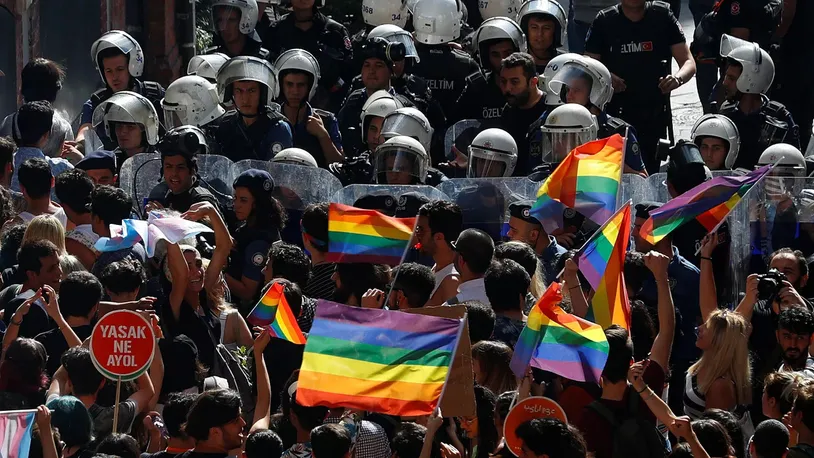
More than 450 civil society organizations from 65 countries have called on Turkey to end what they described as the criminalization of the LGBTI+ movement and release people detained solely for human rights work.
In a joint statement on 22 September 2026 titled “Stop the Criminalisation of the LGBTI+ Movement in Turkey,” the groups said human rights advocacy, publishing, organizing, membership, donations, fundraising and lawful domestic or international funding should not be treated as evidence of criminal activity and called for an end to raids and online restrictions targeting LGBTI+ organizations and human rights defenders.
The statement, published by Turkey-based Women for Women’s Human Rights (WWHR), was signed by organizations including the Association for Women’s Rights in Development (AWID), CIVICUS, the International Planned Parenthood Federation (IPPF), the International Women’s Development Agency (IWDA), PEN Norway and the World Organisation Against Torture (OMCT). CIVICUS is a global alliance of civil society organizations and activists.
The groups objected to what they described as the use of organized-crime provisions and broadly defined concepts such as “obscenity,” “morality” and “family” to criminalize LGBTI+ identities, visibility and advocacy.
The appeal follows a nationwide operation that began September 13 with police raids on LGBTI+ organizations, activists’ homes, gay bars and nightclubs, a day after Turkish authorities restricted access to social media accounts belonging to more than a dozen groups.
Organizations targeted in the investigations include the Kaos Gay and Lesbian Cultural Research and Solidarity Association (Kaos GL), the Families and Friends of LGBTI+ People Association (LİSTAG) and the Social Policy, Gender Identity and Sexual Orientation Studies Association (SPoD), as well as several other LGBTI+ and HIV-related groups.
According to Turkish media, 116 people had been detained in the raids and 82 were jailed pending trial. The cases include LGBTI+ activists and members of rights organizations as well as people accused of prostitution, drug offenses and other crimes, meaning not everyone detained or jailed in the operation was accused of activity connected to LGBTI+ advocacy.
An acquittal and two binding European judgments failed to unlock Turkish activist Osman Kavala’s cell, so after nearly nine years, Europe’s top human rights judges on Tuesday handed Ankara a final, two-part order: Free him and erase the conviction.
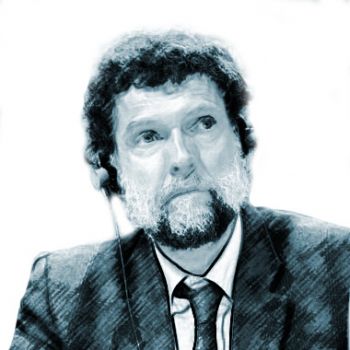
The European Court of Human Rights (ECtHR) on Tuesday 25 August 2026 ordered Turkey to release imprisoned philanthropist Osman Kavala without delay and said his criminal conviction should be treated as null and void, delivering a sweeping judgment in a case that has strained Ankara’s relations with European institutions for years.
The court’s 17-judge Grand Chamber found that the criminal proceedings against Kavala were used predominantly to punish and silence him over activities connected to the 2013 Gezi Park protests and his work as a human rights defender. It also said his case reflected a wider systemic problem in Turkey involving the prosecution and detention of political opponents, human rights defenders and journalists as well as structural weaknesses in judicial independence.
The Strasbourg-based court found violations of Kavala’s rights to liberty, a fair trial, freedom of expression and freedom of assembly and association. It also found that Turkey had improperly restricted those rights for purposes not permitted under the European Convention on Human Rights and that Kavala’s life sentence without the possibility of parole violated the prohibition on inhuman or degrading punishment.
It concluded that the flaws in the proceedings were so serious that Kavala’s conviction amounted to a “flagrant denial of justice,” meaning the conviction could not provide a lawful basis for keeping him imprisoned. The court said his detention since its first ruling in his favor in December 2019 had therefore violated his right to liberty.
Kavala, 68, has been imprisoned since 2017. A Turkish court sentenced him in April 2022 to aggravated life imprisonment — effectively life without parole — after convicting him of attempting to overthrow the government by allegedly financing and organizing the Gezi Park protests.
Tuesday’s ruling also questioned whether the courts handling Kavala’s case were sufficiently independent and impartial. The ECtHR pointed to a disciplinary investigation opened against three judges shortly after they acquitted Kavala in 2020, repeated transfers and mergers of his cases, statements by senior government officials portraying him as guilty before his conviction and broader problems involving the appointment, transfer and discipline of judges.
The court stopped short of saying Turkey’s judiciary as a whole acts on government orders. But it said the structural shortcomings it identified could facilitate direct or indirect executive influence over judicial decisions, particularly in politically sensitive cases.
The Turkish government has repeatedly denied accusations of political interference in the judiciary and maintains that the country’s courts operate independently. President Recep Tayyip Erdoğan has also rejected previous European court rulings in Kavala’s case.
The court also awarded Kavala 70,000 euros ($82,000) in damages and 43,300 euros in legal costs.
Grand Chamber judgments are final and legally binding on Turkey as a member of the Council of Europe. Their implementation is supervised by the Council of Europe’s Committee of Ministers.
On 29 June 2026, Amnesty published a roundup of what can be achieved when we stand together in solidarity. Despite the increasingly fractious state of the world, governments and civil society have come together to pass important laws and resolutions to tackle human rights harms, following protests and petitions from activists and campaigners.
Here a few examples but the list is worth reading in total:
In January, human rights defender Sean Binder and 23 others connected to a Search and Rescue NGO were acquitted in Greece after years on trial. Amnesty International has been campaigning in support of Sean’s case since 2018.
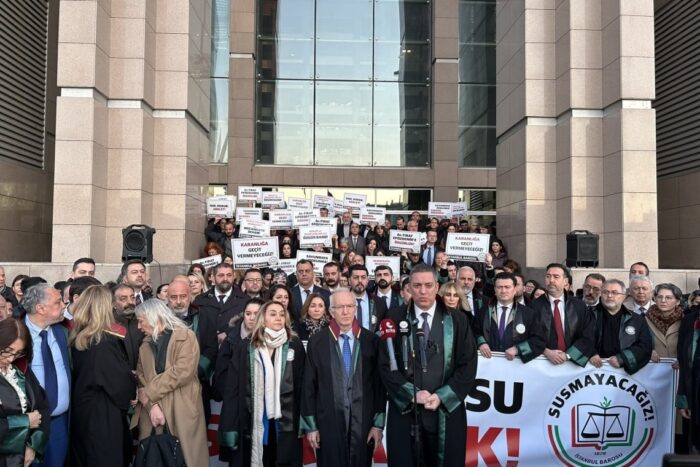
Eleven members of the Istanbul Bar Association’s executive committee were acquitted on 9 January, after facing charges for “spreading terrorist propaganda” and “publicly disseminating misleading information”. The 11 had been on trial over a statement issued by the Bar Association on 21 December 2024 about the killing of two journalists in northern Syria and the arrest of journalists and lawyers at a related peaceful protest in Istanbul the day before.
Human rights defenders who had been arbitrarily detained in Venezuela were released between January and May 2026. They included Javier Tarazona, Rocío San Miguel, Kennedy Tejeda, Carlos Julio Rojas and Eduardo Torres, Darío Estrada, Rosa Chirinos, and Yevhenii Trush.
Eight years after the murder of human rights defender Marielle Franco and her driver Anderson Gomes in Rio de Janeiro, and the attempted murder of Fernanda Chaves, a press officer working for Marielle, those responsible for orchestrating these crimes have finally been convicted. The conviction is a major step forward in the fight against political violence and impunity in Brazil. It is also a testament to the persistence of Marielle’s family, social movements and civil society organizations, such as Amnesty International, in demanding truth and justice over the years. Amnesty International Brazil is continuing to call for broader measures to prevent political violence and ensure effective protection for human rights defenders, especially Black leaders, women and those who challenge entrenched systems of inequality and discrimination.
Adamu Oseni (aka Hussaini Oseni) was released on 18 February 2026 after years of campaigning by Amnesty International Nigeria. Oseni had been sentenced to life imprisonment by the Ondo State High Court, for possessing a phone linked to an armed robbery, despite evidence he was not involved in the crime. After Amnesty International Nigeria submitted a pardon request on his behalf in 2024, his sentence was reduced to 20 years before he was finally released.
Million Beyene, a journalist and managing editor at Addis Standard, was abducted from the newsroom in on 15 April, by three men wearing plain clothes. It is believed he was targeted because of his work as a journalist. Amnesty International launched an Urgent Action on 27 April and he was released to his family on 28 April. Upon his release, he said:”I am currently receiving medical treatment and doing my best to recover. The experience has been difficult, and I am still coping with its impact, but I remain strong. I am deeply grateful for all your support and efforts on my behalf. It truly means a lot to me.”
A Norwegian court rejected Greece’s request to extradite Tommy Olsen, founder of the NGO Aegean Boat Report, who is wanted on criminal charges connected to his work documenting human rights violations against refugees and migrants at Europe’s borders. Following his initial arrest in Norway, Amnesty launched an Urgent Action calling on Norway to reject his extradition and stating that the charges against him were not supported by evidence and were an abuse of anti-smuggling legislation. Olsen still faces criminal proceedings against him in Greece and is subject to a European arrest warrant. Amnesty International will continue to campaign against the criminalization of solidarity with refugees and migrants.
On 15 October 2025, Fariba Nawa wrote about Mahshid Nazemi, Iranian human rights defender.
Mahshid Nazemi, an Iranian human rights activist, left her home one day in the fall of 2022 to walk to the corner store to buy yogurt for dinner. The sun had set in the valley in Isparta, a city in southwestern Turkey, and the air was crisp. Nazemi pulled the hat of her coat over her head. The streets were empty. She was tired and hungry. Suddenly, she saw two cars turn on their lights. A dated, navy-colored sedan with tinted windows drove behind her slowly as she walked. Nazemi became suspicious and stopped. The car braked and a pudgy, bearded man with a khaki shirt exited, cursing at her, calling her a prostitute. “Shut your mouth or we’ll send you to Iran in a suitcase,” Nazemi recounted the man saying. “Your sister is on death row. You want to go to Iran in a suitcase?”
A year later, she stood at the exact spot in Isparta, known for its roses and lavenders, as she retold her ordeal.
Nazemi’s case underscores a broader pattern of Iranian activists abroad facing intimidation and pressure from Tehran, despite the regime’s public denials of involvement.
For Nazemi, she says her plight began long ago as a woman in Iran, where women don’t have equal rights, and the situation has been likened to gender apartheid. Women can’t sing in public, their supreme leader has said riding a bike is shameful — though some women defy the taboo and ride bikes — their testimony is considered half of a man’s in court and their right to inheritance is less than men. Nazemi has survived a lot — imprisonment, sexual harassment, death threats and a deportation camp.
The night she was followed and harassed in the street would be a prelude to a series of dubious events terrorizing her life as a dissident in exile.
At that time, Nazemi was in Turkey, which has become an opposition haven for many Iranians. She was speaking out about political prisoners and crackdowns on protesters, while also helping dissidents in Turkey get legal aid and financial support. She’s been a dogged activist on behalf of women in her native Iran. Nazemi wasn’t doing that work alone. Her oldest sister Pouran Nazemi was at the forefront of the movement in Tehran. The renowned human rights defender has been in and out of Iranian prisons throughout her life. Nazemi said it was Pouran’s sacrifices that encouraged her to become an activist, too.
A selfie of Pouran (left) and Mahshid Nazemi nine years ago in Iran. The sisters haven’t seen each other in-person for a decade.Courtesy of Mahshid Nazemi
The sisters participated in previous uprisings in Iran, demanding democratic rights for women and minorities. They were both arrested in 2016, but Mahshid Nazemi was released. Her family told her to flee, so she went to neighboring Turkey and applied for asylum to a third country. When Pouran was also released from jail, she remained in Iran. But the sisters worked as a team online across the border. They talked to the opposition media, like Voice of America Farsi, making a case for regime change and a revolution.
Instead, the hardline clerical government arrested 22,000 protesters, including Pouran once again in 2022. The government also killed about 550 people inside Iran, calling them traitors and agitators. Then the regime came for those in the diaspora.
“Iran continues to target women human rights defenders abroad, and among the typical and easy-to-use methods are digital threats, such as phishing and hacking attempts, smear and defamation campaigns, as well as threats against family members in Iran,” said Michael Michaelsen, who studies Iran and transnational repression at the Citizen Lab at the University of Toronto.
Nazemi has been the victim of all these tactics but she said the regime went a step further in sending their thugs to threaten her in person that evening in 2022. She reported the incident to the Turkish police, but they didn’t believe her until they found CCTV footage of the incident. A few days later, a Turkish immigration agent called and asked her to come to their office. She thought she might be getting asylum to a third country, somewhere safer than Turkey. But instead, the agent accused her of making a fake ID card, which Nazemi denied. It’s a scene she remembers vividly.
“I didn’t make a fake card. I’m not going to admit to something I didn’t do. If you want to deport me, do so,” Nazemi told the agent. Nazemi was detained and moved into a deportation camp. “The Islamic Republic must have informants in Turkish immigration offices. Otherwise, how would I have ended up in a deportation camp, right after reporting what happened about that night,” she said.
In the camp, Nazemi said the guards beat her, pulling out half of her hair. Another Iranian migrant, who was also detained, accused her of being transgender and threw soup in her face. Nazemi said she had to disrobe in front of the other detainees to prove she was a biological woman to prevent more abuse. She said the camp almost broke her. She had medication with her and one day she took a lot of pills at once. “I didn’t take them to die, actually, but to prove something, how badly they treated us that it got me to this point,” Nazemi said. Nazemi was hospitalized outside the camp, doctors pumped her stomach and she recovered. Police released her and she returned to Isparta and appealed the deportation. Turkey denied the appeal again, but by this time Nazemi’s story was out in the Western press.
The World shared her story, along with press coverage she received in the French newspaper Le Monde — that attention helped her get a visa to France after eight years of being stuck in the Turkish asylum system. She resettled in a French village in December 2023, and continued her activism — Nazemi has expanded her cause to advocate for Afghan migrants as well.
She still gets death threats on social media. Many of the senders say they are the “soldiers of the Islamic Republic.” The direct messages in her inbox on Instagram threaten her with execution, drowning, even rape. Nazemi is under French police protection and reports all the threats.
On April 22, 2026 United Nations special rapporteurs raised serious concerns about Turkey’s use of counterterrorism laws to judicially harass and criminalize human rights defenders and lawyers, including what they described as the misuse of the terrorism financing law, the Stockholm Center for Freedom reported.
In a letter sent to the Turkish government on February 23, 2026, but published only recently, the rapporteurs said authorities were pursuing charges including membership in a terrorist organization and terrorism financing against rights defenders and lawyers, singling out the Human Rights Association (İHD) as a particular target.
The rapporteurs pointed to the case of İHD member Hatice Onaran, who was convicted in 2024 of “violating the law on financing terrorism” after sending small amounts of money to poor and sick prisoners. They also cited the cases of four other members —Osman Süzen, Suna Bilgin, Tuğba Kahraman and Mehmet Acettin — who were charged with membership in a terrorist organization. Süzen was subsequently acquitted at a January 2026 hearing.
A fifth İHD member, İsmail Boyraz, was investigated on accusations of participating in an unlawful assembly after taking part in a teachers’ union protest. The rapporteurs also cited the case of lawyer Sabri Güngen, who was allegedly assaulted by police while meeting with a client.
The rapporteurs expressed concern over what they described as Turkey’s “apparent misuse” of terrorism financing laws in Onaran’s case, noting that providing small sums of money to support the basic needs of ill and financially disadvantaged prisoners, in line with prison regulations and under prison administration supervision does not constitute terrorism financing under international law. Onaran, who is undergoing cancer treatment, was released in February 2025 after his sentence was suspended for six months on health grounds.
They also warned that physical assault and intimidation reportedly faced by lawyers Bilgin, Süzen and Güngen while carrying out their professional duties may have been acts of retaliation for their human rights work.
The rapporteurs raised the same concern in a following statement on March 31, which warned that Turkey’s counterterrorism legislation is being used to criminalize legitimate rights advocacy and restrict fundamental freedoms.
The letter was signed by Mary Lawlor, the UN special rapporteur on human rights defenders; Gina Romero, the special rapporteur on freedom of peaceful assembly and of association; Tlaleng Mofokeng, the special rapporteur on physical and mental health; Margaret Satterthwaite, the special rapporteur on the independence of judges and lawyers; and Ben Saul, the special rapporteur on protection of rights and freedoms while countering terrorism.
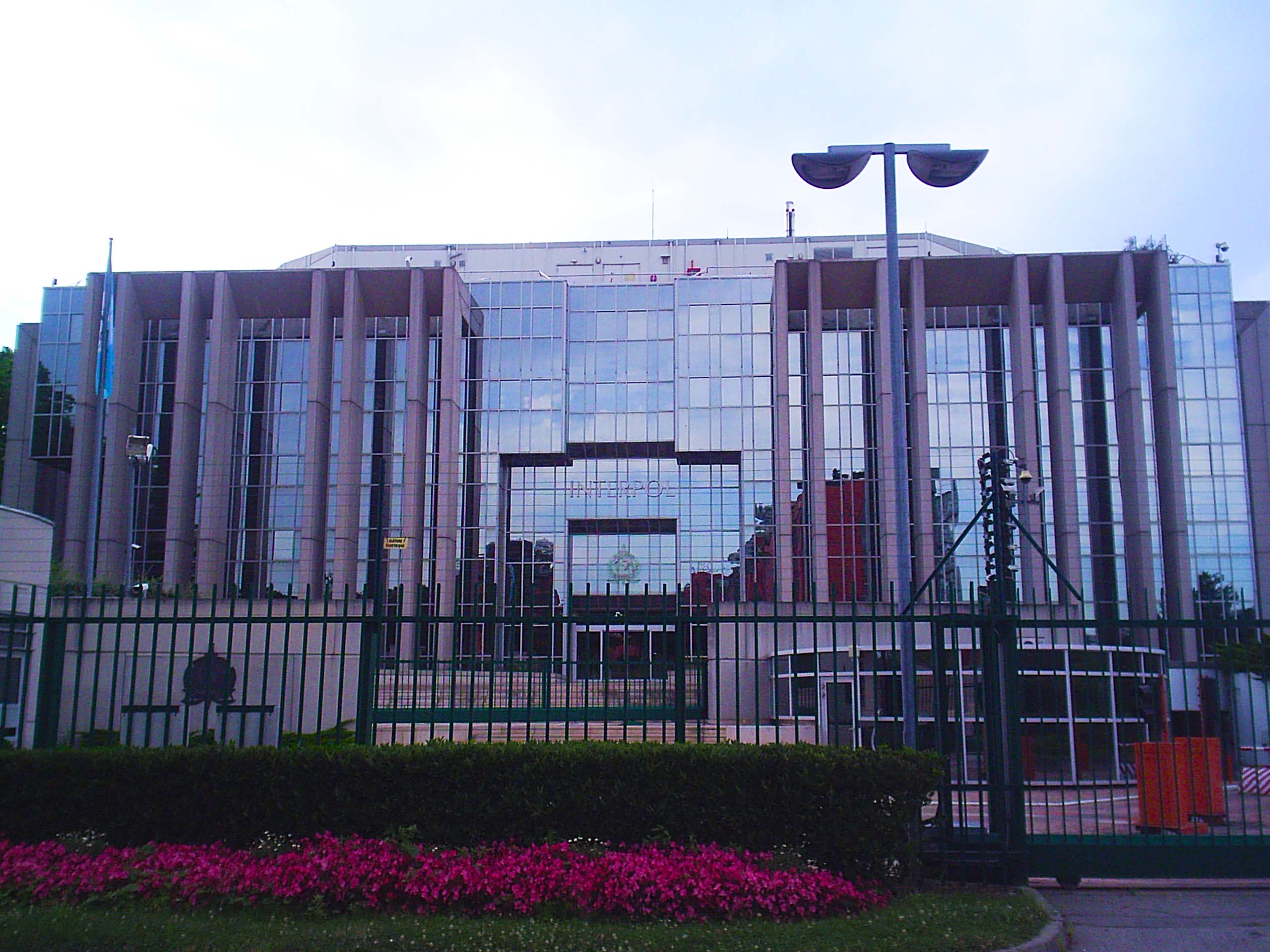
Two media outlets reported on states’ abuses of Interpol red notices to target political dissidents and human rights defenders on Monday. Amnesty International urged Interpol to address this “grave institutional failure” and improve its transparency.
Disclose, a French investigative media outlet, reported that Interpol has disclosed to the public less than 10 percent of the 86,000 active red notices. As of September 2024, Russia (4,817), Peru (4,457), and Tajikistan (3,493) are the countries with the most active red notices. The report also revealed that Interpol’s Commission for the Control of Files (CCF) removed at least 322 notices in 2024 alone after deeming them unjustified. In March 2024 an HRW report also highlights cases of governments misusing Interpol, see https://humanrightsdefenders.blog/2024/03/19/transnational-repression-human-rights-watch-and-other-reports/
At the same time, the BBC revealed that Interpol quietly dropped some initial measures that prevented Russia from abusing the red notices in 2025. The BBC also reported the phenomenon of countries using Interpol’s messaging systems to trace people abroad instead of issuing a notice that can be challenged by the target.
The BBC’s report also outlined how the abuse of the red notice system impacted the life of an exiled Russian dissident, Igor Pestrikov. He fled the country with his family after he refused to supply metal products to government-designated buyers in 2022. During the two years when a red diffusion against him was active, he was unable to rent an apartment, and his bank accounts were frozen. CCF removed his case after he challenged that Russia’s case against him was politically motivated.
Interpol is an intergovernmental organization that coordinates law enforcement of over 196 member countries. When a member state issues a red notice, law enforcement in other member states will assist in locating and arresting the wanted persons. However, Article 3 of Interpol’s constitution prohibits it from participating in any political interventions.
Reacting to the reports, Senior Director for Research, Advocacy, Policy and Campaigns of Amnesty International, Erika Guevara Rosas, questioned Interpol’s credibility since it failed repeatedly to challenge whether the states use red notices legitimately. She urged Interpol to improve its transparency and “stop serving states’ political interest.” Conversely, Interpol told the BBC that some accusations misunderstood how Interpol and its CCF system work, or are based on factual errors.
Relatedly, in November 2025, UN experts also flagged El Salvador’s misuse of the red notices to target two exiled Salvadoran human rights defenders, denouncing the country’s use of red notices as a means “to pursue its political agenda to harass and persecute human rights defenders beyond its borders.” According to international lawyer Kate McInnes, this marks the first time that UN Special Rapporteurs have issued a communication to Interpol. The communication warned that the red notices against the human rights offenders constituted transnational repression, violating Interpol’s constitution to uphold the Universal Declaration on Human Rights and to maintain political neutrality.
Today, 24 January 2026, marks the International Day of the Endangered Lawyer. In recognition of endangered lawyers around the world, the undersigned NGOs, express deep alarm at the growing repression of lawyers worldwide for the legitimate exercise of their professional duties. Attacks on lawyers strike at the very heart of the rule of law, deny victims meaningful access to justice, and enable wider assaults on human rights and democratic institutions.
In Russia, the regime of Vladimir Putin has moved to punish not only opponents but also those who defend them. One year ago this month, to cite just one example, lawyers Vadim Kobzev, Alexei Liptser, and Igor Sergunin, members of the defense team of the late opposition leader Alexei Navalny, were sentenced to an average of four and a half years in prison on fabricated extremism charges simply for carrying out their ordinary professional duties. Since then, Russia has intensified its harassment of lawyers, most recently arresting human rights attorney Maria Bontsler in May 2025.
In Afghanistan, the Taliban’s seizure of the Afghanistan Independent Bar Association and the transfer of licensing to the Ministry of Justice effectively stripped thousands of lawyers of their right to practise, with women lawyers almost entirely excluded from the profession.
In Iran, recent reports show a pattern of state capture of bar associations, politically motivated prosecutions, and gender specific persecution of women lawyers, which together erode fair trial guarantees for all.
In Tanzania, legal advocates have faced systemic oppression from the government, including oppression under the Advocates Act, which gives the executive branch power to manage the legal profession and control over disciplinary measures against lawyers.
In China, the regime systematically cracks down on human rights lawyers, using vague national security laws and administrative controls to dismantle the independent legal profession.
These examples are a part of a wider and well-documented trend. Lawyers are disbarred, disciplined, arbitrarily detained, prosecuted, forced into exile, subjected to surveillance and harassment, and in some cases killed, precisely because they seek to uphold the rights of their clients, including human rights defenders, opposition leaders, journalists, women, minorities, and other marginalized communities.
Despite this, lawyers continue to perform a crucial function. Even in countries without an independent and impartial judiciary, where judicial outcomes are largely predetermined, lawyers document abuses, create records of testimonies and verdicts, and preserve evidence that can one day support accountability. Their efforts also enable recourse to international and regional mechanisms once domestic remedies have been exhausted or shown to be ineffective. As the UN Special Rapporteur on the independence of judges and lawyers recognized in her 2024 report, “justice systems play an essential role in safeguarding democracy, and the work of those justice systems is carried out by people. To protect the rule of law and democracy, we must protect those people.”
Justice is never won easily. But it cannot be won at all if those who defend it are left defenseless.
On May 13, 2025, the Council of Europe (CoE) Convention on the Protection of the Profession of Lawyer opened for signature. This is the first international treaty specifically designed to safeguard lawyers from threats, harassment, and undue interference in their work. This is a historic breakthrough, but it will mean little if governments fail to give it real force. We call on all CoE member states to sign and ratify the Convention without delay and to implement it fully. We encourage states in other regions to develop complementary binding standards so that protection of the legal profession becomes a universal norm…
No lawyer should be punished for defending a client. We honour the courage of all endangered lawyers working under threat, and we reaffirm our collective commitment to protect them and to uphold the right of every person to an independent defense and a fair trial.
Respectfully,
Human Rights Foundation
The Anti-Corruption Foundation
The Arrested Lawyers Initiative
Free Russia Foundation
Freedom House
Freedom Now
George W. Bush Institute
Global Magnitsky Justice Campaign
Human Rights First
Lantos Foundation for Human Rights and Justice
Raoul Wallenberg Centre for Human Rights
Elisa Massimino, Human Rights Institute, Georgetown Law
On 5 January 2026 the International Commission of Jurists and many other NGOs issued a joint statement calling on the authorities to immediately terminate the abusive criminal proceedings and drop charges ahead of the 26 Istanbul Heavy Penal Court’s expected final hearing scheduled for 5 to 9 January 2026.
The continued prosecution of the president and 10 executive board members of the Istanbul Bar Association, and the prosecutor’s request for their conviction on terrorism charges are a damning reflection of the troubled state of the rule of law and democratic norms in Turkey.
The prosecutor seeks the criminal conviction of all eleven members of the Bar’s elected leadership – President Prof. İbrahim Özden Kaboğlu, Ahmet Ergin, Bengisu Kadı Çavdar, Ekim Bilen Selimoğlu, Ezgi Şahin Yalvarici, Fırat Epözdemir, Hürrem Sönmez, Mehmedali Barış Beşli, Metin İriz, Rukiye Leyla Süren, and Yelde Koçak Urfa – on the charge of “spreading terrorist propaganda” under Article 7/2 of the Anti-Terrorism Law, solely for issuing a public statement on 21 December 2024 concerning the killing of two journalists in northern Syria and the arrest of journalists and lawyers at a related peaceful protest in Istanbul the day before.
The trial prosecutor’s final opinion confirms and deepens the concerns raised by 56 international organisations in the joint statement of January 2025, condemning the initiation of criminal and civil proceedings against the Bar’s leadership, and in the April 2025 joint statement, which deplored the removal of the elected board and the escalating attacks on lawyers across Turkey. A group of the organisations also submitted a joint amicus curiae brief in which they concluded that the proceedings violate Turkey’s obligations under international human rights law and constitute an unjustified interference with the independence of the legal profession.
A clear misuse of criminal law
In his final opinion, the prosecutor alleges that by referring to the two individuals killed in Syria as journalists and by citing international humanitarian law applicable to the protection of civilians and media workers in conflict zones, the Bar leadership “treated as a war crime” an operation carried out by security forces, thereby intentionally legitimising and disseminating the ultimate separatist aims of the Kurdistan Workers’ Party (PKK). The prosecutor further asserts that describing those killed as journalists “encouraged” membership of the PKK and “made its methods appear legitimate”, amounting to “press and media–based terrorist propaganda” under Article 7/2 of the Anti-Terrorism Law. These allegations, which claim that a lawful, rights-based statement consciously advanced the objectives of an armed organisation, are wholly unfounded and legally unsustainable.
As emphasised in both joint statements in January and April 2025 and the amicus curiae brief in September 2025, the Istanbul Bar Association has a statutory and ethical duty to speak out on violations of human rights and the rule of law. The prosecutor’s position effectively criminalises the Bar Association’s discharge of this duty protected under both domestic law and international human rights law and standards. The prosecutor’s construal of a legitimate exercise of the right to freedom of expression as a terrorism offence amounts to a misuse of criminal law and judicial harassment.
Violations of international standards and the Bar’s statutory mandate
International and regional human rights standards, including the UN Basic Principles on the Role of Lawyers, the Council of Europe Convention for the Protection of the Profession of Lawyer, and consistent jurisprudence of the European Court of Human Rights, affirm that lawyers and their associations must be able to engage in public debate on matters of justice and human rights without fear of reprisals.
Criminalising their exercise of the rights to freedom of expression and association contravenes the provisions of these instruments safeguarding the rights and role of lawyers and their professional organisations, as well as Articles 10 and 11 of the European Convention on Human Rights, Articles 19 and 22 of the International Covenant on Civil and Political Rights, and Articles 26, 27 and 33 of the Constitution of Türkiye.
The criminal proceedings strike at the heart of the independence of the legal profession and amount to a misuse of counter-terrorism laws to silence criticism, suppress human rights monitoring, and undermine self-governance of bar associations.
Signatories (in alphabetical order):
Amnesty International
Center of Elaboration and Research on Democracy (CRED)
Council of Bars and Law Societies of Europe (Le Conseil des barreaux européens, CCBE)
Defense Commission of the Barcelona Bar Association (Spain)
Deutscher Anwaltverein (German Bar Association, Germany)
Eşit Haklar İçin İzleme Derneği (Association for Monitoring Equal Rights, Türkiye)
European Association of Lawyers for Democracy and World Human Rights (ELDH)
The European Criminal Bar Association (ECBA)
Fédération des Barreaux d’Europe (European Bars Federation, FBE)
Foundation Day of the Endangered Lawyer
Hak İnsiyatifi Derneği (Rights Initiative Association, Türkiye)
Hakikat Adalet Hafıza Merkezi (Truth Justice Memory Center, Türkiye)
Haldane Society of Socialist Lawyers (UK)
Human Rights Institute of the Brussels Bar (Belgium)
Human Rights Watch
İnsan Hakları Derneği (Human Rights Association, Türkiye)
The International Association of Democratic Lawyers (IADL)
International Bar Association’s Human Rights Institute (IBAHRI)
The International Commission of Jurists (ICJ)
International Federation for Human Rights (FIDH), within the framework of the Observatory for the Protection of Human Rights Defenders
Kaos GL Derneği (Kaos GL Association, Türkiye)
The Law Society of England and Wales (LSEW, UK)
Lawyers for Lawyers (Netherlands)
Lawyers’ Rights Watch Canada (LRWC, Canada)
Lyon Bar Association (France)
National Union of Peoples Lawyers (NUPL, Philippines)
PEN Norway (Norway)
Turkey Litigation Support Project (TLSP, UK)
Türkiye İnsan Hakları Vakfı (Human Rights Foundation of Turkey, Türkiye)
Vereinigung Demokratischer Jurist:innen VDJ (Association of Democratic Jurists, Germany)
World Organisation Against Torture (OMCT), within the framework of the Observatory for the Protection of Human Rights Defenders
then on 9 January 2026 Amnesty stated “The decision to acquit the Istanbul Bar Association leadership of these unfounded charges is welcome news. This case was a clear misuse of criminal law and should never have been brought in the first place.” https://www.amnesty.org/en/latest/news/
On 5 August 2025, human rights defender Enes Hocaoğulları was detained at the Ankara Esenboğa Airport, on his return to Türkiye due to an arrest warrant issued by an Istanbul court, in connection with ongoing investigations into a speech he made at the 48th session of the Congress of Local and Regional Authorities of the Council of Europe on 27 March 2025.
Enes Hocaoğulları is a youth and LGBTI+ rights defender based in Ankara, Türkiye. Since 2022, he works as the International Advocacy and Fundraising Coordinator at ÜniKuir Association, an LGBTI+ rights organisation in Türkiye. His focus is on diplomatic engagement, monitoring youth rights, reporting and advocacy. His climate activism during his high school years eventually evolved into a fight for human rights and democracy. In February 2025, he was selected as the youth delegate from Türkiye for the Congress of Local and Regional Authorities of the Council of Europe.
On 5 August 2025, human rights defender Enes Hocaoğulları was detained at the Ankara Esenboğa Airport, on his return to Türkiye due to an arrest warrant issued by an Istanbul court, in connection with ongoing investigations into a speech he made at the 48th session of the Congress of Local and Regional Authorities of the Council of Europe on 27 March 2025.
The judgeship ruled for the pre-trial detention of Enes Hocaoğulları, justifying the decision by stating that there is strong suspicion that the human rights defender might flee. This is despite the fact that he returned to Türkiye aware of the risk of arrest upon arrival. Following the pre-trial arrest decision, he was transferred to Sincan Prison in Ankara.
In February 2025, Enes Hocaoğulları was selected as the youth delegate of Türkiye for the Congress of Local and Regional Authorities of the Council of Europe. On 24-27 March 2025, the human rights defender attended the 48th session of the Congress, where he delivered several speeches, including on 27 March 2025, when he gave a speech detailing police violence imposed on protesters in Türkiye, including attacks with tear gas, rubber bullets and water cannons, and the strip search of detained students. He called on the international community to act against the human rights violations in Türkiye.
The speech, which was recorded and posted online, went viral on social media. This led to a smear and hate campaign against the youth and LGBTI+ rights defender, accusing him of being a traitor, foreign agent and a queer who wants to “spread LGBTI+ ideology”. Additionally, investigations were initiated by Ankara and Istanbul Chief Public Prosecutors’ Office under articles 216 (inciting public to hatred and hostility) and 217/A (defamation law) of the Turkish Penal Code respectively, which were later consolidated under Ankara prosecutor’s office. An additional investigation was initiated by the Kırşehir Prosecutor’s Office under article 301 of the Turkish Penal Code (insulting the Turkish nation, the Republic of Turkey, or the institutions and organs of the state).
Front Line Defenders believes that the human rights defender was solely arrested for his peaceful human rights work and for exercising his right to free expression to explain the human rights violations that he has personally witnessed. It is particularly worrying that he was targeted for a speech that he made at the Council of Europe, which Türkiye is a member of.