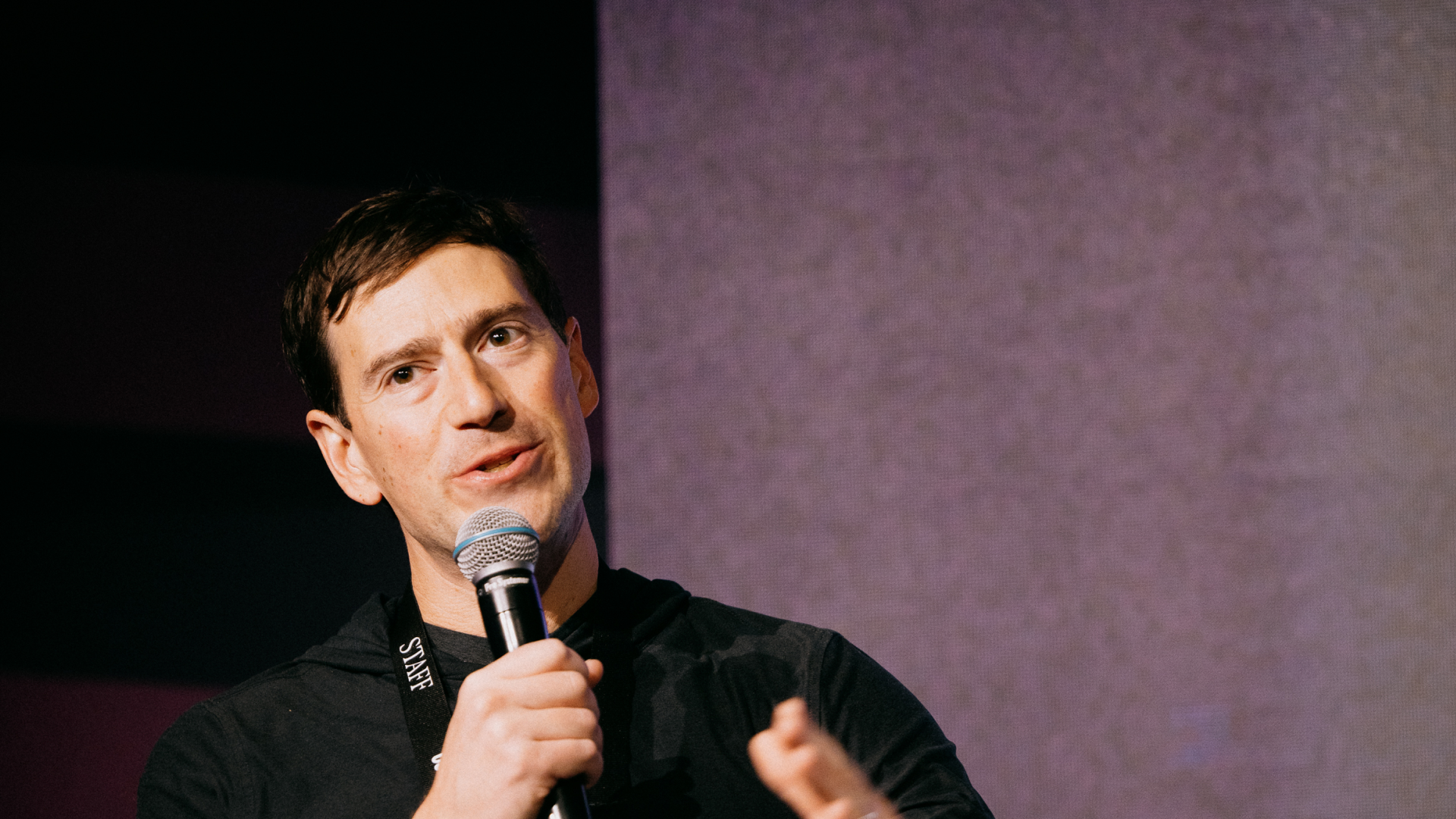
What if AI could be a tool for freedom? In conversation with Owen Clegg from BBC World Service, Alex Gladstein, Chief Strategy Officer at the Human Rights Foundation, explores how artificial intelligence can empower human rights activists, expand access to information, and help counter authoritarian uses of technology.
While AI is often framed through the lens of risk, Alex explores how the technology can also empower activists, journalists, and opposition movements around the world by supercharging their work through personal and organizational agents. He points to Venezuela, where opposition groups responding to a humanitarian crisis have used AI to quickly build crowdfunding infrastructure that would otherwise have required significant time, technical expertise, and resources helping deliver aid. Listen to the full conversation below.
To learn more about the AI for Individual Rights program, join HRF’s AI newsletter. Subscribe here
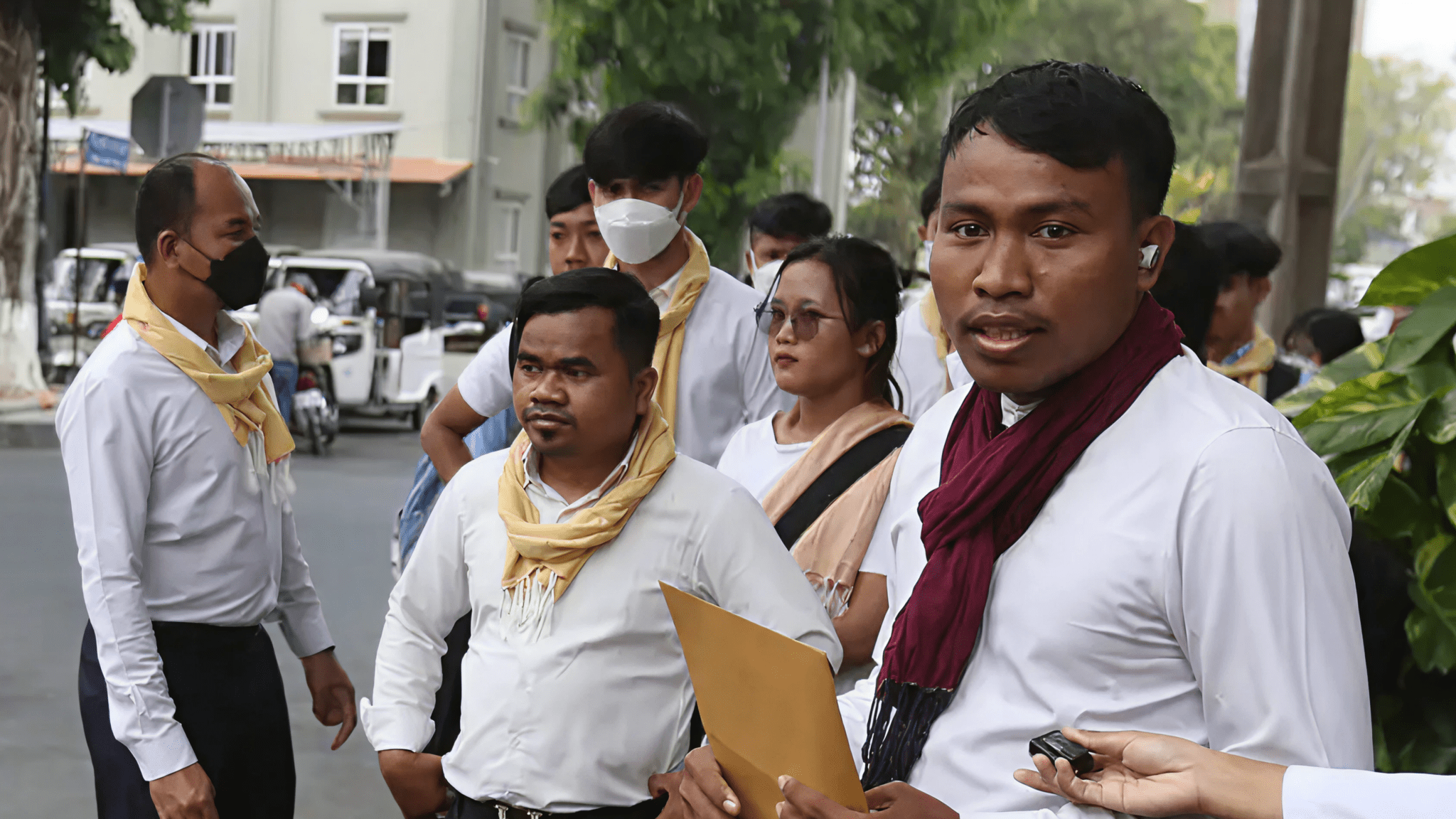
On 23 March 2026 the Human Rights Foundation welcomed the opinion issued by the UN Working Group on Arbitrary Detention (WGAD) finding that Cambodia’s detention of activist Koet Saray violates international human rights law, following an HRF submission.
Mr. Koet Saray is a human rights defender and former president of the Khmer Student Intellectual League Association (KSILA), a group dedicated to promoting human rights, democracy, development, and environmental protection that has now ceased operations after the regime targeted more of its members. He was arrested on April 5, 2024, after posting photos on social media from a meeting with Preah Vihear Province villagers who had been forcibly evicted from their homes to make way for a rubber plantation. Mr. Koet Saray advocated for the villagers on social media and through interviews given to media outlets about the evictions.
Cambodia charged Mr. Koet Saray with “incitement” under Articles 494 and 495 of the Criminal Code, controversial provisions that the WGAD described as so vague and overbroad as to invite abuse and misuse and as incompatible with international legal principles. He was also charged under Article 88, Cambodia’s recidivism provision, due to prior fabricated incitement charges for participating in a peaceful protest in 2020. He was held in pretrial detention for six months before being tried in a one‑day, closed‑court proceeding, and he was convicted and sentenced to four years in prison on Nov. 6, 2024.
“The Working Group’s opinion confirms that Cambodia weaponized vague criminal statutes to silence a peaceful human rights defender,” said HRF International Legal Associate Kaitie Holland. “Cambodia clearly violated Mr. Koet Saray’s rights to the freedoms of expression, peaceful assembly, and association. We commend the Working Group for its thorough legal analysis recognizing the pattern of abuse against Mr. Koet Saray and calling out his illegal pre‑trial detention, the use of overbroad incitement provisions against him, and the denial of a fair trial.”
HRF joins the WGAD’s call for the immediate release of Mr. Koet Saray and for a full, independent investigation into the circumstances of his arrest, trial, and imprisonment. HRF urges the international community to hold Cambodia accountable for the detention of Mr. Koet Saray and other activists who are arbitrarily imprisoned under the country’s abusive incitement laws.
Doja Cat would be headlining a concert organized by Global Citizen in partnership with the regime of Rwanda’s warmongering dictator Paul Kagame, just two weeks after the US imposed sanctions on Rwanda’s army and senior Rwandan officials for their continued fuelling of a bloody war and humanitarian catastrophe in eastern DRC, in violation of a peace agreement brokered in December 2025.
Doja Cat’s appearance would offer Kagame an opportunity to grandstand and project a deceptive image of unity, progress and normalcy. It would be the perfect distraction from the sanctions, the prisons filled with Rwandan dissidents like opposition leader Victoire Ingabire, or Rwanda’s role in causing tremendous human suffering in DRC through its deployment of troops and support for the M23 militia — which is linked to massacres and rapes, forced recruitment and exploitation of civilians, and the use of child soldiers.
Doja Cat would follow John Legend, who headlined the 2025 #MoveAfrika Kigali concert amid public outcry. Legend performed after Nigerian Grammy-winning artist Tems canceled her concert over concerns after Rwandan troops and M23 seized eastern DRC’s two largest cities and imposed a reign of terror, exploitation, and plunder of strategic minerals.
Doja Cat has previously used her platform to advocate for vulnerable populations and has encouraged her audience to support civilians, women, and children fleeing violence, including in DRC. High-profile cultural events risk being used by Kagame’s regime to project an image of openness and legitimacy while political freedoms remain tightly restricted. In our letter, we urge Doja Cat to reconsider performing and to avoid allowing her platform to be used to legitimize a dictatorship which persecutes artists, crushes dissent, and continues to cause grave human suffering beyond its borders.
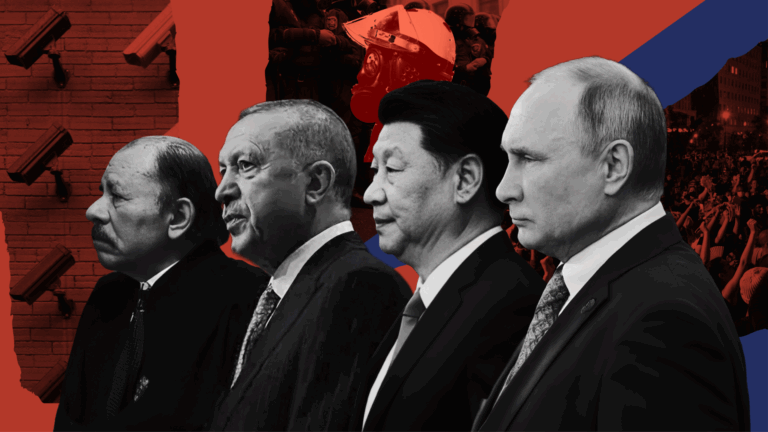
On 26 February 2026 the Human Rights Foundation (HRF) launched its research project, the Tyranny Tracker, a qualitative index that classifies the world’s countries and territories as democratic, hybrid authoritarian, or fully authoritarian. This political regime assessment tool is now available to the public at a moment when tyranny is on the rise worldwide.
According to HRF’s Tyranny Tracker, 75% of the world’s population lives under authoritarianism despite representing only 92 countries, or less than half of all countries in the world — a number that is partly explained by the hybrid authoritarian regimes of India, Indonesia, Pakistan, and the Philippines, and by the fully authoritarian regimes of China, Ethiopia, Nigeria, Russia, and Vietnam, which rule over some of the world’s most populous countries. The Tyranny Tracker classifies countries using a methodology consisting of 45 indicators categorized into three thematic pillars: electoral competition, freedom of dissent, and institutional accountability. The methodology is informed by academic literature and HRF’s 20 years of experience advocating on behalf of dissidents from countries ruled by authoritarian regimes. The research draws on a range of sources, including media, data collected by HRF’s in-house research team, an extensive human rights network, and expert advice. Published today in the Journal of Democracy, a piece from HRF’s lead researchers Javier El-Hage, Malaak Jamal, and Alvaro Piaggio, explores what sets the Tyranny Tracker apart from other indexes, and how readers can use the tool to inform their work.
“The Tyranny Tracker is a culmination of years of HRF’s internal research to identify patterns of authoritarianism worldwide and decide which regimes to prioritize as targets of our advocacy work,” said Malaak Jamal, HRF’s director of policy and research. The Tyranny Tracker uses three classifications for the governments ruling countries around the world: Democratic governments are characterized by largely free and fair elections, freedom to criticize the government, and an independent judiciary capable of being an effective check on government abuse. While many of these governments currently face real challenges in resisting the autocratic tendencies of democratically elected leaders emboldened by increased political polarization globally, they continue to maintain the mechanisms of self-correction that allow democracies to survive and evolve, as opposing political parties regularly and peacefully transfer power. Hybrid authoritarian regimes are typically the result of the severe erosion of institutions by an initially democratically elected government, and represent a step in the process of authoritarian consolidation. While these authoritarian regimes maintain a façade of democracy through regular elections, their autocratic actions heavily skew elections in favor of the incumbent to the point that an opposition victory and peaceful transfer of power are highly unlikely. Fully authoritarian regimes systematically stifle meaningful electoral competition and the basic freedom to dissent, all the while tightly controlling a judicial branch, which lacks any ability to serve as a check on government abuse. These authoritarian regimes regularly rig elections (when they hold them at all), shut down critical media outlets and organizations, and target political opponents and dissenters with arrests and killings, making the chance of a nonviolent transition to democracy as a result of elections little more than a theoretical possibility.
“HRF’s new tool aims to contribute to the healthy competition and complementarity among existing democracy indexes by great institutions, such as Freedom House, V-Dem, International IDEA, or the Economist Intelligence Unit, that already do a great job documenting the situation of authoritarianism worldwide in a quantitative way. The Tyranny Tracker, on its part, is methodologically different as it follows a simple yet structurally cohesive and qualitative analysis process, carried out by HRF’s regional policy and advocacy researchers and experts, resulting in limited yet materially significant differences in country classifications,” said Javier El-Hage, HRF’s chief legal and policy officer.
On 19 February 2026, an important group of NGOs stated that the international community must call for the immediate release of Umar Khalid
On Jan. 5, 2026, the Indian Supreme Court denied bail to human rights defender and student activist Umar Khalid, who has been detained for over five years without trial, in violation of India’s obligations under international human rights law. The undersigned organisations are disturbed by the Court’s decision. As domestic legal remedies have proven ineffective, we urge the international community to take urgent and coordinated action.
Khalid was arrested on Sept. 13, 2020, after he became a prominent face of nationwide peaceful protests against the discriminatory Citizenship Amendment Act, a law excluding Muslims from eligibility for a fast-tracked path to Indian citizenship. Khalid’s unfounded prosecution stems solely from the exercise of his rights to freedom of expression and peaceful assembly.
Khalid was charged under India’s anti-terror law, the Unlawful Activities (Prevention) Act (UAPA), as well as other laws, for a total of 29 charges. The UAPA has been criticised by the UN Working Group on Arbitrary Detention and several other UN Special Procedures mandate holders, particularly for its vague definitions and restrictive bail provisions that enable prolonged pre-trial detention. Indian authorities have frequently used these anti-terror legislations to detain political dissenters, human rights defenders, activists, and Muslims by keeping them in prison for extensive periods of time prior to trial. Indian grassroots organisation People’s Union for Civil Liberty has demonstrated through its investigation how UAPA has been systematically abused to silence dissent.
Since his arrest, Khalid has been languishing in Delhi’s Tihar jail for over five years awaiting trial. According to the Supreme Court, this excessively long pre-trial detention has not “crossed the threshold of constitutional impermissibility,” but Khalid should not be detained at all — he is being held simply for exercising his rights. The Supreme Court’s Jan. 5, 2026, decision also forbids Khalid from applying for bail for one year. His trial is yet to begin.
In the same judgment in which the Court denied bail to Khalid, it released his co-defendants in the case, activists Gulfisha Fatima, Shifa Ur Rehman, Meeran Haider, Saleem Khan, and Shadab Ahmed, a development the undersigned organisations welcome. However, Khalid’s co-defendants, released on bail, are not entirely free. The Supreme Court imposed strict bail conditions: a blanket ban on participating in “any programme or address”, attending “any gathering, rally or meeting, whether physically or virtually” and on circulating “any post either in electronic or physical form or circulate any hand bills, posters, banners, etc. in any form whatsoever.” These conditions violate their rights to freedom of expression and association.
All of Khalid’s co-defendants remain at risk of re-arrest if eventually convicted in the case. This includes activist Safoora Zargar, who was charged in the same case but released on bail in June 2020 due to her pregnancy, and following a decision of the United Nations Working Group on Arbitrary Detention rendering her detention arbitrary.
The Indian judicial system has failed Umar Khalid and his co-defendants. It is time for the international community to take meaningful and coordinated action. Governments, particularly those with strong bilateral relationships with India, should publicly and privately call for Umar Khalid’s immediate and unconditional release and raise his case in all high-level diplomatic engagements.
As a sitting member of the UN Human Rights Council, India should be reminded of its commitment under UN General Assembly Resolution 60/251 to “uphold the highest standard in the promotion and protection of human rights.”
Pending the acquittal of Khalid and his co-defendants, diplomatic missions in New Delhi should also closely monitor court proceedings and reaffirm the importance of due process and presumption of innocence.
Signed by;
Human Rights Foundation
Hindus for Human Rights
Diaspora in Action for Human Rights and Democracy (DAHRD)
Amnesty International
InSAAF India
Indian American Muslim Council
UK Indian Muslim Council
Scottish Indians for Justice
India Alliance Paris
South Asia Solidarity, UK
South Asia Justice Campaign
Joint Committee to Stop Repression in India
India Labour Solidarity
Freedom House
India Civil Watch International
Karwaan-e-Mohabba
World Organisation Against Torture (OMCT), within the framework of the Observatory for the Protection of Human Rights Defenders
Free Voices Collective e.V.
International Federation for Human Rights (FIDH), within the framework of the Observatory for the Protection of Human Rights Defenders
At the end of 2025 the International Federation for Human Rights (FIDH), one of the world’s oldest human rights movements and Human Rights Watch were declared “undesirable” by the Russian Federation. For FIDH the designation was made by the Prosecutor General of Russia on 13 November, and on 1 December, Russia’s Ministry of Justice included FIDH in its register of “undesirable organizations“, which currently contains 281 entities, including several FIDH members, such as the Center for Civil Liberties (CCL), the Norwegian Helsinki Committee (NHC), the Helsinki Foundation for Human Rights (HFHR), and Truth Hounds.
“This ignoble move not only further threatens and endangers our Russian members, partners, their staff, and ordinary Russian citizens supporting our human rights work. It also sends a clear message that Russia is no friend of the global human rights movement“, said Alexis Deswaef, FIDH President. “This designation of FIDH as an ‘undesirable organisation’ demonstrates the importance of our commitment to supporting those who defend human rights, whether in Russia or in exile. FIDH will continue to pursue this commitment more than ever.”
Under the “undesirable organisations” law, adopted in 2015 and further tightened in 2021 and 2024, the Prosecutor General’s Office has the power to declare as “undesirable” any foreign or international organisation that is deemed “a threat to the foundations of the constitutional order of the Russian Federation, the defense capability of the country or the security of the state“.
Concretely, “undesirable organisations” are banned from engaging in any activities inside Russia, including the publication or dissemination of any information, carrying out financial transactions, and providing financial or other assistance to local organisations and individuals. The “participation in the activities” of an “undesirable organisation” is subject to administrative and criminal liability, including up to four years of imprisonment. Any Russian citizen or organisation cooperating with an “undesirable organisation“, even if residing outside Russia, faces administrative penalties and, in the case of individuals, criminal liability. In practice, the vague wording of the law has led to the punishment of individuals simply for reposting information disseminated by an “undesirable organisation” on social media platforms, even if the original posts predated the organisation’s designation as “undesirable“.
“For over three decades, Human Rights Watch’s work on post-Soviet Russia has pressed the government to uphold human rights and freedoms,” said Philippe Bolopion, executive director at Human Rights Watch. “Our work hasn’t changed, but what’s changed, dramatically, is the government’s full-throttled embrace of dictatorial policies, its staggering rise in repression, and the scope of the war crimes its forces are committing in Ukraine.”
The Prosecutor General’s Office made the decision to ban Human Rights Watch on November 10, as follows from the Ministry of Justice’s register of “undesirable” organizations updated today. The official reasons for the designation are not known.
On 24 July, Russia’s Ministry of Justice added the Norwegian-Russian organisation SmåRådina (SmåRådina: for Democracy in Russia) to the register of “undesirable” organisations. The Russian authorities have not publicly explained the reasons for the decision.
After persistent speculation about the possibility of the prize going to Donald Trump [see e.g.: https://humanrightsdefenders.blog/2025/07/24/nobel-peace-prize-choice-between-trump-and-albanese/], it was announced today 10 October that the Venezuelan opposition leader María Corina Machado has won the 2025 Nobel Peace Prize, winning more recognition as a woman “who keeps the flame of democracy burning amid a growing darkness.”
The former opposition presidential candidate was lauded for being a “key, unifying figure” in the once deeply divided opposition to President Nicolás Maduro’s government, said Jørgen Watne Frydnes, chair of the Norwegian Nobel committee. “In the past year, Ms. Machado has been forced to live in hiding,” Watne Frydnes said. Despite serious threats against her life, she has remained in the country, a choice that has inspired millions. When authoritarians seize power, it is crucial to recognize courageous defenders of freedom who rise and resist.”
The Nobel Prize Committee clarified that “Maria Corina Machado meets all three criteria stated in Alfred Nobel’s will for the selection of a Peace Prize laureate. She has brought her country’s opposition together. She has never wavered in resisting the militarisation of Venezuelan society. She has been steadfast in her support for a peaceful transition to democracy.
Maria Corina Machado has shown that the tools of democracy are also the tools of peace. She embodies the hope of a different future, one where the fundamental rights of citizens are protected, and their voices are heard. In this future, people will finally be free to live in peace.”
A screening of the feature documentary “Dissidents” will take place on Sunday, Feb. 2, 2025, at 2:00 p.m. EST. The event location is Firehouse Cinema, 87 Lafayette Street, New York. “Dissidents” tells the story of three Chinese dissidents who continue to fight for democracy against the Chinese Communist Party (CCP) through art, protest, and grassroots organizing despite being exiled from their own home and despite the CCP’s transnational attempts to threaten them with violence, criminal charges, and arson. The film features Juntao Wang, a primary organizer of the 1989 Tiananmen Square protests; Weiming Chen, a human rights artist whose sculpture criticizing Xi Jinping was burnt down; and asylum seeker Chunyan Wang, who was arrested for attempting to deliver a petition letter to Chinese vice premiers during the US-China trade talks.
After the film, there will be a panel discussion featuring: Yaqiu Wang, research director for China, Hong Kong, and Taiwan at Freedom House Joey Siu, Hong Kong activist and executive council member at the World Liberty Congress Weiming Chen, human rights artist known for the Liberty Sculpture Park in CaliforniaYi Chen, director of “Dissidents” at C35 FilmsPema Doma, Executive Director, Students For a Free Tibet The event is free and open to the public, but registration is required. Please be sure to RSVP on Eventbrite as soon as possible, as reservations are granted on a first come, first serve basis.
The Human Rights Foundation (HRF) announced that “Beyond Utopia,” a BAFTA-nominated and du-Pont-Columbia Award-winning film that follows the harrowing journeys of several individuals as they attempt to escape North Korea, is now available to stream on Amazon Prime, Apple TV, and YouTube. Pastor Seungeun Kim, who has made it his life’s work to rescue North Koreans. Over the past 23 years, he has saved more than 1,000 people through a network of smugglers and activists. As the film depicts, Pastor Kim frequently risks his own life by joining defectors on parts of their treacherous journey to safety, a trek that spans thousands of miles through jungles and rivers. Dubbed “an astonishing, real-life geopolitical thriller” by The Hollywood Reporter and “a staggering look at the nightmare of North Korea and the brave souls who tried to escape it” by Variety, the film has already received critical acclaim. It won the Audience Award for US Documentary at the 2023 Sundance Film Festival, received a du-Pont-Columbia Award, has been nominated for the 2024 British Academy Film Award for Best Documentary, and was shortlisted for the 2024 Oscar for Best Documentary. Stream “Beyond Utopia” today on Amazon Prime, Apple TV, and YouTube.