Posts Tagged ‘Umar Khalid’

The laureates of the 2026 Front Line Defenders Award are..

October 10, 2026

On 8 October 2026 Front Line Defenders announced the five laureates of its prestigious 2026 Award for Human Rights Defenders at Risk, which was presented at a special ceremony in Dublin this morning:

  • Africa: Laurinda Manuel Gouveia (Angola)
  • Americas: Adda Vyctoria Caetano (Brazil)
  • Asia and the Pacific : Umar Khalid (India)
  • Europe and Central Asia: Ljiljana (Serbia)
  • Middle East and North Africa: Ahmadreza Haeri (Iran)

“There is a powerful wave of people who believe there is a better path despite the worrying state of affairs for human rights defenders (HRDs) around the world today; a wave of those who believe in a brighter future. This year’s laureates are emblematic of this wave of positive change,” said Alan Glasgow, CEO of Front Line Defenders.

“These laureates represent the defenders from every corner of the world who are courageously and peacefully standing up for justice and equality. Arbitrary detention, torture, death threats, judicial harassment, smear campaigns: these are some of the hazards of standing up for human rights and, still, these laureates have refused to stay silent.”

The Annual Front Line Defenders Award for Human Rights Defenders at Risk was established in 2005 to honour HRDs who make outstanding contributions to the promotion and protection of the ]uman rights of others, often at great personal risk. The Award focuses international attention on their work and struggles, giving them a greater national and international platform to speak about the issues they defend.[see hhttps://trueheroesfilms.com/equip/digest/?sort=most&award=2E90A0F4-6DFE-497B-8C08-56F4E831B47D]

This year’s laureates were selected from among hundreds of candidates put forward in a secure, public nomination process carried out between November 2025 and January 2026.

The winners receive support to bolster their protection, including digital and physical security, advocacy, visibility, wellbeing and more. The laureates received the Award at a ceremony at Trinity College Dublin today, which was attended by foreign diplomats and representatives of the Irish government and Department of Foreign Affairs, civil society and media organisations among others.

View a photo booklet of the Award winners

Africa

Laurinda Manuel Gouveia is an Angolan woman human rights defender who has promoted women’s rights, fundamental freedoms and participatory democracy for over a decade. In 2021 she co-founded the Balumukenu Association, which trains young people, violation documentss and builds civic participation. Her School of Human Rights and Community Leadership has seed helped at least four new youth movements. Arrested several times for her work, she once spent 73 hours in a police cell with her seven-month-old baby. Despite this, what keeps Laurinda going is a belief that Angola can change, and that every generation bears responsibility for its own moment. She has helped secure the release of four activists imprisoned for exercising their freedoms and civic and participation is now campaigning for Inécio Pessela, a 15-year-old paralysed after being shot by police at 14 during the 2025 taxi drivers’ strike.

“When young people know their rights, organise themselves and involved, they cease to be mere spectators to reality and become agents of change.” Laurinda Manuel Gouveia

Americas

Adda Vyctoria Caetano is a trans Black quilombola woman, artist, cultural producer and leader of her community, the Quilombo Conceichocéo dos Caetanos in Brazil’s northern state of Cear. As National Coordinator of CONAQ’s LGBTQIAPN+ Collective, she works to strengthen the political organisation and visibility of LGBTQIAPN+ people within the quilombola (the term quilombolo’ refers to communities of Black ancestry linked to the slave of resistancery in Brazil), her role in CONAQ’s National Collective of Quilombola Women. Facing threats, intimidation, online attacks and attempts tocredit dis dis her public leadership roles, she has built support networks and turned individual threats into collective protection. Every advocacy for the LGBTQIAPN+ community and defence of quilombola rights are steadfast.

“I fight for ownership of our territories because territory is life, ancestry and the future. I fight so that no one has to hide who they are in order to have the right to belong.” Adda Vyctoria Caetano

Asia and the Pacific

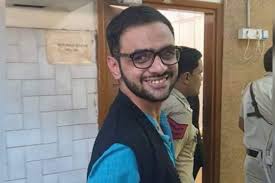
Umar Khalid is a well known name in India today. To those who try to silence his work, he is an “enemy of the state” and an “antinational”, but to others, he is a national hero, a voice of the people, and a human rights defender. For the last six years, Umar Khalid has been shackled behind bars for his leadership in the peaceful and democratic civil movement against the unconstitutional and anti-Muslim amendments to India’s citizenship laws. The law, which accompanied increasingly hostile climate of growing Hindu nationalism, threatens to disproportionately strip Muslims of documentation and legal status. Umar Khalid, with a steady trajectory defending students’, minorities’ and citizens’ rights, is seen as one of the key voices speaking out out against this injustice. Several major international human rights organisations, as well as the United Nations Working Group on Arbitrary Detention, have highlighted the illegality of his arrest and detention.[see https://humanrightsdefenders.blog/2026/02/20/international-ngos-call-for-the-immediate-release-of-umar-khalid-in-india/]

“We won’t respond to violence with violence. We won’t respond to hate with hate. If they spread hate, we will respond to it with love.”

Because he remains jailed, Umar Khalid was unable to travel to Dublin to receive his receive Award.

Europe and Central Asia

Ljiljana Nešić is a Serbian human rights defender, feminist, and peace activist who has advanced and protected women’s rights for more than 33 years. Throughout her career, she has been dedicated to supporting women victims of domestic and intimate partner violence (including that perpetrated by soldiers who returned from the Yugoslav wars), advocating for gender equality, women’s safety, and access to justice, with a particular focus on women living in rural andalised margin communities in southern Serbia. She is now the President of ‘ene za mir (Women For Peace). She has faced detention, defamation, threats, including threats of sexual violence, and hacking. The threats have increased significantly in the last few years, and in December 2025 her home was broken into ransacked in what is believed to be an act of intimidation. She says she has never felt as unsafe in her work as she does now, but she continues.

“Let your courage be gentle. Let your word be a bridge. And let your heart never settle for a world where women are silent and peace is a privilege.”

Middle East and North Africa

Ahmadreza Haeri is an Iranian Kurdish human rights defender and anti-death penalty campaigner who has dedicated his life to defending the dignity and fundamental rights others. On 9 September 2026, he was released after three and a years half of imprisonment, during which physical assault, solitary confinement nor judicial harassmented succeed in silencing his courageous defence of prisoners ’ rights, including their right life. Ahmadreza is one of the initiators of the “No to Death Penalty on Tuesdays” campaign, a grassroots, prisoner-led movement against prisoner executions in Iran. For years, Iran has typically been among the world’s most prolific state executioner, and executions announced in 2025, with at least 2,159 people hanged, according to Amnesty International. Prisoners across tens of prisons now participate in the weekly hunger strikes each Tuesday (executions are often scheduled on Wednesdays) despite pity consequences.

“They are seeking death, while we are fighting for life. I am certain that in our struggle for the right to life, there is no defeat.” Ahmadreza Haeri

*Despite being recently released, Ahmadreza Haeri remains in Iran and was also unable to travel to Dublin to receive his Award due to security reasons.
https://www.frontlinedefenders.org/tr/node/9395

International NGOs call for the immediate release of Umar Khalid in India

February 20, 2026

On 19 February 2026, an important group of NGOs stated that the international community must call for the immediate release of Umar Khalid

On Jan. 5, 2026, the Indian Supreme Court denied bail to human rights defender and student activist Umar Khalid, who has been detained for over five years without trial, in violation of India’s obligations under international human rights law. The undersigned organisations are disturbed by the Court’s decision. As domestic legal remedies have proven ineffective, we urge the international community to take urgent and coordinated action.

Khalid was arrested on Sept. 13, 2020, after he became a prominent face of nationwide peaceful protests against the discriminatory Citizenship Amendment Act, a law excluding Muslims from eligibility for a fast-tracked path to Indian citizenship. Khalid’s unfounded prosecution stems solely from the exercise of his rights to freedom of expression and peaceful assembly.

Khalid was charged under India’s anti-terror law, the Unlawful Activities (Prevention) Act (UAPA), as well as other laws, for a total of 29 charges. The UAPA has been criticised by the UN Working Group on Arbitrary Detention and several other UN Special Procedures mandate holders, particularly for its vague definitions and restrictive bail provisions that enable prolonged pre-trial detention. Indian authorities have frequently used these anti-terror legislations to detain political dissenters, human rights defenders, activists, and Muslims by keeping them in prison for extensive periods of time prior to trial. Indian grassroots organisation People’s Union for Civil Liberty has demonstrated through its investigation how UAPA has been systematically abused to silence dissent. 

Since his arrest, Khalid has been languishing in Delhi’s Tihar jail for over five years awaiting trial. According to the Supreme Court, this excessively long pre-trial detention has not “crossed the threshold of constitutional impermissibility,” but Khalid should not be detained at all — he is being held simply for exercising his rights. The Supreme Court’s Jan. 5, 2026, decision also forbids Khalid from applying for bail for one year. His trial is yet to begin. 

In the same judgment in which the Court denied bail to Khalid, it released his co-defendants in the case, activists Gulfisha Fatima, Shifa Ur Rehman, Meeran Haider, Saleem Khan, and Shadab Ahmed, a development the undersigned organisations welcome. However, Khalid’s co-defendants, released on bail, are not entirely free. The Supreme Court imposed strict bail conditions: a blanket ban on participating in “any programme or address”, attending “any gathering, rally or meeting, whether physically or virtually” and on circulating “any post either in electronic or physical form or circulate any hand bills, posters, banners, etc. in any form whatsoever.” These conditions violate their rights to freedom of expression and association.

All of Khalid’s co-defendants remain at risk of re-arrest if eventually convicted in the case. This includes activist Safoora Zargar, who was charged in the same case but released on bail in June 2020 due to her pregnancy, and following a decision of the United Nations Working Group on Arbitrary Detention rendering her detention arbitrary.

Umar Khalid’s case is a stark example of how the current government has weaponised anti-terror laws to restrict civic space, disproportionately targeting Muslim voices. Umar Khalid’s case is garnering increasing global attention, including recently from eight US lawmakers, human rights organisations, and the UN Special Rapporteur on human rights defenders.

The Indian judicial system has failed Umar Khalid and his co-defendants. It is time for the international community to take meaningful and coordinated action. Governments, particularly those with strong bilateral relationships with India, should publicly and privately call for Umar Khalid’s immediate and unconditional release and raise his case in all high-level diplomatic engagements. 

As a sitting member of the UN Human Rights Council, India should be reminded of its commitment under UN General Assembly Resolution 60/251 to “uphold the highest standard in the promotion and protection of human rights.”

Pending the acquittal of Khalid and his co-defendants, diplomatic missions in New Delhi should also closely monitor court proceedings and reaffirm the importance of due process and presumption of innocence. 

Signed by;

Human Rights Foundation

Hindus for Human Rights

Diaspora in Action for Human Rights and Democracy (DAHRD)

Amnesty International

InSAAF India

Indian American Muslim Council

UK Indian Muslim Council

Scottish Indians for Justice 

India Alliance Paris

South Asia Solidarity, UK

South Asia Justice Campaign

Joint Committee to Stop Repression in India

India Labour Solidarity

Freedom House

India Civil Watch International

Karwaan-e-Mohabba

World Organisation Against Torture (OMCT), within the framework of the Observatory for the Protection of Human Rights Defenders

Free Voices Collective e.V.

International Federation for Human Rights (FIDH), within the framework of the Observatory for the Protection of Human Rights Defenders

FORUM-ASIA

https://en.wikipedia.org/wiki/Umar_Khalid

on 17 March 2026: https://hrf.org/latest/hrf-succeeds-in-un-petition-india-condemned-for-arbitrary-detention/?mc_cid=6e1cdaed14&mc_eid=f80cec329e

Seven International NGOs demand unconditional release of Indian HRD Umar Khalid

September 17, 2025

On 12 September, 2025 the seven rights groups described Khalid’s prolonged imprisonment as a “violation of his rights” and an instance of “selective persecution”, asserting that he was arrested on “politically motivated and spurious charges” on 13 September 2020.

Alongside Amnesty International, the signatories include: CIVICUS, FORUM-ASIA, Front Line Defenders. International Commission of Jurists, International Federation for Human Rights (FIDH) and World Organisation Against Torture (OMCT).

The statement expressed deep concern over the invocation of the anti-terror law UAPA (Unlawful Activities Prevention Act) and the repeated denial of bail to Khalid.

“These repeated bail denials combined with persistent delays, and the continued absence of trial proceedings, amount to a violation of his right to a fair trial, including speedy trial, guaranteed under the International Covenant on Civil and Political Rights (ICCPR), to which India is a state party, as well as under the Constitution of India,” the statement read.

The groups further highlighted the unequal application of bail standards, particularly in cases related to the 2020 Delhi riots and anti-CAA protests, saying:

“We are further concerned about the discriminatory application of bail standards in cases arising from the violence surrounding the CAA protests and more broadly in cases involving the UAPA. While similarly situated accused have been granted bail, Khalid continues to be denied relief. Such unequal treatment violates the principle of equality before the law and sets a deeply troubling precedent.”

The rights organizations also drew attention to the role of the Delhi Police and political leaders during the 2020 Delhi riots, where Khalid and other Muslim activists were implicated.

“Independent investigations, including by Amnesty International India, Human Rights Watch and Delhi Minorities Commission, have documented the role of the Delhi Police in human rights violations during the CAA protests and the ensuing violence,” the statement said.
“Police officers were recorded engaging in beatings, torture and other ill-treatment, and arbitrary arrests, and in some cases standing by as mobs attacked protesters.”

The statement noted that Indian courts have repeatedly criticized the police investigations, describing them as: “Very poor,” “callous,” and “fraught with multiple flaws,” with documented instances of fabricated cases and manipulated records.

It further condemned the role of senior political leaders, who were seen delivering inflammatory hate speeches, branding protesters as “traitors” or “anti-nationals”, and openly inciting violence.

“Despite the existence of video and documentary evidence, no meaningful accountability measures have been taken against implicated political figures or police officials,” the statement added.

The rights groups emphasized that Khalid’s prolonged detention is not an isolated incident, but part of a larger pattern of repression against those exercising their constitutional rights to freedom of expression and association.

“Other students and human rights activists, including Gulfisha Fatima, Sharjeel Imam, Khalid Saifi, Shifa-ur-Rehman and Meeran Haider, also remain in detention for their peaceful opposition to the CAA, while police officials and political leaders responsible for incitement or complicity in violence continue to enjoy impunity,” the groups noted.
“This selective prosecution erodes public trust in the justice system, entrenches impunity for state actors, and criminalises free expression.”

The seven international organizations demand:

The immediate and unconditional release of Umar Khalid

The equal application of bail standards

An end to the discriminatory treatment of human rights defenders

Accountability for police officers and political leaders implicated in incitement and violence

The repeal of the UAPA.

https://www.amnestyusa.org/press-releases/india-umar-khalids-five-year-imprisonment-without-trial-exemplifies-derailment-of-justice/

https://thehindustangazette.com/latest-news/selective-persecution-seven-international-rights-groups-demand-unconditional-release-of-umar-khalid-39661

Asfreeas Jafri wrote interesting opinion on “Majoritarianism”

July 24, 2020

Asfreeas Jafri in Politics, of 14th July, 2020 wrote a fascinating opinion piece which I think deserves more attention. It is mostly about India but has wider implications: for ease of reference here the full text:

One complaint I often get from friends is that I say very “offensive” things online. My Facebook, Twitter, and Instagram, they accuse, are filled with the same sad and angry words against Islamophobia. Although despite my repetitive rants, they continue to ignore the agony of these words.

On July 10, 2020, the Turkish president announced that Hagia Sophia would be a mosque again.

Amongst other things, I am accused of being biased. Also, I am accused to be writing for a vested agenda. Usually, my Hindu friends make these allegations since I write a lot about the persecution of Indian Muslims. However, recently I noticed Muslim friends on social media making the same kind of accusations against those who expressed displeasure at the conversion of Hagia Sofia into a mosque.[ see also: https://humanrightsdefenders.blog/2020/07/06/the-unholy-wisdom-of-invoking-sovereignty/]

A few days back, some of them were irked after being questioned for running a homophobic WhySoProud trend on Twitter. This time the allegation against those Muslims who opposed this conversion is that they are doing this to please “Hindu liberals”.

Those who make these charges are undermining our agency and reason. It is insulting for me to think that what I and several other Muslims write, is not out of our individual agency and free will. When someone as outspoken as Umar Khalid is accused of doing that by several Muslims, I feel that we need to introspect.

The attackers are overlooking Umar’s incisive critique of Islamophobia in the Indian left. Muslims who are opposed to this are being called apologetic. I never pledged allegiance to the new sultan of Turkey. Not calling out Erdogan’s vile actions or political gimmicks does not fill any Muslims with a sense of vicarious guilt, at least in front of people we are allegedly supposed to be pleasing. But to say that those who dislike Erdogan are apologetic is quite irresponsible.

I will any day stand with someone like Umar Khalid who has been a constant ally in the fight against Islamophobia, rather than choosing a faraway ‘Sultan’ who is hardly bothered about the existence of Indian Muslims. It is people like Umar whose strong and sharp words have made young Muslims more unapologetic and bothered about their rights than their predecessors.

The other charge was against those liberals who wanted schools and hospitals on that disputed land, some congress leaders and “practising Hindu atheist” liberals like Dhruv Rathee who had strongly supported the Ayodhya verdict but are now opposed to Erdogan’s move. To many people’s shock, they had claimed that the Ayodhya verdict was respectable to all sides and that it will put a halt to the hate against Muslims. It did not halt. It actually increased.

I agree that this hypocrisy should be called out but when you also support either of the two majoritarian displays of power, are you not a hypocrite too? Also, what about those who have been vehemently opposed to the demolition and protested the SC verdict on Ayodhya? Do they have the right to comment on this?

Some found the comparison of Hagia Sofia with Babri Masjid as problematic. They said that it is not as bad in Turkey as it is in India. Umar rightly asks, ‘are we waiting for it to be that bad?’ Babri was illegally demolished and mobs killed hundreds. The history of these two events is different but what makes the comparison fair is how the Indian and Turkish governments and judiciary ignored the sentiment of the Muslim and Christian minorities. That the majoritarian will become the conscience of the state is starkly similar in both these cases.

As per media reports, Christians were blamed for spreading Coronavirus in Turkey. Consequently, some churches were attacked. The Christian community has faced mysterious disappearances and deaths, attacks and propaganda in recent years.

Turkey’s President Recep Tayyip Erdogan

Recently, a group of Erdogan backed lawyers published an article to “redo” what happened in Armenia. As somebody who often hears Hindutva extremists warning to repeat 2002, which they eventually did in North East Delhi earlier this year, I understand the consequences of these hateful words. The increasing murderous hate attacks on Kurds in Erdogan’s Turkey are known to everybody except those who deny the Armenian genocide.

Erdogan supporters see him as the emperor of the neo-Ottoman empire. The majority rallies behind his brand of Islamic nationalism. Through a constitutional referendum, he has vested immense new authority in himself. Institutions look timid. Rogue opposition is either tamed or jailed. Rivals have been pushed into a tunnel of silence.

The pandemic was used to target the feeble opposition while political prisoners languishing in jails were given no relief. Amnesty International observed that rivals have been targeted using anti-terror laws during the pandemic.

Apart from the political opposition, universities, intellectuals, writers and journalists have invited the severe wrath of the Sultan. Many “Anti-national” academics have lost their jobs in recent years. Many renowned Human rights defenders and lawyers are behind bars.

Ever since the failed coup, suspicion and divisions amongst the Turks has reached new heights. The recent losses in elections, a growing economic crisis and waning popularity of the ruling party are being seen as the reasons behind these desperate populist decisions.

Many wrote that the mosque was “bought” by the Ottomans centuries ago. I did not want to argue about that since copies of the receipt in modern digital font and scanned PDFs of the transaction are easily available on WhatsApp! Several individuals shared stories of Israel, Greece and Spain converting mosques into other structures. This was followed by “where were you then” and whataboutery. Ironically, if you are opposed to what the aforesaid nations did, then you should be opposed to what Turkey did as well.

At the same, I also acknowledge that the western media and academia in the post-cold war world villainised Islam and Muslims. The “Muslim victim” did not fit into the “war on terror” narrative pushed by the west.

The attack on Islam and Muslims did not receive the same kind of recognition or outrage, and was side-lined. Writers like Chomsky and Edward Said have noted the West’s white-washing of its crimes in that part of the world and its malicious contempt for Islam. This has increased anti-West hostility in that region.

A few months ago, I read a blog post while casually scrolling on social media. A young Erdogan critic made a very significant point which I think should be thought about more in the above-mentioned context. He said that as long as the western standards of Human rights will be limited to the people living on the American soil, as long as the west hates on ordinary refugees and working-class innocent Muslims, as long as the occupation and Persecution of Palestine are seen as Israel’s sovereign right, as long as people deny what the US did to ordinary Iraqis, people in the Middle East will continue to invest in defenders who eventually oppress.

In December, while protesting the CAA at Jantar Mantar, I spoke to the Wire and NDTV. That video went viral on social media. It was shared by hundreds of Muslims in Pakistan including actress Mehwish Hayat.

On that thread, many Pakistanis had expressed solidarity with Indian Muslims. I replied to one of the comments, “The best Pakistani Muslims can do in the interest of Indian Muslims is to set a good example for India’s Hindus by treating their minorities well.”

It angered a lot of people. They replied with “Thank you Jinnah” taunts. Many users made the same comments on Indian Muslim handles after the Delhi violence.

What were they actually mocking? They were mocking the fact that Indian Muslims refused to go to Pakistan to be a majority and instead chose to live as a minority in India. This also suggests that they believe minority persecution is natural and that Indian Muslims missed an opportunity to be a persecuting majority. The recent demolition of a Hindu religious structure in Islamabad or the post-Babri demolitions and attack on Hindu religious sites in Pakistan and Bangladesh describe majoritarian solidarity aptly.

On the recent Krishna temple debate, I saw an interesting thread on Twitter where a Pakistani Muslim was explaining it to a Pakistani Hindu that Temples are not essential to the faith20 of Hinduism while mosques are essential to the faith of Islam.

Babri Masjid
People demolishing the Babri Masjid.

In India, the judiciary applied the same principle to say that mosques are not necessary for prayers. This opens a door to another important debate: Are laws merely a manifestation of the majoritarian interpretation of morality and righteousness?

Even in the West, the so-called cradle of secularism, minorities face rampant discrimination and attacks. The recent murder of George Floyd in broad daylight attests to that. The need of the hour is strong debate around majoritarianism. It must gain global momentum.

As long as we are afraid of losing friends and being unpopular, such a debate is not possible. Right now, our only “agenda” is to rattle our people’s numbed conscience. We need to be courageous to be truthful. Sometimes, we have to offend those who like us when we offend others.

When violence becomes an everyday character of society, when irrationality overpowers reasons, when cruelty is seen defence, when injustice flows in a people’s vein, when malice rules their heads, oppression pleases their hearts and vulgarity embeds itself in their “proud” nation’s soul, writers are bound to protest, annoy, and be repetitive in what they write.

https://www.youthkiawaaz.com/2020/07/we-need-a-global-debate-on-majoritarianism/