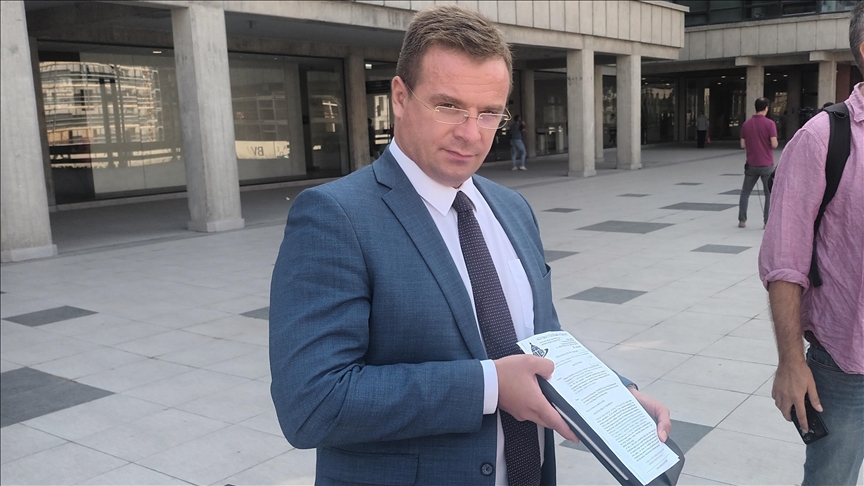
On 15 April 2026 The ICJ condemned the continued deprivation of liberty of Serbian lawyer Cedomir Stojkovic and the criminal proceedings against him on charges of incitement to violent overthrow of the constitutional order and disclosure of official secrets, which appear to constitute reprisals for the exercise of his right to freedom of expression. On 4 April 2026, Serbia’s Bar Association (Advokatska komora Srbije) expressed concern that the political nature of the charges against him and the three-year period covered by the indictment “give rise to the suspicion that his detention, along with other measures imposed against attorney Stojkovic, are being used as a means of coercion, rather than as a means of ensuring the unobstructed conduct of criminal proceedings.” The Bar Association demanded that Stojkovic be released pending trial.
“The prosecution of a lawyer for social media posts expressing criticism of the authorities is incompatible with Serbia’s obligations under international human rights law and standards,” said Temur Shakirov, ICJ Europe and Central Asia Programme Director. “The Serbian authorities must release Stojkovic and ensure that lawyers can exercise their right to freedom of expression without fear of reprisal.”
The political nature of the charges, the breadth of the indictment covering social media posts over a three-year period, and the severity of the restrictive measures imposed on him, including pre-trial detention, house arrest and a prohibition on posting on social media and on participating in public life, give rise to serious concern that he is being prosecuted to punish him for his public criticism of the Serbian authorities.
Stojkovic was arrested on 29 December 2025 and held in pre-trial detention for 30 days before being transferred to house arrest on 27 March 2026. He remains subject to restrictive measures, including a prohibition on posting on social media and on participating in public life. The charges relate to 17 social media posts published over approximately three years, which the Higher Public Prosecutor’s Office in Belgrade has characterized as incitement to violent overthrow of the constitutional order and disclosure of official secrets.
On 24 March 2026, the UN Special Rapporteur on the independence of judges and lawyers addressed a communication to the Serbian Government expressing concern that several provisions of a series of amendments and newly adopted laws relating to the judiciary and the prosecution authorities “may not be in line with international human rights standards related to the independence of the judiciary and the right to a fair trial, including: the impartiality of the prosecution service, the separation of powers, and the ability of judges and prosecutors to perform their functions free from undue influence, pressure or interference.”
On 2 April 2025 AFP reported that language used by President Donald Trump and his government to slash US-funded foreign aid is being adopted by other governments to attack NGOs and independent media.
Civil society groups in parts of Eastern Europe and beyond — long targeted by discredit-and-defund campaigns because of the light they shone on corruption and lack of transparency — are now also dealing with Trumpian rhetoric, human rights groups said.
Trump administration statements “are being weaponised in real-time by autocrats and dictators across Eastern and Southeastern Europe to justify and deepen their crackdown on independent media, NGOs, and human rights defenders,” Dave Elseroad, of the Human Rights House Foundation, told AFP.
From Hungary to Serbia, to Georgia and Bosnia, non-governmental organisations and independent media outlets working to bolster democratic norms are hearing officials borrow White House phrases to justify officials’ stances against them.
It includes Trump’s claim that the US Agency for International Development (USAID) was “run by radical lunatics”, and his billionaire advisor Elon Musk’s calling the agency a “criminal organisation” that needed to be put “through the woodchipper”.
Such terms are “seriously encouraging language used in Budapest or in Belgrade or in Bratislava or Banja Luka,” said Miklos Ligeti, head of legal affairs at Transparency International’s Hungary chapter.
In some countries, the verbal ammunition comes on top of a sudden funding gap wrought by the dismantling of USAID, which is hitting the NGO sector hard. USAID had been providing funding to a vast array of independent organisations in countries like Hungary where such groups have been “financially suffocated domestically,” Ligeti told AFP.
Hungarian Prime Minister Viktor Orban has hailed the crackdown on USAID by his ally Trump as a “cleansing wind”. Orban has vowed to “eliminate the entire shadow army” he says is made up of his political enemies, judges, the media and NGOs.
The UN rights office in Geneva slammed “escalating attempts worldwide to weaken and harm domestic and international human rights systems, including defunding and delegitimising civil society”. It said that “it is all the more worrying to see these trends also emerging in established democracies”.
In some countries there is a direct line between utterances in Washington and action to undermine civil society. In Georgia, for example, the ruling Georgian Dream party last month called for the country to adopt its own version of the US Foreign Agents Registration Act (FARA) — which observers warn could be turned against NGOs receiving foreign funding.
And in Serbia, which has been rocked by months of protests over government corruption, authorities referred to statements made by Trump and other top US officials to justify raiding a number of NGOs. The Serbian government saw the Trump administration’s labelling of USAID as a “criminal organisation” as “a fantastic opportunity to basically punish civil society”, said Rasa Nedeljkov, programme director at the Center for Research, Transparency and Accountability (CRTA).
CRTA’s offices were raided in February by heavily armed police. The operation took 28 hours because prosecutors had CRTA staff manually copy documents related to USAID-funded projects to hand to them, rather than accepting digital versions.
Serbian authorities have explicitly referred to statements by Trump and other US officials to justify raids on a number of NGOs.
Pavol Szalai, head of the EU-Balkans desk at Reporters Without Borders (RSF), said leaders in a string of countries were using “the suspension of USAID by Trump to attack media which had received USAID funds”. He said such groups were being doubly punished: they “lost their funding from one day to the next” while also increasingly being “targeted by intimidation”…
He warned that, “as these media retreat.. they will be replaced by propaganda”.
“I’m the only girl of six siblings. And suddenly I lost five brothers between 2012 and 2014,” said Yasmine Al-Mashaan, a Syrian human rights defender and victim. “Before they were taken, they were around to love and protect me. I think it’s my duty to give them a little bit of their love and to fight for truth and justice for them and for everyone,” said Al-Mashaan, a former pharmaceutical assistant.
She spoke during an enhanced interactive dialogue on transitional justice at the 58th session of the Human Rights Council in Geneva, Switzerland, where UN Human Rights Chief Volker Türk presented a report on lessons learned and good practices related to transitional justice in the context of sustaining peace and sustainable development.
“In 2018, I co-founded, along with other families of forcibly disappeared persons, the Caesar Families Association, which brings together families who identified their loved ones among the victims in the photos smuggled out of Syria in 2013, known as the Caesar Photos,” Al-Mashaan said.
Her brother Oqba, one of her two disappeared brothers, was among the photos.
Türk emphasized that transitional justice tackles the demons of the past to build a better future.
“It grapples with difficult questions about truth and memory. It looks for justice, in all its complex and myriad forms,” he said. “And it helps to repair the institutional and social fabric of fractured societies. Above all, transitional justice is about victims, dignity and healing.”
According to the Office’s report, in the aftermath of a conflict or large-scale and serious human rights violations and abuses, States have an obligation to provide truth, justice, reparation and guarantees of non-repetition. The report showcases some 36 victim-centred, inclusive, and gender-responsive transitional justice efforts led by victim associations and grass-roots organizations from dozens of countries, from Colombia to Syria, and Chad to Timor Leste.
However, Türk said, the path to peace is never easy.
“Transitional justice is often held up and slowed down by political instrumentalization, discriminatory or selective design and focus, insufficient buy-in of affected populations, and weak State institutions,” he said.
Women and youth as a driving force
Türk said that civil society, including grass-roots organizations often led by women and youth, play a crucial role in overcoming these challenges.
Sofija Todorovic, Programme Director of Youth Initiative for Human Rights in Serbia, who also participated in the dialogue, believes the role of youth organizations in transitional justice is indispensable.
“These organizations ensure that the voices and perspectives of young people are integrated into the policies and strategies shaping their future,” she said. “In many cases, their mission extends to educating youth about the history that has been deliberately concealed from them.”
Todorovic’s determination was fuelled by the realization that her country had hidden the truth from her.
“My State and the institutions within my State didn’t give me the right to truth and to make informed conclusion about the past, but rather they forced only one side of the story of the past,” she said. “And I think that that it’s unfair.”
She emphasized the need to address intergenerational trauma in transitional justice efforts.
“Only people who have space to heal can be able to build functional democracy,” she said. “We need a political climate that will resolve the trauma, not exploit it.”
Both Todorovic and Al-Mashaan’s organizations exemplify the power of women’s leadership, resilience, and strategic action in advancing transitional justice despite significant obstacles.
Justice and peace
Leyner Palacios Asprilla, a Colombian human rights defender and former Truth Commission member currently leading the Unit for Victims of the Chocó Region, participated in the dialogue via video message. The situation in his region remains so critical that he couldn’t leave the victims he works with alone.
For Palacios Asprilla, UN Human Rights in Colombia has been instrumental in navigating the challenges of consolidating peace, protecting victims, and defending human rights.
“Today, the world cannot forget our country because we have not yet crossed the finish line or overcome the obstacles to reach a point of tranquillity,” he said. “Colombia is an example to the world in its commitment to consolidating peace. But the world must not forget that this task is not yet complete.”
Türk said that in this fragmented world, transitional justice is an essential and creative problem-solving approach. It must be grasped, nurtured and used to build durable peace.
Many countries, including Nepal, Syria, and Bangladesh, have enormous opportunity to move towards justice and peace, he said.
Key takeaways
In preparing the report, UN Human Rights organized consultations with 70 women and 70 men from more than 77 countries, including representatives of national entities implementing transitional justice measures, victims’ associations and civil society organizations, regional and international human rights protection systems, and transitional justice experts and practitioners.
The report identifies seven key lessons in advancing transitional justice:
Documenting human rights violations is essential for accountability and future justice.
Marginalized victims must be included, ensuring their experiences are recognized.
Victims’ associations play a crucial role in advocacy and justice efforts.
Immediate legal, medical, and psychological support helps victims navigate trauma.
International human rights mechanisms provide accountability when national justice fails.
Universal jurisdiction and international courts offer alternatives when domestic options are blocked.
Grassroots memory and memorialization preserve historical truth and prevent future atrocities.
Natika Kantaria is a human rights advocate with nearly a decade of experience planning and implementing advocacy campaigns in human rights. She has worked with international organizations and watchdog NGOs and collaborated with the public and private sectors. For the ISHR she wrote a piece on 26 February 2025 about a worrying trend: ‘Foreign agent’ laws have been introduced in various countries, violating international human rights law and threatening to silence human rights defenders. This pattern is particularly evident in Eastern Europe, where NGOs courageously resist and need the support of the international community. See e.g. my earlier posts:
Societies thrive when everyone can work, speak out, and organise freely and safely to ensure justice and equality for all. Legislation requiring NGOs to register as ‘foreign agents’ is a barrier to this virtuous cycle. Despite the European Court of Human Rights’ 2022 ruling that Russia’s 2012 foreign agent law violated freedom of expression and association, the governments of Hungary, Georgia, Slovakia, Serbia, and Bosnia and Herzegovina have proceeded undeterred to introduce similar laws.
These laws specifically target NGOs and not-for-profits that receive foreign funds and require them to register as foreign agents, organisations serving the interests of a foreign power, or agents of foreign influence. By doing so, they restrict the capacity of human rights defenders to organise, participate and exercise their right to defend rights by:
imposing disproportionately high fines and heavy sanctions to NGOs refusing to comply, which may ultimately lead to the termination of their operations
using vague wording, that ultimately gives too much room and power for government interpretation. For instance, the requirement for NGOs to register in official records or identify themselves as ‘agents of foreign influence’ lacks clarity and specificity.
increasing the burden of NGOs by introducing heavy reporting and auditing requirements. The State’s alleged need for transparency as their primary purpose can, therefore, be effectively addressed through existing legislation regulating NGOs.
employing a negative narrative that stigmatises and delegitimises the work of the civil society organisations and human rights defenders. This rhetoric promotes hostility and distrust toward civil society and encourages attacks against defenders.
Furthermore, such laws contradict the commitments of these countries under international human rights law. Article 13 of the 1998 UN Declaration on human rights defenders recognises the right of defenders to solicit, receive and utilise resources.
Article 10 of the Declaration +25, a supplement to the UN Declaration put forward in 2024 by civil society, human rights defenders and legal experts, addresses States’ attempts to prohibit foreign contributions or impose unjustified national security limitations. It stipulates that States should not hinder financial resources for human rights defenders and outlines measures to prevent retaliation based on the source of their funding. These laws violate rights related to freedom of expression, association, and privacy, as outlined in the European Convention on Human Rights (ECHR) and International Covenant on Civil and Political Rights. Foreign agent laws also run counter to commitments made by countries at the regional level as members of the Council of Europe (CoE) and the Organization for Security and Co-operation in Europe (OSCE), including recommendation CM/Rec(2018)11, which emphasizes the protection and promotion of civil society space and OSCE guidelines for protecting human rights defenders.
NGOs are increasingly becoming a primary target for repressive governments. According to the CIVICUS Monitor 2024 report, the countries mentioned above that have introduced ‘foreign agent’ laws have either ‘closed’ or ‘obstructed’ civil society space. In addition, the Trump administration’s rhetoric and its decision to freeze foreign aid have contributed to strengthening hostile narratives already present in ‘foreign agent laws’ in Eastern Europe and have emboldened governments in their efforts to publicly undermine these organisations.
While the silencing of NGOs has become part of the agenda for many governments, and the rise of ‘foreign agent’ laws serves as a step towards establishing authoritarian regimes, civil society actors continue to mobilise in response. Strengthening engagement with international human rights mechanisms, fostering joint global advocacy, and providing support to targeted organisations and groups are essential steps that international NGOs and the international community should take to build resistance, reinforce coalition efforts, and protect the work of human rights defenders.
International and regional human rights mechanisms have called for governments to either repeal these laws, or not to adopt them in their current forms. On 7 February 2025, three UN independent experts issued a statement in relation to Bosnia and Herzegovina, where the government reintroduced the ‘Law on the Special Registry and Publicity of the Work of Non-Profit Organisations’ after its initial withdrawal in May 2024. The statement stressed that creating a register of non-profit organisations receiving foreign funding in one of the entities of Bosnia and Herzegovina will impose severe restrictions on NGOs and would grant government control over their operation, including the introduction of an annual inspection, with further reviews of legality of CSOs receiving foreign funding possible upon requests from citizens or relevant authorities.
In this unsupportive environment, donors have a fundamental role to play. ‘As civil society actors devise strategies to push back against these repressive tactics, private philanthropy and bilateral and multilateral donors have vital support roles to play,’ writes James Savage, who leads the Fund for Global Human Rights’ (FGHR) programme on the Enabling Environment for Human Rights Defenders. ‘They can help civil society prepare for future challenges, so that it is organised not only to respond to evolving forms of repression but also to get ahead of them by tackling their root causes,’ Savage concludes.
The first episode features Serbian protest organizer and peaceful revolutionary Srdja Popovic.
In just a few years, Srdja transformed from a college student in a band to the leader of a national movement that ended the fearsome dictatorship of Slobodan Milošević with clever tactics and movement building, all without a single shot fired. After the tyrant’s fall, Srdja went on to serve in Serbia’s National Assembly and later launched an organization called CANVAS that teaches the art of protest to democracy activists around the world. He is the author of Blueprint for Revolution: How to Use Rice Pudding, Lego Men, and Other Nonviolent Techniques to Galvanize Communities, Overthrow Dictators, or Simply Change the World.
HRF chief strategy officer Alex Gladstein (@Gladstein) sat down with Srdja to discuss: How do you scale a movement of one up to millions of people? How do you overcome a regime that holds all the power and weapons? Why are peaceful revolutions much more successful than violent ones? Why are street movements like start-ups? Is it possible to sustain a movement during a global pandemic? How are protest movements around the world reacting to their new twin enemies, the coronavirus and the rise of authoritarianism?
Nataša Kandić, the founder of the Humanitarian Law Center (HLC), an NGO documenting human rights violations across the former Yugoslavia, along with five other human rights defenders, organized a protest against Vojislav Šešelj’s book launch. Although the International Criminal Tribunal of the UN found Vojislav Šešelj guilty of crimes against humanity and sentenced him to ten years in prison in 2018, today he is the leader of the Serb Radical Party (SRS), and a member of Serbian parliament. At the book launch on 5 February 2020, he was promoting his latest book, in which he denies the Srebrenica genocide. The protesters were physically attacked and removed from the event by force.
The human rights defenders (members of the HLC, the Youth Initiative for Human Rights, and Forum ZFD) intended to hand out copies of an HLC report detailing Serbian war crimes committed against Croats, documents that had a crucial role in Šešelj’s Hague trial as well. Speaking to the Belgrade office of Radio Free Europe, Nataša Kandić said that they were pushed to the ground and kicked by SRS members following an order coming from Šešelj, the party’s leader. Ivana Žanić, executive director of HLC, shared a video showing this on her Twitter channel.
The founder of the Humanitarian Law Center (HLC), along with five other activists of HLC, the Youth Initiative for Human Rights (YiHR) and Forum ZFD, was physically assaulted by members of the far-right Serbian Radical Party at an event promoting books which deny genocide and crimes against humanity in the former Yugoslavia.
The human rights activists attempted to distribute a HLC report detailing war crimes committed against Croats in the Vojvodina province when they were confronted by supporters of the Radical party . On orders of the party’s president, convicted war criminal Vojislav Seselj, they proceeded to push, hit and verbally abuse the activists; violently forcing them out of the public hall.
The attack took place at the premises of the municipality Stari Grad in Belgrade, which is a public space, yet no staff or security personnel attempted to intervene to prevent the confrontation.
Natasa Kandic is the recipient of many (eight) human rights awards including the Martin Ennals Award in 1999 the first award by Civil Rights Defenders 2013. Its Director for Europe, Goran Miletic, commented “it is very concerning that time and again, every discussion on Serbia’s involvement in war crimes during the nineties is met with violent abuse and harassment. Events promoting genocide-denial are completely unacceptable in any democratic society, let alone an aspiring EU member state. Not only should public authorities not provide public spaces for such manifestations, but they should take an active position against the promotion of war criminals.”
During International Civil Society Week, which was held in Serbia from 8 to 12 April 2019 [see: https://humanrightsdefenders.blog/tag/2019-international-civil-society-week/] Ana Zbona, who is Civic Freedoms and Human Rights Defenders Project Manager at the Business and Human Rights Resource Centre (BHRRC). spoke to three human rights defenders on what companies can do to help protect civic freedoms:
Sutharee Wannasiri (Thailand)
Sutharee has been supporting the 14 Myanmar workers that have denounced labour rights abuses at the Thammakaset Farm in Thailand. She has actively engaged in public advocacy to demand business accountability on labour rights abuses, and an end to the judicial harassment workers are facing in retaliation for reporting these. To date, Thammakaset Farm has filed more than 13 criminal and civil complaints against the workers and the local CSO staff from Migrant Worker Rights Network and the journalists supporting them, including her – many of them are ongoing. The majority of the cases have been dropped by the courts.
Sutharee said:
“It is also the responsibility of international brands that buy from Thailand to make sure the companies they are sourcing from are not engaged in judicial harassment that creates a chilling effect on whistleblowers and other defenders. They should establish mechanisms that allow workers and defenders to communicate with the brands directly and ensure that they are protected from any retaliation from suppliers during the investigation. The results should be made public and bring accountability for the abuses.”
Amanda Segnini (Brazil)
The organization engajamundo focuses on youth empowerment in Brazil, with a particular focus on climate change. Its main goal is to make young people ware of their power to transform their communities. The organization is concerned about how civic freedoms will be negatively affected under the new government of President Jair Bolsonaro. Engajamundo is open to dialogue and ongoing engagement with companies if there is an alignment in values. Amanda believes that companies and civil society could engage more with one another if they find a shared purpose.
Amanda said:
“It might be right for companies to say something in support of activists that are under attack – but only if they have been working with the community long-term and have an ongoing relationship with them: for example, if they work with local producers and source responsibly from them. If such a community is under attack, a brand should say or do something in their support. But if they only say something without having that relationship, it’s like they are just ‘riding on the wave’, taking advantage of the buzz. Companies also should not censor civil society they engage with. For example, once we were invited to take part in a corporate event, but they tried to censor what we wanted to say. We decided not to participate in the end.”
Sasa Uzelac (from Serbia)
Sasa is the Solidarity Center‘s Regional Coordinator for South East Europe. Solidarity Center was established by AFL-CIO, and is the biggest international organization supporting trade unions and associations working to protect labour rights in South East Europe. He says trade unions and workers’ associations are increasingly under attack from governments, companies, and far-right political organizations and movements. Sasa says the tide of far-right populism is creating additional problems for organizations and people advocating for labour rights. Workers’ rights are being endangered on a daily basis by “ruthless” employers and “mindless” government officials. Freedom of association, decent working conditions, and human rights in the field of work are at risk due to governments’ failure to sanction unlawful activities by employers.
Sasa said:
“The best thing brands can do is to introduce union practices from their country of origin, rather than exploiting the weaknesses of the local system and local practices in their operations. But sadly they are not doing that to a high enough standard in this region. When big international companies enter the market, they should also make sure that the health and safety standards are brought to the levels of their countries of origin.”
This article is part of a series in the context of International Civil Society Week (ICSW), sponsored by CIVICUS, and which took place in Belgrade, on 8 – 12 April 2019. Written byLysa John, the secretary-general of CIVICUS: “Grassroots Organising Points the way in Fight Against Rising Repression“
—
.. Greta Thunberg is marvelling at how, in just a few short months, her solitary protests outside Sweden’s parliament, have inspired and united hundreds of thousands of young people and others across the globe into a powerful, growing grassroots movement for climate change action. Thunberg’s school climate strike has inspired more than 1,500 climate strike events in more than 100 countries across the globe, from Argentina to New Zealand.
Lysa John – Credit: CIVICUS
…..The old approaches of working with governments, who are failing to serve their people’s interests, for incremental change, are not working anymore…
In this environment, citizen action is increasingly being organized into grassroots, social movements – mass-based, non-hierarchical groupings driven by people power, that are starting to prove successful in the fight for human rights and social justice.
The global #MeToo gender rights movement and the March for Our Lives American gun reform movement led by high school students – both still growing campaigns – provide encouraging lessons for the Climate School Strike movement on the power of this dynamic approach to activism.
So, how does civil society engage social movements in a way to harness the power of dynamic, new ways to tackling the world’s most pressing challenges?..
In order to build stronger, more resilient and effective civil society we need to re-connect with citizens. Across the world, we are seeing the emergence of diverse civic movements aimed at calling out injustices or achieving improvements in governance in local and national contexts.
Many of these are spontaneous, self-organised expressions of change – led by ordinary people who feel strongly about universal values of justice, integrity and solidarity. For formal civil society organisations (CSOs), there could not be a better time to lean into and strengthen approaches to community leadership for ‘glo-cal’ change. We have the passion and intellect to connect the action on the streets with the spaces where decisions must be taken; and to channel the local energies for change into strategies for long-term, globally-connected transformation.
At the International Civil Society Week (ICSW), a primary goal is for delegates to work together to understand and connect with people’s movements on the streets around the world, to build bridges that strengthen alliances and create solidarity and to identify steps to build and sustain collective impact. On every continent, forces seek to undo the advances made in our societies and communities. But around the world, brave citizens continue to risk their lives to stand up against repression and persecution.
The ICSW is all the more significant this year as civil society leaders, activists and innovators are gathering in a country in which a growing social movement has been demonstrating some of these very goals. For weeks now, there have been ongoing mass protests in the capital, Belgrade, calling for democratic reforms under the banner of a campaign known as “#OneinFiveMillion. The campaign is a live example of how civil society plays an instrumental role in fighting to protect and expand civic freedoms and democratic values in the Balkans and globally. The toppling of Macedonia’s government in 2017 by unprecedented civic action is another example of that fight back. Serbian civil society played a crucial role in the country’s transition to democracy. But not all parts of the country’s society are equally protected, with gay-rights activists and women human rights defenders, in particular, targets of attacks and threats. By hosting ICSW 2019 in Serbia, we will shine a spotlight on the region’s communities, help address their challenges and find ways to support them.
We will also examine the opportunities we have to forge new alliances and increase our collective impact by coming together to fight for common issues. Across the past year, we have civil society get better at transferring strategies and lessons for change across countries.
India’s legal win for the lesbian, gay, bisexual, transgender and queer community has, for instance, boosted efforts to repeal discriminatory laws in other countries, including Costa Rica and Portugal. In Argentina, Kenya and Ireland, we saw ordinary people take action to defend and advance abortion rights. Last, but not in the least, we will spend time reviewing the changes we need within civil society and the way we operate. We need greater accountability for our own actions and the way we engage those we are meant to serve and represent.
…..
Building a new generation of champions for social justice – in the way that Greta Thunberg has inspired millions of children and youth to take action for the climate – is the future we need to design together; our time in Belgrade offers us the opportunity to commit to doing this better and more actively together.
“Civil Society Leaders Meet Amid Protests, Attacks on Rights” by A. D. McKenzieReprint
Under the theme, “The Power of Togetherness”, ICSW 2019 “seeks to generate deep conversations among civil society leaders, social justice advocates, development practitioners, members of the philanthropic community, diplomats and others on emerging global challenges and how civil society should be responding to these,” said Mandeep Tiwana, CIVICUS’ chief programmes officer.
“Defence of democratic values, civic space and participation, along with citizen action, will be among the topics of discussion,” he told IPS in an email interview while en route to Belgrade. “Our message to governments is that the right to peaceful protest is a basic human right enshrined in constitutional and international law. Governments have an inherent responsibility to enable the right to peaceful protest as an integral element of the defence of democracy,” he added…
“In country after country, democracy is under attack, with populist and right-wing movements gaining ground and democratic regression being witnessed even in countries historically considered bastions of democracy,” CIVICUS says.
“This year’s event in Serbia comes at a critical and opportune time for civil society and the world’s citizens to realise the power of unified, collective action to challenge a global trend that threatens our fundamental freedoms,” said Lysa John, CIVICUS’ Secretary General………
Media workers, in fact, often find themselves between a rock and a hard place, caught amongst the security forces and protestors as they try to report on turbulent events. CIVICUS said that the role of the media and their relationship with civil society will be a key topic of discussion at ICSW, alongside the focus on protecting rights campaigners.
“CIVICUS is working in several ways to stop attacks on members of the media and civil society activists targeted for exposing rights violations or speaking truth to power,” Tiwana said. “We engage with a broad range of civil society organisations that support press freedom using several approaches ranging from in-depth participatory research and analysis to raising awareness of attacks on the media, strategic coalition building, and directly engaging decision-makers at the national and international levels.”
…..Ahead of the meeting, Serbia and four other countries have been added to a global watchlist of countries that have seen an “escalation in serious threats to fundamental freedoms in recent weeks and months”, according to CIVICUS Monitor, an online platform that tracks threats to civil society across the world. Citizens of all five countries (Afghanistan, Saudi Arabia, Sudan, and Venezuela are the others) are experiencing increasing rights violations that “include killings, attacks on protesters, media restrictions and arbitrary detentions of human rights defenders”.
For those who think that human rights education work is done only in developing countries, here some information from the Council of Europe. The 2019 call for COMPASS National and Regional Training Courses in Human Rights Education for young people generated 45 projects proposals submitted by youth NGOs from 24 Council of Europe member states. The 2019 programme of Compass courses includes activities in Azerbaijan, Greece, Ireland, Italy, Lithuania, the Republic of Moldova and Serbia (see list below). Proposals from Norway, Slovenia and Portugal are on a reserve list pending further availability of funds.