Archive for the 'films' Category

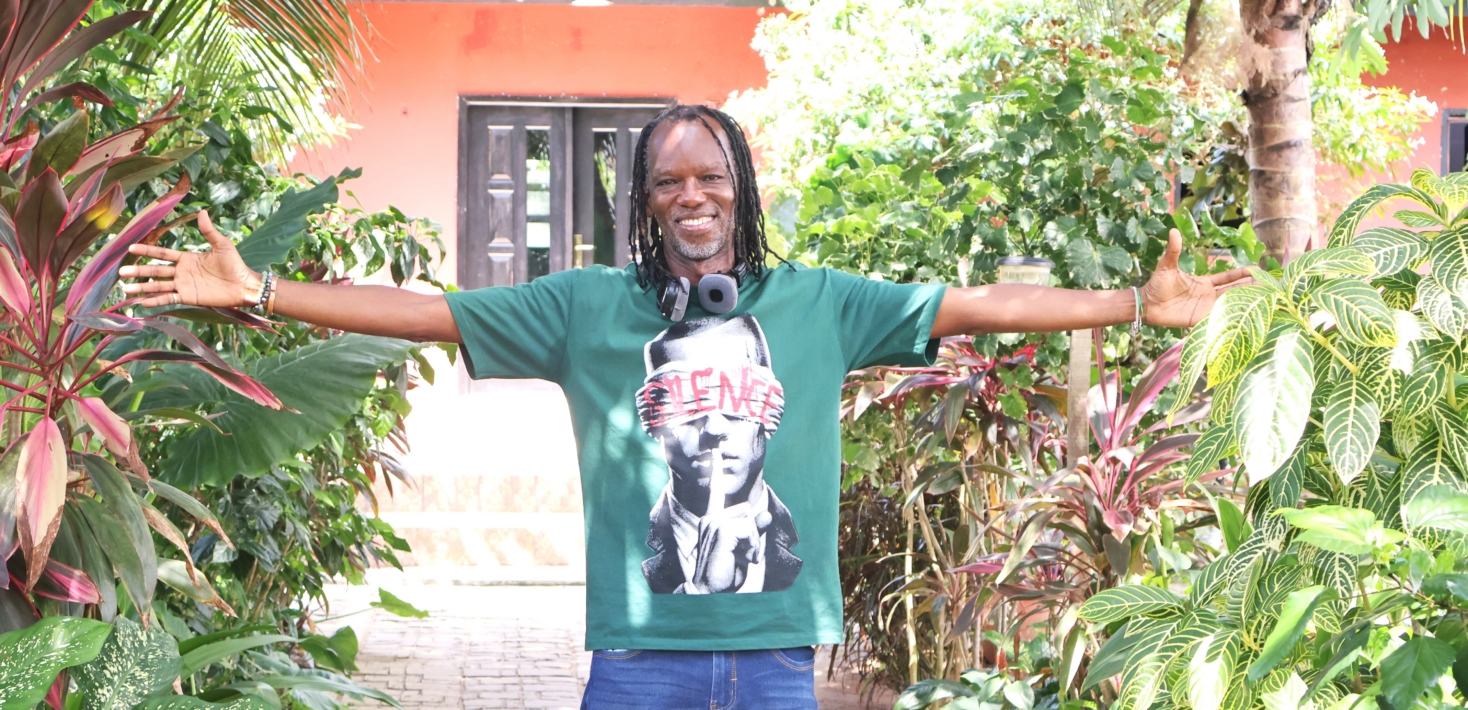
Kajeem, the Ivorian reggae-man who celebrates human rights

June 22, 2026

Amnesty International

On 22 June 2026, Amnesty International wrote about the inspiring Ivorian reggae artist/ human rights defender Guillaume Konan, known as Kajeem,

Guillaume Konan, known as Kajeem, is a singer and songwriter who grew up in Abobo, a neighbourhood of Abidjan, the economic capital of Côte d’Ivoire. Now 57, he began his career in the 1990s in rap music before moving on to reggae. Kajeem is committed to defending rights and freedoms, and speaks out against restrictions on civic space in his country, particularly the right to freedom of expression. He has been working with Amnesty International for over a dozen years as a human rights ambassador.

Following the song “Osons le courage” (Let’s be brave) in 2023, which called on youth to resist injustice, he released in June 2026 the song “En toute liberté” (In total freedom) with artists Didier Awadi from Senegal and Soum Bill from Côte d’Ivoire, and the support of Amnesty International.

“I made my first visit to prisoners when I was 12, as a Catholic boy scout. It was a very formative experience for the young boy I was. I couldn’t understand how people could be put in those terrible conditions, no matter what they had done. So, when I started playing music as a teenager, I gravitated toward genres that stand up for the underdog. Freedom of expression was one of the first rights I sought to assert. Nowadays, the laws in Côte d’Ivoire regarding the internet are so vague that they have become pretexts for imprisoning whomever the authorities please. There is no worse oppression than the one carried out under the guise of the law. Being able to speak out against injustice is a fundamental right, and until the day I die, I will fight for it…. I write songs that denounce a system, not individuals.Ivorian singer Kajeem

I’ve faced various forms of pressure. Today, radio hosts are pressured not to play certain songs, and sponsors are pressured to stop supporting certain artists. The first song of mine which provoked threats was “Sergent 2 togos” (Sergeant 2 togos) released in 2006, which exposed police extortion at roadside checkpoints. I often joke that in other countries, when you’re threatened, you go to the police for protection. But I was being threatened by the police! I had to leave the country for six months.

When I released the song “Tu tournes film” (You’re shooting a movie) in 2023, I faced the same issues, but in a much more intense way. The song “Tu tournes film,” meaning “You’re just blowing hot air”, is about broken promises. An election pledge is a social contract made with the voters, but if you remind those guys of their promises, they get upset!

I woke up one morning to over 1,600 hate messages, including death threats. But I’ve never been very scared by that kind of thing, I think it’s counterproductive because a song has a life of its own, even if its author is dead! People shouldn’t see me as an enemy. I write songs that denounce a system, not individuals.

People may feel that human rights are a luxury they cannot afford because they have basic needs to meet. But how many people earn a lot of money while living under total oppression? We cannot prioritize our needs by saying, “Let’s eat first and worry about that later.” Human rights do not apply only to a certain category of countries or individuals, they are universal.

For me, the future is bright, as every day we see youth getting engaged despite all the distractions offered to them. I think of myself as a sad optimist, unlike the cheerful pessimists who seem happy but no longer believe in anything and just want to enjoy the moment. When you become aware of the realities, it makes you a little sad, but it motivates you because it shows you the work that needs to be done, and every morning, you head back into the fray.

Watch the video clip “En toute liberté” (In total freedom) with artists Kajeem, Didier Awadi and Soum Bill

In 1988 I was in Abidjan for the historic Human Rights Now! world tour concert organized by Amnesty. After that I kept running into the Amnesty team in the field, whether I was working with the Red Cross, visiting detainees, or organizing events at the university to raise awareness of human rights. We were working on the same issues, so I felt less alone. To me, Amnesty is truly like family.   Our song “En toute liberté” is for all those fighting for human rights, so they have a rallying cry.”

To mark the release of the song “En toute liberté” and as part of the campaign Resist run by Amnesty International, Kajeem and Amnesty International Côte d’Ivoire are organizing a digital campaign, as well as discussions on the right to freedom of expression at universities across Côte d’Ivoire.

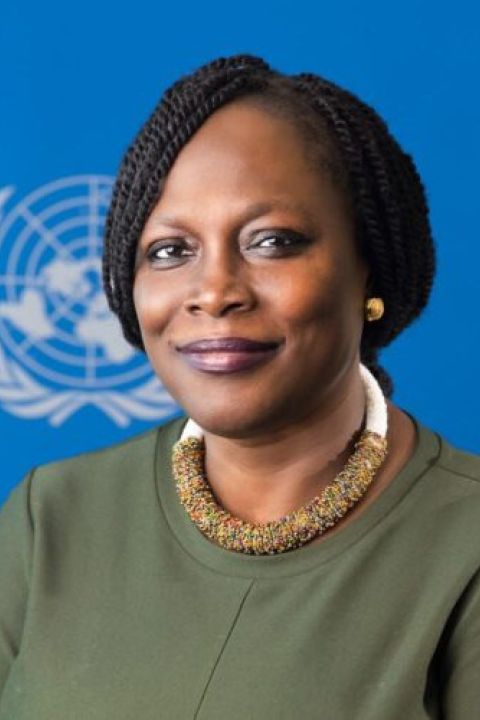
Awa Dabo of The Gambia – Deputy High Commissioner for Human Rights

June 7, 2026

On 19 May 2026 I bid farewell to Deputy High Commissioner for Human Rights, Nada Al-Nashif, [see: https://humanrightsdefenders.blog/2026/05/19/un-farewell-to-deputy-high-commissioner-nada-al-nashif/] but forgot to mention that already on 16 February 2026 the United Nations Secretary-General had announced the appointment of Awa Dabo of The Gambia as her successor.

Ms. Awa Dabo has extensive experience in human rights, crisis recovery, peacebuilding and prevention, humanitarian affairs and development. She has held several senior level positions within the UN, at country and headquarters levels, most recently as Director and Deputy Head of the UN’s Peace Building and Peace Support Office (DPPA/DPO), where she has been leading and managing efforts to develop peacebuilding strategies and initiatives, and building a strong interface with internal and external partners. 

Ms. Dabo previously served as Chief of Country Oversight and Support, for the United Nations Development Programme (UNDP) Regional Bureau for Africa, Senior Adviser and Head of the Crisis and Fragility Policy and Engagement Team for the Crisis Bureau of UNDP, Country Director for UNDP in Tanzania, and Regional Programme Manager and Team Leader at UNDP’s Bureau for Crisis Prevention and Recovery. 

Ms. Dabo, who started her UN career as a UN Volunteer (UNV), also worked with other UN and non-UN entities, including the UN Office for the Coordination of Humanitarian Affairs (OCHA), the Office of the UN High Commissioner for Human Rights (OHCHR), and the African Society of International and Comparative Law. 

Ms. Dabo holds an LLM in International Human Rights Law from the University of Nottingham, United Kingdom. In addition to her native English, Krio and Mandinka, she is fluent in Pidgin and Wolof.

https://www.un.org/sg/en/content/sg/personnel-appointments/2026-02-16/ms-awa-dabo-of-the-gambia-deputy-high-commissioner-for-human-rights

2 June 2026 film screening and discussion: “Water for Life” and the struggle of Berta Cáceres

May 21, 2026

On 23 November 2022 I posted:

and now – 3 years later – there is another film, shown on 02 June 2026, also in Geneva:

Ten years after the murder of Honduran human rights defender Berta Cáceres, ISHR and PBI Switzerland invite you to a special film screening and discussion featuring an edited version of the film “Water for Life “, followed by a discussion with Roxanna Altholz, Camilo Bermúdez (COPINH) and director Will Parrinello. Free admission upon registration.

For more on Carceres, see: https://humanrightsdefenders.blog/tag/caceres/ as well as https://www.trueheroesfilms.org/thedigest/laureates/2AD0CEE4-80CB-3234-04B4-F2ED7ACBE6C5

As part of a European advocacy tour organised by Peace Brigades International, Roxanna Altholz and Camilo Bermúdez will be stopping off in Switzerland to discuss the fight for truth and justice in the Berta Cáceres case.

The screening will be followed by a discussion with:

  • Roxanna Altholz, a human rights lawyer, associate director of the Human Rights Clinic at Berkeley Law and co-author of the independent report on the murder of Berta Cáceres
  • Camilo Bermúdez, a human rights defender and legal adviser to COPINH, a Honduran organisation founded by Berta Cáceres and supported by PBI in Honduras
  • Will Parrinello, director and producer of the film Water for Life.

The discussion will be moderated by Txell Bonet, a Catalan journalist.

2 June 2026 7:30 PM – 9:30 PM. Address: Fonction cinéma Maison des Arts du Grütli Rue du Général-Dufour 16 1204 Genève Event language(s) French/Spanish RSVP Needed: yes

https://ishr.ch/events/film-screening-and-discussion-water-for-life-and-the-struggle-of-berta-caceres

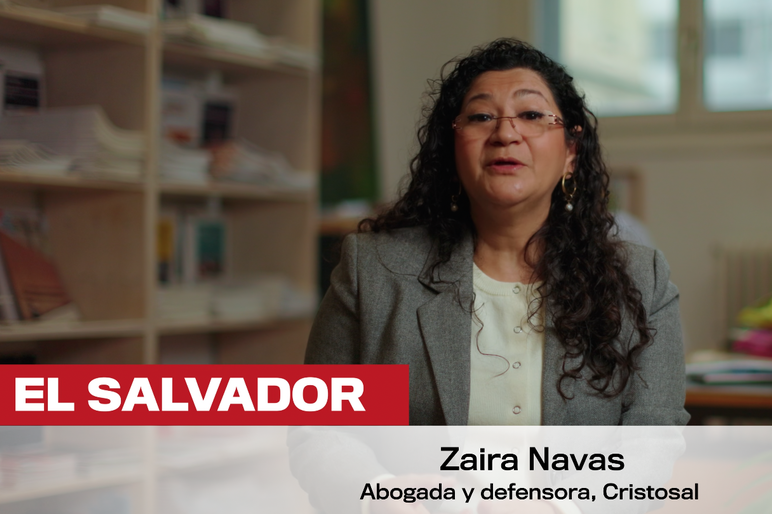
Interview with Zaira Navas – a Salvadoran Woman Human Rights Defender in Exile

April 20, 2026

Zaira Navas woman human rights defender from El Salvador

Zaira Navas, woman human rights defender from El Salvador.

In recent years, civic space has significantly reduced in El Salvador, under a state of exception, a state of emergency that suspended several constitutional rights. Human rights defenders have faced increasing threats and criminalisation, forcing many into silence or exile. Zaira Navas is a lawyer and human rights defender at Cristosal, partner of OMCT and the SOS-Torture Network. She is also a member of OMCT’s Latin America litigators’ group, part of four regional litigators’ groups that bring together lawyers and human rights defenders working at the front lines of the fight against torture and ill-treatment. Last year, Zaira Navas was pushed to flee El Salvador, after her colleague, Ruth López, prominent Salvadoran activist, was arrested. In Geneva to attend the Human Rights Council, she tells us about her experience being a woman human rights defender in exile, and where she still finds hope in her work.

What was it like to make the decision to leave El Salvador?

I am currently in exile due to repression under the state of exception in El Salvador imposed by President Nayib Bukele, which intensified in 2025. In May, my colleague Ruth López was detained on absurd corruption charges. That same week, I learned I could also be arrested. Our organisation, Cristosal, asked us to protect ourselves. There was no time to think about it. We left the country believing we would return in 15 days, but I have now been outside El Salvador for nine months.

How has exile affected you, as a woman and as a human rights defender?

The first months were filled with uncertainty. Violence and aggression against defenders increased, and our organisation was forced to close its operations in the country. There was no turning back.

There was a period when I felt depressed. Not only for being away from my country, but because I thought I could not continue my work. I am now separated from my family, but I am working, and that is a very important source of encouragement….

What actions should the international community take to ensure a safe environment for defending human rights in El Salvador?

The international community must closely monitor human rights violations in El Salvador and must pay close attention to what is happening in our country, questioning the anti-democratic methods and internal policies. International cooperation allows us to keep working. It is important that organisations that support human rights groups look for new ways to cooperate so that the work can continue from outside the country.

https://www.omct.org/en/resources/blog/it-is-my-way-of-life-and-my-legacy-interview-with-a-salvadoran-woman-human-rights-defender-in-exile

Documentaries give a voice to those who are silenced

March 29, 2026

The 24thedition of the Geneva International Film Festival and Forum on Human Rights (FIFDH) took place in Geneva from 6-15 March 2026. The Right Livelihood team attended several screenings and debates and shared the experience in this text.

Ellynn Del Perugia, Administrative Officer, wrote on 26 March 2026 about this:

Each year, the FIFDH offers the opportunity to watch documentaries and movies from all corners of the world. Some echoed the work and values of Right Livelihood Laureates or the proposals currently under research, others expanded our understanding of the broader human rights landscape.

More than providing an opportunity to learn, these films act as living memories and testimonies. They make public what power would prefer to keep hidden. In some cases, placing a camera in someone’s hands becomes an act of resistance in itself. As 2024 Laureate Issa Amro did when he initiated a camera distribution project in Hebron, Palestine, to document and collect video evidence of abuses and injustices committed by Israeli settlers and the military against Palestinians. 

The festival opened with “A Fox Under a Pink Moon”, which won the Grand Award of the festival. This self-portrait follows a 16-year-old Afghan artist as she attempts to escape multiple forms of violence in Iran and join her mother in Austria, using her mobile phone as both a tool of survival and a means of artistic expression.

Over the following days, the programme moved across different geographies and contexts: Argentina grappling with fifty years of memory since the dictatorship in the documentary “Identidad”; China’s expanding surveillance state and its repression of the Uyghur population, in “Eyes of the Machine”; Pakistan’s environmental and human crisis in “Black Water”; and the fragile future of multilateralism explored in “Solidarity” alongside a debate on the future of International Geneva. The latter raised important questions for Right Livelihood, which uses international platforms to support the Laureates. Are we witnessing the end of a rules-based international order? And if so, what replaces it? An order based purely on the interests of the most powerful? What would a future without International Geneva look like?

Across these very different stories and regions, one theme kept returning: the suppression of memory as a tool of power. “Identidad” follows one man’s quest to rediscover his origins and identity. The documentary explores the importance of remembrance in countering the erasure of memory, a tactic often employed by repressive governments to conceal their own crimes.

“Eyes of the Machine” raises a similar question, documenting the silencing of the Uyghur population’s culture, language and collective memory. Here too, some individuals have chosen to keep these memories alive and share their stories, often at great personal risk.

This is something we recognise deeply at Right Livelihood. The Laureates we support are often people who choose to speak, act and organise in contexts where doing so comes at great personal cost.

Held alongside the 61st session of the Human Rights Council, several Laureates and partners present in Geneva also participated in this festival. It is difficult to leave these films feeling indifferent. They unsettle, as they should. They raise questions about the direction of the world and the future that lies ahead. But they also remind us that memory, when kept alive, can be a form of hope.

[see also: https://humanrightsdefenders.blog/2023/02/07/true-heroes-films-launches-hrds-animation-pilot/]

Right Livelihood on Human rights defenders in exile

March 19, 2026

The Right Livelihood Foundation and partners have gone into the problems faced by Human Rights Defenders in exile:

Leaving your country means more than crossing a border. It means stepping into uncertainty, a place where language falters, futures blur and belonging must be rebuilt. But exile can also open doors. It can broaden perspectives, forge new alliances and inspire people to rebuild on their own terms.

Through the project “Reconceptualising exile”, Right Livelihood together with the Global Campus of Human Rights, work with a group of 14 fellows living in exile to rebuild life, regain identity and purpose while the ground they left behind remains too dangerous to return to. This visual story challenges what you think exile means. It invites you to see how it feels and how people rebuild from fragments, carrying language, memory and conviction across borders.

What forces someone into exile? Behind those numbers are real people punished for what they believe in:

For Natallia Satsunkevich, a human rights defender from Belarus, it was fighting for democracy in the face of the dictatorship.

For Viacheslav (Slava) Samonov, a Russian lawyer and LGBTQ+ activist, the dissolution of his NGO amid the post-invasion crackdown and the rapidly escalating repression against LGBTQ+ people.

For Askold Kurov, a Russian documentary filmmaker, it was promoting free media and LGBTQ+ rights.

For Helen Mack Chang, it was challenging the rampant corruption in Guatemala.  

For Abdul Rahman Yasa, it was standing up for human rights, women’s issues and youth advocacy under the Taliban. 

TAKE A DEEP DIVE INTO THEIR FULL STORIES

Human rights defender’s story: Nathalia Bonilla from Ecuador

March 6, 2026

Nathalia Bonilla is an environmental human rights defender from Ecuador who works in the protection of the rights of Nature. She told ISHR about her country’s sharp policy turn in favour of extractive activities and spoke about the ‘utopia’ she and her peers would like to see in its place. ‘A revolution where you can’t dance is not my revolution,’ Nathalia said, in arguing for an ‘environmentalism for the people’.

Meet other defenders liker her: https://ishr.ch/defender-stories/

Interview with Jawad Fairooz, a Bahraini human rights defender,

February 25, 2026

Jawad Fairooz is a Bahraini human rights defender, Founder of OMCT’s SOS-Torture Network member organisation SALAM for Democracy and Human Rights. He is also a former Member of the Bahraini Council of Representatives, currently living in exile after years of persecution by the authorities, including detention, torture, and the revocation of his nationality. In Bahrain, severe restrictions on civic space persist alongside widespread impunity and ongoing allegations of torture. As the UN Committee Against Torture reviews Bahrain’s record, Jawad Fairooz reflects on the human rights climate in the country, the personal cost of his advocacy, and the urgent need for accountability, drawing on his experience and the findings highlighted by OMCT and partners’ Global Torture Index.Since the crackdown on the Arab Spring protests in 2011, Bahrain has been marked by grave human rights violations. .. More than 435 people have had their nationality revoked [see also: https://humanrightsdefenders.blog/2018/02/25/i-am-bahraini-website-launched-in-effort-to-stop-denationalizations/], and over 300 prisoners of conscience remain behind bars, including opposition leaders. Freedom of speech and assembly are criminalised, torture has not been systematically banned, and political and civil rights continue to be restricted. The core violations that began years ago are still continuing today.

What has been the cost of your advocacy in Bahrain?

From the moment I became active in public life, I knew there would be a high price to pay. In 2004, while leading a large protest against the US invasion of Iraq, I was shot in the head with a live bullet. Since then, I have been targeted repeatedly through detention, torture, and eventually the revocation of my nationality.

The Global Torture Index classifies Bahrain as facing a “very high risk” of torture. Why?

Torture is not taken seriously by the authorities. There are no accountability and no clear mechanism to hold senior officials responsible. Victims are denied remedies, redress, and rehabilitation. Even after release, former detainees struggle to regain basic civil and political rights. They face obstacles in obtaining employment, housing, and other services. International recommendations from bodies such as the UN Committee Against Torture have not been implemented. There have been no meaningful legal amendments to fully prohibit torture or establish independent investigations. Semi-government institutions lack independence and cannot be trusted to address these abuses. All of this shows a clear lack of political will.

What are the main obstacles facing survivors of torture when seeking justice?

The government focuses on public relations rather than real reform. Institutions like the National Institution for Human Rights, the Special Investigation Unit, and other bodies exist, but they are not independent. Cases referred to them rarely result in accountability or fair trials. Victims consistently report that justice is denied. Torture has evolved from overt physical abuse to psychological and “soft” methods, including deprivation of rights, travel bans, revocation of nationality, deportation, and denial of documents and services. These practices show that torture continues in different forms, and the authorities are not serious about ending it at its roots…

You have been in exile. How do defenders continue their work despite reprisals?

Human rights defenders in exile pay a heavy price. Many are banned from entering Bahrain or face fabricated cases, Interpol notices, travel restrictions, and harassment of their families. Smear campaigns label activists as terrorists or foreign agents. Despite this, defenders continue out of belief in the cause and responsibility toward victims. It is extremely difficult, but repression cannot last forever, especially under international scrutiny.

What gives you hope to continue your work?

Silence only strengthens repression. The resilience of victims and their families gives me hope. Standing with them is a moral and spiritual duty. I believe oppression has a short life, and that by continuing this work, we help ensure that future generations do not inherit a reality of torture, executions, statelessness, and detention.

https://www.omct.org/en/resources/blog/silence-only-strengthens-repression-interview-with-bahraini-human-rights-defender

Nathalia Bonilla, an environmental human rights defender from Ecuador

December 22, 2025

Nathalia Bonilla is an environmental human rights defender from Ecuador who works in the protection of the rights of Nature. She told ISHR about her country’s sharp policy turn in favour of extractive activities and spoke about the ‘utopia’ she and her peers would like to see in its place. ‘A revolution where you can’t dance is not my revolution,’ Nathalia said, in arguing for an ‘environmentalism for the people’.

https://ishr.ch/defender-stories/human-rights-defenders-story-nathalia-bonilla-from-ecuador

Transnational repression by China reaches New York

November 8, 2025

On 6 November 2025 Human Rights Watch issued a press release on how Chinese Police Harass Filmmakers, Families to Undermine Free Expression Abroad

9da2a6d2-e1fd-4b3d-a322-ba3c24f25b37
A still from Jiangnan Xu’s film “Friends from Jiangnan.” © Zhu Rikun

Chinese authorities harassed several dozen Chinese film directors and producers, as well as their families in China, causing them to pull films from the inaugural IndieChina Film Festival in New York City. On November 6, 2025, the festival’s organizer, Zhu Riku, announced that the film festival, scheduled for November 8-15, had been “suspended.”

The Chinese government reached around the globe to shut down a film festival in New York City,” said Yalkun Uluyol, China researcher at Human Rights Watch. “This latest act of transnational repression demonstrates the Chinese government’s aim to control what the world sees and learns about China.

Chiang Seeta, a Chinese artist and activist, reported that nearly all participating directors in China faced intimidation. Even directors abroad, including those who are not Chinese nationals, reported that their relatives and friends in China were receiving threatening calls from police, said Chiang.

On November 1, the organizers issued an announcement on social media saying they had received messages from some film directors and producers and their families about Chinese government harassment: “We are deeply concerned about the situation. … [I]f you are under pressure not to attend the festival … we fully understand and respect it.” By November 4, more than two-thirds of participating films had cancelled their screenings.

After the festival was suspended, Zhu issued a statement that the decision was not out of fear, but rather to “stop harassment of … directors, guests, former staff, and volunteers associated with the festival, including my friends and family.”

Independent film festivals in China have faced intensifying crackdowns over the past decade, Human Rights Watch said. The Chinese authorities have shut down all three major independent film festivals in China: Yunfest, founded in 2003; the China Independent Film Festival, founded in 2003; and Beijing Independent Film Festival, founded in 2006.

When the authorities shut down the last screening of the Beijing Independent Film Festival in 2014, they cut off electricity from the venue, confiscated documents from the organizer’s office, and forced the organizers to sign a paper promising not to hold the festival. Many festival organizers have tried without success to adapt, for instance by changing their format to screenings at multiple venues.

The 14th China Independent Film Festival was shuttered in 2018, the last time such a festival took place in China.

A court in January 2025 sentenced Chen Pinlin, known as Plato, to three-and-a-half years in prison for allegedly “picking quarrels and provoking trouble” after he made a documentary about the “white paper protests” during Covid-19 lockdowns. Transnational repression can be defined as government efforts to silence or deter dissent by committing human rights abuses against their own nationals living abroad, their families at home, or members of the country’s diaspora. [see also: https://humanrightsdefenders.blog/2025/10/17/un-report-highlights-chinas-targeting-of-human-rights-defenders-abroad/]

The Chinese government’s transnational repression of the arts has not been limited to film. Chinese officials interfered with an exhibition in Bangkok and censored artwork by Uyghur, Tibetan, and Hongkonger artists in August.

https://www.hrw.org/news/2025/11/07/china-authorities-shut-down-film-festival-in-new-york

https://www.europarl.europa.eu/news/en/agenda/briefing/2025-11-12/10/combating-transnational-repression-of-human-rights-defenders

https://ishr.ch/latest-updates/un-experts-warn-of-surge-in-transnational-repression-targeting-defenders-from-china-and-southeast-asia

https://www.theguardian.com/world/2026/mar/25/china-hong-kong-dissidents-transnational-repression-report