Posts Tagged ‘film’

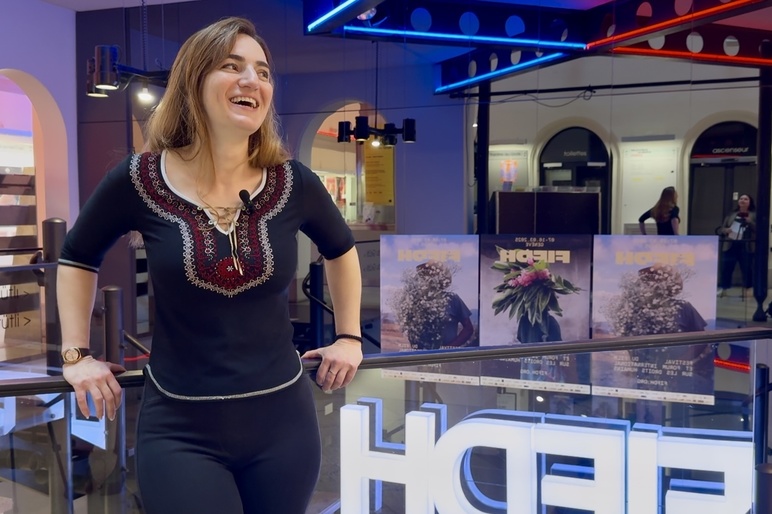
Geneva Human Rights Film Festival: winners announced

March 19, 2024

On 14 March 2024, the FIFDH published the film awards for its 2024 Festival. They include:

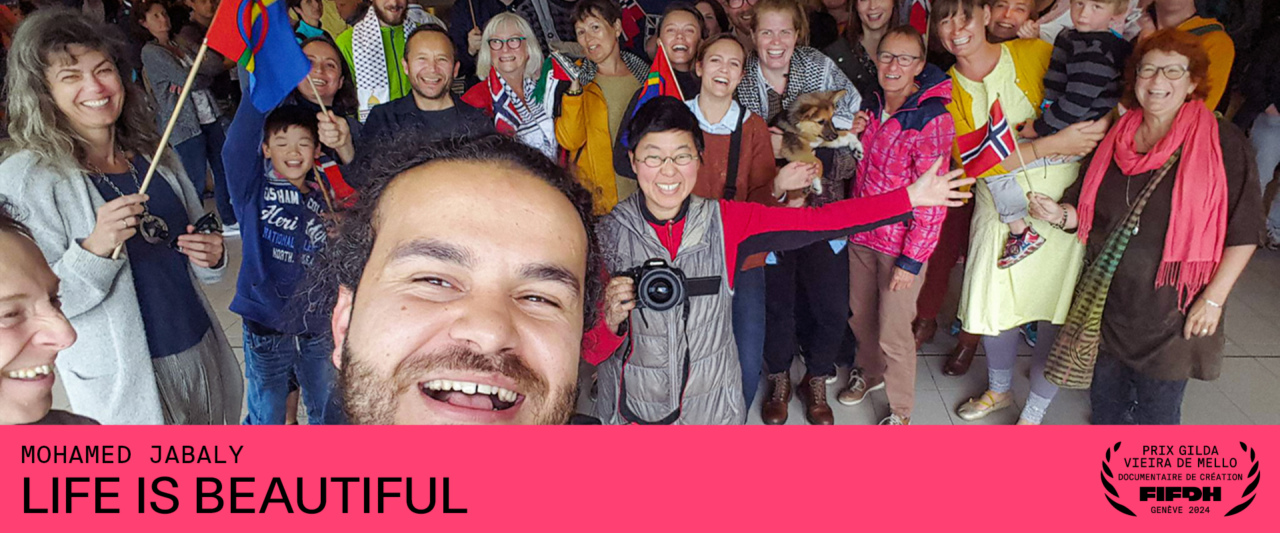
Gilda Vieira de Mello Prize

provides a moving account of the daily life of Mohamed Jabaly, who is stranded in Norway after the closure of Gaza’s borders. A call for freedom of movement, but above all freedom to pursue your dreams. “Gaza as depicted in Life is Beautiful no longer exists. Its streets, squares and the faces that populate filmmaker Mohamed Jabaly’s memories have been eradicated in the ongoing genocide in Palestine. What we are left with are the images that tell of the past, already under Israeli occupation. The violence of the borders, but also the solidarity and determination of an individual to lead a dignified existence. Cinema becomes the compass of an odyssey that takes us all to Gaza.

Prize of the World Organisation Against Torture (OMCT)

Total Trust follows the daily lives of activists who are watched and oppressed by the Chinese government through the use of technology, artificial intelligence and human rights. “Unveiling what appears to be a real-life Orwellian 1984 scenario, the documentary vividly portrays the persecution of Chinese human rights defenders and exposes the use of cutting-edge state surveillance technology tools to tightly control the lives of millions of people. This disconcerting image of rising authoritarianism prompts an important question: “Is a future controlled by technology, where we are no longer free to exercise our rights, a real risk for us all?” The prohibition of torture is what allows individuals to shape their personality and views, and establish their dignity, which is the very essence of being human.” [https://www.omct.org/en/resources/blog/one-moment-of-darkness-wont-blind-you-forever-award-winning-filmmaker-jialing-zhang-on-state-surveillance-technology-and-persecution-of-human-rights-defenders-in-china]

In March 2024, also noteworthy is that at the Thessaloniki International Documentary Festival the top prize in the International Amnesty Award competition went to Maciek Hamela’s Oscar-shortlisted In the Rearview. Hamela shot his film almost entirely within the confines of a van evacuating Ukrainian civilians fleeing the Russian invasion of their country. [https://deadline.com/2024/03/thessaloniki-internationa-documentary-festival-2024-awards-my-stolen-planet-stray-bodies-1235860706/]

For the full table of FIFDH winners, see:

https://www.euronews.com/culture/2024/03/18/human-rights-film-festival-winners-hone-in-on-russia-and-gaza

After 36 years HRW Human Rights Film Festival stops

March 14, 2024

Sad news for those of us – like me – who believe in the power of images [see e.g. https://humanrightsdefenders.blog/tag/images/ and https://humanrightsdefenders.blog/tag/images/page/2/ and https://humanrightsdefenders.blog/tag/images/page/3/ and https://humanrightsdefenders.blog/tag/images/page/4/ and https://humanrightsdefenders.blog/tag/images/page/5/ and https://humanrightsdefenders.blog/tag/images/page/7/ and https://humanrightsdefenders.blog/tag/images/page/8/]:

On 13 March 2024 Human Rights Watch announced that it would be closing its long-running film festival. Founded in 1988, the Human Rights Watch Film Festival showcased nearly 1,000 independent films, was presented in over 30 cities across the globe, and is the world’s longest running human rights film festival.

“It’s with sadness and deep regret that we have made the difficult decision to close the Human Rights Watch Film Festival,” said Tirana Hassan, executive director of Human Rights Watch. “The film festival is a celebrated cultural institution that educated and inspired hundreds of thousands of filmgoers and filmmakers around the world over three decades, providing a critical space for connection, conversation, and action on human rights issues.”

The decision to close the festival was part of a wider restructuring due to financial constraints, Human Rights Watch said. Human Rights Watch Film Festivals will take place as planned across the United Kingdom and Ireland, opening on March 14, 2024, and across Canada starting on March 21.

Human Rights Watch is immensely proud of the talented film festival leadership and staff, who built partnerships across the human rights community and film industry. The festival established a mainstream platform for impactful films and in-depth conversations about human rights issues, with a priority focus on underrepresented perspectives from around the world.

The festival staff have been instrumental in pushing for increased accessibility standards in the film industry, resulting in three fully inclusive film festivals in the last two years. During the Covid-19 pandemic and the lockdowns that shuttered cinemas, the film festival team created a digital streaming site that tripled attendance figures, encouraged festival members to tune in for live conversations, and ensured that the public would not be isolated at home. The innovative site continued the festival’s work of creating spaces for dialogue, connection, and action on human rights issues.

“We owe the Human Rights Watch Film Festival’s success and impact to the longstanding commitment of our festival staff and consultants, volunteers, partners, the filmmakers, and of course our audiences,” Hassan said. “They helped to nurture the human rights storytelling movement that we see thriving today.”

https://ff.hrw.org/news/human-rights-watch-end-its-celebrated-film-festival

Copenhagen International Documentary Film Festival adds major human rights award

February 16, 2024

On 15 February 2024 Ben Dalton informed that the Copenhagen International Documentary Film Festival (CPH:DOX) has unveiled the line-ups for its five competitive sections for its 2024 edition. All films in the main Dox:Award competition are world premieres for the second successive year.

The festival has launched a new section and award for 2024, the Human:Rights award, marking the 75th anniversary of the Universal Declaration of Human Rights. A €5,000 prize sponsored by the Institute for Human Rights will be given to a film that addresses human rights issues.

The festival will also include a series of events and discussions focusing on universal rights, beginning with a photo exhibition at the Pressen venue.

“This year’s competition sharpens its focus on the most urgent issues of our time, from the wars in Ukraine and Gaza to gang violence in Sweden, exploring themes of identity politics, colonialism, and the foundational struggles for democracy and the fight against climate change,” said Niklas Engstrom, artistic director of CPH:DOX.

https://www.screendaily.com/news/cphdox-unveils-competitions-adds-human-rights-award/5190553.article

The Swimmers: Netflix film about Syrian refugee swimmers

September 15, 2022

UNHCR announced on 9 September 2022 that a new Netflix film, The Swimmers, tells the remarkable tale of Yusra Mardini, a young Syrian refugee and UNHCR Goodwill Ambassador, who escaped conflict and went on to compete in two Olympics.

“This is a movie that any person in the world can relate to,” the 24-year-old said shortly before the film’s world premiere on Thursday at the prestigious opening night of the Toronto International Film Festival (TIFF). “We want the movie to make a difference.” UNHCR Goodwill Ambassador Yusra Mardini hopes the dramatic new film of her and her sister’s escape from conflict to new lives in Europe will challenge attitudes towards refugees.

Directed by acclaimed Egyptian-Welsh filmmaker Sally El Hosaini of My Brother the Devil, the film stars Lebanese actors and real-life sisters Nathalie and Manal Issa, as Yusra and her older sibling Sara.

It tells the story of their childhood in Damascus, their focus on swimming from a young age, and their dramatic journey to Europe in 2015 that saw them help save the lives of fellow refugees by jumping into the water and steering their stricken dinghy to shore through the Aegean Sea’s dark waters.

While the public will have to wait until 23 November for the film’s general release, Mardini has already seen it twice and says it is impossible for her to pick the best moments. “Honestly, the whole movie is my favourite scene!” she says.

She hopes it will prove much more than simple entertainment. “This movie is going to put the conversation on the table of what a refugee is, of what we want to change,” says Yusra.

El Hosaini, the director, echoes this ambition. “My greatest hope for the film is that it subverts the tired stereotypes of both refugees and young Arab women.

“I want the film to remind us that refugees are regular people with full, regular lives, with hopes and dreams. Ordinary people who’ve had to make unimaginable choices, leaving their homes and risking everything in search of a safer, better life.”

Since becoming the youngest ever UNHCR Goodwill Ambassador in 2017, and competing as a swimmer in both the Rio 2016 and Tokyo 2020 Olympics, Yusra has emerged as a leading voice for refugees, one that The Swimmers will amplify still further.e

To change perceptions of refugees, understanding must come first, she says. “The education systems have to change: they have to be more open, they have to teach the stories of migrants and refugees,” says Yusra, who hopes sharing her story far and wide, through her 2018 memoir Butterfly and now The Swimmers, will help educate people about the potential, and the value, that all refugees have. “We have to treat everyone the same,” she says.

The Olympic Games changed the way I think about being a refugee. I walked into the stadium in Rio and I realised that I can inspire so many people. I realised that ‘refugee’ is just a word, and what you would do with it is the most important thing.”

Despite being in the Hollywood spotlight, Yusra has not lost sight of her calling. “A lot still has to change for refugees,” she says. “This is not the end. This is just the beginning.”

https://www.unhcr.org/news/stories/2022/9/631b527f4/netflix-brings-yusra-mardinis-inspiring-story-world.html

Film “THE STORY WON’T DIE” about Syrian protest art

June 18, 2022

THE STORY WON’T DIE is an inspiring, timely look at a young generation of Syrian artists who use their work to protest and process what is currently the world’s largest and longest ongoing displacement of people since World War II. The film is produced by Sundance Award-winning producer Odessa Rae (Navalny). Rapper Abu Hajar, together with other celebrated creative personalities of the Syrian uprising, including post-rock musician Anas Maghrebi, members of the first all female Syrian rock band Bahila Hijazi and Lynn Mayya, breakdancer Bboy Shadow, choreographer Medhat Aldaabal, and visual artists Tammam Azzam, Omar Imam and Diala Brisly, use their art to rise in revolution and endure in exile in this new documentary reflecting on a battle for peace, justice, and freedom of expression. It is an uplifting and humanizing look at what it means to be a refugee in today’s world, and offers inspiring and hopeful vantages on a creative response to the chaos of war.

The Human Rights Foundation organised the New York Premiere of THE STORY WON’T DIE on Friday, June 17 at Cinema VillageThe screening was followed by a Q&A with award-winning filmmaker David Henry Gerson and the film’s co-producer Abdalaziz Alhamza.

https://mailchi.mp/hrf.org/you-are-invited-june-15th-screening-of-the-dissident-288999?e=f80cec329e

Neil Gaiman launches crowdsourced animated film for Syrian refugees

December 8, 2020

Neil Gaiman launches a crowdsourced animated film to help raise funds for Syrian refugees battling freezing temperatures and icy winds amid threat of Covid-19.

Neil Gaiman – celebrated author and Goodwill Ambassador for UNHCR – has joined forces with hundreds of fans and artists to release a new animated version of his poem What You Need To Be Warm.

The animated film aims to raise much needed funds for UNHCR’s Winter Appeal providing vital support for refugees in the Middle East including Syrian and Iraqi refugees, many of whom are battling their ninth winter away from home. This year is the hardest yet as refugees face snow, rain and freezing temperatures, as well as the impact of Covid-19 which has dramatically affected vulnerable families, put health at risk, devastated livelihoods, and pushed more refugees out into the cold.

Neil Gaiman said: “This animated film was a chance for people to come together to help raise awareness and life-saving funds to protect these families. I was blown away by the response and quality of drawings submitted online. People really care and want to help and they still can by making a donation

https://www.unhcr.org/news/press/2020/12/5fce20a14/neil-gaiman-launches-crowdsourced-animated-film-help-raise-funds-syrian.html

Tonight screening of “Boys State” by RFK Rights

October 6, 2020

Tonight 5 October 2020 you can participate in the virtual private screening of Boys State, which won this year’s Sundance Grand Jury Prize for documentary. This engaging film tells the story of 1,100 boys who come together to build a representative government from the ground up, and in the process examines our divided country and the health of the American democracy. Rolling Stone calls it “both sweeping and intimate” and “exhilarating.”   The screening will be followed by a Q&A session with the filmmakers and two of the film’s subjects, moderated by Kerry Kennedy.

Tonight at 7 p.m. EDT.    To RSVP to the event: email BoysStateRFK@a24films.com.   

https://mailchi.mp/rfkhumanrights/d7az6w232t-855714?e=99673fdc45

Shirin Ebadi biopic: Until We Are Free

August 27, 2020

Harris says, “It’s been an honor to work with many remarkable Nobel Peace Laureates, including the Dalai Lama, Archbishop Desmond Tutu and Shirin Ebadi, as part of the PeaceJam Nobel Legacy film series and to lend my voice to Shirin’s story of fighting for women and children to be treated with basic human dignities.”

https://www.benzinga.com/pressreleases/20/08/p17263858/award-winning-producer-and-voiceover-actor-laurel-harris-narrates-shirin-ebadi-until-we-are-free-w

Film “USA v Scott”: Humanitarian Aid Is Not a Crime

July 8, 2020

Murat Oztaskin – a member of The New Yorker’s editorial staff – wrote on 8 july 2020 a rich piece on the case of Scott Warren who was prosecuted for bringing water to migrants in the desert [https://humanrightsdefenders.blog/2019/05/29/also-in-usa-helping-migrants-is-criminalised-scot-warren-in-court-on-29-may/ ] He does so in reaction to the short documentary “USA v Scott”…

Warren was charged with one count of conspiracy to transport illegal aliens and two counts of harboring, and faced up to twenty years in prison. The lead-up to his first trial, in May, 2019, is chronicled in the short documentary “USA v Scott.”….

“USA v Scott” is directed by Ora DeKornfeld, a twenty-nine-year-old filmmaker, and Isabel Castro, a thirty-year-old multimedia journalist who was born in Mexico. “I think we were both fundamentally inspired” to make the film, Castro told me, “because we saw it as such a seminal case.” In 2017 and early 2018, several No More Deaths volunteers, including Warren, were charged with federal misdemeanors for “littering” and “trespassing”—that is, for leaving water and other supplies along crossing routes in federal wildlife areas. But Warren’s arrest at the Barn proved a turning point in immigration enforcement. In early 2017, Jeff Sessions, Donald Trump’s first Attorney General, directed federal prosecutors to use the law against harboring unauthorized migrants as a tool to help enforce the Administration’s zero-tolerance immigration agenda—until then, the law had been used almost exclusively against smugglers who trafficked migrants for profit. Warren was charged by Michael Bailey, the U.S. Attorney for the District of Arizona, a Trump appointee.

The film, which has screened at the Tribeca and Mountainfilm festivals, largely skirts politics, focussing instead on how the situation raised “moral questions for people who were living in Arizona,” Castro said. Warren frequently hosts roundtable discussions on immigration in Ajo, and the film opens on one such meeting. “Borders are supposed to keep us safe,” one member of the community says. “And now I have fear.” Another says, “My thing is, they wanna come here, they wanna come here for a better life so badly, but then they also wanna say, ‘Well, do it my old-country way.’ ” Warren listens patiently, nods. “Thank you for sharing that,” he says. The film also shows individual interviews with residents of Ajo. “To us, it’s normal,” one man says. “We’ve lived with [crossing migrants] all of our lives. It was never a big deal. And then the government stepped in and made a big deal out of it.”

Warren’s felony trial began in May, 2019. The documentary shows the tense months leading up to it, as he remains calm and diligently continues his work with No More Deaths. “We saw in Scott . . . someone who was doing very radical work but who was carrying himself in a very open and mild-mannered way,” DeKornfeld told me—someone who “could potentially connect not only with people who already agree with his politics but also those who don’t.” The trial ended, in June, in a hung jury.

Because the prosecution declined to drop all charges against Warren, the case went to a second trial, in November, where Warren was tried on the harboring charges. (The conspiracy charge was dropped, and the judge ruled that no mention of the Trump Administration’s policies could be included in the arguments.) The jury found him not guilty. After the verdict, Warren said, “The government failed in its attempt to criminalize basic human kindness.” Although Warren was vindicated, the fate of Sacaria-Goday and Perez-Villanueva remains unknown.

https://www.newyorker.com/culture/the-new-yorker-documentary/usa-v-scott-and-the-fight-to-prove-that-humanitarian-aid-is-not-a-crime

Film “Sergio” (Vieira de Mello): first reviews decidedly mixed

January 31, 2020
This new film directed by Greg Barker [see also: https://humanrightsdefenders.blog/2014/01/23/we-are-the-giant-film-about-the-arab-spring-here-is-the-trailer/] and based on his own award-winning documentary, confusingly also called Sergio, is a biographical drama about Sérgio Vieira de Mello, a diplomat from Brazil who worked for the United Nations High Commissioner for Refugees (UNHCR) for most of his life and was briefly High Commissioner for Human Rights. He was celebrated as a pre-eminent humanitarian before tragically dying in the Canal Hotel bombing in Iraq alongside many of his staff in 2003. The fiction film Sergio made its premiere at the Sundance Film Festival on 28 January 2020 before heading to Netflix.

Kayleigh Donaldson in Screenrant of 2 january 2020 wrotes perhaps a bit too breathlessly that the film Sergio is “one of the most anticipated Netflix original movies in 2020“.

Now the first two reviews are out and they indicate that it is foremost a romantic story that is well acted but diverts a lot from reality.

Jessica Kiang in Variety of 29 January 2020 is the more critical and – in my view – serious voice:

… handsome, heroic, charismatic de Mello (played with persuasive charm by Wagner Moura) certainly does seem like a man whose present was shaped by …the better, brighter, freer global future he believed the U.N. could be instrumental in achieving and that he personally could help midwife into being. Such noble intentions and such impact on world affairs does render understandable Barker’s rather starry-eyed approach, but [puts] unnecessary length and sentimental emphasis on the man’s romantic life…

..First, we spin forward to the 2003 bombing of the U.N. headquarters in Baghdad, which was ordered by terrorist leader Abu Musab al-Zarqawi and which claimed at least 22 lives and wounded over 100 people, and here provides a loose framing device. De Mello and close associate Gil Loescher (Brian F. O’Byrne), both critically wounded, were trapped under tons of rubble in the blast, and … screenwriter Craig Borten imagines a borderline delirious de Mello reliving moments of significance from his storied life. Chief among these reminiscences is the tale of his romance with Carolina Larriera.. .an Argentinian U.N. economic adviser whom the married father-of-two met while brokering a peace deal between the rebels and the Indonesian government in East Timor.

In Adrian Teijido’s calm, throughful photography (it’s a refreshing choice to not go the shaky handheld docudrama route), de Armas and Moura make an attractive couple, and de Armas is able to imbue Carolina — whose role seems just a little wispy on the page — with an intelligence and will that makes her more than just de Mello’s romantic foil. But Barker’s emphasis on this love story at the expense of a deeper exploration of the exceptional talents that earned de Mello his reputation for feats of diplmatic wizardry in highly fraught situations where others had tried and failed, also has a curiously flattening effect.

Although the relationship with Larriera was doubtless crucially important to de Mello, it was not the thing that made him extraordinary in the eyes of the world. And so the hesitant courtship, the smouldering looks, and the romancing, including a tasteful but unnecessarily lengthy sex scene over which Fernando Velázquez’ otherwise rather generic political-thriller score crescendos like it’s high drama, all feel like a distraction from the more thorny and politically provocative side of de Mello’s story. That’s especially irksome given that the scenes of geopolitical debate, diplomatic argument and even ego clash between de Mello and the world-wearily witty Loescher … are actually where the film crackles to life.

…But this sentimental approach glosses over much of the potential drama that is set up only to dissipate: de Mello’s prickly relationship with U.S. Envoy Paul Bremer (Bradley Whitford); his association, criticized by Loescher, with war criminals and terrorists if he believed it could achieve his ends; and his fateful decision to send the U.S. Army guards away from the U.N. office in Baghdad in 2003. Sergio Vieira de Mello was, by all accounts, not a man who let fear of making the wrong decision stop him from acting decisively, and it’s a shame that the soft-edged romantic prevarications of “Sergio” prevent the film from embodying that same dynamism.

Courtesy of Sundance
 John DeFore in Hollywood Reporter of 30 January 2020 sees a more than successful transition from documentary to a feature film:

… Rather, it’s one of those rare films .. in which a genuine concern for geopolitics coexists perfectly well with romance and old-fashioned moviegoing pleasures. This portrait of influential U.N. diplomat Sergio Vieira de Mello benefits immensely from two magnetic leads, Wagner Moura and Ana de Armas, whose onscreen chemistry is undeniable; but its deft sense of structure is of equal importance, making it an engrossing picture even for those who know next to nothing about its subject or settings.

..Sergio and refugee expert Gil Loescher were trapped alive in the rubble; as a framing device, Sergio sets flashbacks to various points in his career during the hours when two American soldiers (Garret Dillahunt and Will Dalton) worked to extract the pinned men. These episodes help cement the diplomat’s reputation as an idealistic fix-it man for some of the world’s trickiest conflicts. …Sergio is out for a jog during his East Timor assignment when he passes another jogging foreigner, Carolina Larriera (de Armas). The attraction is immediate, but the film savors its development: …While the film plays up Sergio’s attractiveness to the younger woman (shirtless, the 50 year-old man probably bore little resemblance to Moura), it’s not blind to emotional flaws: He’s ignorant of key facts about his two sons’ lives, and he admits he’s most attentive to relationships and projects whose timeframe is finite.

Also on hand in East Timor is Loescher (Brian F. O’Byrne), who will be trapped by his side in Baghdad. The real Loescher, who had two legs amputated in his rescue from the site, was an independent expert who was only in Sergio’s Baghdad office (along with Arthur Helton – see: https://en.wikipedia.org/wiki/Arthur_Helton) to interview him for a column on openDemocracy.net. In Sergio, Loescher is a composite, depicted as Vieira de Mello’s right-hand man for multiple U.N. missions — the conscience who argues against his boldest moves. As a storytelling device, this works quite well; but using Loescher’s real name is an unexpected choice for a documentarian, and confuses the truth for no reason. [my view: INDEED – see also: https://humanrightsdefenders.blog/2017/06/07/gil-loescher-life-long-defender-of-rights-of-refugees-honored/ and https://www.imdb.com/title/tt0479980/]

Those who know the history intimately may take issue with other condensations that play perfectly well to a layperson: Sergio’s interactions with U.S. diplomat Paul Bremer (Bradley Whitford) are dramatically satisfying, and seem to capture the general nature of U.S./U.N. friction at the time; a question regarding the U.S. Army’s protection of Sergio’s office is probably also finessed for maximum thematic effect. The picture is most vulnerable to Hollywoodisms in scenes set after the bombing, as Carolina looks frantically for Sergio; the latter dreams of a sunny beach in his native Rio de Janeiro; and those soldiers heroically try to extract him despite having none of the necessary rescue equipment. But, coming late in the film as they do, these indulgences feel appropriate to the film’s lionization of its subject and investment in the couple’s relationship. Sergio believes in heroes and big ideals, and hopes we’re capable of the same belief…

Monica Castillo in NBC of 31 January 2020 adds an interview with the star Wagner Moura who “was so intrigued by Vieira de Mello’s story that he signed on as a producer for the movie. In the interview with NBC News, Moura said that this is the first of many stories he’d like to share to address the lack of Latinos on the screen. In the interview he also says “this guy is kind of a personal hero for me, and I’ve been working with the U.N. for a while; I’m a goodwill ambassador for the ILO [International Labour Organization] and the fight against slave labor..[Sergio] was a man who dedicated his life to human rights. When he was killed, he was the high commissioner for human rights; when he started in the U.N., he was the high commissioner for refugees“. Well he was NOT, he worked for the UNHCR.

——
https://variety.com/2020/film/uncategorized/sergio-review-1203473960/
https://screenrant.com/netflix-original-movies-anticipated-2020/
https://www.hollywoodreporter.com/review/sergio-1274882
https://www.nbcnews.com/news/latino/sergio-narcos-star-wagner-moura-plays-latino-who-doesn-t-n1127341