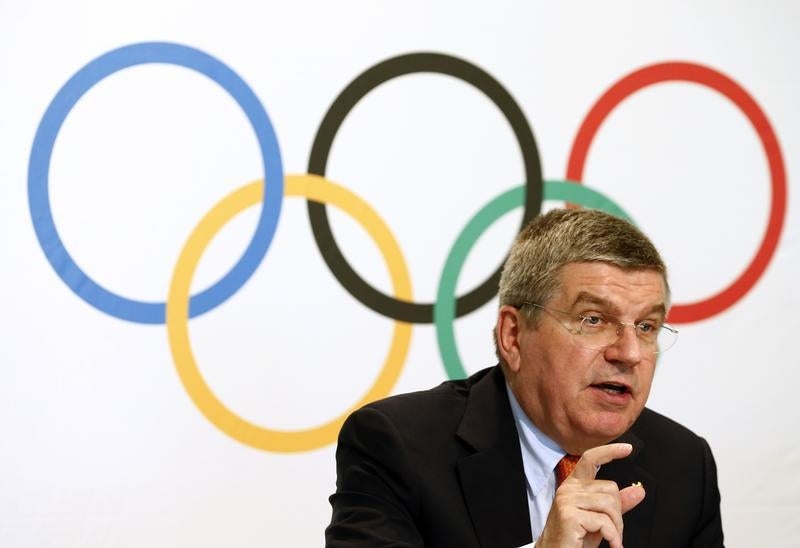
On 1 July 2024 Arab News reported that Volker Turk, the UN High Commissioner for Human Rights stated rhat “when athletes use their voice to promote equality in sport, they are human rights defenders”. “They often speak out at great risk to themselves and to their careers, in a context that has not always been open to criticism from the inside. Because — as in other areas — power dynamics are still very much at play in the sporting world, and more is needed to dismantle them.” Turk, who did not name any athletes, said those who use their voice to address issues in their sport or in society should be protected and given “avenues to speak out and seek redress, safely and without fear of reprisals.” Turk was speaking at the UN Human Rights Council in Geneva on a panel alongside Thomas Bach, the president of the International Olympic Committee (IOC), on human rights and the Olympics ahead of the Paris Summer Games.
I have been paying attention to the phenomenon of sports washing on several occasions in the past. See e.g. https://humanrightsdefenders.blog/tag/sports-washing/. It pleases me to see that the Economist on 19 November 2022 underpinned this concern by showing that over the last years autocratic regimes have increased their share of the pie.
According to data compiled by Adam Scharpf, of the University of Copenhagen, and two colleagues, the share of international sporting events hosted by autocracies fell from 36% in 1945-88 to 15% in 1989-2012. Since then, it has rebounded to 37%. Although the total number of democracies in the world has also declined from the post-cold-war high, only a few recent autocratic hosts are lapsed democracies.
Ironically, this trend stems largely from democratic decision-making. Studies have shown that big sporting events tend to be bad deals for host countries. Cities have to build costly stadiums that are rarely used afterwards, and that fail to spark economic development in surrounding areas. As a result, governments accountable to their taxpayers have become less enthusiastic about being the host. This year’s Winter Olympics wound up in Beijing almost by default, after all four cities in democratic countries that had bid backed out. The only alternative was Almaty, Kazakhstan.
Autocrats, in contrast, are free to squander public funds. The main threat they face as hosts is that protesters or the press will highlight human-rights violations. But rather than encouraging reform, the international spotlight seems to lead such regimes to become even more repressive in the run-up to sporting events.
Using “repression scores” calculated by other scholars that measure how much violence states inflict on their citizens, Mr Scharpf has shown that hosts of the Olympics and football tournaments tend to crack down two years before opening ceremonies. Once the world starts watching, they ease off. All this is illustrated by graphics.
UNHCR announced on 9 September 2022 that a new Netflix film, The Swimmers, tells the remarkable tale of Yusra Mardini, a young Syrian refugee and UNHCR Goodwill Ambassador, who escaped conflict and went on to compete in two Olympics.
“This is a movie that any person in the world can relate to,” the 24-year-old said shortly before the film’s world premiere on Thursday at the prestigious opening night of the Toronto International Film Festival (TIFF). “We want the movie to make a difference.” UNHCR Goodwill Ambassador Yusra Mardini hopes the dramatic new film of her and her sister’s escape from conflict to new lives in Europe will challenge attitudes towards refugees.
Directed by acclaimed Egyptian-Welsh filmmaker Sally El Hosaini of My Brother the Devil, the film stars Lebanese actors and real-life sisters Nathalie and Manal Issa, as Yusra and her older sibling Sara.
It tells the story of their childhood in Damascus, their focus on swimming from a young age, and their dramatic journey to Europe in 2015 that saw them help save the lives of fellow refugees by jumping into the water and steering their stricken dinghy to shore through the Aegean Sea’s dark waters.
While the public will have to wait until 23 November for the film’s general release, Mardini has already seen it twice and says it is impossible for her to pick the best moments. “Honestly, the whole movie is my favourite scene!” she says.
She hopes it will prove much more than simple entertainment. “This movie is going to put the conversation on the table of what a refugee is, of what we want to change,” says Yusra.
El Hosaini, the director, echoes this ambition. “My greatest hope for the film is that it subverts the tired stereotypes of both refugees and young Arab women.
“I want the film to remind us that refugees are regular people with full, regular lives, with hopes and dreams. Ordinary people who’ve had to make unimaginable choices, leaving their homes and risking everything in search of a safer, better life.”
Since becoming the youngest ever UNHCR Goodwill Ambassador in 2017, and competing as a swimmer in both the Rio 2016 and Tokyo 2020 Olympics, Yusra has emerged as a leading voice for refugees, one that The Swimmers will amplify still further.e
To change perceptions of refugees, understanding must come first, she says. “The education systems have to change: they have to be more open, they have to teach the stories of migrants and refugees,” says Yusra, who hopes sharing her story far and wide, through her 2018 memoir Butterfly and now The Swimmers, will help educate people about the potential, and the value, that all refugees have. “We have to treat everyone the same,” she says.
“The Olympic Games changed the way I think about being a refugee. I walked into the stadium in Rio and I realised that I can inspire so many people. I realised that ‘refugee’ is just a word, and what you would do with it is the most important thing.”
Despite being in the Hollywood spotlight, Yusra has not lost sight of her calling. “A lot still has to change for refugees,” she says. “This is not the end. This is just the beginning.”
For the first time, the IOC has included explicit reference to the United Nations Guiding Principles on Business and Human Rights (UNGP), which outline the human rights responsibilities of businesses, as well as references to anti-corruption standards. The Guiding Principles explain how commercial enterprises should assess human rights risks, take effective steps to avoid human rights problems, and ensure a remedy for abuses that occur in spite of those efforts.
“This is an important step by the IOC for the future,” said Sharan Burrow, International Trade Union Confederation general secretary. “Implementing the UN Guiding Principles across all major global sporting events could help break the cycle of human rights abuses, and this example from the IOC should be applied to all such events, starting now.”
The SRA’s mission is to ensure that sports bodies and mega-sporting events respect human rights, the environment, and anti-corruption requirements at all stages of the process. “Time after time, Olympic hosts have gotten away with abusing workers building stadiums, and with crushing critics and media who try to report about abuses,” said Minky Worden, director of global initiatives at Human Rights Watch. “The right to host the Olympics needs to come with the responsibility not to abuse basic human rights.”
The revised contract requires host cities to “protect and respect human rights and ensure any violation of human rights is remedied in a manner consistent with international agreements, laws and regulations applicable in the Host Country and in a manner consistent with all internationally-recognized human rights standards and principles, including the United Nations Guiding Principles on Business and Human Rights, applicable in the Host Country.”
“If implemented, the revised Host City Contract will help ensure that Olympic hosts respect ‘human dignity’ as required by the Olympic Charter,” said Brendan Schwab, head of UNI World Athletes. “This should have a ripple effect across all mega-sporting events such as the World Cup, and wherever abuses tied to sport still occur.”
[Key provisions of the revised Olympic Host City Contract include:
13. Respect of the Olympic Charter and promotion of Olympism
13.1. The Host City, the Host NOC and the OCOG undertake to abide by the provisions of the Olympic Charter and the IOC Code of Ethics and agree to conduct their activities related to the organisation of the Games in a manner which promotes and enhances the fundamental principles and values of Olympism, as well as the development of the Olympic Movement.
13.2. Pursuant to their obligations under §13.1, the Host City, the Host NOC and the OCOG shall, in their activities related to the organisation of the Games:
a. prohibit any form of discrimination with regard to a country or a person on grounds of race, colour, sex, sexual orientation, language, religion, political or other opinion, national or social origin, property, birth or other status;
b. protect and respect human rights and ensure any violation of human rights is remedied in a manner consistent with international agreements, laws and regulations applicable in the Host Country and in a manner consistent with all internationally-recognised human rights standards and principles, including the United Nations Guiding Principles on Business and Human Rights, applicable in the Host Country; and
c. refrain from any act involving fraud or corruption, in a manner consistent with any international agreements, laws and regulations applicable in the Host Country and all internationally-recognised anti-corruption standards applicable in the Host Country, including by establishing and maintaining effective reporting and compliance.
13.3. The IOC, through its Coordination Commission referred to in §27, shall establish a reporting mechanism to address the obligations referred to in §13.1 and §13.2 in connection with the activities of the Host City, the Host NOC and the OCOG related to the organisation of the Games.
15. Sustainability and Olympic legacy
15.1. The Host City, the Host NOC and the OCOG undertake to carry out all activities foreseen under the HCC in a manner which embraces sustainable development and contributes to the United Nations’ Sustainable Development Goals.]
The IOC Executive Committee is meeting in Rio de Janeiro these days (26-28 February) to discuss implementation of Agenda 2020, its “strategic roadmap for the future of the Olympic Movement”. The IOC’s adopted agenda requires Olympic host countries to respect anti-discrimination measures and labor standards, improve transparency, and promote good governance.
The new Sport and Rights Alliance (SRA see below for membership) addressed a letter to the IOC saying that “too often major sports events have seen people forcibly evicted from their homes to make way for infrastructure, workers exploited, campaigners locked up, the environment damaged beyond repair and notoriously opaque bidding processes,” … “The recommendations in the IOC’s Agenda 2020 are a chance to change that and ensure human rights, the environment and anti-corruption measures are central to all stages of the Olympic Games, from bidding, through to the development and delivery phase to final reporting.” Read the rest of this entry »