Posts Tagged ‘Hong Kong’

‘Why is the Chinese Communist Party so scared?’

September 4, 2026
Hong Kong Watch

Benedict Rogers in Hong Kong Watch of 1 September 2026 asks the same kind of question I aksed many years ago in a symposium about NGOs [see Chapter 4, titled “From human rights projects to strategies: The search for coherence,” in the book NGOs in China and Europe: Comparisons and Contrasts edited by Yuwen Li – 2012].

Benedict Rogers writes iner alia: Within the past week, the Chinese regime has convicted a Hong Kong barrister and a trade unionist for the crime of organizing a peaceful vigil to commemorate the Tiananmen massacre and sentenced a Chinese artist to three years in prison for satirical sculptures of the long-dead leader Mao Zedong, responsible for the deaths of millions of Chinese civilians during his rulen.In so doing, Xi Jinping’s dictatorship has proven once again its thin-skinned paranoia, its neurotic fear of dissent and humor, and its ruthless determination to silence freedom of expression and bury history and truth.

Hong Kong lawyer Chow Hang-tung, aged 41, and trade unionist Lee Cheuk-yan, aged 69, representing the now-defunct Hong Kong Alliance in Support of Patriotic Democratic Movements of China, were convicted on Aug. 21 of the crime of “inciting subversion” — simply for having organized candle-lit vigils to remember the 1989 Tiananmen massacre. They now face up to ten years’ imprisonment.

Both have already been in jail for the past five years and have now been convicted under Hong Kong’s draconian national security law imposed on the city by Beijing in 2020.

Both the conviction of Chow and Lee, and the sentencing of Gao [https://humanrightsdefenders.blog/2026/08/27/chinese-artist-gao-zhen-sentenced-to-the-maximum-of-3-years-prison-over-satirical-mao-statues/], have drawn international condemnation from the United Nations, international human rights organizations, and governments.

The United Nations Special Rapporteur for human rights defenders, Andrea Bolanos Vargas, said she is “deeply concerned” about Chow and Lee’s verdict, and called for their immediate release. She said: “Peacefully preserving memory and calling for truth, justice and accountability are human rights activities and must never be criminalized.”

These two cases are just the latest examples of Beijing’s intensifying intolerance of dissent. They follow the 20-year prison sentence imposed on Hong Kong media entrepreneur and devout Catholic  Jimmy Lai, aged 78, earlier this year, and the imprisonment of hundreds of other pro-democracy campaigners, human rights defenders, journalists, bloggers, and religious practitioners in Hong Kong and across China….

All these cases combined raise an important question. If China is — as Xi Jinping and the Chinese Communist Party want us to believe — the world’s new superpower, why is it so terrified of a barrister and a trade unionist and a media entrepreneur lighting candles, or an artist making satirical sculptures?

If the regime in Beijing is as strong as they suggest, why are they so scared of Christians gathering to pray, Tibetans meditating on the Dalai Lama’s teachings, Uyghurs fasting during Ramadan, or Falun Gong practitioners practising physical exercises similar to yoga and promoting “truthfulness, compassion, and forbearance?” And why does it consider it a crime to promote understanding of different ethnic and religious cultures?

The truth is, the regime in Beijing hates humour, is scared of jokes, and is terrified of any opinion or belief that diverges from total loyalty not only to the Chinese Communist Party’s ideology but also to its key leaders, contemporary and historical. Any perceived mockery of Mao is deemed an insult to Xi, any attempt to remind the world about the tragedy of Tiananmen is seen as an assault on today’s regime, and any practice of religion or spirituality is regarded as a rejection of the regime’s attempts at self-deification.

In other words, this is a fragile regime, scared of its own shadows, its own murderous history, and its own people. Such a regime may be able to lock up brave dissidents, lawyers, trade unionists, journalists, artists, and religious believers for a time. It may be able to shut down free expression and freedom of religion for a while. But it can never silence the souls of its people, for whom the courage of Chow Hang-tung, Lee Cheuk-yan, Gao Zhen, and so many others stands as a light in the darkness.

This article was published in UCA News on 31 August 2026.

https://www.hongkongwatch.org/all-posts/2026/9/1/why-is-the-chinese-communist-party-so-scared-benedict-rogers

https://www.hrw.org/news/2026/09/04/hong-kong-misuses-colonial-era-law-to-violate-rights
Human rights defenders increasingly face reprisals through transnational repression – #EndReprisals campaign!

June 23, 2026

Human rights defenders who engage with the United Nations are increasingly facing reprisals through transnational repression, as States seek to silence criticism beyond their borders.

The world is starting to recognise transnational repression. [see e.g. https://humanrightsdefenders.blog/2024/03/19/transnational-repression-human-rights-watch-and-other-reports/] Now it must act to stop it. 

ISHR calls on States to raise cases of transnational repression as reprisals against human rights defenders who engaged with the United Nations. Here is the message it will send and it calls on anybody to sign up:

Excellency, 

In the past, you showed your support in preventing reprisals against those who engage with the United Nations by co-sponsoring the resolution on reprisals and/or publicly naming cases of reprisals against human rights defenders. 

The following human rights defenders have dedicated themselves to promoting and safeguarding human rights in their respective countries, including through engagement with the United Nations. Yet, instead of being protected, they are facing reprisals and transnational repression linked to their cooperation with UN human rights mechanisms. 

Through threats, criminalisation, surveillance, attacks on family members, professional sanctions, asset seizures and other forms of intimidation, these defenders continue to face consequences for engaging with the United Nations, even while living in exile. 

I urge your delegation to raise the following cases during the Human Rights Council and the General Assembly’s Third Committee and publicly condemn all acts of reprisals and transnational repression against individuals who cooperate with the UN. 

Basma Mostafa (Egypt) is an investigative journalist and human rights defender who fled Egypt in 2020 after reporting on enforced disappearances, torture and extrajudicial killings. Despite living in exile in Europe, she continues to face threats, harassment, surveillance and intimidation linked to her human rights work and engagement with UN human rights mechanisms. Her case was included in the UN Secretary-General’s reprisals report. 

Anna Kwok (Hong Kong) was the Executive Director of the Hong Kong Democracy Council. In connection with her international human rights advocacy and engagement with UN mechanisms, Hong Kong authorities issued an arrest warrant against her, revoked her passport and offered a reward for information leading to her arrest. Her case was included in the Secretary-General’s reprisals report, and reprisals have also extended to her family members. 

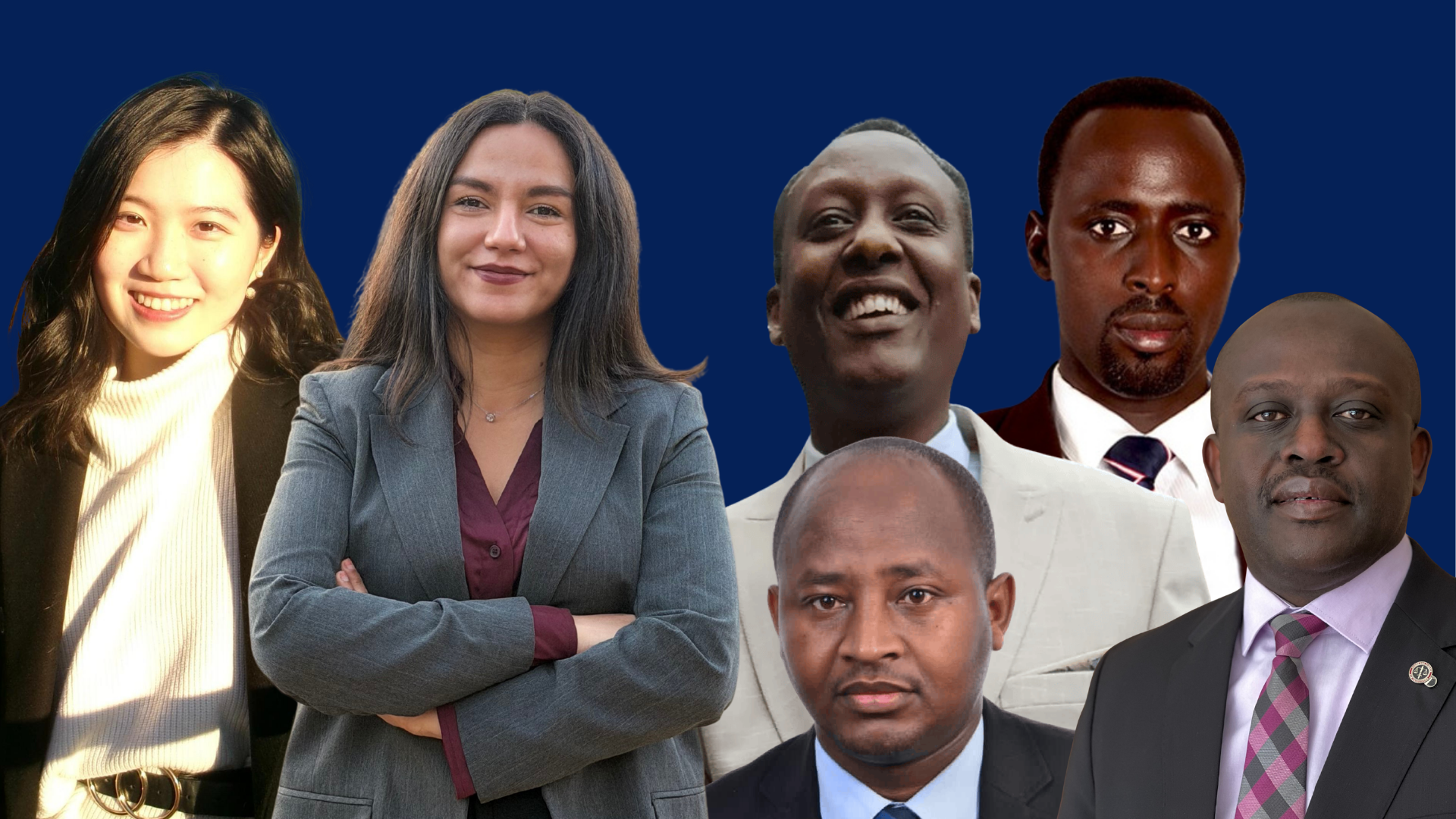
Armel Niyongere, Dieudonné Bashirahishize, Vital Nshimirimana and Lambert Nigarura (Burundi) are human rights lawyers who were forced into exile after cooperating with the UN Committee against Torture. Despite living in Belgium, they remain subject to the consequences of reprisals, including life sentences handed down in absentia and the freezing of their assets in Burundi. In 2025, the Committee against Torture found that Burundi had violated the Convention against Torture by retaliating against them for engaging with the UN. 

These cases underscore the urgent need for States to address transnational repression as a growing threat to the integrity of the UN human rights system and the safety of those who engage with it. 

I call on your delegation to publicly raise these cases during the Human Rights Council and the General Assembly’s Third Committee, condemn all acts of reprisals and transnational repression against those who cooperate with the United Nations, and urge the governments concerned to end these violations. 

Human rights defenders must be able to engage with the United Nations freely, safely and without fear of retaliation, whether at home or abroad. 

Yours sincerely, 

your full name will go here

New/Mode and International Service for Human Rights should email me with exciting updates about this campaign and others. This campaign is hosted by the International Service for Human Rights. The protection of your privacy is important to ISHR. On this page, you will find our most up-to-date Privacy Policy. 

Powered by New/Mode

The world is beginning to recognise transnational repression. Now it must act to stop it. 

Read the stories of human rights defenders who left their countries of origin, but the threats continue.  

https://ishr.ch/campaigns/endreprisals2026

seealso https://www.coe.int/en/web/civil-society/-/pace-condemns-transnational-repression-and-urges-new-laws-to-stop-it

https://kettering.org/exile-no-longer-offers-safety-the-mounting-threat-of-transnational-repression-in-latin-america

Jimmy Lai receives DW Freedom of Speech Award 2026

May 1, 2026

On 20 April 2026, DW has awarded its 12th Freedom of Speech Award to Jimmy Lai. A prominent advocate for press freedom & democracy in Hong Kong, the founder of the Apple Daily newspaper has been detained in solitary confinement since 2020.

Prozess gegen Verleger Jimmy Lai in Hongkong
Image: Anthony Wallace/AFP

On honoring Jimmy Lai, DW Director General Barbara Massing said: “Jimmy Lai has stood unwaveringly for press freedom in Hong Kong at great personal risk, even as space for independent journalism became increasingly limited. With Apple Daily, he gave journalists a platform for free reporting and a voice to the democracy movement in Hong Kong. His commitment reminds us that press freedom is never a given – it must be constantly defended. With the DW Freedom of Speech Award, we honour his indispensable dedication to democratic values.”

The DW Freedom of Speech Award will be presented on June 23, 2026, at the DW Global Media Forum, DW’s international media conference, in Bonn.

Jimmy Lai was born in southern China in 1947 and, as a young child, fled to Hong Kong in 1960. The British citizen founded the pro-democracy newspaper Apple Daily in 1995 and later became one of the city’s most prominent advocates for democracy, financially supporting democratic parties and politicians and taking part in the mass protests of 2019 and 2020. Following the introduction of China’s national security law in Hong Kong in June 2020, Lai was later arrested and has remained in custody, and in prolonged solitary confinement, since December 2020. Regardless of his British citizenship, the Hong Kong authorities continue to deny the United Kingdom consular access to him.

In early 2026, a Hong Kong court sentenced Jimmy Lai to 20 years in prison. He had been convicted in December 2025, following a two-year trial, on charges including “conspiracy to collude with foreign forces” and conspiracy to publish “seditious material.”

“One of the reasons why they put you in solitary confinement, of which my father has been for more than five years now, is to tell you that nobody cares about you, that you’re going to die alone. And all the support and this award show that that is not the case. That people who fight for freedom, people who fight for the freedom of others, are never alone,” Jimmy Lai’s son Sebastien told DW in an exclusive interview.

For more on the Freedom of Speech Award and its laureates, see: https://www.trueheroesfilms.org/thedigest/awards/b9e2c660-8e41-11ea-b31d-31ce896d8282

https://corporate.dw.com/en/jimmy-lai-receives-dw-freedom-of-speech-award-2026/a-76968037

https://amp.dw.com/en/hong-kong-pro-democracy-publisher-jimmy-lai-honored-by-dw/a-76991604

https://www.theguardian.com/world/2026/apr/30/jailed-hong-kong-pro-democracy-activist-jimmy-lai-wins-freedom-of-speech-award-in-germany

Transnational repression by China reaches New York

November 8, 2025

On 6 November 2025 Human Rights Watch issued a press release on how Chinese Police Harass Filmmakers, Families to Undermine Free Expression Abroad

9da2a6d2-e1fd-4b3d-a322-ba3c24f25b37
A still from Jiangnan Xu’s film “Friends from Jiangnan.” © Zhu Rikun

Chinese authorities harassed several dozen Chinese film directors and producers, as well as their families in China, causing them to pull films from the inaugural IndieChina Film Festival in New York City. On November 6, 2025, the festival’s organizer, Zhu Riku, announced that the film festival, scheduled for November 8-15, had been “suspended.”

The Chinese government reached around the globe to shut down a film festival in New York City,” said Yalkun Uluyol, China researcher at Human Rights Watch. “This latest act of transnational repression demonstrates the Chinese government’s aim to control what the world sees and learns about China.

Chiang Seeta, a Chinese artist and activist, reported that nearly all participating directors in China faced intimidation. Even directors abroad, including those who are not Chinese nationals, reported that their relatives and friends in China were receiving threatening calls from police, said Chiang.

On November 1, the organizers issued an announcement on social media saying they had received messages from some film directors and producers and their families about Chinese government harassment: “We are deeply concerned about the situation. … [I]f you are under pressure not to attend the festival … we fully understand and respect it.” By November 4, more than two-thirds of participating films had cancelled their screenings.

After the festival was suspended, Zhu issued a statement that the decision was not out of fear, but rather to “stop harassment of … directors, guests, former staff, and volunteers associated with the festival, including my friends and family.”

Independent film festivals in China have faced intensifying crackdowns over the past decade, Human Rights Watch said. The Chinese authorities have shut down all three major independent film festivals in China: Yunfest, founded in 2003; the China Independent Film Festival, founded in 2003; and Beijing Independent Film Festival, founded in 2006.

When the authorities shut down the last screening of the Beijing Independent Film Festival in 2014, they cut off electricity from the venue, confiscated documents from the organizer’s office, and forced the organizers to sign a paper promising not to hold the festival. Many festival organizers have tried without success to adapt, for instance by changing their format to screenings at multiple venues.

The 14th China Independent Film Festival was shuttered in 2018, the last time such a festival took place in China.

A court in January 2025 sentenced Chen Pinlin, known as Plato, to three-and-a-half years in prison for allegedly “picking quarrels and provoking trouble” after he made a documentary about the “white paper protests” during Covid-19 lockdowns. Transnational repression can be defined as government efforts to silence or deter dissent by committing human rights abuses against their own nationals living abroad, their families at home, or members of the country’s diaspora. [see also: https://humanrightsdefenders.blog/2025/10/17/un-report-highlights-chinas-targeting-of-human-rights-defenders-abroad/]

The Chinese government’s transnational repression of the arts has not been limited to film. Chinese officials interfered with an exhibition in Bangkok and censored artwork by Uyghur, Tibetan, and Hongkonger artists in August.

https://www.hrw.org/news/2025/11/07/china-authorities-shut-down-film-festival-in-new-york

https://www.europarl.europa.eu/news/en/agenda/briefing/2025-11-12/10/combating-transnational-repression-of-human-rights-defenders

https://ishr.ch/latest-updates/un-experts-warn-of-surge-in-transnational-repression-targeting-defenders-from-china-and-southeast-asia

https://www.theguardian.com/world/2026/mar/25/china-hong-kong-dissidents-transnational-repression-report

Repressive Laws Are Increasingly Being Used to Silence Activists Across Asia

July 29, 2025

Josef Benedict and Rajavelu Karunanithi published a piece in the Diplomat of 18 July 2025 describing how from Hong Kong to India, governments are passing and weaponizing new laws to pursue and jail whoever speaks up for human rights.

Four years ago, on the 32nd anniversary of the 1989 Tiananmen Square massacre, plain clothes police arrested human rights lawyer and pro-democracy activist Chow Hang-tung outside her office in Hong Kong. Her alleged crime? Publishing two social media posts advertising a public vigil to remember the notorious crackdown in Tiananmen Square. At the time, Chow was the vice-chair of the now defunct Hong Kong Alliance in Support of the Patriotic Democratic Movement of China, the main organizer of annual Tiananmen vigils…

Sadly, such repression is not unique to Hong Kong. Across Asia, authoritarian and democratic governments alike are passing and weaponizing new laws – in clear violation of international law and standards – to pursue and jail whoever speaks up for human rights. Today, on Nelson Mandela International Day, we call for the release of Chow Hang-tang, who is part of CIVICUS’ Stand As My Witness campaign, as well as other human rights defenders unjustly locked up in Asia around the world.

The CIVICUS Monitor, which tracks civic space conditions across the world, now rates Hong Kong’s civic space as “closed,” the worst possible ranking. Hundreds remain behind bars as police systematically use the new laws to arrest and prosecute people on trumped-up charges. Often, the process itself becomes the punishment as activists spend years in detention before they are even tried…

Meanwhile, Hong Kong authorities are trying to take their repression international, by offering bounties for activists-in-exile charged under the National Security Law and by arresting the father of a prominent U.S.-based activist, Anna Kwok.

..Hong Kong’s National Security Laws have become something of a model for other Asian governments looking to stifle dissent.

Look no further than India, often called the world’s largest democracy, where Prime Minister Narendra Modi’s government resorts to similar laws to consolidate power and silence his critics. Dozens of activists have been jailed under the Unlawful Activities Prevention Act (UAPA), a draconian anti-terror law. Under the UAPA’s provisions, activists remain in pre-trial detention for long periods and are denied bail, including human rights defender Khurram Parvez, who was arrested in November 2021. His trial has yet to start, four years on. [see also: https://www.trueheroesfilms.org/thedigest/laureates/81468931-79AA-24FF-58F7-10351638AFE3]

In neighboring Pakistan, the government also weaponizes anti-terror legislation against activists like Mahrang Baloch, who languishes in prison on terror charges for speaking out against ongoing violations of ethnic minority rights by the Pakistan security forces in Balochistan. [see also: https://humanrightsdefenders.blog/2025/05/28/un-experts-alarmed-by-arbitrary-detention-of-azerbaijani-human-rights-defender-mammadli/]

In Thailand, more than 270 individuals have been arrested or prosecuted under lese-majeste or royal defamation laws since early 2020, many of whom have received long consecutive sentences from the courts. Human rights lawyer Arnon Nampa, for instance, received multiple convictions and 26 years in jail for calling for democratic reforms and reforms of the Thai monarchy. [see also: https://www.trueheroesfilms.org/thedigest/laureates/1e7ce01b-7927-41f1-b7d4-2c563ee235cc]

Meanwhile, Cambodia’s Han Manet regime has used “incitement” laws as their weapon of choice to silence activists, journalists, and members of the opposition.

With legal repression spreading across Asia, the international community must do more to push back and stand with these brave activists. Foreign governments must not only speak out when activists are convicted, but step in much earlier when these human rights defenders are arrested. Diplomats should visit wrongly arrested activists in detention, monitor their trials, and engage with their families. Foreign governments must also use international platforms like the United Nations Human Rights Council and bilateral meetings to highlight their cases and call for their release. 

Activists-in-exile also need support and assistance, especially when they face transnational repression. The recent G-7 Leaders’ Statement on Transnational Repression was a good start, but strong rhetoric must now turn into serious action. Failure to undertake such actions will see a further regression of democracy and repression of civic freedoms in Asia and elsewhere.

https://thediplomat.com/2025/07/repressive-laws-are-increasingly-being-used-to-silence-activists-across-asia/

Hong Kong: Targeting of Exiled Activists’ Families Escalates

May 16, 2025

Father of Anna Kwok Charged with National Security Crime

The Hong Kong police arrested the father of a prominent US-based activist, Anna Kwok, on April 30, 2025, and charged him with a national security crime, Human Rights Watch said today. The arrest of Kwok Yin-sang was the first such prosecution of a family member of an exiled activist. Hong Kong authorities should immediately drop all charges and release him.

The Hong Kong authorities have recently intensified their harassment of the families of 19 wanted Hong Kong activists living in exile. Punishments and harassment against individuals for the alleged actions of another person is a form of collective punishment, prohibited by international human rights law.

The Chinese government has increased its appalling use of collective punishment against family members of peaceful activists from Hong Kong,” said Yalkun Uluyol, China researcher at Human Rights Watch. “The Hong Kong authorities should immediately and unconditionally release Anna Kwok’s father and cease harassing families of Hong Kong activists.”

On May 2, national security police formally charged Kwok Yin-sang, 68, with “directly or indirectly” dealing with the finances of an “absconder” under section 90 of the Safeguarding National Security Ordinance, which carries a punishment of up to seven years in prison. Kwok Yin-sang remains in custody with a bail hearing scheduled for May 8. Anna Kwok’s brother was also arrested on April 30 but has been released on bail pending further investigation.

Anna Kwok, 28, is the executive director of Hong Kong Democracy Council, a nongovernmental organization based in Washington, DC. In July 2023, she was among a first group of eight people against whom the Hong Kong police issued arrests warrants and HK$1 million (US$129,000) bounties for violating Hong Kong’s National Security Law.

Since then, Hong Kong police have issued similar baseless arrest warrants and bounties against 11 other exiled Hong Kong activists.

Hong Kong authorities have sought to intimidate dozens of family members of the 19 “wanted” individuals, primarily by interrogating them. In the case of Ted Hui, a resident of Australia, they also confiscated HK$800,000 (US$103,000) from him and his family for having allegedly violated the National Security Law.

There has been a new wave of harassment against these families in recent months, Human Rights Watch said. After the Hong Kong police issued the third group of arrests and bounties against six exiled activists in December 2024, they began to harass their families. In January, police interrogated eight family members and former colleagues of the UK-based scholar Chung Kim-wah, and raided the office of the Hong Kong Public Opinion Research Institute, with which Chung was formerly associated.

In February the police questioned the aunts and an uncle of Carmen Lau, a UK-based activist and former district councilor. On March 18, police interrogated the stepfather of the activist Tony Chung, who is in the UK.

On April 10, national security police took the parents of the US-based activist Frances Hui into custody for questioning.

The 19 wanted activists have also faced various other forms of harassment. In June and December 2024, the Hong Kong government cancelled the passports of 13 wanted activists, including Anna Kwok. In March, Lau and Chung reported that anonymous individuals sent letters to residents in various London neighborhoods urging them to hand in the activists to the Chinese Embassy in London, citing the warrants and bounties against them. Similar letters were sent to Melbourne-based Kevin Yam, a democracy activist and an Australian citizen.

Many of the 19 activists, including Kwok and Frances Hui, have reported online harassment campaigns, including rape and death threats, since the government issued the warrants and bounties against them. The media reported that an online campaign, which exhibited signs of a previous Chinese government influence operation, sought to mobilize far-right people in the UK to attack activists on the bounty list.

The 19 wanted activists live in the UK, US, Canada, and Australia. The US government in March sanctioned six officials in Hong Kong for using the National Security Law “extraterritorially to intimidate, silence, and harass” the activists. The other three governments have issued statements condemning the arrest warrants, but have not taken action to hold Hong Kong officials accountable. The US government is also the only one that has arrested someone for allegedly harassing a Hong Kong activist on its soil, though the person was later acquitted.

The Chinese government has used two draconian national security laws, the National Security Law of 2020 and the Safeguarding National Security Ordinance of 2024, to dismantle the city’s pro-democracy movement and take away its fundamental freedoms, which are enshrined in Hong Kong’s de facto constitution, the Basic Law. Over 200,000 Hong Kongers have left Hong Kong, among them protesters and activists who have continued their activism abroad.

The AustralianUK, and US governments, the European Union, and the United Nations High Commissioner for Human Rights have all publicly expressed concerns about the two security laws.

“Beijing isn’t likely to stop abuses against the families of exiled activists unless affected governments send a strong message that such repression carries a cost,” Uluyol said. “They should fully investigate and sanction Chinese and Hong Kong officials involved, and pass strong laws to protect their residents and citizens from transnational abuses.”

https://www.hrw.org/news/2025/05/04/hong-kong-targeting-exiled-activists-families-escalates

Kofi Annan Courage in Cartooning Award 2024

May 10, 2024

On World Press Freedom Day, May 3, the Freedom Cartoonists Foundation recognized the talent and
courage of cartoonists working under difficult circumstances. The Kofi Annan Courage in Cartooning Award 2024 was presented by Nobel Peace Prize laureate Dr. Shirin Ebadi of Iran, during a public ceremony at the Geneva Graduate Institute, in presence of CNN’s international chief anchor Christiane Amanpour. For more on this award see: https://www.trueheroesfilms.org/thedigest/awards/f60cb3d4-c79a-43aa-9b5c-351c56c02ae1. This award is presented every two years in alternance with a prize presented by the allied organization Cartoonists Rights in the United States.
The accompanying international exhibition Cartooning for Freedom, visible on the shores of Lake Geneva until June 2, 2024, features nearly 60 press cartoons selected by Freedom Cartoonists, in partnership with Cartooning for Peace in Paris.
Chaired by Kenneth Roth, former Executive Director of Human Rights Watch, the international jury shares the 2024 Prize between two winners: Rachita Taneja (India) and Zunzi (Hong Kong).

see also: https://humanrightsdefenders.blog/2022/05/10/new-kofi-annan-courage-in-cartooning-award-to-ukrainian-and-hungarian-press-cartoonists/

For Chappatte, president of the Foundation, “Both brilliantly embody the fundamental values of editorial cartooning: talent, freedom of spirit, and courage. With a bit of mischief.

https://www.barrons.com/news/indian-hong-kong-satirists-win-press-cartoon-award-8db6c9b8

Meet Joey Siu, a Hong Kong activist

January 21, 2024

Meet Joey Siu, a Human Rights Foundation (HRF) Freedom Fellow and Hong Kong activist based in Washington, D.C.  Siu played a vital role in Hong Kong’s 2019 pro-democracy protests, co-founding a student advocacy coalition and organizing city-wide demonstrations. After fleeing Hong Kong in 2020, Siu served as an advisor to the Inter-Parliamentary Alliance on China and a policy advisor to Hong Kong Watch. Siu is currently an Asia Pacific coordinator for the World Liberty Congress, an advisor to the Athenai Institute, and oversees the Hong Kong program at the National Democratic Institute.

In exile, Siu remains a dedicated advocate for Hong Kongers, Tibetans, Uyghurs, and other communities oppressed by the Chinese Communist Party (CCP). Learn more about her activism in the exclusive interview below.

Q: Tell us a little bit about yourself and your current projects. 

A: I am a human rights activist from Hong Kong (HK). Back in 2019, when the pro-democracy movement in Hong Kong first started, I was one of the student leaders who led many of the on-campus activities and city-wide protests and demonstrations. In 2019, I also co-founded a student coalition with other student activists in HK to solidify international advocacy efforts for HK. I was forced to flee HK in late 2020 and settled in Washington, D.C. Since then, my efforts have been focused on international advocacy for HK’s democratic freedoms overseas.

I am establishing a regional activist network for women advocates to connect, amplify, and empower one another and to elevate women leaders in this space. Beyond that, I am very active in the HK diaspora community and working to foster cross-movement solidarity with other communities under the repression of the Chinese Communist Party (CCP).

Q: How do you feel about the bounty HK authorities placed on your head?

A: On Dec. 13, I woke up to the news that HK authorities issued an arrest warrant and a $1 million HK bounty on me. Ever since I fled, I knew this could happen given the Chinese and HK authorities’ efforts to silence dissent, not just from those in HK but from those in exile. But this bounty is like a death certification — I can really never go back. I was overwhelmed by the news and the actions I’ve had to take to step up my personal security. 

I — and the 12 others with bounties on their heads — saw this coming. They issued the bounty to threaten us, to deter us from continuing our advocacy, to scare us, and to really intimidate us. But that will not work on me. I will not stop; I will continue my advocacy until I can return to HK.

Q: What tactics does the Chinese regime employ to suppress activists like yourself?

A: The overseas communities have lobbied for international attention on China and HK and all of the human rights atrocities committed by the CCP. That is why the CCP is trying so hard to silence us. 

Over the past few years, the CCP and the HK authorities have stepped up their transnational repression. We’ve witnessed a wide variety of tactics employed by the CCP, from holding our loved ones back home as hostages to infiltrating our communities, setting up secret police stations all across the world, including in the United States, to coercing different stakeholders and industries to spy on their behalf. 

These tactics have not been used just against Chinese and Hong Kongers but also against Uyghurs and Tibetans. And we’ve seen other authoritarian regimes copying the CCP’s tactics, including Russia, Iran, and Belarus. In fact, these regimes are working hand-in-hand to silence dissent overseas.

Q: Should democracies be paying more attention?

A: I want to stress that the impact of transnational repression extends beyond the activists. Beyond spying on dissidents overseas, tactics include economic coercion, brainwashing, and education through Confucius institutes in American universities and colleges. Those tactics impact every individual living in a democracy.

Democracies all across the world should pay attention to this and take concrete steps to combat transnational repression on their soil and in other democracies. Securing the safety and security of dissidents like me is an essential step to allowing us to have the freedom to continue speaking up and to continue confronting authoritarianism. 

Q: How has the Freedom Fellowship supported you in your work?

A: The Fellowship allowed me to meet activists from communities I otherwise would not have been in touch with as actively or frequently. In my cohort, I met activists from Bolivia, Cuba, Myanmar, Morocco, Egypt, and more. I got to talk with them and learn the tactics they’ve used to overcome challenges and unite their communities. Fostering relationships and strategizing on campaigns together was the most valuable experience for me. 

Building that cross-community solidarity is essential. We see dictators working together and it is of the utmost importance that we, human rights activists, are working together. Democratic backsliding is not an issue faced by one community alone; it is an issue faced by all communities under oppression.

Q: What have you recently been doing? What do you hope to achieve in 2024?

A: After the news about the HK bounty broke, I had several meetings with US congressional offices. I met with the House Foreign Affairs Committee, Chairman Mike Gallagher of the House Select Committee on the Chinese Communist Party, and Sen. Jennifer Sullivan. Hopefully, these meetings will lead to legislation to combat transnational repression, but we require a coordinated and bipartisan effort in Congress. I hope to see something like the Transnational Repression Policy Act advanced and adopted in this Congress. 

With the ongoing reports of the bounty on me and other activists, Jimmy Lai’s case, and the upcoming sentencing of the 47 activists in HK, we can hopefully take advantage of the momentum. We can push the US government and other democracies to take action. 

Additionally, during the 2023 Freedom Fellowship retreat, I came up with the idea of the regional women’s network. In the upcoming months, I want to turn this idea into something concrete—start inviting people to be founding members and board members, start the registration process, and establish a financial foundation and fundraising plan.

https://mailchi.mp/hrf.org/meet-hrf-freedom-fellow-joey-siu?e=f80cec329e

European Bar Association gives 2023 award to three Chinese lawyers

December 5, 2023

Jailed Hong Kong, Chinese attorneys honored with human rights award

From right, jailed Hong Kong barrister Chow Hang-tung and Chinese rights attorneys Xu Zhiyong and Ding Jiaxi were honored with human rights awards by the Council of Bars and Law Societies of Europe. Credit: Reuters, AP, Reuters

Three jailed attorneys from Hong Kong and China have been honoured with Council of Bars and Law Societies of Europe human rights awards, as a Chinese court rejected appeals from two of them, upholding their original sentences for “subversion.”

For more on these CCBE human rights awards, see: https://www.trueheroesfilms.org/thedigest/awards/A3C73F81-6FCB-4DDD-9356-61C422713949

Jailed Hong Kong barrister Chow Hang-tung, who has been behind bars since September 2021, and Chinese rights attorneys Xu Zhiyong and Ding Jiaxi, who were jailed in April for attending a 2019 gathering of dissidents in the southeastern city of Xiamen, were given the awards in absentia in recognition of their work upholding human rights, the association said on its website. See: https://humanrightsdefenders.blog/2023/04/11/xu-zhiyong-and-ding-jiaxi-two-human-rights-defenders-in-china-sentenced/

The ceremony in Athens took place on Friday 24 November, the same day that a court in the eastern province of Shandong rejected appeals from Ding and Xu, who are currently serving 12- and 14-year jail terms handed down by the Linshu County People’s Court for “subversion of state power,” respectively.

Chow said in an acceptance speech sent from prison that the fight for democracy in China is part of ensuring that the law serves democratic and humanitarian values, rather than just the wishes of those willing to use force to bring others in law. See: https://www.ccbe.eu/fileadmin/speciality_distribution/public/documents/HUMAN_RIGHTS_AWARD/2023/EN_2023_HR_Speech_Chinese-Human-rights-lawyer-Hang-Tung-Chow.pdf

“The dignity of our profession … it is bound up with the dignity of the law, with whether the law reflects our autonomy or denies it,” wrote Chow, who organized now-banned annual vigils commemorating the 1989 Tiananmen massacre.

“In that sense the building of democratic institutions that alone can safeguard the law’s dignity is also a lawyer’s duty, which is why all three of us receiving this prize today are jailed for working for democracy in China, a fight that may seem unrelated to our profession but is in fact, central to it,” said Chow.

She is currently awaiting trial under a security law on charges of “subversion” amid an ongoing crackdown on dissent in Hong Kong.

“It is a fight we cannot waver from, even when knowing that the laws we served would likely condemn us,” she said, describing the fight as “the highest service a lawyer can offer her fellow men.”

Rights activist Patrick Poon said the fact that Chow was honored alongside Xu and Ding shows how little difference there is now between the judicial systems in Hong Kong and mainland China, following a years-long crackdown on political opposition and public dissent in the wake of the 2019 protest movement.

https://www.rfa.org/english/news/china/china-lawyers-awards-11272023160715.html

Young human rights defenders from China (Uyghur, Tibetan and Hong Kong) trained on the UN’s human rights bodies.

October 6, 2023

ISHR and Freedom House hosted a group of young defenders from the diaspora for a training on UN human rights mechanisms and joint advocacy meetings in Geneva.

Eight activists working on Uyghur, Tibetan and Hong Kong rights across six countries, including Canada, Germany, India, the Netherlands, the United Kingdom and the United States, participated in the United Nations Advocacy Training (UNAT) program to learn and strategise together on ways to hold the Chinese government accountable for its human rights violations at the international level.

Why a training for youth diaspora activists?

Young activists play a critical role in diaspora movements to address and counter the Chinese government’s persecution of peoples from the Uyghur region, Tibet, and Hong Kong. When capacity building and support are available to them, they can meaningfully engage their host governments and international institutions, like the UN, to hold the Chinese government accountable for its ongoing abuses against their communities inside the People’s Republic of China, and acts of transnational repression outside Chinese borders. Unfortunately, youth diaspora activists don’t have many opportunities to convene and collaborate in those international spaces. 

Working together as allies and partners, these groups can help increase the confidence in their efforts and improve impact and sustainability. Opportunities to network, train together, and work on joint advocacy efforts will help individual diaspora groups communicate and coordinate more effectively amongst themselves and with other relevant local and international groups to amplify and sustain pressure on the Chinese government for meaningful human rights change.

Aged between 19 and 28 years old, this was the first time that young activists from these communities came together in Geneva to work on cross-cutting community issues and build solidarity. Participants are engaged in rights advocacy through their work with established groups like the Hong Kong Democracy Council, Free Uyghur Now, and the Uyghur Human Rights Project or have founded impactful youth led organisations in their host countries, such as Students for a Free Tibet, Harvard College Students for Uyghur Solidarity, and Uyghur Youth Initiative. They are working toward better visibility and accountability towards violations outlined in the UN’s Xinjiang report published last August 2022, including the curtailment of free assembly and expression, mass surveillance, forced labour, and cultural and religious persecution.

During the interactive training programme, participants engaged with one another through peer check-in sessions, with human rights experts and advocates through live Q&As, discussions on the Human Rights Council, Special Procedures, Treaty Bodies and the Universal Periodic Review, and considered how to engage in advocacy activities at the UN in order to effect change for their communities.

The in-person training was designed to coincide with the 54th Session of the Human Rights Council so that the participants could attend the United Nations for the first time in their careers. As well as receiving additional advocacy training modules on all the UN human rights mechanisms from a range of experts, participants had the opportunity to build networks in Geneva and around the world, engage in meetings with UN member States and UN staff, and produce a powerful solidarity video statement which summarises their call to action to the UN States members.

All of the participants expressed they were satisfied with the training and  increased their skills and networks to engage in advocacy at the UN. Freedom House and ISHR will continue to support these participants as they develop joint advocacy initiatives and build solidarity among their communities. 

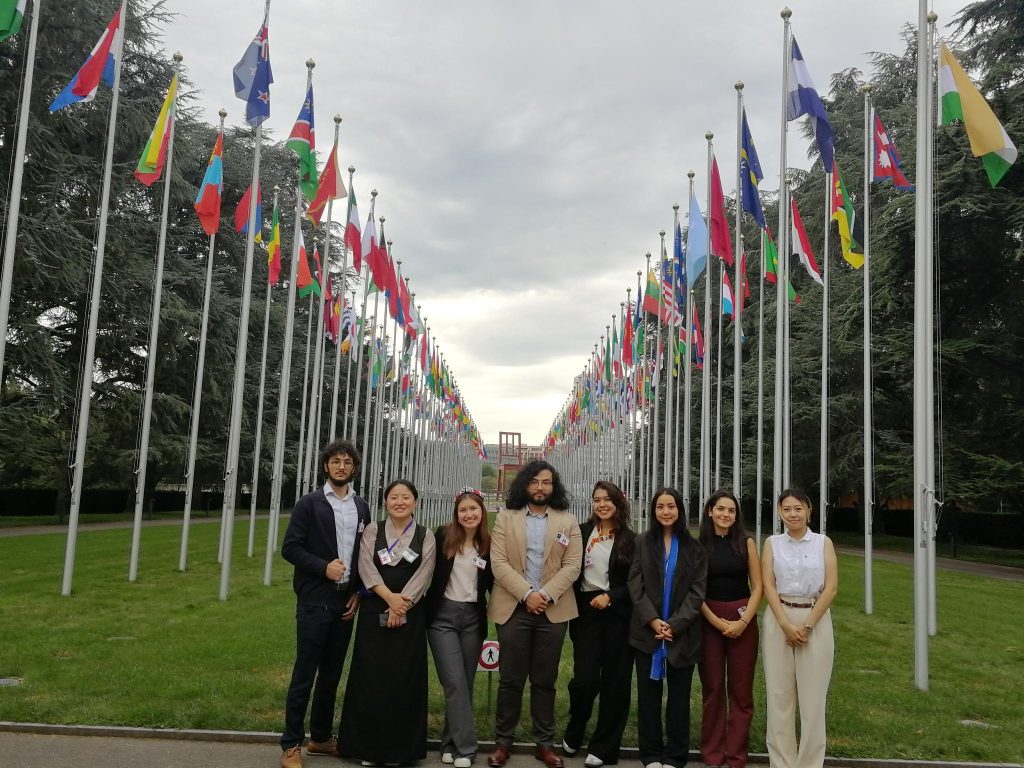
Participants in front of the flags of UN Member States, at UN Office at Geneva

Participants in front of the flags of UN Member States, at UN Office, Geneva

https://ishr.ch/latest-updates/young-uyghur-tibetan-and-hong-konger-defenders-share-their-priorities-with-the-uns-human-rights-bodies-in-geneva/