On the occasion of World Press Freedom Day (May 2026), the Freedom Cartoonists Foundation, in partnership with the City of Geneva, paid tribute to the talent and courage of cartoonists working under difficult circumstances.
The Kofi Annan Courage in Cartooning Award 2026, honouring their exceptional contribution to human rights and freedom of expression, was presented at the Geneva Graduate Institute, in the presence of Joseph Stiglitz, 2001 Nobel Prize laureate in Economics, former Chief Economist of the World Bank and Professor at Columbia University.
More on the Kofi Annan Courage in Cartooning Award, see: https://www.trueheroesfilms.org/thedigest/awards/f60cb3d4-c79a-43aa-9b5c-351c56c02ae1. It is awarded every two years by the Freedom Cartoonists Foundation and the City of Geneva. In alternating years, the Prize is presented by partner organisation Cartoonists Rights in the United States.
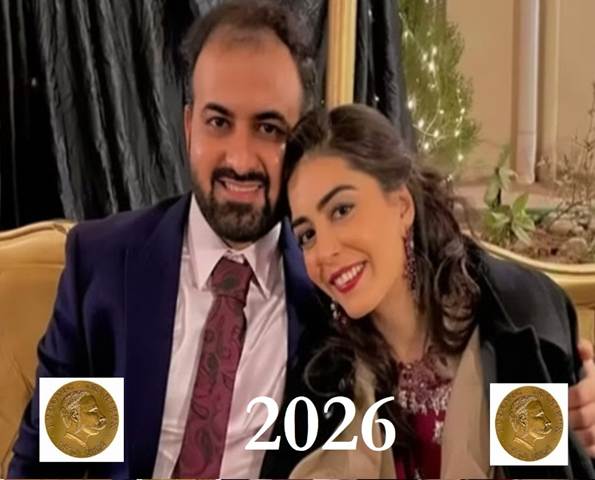
Chaired by Kenneth Roth, former Executive Director of Human Rights Watch, the international jury has chosen to share the 2026 Prize between two laureates: Safaa Odah (Palestine) and Jimmy “Spire” Ssentongo (Uganda).
The Laureates [film portraits made by True Heroes Films]
Safaa Odah is a Palestinian cartoonist living in Gaza. Before the escalation of the war in 2023, she produced drawings, comic strips and posters on women’s empowerment and for young audiences. Since October 2023, her drawings have depicted the terrible daily life of Gazans during the war. Her simple, almost naive line stands firm against the din of bombs. Safaa Odah’s favourite themes are universal – family love, grief, hunger and poverty, peace – and offer a poignant perspective on the occupation and displacement of Gaza’s population. Her drawings express what words fail to convey and bear witness to a horror that the world tolerates. She continues to draw cartoons under extremely difficult conditions, using whatever materials she can gather – for instance drawing on the plastic tarpaulin that serves as her family’s tent – and publishing them on social media.Amid extreme violence and utter destitution, the Palestinian artist has been documenting the harrowing situation of Gaza’s population for two and a half years. The family home was destroyed in a bombing two years ago, and Safaa Odah and her family now live in the Khan Younis camp.
Jimmy “Spire” Ssentongo is a Ugandan academic, columnist, portraitist, author and award-winning self-taught cartoonist. He has worked, among others, for the Ugandan newspaper The Observer since 2006. Holding a PhD in Philosophy, he served as Associate Dean of the Faculty of Arts and Social Sciences at Uganda Martyrs University. Frequently harassed, Spire has been in the crosshairs of the authorities since the 2020 pandemic. In March 2024, he received death threats after launching an anti-corruption campaign on X – #UgandaParliamentExhibition – calling on parliament to be held accountable. Spire’s humour and critical analytical mind amplify the reach of his cartoons, which have become popular and viral. The Ugandan intellectual uses them to denounce corruption, institutional abuses and the excesses of power. A victim of cyberbullying, he long kept a low profile. In January 2026, he temporarily took refuge in Belgium to escape growing pressure ahead of the presidential election.
Today was the funeral of one my best friends and, more importantly, one of the most significant architects of the international human rights system as it developed in the last 50 years. Theo (Theodoor Cornelis) van Boven, was born in Voorburg on 26 mei 1934 and died peacefully in Maastricht on 9 mei 2026.
I have had the honor to work with him for many years [our lives intertwined over a long period of time and on different locations] and wrote about him several times. Most recently “Courageous Leaders and NGO Initiatives” in Ramcharan and others (ed), The Protection Roles of Human Rights NGOs, Essays in honour of Adrien-Claude Zoller, Brill Nijhoff, Leiden, 2023 (ISBN 978-90-04-51677-9), pp 614-636.
So, here a large part of the section on this great man: This section is about a man who was crucial in getting the United Nations and NGO partners to deal with human rights protection. Much has been written about his work and the enormous contribution Theo van Boven made to the UN human rights machinery as we now know it. .. Nowadays the United Nations has an elaborate machinery to deal with human rights violations. The system is far from perfect and still too often subject to political pressures and selectivity but there are now a great many thematic and country mandates, emergency sessions and there is an International Criminal Court against impunity. Wind back 40 years and none of this existed. The violations were there for all to see but not for the United Nations, which preferred to consider this part of the ‘internal affairs of sovereign states’. The man who would make it his life’s mission to change this, Theo van Boven, got in 1977 the position from where to do it: Director of Human Rights in the UN.
His teenage years were eaten up by the second world war. His memories of that period, his strict protestant background and his law studies in Leiden led him to enter an area that was not so obvious at the time: international human rights. He studied in the USA, wrote there a thesis on freedom of religion and soon afterwards, around 1960, he found himself as a young diplomat shaping the human rights policy of the Netherlands. A decade later the protest against the Vietnam war, the violations by the Greek colonels, the coup d’état in Chile and President Carter’s new policy on human rights pushed human rights suddenly higher on the political agenda. Theo had become an expert member of the UN Sub-commission on Human Rights and was one of the engineers of the first UN effort to investigate large-scale human rights violations, namely Chile. I myself met him when he was still a young professor lecturing on human rights in Amsterdam. Then – in the summer of 1977, the same month I started at the ICJ – he was appointed Director of the small human rights secretariat of the UN in Geneva. Here he started his work to bring dictators to accountability and to give the UN a capacity to deal with gross and systematic violations of human rights. Something that is now taken for granted but it would cost Theo his job.
Unlike his predecessors, Theo van Boven did not put all his faith in quiet diplomacy and he regularly talked about the need for the UN to address gross and systematic violations, about the mobilisation of shame and stated that the UN should care about victims. He also started to receive the victims – and the NGOs who represent them – in his office. This led to an incident that would be comic if it was not for the consequences. J. Matarollo was an Argentinean exile lobbying against the generals in his homeland who were killing left-wing opponents by the thousands. Theo agreed to hear him and told his secretary (inherited from his predecessor) to call Matarollo to give him an appointment in the early of hours of the next day. She faithfully called the Argentinean embassy assuming that he was a diplomat as these were the kind of people that normally met with the Director. The next day there was no Matarollo but an angry Note Verbale from Argentinean Ambassador Martinez accusing Theo of meeting with terrorists.
In the UN he did not conform to the image of the traditional diplomat, e.g. by pinning an anti-apartheid button on his suit, but even more so by publicly stating that NGO reports about dead bodies floating down a river in Guatemala were true, or by denouncing disappearances in Chile and Argentina. When in 1980 the government in the USA changed and Ronald Reagan and his team decided to play down violations by right-wing regimes, especially in Latin America, Theo did not flinch and openly criticised their support to these dictatorships. “Naming and shaming” by a UN official was unusual and not easily accepted by the diplomatic community. The Latin American regimes – led by Argentina and silently encouraged by the US – started a campaign to oust Van Boven as Director of Human Rights.
To complicate matters for van Boven, the new UN Secretary-General must have felt little sympathy for this particular Director, as J. Perez de Cuellar had earlier, in 1980, been appointed as Special Representative by the previous Secretary General to go to Uruguay and look into the human rights situation. His report was such a whitewash that it was heavily criticized in the Commission on Human Rights. How correct this reaction had been was shown when the famous pianist Estrella – whom de Cuellar claimed to have visited in the Libertad prison – came to Geneva and told the I.C.J and others that there had been no such visit.
In the meantime in 1980 Theo had put great energy – together with some key NGOs in creating a Working Group on Enforced Disappearances. As a mechanism focusing only on Argentina was politically not feasible, the new idea was to create a thematic mandate on the phenomenon of disappearances in the knowledge that Argentina was going to be the main target. At the decisive session the tension was enormous as the outcome of the vote was very uncertain. The Jordanian Chairman of that session had to deal with endless procedural issues, many of them proposed by Uruguay (egged on by Argentina which was only an observer). Finally, late at night the Chair felt that the resolution creating the mandate could be passed without a vote and moved to do so, but the Uruguayan Ambassador again started to put up his name plate as a sign that he wanted the floor. The Chairman quite unusually interrupting, looked directly at the Uruguayan Ambassador and said: “I URGE my brother from Uruguay NOT to do this..” The name plate slowly turned downwards again and the Chair immediately declared the resolution adopted. The NGOs and tens of Mothers and Grandmothers of the Plaza de Mayo in the public galleries started a spontaneous applause and quite a tear was shed. ..
In early 1982 the issue of Theo van Boven’s tenure as Director came to the fore. His contract had to be renewed which normally was a routine matter, but not this time. The issue came to an explosion when Theo’s opening speech to the Human Rights Commission was sent on a Friday evening to the UN Secretariat in NY for information and at the same time given to the UN Office of Information in Geneva for distribution at the time of delivery the next Monday morning. The UN Office of Information decided to make the statement available to the media that very Friday evening (with the usual proviso: “check against delivery”). The Representative of Guatemala in Geneva obtained a copy of the statement and vehemently objected to the statement. The SG’s office demanded that Theo should refrain from mentioning countries by name – which Theo refused not only out of principle but also because the press would notice the difference on Monday and assume that there had been pressure to remove the names.
As a family friend bringing the kids back from a ski outing, I happened to overhear Theo on the phone to New York agreeing to a ‘compromise’: he would mention at the beginning of his speech that certain passages were done in his ‘personal capacity’. A few days later Theo was suddenly informed that his contract would anyway not be prolonged. His announcement at a dramatic session of the Human Rights Commission grew quickly into an international diplomatic incident.
As I was on the verge of leaving the ICJ, I had some time on my hands. So I got the idea – warmly supported by Niall McDermot – to publish a book with a selection of Theo’s major speeches from the last five years. One of his Special assistants, Bertie Ramcharan, who had written a good part of them, was very helpful and we managed to get a book out within only 6 weeks. The first copy was flown in to Geneva by the publisher and presented to Theo at a public farewell which the ICJ had organised for him. NGOs, some UN staff and students showed up in such large numbers at the university hall that the fire brigade had to refuse access to late comers. Speech after speech – including by Saddrudin Aga Khan – cantered on Theo role in getting the UN machinery on human rights to deal with violations more concretely and on his support for human rights NGOs…
With Ian Guest and many others, I remain convinced that Theo’s dismissal from the UN was the result of pressure by Latin American dictatorships with support from the Reagan administration. As stated in People Matter, he was “hired and fired for the same reason: his deep commitment to human rights”.
After his dismissal Theo and his family returned to the Netherlands where many were very disappointed that there was no real interest in giving him an equivalent position in the foreign affairs department and he ‘ended up’ in the new University of Maastricht as professor of international law, where together with others such as Cees Flinterman he bent the research programme into his favourite direction: human rights. He continued his involvement in international activism in a variety of functions: with NGOs (e.g. European Human Rights Foundation, IMADR, International Alert), and with the UN (e,g. the Sub-commission on Human Rights, Special Rapporteur on Compensation 1990 -1993, Special Rapporteur on Torture 2001-2005, first Registrar of the UN Yugoslavia Tribunal). In 1998 he became the Head of the Dutch Delegation to the Rome Conference which created the International Criminal Court (ICC).
In 1985 he was called to Buenos Aires as a witness to testify against the nine military leaders (including Videla) for their human rights violations in the period 1976 en 1983. The UN had advised him not to go but he felt that he should do anything to end the impunity of these perpetrators. Theo’s testimony – he was called already on the 2nd day – was seen as crucial in establishing that the leaders of the Junta must have known about the massive violations. Theo took the same position with regard to the father of princess Maxima Zorreguieta (the wife of the king of the Netherlands). As Minister of Agriculture Jorge Zorreguieta must have known about the atrocities and should at least have taken distance instead of denying any knowledge. A position which Theo took in 2001 and was still heard defending in 2012.
In the light of Theo van Boven’s recurring clashes with Argentina it must have given him great moral satisfaction when on 26 November 2009 he received a degree honoris causa from the University of Buenos Aires as well as the highest decoration from the Government.
ICTJ stated: “Van Boven’s commitment to the pursuit of justice was relentless. He spoke up about impunity and accountability in contexts of repression such as the military dictatorships in Argentina and Chile, where he also championed the cause of the disappeared, even when political pressure limited others from doing so. Today, ICTJ honors his voice, his perspective, and his deep-rooted legacy. Inspired by his resolve, we will continue our commitment to uphold human dignity above all else in the pursuit of justice and lasting peace all over the world, however long it takes.“
For their exceptional resilience and courage in defence of freedom of expression, free and independent journalism and democracy, Netgazeti and La Hora de Cuba are awarded the Civil Rights Defender of the Year Award 2026,” says the Board of Civil Rights Defenders in its motivation for the prize on 29 April 2026
“Independent media are often among the first targets when governments become more authoritarian. Yet the Georgian and Cuban news platforms, Netgazeti and La Hora de Cuba, have refused to be silenced. Despite threats, imprisonment and repression, both news platforms continue their work with integrity and determination. Through courageous journalism, they expose abuses of power, document human rights violations and ensure that people have access to independent information that is essential for holding those in power to account.
In honor of Human Rights Defenders Day on 9 December 2025, Mongabay looks back at The Clearing, a documentary about young Cambodian activists currently jailed for their environmental and social activism. Filmmakers Andy Ball and Marta Kasztelan produced the video for Mongabay with support from the Pulitzer Center.
The film centers around a group of young environmental activists with the Cambodian civil society group Mother Nature Cambodia. The activists have successfully stopped potentially destructive projects, including a major dam and the export of sand from coastal estuaries. They continue to speak out against development projects, which they say hurt both the environment and local communities.
One such project is in Botum Sakor National Park, once Cambodia’s largest national park. “Eighty percent of the park has been handed to private companies,” Ly Chandaravuth, a Mother Nature Cambodia activist, says in the documentary while flying a drone over a deforested area. “We’re filming a video to urge the government to stop giving land concessions inside the national park to corporations. Thousands of families have been evicted because they need to build an airport and casinos.”
Such outspoken activism has drawn the attention of Cambodia’s authoritarian government. Dozens of activists have been arrested over the years and 11 have been jailed. The documentary follows the plight of Chandaravuth, who was arrested in June 2021 then released on bail, as well as four other activists. All five were awaiting trial for their work.
During this time, the activists won the 2023 Right Livelihood award “[f]or their fearless and engaging activism to preserve Cambodia’s natural environment in the context of a highly restricted democratic space.”
Three of the activists traveled to Stockholm, Sweden, to accept the award with the specter of prison hanging over them upon their return. “We face to be in jail again for up to 15 years if the court finds us guilty. And we’re sure that the court will find us guilty,” Sun Ratha, a Mother Nature Cambodia activist, told Right Livelihood officials in Sweden. Ratha and Chandaravuth had already each served five months in jail for their activism, she said. [https://www.trueheroesfilms.org/thedigest/laureates/d41428d8-4b96-4370-975e-f11b36778f51]
In July 2024, 10 Mother Nature Cambodia activists, including Ratha and Chandaravuth, were sentenced to six to eight years in prison for insulting the king and plotting against the government.
A government spokesperson justified the sentencing saying, “How can they describe our leaders as destroyers of the nation? We accept all kinds of constructive criticism but not malicious slander. We must accept the fact that development inevitably has some impacts.”
On Dec. 1, a Cambodian appeals court denied a bail request for five of the activists, UCA News reported. It’s the third time they’ve been denied such a request in the year since they’ve been imprisoned.
Brito Fernando in front of a monument displaying hundreds of portraits of disappeared people in Seeduwa, outside Colombo. Photo: The Living History Forum/Splendid
On 24 March 2026 it was announced that Brito Fernando from Sri Lanka has been awarded the Per Anger Prize 2026 for his work seeking truth and justice for the tens of thousands of people who have disappeared involuntarily in Sri Lanka. The Per Anger Prize is the Swedish Government’s international prize for human rights and democracy.
Brito Fernando is the founder and chair of Families of the Disappeared (FoD), which represents more than 20,000 families across Sri Lanka. Since the late 1980s, he has campaigned to establish what happened to those who vanished during periods of political violence and civil war in the country, and to secure accountability and justice.
According to the UN Working Group on Enforced or Involuntary Disappearances (WGEID), Sri Lanka has among the highest numbers of unresolved cases of enforced disappearance in the world. During various armed conflicts and the civil war in Sri Lanka, which ended in 2009, tens of thousands of people were taken by state actors, armed groups or paramilitary organisations. Most of these cases remain unresolved.
In 2004, Brito Fernando founded FoD, which today is the only organisation in Sri Lanka working across all communities on the issue of disappearances. Various ethnic and religious groups in Sri Lanka have historically been pitted against each other. Even today, violence and discrimination against minority groups remain widespread.
Through his work, Brito Fernando has brought together families from Sinhalese, Tamil and Muslim communities across much of the country in a common fight for truth, justice and accountability.
Brito Fernando’s work has entailed significant personal risk. He has been detained and arrested on several occasions, questioned over alleged links to terrorism and had his home attacked. Despite this, he and the families in FoD continue their pursuit of truth and justice.
Aziza Abdirasulova has displayed great courage and determination in defending human rights
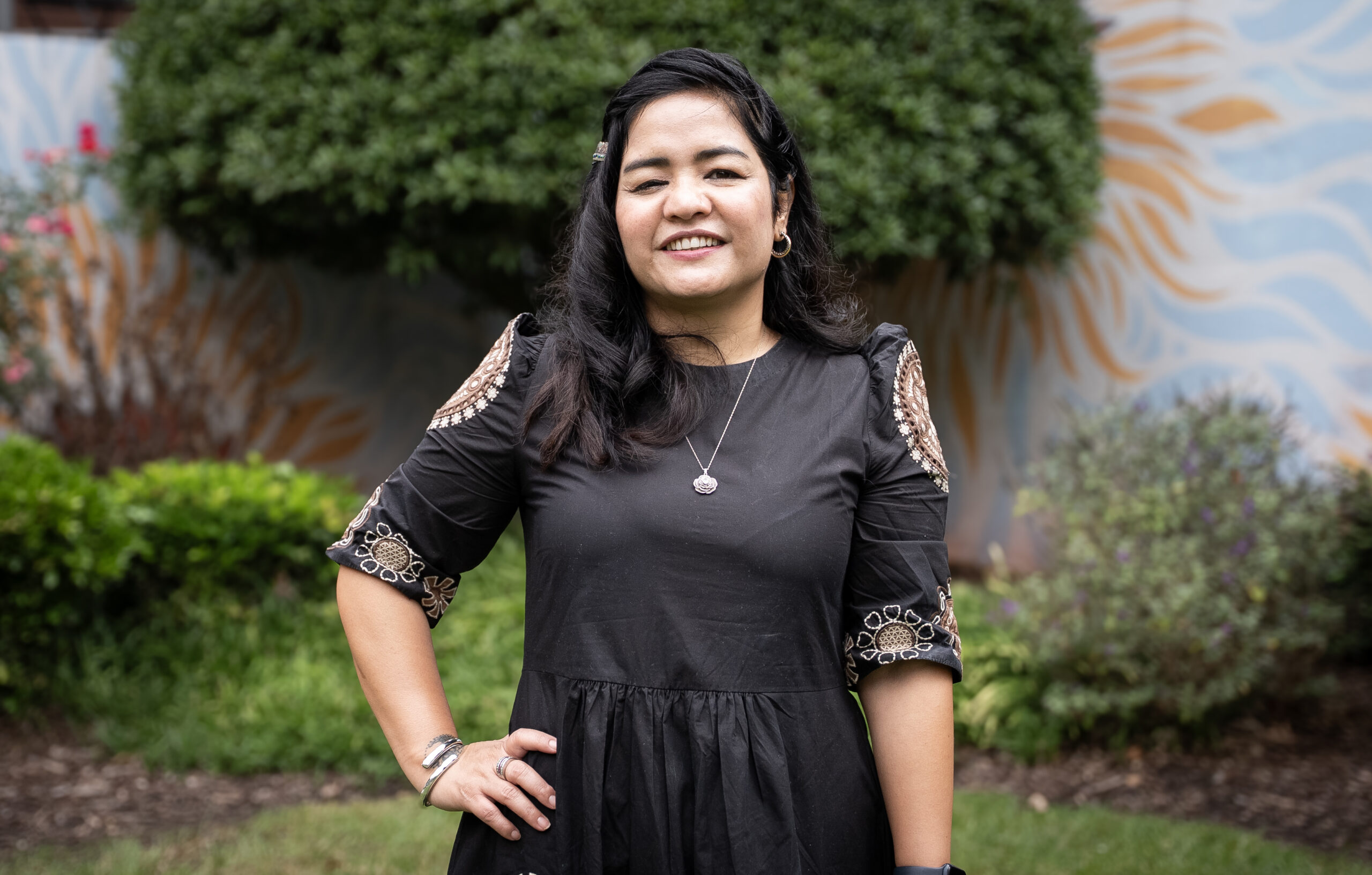
Aziza Abdirasulova, a prominent human-rights defender and a pioneering independent civil society activist from Kyrgyzstan, has been awarded the 2026 Council of Europe Raoul Wallenberg prize in recognition of her efforts to protect fundamental rights with a particular focus on prisoners’ rights, freedom from torture, and the right to peaceful assembly.
At the award ceremony in Strasbourg, on 21 January 2026, Council of Europe Secretary GeneralAlain Berset recognised the great courage and determination of Ms Abdirasulova making an outstanding contribution to fundamental rights in Kyrgyzstan, often at great personal and physical risk.
“As one of the first independent human-rights defenders in Kyrgyzstan to document torture and arbitrary detention systematically, Aziza Abdirasulova has kept facts on the record when silence would have been easier. At a time when attention is drawn to geopolitical shifts and crises at the top, she reminds us that the Raoul Wallenberg prize brings the focus back to human-rights defenders.”
In the spirit of Raoul Wallenberg’s work, notably his single-minded determination and extraordinary courage in standing up to protect fundamental rights, the jury emphasised that Aziza Abdirasulova refused to be silenced by intimidation and harassment. Underlining the essential role of human-rights defenders in challenging times, including backsliding on human rights, the jury stressed that “her organisation Kylym Shamy has played a key role in exposing systemic human-rights violations providing legal support to victims and mobilising public opinion nationally and internationally. It has also been a vital source of credible information for the international community on human-rights issues in Central Asia. She has worked indefatigably to promote and protect freedom of assembly and the right to peaceful protest in the face of severe official restrictions on protests and public gatherings.”
Receiving the prize, Aziza Abdirasulova said: “For me, like for Raoul Wallenberg, every human life saved had and has the ultimate value. Over the years of my work, I have consistently defended fundamental human rights: freedom of peaceful assembly, freedom from torture and cruel treatment, freedom of speech and opinion. This work required not only professional knowledge but also great personal courage. I happened to witness hundreds of cases of torture, and in each case, I have tried to provide whatever support I could to the victims.”
The Parliamentary Assembly of the Council of Europe (PACE), in partnership with the Václav Havel Library and the Charta 77 Foundation, has issued a call for nominations for the 2026 Václav Havel Human Rights Prize.
The deadline for submitting nominations for the 2026 edition of the Prize is 30 April 2026.
Nominations should be sent to the Parliamentary Assembly by e-mail to the following address: hrprize.pace@coe.int, using the form available on the Prize web page. They should be signed by at least five sponsors and submitted in either English or French.
This is a reminder that nominations for the 2026 Right Livelihood Award are open, and the deadline is January 16, 2026 . They are seeking new nominees for the Award who are leading change-makers in their field. Nominations are fully open to the public; therefore, anyone can nominate an individual or organisation creating change through their innovative and life-changing work. To nominate a candidate (preferably in English, but French and Spanish are also accepted), please submit nominations through our online nominations form. Read more about the Award https://www.trueheroesfilms.org/thedigest/awards/97238E26-A05A-4A7C-8A98-0D267FDDAD59.
The Right Livelihood Award recognizes and supports outstanding individuals and organizations driving social, environmental, and human rights change. Winners receive financial or honorary awards, lifelong access to a global network, and international recognition to amplify their impact and protect their work.