Enforced disappearances are reaching alarming levels worldwide, while human rights defenders face increasing persecution and surveillance, United Nations experts warned the Third Committee (Social, Humanitarian and Cultural) on 20 October 2026 citing thousands of unresolved cases and growing threats to those seeking justice and accountability.
Andrea Bolaños Vargas, Special Rapporteur on the situation of human rights defenders, warned that criminalization has become the most prevalent global threat facing those who expose abuses and defend fundamental freedoms. Presenting findings from a survey of 1,122 respondents, she reported that 66 per cent of women human rights defenders believed their situation had deteriorated, rising to 78 per cent among LGBTIQ+ women defenders. Three quarters said restrictive laws and regulations had undermined their work.
“Criminalization is combined with disinformation and stigmatization, surveillance, arbitrary detention, administrative restrictions, funding restrictions, digital attacks, and in some cases, violence against defenders themselves, as well as their families,” she said. Such threats extend even to regions with long-standing democratic traditions. “The human cost is enormous,” she stressed, reporting that 83 per cent of survey respondents experienced negative effects on their mental health. Nearly half of the women human rights defenders surveyed reported having to leave their homes to seek safety, with 24 per cent internally displaced and 22 per cent forced into exile.
…The Czech Republic’s representative highlighted the imprisonment of human rights defenders in Belarus and the Russian Federation, drawing attention to Ukrainian activists Iryna Danylovych and Amet Suleymanov, held in Russian Federations prisons without adequate medical care.
Germany’s delegate urged Moscow to release two Indigenous human rights defenders and called on China to free Hong Kong lawyer Chow Hang Tung.
Rejecting the criticism, China’s representative accused Germany of spreading “smears”. “Some countries and political forces seek to portray criminals as human rights defenders to whitewash their unlawful and criminal conduct,” he said.
Belarus’s delegate dismissed the Czech Republic’s allegations concerning medical care for detainees, insisting that free healthcare is available to all, including prisoners. The Russian Federation’s representative, meanwhile, accused Ukraine and the Baltic States of persecuting those defending Russian-speaking populations, citing the arrest of Latvian activist Viktor Gushchin.
The European Union’s representative, speaking in its capacity as observer, warned that growing fear and self-censorship among people cooperating with United Nations human rights mechanisms represents “a substantive loss to us all”, expressing concern over technology-facilitated transnational repression….
On 20 October 2026, a large number of UN special rapporteurs and experts as well as 4 important NGOs called on India to end the crackdown on peaceful protests and release arbitrarily detained protesters.
Alarmed by a repeatedly heavy-handed police response to peaceful youth-led demonstrations in New Delhi and other parts of the country over the past three months, UN experts and international NGOs ca;;ed on Indian authorities to respect, protect and fulfil the right to peacefully protest, and ensure justice for human rights violations reported during these and previous protests.
“This crackdown reflects a broader, troubling pattern,” the experts said. “We have repeatedly alerted the Indian authorities to undue restrictions on peaceful assembly, excessive use of force, arbitrary detentions, enforced disappearances, and the targeting of student activists, amongst others.” In March, 10 student and labour-rights activists were reportedly detained in New Delhi by plain-clothes police officers, held incommunicado for more than 24 hours, and allegedly subjected to ill-treatment, threats, coercion and forced declarations, before being released following habeas corpus proceedings.
Over the last months, hundreds of thousands of students and their supporters have been gathering peacefully to protest in different parts of the country against Government decisions regarding the education system, and more recently, voter-roll deletions which affect 130 million individuals, reportedly belonging to the Muslim minority, Scheduled Castes and Tribes. “Despite the non-violent nature of the assemblies, law enforcement agencies have reportedly deployed force against unarmed students, including lathi charges and have prevented thousands from joining the protests,” the experts said.
The experts raised concerns over reports that Section 163 of the Bharatiya Nagarik Suraksha Sanhita (BNSS) – or India’s criminal procedure code – has been invoked to impose broad bans on public gatherings, suspend public transportation and execute internet shutdowns.
“We call on the authorities to immediately cease the use of excessive force, rescind blanket assembly bans, and refrain from the misuse of digital surveillance, including through biometrics, and internet disruptions.” The experts called for an independent, impartial, and thorough investigation into the conduct of law enforcement and affiliated forces to be launched without delay to ensure full accountability, justice, and victims’ reparations.
Amnesty International, CIVICUS, Front Line Defenders and South Asians for Human Rights also call on the Indian authorities to release everyone arbitrarily detained for the exercise of their right to freedom of peaceful assembly and ensure accountability for abuses by security forces.
On 10 October 2026, protests were called by the youth-led Cockroach Janta Party (CJP) and backed by student groups calling for the resignation of the Chief Election Commissioner of India, following reports that the nationwide Special Intensive Revision of electoral rolls by the election commission removed around 130 million names from voter lists.
Arbitrary detentions continued on 11 October and there were reports of physical attacks by police on protesters in detention. Many women protesters and journalists accused security personnel of sexual harassment while detaining them during the protests.Right-wing vigilante groups were also seen threatening and assaulting protesters and journalists. Some of them harassed Muslim women journalists while they were covering the protests.
Nearly 40 journalists were detained over the two days. Some of them were physically assaulted, intimidated, and had their camera and mobile phones seized or destroyed despite showing their press identity cards. A group of lawyers who carried out a rally near the Supreme Court in support of protesters also faced unlawful force by police and some were detained briefly.
Instagram accounts of the news outlets Molitics and Journo Mirror have been blocked in India during its coverage of the protests citing Information Technology Rules.
On 10 October authorities also ordered a 24-hour mobile internet shutdown in central Delhi. Mobile internet was also reportedly blocked at eight stadiums used as detention centres, cutting detainees off from their lawyers and families. Reports also suggest that the shutdown was taking place beyond areas of protests and detention.
UN human rights experts released a landmark statement urging States, businesses, INTERPOL and international organisations to prevent and combat the spread of transnational repression, warning of its increasing impacts on human rights, democracy and the rule of law and those who take action to defend them. Over one hundred UN Special Procedures mandate holders and members of Treaty Bodies (full list below) adopted a landmark statement calling for a decisive international response to the increasing use of transnational repression by States as a tool to silence activism across borders. ‘An unprecedented number of UN experts made it clear today that any response to transnational repression should be strongly anchored in human rights obligations. Not only should governments hold perpetrators accountable, they should also proactively adopt laws and policies that centre the needs of victims, in particular at-risk diasporas and those in exile.’Raphaël Viana David, ISHR Senior Advocacy Manager ‘Transnational repression represents a growing challenge to the international human rights system and to the principles of the Charter of the UN itself,’ signatories said in their appeal, which provided a roadmap of measures to prevent and respond to transnational repression, and better assist and protect those targeted. ‘By creating fear across borders, transnational repression has profound consequences not only for those directly targeted, their families and communities, but also for civil society action, democratic principles, civic space, refugee protection, independent journalism and media freedom,’ the experts stressed, warning that this threatens the ability of individuals and groups to ‘promote, protect and defend human rights, and to engage safely with national, regional and international human rights mechanisms’, including at the UN. Arising from a retreat for UN human rights experts convened by ISHR in June, this joint statement comes a week after the UN Human Rights Council’s first dedicated dialogue on the issue of transnational repression, and arbitrary detention and amid broader efforts by the UN human rights system to address growing acts of transnational repression targeting those who engage with the UN. These efforts include statements and resolutions at the Human Rights Council, and a first brief by the UN Human Rights Office. Transnational repression tactics, the experts said, include extrajudicial killings, torture, harassment, arbitrary detention, travel bans, expulsions, deprivation of nationality, misuse of international law enforcement mechanisms, including INTERPOL Red Notices, intimidation of family members and associates, and more. Signatories flagged the ‘increasingly digital nature of transnational repression’, including through the use of social media, spyware and malware software, warning that all of these are being amplified by artificial intelligence tools. Signatories urge States to refrain from committing or supporting acts of transnational repression and to develop specific laws and policies to prevent, investigate and punish such acts, including when they don’t amount to a crime under domestic law. This includes directing resources to better track and analyse patterns of transnational repression, including digitally, building the capacity of national authorities across different areas, establishing inter-governmental coordination mechanisms and focal points, and regulating surveillance technologies. Signatories stress the need to combat the misuse of frameworks to counter terrorism and organised crime, to apply additional vetting to INTERPOL Red Notices and Diffusions, and to take into account a country’s transnational repression record when considering bilateral cooperation, agreements, and diplomatic assurances. States must also redouble efforts to protect and assist those being targeted or likely to be in the future, including through efficient reporting channels, adequate protection policies and programmes, psychosocial support, and expedited asylum, resettlement and humanitarian visa processes. Experts also call on other actors, including international organisations and businesses – to be wary of transnational repression and of their responsibilities in preventing it. Businesses, in particular tech companies, should conduct due diligence and strengthen privacy and data protection. INTERPOL should also step up efforts to tackle the misuse of Notices, Diffusions, and other mechanisms, including by cooperating with civil society and relevant States. ‘Powerful human rights abusers will not let a border stop them from quashing dissent. At a time when more States are pushing human rights defence into exile, the UN and all States who care about upholding human rights must heed the experts’ call and take action to protect those who seek refuge or engage in critique or dissent abroad.’Raphael Viana David The latest annual report by the UN Secretary-General on acts of reprisals against individuals seeking to cooperate with the UN cites 32 States. Of these, 13 States are cited for acts of transnational repression, affecting at least 43 individuals and four organisations. ‘Allegations of transnational repression across borders seemed to be on the rise, with examples from all regions, some enabled by the misuse of digital technologies,’ the report noted in its conclusions. ‘Transnational repression can cripple key accountability efforts at the UN and leave the global human rights system blind and deaf. States must ensure human rights defenders and activists who seek justice at the UN are safe from the long reach of abusive governments both while engaging with its mechanisms and afterwards.’Madeleine Sinclair, director of ISHR’s office in New York. ISHR has long campaigned to denounce reprisals against those engaging with the UN, and for the UN and States to ensure that human rights defenders and civil society organisations can safely cooperate with human rights experts and mechanisms. This year, ISHR’s campaign is focused on the impact of transnational repression. ISHR urges States, UN officials, businesses and all stakeholders to follow the recommendations in the statement and take proactive steps to address, prevent and punish acts of transnational repression, to enhance assistance and protection of victims, and to ensure everyone can safely engage with the UN and other international human rights bodies.
Kasmira Jefford on 23 September 2026 in Geneva Solutions discusses the transnational repression by Russia as exposed in Mariana Katzarova’s report to the UN.
Reporting to the Human Rights Council this week on the Kremlin’s widening crackdown on Russian critics overseas, Mariana Katzarova urged states to create a binding international instrument to put a stop to authoritarian governments reaching across borders. Since being appointed special rapporteur on Russia by the Human Rights Council in October 2022 – eight months after its full-scale invasion of Ukraine – Mariana Katzarova has reported widely on the Kremlin’s expanding efforts to stifle critics and anti-war voices within its borders.
But her latest report took her into new territory. “Today, I report on how Russia is exporting that rule of fear,” she told members gathered in the Palais des Nations’ Assembly Hall on Monday. The country in question was conspicuously absent.
The Bulgarian human rights expert and former journalist described how Vladimir Putin’s government “has become one of the most prolific perpetrators of transnational repression” by building a state-run system to surveil, intimidate and punish any citizens seen to be voicing dissent abroad.
Drawing on more than 400 documented cases, Katzarova noted these were “not a series of isolated incidents”. “It is the continuation, beyond Russia’s borders, of the same structural, state-sponsored system of repression I have documented at home,” she added.
Her report, she claims, is the first UN country-specific report on transnational repression – a concept for which Katzarova said there is still no universal definition but which she describes as a state reaching beyond its borders to silence political or civic opponents.
In August, Russia introduced a new law imposing sweeping financial, property and consular restrictions on Russians living abroad who have pending convictions, including under legislation used to prosecute critics. “My report calls this civic death, de facto statelessness for people who remain on paper citizens,” she added, calling on Moscow to rescind the law.
Russia declined Geneva Solutions’ request to comment. In a statement issued earlier this month, Moscow’s foreign ministry said its stance was unchanged from previous years. “We do not recognise the mandate of this illegitimate special procedure, and any form of interaction with it is unacceptable to us”.
Several journalists and rights defenders targeted by Russia were also present at the Human Rights Council on Monday to share their testimonies – including Natalia Arno, an exiled Buryat human rights defender, who fell ill in 2023 with suspected poisoning symptoms during a conference visit in Prague.
Arno, who lives in the United States where she founded the Free Russia Foundation, recalls finding her hotel room door open and noticing a strange smell inside. She woke up the next day with sharp dental pain and cancelled the rest of her trip. On the flight back, she said her organs started to fail, and she was rushed to the hospital on arrival.
Arno said US authorities investigating the case couldn’t tell her what happened, claiming it was a matter of national security. However, according to the special rapporteur, she was told informally by a military hospital that was analysing her bloodwork that she had been targeted by a new type of Novichok.
The suspected attack was unlike anything she had experienced before. “This was another eye-opening level, because it seemed like surveillance, cyberattacks – they just wanted some information about us. But to physically attack us, it was something new,” Arno said.
She said that more needed to be done at an international level to raise awareness of transnational repression. “This issue should not only be treated as a human rights issue. It’s definitely a national security issue because it’s also an attack on the sovereignty of your country,” she said as she addressed states in the room.
Roman Dobrokhotov, Russian journalist and editor-in-chief of news platform The Insider, was also at the side event. “You don’t see my name here because of security reasons – I can’t announce in advance when I’m flying to a conference, even if it is a UN event.”
The Kremlin has targeted Dobrokhotov following investigations by his media into the government’s role in a string of deadly incidents, including the poisoning of the late Russian opposition leader Alexei Navalny in 2020. Last year, in a long-running trial in the UK, where the journalist and his family have been residing, a court found six Bulgarians guilty of spying for Moscow in a sophisticated operation that included Dobrokhotov among their targets.
He echoed Arno’s concern that repression of individuals was also a problem of global security, saying the same groups targeting him “were also responsible for a big wave of sabotage operations in many different countries”.
Katzarova said countries, particularly in Europe and the United States, where she had seen many cases of transnational repression, needed to work more closely to combat the problem, especially by vetting international compliance databases like Interpol to prevent politically motivated entries or arrest warrants from being automatically cleared.
The expert called for a UN convention to establish common definitions, host-state responsibility, and frameworks for prevention, accountability, and cooperation.
“I hope this is not just a distant dream, but there is a lot of work to be done by member states to initiate such a new instrument,” she told journalists, adding that the Human Rights Council should be at the forefront of such a movement.
“In the meantime, while we don’t have this convention in place, I am calling on the host states to actually develop on their national level a whole framework set up to tackle transnational repression with a strategy, with involvement of their law enforcement, prosecutors, civil society, in order to identify who the victims are,” she said.
Human Rights Council members will vote at the end of the session on whether to renew her mandate – in a resolution being led by the European Union. Commenting on the report on the human rights situation in Russia, the EU ambassador noted the existence of a systematic mechanism of repression in Russia that operates even beyond the country’s borders to suppress criticism.
“The EU is concerned about the report’s findings, the cases of murders and poisonings, the abuse of legal and administrative procedures, the conduct of digital operations, and the use of Interpol contrary to its intended purpose — all of which are directed against individuals both within Russia and beyond its borders,” the EU representative noted. [https://ua.news/en/world/es-zaklikav-rosiiu-pripiniti-peresliduvannia-gromadian-cherez-interpol]
Women Human Right Defenders (WHRDs) from around the world will be gathering in Geneva from 21 to 25 September, to learn about the UN Human Rights Council, advocate for their rights and amplify their own stories.
The week-long training, known as the Women Human Rights Advocacy Week, is co-organized by nine human rights organizations including Amnesty International (see below for full list). It is aimed at providing participants with practical tools to understand the Human Rights Council, while offering guidance on how to engage with it strategically and advocate for change in their communities.
“The women attending are risking their lives every day to protect their communities from climate change, greedy corporations and land theft,” said Lisa Maracani, Amnesty International’s researcher on human rights defenders. “Their knowledge is crucial to ensuring bodies such as the Human Rights Council remain effective, while the WHRD Advocacy Week is designed to provide these women with the tools and strategies to advance their advocacy on this global stage.”
The women attending [this meeting] are risking their lives every day to protect their communities from climate change, greedy corporations and land theft.Lisa Maracani, Amnesty International’s researcher on human rights defenders
Participants attending are WHRDs working at the nexus of gender, climate and conflict, and includes activists protecting the environment, the rights of women migrant workers, Indigenous land rights, as well as the rights of communities impacted by businesses activities.
The training aims to facilitate participation for activists who face multiple barriers to accessing the UN, to equip participants with a broad knowledge of the human rights system, to foster networks among them as well as between them and human rights experts, and to amplify their voices and calls for international accountability.
Participants will be able to speak before the Human Rights Council, and meet with, lobby and inform UN officials, diplomats and Council-mandated independent experts. Several participating defenders will also speak at a public event at the UN headquarters on Thursday 24 September alongside the UN Special Rapporteur on the human right to a clean, healthy and sustainable environment.
“The UN human rights system must be open to and informed by those who have most to contribute to it: human rights defenders,” said Fabiana Leibl, programme manager for the International Service for Human Rights. “With this training, we seek to make sure the perspectives of women human rights defenders are effectively represented at the Human Rights Council’s and across its key mechanisms.”
This event has been organized by: Amnesty International, Asia Pacific Forum on Women (APWLD), Front Line Defenders Rights, International Service for Human (ISHR), Peace Brigade International (PBI), The Association for Women’s Rights in Development (AWID), Women Human Rights Defenders International Coalition (WHRDIC), WHRD Middle East and North Africa Coalition (WHRD MENA Coalition), Urgent Action Fund for Feminist Activism (UAF).
On 15 September 2026 several NGOs issued a joint Statement on this case:
Journalist and #MeToo activist Sophia Huang Xueqin is due to be released on 18 September after serving an unjust five-year prison sentence. The International Federation for Human Rights (FIDH) and the World Organisation Against Torture (OMCT), within the framework of the Observatory for the Protection of Human Rights Defenders, together with other organisations, call on the Chinese authorities to ensure her immediate release and guarantee that, once released, she can carry out her journalism and human rights work without surveillance, harassment, retaliation or other restrictions.
Sophia Huang Xueqin is widely recognised for her work on human rights and commitment to press freedom. She is a journalist and one of the most prominent figures associated with China’s #MeToo movement. For years, she reported on and advocated for gender equality and supported survivors of sexual harassment and gender-based violence.
In September 2021, Sophia was preparing to start graduate studies in the UK. However, she and a friend, human and labour rights activist Wang Jianbing, were arrested in Guangzhou, China on 19 September, and detained incommunicado for more than five months. While in detention, both Sophia and Jianbing were reportedly subjected to ill-treatment, with negative impacts on their health.
During their trial in September 2023, the prosecution focused on their role in co-organising weekly gatherings with fellow activists, as well as their participation in an online course on non-violence and online posts they had published or shared on issues deemed “sensitive” by the Chinese government.
Their convictions in June 2024 for “inciting subversion of state power” were based solely on the permissible exercise of their human rights, including the rights to freedom of the press and expression as well as association. Their case is emblematic of the Chinese government’s ongoing crackdown on journalists, human rights defenders, feminist activists and civil society voices calling for social justice and respect for human rights.
Wang, who was sentenced to three and a half years, was released in March 2025.
While Sophia Huang Xueqin is expected to be released on 18 September, we are concerned that she will face restrictions after leaving prison. She was subject to a “supplemental sentence” of four years’ deprivation of political rights, a punishment that is routinely imposed on human rights defenders and journalists to restrict their ability to speak, publish and organise long after their prison terms end. The legal provisions permitting this punishment are incompatible with international human rights standards, not to mention the fact that no one should be punished simply for exercising their human rights.
We call on the Chinese authorities to:
Ensure Sophia Huang Xueqin is released immediately and is not subjected to any further arbitrary detention and allowed to move freely; Guarantee her rights to freedom of expression, press, association and peaceful assembly, alongside her right to participate in public life, including her ability to communicate freely with family, friends, supporters and civil society groups; Ensure she is not subjected to surveillance, harassment, intimidation, retaliation or restrictions on her movement and communications; and Amend domestic laws, notably the Criminal Law, to ensure their compliance with international law and standards, and prevent the misuse of legal provisions to restrict the rights of human rights defenders and others.
On 3 September 2026 Amnesty International presented ‘Stories That Resist‘, its first Virtual Museum—an immersive 360° experience that allows visitors to explore 65 years of campaigning, research and collective action in defence of human rights around the world. Developed in the Americas, the initiative aims to introduce the movement’s history to new audiences and inspire more people and future generations to join the defense of human rights. More than a digital archive, Stories That Resist is a space for memory, education and participation that demonstrates what can be achieved when thousands of people organize and act in the face of injustice.
The museum is available in English, Spanish and Portuguese, includes accessibility features for all visitors and can be explored free of charge from anywhere in the world.
Across five thematic galleries, visitors can explore more than 50 historical items, including emblematic objects from Amnesty International’s archives, campaigns that defined generations, photographs, videos, awards and testimonies from people who chose to act in the face of injustice.
“The history of Amnesty International is made up of people who refused to remain indifferent. This museum allows us to honour their courage, preserve the memory of our struggles and remind ourselves that every action, however small it may seem, can help transform a life,” said Ana Piquer, Amnesty International’s Regional Director for the Americas.
The museum offers visitors a closer look at some of the most significant moments and honours in Amnesty International’s history, including the story of the Nobel Peace Prize awarded to the organization in 1977 for its contribution to the defence of human rights. It also features individuals and movements honoured with the Ambassador of Conscience Award, Amnesty International’s highest distinction, presented to those who have confronted injustice and used their voices and actions to inspire millions of people. Recipients include Nelson Mandela, Malala Yousafzai, Ai Weiwei, Alicia Keys, Greta Thunberg and the Fridays for Future movement. SEE ALSO: https://trueheroesfilms.com/equip/digest/?sort=most
“Every campaign, every investigation, every object and every person who chose to act is part of this history. Today, that legacy has a new space where it can continue to inspire,” said Ana Piquer, Amnesty International’s Regional Director for the Americas.
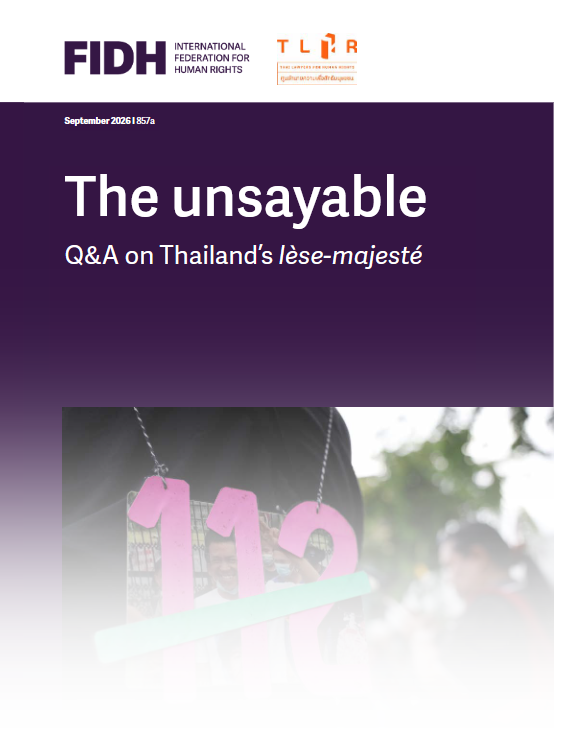
A new report published on 2 September 2026 by the International Federation for Human Rights (FIDH) and its member organisation Thai Lawyers for Human Rights (TLHR) sheds light on the severe human rights impacts of the enforcement of Article 112 of Thailand’s Criminal Code (lèse-majesté) since the country’s latest military coup in May 2014.
The report, titled “The unsayable – Q&A on Thailand’s lèse-majesté”, answers 15 frequently asked questions about Article 112 and its implications for human rights, civic space, the media, and democratic development in Thailand.
“The evidence of the serious human rights violation linked to the enforcement of Article 112 is overwhelming and causes great damage to Thailand’s international standing. Reform of Article 112 is long overdue and efforts by Thai civil society to peacefully campaign for such changes should be commended and protected,” said FIDH Vice-President Teppei Ono.
Statistics about lèse-majesté reflect the severity and scope of the human rights violations linked to the enforcement of Article 112. Between May 2014 and July 2026, at least 461 individuals were prosecuted under Article 112, with at least 199 receiving prison sentences. The 10 longest prison sentences imposed under Article 112 averaged approximately 30 years and six months, with the longest sentence reaching 50 years. At least 21 children were prosecuted under Article 112, with the youngest one aged 14.
As of July 2026, 29 individuals remained detained under Article 112. Of these, 12 were detained pending trial or appeal, while the judgments for the remaining 17 had become final. Among those behind bars is prominent pro-democracy activist and human rights lawyer Arnon Nampa, who has accumulated a prison term of over 31 years stemming from 11 lèse-majesté convictions for his speeches and online posts that called for monarchy reform. Three additional lèse-majesté cases remain pending.
At the international level, all the relevant key United Nations (UN) human rights mechanisms have consistently expressed their concerns over various aspects of the enforcement of Article 112 and declared it incompatible with Thailand’s human rights obligations under international law…
FIDH and TLHR call on states to use Thailand’s fourth UPR to raise their concerns over the ongoing abuse of Article 112 and make recommendations to the Thai government to bring this provision into line with international law. FIDH and TLHR also urge Thai authorities to establish a moratorium on new lèse-majesté prosecutions and to immediately release all those who are being deprived of their liberty under Article 112.
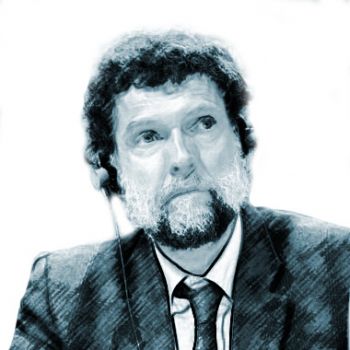
An acquittal and two binding European judgments failed to unlock Turkish activist Osman Kavala’s cell, so after nearly nine years, Europe’s top human rights judges on Tuesday handed Ankara a final, two-part order: Free him and erase the conviction.
The European Court of Human Rights (ECtHR) on Tuesday 25 August 2026 ordered Turkey to release imprisoned philanthropist Osman Kavala without delay and said his criminal conviction should be treated as null and void, delivering a sweeping judgment in a case that has strained Ankara’s relations with European institutions for years.
The court’s 17-judge Grand Chamber found that the criminal proceedings against Kavala were used predominantly to punish and silence him over activities connected to the 2013 Gezi Park protests and his work as a human rights defender. It also said his case reflected a wider systemic problem in Turkey involving the prosecution and detention of political opponents, human rights defenders and journalists as well as structural weaknesses in judicial independence.
The Strasbourg-based court found violations of Kavala’s rights to liberty, a fair trial, freedom of expression and freedom of assembly and association. It also found that Turkey had improperly restricted those rights for purposes not permitted under the European Convention on Human Rights and that Kavala’s life sentence without the possibility of parole violated the prohibition on inhuman or degrading punishment.
It concluded that the flaws in the proceedings were so serious that Kavala’s conviction amounted to a “flagrant denial of justice,” meaning the conviction could not provide a lawful basis for keeping him imprisoned. The court said his detention since its first ruling in his favor in December 2019 had therefore violated his right to liberty.
Kavala, 68, has been imprisoned since 2017. A Turkish court sentenced him in April 2022 to aggravated life imprisonment — effectively life without parole — after convicting him of attempting to overthrow the government by allegedly financing and organizing the Gezi Park protests.
Tuesday’s ruling also questioned whether the courts handling Kavala’s case were sufficiently independent and impartial. The ECtHR pointed to a disciplinary investigation opened against three judges shortly after they acquitted Kavala in 2020, repeated transfers and mergers of his cases, statements by senior government officials portraying him as guilty before his conviction and broader problems involving the appointment, transfer and discipline of judges.
The court stopped short of saying Turkey’s judiciary as a whole acts on government orders. But it said the structural shortcomings it identified could facilitate direct or indirect executive influence over judicial decisions, particularly in politically sensitive cases.
The Turkish government has repeatedly denied accusations of political interference in the judiciary and maintains that the country’s courts operate independently. President Recep Tayyip Erdoğan has also rejected previous European court rulings in Kavala’s case.
The court also awarded Kavala 70,000 euros ($82,000) in damages and 43,300 euros in legal costs.
Grand Chamber judgments are final and legally binding on Turkey as a member of the Council of Europe. Their implementation is supervised by the Council of Europe’s Committee of Ministers.
In a Blog for Human Rights First published on 20 August, 2026 Brian Dooley decries the arrest of Naji Fateel in Bahrain.
Around 5am on Tuesday morning this week, Naji Fateel was woken up by police banging hard on his bedroom door. They grabbed and arrested the Bahraini Human Rights Defender, and took him into custody.
Speaking today from jail, he described how startled he was at what happened, because in 2024, after spending a decade in prison for his human rights work, he was given a “Royal Pardon” and told was no longer wanted by the police. “They rushed into the house, terrifying the children, terrifying my mother, first thing in the morning. They dragged me out and put me on a bus,” he said.
Fateel is a prominent peaceful activist, known internationally for his human rights work. He was arrested in 2013 and sentenced to 15 years in prison. In 2016, while already imprisoned, he was given another fifteen-year sentence following his alleged role in prison unrest at the notorious Jau Prison the year before. That sentence was later reduced to ten years on appeal. Human Rights First was among those, including various UN mechanisms, regularlycalling for his release over the years. I raised his case repeatedly, including in testimony I gave to the U.S. Congress in 2022.
Although he should never have been jailed in the first place, Bahrain’s ruling family – its unelected government – issued him a pardon in 2024, assuring him he had no more prison time to serve. But now he is back in jail.
The pretext for seizing him appears to be a fine imposed by the bizarre 2016 judgement over prison protests. In addition to the prison time, the sentence ordered Fateel and 56 other defendants to pay over $1million between them towards repairing alleged damage to the prison during the unrest, mostly to its air conditioning system.
Fateel says that when police put him on the bus they cited this collective punishment as the reason he was taken from his home and arrested in a dawn raid.
“They said, ‘You have a fine.’ I said ‘There was no need for you to do this – if you had called me and told me to come to your office, I would have come.’”
Fateel also said he had been specifically told, in a call with the police two days before the early morning raid, that there was no need for him to report to the police offices for anything.
He said the police who stormed his home showed no arrest warrant, and that the way they targeted him “was a method of intimidation.” He said today too that he and four others arrested that same morning have been told they will be brought before the Public Prosecution Office to be charged with crimes.
Not for the first time, Bahrain’s security forces seem to be exhibiting a dangerous mix of brutality and incompetence. Fateel should be released immediately, as should the other human rights activists still jailed in Bahrain for their peaceful criticism of the government