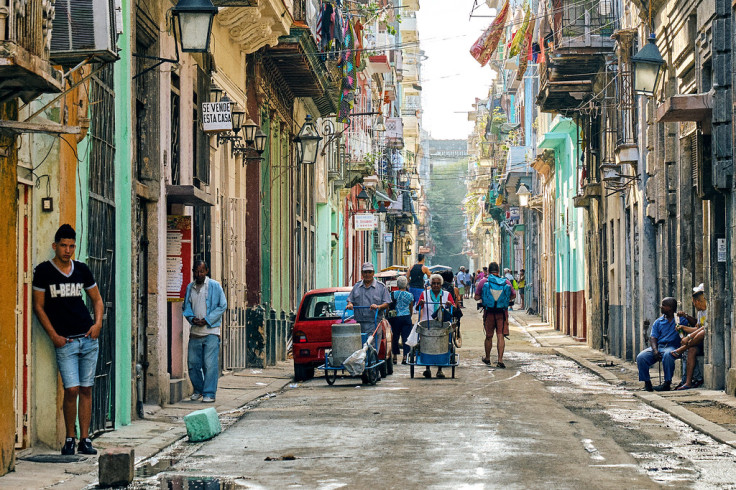
Human Rights Watch said on 9 April 2026 that Cuba‘s recent pardon of more than 2,000 inmates did not include political prisoners, reinforcing earlier concerns raised by other rights groups that the measure would exclude detainees jailed for dissent.
The Cuban government announced during Holy Week that it would pardon 2,010 prisoners, describing the move as a “humanitarian and sovereign gesture” tied to religious observances. Officials said the release would prioritize groups such as young people, older adults, women and foreigners, based on criteria including health conditions and time served, but did not disclose the identities of those freed.
Human Rights Watch’s assessment, reported by Bloomberg, confirmed that none of those released were among the more than 1,200 political prisoners documented on the island. The finding adds weight to reports published days earlier by organizations including the Cuban Observatory for Human Rights, Prisoners Defenders and Cubalex, which had already said they found no evidence that political detainees were included in the pardon.
Those groups had warned that the measure appeared to benefit common prisoners while leaving untouched cases tied to political repression. “It’s a propaganda exercise,” Javier Larrondo, president of Prisoners Defenders, said at the time, arguing that Cuban authorities have historically used releases of common inmates to inflate figures associated with political concessions.
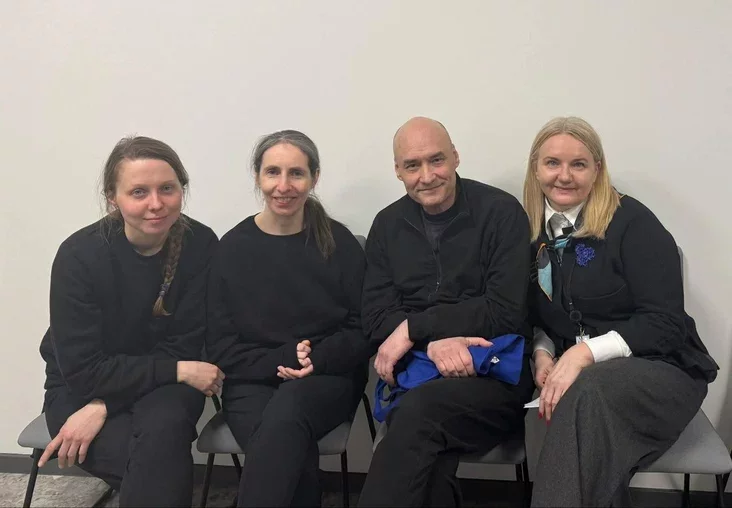
The Human Rights Center “Viasna” published a joint photo of three of its employees — Marfa Rabkova, Nasta Loika, and Valiantsin Stefanovich — who were released.
Belarusian leader Alexander Lukashenko released 250 political prisoners on 19 March 2026, the largest group freed so far, as the United States moved to lift more sanctions, The releases are part of a broader effort by Minsk to improve ties with Washington after years of isolation and sanctions. Among those freed was Katsyaryna Andreyeva, a journalist with Polish Belarusian-language broadcaster Belsat, according to reports.
Also released was Marfa Rabkova, an activist with Belarusian human rights group Viasna who was arrested in September 2020 and sentenced to 14 years and nine months on charges including “extremism,” the Reuters news agency reported.
Coale – an envoy for US President Donald Trump – said he expected all remaining political prisoners to be released by the end of the year, adding that Washington would lift all sanctions imposed over the 2020 crackdown on protesters if that happens, Reuters reported. He also said Lukashenko had been urged to halt further arrests. The United States has agreed to lift sanctions on several Belarusian banks and the country’s finance ministry, as well as fertiliser producers, according to the AFP news agency.
Exiled Belarusian opposition leader Sviatlana Tsikhanouskaya welcomed the latest prisoner release as a moment of “great joy” and “huge relief.”
Civil Rights Defenders welcomes the news that human rights defender Nasta Loika has been released from prison in Belarus as part of the country’s largest mass release of political prisoners to date. Nasta is a longstanding advocate for human rights in Belarus and an alarm bearer in the Natalia Project, the world’s first alarm and positioning system for human rights defenders at risk.
“We are deeply relieved that Nasta Loika is finally free. Her courage, resilience, and commitment to human rights have inspired countless people in Belarus and beyond. While we celebrate her release, it comes after years of unjust persecution. No one should ever be imprisoned for defending fundamental rights,” says Gabrielle Gunneberg, Global Department Director at Civil Rights Defenders.
Reacting to the release of 250 individuals imprisoned in Belarus on politically motivated grounds, including human rights defenders Marfa Rabkova and Nasta Loika, as a part of a deal with the United States, Marie Struthers, Amnesty International’s Eastern Europe and Central Asia Director, said:
“While the release of hundreds of individuals unjustly detained on politically motivated charges is a welcome step, it must not be mistaken for justice. Marfa Rabkova, Nasta Loika, Valiantsin Stefanovich and others should not have spent a day in prison. Freedom should never be the product of geopolitical bargaining in human beings. Justice will not be served until those responsible for their unlawful imprisonment are held accountable.
Human rights activist and Nobel Peace Prize laureate Ales Bialiatski reacted to the release of fellow human rights defenders:
“I am immensely happy, like all my colleagues, about the release of our friends, our colleagues: Valiantsin Stefanovich, Marfa Rabkova, and Nasta Loika. The thing that we expected — I have been expecting it for the last three months, and my colleagues have been expecting it for more than five years — has come true. Because Marfa Rabkova served five and a half years, Valiantsin Stefanovich served four and a half years, and Nasta Loika served several years. And it was an absolute injustice, it shouldn’t have been like this.
The prominent Nigerian atheist, who was freed on 8 January 2024 after serving more than four years in prison for blasphemy, is now living in a safe house as his legal team fear his life may be in danger…
In 2024, the UN Working Group on Arbitrary Detention (UNWGAD) released its opinion that the Nigerian State violated international law by detaining Bala. Concluding that he was wrongfully imprisoned for exercising his right to freedom of thought, conscience, religion or belief and that because of this violation no trial should have taken place.
Humanists International welcomes news of the release of Mubarak Bala, however, it reiterates that he should never have been detained in the first place. The organization once again thanks all those individuals and organizations without whose support this work would not have been possible. The organization hopes that Bala will one day be able to return to his homeland, and resume his work.
Andrew Copson, President of Humanists International stated:
“Today, we celebrate Mubarak Bala’s release – a hard-won victory that fills us with immense joy and relief. This triumph would not have been possible without the unwavering dedication of Humanists International’s staff, the tireless advocacy of Leo Igwe, the expertise of James Ibor and Bala’s legal team, and the invaluable support of our partner organizations. We extend our deepest gratitude to each and every one of them. While we rejoice in Mubarak’s freedom, we remain committed to fighting for the countless others who remain unjustly imprisoned for their beliefs. Their struggle is our struggle, and we will not relent until they too are free.”
But many, such as the NGO ARTICLE 19, have a warning: However, this is not a slam-dunk win for press freedom. The US should have never brought these charges. The single remaining criminal count of conspiring to obtain and disclose classified US national defence documents puts investigative journalism at severe risk in the United States and beyond. Journalists that cover national security, the armed forces and defence do this day in and day out as part of providing transparency and accountability to hold abuses of power in check.
‘We are all at risk if the government can hold an archaic law, the Espionage Act, over the heads of journalists to silence them.’ The charge under the Espionage Act undermines the principles of media freedom, accountability, and independent journalism that Assange, his legal team, and campaigners had championed throughout his case, which began in 2012. The fact that his release from Belmarsh prison is a result of plea deal is a clear reminder of how important it is to redouble our efforts defending media freedom and pushing for accountability.
Patrick Wintour in the Guardian 9 April 2024 reports that Bahrain has unconditionally released more than 1,500 prisoners, including political detainees, in the biggest royal pardon since the 2011.
The amnesty followed years of campaigning inside the country and by international human rights groups but came as a complete surprise to activists. Amnesty Bahrain said: “This is a welcome step. Many of [the prisoners] should not have been imprisoned in the first place.”
The releases were ordered by King Hamad bin Isa Al Khalifa, coinciding with Eid and the silver jubilee of the king taking power. The US embassy in Bahrain welcomed the move and expressed the hope that all those being released will be reunited with their families.
On social media, joyful scenes of families being reunited in their homes were screened, including some who had not been in their family home for as long as a decade.
But Sayed Ahmed Alwadaei, director of advocacy at the British-based Bahrain Institute for Rights and Democracy, said: “This came as a complete shock. There had been no prior indication, and this is the most important release programme since 2011. The release is bittersweet as there are still 600 political prisoners behind bars and on death row.”
Among those retained in prison include Hassan Mushaima, the head of the opposition group Al-Haq, and Abdulhadi al-Khawaja, a Danish-Bahraini human rights defender serving a life sentence in Bahrain for peaceful human rights work.
On 1 December 2023, Daouda Diallo, a human rights defender and secretary general of the Coalition Against Impunity and Community Stigmatization, was abducted by security forces in civilian clothes in Ouagadougou, capital of Burkina Faso, and taken to an unknown location. See: https://humanrightsdefenders.blog/2023/12/04/mea-laureate-2022-daouda-diallo-abducted/
On 28 March, 2024 Amnesty International (Index Number: AFR 60/7830/2024) reported that he was freed on 7 March 2024.
Following the decision of a judge in Guatemala City to authorize the immediate release of Virginia Laparra, former prosecutor of the Special Prosecutor’s Office against Impunity (FECI) on Tuesday, 3 January, Ana Piquer, Americas director at Amnesty International, said:
“Virginia Laparra should never have spent a day in jail. It’s great news that she can be reunited with her loved ones after nearly two years as a prisoner of conscience. Her release is a first step towards ending the terrible human rights violations she has faced in retaliation for her outstanding work as an anti-corruption prosecutor.”
“We lament, however, that Virginia Laparra remains convicted of a crime she did not commit and faces another unfounded trial, due to the regrettable use of criminalization against dozens of people who, like her, have led the fight against impunity. Amnesty International reiterates its call for the Guatemalan authorities to put an immediate end to the misuse of the criminal justice system to harass, intimidate and punish judges, prosecutors, human rights defenders and journalists”.
On 28 November 2022, Amnesty International named the former prosecutor as a prisoner of conscience, having found that her detention was solely due to her human rights work as head of FECI in Quetzaltenango, and requested her immediate and unconditional release. In May 2023, the United Nations Working Group on Arbitrary Detention declared that the detention of the former anti-corruption prosecutor was arbitrary and requested her immediate release. At the same time, the international mobilization of thousands of human rights activists on the case has not ceased.
“Amnesty International underscores the importance of international pressure in cases such as those of Virginia Laparra. Our movement in the Americas and around the world has not rested in demanding the release of the former prosecutor,” said Ana Piquer.
The unfounded criminal prosecution against Virginia Laparra took place in a context of attacks against dozens of people for their role in the investigation of high-profile cases of large-scale corruption and human rights violations. In 2022, there were 3,754 attacks against human rights defenders and at least 73 judicial workers, journalists and activists had to go into exile, according to data from Guatemala’s Human Rights Defenders Protection Unit (UDEFEGUA).
Matiullah Wesa, a girls’ education advocate, reads to students in the open area in Spin Boldak district in the southern Kandahar province of Afghanistan on May 21, 2022. Siddiqullah Khan/AP
On 26 October 2023 AP reported that the Taliban have freed an Afghan activist who campaigned for the education of girls. Matiullah Wesa was arrested seven months ago and spent 215 days in prison, according to the group, Pen Path.
The Special Rapporteur on Human Rights of the United Nations Human Rights Council, Rina Amiri,, has welcomed the release of Matiullah Wesa, the founder of the “Rah-e-Qalam” organization and an education activist, and has called for the freedom of all human rights defenders in Afghanistan. Richard Bennett, the Special Rapporteur on Human Rights of the United Nations, has requested the immediate and unconditional release of all individuals detained “arbitrarily for defending their rights and the rights of others.”
Ataullah Wesa, Matiullah’s brother, announced on his social media account that he had been released after 215 days. However, some human rights activists and well-known members of Afghan civil society remain in prison.
Amnesty International said that Wesa should never have been jailed for promoting girls’ rights to education.
“The Taliban de-facto authorities must release human rights defenders and women protesters Rasool Parsi, Neda Parwani, Zholia Parsi and Manizha Sediqi and all others who are unfairly kept behind bars for standing up for equality and denouncing repression,” the rights group tweeted.
On August 29, 2023, Amnesty International USA, Human Rights Watch, Project on Middle East Democracy (POMED) and 16 additional civil society organizations delivered an open letter urging U.S. Secretary of State Antony Blinken to encourage the United Arab Emirates (UAE) government to immediately and unconditionally release Emirati human rights defender Ahmed Mansoor ahead of the 28th Conference of Parties of the United Nations Framework Convention on Climate Change (COP28) that will take place from November 30 to December 12, 2023. [for more on UAE: see https://humanrightsdefenders.blog/tag/ahmed-mansoor/]
In the letter, the organizations urged Secretary Blinken to call on the UAE government to immediately and unconditionally release Ahmed Mansoor and other jailed human rights defenders and peaceful critics both privately and publicly at the highest levels. The organizations also called on the Secretary to signal deep concern about Mansoor’s well-being and request permission to visit him in prison as soon as possible.
“With the world’s attention on Dubai, the US government should deliver on this administration’s promise to center human rights in its foreign policy and press the Emirati authorities to finally release Ahmed Mansoor,” said Elizabeth Rghebi, Advocacy Director for the Middle East and North Africa, “As a participant in COP28, the US government can demand the UAE demonstrate through this high profile release its commitment to the human rights principles required for healthy civic space at this upcoming global gathering.”
Governments have an obligation to protect the civic space for protest, in particular guaranteeing the rights to freedom of peaceful assembly and freedom of expression. Subjecting human rights defenders and critics to unlawful use of force, arbitrary detention, unfair trials, and abusive detention conditions violate these and other rights. The US government should work to uphold its obligations both at home and when engaging diplomatic partners.
Mansoor was arrested by Emirati authorities in March 2017 for “spreading false news” to “harm the reputation of the state.” All the charges on which he was convicted were based solely on his human rights advocacy, including using email and WhatsApp to communicate with human rights organizations. Following more than a year in isolation in pre-trial detention and a grossly unfair trial, an Emirati state security court sentenced Mansoor to 10 years in prison. Mansoor is a laureate of the MEA [see: https://www.trueheroesfilms.org/thedigest/laureates/074ACCD4-A327-4A21-B056-440C4C378A1A]
Throughout his imprisonment, Mansoor has been subjected to treatment that violates the prohibition against torture and other cruel, inhuman, or degrading treatment, including being held in solitary confinement without access to reading materials, television, or radio. Since December 2017, he has been denied eyeglasses, most personal hygiene items and, at least until recently, a bed or mattress in his cell.
A large group of civil society organizations, condemn the three-year prison sentence handed down to human rights researcher at the Egyptian Initiative for Personal Rights (EIPR) and academic Patrick George Zaki for his writings highlighting the hardship and discrimination faced by Coptic Christians in Egypt, such as himself.
On July 18, 2023, following a trial rife with due process violations, an Egyptian emergency state security court handed down a three-year prison sentence to Patrick on trumped up charges of spreading false news. Patrick, who was a graduate student at the University of Bologna at the time, was arrested by Egyptian authorities on February 7, 2020, while at the Cairo Airport during a visit home to see his family. In custody, he was held incommunicado for a 24-hour period; he was beaten, stripped, electrocuted, verbally abused, and threatened. He was initially accused of joining a terrorist organization and spreading false news. In September 2021, lawyers learned that he had been referred to emergency state security court on false news charges for a 2019 article that he authored for independent digital media outlet Daraj on his experience as a Coptic Christian religious minority, titled, “Displacement, Killing & Harassment: A Week in the Diaries of Egypt’s Copts.” On December 7, 2021, following 22 months behind bars, he was ordered released from detention pending trial, and placed on travel ban. His trial continued until the July 2023 verdict, following which he was taken back into custody today.
Verdicts handed down by an emergency court are not subject to legal appeal, only to ratification by the President. The President also has the authority to commute the sentence or to quash the verdict. Furthermore, under Circular No. 10 of 2017 governing emergency state security courts, “If the accused is brought to trial while not in custody and sentenced to a prison penalty, he must be released immediately without executing the penalty pending the decision of the ratifying authority.” Per this provision, Patrick must legally be free while the President considers ratification; for Egyptian authorities to have taken him into custody constitutes a clear violation of this circular.
The targeting, arrest, prosecution, and sentencing of Patrick Zaki for writing about his experiences as a Coptic Christian is an egregious measure by Egyptian authorities that is indicative of a larger failure by the state to protect religious minorities. Instead, the authorities target Copts for merely expressing themselves and bringing attention to the discrimination they regularly endure. This sentence occurs in violation of Egypt’s domestic laws and international legal commitments, and sends a clear message that the Egyptian government is not serious about implementing its national human rights strategy or carrying out a meaningful national dialogue. At a time during which Egyptian authorities should be addressing the dire economic crisis, this step raises severe questions on the trajectory of the country.
The undersigned civil society organizations, call on Egyptian President Abdel Fattah El-Sisi not to ratify the verdict handed down to Patrick Zaki and instead to quash it in its entirety. We call on Egyptian authorities to immediately release Patrick Zaki from custody, to drop all charges and close all cases brought against him in their entirety, and to lift the travel ban brought against him. We urge all of Egypt’s international, multilateral, and government partners to press the Egyptian government to immediately release Patrick and cease persecuting him for his legally protected speech and vital human rights work.