Posts Tagged ‘religion’

Felice Gaer, inspiring Human Rights Defender dies at 78

November 26, 2024

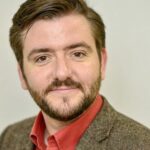
Felice Gaer Baran, an internationally renowned human rights expert who for more than four decades brought life and practical significance to the Universal Declaration of Human Rights and international commitments to prevent grave human rights abuses around the world, died on November 9, 2024 in New York City, following a lengthy battle with metastatic breast cancer. She was 78. At the time of her death, she was the director of the American Jewish Committee’s Jacob Blaustein Institute for the Advancement of Human Rights (JBI)Felice Gaer headshot

Longtime UN official and Acting High Commissioner for Human Rights from 2003-2004 Bertrand Ramcharan characterized Gaer as a “pillar of the human rights movement.

Throughout her career, in myriad roles, Gaer insisted that governments and the United Nations should consistently condemn the practices of tyrants and authoritarians and recognize that many forms of harm and inequality once considered ‘internal affairs’ of states as human rights abuses. Gaer’s influence established more protective interpretations of human rights norms from within and outside the United Nations human rights system. She effectively advocated for the creation and evolution of numerous international institutions and processes that play a critical role today in monitoring states’ human rights practices and holding violators to account.

Gaer achieved international recognition among human rights advocates as a force multiplier capable of overcoming the obstacles within government bureaucracies and multilateral institutions that often allow perpetrators of egregious abuses to avoid scrutiny and condemnation. Dr. Ahmed Shaheed, who served as the UN’s independent monitor on human rights in Iran and on the right to freedom of religion or belief, praised Gaer’s “exemplary track record” in 2021, stating that “You and JBI have made exemplary contributions to advancing human rights through the UN, especially in strengthening the effectiveness of the UN’s human rights mechanisms. Your own personal contribution, not just through the JBI, but in your own capacity as a member of the UN Committee against Torture and other roles, are not only legendary, but are a source of inspiration for everyone.” Elena Bonner, a one-time Soviet political prisoner, founder of the Moscow Helsinki Group, relentless advocate for democratic change in Russia, and wife of famed Soviet physicist, dissident, and Nobel Laureate Andrei Sakharov, with whom Gaer worked closely, recounted in 1997 that Gaer’s fierce approach to advocacy had helped a nascent international human rights movement find its voice. Said Bonner, “it was thanks to individuals like…Felice…who had the courage to be impertinent, that today it is more and more difficult for the rights-violating governments to challenge the universality of human rights and to ignore human rights concerns.”

Gaer began her career at the Ford Foundation as a program officer in 1974, focusing on the Soviet Union and Eastern Europe; subsequently, her areas also included arms control and human rights. At Ford, she became heavily involved in advocacy for the rights of Soviet Jewish refuseniks and encouraging broader internal changes that would catalyze greater respect for human rights for all in the Soviet Union. She maintained a passion for championing individual rights defenders while expanding her geographical focus. As the Executive Director of the International League for Human Rights from 1982 to 1991, Gaer championed human rights defenders throughout Latin America, particularly in Chile and Venezuela. She then served as Director of European Programs for the United Nations Association of the USA from 1992 to 1993, before becoming director at the Jacob Blaustein Institute in 1993–where she remained for the following three decades.

Gaer served for nine terms as an appointed “public member” of official U.S. government delegations to United Nations meetings between 1993 and 1999, including six U.S. delegations to meetings of the U.N. Commission on Human Rights. As a public member of the U.S. delegation to the 1993 World Conference on Human Rights in Vienna, Gaer’s advocacy was instrumental in the creation of the position of UN High Commissioner for Human Rights. Gaer also played a critical role in bringing about the conceptual and political victory that the U.S. government achieved for women’s rights at the 1995 World Conference on Women in Beijing – at which the UN explicitly recognized for the first time that women’s rights are human rights – working closely with US Ambassador to the UN Commission on Human Rights Geraldine Ferraro and First Lady Hillary Clinton.

In 1999, Gaer became the first American and first woman to serve on the 10-person United Nations Committee against Torture, an expert body that monitors implementation of the Convention against Torture. Over her 20 years on the United Nations Committee against Torture, Gaer insisted that the Committee and all other UN treaty bodies should affirmatively and publicly press governments to address allegations of wrongdoing, rather than accepting States’ assertions of compliance at face value. She led the Committee to develop practices that made it far more accessible to non-governmental organizations and human rights defenders seeking to share evidence of human rights violations. She also devoted extraordinary effort to ensuring that the Committee acted on information it received from third parties and conveyed accurate appreciation of the key human rights challenges occurring in every country it reviewed. Her rigorous and unsparing critiques – and her practice of inquiring about alleged victims of torture and arbitrarily imprisoned lawyers and advocates by name in public meetings – occasionally provoked angry outbursts by government officials accustomed to deferential, non-adversarial treatment in UN settings. However, Gaer’s approach turned what might otherwise have been pro-forma exercises into valuable opportunities for advocates to secure formal UN recognition of their claims.

Gaer’s efforts also led to a transformation in the Committee’s against Torture’s approach to the issue of violence against women, which previously was seen only as often a private matter rather than a form of torture or ill treatment for which perpetrators should be punished and victims of which are entitled to redress. The Committee became an important avenue for women’s rights advocates seeking to compel governments to develop more effective national capacities to protect women from violence, as well as members of vulnerable groups such as religious minorities and LGBTQI persons. These efforts brought significant public attention to previously overlooked issues in several countries. In one particularly noted case, Gaer’s insistence at public Committee meetings that Ireland had failed to address the abuses of the church-run ‘Magdalene Laundries’ – which had imprisoned and punished women the church had deemed ‘morally irresponsible’ – galvanized local advocates’ efforts for an official government inquiry to redress this longstanding historical injustice and acknowledge the State’s enduring obligations to survivors of the Laundries.

Gaer also championed the rights of religious minorities and victims of violence justified in the name of religion in countries around the world. Gaer was appointed and served five terms as an independent expert member of the bipartisan federal U.S. Commission on International Religious Freedom from 2001-2012, including as its chair. In that capacity, Gaer traveled to countries ranging from Sudan and Egypt to China to Afghanistan, directly pressing government officials to change policies and practices. She testified frequently before Congress and organizations including the Organization for Security and Cooperation in Europe on religious freedom issues.

Gaer’s commitment to universality also inspired her to work for decades to correct the persistent failure of the United Nations to recognize antisemitism as a serious human rights concern and to recognize the Holocaust as its most violent manifestation. Her engagement with public delegations to the UN Commission on Human Rights encouraged the U.S. to secure the inclusion of the first reference to antisemitism as an evil that UN efforts should seek to eradicate, in a resolution of the UN General Assembly, in a 1998 text condemning racism, using language previously negotiated by the U.S. at the Commission.

Gaer not only shared her wisdom and practical experience with colleagues but also convened numerous strategy discussions and facilitated the work of hundreds of human rights defenders, advocates, and other independent UN experts through JBI grants that empowered and encouraged their efforts to advance human rights norms and protections on a wide range of subjects and countries. For many colleagues and beneficiaries of her supports, Gaer was an invaluable resource, strategist, collaborator, mentor, and friend…

A prolific author of over 40 published articles and book chapters and editor of the volume “The United Nations High Commissioner for Human Rights: Conscience for the World,” Gaer received the American Society of International Law’s Honorary Member Award in 2023, an Honorary Doctorate from the Jewish Theological Seminary in 2018, and the First Freedom Center’s prestigious National First Freedom Award for her religious freedom advocacy in 2010. Gaer’s JBI was also named a “Champion of Prevention” by the UN Office on the Prevention of Genocide in 2023. [https://humanrightsdefenders.blog/2013/12/21/jacob-blaustein-institute-for-human-rights-publishes-book-on-un-high-commissioner-for-human-rights/]

One of three children of Abraham Gaer, a businessman who owned a toy shop, and his wife Beatrice Etish Gaer, Felice was born on June 16, 1946 in Englewood, New Jersey. She was raised in Teaneck, New Jersey and graduated from Teaneck High School. She received a Bachelor of Arts degree from Wellesley College and pursued her graduate studies in political science at Columbia University’s Russian Institute (now Harriman Institute), where she received a Master of Arts degree in 1971 and a Master of Philosophy degree in Political Science in 1975. In 1975, she married Dr. Henryk Baran, a professor at the State University of New York-Albany; Dr. Baran has a long and distinguished career specializing in Russian literature and culture of the Russian Silver Age and avant garde. The couple’s two sons – Adam, a queer filmmaker and curator, and Hugh, a workers’ rights attorney who litigates wage theft, discrimination, and forced labor cases – survive her, as do her brother Arthur Gaer, sister Wendy Philipps, son-in-law Jacob Rozenberg, five nephews, and ten cousins. Gaer’s wisdom, support, conviction, and passionate concern for all humanity made her truly exceptional, and she will be deeply missed.

https://www.ajc.org/news/felice-gaer-legendary-human-rights-champion-who-inspired-generations-of-global-advocates-dies

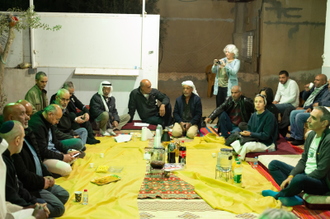
Humanists International awarded grants to 13 projects worldwide through 2024 Grants Program

July 1, 2024

Humanists International announced on 24 June 2024 that it has awarded grants to 13 projects worldwide. This initiative, awarding a total of £36,300 through the 2024 Grants Program, provides financial support to bolster humanist endeavors and empower organizations working to advance humanist values across the globe.

The grant program in 2024 was made possible thanks to a very generous legacy gift left to the organization by the late Professor Dabir Tehrani, who was a long-standing supporter of Humanists International.

The call for applications, opened from April to May, attracted a wide range of proposals. Selected projects, kicking off this month, will continue until January 2025. Grants were awarded exclusively to Members and Associates of Humanists International, focusing on five key areas:

  • Development Grants: Supporting the growth and sustainability of humanist organizations, particularly in developing countries.
  • Digital Humanism Grants: Encouraging projects that utilize technology to promote humanist values online.
  • Humanist Ceremonies Grants: Building capacity for humanist celebrants to offer alternative ceremonies like weddings and funerals.
  • Regional Networking Meetings Grants: Facilitating gatherings and collaboration between humanist organizations within specific regions.
  • Young Humanist Grants: Empowering young people to become active participants in the humanist movement.

For members interested in applying for future grants, Humanists International also offers the year-round Cafe Humaniste Grant. This program supports small, in-person, or online gatherings where members can discuss any topic related to humanism.

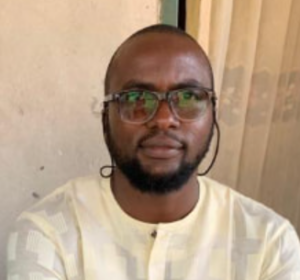
Dooyum Dominic Ingye, Project Head at Advocacy for Alleged Witches, one of the grant recipients, said:

“We are truly honored and grateful that the Advocacy for Alleged Witches (AFAW) has been selected to receive the Humanists International Development Grant for our project. This funding will make a significant difference in our ability to advocate for justice, provide legal aid, and empower alleged witches to stand up against the discrimination and violence they face.”

Javan Lev Poblador, Membership Development Officer of Humanists International, commented:

“We are delighted to support these 13 projects making a tangible difference in local and international communities by promoting humanism. These grants will equip our Members and Associates with vital resources to grow and extend their impact.”

https://humanists.international/2024/06/humanists-international-supports-13-global-humanist-projects-in-2024/

Minority Rights and Advocacy Toolkit Online Course

January 24, 2024
Minority Rights Group

Challenges to freedom of religion and belief and abuses to the human rights of religious minorities are on the rise across the world, with increased violence, harassment, and threats often met with a lack of accountability. They occur against a backdrop of long-standing social, political, economic, and cultural marginalization and exclusion, particularly for those who face intersectional discrimination, such as religious minority women or persons with disabilities.

It is, therefore, vital to support organizations and activists representing these communities who work towards strengthening the rights of minorities of faith and belief and combatting the discrimination, prejudices and persecution these communities experience daily.

What is the course about?

The free, 7-week online course aims to build an understanding of regional and international minority rights mechanisms and ways to implement these rights frameworks at the national and local levels and build the capacity of human rights defenders (HRDs) to advocate for the rights of minorities.

The course will offer opportunities to exchange and collaborate with other HRDs to:

  • Monitor and report on violations against religious minorities
  • Raise awareness amongst key stakeholders of the human rights violations, persecution and discrimination these communities face
  • Campaign from local to international levels to secure commitments from key stakeholders to improve the situation of religious minorities
  • Train Graduates will also have the opportunity to follow up with access to a Training of Trainers that will give them the opportunity to develop their skills and share the knowledge they learned

Who can apply for this course?

Civil society organizations and activists representing religious minority and indigenous communities from two regions of the world where religious minorities are suffering from serious human rights violations, widespread discrimination and marginalization are welcome to apply.

Applicants from and/or based in the following countries will be prioritized: Bangladesh, Egypt, India, Indonesia, Iraq, Iran, Lebanon, Morocco, Myanmar, Nepal, Pakistan, Sri Lanka, Syria, Thailand, Tunisia.

  • Basic Concepts in Human Rights and Minority Rights
  • UN Declaration on the Rights of Persons Belonging to National or Ethnic, Religious and Linguistic Minorities
  • UN Treaties and Human Rights Mechanisms
  • Freedom of Religion or Belief (FoRB)
  • UN Mechanisms to Protect Minorities
  • Regional Human Rights Systems and Mechanisms
  • Advocacy Campaigns

To complete the course, participants must submit three written assignments: a briefer, an outline of a shadow report and an advocacy plan.

How many hours a week is the course?

The course will require approximately 3 hours per week for the duration of the course. Your participation will be facilitated by a tutor who will offer mentoring on a one-on-one basis as required. Our tutor is an expert in minority rights and community networking.

During the course we also organize a webinar, which offers a unique opportunity to learn more about the mandate of the UN Special Rapporteurs and engage in a Q&A session with them.

Faith Leaders as Human Rights Defenders

October 25, 2017

This week (23 – 27 October 2017) there is an on-line Dialogue by New Tactics Supporting Faith Leaders and Faith-Based Organizations as Human Rights Defenders” with as goal: Mobilizing Allies and Modeling Systems and Structures.

The background to this interesting topic is the converging and diverging principles of secular human rights goals and religious values. On the one hand, there are historical and contemporary instances in which oppressors have used religious doctrines to endorse discrimination and violence against marginalized groups. Around the world, people continue to suffer daily from these acts of hate. Yet, many faith leaders from a range of religions denounce religiously motivated violence and actively work to combat human right abuses around the world. Some of history’s most impactful activists—El Salvador’s Oscar Romero, India’s Mahatma Gandhi, Iran’s Shirin Ebadi, the United States’ Martin Luther King drew upon their personal faith to promote civil rights and peace.
Today, many faith leaders and faith-based organizations have become leaders in human rights activism and humanitarianism, both locally and internationally. In Northern Uganda, the Acholi Religious Leaders Peace Initiative has united faith leaders to advocate for peace and strengthen the peacebuilding process in the wake of the region’s devastating civil war. Rabbis for Human Rights supports human rights in Israel and the Occupied Territories by performing acts of solidarity with Palestinians suffering from the Occupation, organizing interfaith dialogues, and educating their fellow community members on the interconnectedness of Judaism and human rights. Musawah is global human rights movement working to advance women’s rights in Muslim contexts, using Islamic teachings and universal human rights doctrinal frameworks to guarantee equality in the lived realities of men and women. Each of these organizations has incorporated their faith into action-based human rights movements that demonstrate their accountability in practicing what they preach: dignity, justice, and fairness for all humanity.
Faith leaders and organizations can contribute to strengthening human rights around the globe by countering voices of oppressors, mediating conflicts to end or avoid violence, denouncing discrimination, organizing humanitarian assistance, and so much more. Just as faith communities may thrive in environments where each member’s dignity and rights are recognized, the international human rights movement may learn from engaging communities with deeply rooted ethical and spiritual foundations. In March of 2017, the UN Office of the High Commissioner of Human Rights launched “Faith for Rights,” an initiative to strengthen the interconnectedness of the world’s religions and human rights. In the subsequent Beirut Declaration, participating faith-based and civil society actors recognized their mutual commitment to “upholding the dignity and the equal worth of all human beings.” Across the world, faith leaders and faith-based organizations can be valuable allies in achieving universal human rights for all.
In this conversation, New Tactics seeks to discuss the role of faith in promoting human rights across the globe and strategies for strengthening partnerships between secular and religious human rights defenders.  The Conversation Leaders are:
habdille's picture
Marie Juul Petersen's picture

Source: Supporting Faith Leaders and Faith-Based Organizations as Human Rights Defenders | New Tactics in Human Rights

Asia and human rights defenders: the shrinking space for NGOs

May 26, 2015

In a few recent posts I drew attention to the trend of shrinking space for NGOs in countries such as Russia, Kyrgyzstan and Cambodia [https://thoolen.wordpress.com/2015/05/21/draft-laws-on-civil-society-restrictions-also-pending-in-kyrgyzstan-and-cambodia/]. On 9 May 2015, The Economist’s column on Asia (Banyan) was devoted to the same issue, concluding that “Democratic Asian governments as well as authoritarian ones crack down on NGOs“. Under title “Who’s afraid of the activists?” it mentions China, Cambodia, India, Pakistan, Sri Lanka, Bangladesh, Kyrgyzstan and Tajikistan.

It lists the usual ‘complaints’ that both authoritarian and democratic leaders use against the activities of NGOs, which range from:

  • threats to national sovereignty
  • promotion of ‘Western’ values
  • hidden agenda (such as conversion to Christianity)
  • blocking development through environmental objections.

E.g. the Indian home ministry claims that 13 billion $ in foreign money has gone to local charities over the past decade and that 13 of the top 15 donors were Christian outfits. Interestingly, similar complaints come from the biggest Indian NGO, Rashtriya Swayamsevak Sangh (RSS), which itself has “strong foreign links, draws on an Indian diaspora in America and elsewhere for support, and dishes out help across borders, such as in Nepal following last month’s earthquake”.

Quite rightly the article concludes that in the long run, such limitations only rally political opponents, while (local) NGOs may face close scrutiny themselves one day (when the Government has changed hands): “Battering-rams, after all, have two ends.”

Who’s afraid of the activists? | The Economist.

Easter cards to christian human rights defenders

March 17, 2015

Fra Angelico

This blog does not often carry religious paintings. This time it is to illustrate the action by Bishop Declan Lang, Chair of the Catholic Bishops’ Conference Department of International Affairs, who is encouraging to contact Christian prisoners of conscience and human rights defenders with a message of hope this Easter. For the first time, Action by Christians Against Torture has published an Easter greetings list containing details of Christians including a teacher imprisoned on political charges in Indonesia, a priest facing threats because of his human rights advocacy in Cuba and an MP risking her safety by speaking out on behalf of religious minorities in Pakistan.

Bishop Declan stated: “Pope Francis has called on us to support Christians facing persecution wherever they are in the world. Sending an Easter message to Christian prisoners of conscience and human rights defenders is a practical yet powerful way to give hope and encouragement. Showing that they are not forgotten can also lead to better treatment by the authorities. I strongly welcome the work of Action by Christians Against Torture, and hope that Catholics throughout England and Wales will join me in sending a message of solidarity this Easter.

The Action by Christians Against Torture Easter greetings list is available at: www.acatuk.org.uk/EastercardList2015.pdf

Bishop endorses campaign to send Easter cards to persecuted Christians – Independent Catholic News.

Asma Jahangir speaks on human rights restrictions justified in name of religion

December 9, 2014

From left: Asma Jahangir, Bill McKibben, Alan Rusbridger and Basil Fernando (photo: Wolfgang Schmidt/Right Livelihood Award Foundation)

(The four winners of this year’s Right Livelihood Award (from left): Asma Jahangir, Bill McKibben, Alan Rusbridger and Basil Fernando. US whistle-blower Edward Snowden (not pictured) also received an honorary award)

Qantara.de 2014 on 9 December 2014 published an interesting interview by Roma Rajpal Weiss with Asma Jahangir, a prominent human rights defenders, winner of the Right Livelihood Award of this year and Laureate of the MEA as far back as 1995. The title “Every restriction is justified in the name of religion” is taken from Asma’s statement that most restrictions on the human rights of women in Pakistan are justified by arguments (perhaps rather feelings) based on religious or tradition. Read the rest of this entry »

Jimmy Carter’s new book on the rights of woman and how religions have kept them suppressed

April 8, 2014

Former President Jimmy Carter (89 years old!!) has incredible stamina but his latest book – A Call to Action: Women, Religion, Violence, and Power – is remarkable not just because of that high age but because it is incredibly blunt in describing how religions have systematically denigrated women, leading to prejudice, infanticide and horrific violence. The highlights of the interview below with KERA’s vice president of news, Rick Holter, about “the human and civil rights struggle of our time”, in too interesting to try and summarize and the same goes for the long excerpt from the book following: Read the rest of this entry »

Trial of Vietnamese human rights defender Le Quoc Quan set for 2 October

September 27, 2013

In five days from now, on 2 October 2013, the People’s Court in Hanoi, Viet Nam, will hear the case of human rights defender Le Quoc Quan, who has been held in detention since 27 December 2012 and whose trial was postponed on 8 July 2013. Le Quoc Quan is a prominent lawyer, blogger and human rights defender. He has a long history of being targeted by the Vietnamese authorities in retaliation for his work. As a lawyer, he represented many victims of human rights violations, but was disbarred in 2007 on suspicion of engaging in “activities to overthrow the regime”. Le Quoc Quan also runs a blog http://lequocquan.blogspot.ie/  where he writes about various issues including civil rights, political pluralism and religious freedom. On 27 December 2012, Le Quoc Quan was arrested on trumped up allegations of tax evasion, was held incommunicado for the first two months and spent fifteen days on hunger strike. Currently the human rights defender remains imprisoned awaiting trial.Frontline NEWlogo-2 full version - cropped

More information, please see update from 12 July 2013 http://www.frontlinedefenders.org/node/23255


The Gambia: Release of detained human rights defender Imam Baba Leigh

May 29, 2013

One should be grateful for small gains: Front Line Defenders reported that on 11 May 2013, the Gambian government released renowned Muslim cleric and human rights defender, Iman Baba Leigh, to whose arrest I referred earlier. The human rights defender was arrested on 3 December 2012, and was detained incommunicado for five months for declaring the execution of nine death row inmates to be inimical to Islamic teaching. Imam Baba Leigh Read the rest of this entry »