Posts Tagged ‘prison conditions’

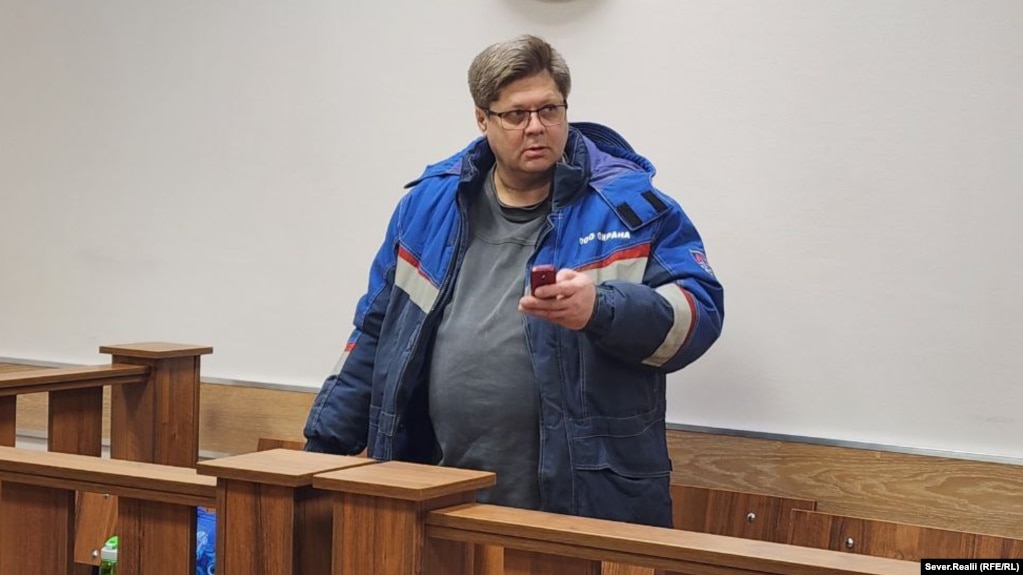
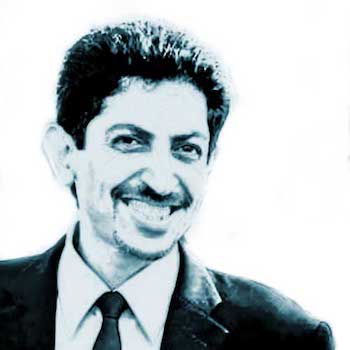
How bad prison conditions in Russia are: Human Rights Defender Gregori Vinter asks Putin to euthanize him

February 3, 2024
Human rights activist Gregori Vinter appears in court in Cherepovets, Russia, on January 17.

On 29 January 2024, Rafio Free Europe reported that Russian paleontologist and human rights defender Gregori Vinter, who was sentenced to three years in prison earlier this month on a charge of distributing “false” information about Russian armed forces involved in Moscow’s ongoing invasion of Ukraine, has asked President Vladimir Putin to euthanize him “to avoid an excruciating death of diabetes.”

Vinter’s lawyer, Sergei Tikhonov, on January 28 called the letter written by his client before he was handed his sentence on January 18 “a gesture of despair.”

In the letter, Vinter says prisons could not supply the insulin he needs to treat his diabetes, while getting supplies from outside the institution would be impossible because he would have to visit doctors to get prescriptions, something that wouldn’t be allowed.

“My experience tells me that without my medicine my life in custody will be very short…. I will face a process of a long and cruel death…. Knowing that as an inmate I will face a mere excruciatingly painful death among the alien, cruel, and absolutely indifferent people of the prison, I ask you to allow a voluntary medical euthanasia for me,” Vinter’s letter to Putin says.

“Imprisonment for a person like me, a person who survived a stroke, a clinical death during COVID, an attempted murder in 2018, actually means an execution, a public execution accompanied with long-term suffering through a slow and painful death. This is not just 1937 [period of Josef Stalin’s great purge] — it is perverted pathological sadism that is known to the whole world as the Russian Federation’s Federal Penitentiary Service.”

Prison officials have not commented on Vinter’s letter and whether he would have regular access to the medical assistance he needs.

The 55-year-old Vinter is the leader of the For Human Rights group branch in his native city of Cherepovets. His human rights activities in recent years helped to reveal the mass beatings of inmates at a local prison and investigations of the penitentiary’s guards. He also made headlines in 2019 after he led several rallies protesting against the local government’s deforestation activities in the region around Cherepovets.

During the pandemic in 2020, Vinter was handed a parole-like two-year sentence over an online post about the transportation of convicts without medical masks and other COVID precautions.

Before the sentence was pronounced, Vinter spent time in a detention center where, he said, investigators tortured him with electricity and broke his leg.

Vinter later told journalists about what he endured in the detention center, which led to a public outcry and investigations of the center’s administration.

The case against Vinter was initiated in August 2022 after he posted materials on the Internet about alleged atrocities committed by Russian troops against civilians in Ukraine.

The Memorial human rights group has recognized Vinter as a political prisoner.

https://www.rferl.org/a/imprisoned-russian-rights-activist-asks-putin-euthanasia/32796757.html

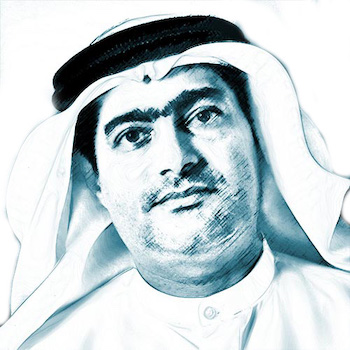
19 NGOs Call on US to Press the UAE to Release Ahmed Mansoor ahead of COP 28

September 1, 2023

On August 29, 2023, Amnesty International USA, Human Rights Watch, Project on Middle East Democracy (POMED) and 16 additional civil society organizations delivered an open letter urging U.S. Secretary of State Antony Blinken to encourage the United Arab Emirates (UAE) government to immediately and unconditionally release Emirati human rights defender Ahmed Mansoor ahead of the 28th Conference of Parties of the United Nations Framework Convention on Climate Change (COP28) that will take place from November 30 to December 12, 2023. [for more on UAE: see https://humanrightsdefenders.blog/tag/ahmed-mansoor/]

In the letter, the organizations urged Secretary Blinken to call on the UAE government to immediately and unconditionally release Ahmed Mansoor and other jailed human rights defenders and peaceful critics both privately and publicly at the highest levels. The organizations also called on the Secretary to signal deep concern about Mansoor’s well-being and request permission to visit him in prison as soon as possible.

“With the world’s attention on Dubai, the US government should deliver on this administration’s promise to center human rights in its foreign policy and press the Emirati authorities to finally release Ahmed Mansoor,” said Elizabeth Rghebi, Advocacy Director for the Middle East and North Africa, “As a participant in COP28, the US government can demand the UAE demonstrate through this high profile release its commitment to the human rights principles required for healthy civic space at this upcoming global gathering.”

Governments have an obligation to protect the civic space for protest, in particular guaranteeing the rights to freedom of peaceful assembly and freedom of expression. Subjecting human rights defenders and critics to unlawful use of force, arbitrary detention, unfair trials, and abusive detention conditions violate these and other rights. The US government should work to uphold its obligations both at home and when engaging diplomatic partners.

Mansoor was arrested by Emirati authorities in March 2017 for “spreading false news” to “harm the reputation of the state.” All the charges on which he was convicted were based solely on his human rights advocacy, including using email and WhatsApp to communicate with human rights organizations. Following more than a year in isolation in pre-trial detention and a grossly unfair trial, an Emirati state security court sentenced Mansoor to 10 years in prison. Mansoor is a laureate of the MEA [see: https://www.trueheroesfilms.org/thedigest/laureates/074ACCD4-A327-4A21-B056-440C4C378A1A]

Throughout his imprisonment, Mansoor has been subjected to treatment that violates the prohibition against torture and other cruel, inhuman, or degrading treatment, including being held in solitary confinement without access to reading materials, television, or radio. Since December 2017, he has been denied eyeglasses, most personal hygiene items and, at least until recently, a bed or mattress in his cell.

https://www.amnestyusa.org/press-releases/19-organizations-call-on-us-administration-to-press-uae-on-release-of-ahmed-mansoor/

https://www.hrw.org/news/2023/08/30/cop28-us-should-press-uae-activists-release

500 Bahraini prisoners on hunger strike over conditions

August 20, 2023

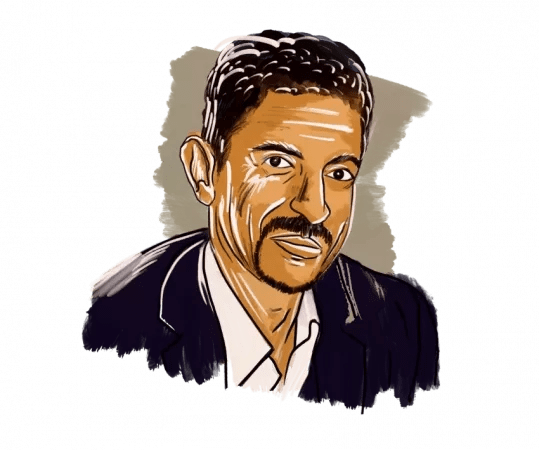
On 18 August 2023 Brian Dooley posted for Human Rights First about the new crisis in Bahrain‘s prisons as at least 500 prisoners are on hunger strike refusing food in protest at their detention conditions. Among those denied the care they need are prominent rights activists Abdulhadi Al Khawaja, Abduljalil Al Singace, and Hassan Mushaima, who have been jailed since their peaceful protests in 2011. On 15 August 2023, human rights defender Abdulhadi Al-Khawaja was denied a prearranged video call with his daughter days after he was rushed to the intensive care unit where doctors declared his life was in danger. Abdulhadi Al-Khawaja is at imminent danger of losing his life since he has started a water-only hunger strike on 9 August 2023. [see: https://www.trueheroesfilms.org/thedigest/laureates/4d45e316-c636-4d02-852d-7bfc2b08b78d]

Bahrain’s main prison, Jau, currently holds an estimated 1300 prisoners, around half of whom are on a hunger strike. The current crisis could have been easily avoided – if Bahrain’s government had shown an iota of wisdom, it would have released those unjustly jailed years ago, and given all those who need medical treatment adequate care.

See also: https://humanrightsdefenders.blog/tag/bahrain/

It’s another mishandling of a situation that now threatens to spiral dangerously out of control. In March 2015 there was a prison riot at Jau. HRF predicted that the poor conditions, overcrowding, and poor medical care would erupt into large-scale disturbances, and they did.

I spoke to several former inmates of Jau last night. One recently released prisoner said “This frustration in the prison has to go somewhere, it’s been building for so long. The situation is getting worse every day with more and more prisoners joining the protest. Some have already collapsed.”

Some prisoners began refusing food on August 7, and many more have since joined the protest. International attention is starting to turn towards Jau. Yesterday I joined others in an overnight protest outside the Bahrain embassy in London, praying for those prisoners in urgent need of medical care.

But if any of the hundreds of prisoners on the hunger protest die, the consequences of Bahrain’s failure to resolve the crisis could be catastrophic, with unrest spilling onto the streets. The authorities in Bahrain need to act fast to prevent a similar outcome to 2015, when they responded to prison unrest by torturing and ill-treating dozens of detainees.  Better to make the smart move now, grant the prisoners’ basic demands including proper health care, and avert another disaster.

Among those in most acute danger are the leading rights activists. Human Rights First joined other NGOs this week urging the State Department to use its considerable influence with Bahrain to press for a speedy and humane resolution to the crisis.

https://www.theguardian.com/world/2023/aug/18/bahraini-prisoners-hunger-strike-conditions

https://www.frontlinedefenders.org/en/case/human-rights-defender-abdulhadi-al-khawaja-imminent-danger-losing-his-life

“G. N.” Saibaba in India continues from his cell

July 7, 2023

INPA02121512

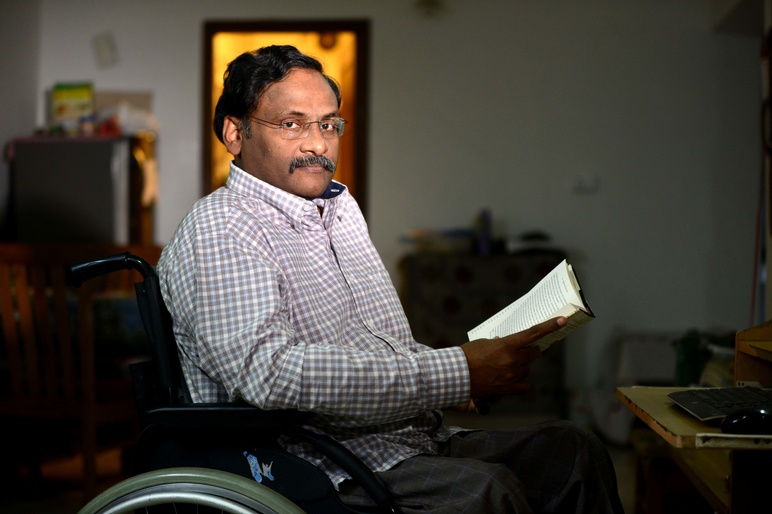
A wheel-chair using, human rights activist and former university lecturer of English, G. N. Saibaba has endured years of cruel, inhumane solitary confinement ©DR

I still stubbornly refuse to die
The sad thing is that
They don’t know how to kill me
because I love so much
The sound of growing grass

OMCT published this impressive story in calling for the immediate release of G. N. Saibaba:

These are the defiant words of Gokarakonda Naga “G. N.” Saibaba, written from his cell in Nagpur Central Jail in the Indian state of Maharashtra. A wheel-chair using, human rights activist and former university lecturer of English, Sai has endured years of cruel, inhumane solitary confinement. Still, his irrepressible resilience shines through. And Sai’s poetry fills a recently published anthology. But he did not write it in verse. In order to evade the prison’s punishing censors, and to disguise his messages of equality, positivity and love, Sai penned letters to friends and his partner of 30 years. These were transcribed, and became his book entitled, Why Do You Fear My Way So Much?

Prison conditions

Now, G. N. Saibaba is much less able to write. Since his erroneous conviction for terrorism-related crimes in 2017, and a sentence of life imprisonment, Sai’s health has progressively deteriorated. Suffering from a heart condition, a brain cyst, a lump in the abdomen and breathing difficulties, his multiple medical conditions require specialised treatment only available in New Delhi. And his disability as a result of childhood polio has been compounded by untreated nerve damage in his left arm, that has spread to his right, leaving him with no strength in his upper limbs. Sai needs support to perform any simple human function like sitting up, eating, drinking or using the toilet, a task which has been assigned to two fellow detainees. His dependency has been underlined by the constant monitoring of his cell. It was only recently – after Sai went on another hunger strike – that the prison authorities agreed to change the direction of CCTV cameras, giving him some semblance of privacy. Before that, his bed and toilet were recorded 24/7. This was a small victory. Despite repeated advocacy by the UN and human rights groups on G. N. Saibaba’s behalf, he is forced to inhabit a small, egg-shaped cell exposed to extreme weather conditions and with little space to move, particularly for someone in a wheelchair as Sai. Given his disability, some commentators believe the conditions of his detention may amount to torture.

Arrest in Delhi

It was 9th May 2014, and G. N. Saibaba was returning home for lunch from his lecturing duties at Delhi University. Without warning, a van jack-knifed in front of the car he was travelling in, forcing it to stop. Sai’s driver was pulled roughly from the vehicle, and replaced by a man in civilian clothing. Two others flanked their captive in the back. G N Saibaba was driven directly to the airport. He was never shown an arrest warrant, and nobody informed Sai’s relatives about his arrest. He was put on a plane to Nagpur, Maharashtra. On arrival, he was transported in an anti-landmine vehicle, in a convoy of commandos armed with automatic weapons. The military clearly wanted to send a message they had detained a hard-core terrorist – not a committed campaigner who has fought most of his life against discrimination and caste-based oppression, and for the rights of women and indigenous Indians.

Activism

G. N. Saibaba grew up in a small, rural community in southern India. Disabled by polio as a young child, he understood early on how unfairness and prejudice are perpetrated. Excelling in school, Sai went on to university where he became involved in student politics. His appointment as a professor of English did not dilute his outspoken criticisms of injustice.

In particular, he became a leading detractor of what became known as ‘Operation Green Hunt’ – a military campaign in central India, home to a large population of several indigenous communities (known as Adivasis), to eliminate Maoists, also called Naxals. Central India has witnessed numerous people’s movements opposing forceful occupation of indigenous land, and the exploitation of ancient forests and rich mineral resources. This military campaign against Naxals was used to quash such movements, leading to numerous human rights violations against civilians.

Conflict in this region dates back to the 1960s. ‘Operation Green Hunt’ began in 2009 – an all-out, on-going offensive by the Indian armed forces to rid the area of Naxals. G. N. Saibaba led the Forum Against War on the People – a solidarity organisation, and an attempt to shine a light on human rights abuses in the region. These atrocities – committed for the most part by the military and paramilitaries – have been well documented. They include extrajudicial killings, multiple rapes, and the deeply disturbing desecration of civilian corpses. It has been estimated more than 2,000 people have lost their lives since 2009.

Conviction

G. N. Saibaba’s advocacy certainly gave pause for thought to national and transnational mining corporations thinking about investing in the region. So, it was inevitable perhaps he would become a target. His persecution began under the Congress government – his Delhi home was raided more than once – and then continued under the BJP, and the prime ministership of Narendra Modi.

At G. N. Saibaba’s trial in 2017, with the courthouse fortified by hundreds of police officers to reinforce the impression of a dangerous extremist, he was tried under India’s anti-terror legislation – the Unlawful Activities (Prevention) Act. With five others, Sai was convicted of alleged links to the banned Maoist organisation.

Judicial rollercoaster

In October this year, the Nagpur Bench of the Bombay High Court ruled G. N. Saibaba’s initial trial had been flawed. The case against him was discharged. The elation he, his family and supporters felt quickly turned to disbelief. The government – infuriated, no doubt by the court’s decision to release an ‘urban Naxal’, a term regularly used to stigmatise human rights defenders – applied for a special sitting of the Supreme Court. The very next day, on a non-working day the special bench of the Supreme Court suspended the decision of the Bombay High Court. This leaves G N Saibaba still in that heavily monitored isolation cell, struggling to negotiate its curved walls in his wheelchair.

Above all, love

G. N. Saibaba’s hope of liberty has once more been dashed. Even so, his spirit is strong. The untreated infections in his hands, and the pain he experiences, means Sai cannot write more than two or three pages a month. But letters from home, especially from his partner, help sustain him.

I defeat the purpose
of the solitary confinement
by drowning myself
in your letters of love.

https://www.omct.org/en/resources/news/an-academic-is-caged-his-thoughts-are-still-free-resilient-and-undefeated

NGOs call for the release of Mohammed al-Qahtani, detained incommunicado for six months in Saudi Arabia

May 25, 2023

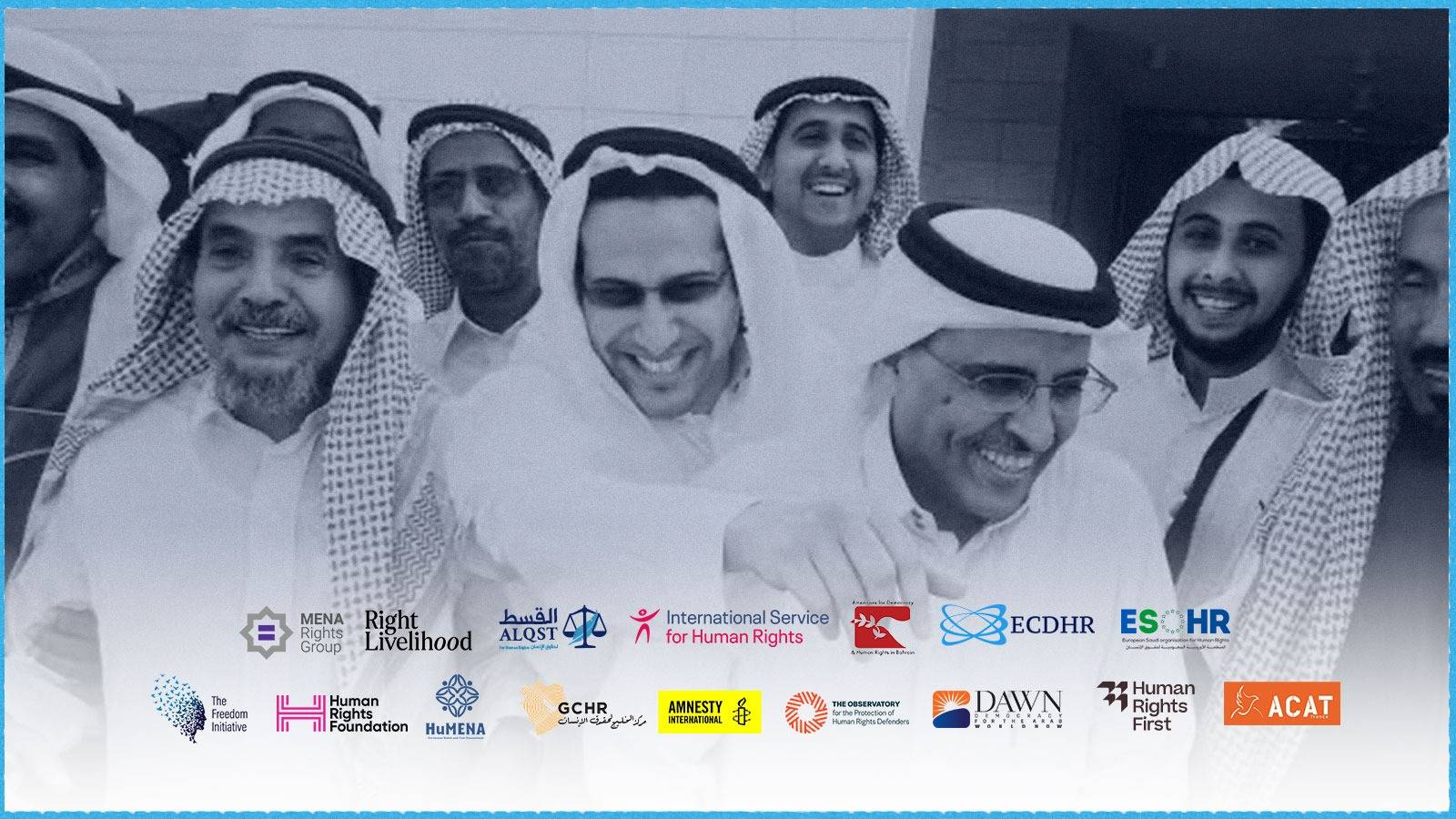
We, the undersigned human rights organisations, call on Saudi authorities to reveal the health condition  of and immediately and unconditionally release prominent Saudi human rights defender and co-founder of the now dissolved Saudi Civil and Political Rights Association (ACPRA)*, Dr. Mohammed al-Qahtani, who has been detained incommunicado for six months. We also call for the immediate and unconditional release of four ACPRA members who remain in arbitrary detention.

Today, 24 April 2023, marks six months since prominent Saudi human rights defender and co-founder of the Saudi Civil and Political Rights Association (ACPRA)* Mohammed al-Qahtani last contacted his family. Since then, the authorities have subjected him to incommunicado detention. Al-Qahtani served his full sentence in November 2022. Five ACPRA members remain imprisoned in reprisal for their peaceful human rights activism: Mohammed al-Qahtani, Essa al-Hamid, Mohammed al-Bajadi, Fawzan al-Harbi, and Abdulaziz al-Shubaili.

Mohammed al-Qahtani was arbitrarily arrested in March 2012 and interrogated regarding his work with ACPRA and his peaceful activism. On 9 March 2013, the Criminal Court in Riyadh sentenced him to 10 years in prison to be followed by a travel ban of equal length on charges including “breaking allegiance to the ruler”, “questioning the integrity of officials”, “seeking to disrupt security and inciting disorder by calling for demonstrations”, and “instigating international organizations against the Kingdom.” The authorities failed to release Al-Qahtani  on 22 November 2022, when he finished serving his prison sentence. However, since 24 October 2022, Saudi authorities have denied him any contact with his family and continue to keep him in incommunicado detention. 

Despite al-Qahtani’s wife making several inquiries about him to al-Ha’ir prison, where al-Qahtani was serving his sentence, prison officers continue to refuse to disclose any information about him. His family has reasons to believe that he has entered into a hunger strike and his health has considerably deteriorated, putting his life at imminent risk. This is not the first time Mohammed al-Qahtani was denied contact with his family. In April 2021, he was held incommunicado after testing positive for Covid-19, raising fears regarding his health and well-being for the duration of his illness. For the past 10 years of imprisonment, security forces  subjected al-Qahtani to inhumane and degrading conditions of detention, and they have also subjected him to torture and ill-treatment, including beatings.

We are all the more concerned about -al-Qahtani’s well-being considering the death of ACPRA co-founder Abdullah al-Hamid in detention on 23 April 2020. Abdullah al-Hamid suffered from hypertension, and his doctor told him three months before he passed away that he needed to undergo heart surgery. He was threatened by prison authorities that if he told his family about his health condition, they would cut his communication with his family. Dr Abdullah al-Hamid had suffered a stroke on 9 April 2020 and remained in detention, despite being in a coma in the intensive care unit at al-Shumaisi Hospital in Riyadh.

Following al-Hamid’s death, the Saudi authorities carried out a wave of arrests against several individuals who expressed sympathy over his passing.

Created in 2009 by 11 human rights defenders and academics, ACPRA was established to promote and protect fundamental rights and freedoms in Saudi Arabia, including through promoting constitutional reforms. While ACPRA was never officially registered by the government, it was formally banned as an organization and dissolved by court order in 2013. As of May 2016, all of its 11 members had been sentenced by the Specialized Criminal Court (SCC) to lengthy prison sentences ranging between seven and 15 years for their human rights activism and cooperation with the United Nations human rights mechanisms.

In light of the above, we, the undersigned organisations, reiterate our call on the Saudi authorities to immediately and unconditionally release Mohammed al-Qahtani and other imprisoned members of ACPRA who are arbitrarily detained solely for their peaceful activism. In the interim, we call on the authorities to disclose the fate and whereabouts of Mohammed al-Qahtani, ensure immediate contact with his family, and provide him with any medical care he may need. Saudi Arabia should ensure a free and enabling environment for all human rights defenders, in order for them to carry out their activities without fear of reprisals and without undue restrictions.See also: https://www.trueheroesfilms.org/thedigest/laureates/78383825-0b3f-4bca-883a-b81e1baecd09

Among the co-founding members of ACPRA, five remain imprisoned today: Dr Mohammed al-Qahtani (sentenced to 10 years in prison followed by a 10-year travel ban. He completed his sentence in November 2022, yet remains in detention incommunicado); Mohammed al-Bajadi (sentenced to four years in prison, four years of suspension followed by a 10-year travel ban, and currently detained since May 2018); Abdulaziz al-Shubaili (sentenced to eight years in prison followed by an eight-year travel ban); Fowzan al-Harbi (sentenced to 10 years in prison followed by a 10-year travel ban); Essa al-Hamid (sentenced to 11 years in prison, followed by an 11-year travel ban). Sheikh Sulaiman al-Rashudi (sentenced to 15 years in prison and a 15-year travel ban. He was released in April 2018 for medical reasons; Abdulkarim al-Khodr (sentenced to 10 years in prison, followed by a 10-year travel ban. He was released in January 2023 upon the completion of his sentence but remains subject to the travel ban);  Abdulrahman al-Hamid sentenced to 9 years in prison, followed by a 9-year travel ban. He was released in January 2023 upon the completion of his sentence but remains subject to a travel ban); Dr Abdullah al-Hamid (sentenced to 11 years in prison followed by an 11-year travel ban), passed away on 23 April 2020 in custody. Abdullah al-Hamid and Mohammed al-Qahtani, alongside Waleed Abu al-Khair, have received the Right Livelihood Award in November 2018.

Signatories:

  • MENA Rights Group
  • Right Livelihood
  • ALQST
  • International Service for Human Rights (ISHR)
  • Americans for Democracy & Human Rights in Bahrain (ADHRB)
  • European Center for Democracy and Human Rights (ECDHR)
  • European Saudi Organization for Human Rights (ESOHR)
  • Freedom Initiative
  • Human Rights Foundation (HRF)
  • HuMENA for Human Rights and Civic Engagement
  • Gulf Centre for Human Rights (GCHR)
  • Amnesty International
  • International Federation for Human Rights (FIDH), in the framework of the Observatory for the Protection of Human Rights Defenders
  • World Organisation Against Torture (OMCT), in the framework of the Observatory for the Protection of Human Rights Defenders
  • Democracy for the Arab World Now (DAWN)
  • Human Rights First
  • Action des Chrétiens pour l’abolition de la torture (ACAT France)

See the full Joint Statement here.

NGOs demand adequate medical treatment and access to Abdulhadi Al-Khawaja in Bahrain

May 25, 2023

14 NGOs call on Bahrain to ensure that human rights defender Abdulhadi Al-Khawaja is allowed adequate medical treatment, as well as the right to access and respond to allegations made by the Government of Bahrain in a response to a UN communication.

In a joint communication made public on 4 May 2023, six UN experts – including the Special Rapporteur on the situation of human rights defenders, Mary Lawlor, and the Vice-Chair of the Working Group on Arbitrary Detention, Mumba Malila – expressed their utmost concern at the continued arbitrary detention of human rights defender Mr. Al-Khawaja. He is a widely recognised HRD, see: https://www.trueheroesfilms.org/thedigest/laureates/4d45e316-c636-4d02-852d-7bfc2b08b78d

The UN communication addresses troubling allegations of torture, ill treatment and poor prison conditions of Mr. Al-Khawaja, including intimidation, restriction of communication with family, deprivation of basic rights, including his inability to give power of attorney to his lawyer in court, as required, shackling of hands, despite doctors’ orders to the contrary, as well as fabrication of cases against him and other political prisoners in Bahrain.

The UN communication was sent to the Government of Bahrain on 17 February 2023 and remained confidential for 60 days, as is UN protocol. The Government of Bahrain replied to the six UN experts on 17 April 2023, which was recently translated and made publicly available.

The Government of Bahrain’s response denies that Mr. Al-Khawaja has been subject to torture. This is contradicted by findings from the Bahrain Independent Commission of Inquiry (BICI), which was established by the King of Bahrain and medically documented that Al-Khawaja was subjected to torture and sexually assaulted by security forces in 2011. Furthermore, the Government of Bahrain’s response fails to adequately recognize Mr. Al-Khawaja as a human rights defender or acknowledge the arbitrary nature of his detention.

On more than one occasion, Mr. Al-Khawaja attempted to receive information over the phone about the nature of the UN communication, including the Government of Bahrain’s response, but the calls were systematically cut by the authorities. Therefore, Mr. Al-Khawaja officially requested through his lawyer that he be allowed a hard copy of the mentioned documents. The signatories call on Bahrain to ensure that the request is honored.

In addition, Mr. Al-Khawaja has continued to be repeatedly denied access to a cardiologist, as well as other appointments with relevant doctors, despite being at risk of a heart attack or stroke at any time. As recently as the past two weeks, Mr. Al-Khawaja was denied two medical appointments, the most recent being on Thursday 11 May 2023.

Since 9 May 2023, Mr. Al-Khawaja has protested in the yard of Jaw Prison on a daily basis holding up two signs in front of the CCTV cameras stating “Treatment prevention is slow systematic killing” and “You commit torture and prevent treatment” in order for him and his fellow prisoners of conscience to be allowed his necessary medical appointments. He informed his family on 14 May 2023 that he has suspended his protest temporarily due to promises made by the prison administration to improve conditions and allow access to adequate treatment.

The signatories call on the Government of Bahrain to:

  1. Immediately and unconditionally release human rights defender Abdulhadi Al-Khawaja, as well as all other prisoners of conscience.
  2. Ensure that Abdulhadi Al-Khawaja is taken to the necessary medical appointments for diagnostics and treatment.
  3. Ensure that Abdulhadi Al-Khawaja obtains the requested documents related to the UN communication and that he is allowed a written response.

Signatories:

  • The #FreeAlKhawaja Campaign
  • Gulf Centre for Human Rights (GCHR)
  • Americans for Democracy & Human Rights in Bahrain (ADHRB)
  • European Center for Democracy and Human Rights (ECDHR)
  • CIVICUS
  • Global Citizen
  • Rafto Foundation for Human Rights
  • Danish PEN
  • The Martin Ennals Foundation
  • IFEX
  • Bahrain Institute for Rights and Democracy (BIRD)
  • Front Line Defenders
  • DIGNITY – Danish Institute Against Torture
  • Freedom House

Daughter of Danish-Bahraini rights activist offers to take his place in prison

April 4, 2023

Ruth Michaelson in the Guardian of Friday 24 March 2023 reports that human rights activist Abdulhadi al-Khawaja’s health has suffered so much inside a Bahraini prison that his daughter Maryam has offered to trade places with him. She fears that without urgent action, her father will slowly die behind bars without being able to see his family.

I don’t know how much longer my dad has. I spend every day dreading each time the phone rings, as it might be someone calling me to let me know my dad is no longer around,” said Maryam. “I know he has serious health issues and the authorities are using [lack of] access to proper treatment as a method of punishment. I don’t want to wait around for my dad to be released to us in a coffin. I can’t do that.” She added: “The central issue is that my father shouldn’t be in prison to begin with.” [see: https://humanrightsdefenders.blog/2022/11/29/mea-laureate-abdulhadi-al-khawaja-facing-new-charges-for-protesting-injustice-in-jau-prison/]

Khawaja is one of Bahrain’s most prominent human rights campaigners. He has a decades-long history of activism, and was arrested in the dead of night at his family home in April 2011 for his involvement in pro-democracy protests that swept the kingdom. Two months later, he was sentenced to life imprisonment. Twelve years into his sentence, his family say the Danish-Bahraini dual national is being denied crucial medical treatment as punishment for his status as a human rights defender, raising the risk that Khawaja could die behind bars without urgent intervention from the Danish authorities. See: https://www.trueheroesfilms.org/thedigest/laureates/4d45e316-c636-4d02-852d-7bfc2b08b78d

He was convicted of terrorism and attempting to overthrow the government, charges that were condemned as politicised by rights groups. The United Nations Working Group on Arbitrary detention declared that the sentence was directly linked to Khawaja’s desire to freely express his political beliefs and participate in protests, despite the Bahraini authorities’ ruling that anti-government protests were illegal. A spokesperson for the Bahraini government, when asked about Khawaja’s case, said that “freedom of expression and opinion is a constitutional right and no one is detained because of their political views or activism.”

https://www.theguardian.com/global-development/2023/mar/24/denmark-bahrain-rights-activist-maryam-al-khawaja-abdulhadi-prison

MEA laureate AbdulHadi Al-Khawaja facing new charges for protesting injustice in Jau Prison

November 29, 2022

There seems to b no end to the persecution of AbdulHadi AlKhawaja, the 2022 laureate of the Martin Ennals Award [see: https://www.trueheroesfilms.org/thedigest/laureates/4d45e316-c636-4d02-852d-7bfc2b08b78d]

On Americans for Democracy and Human Rights in Bahrain strongly denounced new charges brought against this dual Bahraini-Danish citizen, who is serving a life sentence at Jau Prison for his participation in the 2011 pro-democracy demonstrations. See also: https://humanrightsdefenders.blog/2014/09/12/bahrain-travails-of-a-family-of-human-rights-defenders/

In November 2022, AlKhawaja informed his family that authorities are bringing four new charges against him for his protests against the harsh conditions which he and other political prisoners have been subjected to in Jau prison.

On 16 November, the Second Lower Criminal Court scheduled a hearing on the first of these new charges for an incident in November 2021 when authorities denied his right to call his daughters. However, the court postponed this hearing until 28 November on the grounds that Al-Khawaja needed to perform a power of attorney, something which he was going to do in-person during the hearing. A lieutenant attempted to pressure and threatened Al-Khawaja into recording a video stating that he was refusing to attend the hearing. Nevertheless, Al-Khawaja  refused and repeatedly stated on camera his desire to attend the hearing. He was then transferred back to his cell.

The second charge against him is for insulting a public servant and criticizing a foreign state (Israel) in March 2022 when Al-Khawaja led a peaceful protest inside the prison. He was chanting his opposition to the normalization of relations between Bahrain and Israel, as well as insulting a public servant, who allegedly tortured one of his cellmates. The hearing for this charge was set for 21 November. Prior to the hearing, authorities denied him the every-other-day calls with his lawyer. This hearing was also postponed and while the judge stated that AlKhawaja refused to attend, has not presented any evidence to AlKhawaja’s attorney to support this claim. AlKhawaja has informed his daughter that he wanted to attend.

The third charge, by far the most serious, is a charge of incitement to overthrow or change the regime, and relates to an incident in July 2022 when AlKhawaja was scheduled to attend a medical appointment for treatment on his back. During this appointment, authorities insisted on shackling his feet and hands during transfer and putting him in a small bus with no ventilation, creating conditions like an oven. In response, AbdulHadi started protesting and chanting “Down with the Interior Minister ” holding him accountable for his mistreatment and torture.

The fourth and final charge relates to the protest against the ill-treatment of a fellow inmate and is expected in the coming days.

In addition to these charges and violations, AlKhawaja was already suffering the unceasing legal and bodily violations of prison authorities since his arrest 12 years ago. In addition to inhumane restrictions and property confiscation, authorities have systematically used medical negligence as a form of reprisal against AlKhawaja’s activism. He has been denied proper medical treatment which has significantly contributed to the deterioration of his health. He suffers from back pain and vision impairment which were exacerbated by the extreme torture he endured during interrogations by security officers, as well as magnesium deficiency and leg spasms. In response to this treatment, AlKhawaja has gone on multiple hunger strikes and protests with his fellow inmates against the dehumanizing and unjust treatment by authorities.

These charges clearly demonstrate how prison authorities are trying to silence all dissent against their systematic repression of pro-democracy Bahrainis. Many organizations and individuals have condemned these charges because they set a dangerous precedent.

See also: https://humanrightsdefenders.blog/2021/01/27/over-100-ngos-write-to-prime-minister-of-denmark-to-pressure-bahrain-to-release-abdul-hadi-al-khawaja/

Iranian dissident Poet Baktash Abtin dies of Covid in arbitrary detention

January 10, 2022

On 8 January 2022 the Iranian poet Baktash Abtin died in Tehran after contracting COVID-19 in Evin Prison. Abtin, who died after being put into an induced coma while hospitalized, is the second known political prisoner to die in Iran in the first week of 2022. On January 1, Kian Adelpour died after going on hunger strike to protest being imprisoned without a fair trial.

This is a preventable tragedy and more prisoners’ deaths are inevitable because there is no accountability in the Iranian government,” said Hadi Ghaemi, executive director of the Center for Human Rights in Iran (CHRI). “Abtin was imprisoned in Iran because the government wanted to muzzle him with a jail cell; the state killed him.” Abtin had been serving a five-year prison sentence on the charge of “assembly and collusion against national security.

A group of main NGOs had addressed a joint letter to Ayatollah Ali Hosseini Khamenei on 7 January repeating their call that Abtin be given access to the best possible medical care as he battles for his life. In addition, we urge that: he and all those unjustly detained for their writing or expression be immediately and unconditionally released; that authorities refrain from summoning political prisoners to serve their sentences while the conditions inside Evin and other Iranian prisons remain unsafe; and that any who do contract COVID-19 or other serious illnesses while in jail be granted speedy access to all needed medical care or a medical parole on humanitarian grounds.

While offering condolences to Abtin’s family and friends, the Iranian Writers Association (IWA) where Abtin, 48, was a board member, released a statement on January 8 on the “injustice that was committed against Abtin”: “Baktash Abtin is alive because the spirit of freedom-seeking and the fight against tyranny and injustice is alive,” said the statement.

Fellow IWA board member Reza Khandan Mahabadi was also sentenced to five years in prison and Keyvan Bajan to three years and six months. An international chorus has condemned the IWA writers’ imprisonment, with dozens of high-profile writers and artistic figures including Nobel laureates calling for the writers’ acquittal.

At least 11 writers are known to be either currently imprisoned or living with an unserved prison sentence hanging over their heads in Iran as they await an appeal or to be summoned to jail, according to a list compiled by CHRI.

In an interview with CHRI in May 2019 after his trial, Abtin forcefully said the charge of “assembly and collusion against national security” was for statements published by the IWA, articles in the organization’s internal newsletter, and holding memorial ceremonies for IWA members Mohammad Mokhtari and Mohammad Jafar Pouyandeh, who were murdered in 1998 as part of a concerted state policy to eliminate political and cultural dissidents inside and outside of Iran.

“Nowhere in the world is it necessary to get a permit to gather around someone’s grave,” Abtin told CHRI. “But that’s what we’ve been charged with.”

https://www.hrw.org/news/2022/01/07/joint-ngo-letter-khamenei-baktash-abtins-condition

Ahmadreza Djalali honored with 2021 Courage to Think Award

November 10, 2021

Scholars at Risk (SAR) announced on 9 November 2021 that Dr. Ahmadreza Djalali is the recipient of its Courage to Think Award for 2021. Dr. Djalali, a prominent scholar of disaster medicine sentenced to death in Iran, is being recognized for his struggle for academic freedom and connection to the international academic community. For more on the Courage to Think Award see: https://www.trueheroesfilms.org/thedigest/awards/165B4CC5-0BC2-4A77-B3B4-E26937BA553C.

Dr. Djalali’s wife, Vida Mehrannia, will accept the award on Dr. Djalali’s behalf at SAR’s virtual symposium, Free to Think 2021, on December 9. Information and registration for the free, online event is available here <https://www.scholarsatrisk.org/event/free-to-think-2021-and-courage-to-think-award/> .
Dr. Djalali is an Iranian-Swedish scholar who has held academic positions at Karolinska Institute, in Sweden; the Università del Piemonte Orientale, in Italy; and Vrije Universiteit Brussel, in Belgium. In December 2020, he was awarded a Scholars at Risk Fellowship at Harvard University, in the United States.
The continued imprisonment, extreme sentence, and mistreatment of Dr. Djalali in custody should be of grave concern for anyone who cares about the ability of scholars to work safely,” said Rob Quinn, executive director of SAR. “No scholar should face a death sentence, solitary confinement, and withholding of medical care for their academic or scientific work.
Not only has Dr. Djalali helped the development of the field of disaster medicine at higher education institutions, but he has also put his expertise into practice by supporting communities impacted by crises. Dr. Djalali provided medical aid, health services, and education to communities impacted by floods, earthquakes, and other disasters in Iran, including the 2003 Bam earthquake. While at the Center for Research and Training in Disaster Medicine, Humanitarian Aid, and Global Health (CRIMEDIM), in Italy, Dr. Djalali dedicated his research to resilience and performance of health systems, hospitals, and medical and rescue staff, and trained hundreds of humanitarian and medical staff around the world.
Dr. Djalali was arrested in April 2016 during a trip to Iran to participate in a series of academic workshops. It is strongly believed that he was targeted because of his ties to the international academic community, and the belief that he might trade his freedom in exchange for working for the Iranian intelligence service. On October 21, 2017, Dr. Djalali was sentenced to death for “corruption on earth,” based on unsubstantiated allegations that he had provided intelligence to a foreign government. Dr. Djalali was denied the right to appeal the conviction and sentence and has suffered from torture, ill-treatment, and a growing number of medical complications while in state custody.
On November 24, 2020, Iranian authorities moved Dr. Djalali to solitary confinement in preparation to carry out his death sentence. Dr. Djalali spent five nightmarish months in solitary confinement, awaiting imminent execution, until April 14, 2021, when authorities transferred him to a multiple-occupancy cell. See also: https://humanrightsdefenders.blog/2020/11/26/as-iran-prepares-to-execute-ahmadreza-djalali-the-world-reacts/
For years, Dr. Djalali has been denied access to appropriate medical care for numerous health complications that worsened while he was in solitary confinement. These include leukemia, severe weight loss, chronic gastritis, low heart rate, and hypotension, gallstones, partial paralysis of the right foot, indirect inguinal hernia, hemorrhoid and fissures, low blood cell count, low levels of calcium and vitamin D, malnutrition, dyspepsia, and depression.
Authorities continue to deny Dr. Djalali access to his lawyer and his family in Iran, and from making calls to his wife and children in Sweden.