On August 18, 2026 Swissinfo, in their series Summer profiles, featured the ISHR and its director and deputy, Phil Lynch and Pooja Patel.
Please listen to this week’s episode:
share information on human rights defenders, with special focus on human rights awards and laureates
On August 18, 2026 Swissinfo, in their series Summer profiles, featured the ISHR and its director and deputy, Phil Lynch and Pooja Patel.
Please listen to this week’s episode:
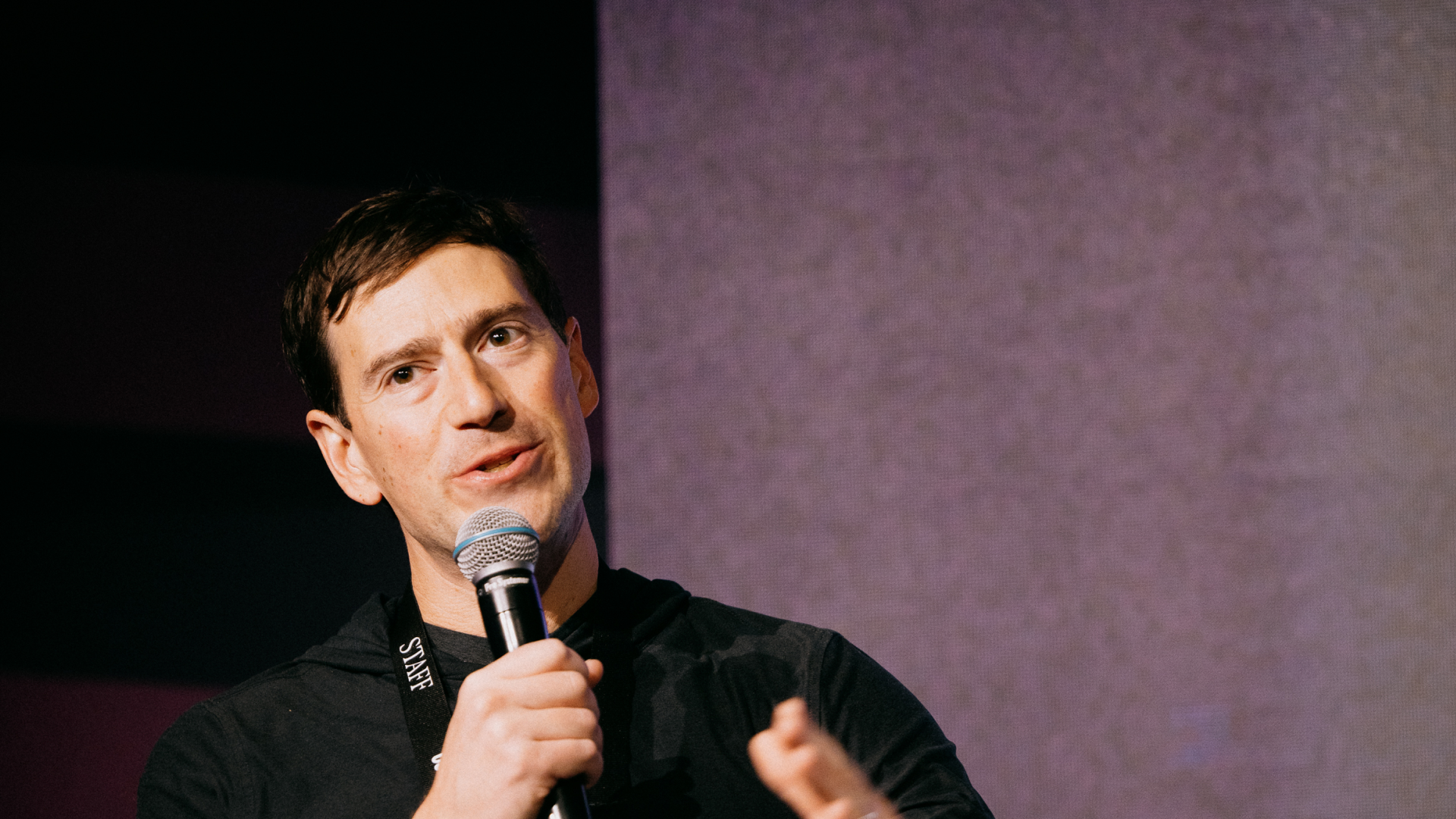

What if AI could be a tool for freedom? In conversation with Owen Clegg from BBC World Service, Alex Gladstein, Chief Strategy Officer at the Human Rights Foundation, explores how artificial intelligence can empower human rights activists, expand access to information, and help counter authoritarian uses of technology.
While AI is often framed through the lens of risk, Alex explores how the technology can also empower activists, journalists, and opposition movements around the world by supercharging their work through personal and organizational agents. He points to Venezuela, where opposition groups responding to a humanitarian crisis have used AI to quickly build crowdfunding infrastructure that would otherwise have required significant time, technical expertise, and resources helping deliver aid. Listen to the full conversation below.
A bit over a year ago I did a post about a podcast in which I talk about the human rights movement as I experienced it over 50 years. See:
An old friend, professor Bert Lockwood and his daughter Meredith, run a podcast series “Human Rights: Conversations Across Generations”. With great pleasure did one as it is true that much of the recent NGO history on human rights remains unrecorded so it will serve a purpose one day. It is now officially live.
Listening Links:
Spotify:
https://open.spotify.com/episode/7xQLkVAGZqPg4YIQsBkaW0?si=1c9bed3f1edc4f49
Apple Podcasts:
https://podcasts.apple.com/us/podcast/human-rights-conversations-across-generations/id1846179353?i=1000777274908
I will be shared on LinkedIn and Instagram.
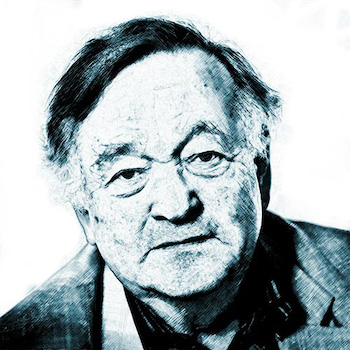
Today was the funeral of one my best friends and, more importantly, one of the most significant architects of the international human rights system as it developed in the last 50 years. Theo (Theodoor Cornelis) van Boven, was born in Voorburg on 26 mei 1934 and died peacefully in Maastricht on 9 mei 2026.
I have had the honor to work with him for many years [our lives intertwined over a long period of time and on different locations] and wrote about him several times. Most recently “Courageous Leaders and NGO Initiatives” in Ramcharan and others (ed), The Protection Roles of Human Rights NGOs, Essays in honour of Adrien-Claude Zoller, Brill Nijhoff, Leiden, 2023 (ISBN 978-90-04-51677-9), pp 614-636.
So, here a large part of the section on this great man:
This section is about a man who was crucial in getting the United Nations and NGO partners to deal with human rights protection. Much has been written about his work and the enormous contribution Theo van Boven made to the UN human rights machinery as we now know it. ..
Nowadays the United Nations has an elaborate machinery to deal with human rights violations. The system is far from perfect and still too often subject to political pressures and selectivity but there are now a great many thematic and country mandates, emergency sessions and there is an International Criminal Court against impunity. Wind back 40 years and none of this existed. The violations were there for all to see but not for the United Nations, which preferred to consider this part of the ‘internal affairs of sovereign states’. The man who would make it his life’s mission to change this, Theo van Boven, got in 1977 the position from where to do it: Director of Human Rights in the UN.
His teenage years were eaten up by the second world war. His memories of that period, his strict protestant background and his law studies in Leiden led him to enter an area that was not so obvious at the time: international human rights. He studied in the USA, wrote there a thesis on freedom of religion and soon afterwards, around 1960, he found himself as a young diplomat shaping the human rights policy of the Netherlands. A decade later the protest against the Vietnam war, the violations by the Greek colonels, the coup d’état in Chile and President Carter’s new policy on human rights pushed human rights suddenly higher on the political agenda. Theo had become an expert member of the UN Sub-commission on Human Rights and was one of the engineers of the first UN effort to investigate large-scale human rights violations, namely Chile. I myself met him when he was still a young professor lecturing on human rights in Amsterdam. Then – in the summer of 1977, the same month I started at the ICJ – he was appointed Director of the small human rights secretariat of the UN in Geneva. Here he started his work to bring dictators to accountability and to give the UN a capacity to deal with gross and systematic violations of human rights. Something that is now taken for granted but it would cost Theo his job.
Unlike his predecessors, Theo van Boven did not put all his faith in quiet diplomacy and he regularly talked about the need for the UN to address gross and systematic violations, about the mobilisation of shame and stated that the UN should care about victims. He also started to receive the victims – and the NGOs who represent them – in his office. This led to an incident that would be comic if it was not for the consequences. J. Matarollo was an Argentinean exile lobbying against the generals in his homeland who were killing left-wing opponents by the thousands. Theo agreed to hear him and told his secretary (inherited from his predecessor) to call Matarollo to give him an appointment in the early of hours of the next day. She faithfully called the Argentinean embassy assuming that he was a diplomat as these were the kind of people that normally met with the Director. The next day there was no Matarollo but an angry Note Verbale from Argentinean Ambassador Martinez accusing Theo of meeting with terrorists.
In the UN he did not conform to the image of the traditional diplomat, e.g. by pinning an anti-apartheid button on his suit, but even more so by publicly stating that NGO reports about dead bodies floating down a river in Guatemala were true, or by denouncing disappearances in Chile and Argentina. When in 1980 the government in the USA changed and Ronald Reagan and his team decided to play down violations by right-wing regimes, especially in Latin America, Theo did not flinch and openly criticised their support to these dictatorships. “Naming and shaming” by a UN official was unusual and not easily accepted by the diplomatic community. The Latin American regimes – led by Argentina and silently encouraged by the US – started a campaign to oust Van Boven as Director of Human Rights.
To complicate matters for van Boven, the new UN Secretary-General must have felt little sympathy for this particular Director, as J. Perez de Cuellar had earlier, in 1980, been appointed as Special Representative by the previous Secretary General to go to Uruguay and look into the human rights situation. His report was such a whitewash that it was heavily criticized in the Commission on Human Rights. How correct this reaction had been was shown when the famous pianist Estrella – whom de Cuellar claimed to have visited in the Libertad prison – came to Geneva and told the I.C.J and others that there had been no such visit.
In the meantime in 1980 Theo had put great energy – together with some key NGOs in creating a Working Group on Enforced Disappearances. As a mechanism focusing only on Argentina was politically not feasible, the new idea was to create a thematic mandate on the phenomenon of disappearances in the knowledge that Argentina was going to be the main target. At the decisive session the tension was enormous as the outcome of the vote was very uncertain. The Jordanian Chairman of that session had to deal with endless procedural issues, many of them proposed by Uruguay (egged on by Argentina which was only an observer). Finally, late at night the Chair felt that the resolution creating the mandate could be passed without a vote and moved to do so, but the Uruguayan Ambassador again started to put up his name plate as a sign that he wanted the floor. The Chairman quite unusually interrupting, looked directly at the Uruguayan Ambassador and said: “I URGE my brother from Uruguay NOT to do this..” The name plate slowly turned downwards again and the Chair immediately declared the resolution adopted. The NGOs and tens of Mothers and Grandmothers of the Plaza de Mayo in the public galleries started a spontaneous applause and quite a tear was shed. ..
In early 1982 the issue of Theo van Boven’s tenure as Director came to the fore. His contract had to be renewed which normally was a routine matter, but not this time. The issue came to an explosion when Theo’s opening speech to the Human Rights Commission was sent on a Friday evening to the UN Secretariat in NY for information and at the same time given to the UN Office of Information in Geneva for distribution at the time of delivery the next Monday morning. The UN Office of Information decided to make the statement available to the media that very Friday evening (with the usual proviso: “check against delivery”). The Representative of Guatemala in Geneva obtained a copy of the statement and vehemently objected to the statement. The SG’s office demanded that Theo should refrain from mentioning countries by name – which Theo refused not only out of principle but also because the press would notice the difference on Monday and assume that there had been pressure to remove the names.
As a family friend bringing the kids back from a ski outing, I happened to overhear Theo on the phone to New York agreeing to a ‘compromise’: he would mention at the beginning of his speech that certain passages were done in his ‘personal capacity’. A few days later Theo was suddenly informed that his contract would anyway not be prolonged. His announcement at a dramatic session of the Human Rights Commission grew quickly into an international diplomatic incident.
As I was on the verge of leaving the ICJ, I had some time on my hands. So I got the idea – warmly supported by Niall McDermot – to publish a book with a selection of Theo’s major speeches from the last five years. One of his Special assistants, Bertie Ramcharan, who had written a good part of them, was very helpful and we managed to get a book out within only 6 weeks. The first copy was flown in to Geneva by the publisher and presented to Theo at a public farewell which the ICJ had organised for him. NGOs, some UN staff and students showed up in such large numbers at the university hall that the fire brigade had to refuse access to late comers. Speech after speech – including by Saddrudin Aga Khan – cantered on Theo role in getting the UN machinery on human rights to deal with violations more concretely and on his support for human rights NGOs…
With Ian Guest and many others, I remain convinced that Theo’s dismissal from the UN was the result of pressure by Latin American dictatorships with support from the Reagan administration. As stated in People Matter, he was “hired and fired for the same reason: his deep commitment to human rights”.
After his dismissal Theo and his family returned to the Netherlands where many were very disappointed that there was no real interest in giving him an equivalent position in the foreign affairs department and he ‘ended up’ in the new University of Maastricht as professor of international law, where together with others such as Cees Flinterman he bent the research programme into his favourite direction: human rights. He continued his involvement in international activism in a variety of functions: with NGOs (e.g. European Human Rights Foundation, IMADR, International Alert), and with the UN (e,g. the Sub-commission on Human Rights, Special Rapporteur on Compensation 1990 -1993, Special Rapporteur on Torture 2001-2005, first Registrar of the UN Yugoslavia Tribunal). In 1998 he became the Head of the Dutch Delegation to the Rome Conference which created the International Criminal Court (ICC).
In 1985 he was called to Buenos Aires as a witness to testify against the nine military leaders (including Videla) for their human rights violations in the period 1976 en 1983. The UN had advised him not to go but he felt that he should do anything to end the impunity of these perpetrators. Theo’s testimony – he was called already on the 2nd day – was seen as crucial in establishing that the leaders of the Junta must have known about the massive violations. Theo took the same position with regard to the father of princess Maxima Zorreguieta (the wife of the king of the Netherlands). As Minister of Agriculture Jorge Zorreguieta must have known about the atrocities and should at least have taken distance instead of denying any knowledge. A position which Theo took in 2001 and was still heard defending in 2012.
In the light of Theo van Boven’s recurring clashes with Argentina it must have given him great moral satisfaction when on 26 November 2009 he received a degree honoris causa from the University of Buenos Aires as well as the highest decoration from the Government.
He was rigthly honored with 4 human rights awards, see: https://www.trueheroesfilms.org/thedigest/laureates/01889BD2-06CD-49BA-9A71-1BBFFFA9121A
ICTJ stated: “Van Boven’s commitment to the pursuit of justice was relentless. He spoke up about impunity and accountability in contexts of repression such as the military dictatorships in Argentina and Chile, where he also championed the cause of the disappeared, even when political pressure limited others from doing so. Today, ICTJ honors his voice, his perspective, and his deep-rooted legacy. Inspired by his resolve, we will continue our commitment to uphold human dignity above all else in the pursuit of justice and lasting peace all over the world, however long it takes.“
https://www.ictj.org/latest-news/ictj-mourns-passing-theo-van-boven-pioneer-victims%E2%80%99-rights
for the Dutch speakers :
In September 2026 followed
In this episode of Democracy Tomorrow, Scott Leckie celebrates the life and legacy of Theo van Boven, a pioneering international human rights lawyer and former head of the UN Centre for Human Rights. Joined by Professor Cees Flinterman and Hans Thoolen, they reflect on van Boven’s courageous defence of victims, his role in advancing international human rights law, and his commitment to justice, accountability and human dignity. The discussion also explores the future of the human rights movement, the United Nations, global democracy and the importance of defending our shared humanity.
on 31 December 2024 the UN Human Rights Podcast showcases the stories of five of the members of the Youth Advisory Board. The board is made up of young people who work on issues that mobilize and empower others to stand up for human rights. The Board is in partnership with Education Above All and Silatech, to empower young people, especially those in conflict and vulnerable situations.

On 17 May 2024 – in Global Voices – Lawyer Haris Azhar shares how the law has been used to intimidate human rights defenders in Indonesia..
Haris Azhar is an advocate, human rights defender, and lecturer in Indonesia who has been involved in human rights work for over 25 years. In January 2024 Azhar, along with another human rights defender, Fatia Maulidiyanti, were acquitted of defamation charges . [see also: https://humanrightsdefenders.blog/2023/11/14/defamation-indictment-for-fatia-maulidiyanti-and-haris-azhar-two-human-rights-defenders-in-indonesia/]
Here Haris Azhar shares how and why he believes the law can be used as a powerful tool to deal with repression of democratic voices and their rights. Read more from our In My Own Words series here.
My name is Haris Azhar. I would say I’ve been working, in general terms, on human rights issues for the last 25 years. I work across the country in Indonesia on some human rights, issues or situations, and in some conflict areas such as in Papua.
I have been working for and dealing with some vulnerable groups such as labour groups, as well as the indigenous people and victims from the violence as well. These days I practise as a lawyer, I do pro bono and also professional for-profit work where I use the profits work to subsidise the pro bono and public interest legal work. I have also joined some organisations, and I was director for two human rights organisations. So that’s why I’ve been very human rights focused.
In early 2024 me and my friend Fatia were brought to court. We won, and we got a good decision from the court. But this is not the final one, because the attorney general has appealed to the Supreme Court. I think this whole process was meant to serve as an example.
The whole process, especially last year, was intended to be intimidation. The litigation or the pre-trial process was intended to intimidate me [and] not to not say more about the practice of business oligarchs in this country. But myself, lawyers, and groups here said, we would not say sorry. We would not stop speaking, and that those in power could continue their judicial harassment of us and that we would fight them.
And during the fight, a lot of things happened [such as] intimidations, negative accusations and campaigns. They accused us of hoax stories, but actually they did the hoax stories. They took over and intercepted my mobile phone as well. These are the lengths and practices of intimidation in place.
However, the process of the court for people like us, we pretty much don’t really care about the final decisions. We can see the shadow of the prisons, because what the government thinks is important for them is for us to not have democratic voices. There aremany cases by politicians and by business groups that aim to criminalise decent voices, and it has become a [common] practice. There are even consultants that can help you if you would like to know how to criminalise decent/democratic voices.
It’s become an industry against freedom of expression, to show that, “This is what happens if you are against us.” They wanted to show they could bring me to court so the warning was that anyone who becomes the client of Haris should be aware. It was symbolic, and that’s what I mean it is a message to intimidate and to intimidate vulnerable groups especially.
Widespread engagement on human rights, working through organisations, has developed not only my knowledge, my skill, but also my networks. This has also developed my interest in what some of the ways we (as a nation) would like to put on the table with regards to issues of human rights.
As a practising lawyer, we have always believed here that we can use the law [to achieve justice]. However the movement here is not like in South Africa, as an example, where at one point in South Africa there was no real equality. There was no legal institution that could be used to secure fairness. We don’t have that kind of situation here [in Indonesia], but we are still looking for the formalisation of equality and fairness.
I believe that the law is one of the crucial things that need to be handled, in addition to other advocacy issues. Because we know that the law or legal mechanisms are [also] being used by the bad guys, by the oligarchs to justify and legalise their plans and to do their own business. Those in power always say that they have complied with the law, that they uphold the rule of law, but actually we know that the law they comply with is their own creation. It is their own definition. That’s why we [as legal practitioners] need to step in, even though it’s not the popular action to do so.
If those in, and adjacent to, power cannot be left to create what is good and not good within the framework of law. We need to bring in the voices from the ground. We need to bring the voices from the indigenous people. We need to bring the voices from the labour groups, from the students, from the women’s groups, and many other vulnerable groups who are connected to the issues.
This is instead of the politicians and the business groups alone making their own arguments and developing their own definitions. We cannot let them be, and let them take over in that kind of way. Rule of law and legislation, has to be accompanied and coloured by the vulnerable voices and interests. This is why we insist that a part of the campaign, part of the research, is that we take the legal action as well.
The gap between the haves and the political groups on the ground is huge. This has been happening year on year, and it is getting worse every year. The new regulations and legislations that we have here, which very much comply with the interests of the business groups which belong to some politicians, create more loose protection of rights of workers and women. For the youth and the students, they are getting fewer protections for their education and freedom.
There’s no freedom on campus for students anymore, [because of] intervention from the government and the police on campuses. It’s getting obvious these days. So I think we need at least two things. First, figuring out how to protect vulnerable groups, because why they were attacked or would be attacked is because they found irregularities, and problematic issues behind the policies of the government, or the law.
These issues have led to economic issues, social issues, business issues and so the vulnerable groups make a choice where they complain or protest, but they get attacked by police, government and intelligence. That is why we need more collaborations with vulnerable groups.
We also need more friends — lawyers, international advocates, researchers — coming down into the rural areas, and into the urban areas to capture what is happening and make a noise, to campaign. That’s why we need to have the first group that I mentioned before. We need not to deal with the substance of the problem, but with the second layer of the problem, [which is] the attacks of the participation, the effects to the participation. For this we need to have a lot of groups [working on] how to deal with this kind of shrinking space.
We just had the 2024 elections where we campaigned around the threat to our freedoms of speech and expression. Some of the candidates responded very well, but the one that was supported by the current regime didn’t have a strong resonance with what we are saying. In addition to the campaign, along with my criminalisation, myself, some friends and organisations submitted a complaint to the Constitutional Court.
Our complaint was regarding some legal articles which were being used against me and against some journalists. We won the case in the Constitutional Court earlier this year, and an article which had been used to criminalise a lot of people has now been dropped. But this win is very short [lived] because we have some articles within certain laws which allow the police to criminalise speech.
When I said we won, that’s regarding just one article in our criminal code. But in the next year and a half we will have a new criminal code implemented and new articles to criminalise speeches. We will need to challenge those articles in the next two years. It’s like Tom and Jerry, where we play hide and seek. It seems politicians and business need a shield to protect themselves from the public, hence these situations but we keep fighting them using the same law.
Legal institutions are not our institutions yet. They are still their institutions [meaning the powerful]. However to a certain degree, the legal space is an open stage for you to perform, to have a say. I think if we don’t fill the space, it will be filled by those who are not supportive of freedom of speech or freedom of expression.
These are the reasons why I think we have to join legal action. So as to not give space for evil to come in and occupy. Also, legal action is not the only type of work needed. It has to be one among others. For instance there is advocacy work too. But law cannot be neglected and that’s why this current situation (and the coming situations), require more than just focusing on the legal system. It has to be about a collaborative methodology and approach.
https://www.globalcitizen.org/en/content/ive-been-fighting-for-human-rights-for-25-years-he/
This day leads to a plethora of statements and actions. Here a small selection focusing on women human rights defenders:

Joan Kuriansky – a volunteer with The Advocates For Human Rights – writes: “Celebrating International Women’s Day in 2021 compels us to pause and examine the lessons of the past year- the COVID pandemic, economic distress and the surging mandate of Black Lives Matter. Each phenomenon has made so more visible the challenges that historically face women across the globe. Importantly, these forces have also made it clear how connected we are to each other whether in neighborhoods within miles of our home or across a continent and the extraordinary role that women play in making lives better and more just in every corner of the world. The UN and UNDP estimate that the pandemic will push 47 million more women and girls below the poverty line. Our upcoming workshop at the NGO CSW65 Virtual Forum will highlight the economic and other inequalities women face as a result of the pandemic. Register here: https://bit.ly/3dmVgSk Event link: https://bit.ly/2NhPoiL“
Women have been in the forefront of promoting peaceful solutions to conflict -conflict that has often included the rape and violation of women, the death of those in combat and the destruction of communities. Women have been in the forefront of promoting peaceful solutions to conflict -conflict that has often included the rape and violation of women, the death of those in combat and the destruction of communities. The Soldiers Mother’s Committee in Russia and Chechnya [[https://www.trueheroesfilms.org/thedigest/laureates/3371DC1A-42AE-44BF-E349-26987BF98314], or the Women of Liberia Mass Action for Peace founded by Leymah Gbowe or the 3 co-founders of Black Lives Matter have inspired all of us. And as we documented in our work with the Liberian Truth and Reconciliation Commission, women have a key role to play in the post-conflict and peacebuilding process.], or the Women of Liberia Mass Action for Peace founded by Leymah Gbowe or the 3 co-founders of Black Lives Matter [https://www.trueheroesfilms.org/thedigest/laureates/4f840e00-be5d-11e7-b953-f7f66015c2f3]have inspired all of us. And as we documented in our work with the Liberian Truth and Reconciliation Commission, women have a key role to play in the post-conflict and peacebuilding process.

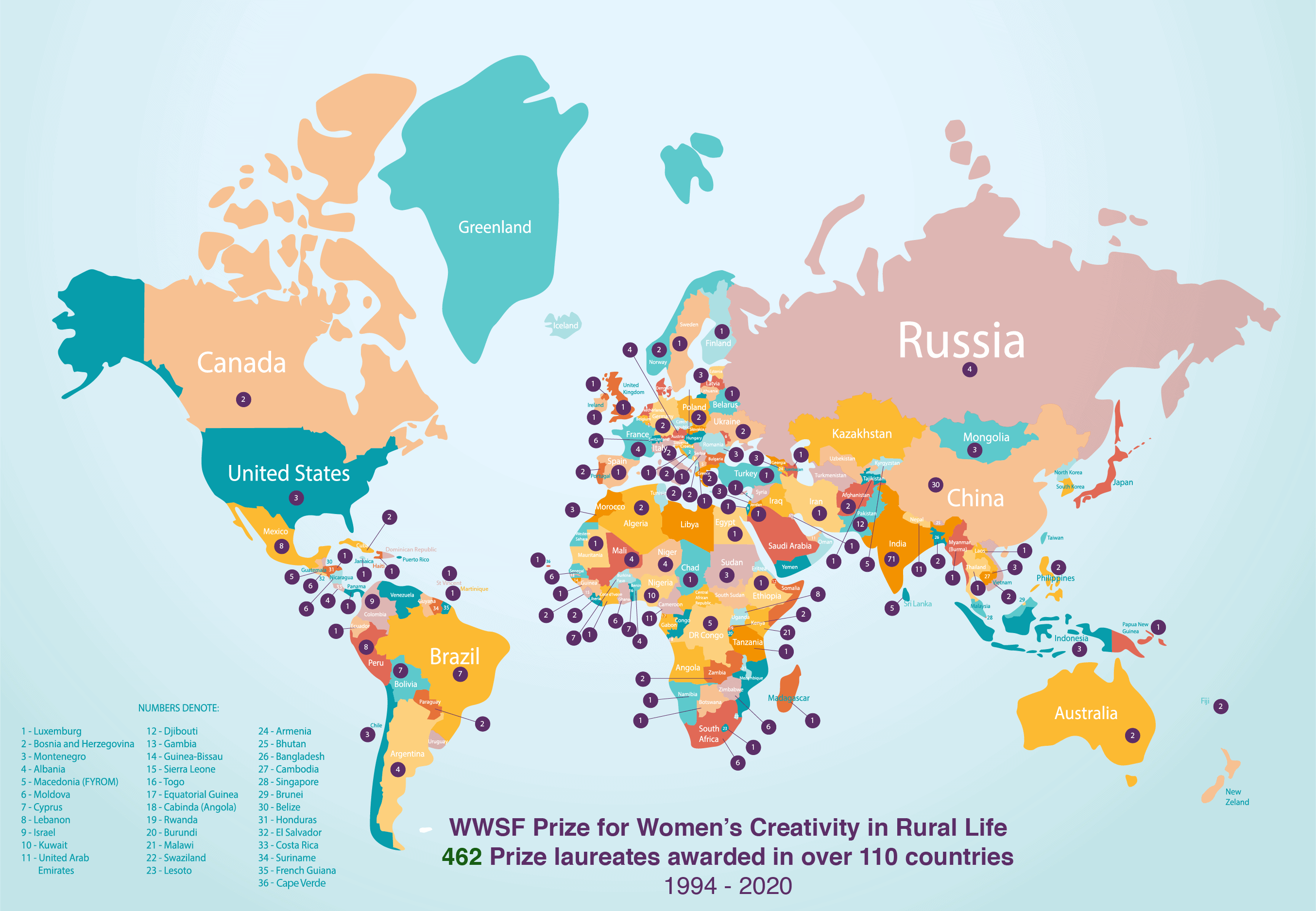
UN Women this year is celebrating women’s leadership in all its forms and calling for women and feminists across the world to claim their space in leadership and decision-making. Presently, only 7.4 per cent of Fortune 500 companies are run by women. Despite progress and many broken records, women continue to be excluded in certain sports. Systemic barriers, gender bias, discrimination and gender stereotypes continue to hold women back from rising in STEM careers. Women and girls have been leading climate action and environmental movements, but men occupy 67 per cent of climate-related decision-making roles. 119 countries have never had a woman leader. Just 25 per cent of national parliamentary seats are held by women.
Around the world, the space for civil discourse and movements is shrinking. The media plays a critical role in amplifying women’s voices and stories and drawing attention to key issues. But, with women holding only 27 per cent of top management jobs in media organizations, More than one-third of women’s employment is in agriculture, increasing women’s access to land and providing better support for women farmers is, therefore, essential. The majority of negotiators, mediators, and signatories in peace processes are still men.
In news media, only 24 per cent of the persons heard, read about or seen in newspaper, television and radio news are women. In global news coverage of COVID-19, only one in five expert sources counsulted were women.
Amnesty International stated that across the Middle East and North Africa (MENA), despite some limited reforms, women continue to face entrenched discrimination and daily violence amid the abject failure of governments to stamp out arbitrary arrests, abductions, assassinations, so-called “honour” killings and other forms of gender-based violence, said Amnesty International, marking International Women’s Day. ..Inadequate government action to protect women from gender-based violence and address impunity has long perpetuated this form of abuse. As a first step, authorities must publicly condemn all forms of gender-based violence and dismantle discriminatory structures that facilitate such abuse – such as male guardianship,” said Heba Morayef. “They must also ensure that the rights of survivors are protected, that survivors can safely access justice and that perpetrators are held to account. Survivors must be able to access adequate shelter, psycho-social support as well as legal and other services.”
All over the world, a female-driven political awakening is taking place. But this is met with prosecution by the State and persecution by self-vigilante groups. Their experiences are marred with patriarchal subordination, sexualised violence, threat and harassment. They face severe retribution and systematic abuse, even at the hands of the State. It is important to have an enabling environment for these soft targets who face heightened risks as compared to their male counterparts. International obligation requires the State to stop criminalising women defenders, write SHRUTIKA PANDEY & MRINALINI MISHRA in The Leaflet of 8 March 2021.
MRT of 8 March 2021 states that International Women’s Day is not celebrated, a struggle is commemorated – that has not ended- in favor of justice, peace and freedom of each one of them. In a strict sense, feminism seeks make gender issues visible. Under that idea, there should be no censorship or exclusion. Nevertheless, What about trans women? While it is true that some people do not agree that they are part of the feminist movement, the reality is that they also suffer from violence, harassment and discrimination. Therefore, they are in the same fight. With that said, we present to you 8 recognized trans women in history
The Media Line of 7 March writes that “Women face uphill climb to equality in the MENA region” Activists and human rights groups paint a daunting portrait of the equality landscape between the genders in the MENA region, as they prepare to mark International Women’s Day, March 8. The coronavirus epidemic, certainly, did not help the plight of women this past year. Still, going forward, the largest issues facing women in the Middle East were entrenched long before the pandemic hit.
In the Gulf Cooperative Council (GCC) countries, women’s rights defenders have it tough. While prominent Saudi women’s activist Loujain al-Hathloul was freed last month after almost three years in prison [see https://www.trueheroesfilms.org/thedigest/laureates/1a6d84c0-b494-11ea-b00d-9db077762c6c], Samar Badawi [https://www.trueheroesfilms.org/thedigest/laureates/eaed8641-4056-4130-a5ff-fb7bf289cece], Nassima al-Sadah, Nouf Abdelaziz and Maya’a al-Zahrani remain in jail after their 2018 arrests on charges of advocating for women’s rights. “Those who are behind bars are the champions for the change that took place,” Khalid Ibrahim, executive director of the Gulf Centre for Human Rights, told The Media Line, referring to women driving.
In UCANews of 8 March 2021 Mary Aileen D. Bacalso, Manila writes that “Millions of women the world over suffer from discrimination, abuse, poverty, gender-based violence and human rights violations, of which enforced disappearance is one of the most cruel forms. Enforced disappearance, which motivated the international community to establish the International Convention for the Protection of All Persons from Enforced Disappearance, especially affects women. On this significant occasion, I remember the faces and voices of women I personally encountered from 50 countries that I visited during my almost three decades of advocacy for the cause of the disappeared. Many of them carried pictures of their loved ones. Some gave me every bit of information with the hope against hope to find light amidst the dark night of the disappeared.”
Euromed uses the occasion for a series of podcast. For our first episode, the story you are about to hear is that of Mozn Hassan, a woman human rights defender and the founder and executive director of Nazra for Feminist Studies, a feminist organisation working in Egypt and the MENA region on gender equality and combatting violence against women. See: https://www.trueheroesfilms.org/thedigest/laureates/38B5C337-72F5-C4DE-BC95-95094B9E3939
[https://open.spotify.com/episode/0BLcZcwdDrab9guLW6fHVo]
https://un-women.medium.com/claiming-womens-space-in-leadership-6acc13946e2
https://www.ucanews.com/news/women-turn-grief-into-courage/91671#
On 31 October 2020 the BBC published a very interesting podcast on Luon Sovath, the Buddhist monk who has long been a thorn in the side of the Cambodian governmen and has been targeted by a state-sponsored disinformation campaign. [see: https://humanrightsdefenders.blog/2020/08/23/more-details-about-luon-sovaths-framing-and-facebooks-role/] The podcast is presented by Reha Kansara.
https://www.bbc.co.uk/sounds/play/w3cszvsm
For the film on the MEA 2012 laureate, see:
Ketty Nivyabandi is a Burundian activist and poet who led the first women-only demonstrations against Burundi’s president in 2015. She defied police beatings, tear gas, and a water cannon to make women’s voices heard.
In this podcast THE HUMAN RIGHTS FOUNDATION dives into Burundi’s authoritarian regime and Ketty’s resistance to Burundi’s dictatorship. What role can women play in protesting and organizing? How do you survive police brutality? How can people remain hopeful and support protestors in Burundi?
https://www.youtube.com/watch?v=XfJuctTwAuA&feature=youtu.be
In the same vein is the following statement: Statement of Caribbean women, women’s organizations and other civil society organizations on the occasion of the Commission on the Status of Women (CSW) 59, Beijing + 20 – Stabroek News – Georgetown, Guyana.
see also: https://thoolen.wordpress.com/tag/women-human-rights-defenders/

