Posts Tagged ‘argentina’

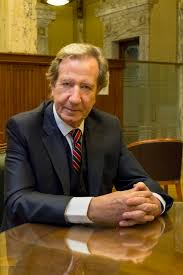
Theo van Boven, a giant in the field of international human rights law: 1934 – 2026. A personal look back.

May 19, 2026

Today was the funeral of one my best friends and, more importantly, one of the most significant architects of the international human rights system as it developed in the last 50 years. Theo (Theodoor Cornelis) van Boven, was born in Voorburg on 26 mei 1934 and died peacefully in Maastricht on 9 mei 2026.

I have had the honor to work with him for many years [our lives intertwined over a long period of time and on different locations] and wrote about him several times. Most recently “Courageous Leaders and NGO Initiatives” in Ramcharan and others (ed), The Protection Roles of Human Rights NGOs, Essays in honour of Adrien-Claude Zoller, Brill Nijhoff, Leiden, 2023 (ISBN 978-90-04-51677-9), pp 614-636.

So, here a large part of the section on this great man:
This section is about a man who was crucial in getting the United Nations and NGO partners to deal with human rights protection. Much has been written about his work and the enormous contribution Theo van Boven made to the UN human rights machinery as we now know it. ..
Nowadays the United Nations has an elaborate machinery to deal with human rights violations. The system is far from perfect and still too often subject to political pressures and selectivity but there are now a great many thematic and country mandates, emergency sessions and there is an International Criminal Court against impunity. Wind back 40 years and none of this existed. The violations were there for all to see but not for the United Nations, which preferred to consider this part of the ‘internal affairs of sovereign states’. The man who would make it his life’s mission to change this, Theo van Boven, got in 1977 the position from where to do it: Director of Human Rights in the UN.

His teenage years were eaten up by the second world war. His memories of that period, his strict protestant background and his law studies in Leiden led him to enter an area that was not so obvious at the time: international human rights. He studied in the USA, wrote there a thesis on freedom of religion and soon afterwards, around 1960, he found himself as a young diplomat shaping the human rights policy of the Netherlands. A decade later the protest against the Vietnam war, the violations by the Greek colonels, the coup d’état in Chile and President Carter’s new policy on human rights pushed human rights suddenly higher on the political agenda. Theo had become an expert member of the UN Sub-commission on Human Rights and was one of the engineers of the first UN effort to investigate large-scale human rights violations, namely Chile. I myself met him when he was still a young professor lecturing on human rights in Amsterdam. Then – in the summer of 1977, the same month I started at the ICJ – he was appointed Director of the small human rights secretariat of the UN in Geneva. Here he started his work to bring dictators to accountability and to give the UN a capacity to deal with gross and systematic violations of human rights. Something that is now taken for granted but it would cost Theo his job.

Unlike his predecessors, Theo van Boven did not put all his faith in quiet diplomacy and he regularly talked about the need for the UN to address gross and systematic violations, about the mobilisation of shame and stated that the UN should care about victims. He also started to receive the victims – and the NGOs who represent them – in his office. This led to an incident that would be comic if it was not for the consequences. J. Matarollo was an Argentinean exile lobbying against the generals in his homeland who were killing left-wing opponents by the thousands. Theo agreed to hear him and told his secretary (inherited from his predecessor) to call Matarollo to give him an appointment in the early of hours of the next day. She faithfully called the Argentinean embassy assuming that he was a diplomat as these were the kind of people that normally met with the Director. The next day there was no Matarollo but an angry Note Verbale from Argentinean Ambassador Martinez accusing Theo of meeting with terrorists.

In the UN he did not conform to the image of the traditional diplomat, e.g. by pinning an anti-apartheid button on his suit, but even more so by publicly stating that NGO reports about dead bodies floating down a river in Guatemala were true, or by denouncing disappearances in Chile and Argentina. When in 1980 the government in the USA changed and Ronald Reagan and his team decided to play down violations by right-wing regimes, especially in Latin America, Theo did not flinch and openly criticised their support to these dictatorships. “Naming and shaming” by a UN official was unusual and not easily accepted by the diplomatic community. The Latin American regimes – led by Argentina and silently encouraged by the US – started a campaign to oust Van Boven as Director of Human Rights.

To complicate matters for van Boven, the new UN Secretary-General must have felt little sympathy for this particular Director, as J. Perez de Cuellar had earlier, in 1980, been appointed as Special Representative by the previous Secretary General to go to Uruguay and look into the human rights situation. His report was such a whitewash that it was heavily criticized in the Commission on Human Rights. How correct this reaction had been was shown when the famous pianist Estrella – whom de Cuellar claimed to have visited in the Libertad prison – came to Geneva and told the I.C.J and others that there had been no such visit.

In the meantime in 1980 Theo had put great energy – together with some key NGOs in creating a Working Group on Enforced Disappearances. As a mechanism focusing only on Argentina was politically not feasible, the new idea was to create a thematic mandate on the phenomenon of disappearances in the knowledge that Argentina was going to be the main target. At the decisive session the tension was enormous as the outcome of the vote was very uncertain. The Jordanian Chairman of that session had to deal with endless procedural issues, many of them proposed by Uruguay (egged on by Argentina which was only an observer). Finally, late at night the Chair felt that the resolution creating the mandate could be passed without a vote and moved to do so, but the Uruguayan Ambassador again started to put up his name plate as a sign that he wanted the floor. The Chairman quite unusually interrupting, looked directly at the Uruguayan Ambassador and said: “I URGE my brother from Uruguay NOT to do this..” The name plate slowly turned downwards again and the Chair immediately declared the resolution adopted. The NGOs and tens of Mothers and Grandmothers of the Plaza de Mayo in the public galleries started a spontaneous applause and quite a tear was shed. ..

In early 1982 the issue of Theo van Boven’s tenure as Director came to the fore. His contract had to be renewed which normally was a routine matter, but not this time. The issue came to an explosion when Theo’s opening speech to the Human Rights Commission was sent on a Friday evening to the UN Secretariat in NY for information and at the same time given to the UN Office of Information in Geneva for distribution at the time of delivery the next Monday morning. The UN Office of Information decided to make the statement available to the media that very Friday evening (with the usual proviso: “check against delivery”). The Representative of Guatemala in Geneva obtained a copy of the statement and vehemently objected to the statement. The SG’s office demanded that Theo should refrain from mentioning countries by name – which Theo refused not only out of principle but also because the press would notice the difference on Monday and assume that there had been pressure to remove the names.

As a family friend bringing the kids back from a ski outing, I happened to overhear Theo on the phone to New York agreeing to a ‘compromise’: he would mention at the beginning of his speech that certain passages were done in his ‘personal capacity’. A few days later Theo was suddenly informed that his contract would anyway not be prolonged. His announcement at a dramatic session of the Human Rights Commission grew quickly into an international diplomatic incident.

As I was on the verge of leaving the ICJ, I had some time on my hands. So I got the idea – warmly supported by Niall McDermot – to publish a book with a selection of Theo’s major speeches from the last five years. One of his Special assistants, Bertie Ramcharan, who had written a good part of them, was very helpful and we managed to get a book out within only 6 weeks. The first copy was flown in to Geneva by the publisher and presented to Theo at a public farewell which the ICJ had organised for him. NGOs, some UN staff and students showed up in such large numbers at the university hall that the fire brigade had to refuse access to late comers. Speech after speech – including by Saddrudin Aga Khan – cantered on Theo role in getting the UN machinery on human rights to deal with violations more concretely and on his support for human rights NGOs…

With Ian Guest and many others, I remain convinced that Theo’s dismissal from the UN was the result of pressure by Latin American dictatorships with support from the Reagan administration. As stated in People Matter, he was “hired and fired for the same reason: his deep commitment to human rights”.

After his dismissal Theo and his family returned to the Netherlands where many were very disappointed that there was no real interest in giving him an equivalent position in the foreign affairs department and he ‘ended up’ in the new University of Maastricht as professor of international law, where together with others such as Cees Flinterman he bent the research programme into his favourite direction: human rights. He continued his involvement in international activism in a variety of functions: with NGOs (e.g. European Human Rights Foundation, IMADR, International Alert), and with the UN (e,g. the Sub-commission on Human Rights, Special Rapporteur on Compensation 1990 -1993, Special Rapporteur on Torture 2001-2005, first Registrar of the UN Yugoslavia Tribunal). In 1998 he became the Head of the Dutch Delegation to the Rome Conference which created the International Criminal Court (ICC).

In 1985 he was called to Buenos Aires as a witness to testify against the nine military leaders (including Videla) for their human rights violations in the period 1976 en 1983. The UN had advised him not to go but he felt that he should do anything to end the impunity of these perpetrators. Theo’s testimony – he was called already on the 2nd day – was seen as crucial in establishing that the leaders of the Junta must have known about the massive violations. Theo took the same position with regard to the father of princess Maxima Zorreguieta (the wife of the king of the Netherlands). As Minister of Agriculture Jorge Zorreguieta must have known about the atrocities and should at least have taken distance instead of denying any knowledge. A position which Theo took in 2001 and was still heard defending in 2012.

In the light of Theo van Boven’s recurring clashes with Argentina it must have given him great moral satisfaction when on 26 November 2009 he received a degree honoris causa from the University of Buenos Aires as well as the highest decoration from the Government.

He was rigthly honored with 4 human rights awards, see: https://www.trueheroesfilms.org/thedigest/laureates/01889BD2-06CD-49BA-9A71-1BBFFFA9121A

ICTJ stated: “Van Boven’s commitment to the pursuit of justice was relentless. He spoke up about impunity and accountability in contexts of repression such as the military dictatorships in Argentina and Chile, where he also championed the cause of the disappeared, even when political pressure limited others from doing so. Today, ICTJ honors his voice, his perspective, and his deep-rooted legacy. Inspired by his resolve, we will continue our commitment to uphold human dignity above all else in the pursuit of justice and lasting peace all over the world, however long it takes.

https://www.ictj.org/latest-news/ictj-mourns-passing-theo-van-boven-pioneer-victims%E2%80%99-rights

https://www.icj.org/icj-mourns-the-passing-of-theo-van-boven-a-leading-light-in-the-human-rights-movement

for the Dutch speakers :

https://www.nrc.nl/nieuws/2026/05/14/voorvechter-van-mensenrechten-theo-van-boven-was-voor-de-duvel-niet-bang-a4927748?gift_token=4927748~1779425764~ZoNkCp0IEeKfgABQVoV_mg~qz1T0tF_jkfHhM3-1nfqmOps9ohrOWVEsPKAKJ5VJVA

Buscarita Roa: one of the last of the Abuelas

August 10, 2025

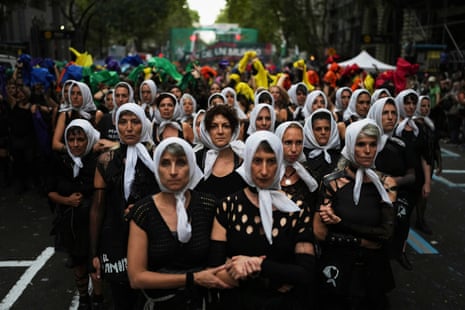
A group of women dressed in black and wearing white headscarves

Women dressed as the mothers and grandmothers of the Plaza de Mayo gather in Buenos Aires, Argentina, in March. Photograph: Rodrigo Abd/AP

On Wednesday 6 August 2025 the Guardian carried an interview with Buscarita Roa, one of the last of the Abuelas.” ..

Argentina’s 1976-83 military dictatorship tortured, killed and “disappeared” an estimated 30,000 people – political opponents, students, artists, union leaders: anyone it deemed a threat. Hundreds of babies were also taken, either imprisoned with their parents, or given to military families. The Abuelas de Plaza de Mayo have fought for almost 50 years to find these grandchildren. Buscarita Roa is one of two surviving active members.

On 28 November 1978, my 22-year-old son, José, his wife, Marta, and their baby daughter, Claudia, joined the list of those “disappeared”. A squad of Argentina’s military police stormed their home and I couldn’t find out any more. I went everywhere to look for them – police stations, courthouses, army camps, churches. I was desperate. But nobody would answer me. Every door was closed. It was a suffocating, hermetic time.

Then one day, not long after they were taken, I watched as a group of women walked in circles around the Plaza de Mayo in Buenos Aires. These mothers and grandmothers had started to gather, demanding answers about their missing relatives. I recognised one of the women. She said come with us, and I did.

We – who would become known as the Abuelas – didn’t know each other before. But we would meet every week and walk round and round the square, identifying each other with our white headscarves.

At first some of the husbands came, but we knew they risked being “disappeared” too, so then the men stayed at home and we went alone. It was still dangerous, a terrifying time, and some of the first mothers were taken themselves.

When the police ordered us to leave, and we didn’t, they charged at us on horseback. But we were younger then, so we could run.

Together we started going to the police stations and the courts, searching for answers. We cried in front of them, and they told us to go away, they didn’t want to see us. We knew the dictatorship was watching us from afar.skip past newsletter promotion

My granddaughter’s disappearance haunted my life. She was only eight months old when she was taken, and whenever I would see a little girl who looked like her, I would follow her, unable to stop until I saw her face. If there were people at my front door I would think, oh she must have come home. Other times, people would tell us they had seen a neighbour with a new baby. So we would go to their houses, trying to glimpse the child, to see if they looked like one of ours. We were doing crazy, desperate things, but it was all we had.

Many years passed before we started to receive any information. Most people didn’t believe us, and those that did thought our sons were terrorists. Still, we continued to go to Plaza de Mayo to pray for the return of our children. And when the country’s economic situation improved, we started travelling abroad to share our story too.

In 2000, I found my granddaughter, and was able to hug her again for the first time in two decades. People had come forward with their suspicions, and a judge agreed to investigate. We learned that Claudia had been taken to the clandestine detention centre “El Olimpo” with her mother, where she was kept for three days before being illegally adopted by a military family. They created a fake birth certificate, signed by a military doctor. My son and daughter-in-law were tortured and killed.

Claudia was in my heart every day that she was missing. I can’t explain what I felt when I found her. It was a pure, overwhelming joy. But I was also afraid, fearful that she would reject me. By then she was 21, and had been raised by a military family. I couldn’t invade my granddaughter’s life just like that, she needed to figure out the terrible truth and start trusting us. Slowly, over long afternoons of mate [a traditional herbal drink], we got to know each other and have built a beautiful relationship.

Belonging to the Abuelas helped me to heal. We laughed, we cried and we became friends. We were relentless too – we women have not rested once in half a century. But while some of us found our grandchildren, others only found bodies, and most of us found nothing at all. And then there is the battle of time; it is cruel and many of the Abuelas have died. There were once many of us, and now there are fewer than 10.

Estela de Carlotto, the president of the Abuelas, and I are the two last active members. But we are growing old too, and I don’t know how much further life will take us. We have found 140 of the grandchildren, with the last reunited last month, but we estimate that nearly 300 are still missing.

The ones we have found have now taken up the mantle. This is the legacy de Carlotto and I leave behind: a generation of grandchildren still looking for the others.

My lifelong work has consisted of searching for my son and daughter-in-law. I am 87 years old now, but I will never give up.

As told to Harriet Barber

https://www.theguardian.com/global-development/2025/aug/06/grandmothers-argentina-disappeared-legacy-reunited

Amnesty finds that young human rights defenders face online harassment for posting on human rights

July 3, 2024
Amnesty International
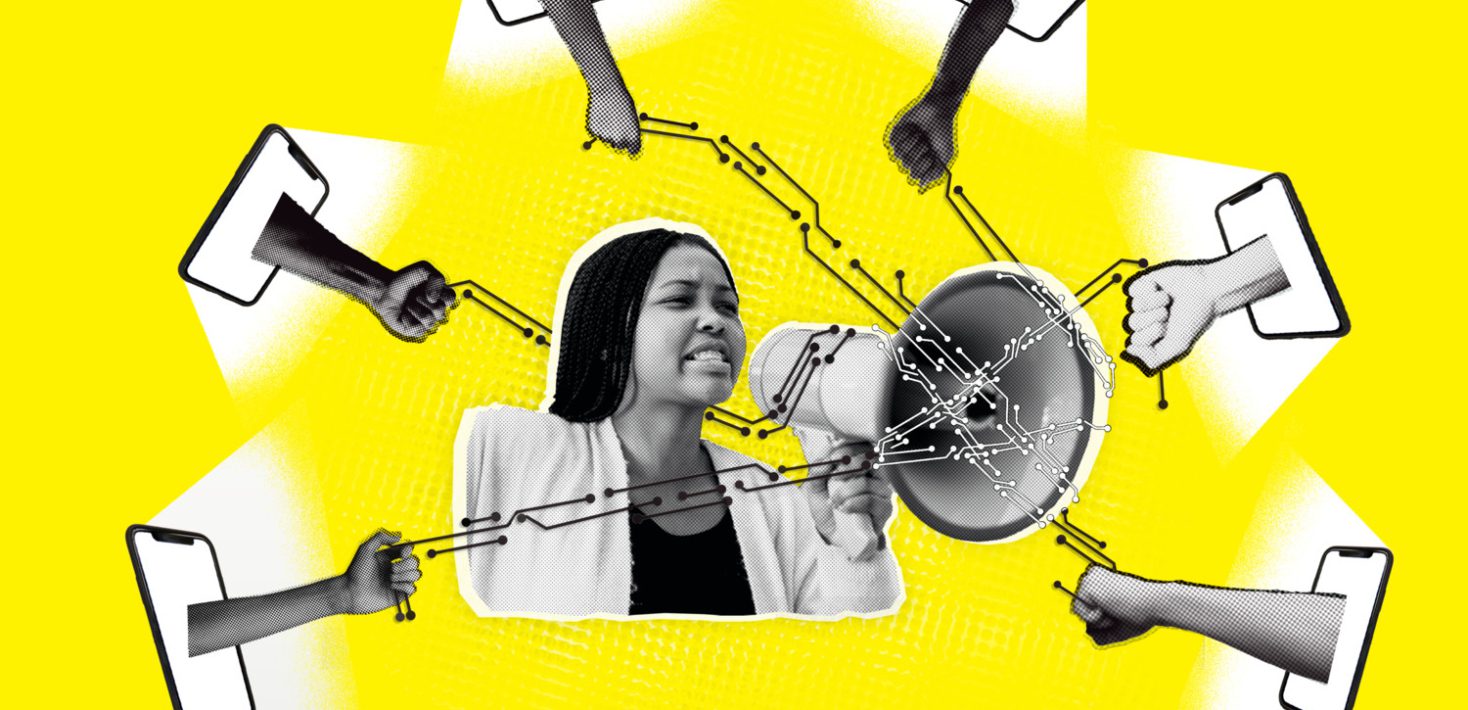
an illustration with a young person speaking into a megaphone. Around them are images of fists coming out of phone screens.

On July 1, 2024 AI published the findings of a survey which says that three out of five child and young human rights defenders face online harassment in connection with their activism, according to a new analysis of 400 responses to an Amnesty International questionnaire, distributed to young activists across 59 countries. More than 1400 young activists participated in the survey conducted as a part of Amnesty International’s global campaign to “Protect the Protest.”

Of those, 400 youth activists aged between 13 to 24 years agreed to the publication of their data.

They faced harassment in the form of hateful comments, threats, hacking and doxing which is often linked to offline abuse and political persecution often perpetrated by state actors with little or no response from Big Tech platforms resulting in the silencing of young people. 

The highest rates of online harassment were reported by young activists in Nigeria and Argentina.

“I have been harassed […] by a stranger because of my pronouns. The stranger told me it is not possible to be a ‘they/them’ and kept sending messages about how I am crazy for identifying the way I identify. I had to ignore the person’s messages,” said a 17-year-old Nigerian queer LGBTI activist who asked not to be identified.

Another young activist – 21-year-old male Nigerian LBGTI rights activist said, “People disagree with my liberal progressive views, and immediately check my profile to see that I am queer Nigerian living in Nigeria, and they come at me with so much vitriol. I am usually scared to share my opinion on apps like TikTok because I can go viral. The internet can be a very scary place,” he said adding that, “Someone cat fishing as a gay man, lured me into coming out to see him after befriending me for a while, and then he attacked me with his friends. This is Nigeria, I couldn’t go to the police for secondary victimization.”

Twenty-one percent of respondents say they are trolled or threatened on a weekly basis and close to a third of the young activists say that they have censored themselves in response to tech-facilitated violence, with a further 14 percent saying they have stopped posting about human rights and their activism altogether.

“I always think twice before making a comment, when I express my political position, I start to get many comments that not only have to do with my position, but also with my body, my gender identity or my sexuality,” said Sofía*, a 23-year-old human rights defender from Argentina shared her experience on X formerly known as Twitter.

The survey respondents said they faced the most abuse on Facebook, with 87 percent of the platform’s users reporting experiences of harassment, compared to 52 percent on X and 51 percent on Instagram.

The most common forms of online harassment are upsetting and disrespectful “troll” comments (60 percent) and upsetting or threatening direct messages (52 percent).

Five percent of the young activists say they have faced online sexual harassment, too, reporting that users posted intimate images (including real and AI-generated images) of them without consent.

For many of the survey participants harassment in relation to their online activism is not limited to the digital world either. Almost a third of respondents reported facing offline forms of harassment, from family members and people in their personal lives to negative repercussions in school, police questioning and political persecution.

Twenty-year-old non-binary activist Aree* from Thailand shared their experience of facing politically motivated prosecution in five different cases whilst they were still a child.

Abdul* a 23-year-old Afghan activist reported being denied work at a hospital after authorities found out about his social media activism.

The Israel-Gaza war currently stands out as an issue attracting high levels of abusive online behaviour, but the threat of online harassment appears to be omnipresent across all leading human rights issues. Peace and security, the rule of law, economic and gender equality, social and racial justice, and environmental protection all served as “trigger topics” for the attacks.

However, the way young activists are targeted varies and appears to be closely linked to intersectional experiences of discrimination, likely harming survivors of identity-based abuse in longer lasting ways than issue-based harassment.

Twenty-one percent of respondents say they have been harassed in connection with their gender and twenty percent in connection with their race or ethnicity. Smaller percentages said they face abuse in connection with their socio-economic background, age, sexual orientation and/or disabilities.

“At first it was simply hateful comments since the posts I published were daring and spoke openly about LGBT rights, which later made me receive threats in private messages and it went further when my account was hacked,” said Paul a 24-year-old activist from Cameroon, on being targeted for his LGBTI related activism adding that, “For 2 years, I have been living in total insecurity because of the work I do as an advocate for the rights of my community online.”

For Paul and many other young activists, online harassment is having deep effects on their mental health. Forty percent of the respondents say they have felt a sense of powerlessness and nervousness or are afraid of using social media. Some respondents have even felt unable to perform everyday tasks and felt physically unsafe. Accordingly, psychological support is the most popular form of support which young activists call for, ahead of easier to use reporting mechanisms and legal support.

Many of the young activists voiced frustrations over leading social media platforms’ failure to adequately respond to their reports of harassment saying the abusive comments are left on the platforms long after being flagged.

Some respondents also felt that social media platforms are playing an active part in silencing them; multiple activists reported that they found posts about the war in Gaza removed, echoing previous reports of content advocating for Palestinian rights being subject to potentially discriminatory moderation by various platforms.

Others highlighted platforms’ role in enabling state-led intimidation and censorship campaigns, undermining activists’ hope for government regulation to provide answers to the challenge of tech-facilitated violence.

Amnesty International has previously documented the repression of peaceful online speech by states including India, the Philippines and Vietnam and is currently calling for global solidarity actions in support of women and LGBTI activists facing state-backed online violence in Thailand.

*The young activists’ names have been changed to protect their identities.

New SG of the ICJ, Santiago Cantón, want to mobilise the human rights community again

May 12, 2023

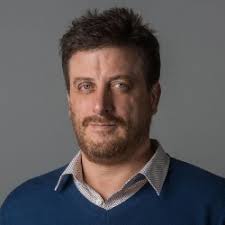
Santiago Cantón, secretary general of the International Commission of Jurists. (Geneva Solutions/Michelle Langrand)

On 11 May 2023 Geneva Solutions carried an interview with the incoming Secretary General of the International Commission of Jurists:

The new head of the International Commission of Jurists warns of the challenges human rights face as democracies across the world falter and calls on human rights groups to rally behind a new purpose. After spending the last few years in the United States, Santiago Cantón, the Argentinian jurist who recently became the new secretary general of the International Commission of Jurists (ICJ), will call Geneva his home for the next five years.

The discreet organisation of well-respected judges and lawyers, located in the Paquis neighbourhood and now celebrating its 70th anniversary, is almost as old as the 1948 Universal Declaration of Human Rights. Born from the ashes of World War II initially to investigate abuses committed in the Soviet part of post-war Germany, the group has made vital contributions over the decades to the human rights architecture. Most notably, they helped push for the creation of an international criminal court and several UN human rights instruments, including the Convention on Enforced Disappearances, first proposed by its then-president Niall MacDermot.

Cantón, 60, also brings with him some heavy baggage of experience in human rights. He was the executive secretary from 2001 to 2012 of the Inter-American Commission of Human Rights, one of the arms of the Organization of American States tasked with reviewing rights abuses. Before that, Cantón served as the commission’s first special rapporteur on freedom of expression from 1998 to 2001. More recently, Cantón was part of the UN Human Rights Council’s commission of inquiry on abuses committed in the occupied Palestinian territories during the 2018 protests.

As a young student, Cantón saw his country fall into the clutches of a military junta that would rule ruthlessly for ten years. While initially drawn to diplomacy and foreign relations, Cantón knew it wasn’t an option to place his skills at the service of a dictatorship. He opted instead to study international law and human rights.

One of his first experiences, and the one to inspire him the most, was advising former US president Jimmy Carter in his democracy programmes in Latin America, most notably supporting elections in Nicaragua and the Dominican Republic in 1990 at a time when the two countries were emerging from bloody conflicts and transitioning into democracies. He saw the region break away from the chains of military regimes and usher in a new era of democracy and rule of law. “1948, with the universal declaration of human rights, was the big bang of human rights,” he told Geneva Solutions. “Since then, the architecture of human rights created throughout the world has been extraordinary.”

But the tides have turned. “Human rights are in decline and have been since the beginning of the century,” he regretted.

For Cantón, part of it is due to a lack of leadership. “We don’t have the same leaders in the world, and the governments that support human rights today, do not have the leadership they need to have for political reasons.” He said long gone are the Raúl Alfonsín of Argentina, Fernando Henrique Cardoso of Brazil and Patricio Aylwin of Chile, leaders who stood up for democratic values following their countries’ exit from military rule.

“You do have leadership on the wrong side. And they’re winning,” he added. He cited the leaders of El Salvador and Mexico, as well as Brazil’s Jair Bolsonaro and the US’s Donald Trump, as examples of how populist leaders have successfully appealed to disillusioned populations.

“Take El Salvador. Here we have someone that has 70 to 80 per cent of popularity. People (feel) that democracy did not deliver. They are tired and want to change everything completely,” he said. President Nayib Bukele’s recent sweeping crackdown that saw over 60,000 suspected gang members arrested has been praised by many Salvadorians fed up with the violence and insecurity that has gangrened the country for years. And despite the harsh criticism his methods have drawn from human rights campaigners, political figures across the region are flaunting it as a successful model that can be replicated in their own countries.

Cantón cautions against the temptation of wanting to scrap everything. “We cannot just change everything! There are things we need to keep, and human rights is one of those,” he said.

On Cuba, Nicaragua and Venezuela, the usual trio singled out for their authoritarian regimes, Cantón prefers to avoid tired narratives. “it’s not a question of left and right, it’s a question of the strength of the rule of law, and the rule of law is declining,” he observed.

Beyond that, human rights that touch upon issues associated with deeply entrenched cultural values have also been met by a wall of resistance. Cantón hasn’t finished unpacking he has already faced a first crisis. A report published by the ICJ in early March on how to apply human rights standards to criminal law was falsely accused across the internet of condoning sex between adults and minors. For Cantón, the world is increasingly polarised, and he views social media as a significant contributing factor. “It’s hard to find the middle ground, and when things are so polarised, they keep getting pushed harder towards two crazy extremes.”

But governments are not the only ones that need to do some soul-searching. Civil society is also struggling to maintain morale, according to Cantón. “It’s very frustrating when you take one step forward, and you have to go back like ten steps,” he said. For the past years, human rights groups have been on the defence, trying to protect hard-won advances. “We need to mobilise the human rights community again, strongly behind something,” he said.

One of the initiatives the ICJ is working on is the creation of a standing independent mechanism to investigate rights violations. UN-backed probe mechanisms are usually set up on a case-by-case basis and have been accused of being selective and politically motivated. The group of lawyers suggests that such a permanent expert body, created through the Human Rights Council or the General Assembly, could help by making it easier to trigger investigations.

“It would be a game changer,” Cantón said.

Emilio Mignone prize 2020 to Haitian NGO

December 14, 2020

The Argentinian Foreign Ministry on Wednesday 9 December delivered the 2020 edition of the Emilio Mignone International Human Rights Prize to Haiti’s Devoir de Mémoire foundation in a virtual ceremony due to the Covid-19 pandemic.

Founded in 2013, this foundation has pioneered the publication of historic testimony of previous human rights violations in the Caribbean island republic. The prize, awarded since 2007 in recognition of outstanding work abroad to defend human rights, is named after the late Professor Emilio Fermín Mignone, lawyer and founder of CELS (Centro de Estudios Legales y Sociales) human rights organisation. See: https://www.trueheroesfilms.org/thedigest/award/51115C74-AFA5-4D19-BDC1-E31917D770C4

see also: https://humanrightsdefenders.blog/2016/12/06/bringbackourgirls-gets-argentinian-emilio-mignone-award/

https://www.batimes.com.ar/news/argentina/5th-december-12th-december-what-we-learned-this-week.phtml

https://www.devoirdememoire.ht/

In memoriam Leandro Despouy: Argentinean human rights defender at the global level

March 16, 2020

When a good friend and soul mate dies, it is sometimes difficult to write something meaningful. So it was when I learned that Argentine human rights lawyer Leandro Despouy – whom I have known since 1976  – had died on 18 December 2019 in Buenos Aires, after a two-year battle with cancer. He was born on 4 April 1947 in San Luis.

The Argentine media paid quite a bit of attention to his passing but (understandably?) focused on his place in Argentinean politics (in the Radical Party) and his institutional role as Head of the Auditoría General de la Nación from 2002 – 2016.  But Leandro Despouy was of great importance to the international human rights movement as it developed in the last quarter of the 20th century. I hope that this ‘obituary’ does some justice:

He started as a lawyer and university teacher before state terrorism (in the form of the far-right death squad Alianza Anticomunista Argentina, known as Triple A) pushed him into exile in 1975 to France. He stayed a refugee until 1983 when he was able to return to his beloved country where he was appointed Extraordinary and Plenipotentiary Ambassador for Human Rights by President Alfonsin. More about what he was able to do in that capacity follows below but I wanted to give special attention how remarkably active Leandro was during his exile. He did not succumb to porosity and made the best of his chances. Always upbeat and entrepreneurial he had great social skills.

Friends helped him with a part-time job (between 1975-1977) as professor of Political Economy at the Université de Paris VIII. In order to make ends meet he accepted many different part-time jobs, including (his favorite!) driving around fashion models and their clothes. The models were quickly enamored of this elegant Latino and sometimes donated suits making him the best dressed refugee in Paris. His own work situation improved when he became one of the assistants of well-known parliamentarian Nicole Questiaux for the 13th arrondissement in Paris and as from July 1981 for her replacement, Louis Moulinet.

Interestingly enough his first activist attention while in exile went to the repressive situation in Uruguay (he told me it was easier to keep politics out of it than in the case of his own country) and it was in that context that we set up SIJAU (Secretariat Internationale des Juristes pour l’Amnestie en Uruguay). Leandro – with the help of French lawyers like Joinet and Weil – managed to organise in December 1978 in the French Senate (!) an international conference that helped the opposition to unite and put pressure on Uruguay.

He undertook a similar effort on Paraguay with the creation of SIJADEP (Secretariat Internationale des Juristes pour l’Amnestie et Democratie en Paraguay).

Leandro was regularly in Geneva to follow up with the UN (and sleeping on my couch) and when the first UN mandate for disappearances was created he was briefly hired as a consultant by the then Director Theo van Boven. The Argentine Ambassador got wind of it and with ‘terrorist’ accusations this had to be terminated quickly.  In the summer of 1982 he did a short stint as Professor of Human Rights at the Centre International des Droits de l`Homme, in Strasburg, France.

Then comes the return to Argentina with the slow process of normalisation and the question of how to deal with the crimes of the recent past. From 1984-1989  he is General Director of Human Rights at the Ministry for Foreign Affaires and with it comes a series of opportunities at the international level. Here some examples:

President of the First International Conference of States Parties on the Convention against Torture and other Cruel, Inhuman or Degrading Treatment or Punishment (1987).

In 1983 Leandro becomes a Member of the UN Sub-Commission on the Prevention of Discrimination and Protection of Minorities (later reduced to an advisory body for the new Human Rights Council). He plays a very active role, as Chairman and as:

  • Special Rapporteur of the Subcommission on disabled persons and human rights to study the connection between human rights, violations of fundamental human freedoms and disability which resulted in his final report, “Human Rights and Disabled Persons.” Which was adopted by ECOSOC resolution 1992/48 of March 1992
  • Special Rapporteur of the same on extreme poverty and human rights. Interim report adopted on 10 June 1994, E/CN.4/Sub.2/1994/19

In 2000 Leandro heads the Argentine Delegation at the 57th Session of the United Nations Commission on Human Rights and from March 2001 to March 2002 he is President of this Commission (currently the United Nations Human Rights Council).

In 2002 in Argentina he becomes the President of the Auditor General’s office (a function reserved for a member of the opposition under the Argentine constitution) but continues to accept assignments of an international nature:

In 2003: he is appointed as Special Rapporteur on the Independence of Judges and Lawyers, United Nations Human Rights Council (until 2009). In that capacity he and four other special rapporteurs asked in 2005 to be admitted to Guantanamo Bay to visit the prisoners held at the US naval base. He and one other was refused permission (see: https://newsarchive.ohchr.org/EN/NewsEvents/Pages/DisplayNews.aspx?NewsID=608&LangID=E}

He remained a sought-after speaker at courses and conferences, such as those organized by the International Institute of Humanitarian Law of San Remo, the Committee of the International Red Cross, FLACSO Argentina ,Harvard University, the European Society of International Law, and the Université de la Sorbonne Nouvelle.

In 1993 he becomes the Assistant Special Representative of the Secretary Generals of the United Nations and Organization of American States, in the context of the UN and OAS joint mission to Haiti.  Between 1999 and 2006 he regularly carried out Expert tasks mandated by a variety of UN agencies for short jobs in e.g.: Brazil, Paraguay, Equatorial Guinea, Colombia, Russia and Ecuador.

This is of course not a complete biography and any additional information would be most welcome. Leandro certainly deserves a lot more recognition at the international level. When Ben Whitaker died in 2014. Leandro was one of the first to honor his contribution [see: https://humanrightsdefenders.blog/2014/07/16/ben-whitaker-died-one-of-the-early-human-rights-defenders-at-the-international-scene/]. I hope this does the same for Leandro.

Gaston Chillier speaks about the values of his NGO, CELS, in Argentina

November 10, 2019

In an interview with Carly Graf of the Buenos Aires Times, Gaston Chillier, the executive director of Centre for Legal and Social Studies (CELS), one of Argentina’s most influential human rights groups, reflects on the organisation’s four-decade fight and the battles that still lie ahead.

Eventually, the grassroots organisation grew into the Centro de Estudios Sociales y Legales (CELS). It would play a fundamental role in bringing to light the abuses and crimes against humanity committed by the military dictatorship and in promoting human rights reform once the regime fell. However, the work did not end with the fall of the military government – over the coming decades, CELS would go on to become increasingly influential in defending the dignity and protecting the human rights of all Argentines. As CELS celebrates the 40th anniversary of its founding, its executive director, Gastón Chillier, spoke with the Times to discuss the organisation’s history, future and the most pressing human rights issues in Argentina today.


How does the CELS of today compare to the CELS of 40 years ago?

There are many lines of continuity between now and then. It was founded by a group of people with family members who had been “disappeared,” intending to denounce the military government and fight for justice. We continue with that commitment and fight against impunity. Of course, there have been some changes that have broadened our vision beyond only combating institutional violence — the greatest of which is that we now advocate and incorporate groups who don’t have a direct tie to the dictatorship. In the 1990s, we brought into the fold groups like immigrants, the indigeneous, union workers, men and more. In the last 15 years, we’ve worked hard to defend the right to protest. I think of our organisation as many different sectors coming together for a grand commitment to defend human rights.

What is the state of the human rights movement in Argentina?

Argentina has a society that’s mobilised across distinct generations and across distinct movements. We have activated and incorporated a wide variety of interests in a way that’s only grown and amplified the human rights movement. What we have now is something much larger and more diverse, but with objectives that we share in common.

What are the biggest challenges to the movement?

Currently, the regional trend of re-militarisation. First, there’s the use of the armed forces to maintain internal security, using the excuse of things like terrorism or drug-trafficking to justify it. This has led to grave systemic violations like what we’re seeing in Colombia, Mexico and Chile. Then, there’s the return of former military actors to positions of political power. We’re seeing the emergence of leaders on the far right, far more conservative and bolstered politically by rhetoric that directly threatens the rights of most people. We see this in Bolsonaro in Brazil. Many of those leaders also have a strong tie to the business sector and they promote the concentration of wealth and the perpetuation of inequality.

How would you evaluate outgoing president Mauricio Macri and his government in this context?

Obviously, Macri is not the same as someone like Bolsonaro or Donald Trump. But, it seems to me, there are many elements of Macri’s government that do resemble this movement towards the right. His policies are more neoliberal, and his term ended with a phenomenal economic crisis, with thousands more poor people and with higher levels of inequality. He also supported the intensified use of armed forces and police, even if it meant abuse. So, no, he’s not like those others, but he still has a very poor record in these matters.

What do you anticipate from Alberto Fernández in terms of human rights?

I can’t speak to the agenda. But I do believe his election signifies a consensus in Argentina to reject militarisation and the creep towards authoritarianism. It seems there’s a widespread understanding of the importance of human rights. Macri’s one of the only leaders in the region in recent years that wasn’t able to maintain his mandate through re-election.

What do you say to critics who say CELS has become too partisan?

I don’t have a defensive response. We’re consistent with our founders. When we participate in a campaign, it’s because we want to bring in a government with the best human rights platform. Today, individual members of our organisation have their own opinions and, of course, we don’t prohibit them from having those. As for our organisation as a whole, we have an agenda of values, not of politics or partisanship.

Let’s talk about specific human rights issues Argentina faces today. First, the prosecution of crimes against humanity.

These didn’t slow down during Macri’s administration, really, because there aren’t ways for him to simply stop the judicial process. That said, the surrounding agencies that could make things go faster didn’t necessarily help […]

Also, there was such a backlash when the government said the“2×1” [ruling] was applicable in these cases, that the courts and Congress quickly corrected course, saying it couldn’t be used for perpetrators of crimes against humanity. And, now, whenever world leaders come like Trump, Angela Merkel or many others, one of the first things they’re taken to see is the Parque de la Memoria or the ESMA [former Navy Mechanics School, used a clandestine detention centre during dictatorship].

Therefore, I think this government finally understands what it was ignorant to before — here’s great relevance and importance to finding justice and memorialising Argentina’s past both here and worldwide.

And what about the push for abortion reform?

With Macri, we had a lot of ambiguity, especially last year during the failed legalisation fight. But then, we saw him and Maria Eugenia Vidal, the outgoing governor of Buenos Aires Province, with the blue scarf — a sign of the anti-abortion movement — at the end of this campaign […] With Alberto Fernández, we have an explicit position. I believe he’s expected to achieve it, and that he will push it through the legislature […]

Even though the Catholic Church and conservative northern provinces still wield great influence , I think it’s now inevitable, it’s just a matter of time […]

Argentina’s society, especially its younger generations, realise that this is a question of public health and another part of the inequality discussion. It is going to be over soon.

There have been cases too about the use of lethal force by security forces…

It’s one of those things that’s not necessa r ily documented, but it’s clearly risen in recent years, especially under Macri. It’s obvious through the political discourse there’s more support and alignment with security forces. In the case of a potential abuse — as in the case of Luis Chocobar — the government will often protect, ally itself with and celebrate police instead of investigating the officer or guaranteeing the victim’s family justice […]

Fernández is going to have to do a lot to reinstate a feeling of trust and legitimacy in the security forces and to disarm these policies promoted by the highest offices of power.

And what’s your view on the health of Argentina’s institutions?

The legacy of the last four years in this respect is very poor, as poor as the economic legacy […] We see this even in the report that came out from the office of the United Nations High Commissioner for Human Rights last week. It points out a number of potential abuses and interventions that could violate the law.

Now, the government under Cristina Fernández de Kirchner didn’t have a good record with institutional corruption, especially as it relates to the Judiciary, but Macri’s government has recorded the same kind of levels […] and Macri ran his campaign selling anti-corruption and transparency as one of the legacies of his administration.

This report goes against that message entirely […] There’s been corruption in our institutions for at least 30 years, not only under him, but it’s led to having a Justice Ministry without any credibility. It would be great to see the incoming government address it.

http://www.batimes.com.ar/news/argentina/gaston-chillier-cels-has-an-agenda-of-values-not-of-politics-or-partisanship.phtml

#BringBackOurGirls gets Argentinian Emilio Mignone award

December 6, 2016

The Government of Argentina has awarded the Nigeria#BringBackOurGirls movement the International Human Rights Prize ‘Emilio F. Mignone’ for work in advocacy towards respect for human rights worldwide. A statement on Monday 5 December in Abuja by the BBOG spokesman, Sesugh Akume, said the award ceremony would take place at the Ministry of Foreign Affairs in Buenos Aires. It added that the coalition would be represented at the event by two members of the Movement, Aisha Yesufu, who is the Chairperson of the  Strategic Team, and Dr. Chinwe Madubuike.
The group stated “While in Argentina, they will as part of the award ceremonies, meet with the human rights group– Las Abuelas de Plaza de Mayo … …It is made up of grandmothers, mothers and other citizens who have since 1977 been advocating for the return of an estimated 500 children abducted or born in detention during the military era and illegally adopted, with their identities hidden.

The statement noted that like the Grandmothers of Plaza de Mayo, which has advocated weekly in the last 39 years, the Chinwe Madubuike has been on a daily campaign since April 30, 2014 for the rescue of now 196 out of the 219 ChibokGirls abducted from their school on 14 April 2014 by Boko Haram.

Source: BBOG wins Argentine rights award – Punch Newspapers

Patt Derian – the rare politician/human rights defender – no longer

May 30, 2016
Being a leading politician and human rights defender does not always go together well. Patricia Murphy (“Patt”) Derian was one of the exceptions. She passed away on 20 May 2016 at the age of 86. She was an American civil rights and human rights activist, who served under President Carter from 1977 to 1981.DERIAN PATT

After Jimmy Carter won the election, he nominated Derian to be Coordinator for Human Rights and Humanitarian Affairs and elevated the post to that of Assistant Secretary of State for Human Rights and Humanitarian Affairs effective August 17, 1977, and Derian served in that capacity for the remainder of the Carter administration. In this post she worked to improve policy coordination on humanitarian issues such as human rights, refugees, and prisoners of war.

Derian was a vocal critic of Jeane Kirkpatrick and of the so-called Kirkpatrick Doctrine during the 1980s, which advocated U.S. support of anticommunist governments around the world, including authoritarian dictatorships, if they went along with Washington’s aims —believing they could be led into democracy by example. Kirkpatrick wrote, “Traditional authoritarian governments are less repressive than revolutionary autocracies.” Derian objected to Kirkpatrick’s characterization of some governments as only “moderately repressive,” arguing that this line of thinking allowed the U.S. to support “a little bit of torture” or “moderate” prison sentences for political dissenters. Derian pointed out that, when it comes to human rights, in terms of morality, credibility and effectiveness, “you always have to play it straight.” Read the rest of this entry »

Santiago Canton leaves RFK to become Secretary for Human Rights in Buenos Aires

January 16, 2016

Santiago Canton will be leaving his post as Executive Director of RFK Partners for Human Rights at the end of this week as he has accepted the position of Secretary for Human Rights for Buenos Aires in Argentina. He started in 2012.Santiago Canton
[Santiago Canton is also an Adjunct Professor at American University’s Washington College of Law, the Georgetown University Law Center, and the Universidad de Buenos Aires. In 2013, Mr. Canton served as a member of the World Bank Panel of Experts on Human Rights, part of a process that reviewed the bank’s environmental and social safeguard policies. From 2001 to 2012, Mr. Canton was the Executive Secretary of the Inter-American Commission on Human Rights. In 1998, he was elected as the first Special Rapporteur for Freedom of Expression in the Inter-American System. From 1994 to 1998, Mr. Canton was Director for Latin America and the Caribbean for the National Democratic Institute for International Affairs. Mr. Canton was a political assistant to President Carter in democratic development programs in countries in Latin America. In 2005, Mr. Canton was awarded the Chapultepec Grand Prize for freedom of expression throughout the Americas.]