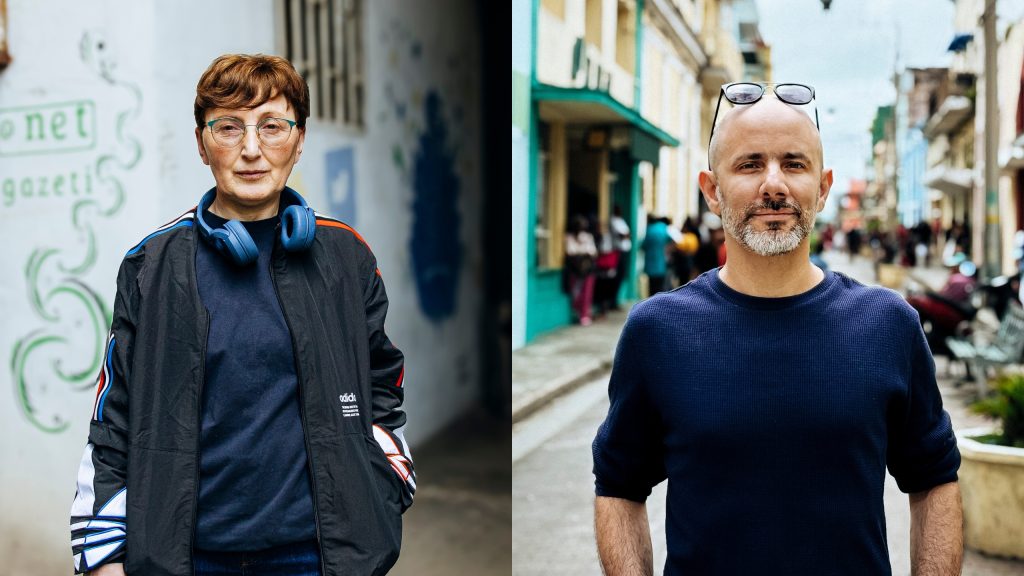
For their exceptional resilience and courage in defence of freedom of expression, free and independent journalism and democracy, Netgazeti and La Hora de Cuba are awarded the Civil Rights Defender of the Year Award 2026,” says the Board of Civil Rights Defenders in its motivation for the prize on 29 April 2026
“Independent media are often among the first targets when governments become more authoritarian. Yet the Georgian and Cuban news platforms, Netgazeti and La Hora de Cuba, have refused to be silenced. Despite threats, imprisonment and repression, both news platforms continue their work with integrity and determination. Through courageous journalism, they expose abuses of power, document human rights violations and ensure that people have access to independent information that is essential for holding those in power to account.
Judge Temirbek Mamatov, who reviewed the case following the ruling by the nation’s Supreme Court, refused to drop the charges and acquit the journalist who participated in the hearing via a web link from the prison colony, Radio Azattyk reported. Mamatov also imposed a travel ban on Tajibek kyzy, and her case is expected to be retried.
On 23 March 2026 Civil Rights Defenders welcomed the decision allowing Makhabat Tajibek kyzy to return home and to finally reunite with her family and teenage son. We also repeat the call that Civil Rights Defenders and other human rights groups have made since the day Tajibek kyzy and her colleagues were arrested: Kyrgyzstani authorities should drop all unsubstantiated charges brought in retaliation for her legitimate journalistic work. Makhabat Tajibek kyzy needs to be fully acquitted and rehabilitated.
The director of anti-corruption investigative outlets Temirov Live and Ait Ait Dese, Tajibek kyzy was arrested in January 2024 along with 10 other current and former staff members and sentenced in October of that year to six years in prison on charges of calling for mass unrest. Until today, all of her co-defendants in the case have been released from jail under probation, pardoned or acquitted.
In the aftermath of conflict, dictatorship, or mass human rights violations, societies face the challenge of addressing past atrocities while rebuilding for the future. Transitional justice refers to a set of legal and social mechanisms designed to achieve justice, accountability, and reconciliation in such contexts. These processes include truth commissions, criminal prosecutions, reparations for victims, and institutional reforms aimed at preventing future abuses. Rooted in the principles of human rights and international law, transitional justice seeks to balance the need for justice and survivor healing with the complexities of political and social stability.
Across the world, many charities and non-governmental organisations (NGOs) play a crucial role in supporting transitional justice efforts. Whether by documenting human rights abuses, advocating for victims, or facilitating truth and reconciliation initiatives, these organisations help societies navigate the difficult journey toward justice and peace. This article by Barbara Listek explores some of the key NGOs working in the field, highlighting their impact in post-conflict and post-authoritarian contexts.
The International Center for Transitional Justice (ICTJ) supports societies recovering from mass human rights violations by helping them confront the past and build more just and inclusive futures. Working alongside victims, local communities, and institutions, ICTJ provides expertise on truth commissions, reparations, criminal accountability, and institutional reform. Whether advising on the creation of truth-seeking bodies or supporting prosecutions of those responsible for serious crimes, the organisation’s work is rooted in the belief that acknowledging harm and delivering justice are essential for healing and long-term peace.
Since its founding, ICTJ has played a key role in transitional justice processes across the globe, including in Colombia, Tunisia, and The Gambia. Its approach is deeply grounded in the lived experiences of survivors, ensuring that justice efforts are not only technically sound but also meaningful to those most affected. By focusing on systemic change and survivor-centred solutions, ICTJ works to prevent the recurrence of violence and strengthen democratic institutions in countries emerging from repression and conflict.
Redress is a London-based organisation founded by British businessman Keith Carmichael after he was unlawfully detained and tortured in Saudi Arabia. Frustrated by the lack of legal support and accountability available to survivors like himself, Carmichael launched REDRESS to fill a critical gap in access to justice. His personal experience became the driving force behind the charity’s mission: to secure justice and reparation for victims of torture and other grave human rights violations.
Now more than 30 years old, REDRESS continues to lead efforts globally to end impunity for torture. The organisation provides legal representation to survivors, supports strategic litigation before national and international courts, and advocates for stronger laws and policies that prevent torture and ensure reparations. By working directly with survivors, while also influencing governments and international institutions, REDRESS helps ensure that survivors’ voices are heard and that justice becomes a meaningful reality, central to any process of healing and transitional justice.
The Center for Justice and Accountability (CJA) is an organisation founded in 1998 on the principle, first used during the Nuremberg trials after World War II, that certain crimes are so egregious that they represent offences against all humankind. These crimes include genocide, crimes against humanity, extrajudicial killing and torture, and as CJA argues, they should never go unanswered.
CJA’s approach is survivor-led and collaborative. The organisation works closely with local partners and in-country prosecutors to build cases that centre the voices and experiences of those most affected. Alongside this, CJA advocates for stronger laws and policies that make it harder for abusers to escape justice and hold everyone accountable to the human rights standards.
The African Transitional Justice Legacy Fund (ATJLF) is an organisation launched in 2019 to support African-led responses to past atrocities, rooted in the belief that sustainable peace and justice must be shaped by those directly affected. Backed by the MacArthur Foundation and WellSpring Philanthropic Fund, the ATJLF emerged alongside the African Union’s Transitional Justice Policy, helping translate its goals into practical, community-driven action. Managed initially by the Ghana-based Institute for Democratic Governance, the Fund has since become a nine-year institutionalised effort supporting civil society across West Africa.
By empowering survivor-led groups and grassroots initiatives, the ATJLF has helped amplify voices often excluded from transitional justice processes. Since its inception, over $2.5 million has been distributed to 46 organisations working in countries including Guinea, Liberia, and The Gambia. As it enters its legacy phase (2024–2026), the Fund is scaling its efforts beyond West Africa and focusing on deeper, long-term partnerships to ensure the impact of its work endures well beyond its closure.
Impunity Watch is an international non-profit organisation working with victims of violence to deliver redress for grave human rights violations and to promote justice and peace. The organisation approaches transitional justice work through a victim-centred approach, taking into account the long-standing criticism of transitional justice not being sufficiently victim-centred. It is also their aim to overcome systemic impunity and its root causes in order to achieve transformative justice (here we could link the article I wrote on transformative justice, but it is not published yet).
For more information about the organisation, we recommend visiting their website for an abundant collection of resources and information, such as the charity’s 2023-2027 Strategic Plan, information about the complex work Impunity Watch does, as well as their multimedia resources section.
The Global Survivors Fund (GSF) is an international charity organisation based in Switzerland, that has it as its mission to enhance the access to reparations for survivors of conflict-related sexual violence around the globe. It was founded in 2019 by Dr Denis Mukwege and Nadia Murad – 2018 Nobel Peace Prize laureates.
The organisation’s work is centred around three core pillars: acting to provide interim reparative measures in situations where States or other parties are unable or unwilling to meet their responsibilities; advocating for the legally responsible parties (duty-bearers) and the international community to develop reparation programmes; and guiding States and civil society by providing expertise and technical support for designing reparation programmes.
To learn more about the organisation’s transformative work, donate or find information about positions openings, visit their website.
Founded in 2014, the Global Initiative for Justice, Truth and Reconciliation (GIJTR) is a consortium of nine global organisations dedicated to addressing the transitional justice needs of societies emerging from conflict or periods of authoritarian rule. The initiative collaborates with communities worldwide to amplify survivors’ voices and inspire collective action in confronting human rights violations. By addressing past traumas, GIJTR aims to pave the way for a more just and peaceful future.
Over the past decade, GIJTR has engaged with communities in over 70 countries, collaborating with more than 800 local civil society organisations and supporting over 500 grassroots projects. Its initiatives include documenting human rights abuses, providing technical assistance to civil society activists, and promoting reparative justice efforts. Notably, the organisation has worked alongside survivors of conflict-related sexual violence in contexts such as Bangladesh, Colombia, and Guinea, supporting them in advocating for their rights and developing community-based programs aimed at meeting survivors’ needs.
The International Coalition of Sites of Conscience is the only global network of historic sites, museums, and memory initiatives that connects past struggles to today’s human rights movements. With over 350 members in 65 countries, its mission is to ensure that the sites preserve the memory of past injustices while fostering dialogue and learning that prevent future violations.
Their slogan being “Remembering is a Form of Resistance,” the Coalition works with local communities, governments, and international partners to ensure that these sites serve as platforms for reconciliation, education, and activism. It convenes impactful projects and initiatives as well as training events that bring together site professionals, historians, and activists to develop best practices for memory‑based reconciliation and community empowerment
If you are interested in how museums can contribute to upholding human rights, or would like to visit one of such sites, we recommend checking out our article on “20 Human Rights Museums Around The World” to discover inspiring spaces that might be worth visiting (perhaps on your next trip!).
The Post-Conflict Research Center (PCRC) is a Sarajevo-based, women-led research centre and NGO, dedicated to advancing transitional justice and promoting peace in post-conflict societies. Founded in 2011 in Bosnia and Herzegovina, PCRC works on issues related to justice, accountability, reconciliation, and human rights. Its efforts include conducting research, providing education, and supporting projects aimed at improving social cohesion and fostering sustainable peace. PCRC is also involved in advocacy and works with local and international organisations to develop and implement policies that address the needs of survivors of conflict and promote justice for atrocities.
PCRC’s signature programmes include Balkan Diskurs, an online platform empowering young journalists to report on regional issues, and Ordinary Heroes, a multimedia project showcasing stories of rescue and courage to promote tolerance and reconciliation. Its work has earned international recognition, including the 2014–15 Intercultural Innovation Award from the UN Alliance of Civilizations and the BMW Group, and praise from the Council of Europe for its exemplary peace education model.
Are you inspired by PCRC’s blend of research and action? Learn what it takes to follow in their footsteps by reading our guide on “How to Become a Human Rights Researcher.”
Rights for Peace is a London-based international organisation that seeks to address the root causes of violence and promote peace through human rights advocacy and transitional justice. Focusing on countries in transition from conflict or repression, Rights for Peace engages with local communities to ensure that victims of violence are heard and that justice mechanisms are effective. It works to strengthen the rule of law, promote accountability, and support processes of social healing through legal reforms and community-led initiatives. By fostering a culture of peace and justice, the organisation aims to prevent the recurrence of violence and contribute to long-term stability.
Currently active in Sudan and South Sudan, Rights for Peace collaborates with local partners to strengthen rule‑of‑law institutions and ensure that victims’ voices shape accountability processes. Its casework includes monitoring identity‑based violations and developing strategic litigation to hold perpetrators accountable, reflecting the organisation’s commitment to survivor‑centred justice.
After persistent speculation about the possibility of the prize going to Donald Trump [see e.g.: https://humanrightsdefenders.blog/2025/07/24/nobel-peace-prize-choice-between-trump-and-albanese/], it was announced today 10 October that the Venezuelan opposition leader María Corina Machado has won the 2025 Nobel Peace Prize, winning more recognition as a woman “who keeps the flame of democracy burning amid a growing darkness.”
The former opposition presidential candidate was lauded for being a “key, unifying figure” in the once deeply divided opposition to President Nicolás Maduro’s government, said Jørgen Watne Frydnes, chair of the Norwegian Nobel committee. “In the past year, Ms. Machado has been forced to live in hiding,” Watne Frydnes said. Despite serious threats against her life, she has remained in the country, a choice that has inspired millions. When authoritarians seize power, it is crucial to recognize courageous defenders of freedom who rise and resist.”
The Nobel Prize Committee clarified that “Maria Corina Machado meets all three criteria stated in Alfred Nobel’s will for the selection of a Peace Prize laureate. She has brought her country’s opposition together. She has never wavered in resisting the militarisation of Venezuelan society. She has been steadfast in her support for a peaceful transition to democracy.
Maria Corina Machado has shown that the tools of democracy are also the tools of peace. She embodies the hope of a different future, one where the fundamental rights of citizens are protected, and their voices are heard. In this future, people will finally be free to live in peace.”
The second week of witness testimonies continued with the court hearings with Egbert Wesselink and Petter Bolme, two individuals considered central to the broader context of the trial. .. Wesselink provided background on the report’s origins and its significance in bringing the case to light. He also discussed his extensive knowledge of Sudan at the time and his contact with the pre-trial investigation and Lundin oil over the years.
Hearing with Egbert Wesselink
This is a very long report but as the devil in the details……
The second week of witness hearings began with the testimony of individuals who had worked and lobbied for these allegations to be investigated. Egbert Wesselink is a historian working for PAX, the largest peace organization in the Netherlands and the lead author of the report “Unpaid Debt” and involved in the production of the report “Depopulating Sudan’s Oil Regions.”
The prosecution’s questioning focused on Egbert Wesselink’s knowledge of southern Sudan and Block 5A during 1997–2003, his contacts with the Lundin companies during that period, the preparation of the report Depopulating Sudan’s Oil Regions, and his role within PAX and ECOS. He was also questioned about investigation trips to Block 5A and his communication with individuals connected to the pre-trial investigation. During the hearing, Wesselink described the situation in Block 5A during 1997–2003 as highly violent, with conflict over oil-rich areas and systematic or indiscriminate attacks on civilians by the Sudanese military and allied militias. He stated that representatives of the Lundin companies were made aware of these conditions by him from 2000 onward and clarified that PAX and ECOS did not exert undue influence over any interviewees involved in their investigations. Wesselink’s testimony provided crucial context about the violent circumstances in Block 5A and the awareness of these conditions among various actors at the time. It also offered valuable insight into the efforts to document and report the actions of oil companies to the rest of the world, while also highlighting the ongoing pursuit of justice and reparations for the plaintiffs.
The hearing began with Egbert Wesselink talking about his academic background in history and education, early work in politics as an assistant to a member of the Dutch parliament and teaching geography and French, and then his transition into human rights, first as a volunteer, then as a UN officer in Cambodia in 1993. He later worked as researcher and expert for the UN Office for Migration/UNHCR before joining PAX in 1998, where he focused on corporate responsibility and human rights dialogue with various companies. Wesselink recounted his early corporate engagement with the first oil company he worked with, Shell, where alongside Amnesty International he was involved in a dialogue with the company concerning the company’s human rights policies and actions.
PAX and ECOS
In the early 2000s, PAX began working in Sudan, responding to reports of harm caused by the oil industry. After discovering Shell’s ties to Sudan, PAX intervened and discussed the company’s human rights policies and actions, leading to Shell’s withdrawal from the country and its cessation of fuel supplies to the Sudanese air force. Around the same time, Dutch NGOs recognized the need for European-level measures and formed the European Coalition on Oil in Sudan (ECOS) to address what they saw as the oil industry’s role in fueling conflict and displacement. PAX played a central role in forming and coordinating ECOS, which launched officially in Brussels in 2001. The coalition aimed to stop harmful oil activities and to create a more substantial and effective dialogue between the EU and Sudan. ECOS brought together over 50 European NGOs and produced major advocacy and research efforts. When asked about its contact with Sudanese churches and their influence, Wesselink responded by saying that while not directed by churches, ECOS regularly consulted Sudanese civil society and church groups through forums, but he emphasized that the ECOS acted based on requests from affected communities and their interests and rights, not on top-down instructions.
When asked about how PAX and ECOS formed their understanding of the oil operations and their harmful effects, Wesselink explained how they found important observations by John Harker, who in 1991 conducted a mission for the Canadian government. The conclusions they presented aligned with what PAX and ECOS had heard from local residents, churches, and organizations working in the area. This information was further confirmed by reports from the UN Special Rapporteur on Human Rights in Sudan and the findings matched entirely with their prior understanding of how the Sudanese government approached the oil issue. Wesselink also described how he met families from areas north of Lundin’s block, who had been forced to flee to Utrecht. Their testimonies were clear, they had been driven from their homes in one of the country’s central oil regions.
Wesselink described how after the initially unsuccessful “Peace First” campaign, ECOS shifted focus in 2002 to promoting responsible oil business standards. By 2003, it no longer called for companies to leave Sudan but instead advocated for reform within the industry. This aligned with the 2003 peace agreement and Sudan’s transitional constitution, which introduced the possibility of compensation to affected communities and international standards for oil operations. But there was also concern from the church and civil society in Sudan that the government would not be strong enough to push for this against an industry that was uninterested and fear that the government lacked the capacity or will to enforce these standards. To address this, PAX organized a major conference in Juba in late 2006, aiming to create space for dialogue on these governance issues.
When asked about ECOS now, Wesselink explained that ECOS no longer exists, following the separation of Sudan and South Sudan, as focus and momentum declined, and according to Wesselink ECOS “died a slow death.” However, PAX continues working toward justice and compensation for communities affected by oil exploitation.
Wesselink’s engagement and contact with oil companies
Egbert Wesselink described how his understanding of the situation in southern Sudan, particularly Block 5A between 1997 and 2003, developed gradually. He became actively involved around 2000, reading extensively, and his first visit to Sudan was in 2004 for a peace conference in Upper Nile, where he gathered firsthand accounts of problems near major oil fields.
Wesselink explained that contact with oil companies varied. He had early and regular engagement with Shell, including participating in a 2000 conference in Munich, where he also met Lundin and Petronas representatives. He had several conversations with Christine Batruch, the head of Lundin’s corporate social responsibility work, which he described as unproductive, noting her denial of human rights concerns and reliance on Sudanese government narratives. He described how he was used to having discussions with oil companies that were upfront about the facts and willing to discuss dilemmas, as morality is rarely black and white—there were many gray areas in these discussions. However, he said that with Batruch it was impossible to have that kind of conversation as she denied well-established facts and showed very little knowledge about human rights and the responsibilities of companies like Lundin in this regard. He described her as appearing to have a combination of real ignorance and purposeful lack of knowledge. Wesselink explained that it was clear that her knowledge was biased and mainly influenced by northern perspectives, as it was evident that the company was following the Sudanese government’s war propaganda that all conflict stemmed from tribal conflicts. He described it like hearing an echo of what the Sudanese government expressed. While Batruch expressed some openness to hearing from southern Sudanese leaders, Lundin ignored Pax’s invitation to have a dialogue regarding ethical guidelines and the oil industry’s impact on the local population. He also stated that he received no response when he asked Batruch about Lundin’s stance on provisions in the peace agreement, which stated that those affected by oil extraction in southern Sudan had the right to compensation and redress and that those affected by the peace agreement were to be compensated.After that, Wesselink had no further direct contact with Lundin, though he was informed that the Church of Sweden had reached out.
Regarding further contact with Lundin Oil, Wesselink described how in late 2001 he raised concerns about former Swedish prime minister Carl Bildt joining Lundin’s board of directors while also being involved with Amnesty Sweden, calling it a conflict of interest. He viewed this dual role as a serious risk to Amnesty’s credibility and structure. Concerned, he wrote to Amnesty International, questioning their cooperation with Lundin. Wesselink explained that he saw it as a great risk for Amnesty to be linked through Bildt with companies accused of serious crimes and that Amnesty should not cooperate with Lundin. However, when he pointed this out, he received a long reply from Carl Bildt defending his involvement, although Wesselink found the arguments factually incorrect. Bildt claimed that Lundin’s presence contributed positively to human rights and peace in the region, which Wesselink strongly refuted, noting that this contradicted all available evidence at the time. He said, “I found these arguments insincere and baseless; they contradicted everything we knew.”
In terms of contact with other companies, Wesselink also engaged with OMV, which was part of the same oil consortium as Lundin. ECOS contacted OMV in 2001, encouraging them to align with international standards. Upon learning more about the situation, OMV’s leadership grew uneasy, especially after commissioning a risk report from the security firm Control Risk Group whose findings raised internal concerns, although they were not a human rights organization. OMV considered halting road construction to Leer due to violence but ultimately yielded to pressure from the Sudanese government. Wesselink noted that OMV often echoed Lundin’s messaging, suggesting coordinated responses.
Preparation of the report “Depopulating Sudan’s Oil Regions”
Regarding the report Depopulating Sudan’s Oil Regions, Wesselink explained that it was based on a 2002 field mission near Block 5A, organized by ECOS and led by Diane de Guzman, with support from journalist Julie Flint. The team flew into the area from Kenya and documented extensive violence and interviewed traumatized civilians. Julie Flint had a camera with her, and they made a short ten-minute film that can still be seen on YouTube, and which they also distributed via the ECOS network. The trip, financed by ECOS, targeted areas near Block 5A and Nhialdiu, where alarming reports of renewed violence were surfacing. The goal was to document these events, recognizing that without credible information, international concern would be lacking. The field data, interviews, and visual evidence were then compiled into a comprehensive report. De Guzman drafted the original document, which included interviews, high-level analysis, and contextual information, but the report itself was then written by Wesselink. The report included interviews, analysis, background on the conflict, and references to arms use and oil revenue.
Unpaid Debt
After 2004, Wesselink and ECOS continued working to ensure oil companies took responsibility for the harm caused during Sudan’s oil conflict. Wesselink believed that Lundin had no real interest in implementing the 2003 peace agreement’s compensation clauses, while his and the Sudanese church’s goal was to make the agreement a success by pushing for reparations. Wesselink recalls that the Sudanese Minister of Justice at the time said, “If there are affected people, they can take their cases to court,” and that became the starting point for assessing the financial damages incurred over the years, followed by lobbying the oil companies to pay these costs. It also became the start for Unpaid Debt as the objective was not only focused on good business practices, but also on ensuring the “debt” was paid.
The prosecution moved on to inquire about the Unpaid Debt report and the individuals involved in its creation. Wesselink explained that he was the main author of the report but had assistance from numerous assistants and received advice and input from others. They also hired a British defamation lawyer to review the report because when the report was finalized in 2008 and sent to Lundin for comments, Lundin’s response, which came via their lawyers, was to claim that the report contained false information that was damaging to the company. They alleged the intent was to harm the company and reserved the right to claim damages. According to Wesselink, such responses are standard tactics companies use when they are unwilling to resolve issues and prefer confrontation instead. This legal threat caused panic among members of ECOS, with the majority of the core group reluctant to risk being taken to court. A smaller faction of members remained undeterred and wanted to move forward with the publication under the condition that the report would be reviewed by a British lawyer due to the UK’s strict defamation laws. This ensured the report’s legal soundness but also resulted in more legally influenced language, which Wesselink speculated might have contributed to the current situation.
The prosecutor then moved on and asked about the recent claims that the photographs in the report were mislabeled regarding the location of where they were taken — Riel in Thar Jath versus Riel in Mankien. Wesselink acknowledged he wasn’t involved in taking the photos and relied on photographers from DanChurch Aid and others. While he could not verify their accuracy, he expressed trust in their work and admitted to being slightly surprised by any alleged mistakes and stated he would be embarrassed if the defense’s claims were proven correct. Despite this, Wesselink maintained that such potential errors would not diminish the report’s overall reliability.
The organization of investigation trips to and near Block 5A
Wesselink was also asked by the prosecution about the organization of investigation trips to Block 5A. These missions were conducted in cooperation with the Sudan Council of Churches and aimed to assess damage and pressure companies for accountability. If companies didn’t respond, findings were intended for the Evaluation and Assessment Committee, which included representatives from the U.S., U.K., and Norway. As a last resort, civil lawsuits were considered. The trips required extensive preparation due to the political sensitivity surrounding oil-related matters. Wesselink mentioned the need to seek support and endorsements for the research from state authorities, the UN, and local chiefs to facilitate the investigation. He also explained how one couldn’t simply go somewhere and “start asking questions about oil” because it was politically sensitive. His role was therefore to travel down to seek support for this work from the local chiefs.
Contacts with the pre-trial investigation
The prosecutor turned its focus to Wesselink’s personal connections to individuals linked to the pre-trial investigation. Wesselink explained that he had limited direct involvement with the pre-trial investigation, having been interviewed twice by Swedish police and attending two meetings with prosecutors. Most contact was minimal, with only some email correspondence. His own involvement with the trial began after civil war broke out in Juba in 2013, where it became nearly impossible for the Swedish authorities to access witnesses. Wesselink and his colleagues suspected the authorities needed help to find witnesses and offered assistance, but the response from the police was vague and Wesselink described them as “mussels” who did not say anything. Wesselink said that they received similar responses from the prosecutors, stating that he and his colleagues had the right to share information that may be helpful to the investigation with the Prosecutor’s Office. However, they did not receive instructions, although the previous prosecutor Magnus Elving did provide general advice stating that witnesses should only be interviewed by the police and should not be guided or influenced in any way.
Believing that firsthand testimony would be crucial to the case, Wesselink and Petter Bolme hired journalist Moses Urhailot in early 2015 to identify witnesses and possible perpetrators in refugee camps across Kenya, Uganda, Ethiopia, and Khartoum. Moses had also contacted people who testified in the earlier Talisman case, as some were willing to engage. Moses was instructed to collect only basic contact info and ensure that witnesses were not influenced. Despite identifying 54 potential witnesses, Wesselink believed that only one was eventually used by prosecutors. According to Wesselink, this stark result underscored the failure of their objective to identify individuals willing to testify.
ECOS’s work in South Sudan and Leech Victim Voices
The final part of the prosecution’s questioning addressed the relationship ECOS had with various groups in South Sudan, focusing on interactions following the publication of the Unpaid Debt report. After the report was published, ECOS began receiving more interest from groups in South Sudan. One such group, Leech Victim Voices, was formed by victims seeking justice after being ignored by both Lundin and the South Sudanese government. Wesselink attended their founding meeting in Juba in 2016. Their demands were later published on PAX’s website, and in 2017, Wesselink presented their claims at Lundin’s shareholders’ meeting. He noted Lundin had already been aware of these claims, having warned him in 2013 against making public accusations.
Wesselink stressed that the claims made by the victims were not driven by a desire for monetary compensation but by the pursuit of justice and truth. He emphasized that remedy and reparation as legal concepts must begin with uncovering the truth. This sentiment was echoed in the efforts of Leech Victim Voices, whose primary goal was to ensure that their experiences and demands were heard. He shared the story of Andrew Jagei Hon Diet, a plaintiff who fled Juba after threats and the murder of his neighbor, believing it was meant as a message for him. PAX helped him escape with Petter Bolme’s assistance. Similar threats were reported by others, including former Lundin employees, who claimed they were pressured to testify in the company’s favor. Wesselink and his team took these reports seriously and, with help from regional human rights organizations, relocated witnesses to safety. The details of these incidents were communicated to Swedish authorities and later shared with the plaintiffs’ counsels.
The plaintiffs’ counsel
After the prosecution’s interrogation, Percy Bratt, one of the plaintiffs’ counsels, had a few questions for Egbert Wesselink. The first topic concerned Wesselink’s efforts to warn plaintiffs to be cautious about discussing potential compensation. Wesselink confirmed that he had done so, elaborating on the cultural distinctions within Nuer legal practices. He explained that while similar to Western legal systems in principle, Nuer culture focuses on reconciliation rather than revenge. For the Nuer, an admission of guilt must be accompanied by a gesture of compensation and amends to the injured party. As a result, it is difficult for someone from the Nuer culture to comprehend a criminal case that excludes reparation or compensation. However, Wesselink emphasized that this cultural expectation does not imply material motivation on the part of the victims, whose ultimate pursuit is justice.
When asked about the driving force behind the victims’ participation, Wesselink clarified that their primary focus is truth and recognition, which are essential prerequisites for reconciliation. This universal principle of law in the Nuer belief system is that those who cause harm must take steps to reconcile it. Wesselink noted that for the Nuer, reconciliation holds more significance than punitive measures, and their efforts to share their experiences often come at great personal expense.
Bratt shifted to the topic of the Unpaid Debt report and inquired whether Wesselink and his team perceived threats of a lawsuit by Lundin Oil. Wesselink affirmed this, talking about the likelihood of a defamation lawsuit arising from the report, which the company argued had caused damage to its reputation. As mentioned in the prosecution’s questioning, PAX hired a British lawyer as the UK defamation law, which places the burden of proof on the defendant to demonstrate that their statements were not defamatory, was the strictest. The lawyer reviewed the report to ensure the accuracy of its claims and their alignment with legal standards.
Wesselink also addressed the defense’s claim that the plaintiffs’ statements amounted to SPLA propaganda. He refuted this notion and cautioned against overestimating the political cohesion of SPLA or SPLM, describing SPLA as a predominantly military operation with no unified political line. He highlighted the absence of a coherent political framework within SPLA or SPLM capable of orchestrating such false testimony.
Andreas Sjögren, the other plaintiffs’ counsel present during this hearing, asked a series of questions about Wesselink’s meeting with Christine Batruch at the Milhauim Conference in late December 2000. Wesselink recalled informing Batruch about the disturbing news of human rights violations linked to oil operations, which was a provocative issue tied to the conference’s theme of Corporate Social Responsibility. While Batruch acknowledged the correlation between oil work and abuses like forced displacement, Wesselink found her understanding of human rights lacking. He explained that Batruch emphasized international law and corporate responsibilities without grasping the fundamental processes that define rights. The conversation was described as awkward, with Wesselink pointing out what he believed should be common knowledge for corporate representatives. He again criticized Batruch for combining ignorance with a willful lack of awareness, further noting that her sources were limited and biased.
Lastly, Sjögren asked whether Lundin had the opportunity to respond to the Unpaid Debt report. Wesselink explained that the report was not intended as a lobbying tool against specific companies but noted that Lundin’s response contained falsehoods and lacked counterarguments. Lundin claimed to have refuted accusations made in the Scorched Earth report by Christian Aid through its own report produced in 2001. However, Wesselink questioned the validity of this defense, as Lundin’s report only covered a brief timeframe and failed to address accusations that spanned years.
Cross-Examination by the defense
The defense started their cross examination by asking Wesselink who actually was behind the police report filed regarding suspected violations of international law linked to Lundin Oil’s operations in Sudan. They asked about the police report dated 17 May 2010. This report, submitted by the plaintiffs’ counsels, Percy Bratt’s law firm, requested an investigation into suspected war crimes. Among the attachments to this report was Wesselink’s Unpaid Debt report, which had been submitted on behalf of ECOS and himself to the International Prosecutor’s Office. Samuelsson pointed out a contradiction in Wesselink’s statement, as Wesselink had previously claimed that Sten De Geer was responsible for submitting the report. Sten De Geer is the person who filed one of the police reports regarding Lundin’s activities in Sudan, based upon the book “Affärer i blod och olja” by Kerstin Lundell. Acknowledging the discrepancy, Wesselink clarified that while others may have been involved in the process, he was ultimately the one who submitted it. Wesselink explained that submitting the report was initially intended as a way to inform prosecutors, not to file a formal police report, as ECOS’s original aim was to achieve justice for victims through political, rather than legal, processes. The publication of the Unpaid Debt report was intended to prompt South Sudanese victims to file criminal complaints independently.
Samuelsson then raised concerns about Percy Bratt’s dual roles, suggesting that Bratt’s prior representation of ECOS and current role as plaintiffs’ counsel might pose ethical issues. Wesselink dismissed these concerns, explaining that Bratt stopped representing ECOS well before taking up the plaintiffs’ case and that there was no conflict of interest.
Shareholder status in Lundin Energy
Turning to Wesselink’s shareholder status in Orrön Energy, Samuelsson highlighted what he perceived as a contradiction between Wesselink’s critique of Lundin and his ownership of shares in the company. Wesselink explained that he purchased five shares in Lundin Energy in 2010 in order to be able to engage directly with the company’s management and shareholders. His objective was to use his status as a shareholder to urge the company to respect international law and ethical business guidelines. He defended this approach as a legitimate and widely practiced method for advocacy, particularly in the United States, Canada, and Europe. At these meetings, Wesselink explained his proposals and urged Lundin to assess the human rights impact of their operations and to take responsibility, including paying reparations if harms were found. While he couldn’t recall exact figures, he confirmed that he proposed allocating funds to demonstrate goodwill toward those affected. He also advocated for the resignation of the company’s management, asserting that it was not in Lundin’s best interest to be led by individuals suspected of war crimes.
Samuelsson questioned whether Wesselink had demanded five million dollars in damages at a shareholder meeting. Wesselink clarified that he had proposed that a sum of money be allocated specifically for compensating those affected. He argued that the company’s approach failed to consider the broader consequences of their legal strategy and urged them to correct their practices to better align with international principles and standards. Wesselink maintained that his actions, whether as a shareholder or through his involvement in advocacy, were aimed at achieving justice and accountability for victims, while upholding ethical guidelines for corporate behavior. He said that had the company’s leadership adopted his proposals, the outcome could have been better both for the company and for those harmed. He also pointed out that Lundin Energy no longer exists, suggesting a different approach might have changed that trajectory. Wesselink also criticized Lundin’s defense lawyers for adopting an overly aggressive legal strategy, arguing that it delayed justice for victims and contradicted the principles of human rights the company had publicly endorsed.
When asked about PAX and their neutrality, Wesselink firmly denied that PAX sided with any party in Sudan’s civil war, calling it a “strange question to ask a peace organization” and explained that supporting peace in a conflict does not entail choosing sides. He acknowledged that neutrality in conflict zones can be difficult, as any action taken by a peace organization may be interpreted as supporting or opposing one side but said that PAX maintained professional impartiality.
The 2019 Svenska Dagbladet article and SPLA Update
Samulsson continued by asking Wesselink about Jan Gruiters, who Wesselink described as the former general director of PAX and a good friend of his. Samuelsson referenced a 2019 opinion piece in the newspaper Svenska Dagbladet calling for reparations from Lundin, which Jan Gruiters co-signed. The defense asked whether Wesselink was familiar with SPLA Update, to which Wesselink answered that he did not read this kind of information from the SPLA. Samuelsson then mentioned that Jan Gruiters wrote articles for SPLA Update and questioned whether PAX and had links to SPLA Update. Wesselink denied any connection and instead discussed how even neutral reporting can be exploited by conflicting parties. Wesselink reiterated that he could not explain why the article appeared in SPLA Update but emphasized that neutrality does not prevent information from being used for one party’s benefit, and that this should not deter individuals from speaking the truth.
Carl Bildt’s email
The defense then presented an email from former Swedish prime minister Carl Bildt, in which he criticized Wesselink for forwarding allegations of systematic human rights violations by Lundin to Amnesty International. Wesselink expressed surprise that Bildt had responded at all and stated that Amnesty shared his position regarding Sudan, making Bildt’s involvement in the organization ironic and noteworthy. He viewed Bildt’s response as an effort to deflect substantive discussions by portraying the conflict as tribal disputes. Samuelsson then asked how Wesselink could dismiss the accounts of Lundin staff who were on-site. Wesselink rebutted this, stating the area was experiencing violent clashes at the time Bildt described it as “calm.” He pointed to Nuer defections that intensified conflict and claimed the region was a “bloodbath.” He also noted that Lundin ceased operations shortly after Bildt’s letter, contradicting Bildt’s portrayal of peace. Wesselink described how the violence at the time was widely anticipated and criticized Bildt for failing to acknowledge the reality of the conflict. Wesselink described Carl Bildt’s interpretation as a reversal of reality, attributing it to state propaganda efforts to justify atrocities.
Criticism of Christine Batruch
The defense then addressed Wesselink’s characterization of Christine Batruch, Lundin’s representative, as a “propagandist” for the Sudanese regime. Samuelsson challenged this label, noting Wesselink had never been in Sudan during the relevant period, to which Wesselink replied, “Do you have to have been to a place to be convinced? I’ve never been to Ukraine, but I know there’s a terrible war happening.” He criticized Batruch for dismissing credible reports and for not answering questions about local conditions. Wesselink explained that he relied on the accounts of knowledgeable individuals and experts, whose information he deemed credible, and had suggested to Batruch that Lundin should collaborate with groups outside the Sudanese government to gain a broader understanding of the situation.
Samuelsson pressed Wesselink on whether his information could be considered objective, given that he had not personally witnessed these events. Wesselink responded again that he relied on a wide range of expert reports, field studies, and testimony from displaced people. He acknowledged the importance of source criticism and said he had engaged critically with the materials he reviewed yet found no reason to doubt the integrity of the core information he used.
Discrepancies between photos in Unpaid Debt Report
Samuelsson then focused on errors in photo captions in the Unpaid Debt report. Wesselink admitted to possible confusion over locations with the same name, specifically “Rier” but emphasized that any mistakes were unintentional. Samuelsson pressed further, noting that the report gave the impression that burned huts photographed in the village of Rier were in areas where Lundin operated. Wesselink acknowledged the misleading impression but reiterated that Lundin did not operate directly in that village. He admitted potential errors and commended the defense for spotting them, saying corrections should be made if verified. When Samuelsson questioned whether Wesselink had known about discrepancies in photograph captions dating back to an email from 2018, Wesselink admitted he had asked the photographer for the locations but did not connect the two photographs to their respective names at the time. Though embarrassed by the issue, he stressed that it did not undermine the overall integrity of the report and firmly stated there was no intent to mislead and apologized if the captions were incorrect.
When shown the version of the report which was sent as a copy in the police report discussed earlier, the photo had another caption, which the defense then questioned, stating that Wesselink must have realized that the caption was wrong and altered it. However, Wesselink denied making any deliberate changes. He explained that the confusion might stem from the commonality of village names and the challenges of recalling specific details from among hundreds of locations.
Identifying witnesses and contact with the investigation
The defense moved on, asking questions about Wesselink’s interactions with Swedish prosecutors and police, including emails referring to their collaboration as a “complete failure.” Samuelsson read aloud emails exchanged between police, prosecutors, and Wesselink, asking whether he had received a formal written request for information. Wesselink could not recall receiving such a request but remembered that police and prosecutors had indicated they welcomed any information that could strengthen their suspicions. He clarified that they worked under general guidance to avoid jeopardizing the investigation. Their role was always to support—not lead—the prosecution.
Samuelsson questioned whether Wesselink considered himself suitable to lead the witness identification process. Wesselink replied that the prosecutor was free to use or reject his findings. Asked about Moses, Wesselink explained he was a journalist known for navigating the sensitive political landscape in South Sudan and was considered neutral. Wesselink believed this neutrality made Moses well-suited for the assignment. When asked about Moses’s attitude toward the Sudanese and Khartoum regimes, Wesselink replied that they had never discussed it.
Regarding whether Moses had used a questionnaire form when approaching potential witnesses, Wesselink replied that they didn’t believe so, describing the process as more of a general approach to providing information. He explained that Moses had been tasked with identifying prospective witnesses, as well visiting various areas to gather support from villages, asking them to sign forms as a show of support, and compiling names. He admitted he had no oversight over Moses’s forms and was not familiar with the specifics of how Moses gathered testimonies. The defense then asked questions regarding the list that Moses’s work resulted in. Wesselink explained that they sent the list of names to the prosecutors but did not know much more about what it resulted in. He explained how their work continued with gathering and recording an incident list of threats and violence reported by some of the witnesses and plaintiffs, which they sent to the authorities. Wesselink clarified that they had been contacted by former Lundin employees who reported being threatened by a former security manager for Lundin. Some of these individuals reached out to Wesselink for guidance, which resulted in a report on the threats and violence, which was subsequently forwarded to authorities. Many of these individuals eventually became plaintiffs. Wesselink stressed that it wasn’t PAX and ECOS who sought them out, but rather Lundin, whose actions led them to approach PAX and ECOS.
Failure of peace campaign and EU ambassadors’ visit to Sudan
Schneiter’s defense team finished their questioning and Ian Lundin’s defense team took over. Their part of the hearing opened with a question about why the 2003 campaign driven by ECOS and Pax to align oil with peace had failed. Wesselink explained that the ECOS strategy included suspending oil operations and advocating for human rights benchmarks in the EU–Sudan dialogue. However, according to Wesselink, the EU–Sudan dialogue was ineffective, often serving as diplomatic cover for improving relations with Sudan while avoiding real human rights scrutiny. When the discussion turned to a visit by EU ambassadors to Sudan in 2001, including Block 5A, and why it didn’t alter the EU’s stance, Wesselink described the mission as superficial, recalling conversations with a Dutch colleague who believed it was designed to avoid meaningful follow-up. Wesselink noted that there was a strong political desire within the EU to continue and strengthen constructive engagement with Sudan, driven by economic opportunities for European countries, particularly in light of the US sanctions on Sudan. Regarding the report generated after the mission, Wesselink explained that it resulted in mixed results and expressed surprise that the report had been used as evidence to suggest everything was fine in the region. While it concluded that the visit did not provide evidence of displacement, the report later acknowledged that there was evidence suggesting the Sudanese government had armed militias and used its own forces to protect the oil fields. Wesselink highlighted that the ambassadors had been given a guided tour by Talisman, during which they were shown only favorable conditions. When asked whether the report accurately reflected the region’s situation, Wesselink said it offered a balanced summary, but the timing of the visit in May 2001 was misleading as it occurred during a brief lull in violence, when the government had temporarily secured control and civilians could move around. Thus, displacement wasn’t visible.
Wesselink acknowledged that some of the report’s findings about militias were accurate but emphasized that the that the report was excessive in its defense of oil activities and failed to connect them directly to human rights abuses, either through oversight or by design. When questioned about whether the EU delegation had done a proper job, Wesselink clarified that the diplomats had framed their actions in a diplomatic manner and were doing their job as they believed was right and emphasized that it was true that the delegation had not seen any evidence of displacement at the time because of the timing. The defense had no further questions, and the cross-examination concluded.
Next week In our next report, we will cover the testimony of Petter Bolme.
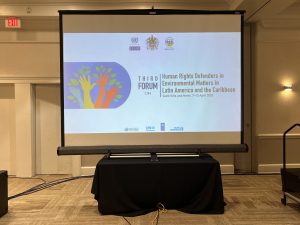
From 7-10 April, the Latin American and Caribbean Forum on Environmental Human Rights Defenders brought together environmental defenders, Indigenous Peoples, civil society, and government representatives in Basseterre, Saint Kitts and Nevis.
The Escazú Agreement is a landmark regional human rights treaty that guarantees access to environmental information, public participation and justice in Latin America and the Caribbean. Article 9 describes States’ obligation to protect human rights defenders in environmental matters and guarantee their rights, including those related to access to information, participation, and justice, as set forth in the agreement.
As of today, 17 countries are parties to the agreement, while other key countries in the region still haven’t signed or ratified it. In February 2025, Special Procedures mandate holders sent a communication to these countries urging them to sign and ratify the agreement.
The 2024 Action Plan adopted by the parties to the Escazú Agreement aims to implement practical protections for human rights defenders in environmental matters. It outlines capacity building and assessment, calling for urgent national action to address immediate threats and ensure the continuity of defenders’ work.
Since April 2024, individuals who believe that a State is not complying with its obligations as a party to the Escazú Agreement can send information (‘communications’) to the treaty’s Implementation and Compliance Support Committee. At a 2024 Conference of the Parties (COP) to the Agreement, States agreed to incorporate a gender perspective within the Escazú Agreement, recognising the unique risks faced by women human rights defenders in environmental matters.
This decision further requires States to consider gender-based violence and ensure women’s participation, enhancing security and effectiveness for all defenders.
At the Forum on Environmental Human Rights Defenders, the #EscazuEnlaCorteIDH initiative was presented during the Third Forum. This initiative seeks to ensure that Escazú standards are included in the Inter-American Court’s forthcoming advisory opinion on the climate emergency.
A central piece of this effort was the amicus brief co-submitted by ISHR.
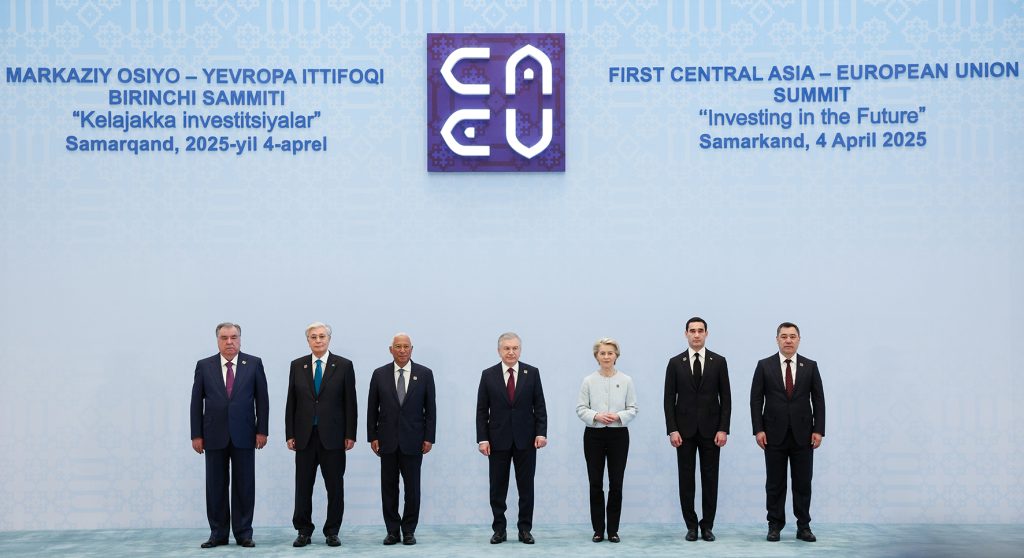
On 10 April 2025 Civil Rights Defenders, along with seven other international human rights organizations, commend the commitments made at the EU-Central Asia Summit in Samarkand. We urge Central Asian leaders to prioritize human rights and uphold the civil and political freedoms enshrined in their national constitutions and international treaties. The commitments to peace, security, democracy, and the elevation of relations to a strategic partnership must be matched by concrete actions to protect human rights.
On Friday, April 4, the Uzbek city of Samarkand hosted the first ever EU – Central Asia Summit where high-level officials – all five regional presidents and European Council President António Costa and European Commission President Ursula von der Leyen – discussed economic cooperation and agreed to bring their existing partnership to a new strategic level. At the end of the summit, participants issued a joint declaration that, among others, stated their commitment to freedom of expression and association, creating an enabling environment for civil society and independent media, protection of human rights defenders, as well as to respecting the rights of women and children. According to an official press release, the European Commission promised to invest €12 billion in the region to strengthen transport links and deepen cooperation on critical raw materials, digital connectivity, water, and energy.
Paragraph 3 of the joint declaration says: “We are committed to cooperate for peace, security, and democracy, to fully respect international law, including the UN Charter and the fundamental principles of respect for the independence, sovereignty and territorial integrity of all States, within their internationally recognised borders. We emphasised the importance of achieving as soon as possible, a comprehensive, just, and lasting peace in Ukraine in accordance with the principles of the Charter of the United Nations. We emphasized the need to uphold the principles of the OSCE by the participating States. We reconfirmed the obligation of all States to refrain in their international relations from the threat or use of force, to respect international humanitarian law and underlined the need for peaceful resolution of conflicts.”
In paragraph 16, the “EU and Central Asian leaders reiterated that the promotion and protection of rule of law, human rights and fundamental freedoms is a common fundamental value. Ensuring freedom of expression and association, an enabling environment for civil society and independent media, protection of human rights defenders as well as the respect for the rights of women, the rights of the child, and labor rights remain at the core of EU–Central Asia relations. The EU reiterated its readiness to support efforts in this regard at regional as well as at national level.”
Furthermore, in paragraph 15 the “Participants affirmed the need for their continued commitment to enhanced cooperation and the development of new approaches in the joint fight against organised crime, violent extremism, radicalisation, terrorism, drug trafficking, trafficking in human beings, migrant smuggling, cyber threats, including cybercrime and disinformationas well as addressing Chemical, Biological, Radiological and Nuclear risks whilst safeguarding human rights and media freedom [emphasis added].”
Civil Rights Defenders, International Partnership for Human Rights (IPHR), Araminta, Freedom Now, Norwegian Helsinki Committee, People in Need, International Federation for Human Rights (FIDH), and the World Organisation Against Torture (OMCT) welcome these declared commitments and urge the leaders of each Central Asian nation to take immediate steps to fulfill their promises. They should start by releasing from prison all journalists, bloggers, lawyers, human rights defenders, civil society activists, and political opponents who have been prosecuted and convicted on retaliatory and unsubstantiated charges. They should also repeal legislation containing provisions that directly contradict their declared commitment to human rights standards.
The Central Asian governments should also end–and establish safeguards to prevent–the misuse of anti-extremism and anti-disinformation policies and security tools to restrict, persecute, and/or criminalize legitimate civil society activity. While enhanced cooperation in the joint fight against organized crime, violent extremism and terrorism, and disinformation are a welcome development, these types of laws and cooperation initiatives have been instrumentalized by the Central Asian governments against legitimate civil society actors, media and political opposition activists, including for imprisonment on lengthy sentences and transnational repression extending to the territory of the European Union.
In particular:
In Kazakhstan, President Kassym-Jomart Tokayev should order the release from custody of activist Aigerim Tleuzhanova, political opposition party leader Marat Zhylanbayev, satirist blogger Temirlan Ensebek, and labor rights activist Erzhan Elshibayev among others prosecuted on politically motivated charges, We believe that these individuals were targeted in direct retaliation for exercising their civil and political rights, and authorities have failed to provide any credible evidence to support the allegations levelled against them. Kazakh authorities should repeal or thoroughly revise broadly worded criminal code provisions penalising the involvement in ‘’extremist’’ activities, ‘’incitement’’ to discord and the spread of ‘’false’’ information, which are frequently misused to target critics, including in some of the cases mentioned above. Kazakh authorities should also drop their declared plans to adopt a so-called “foreign agents’” law, cease the public attacks on the LGBTIQ community, and end reprisals against NGOs-recipients of foreign grants.
In Kyrgyzstan, it is welcome that President Sadyr Japarov pardoned Temirov Live associated journalist Azamat Ishenbekov this week, although he should not have been imprisoned in the first place. Authorities should also quash the charges against his colleagues convicted on similar charges, releasing Makhabat Tajibek Kyzy and lifting the probational sentences imposed on Aike Beishekeyeva and Aktilek Kaparov. We believe all four journalists were targeted in retaliation for their critical opinions and independent journalism. Authorities should also release independent journalist Kanyshay Mamyrkulova and drop the criminal charges initiated against her and others in apparent retaliation for social media posts critical of the government. In addition, they should reverse the court ruling that ordered the liquidation of independent news organization Kloop Media and stop pressuring other independent media. They should repeal the law on so-called “foreign representatives” and revoke vaguely worded provisions that prohibit the dissemination of “false’’, defamatory or insulting information, as well as content that ‘’promotes non-traditional sexual relations’’. This legislation severely violates the fundamental freedoms of expression, association, and assembly.
In Tajikistan, President Emomali Rakhmon should take immediate steps to release from prison the eight independent journalists Rukhshona Hakimova, Abdusattor Pirmuhammadzoda, Ahmad Ibrohim, Abdullo Ghurbati, Daler Imomali, Khurshed Fozilov, Khushom Gulyam, and Zavqibek Saidamini. Human rights activists and lawyers Ulfatkhonim Mamadshoeva, Buzurgmehr Yorov, Manuchehr Kholiknazarov, and Faromuz Irgashov should also be freed without delay. By imprisoning these individuals the Tajik authorities have cemented a climate of fear among civil society actors – a record that must be reversed. Tajik authorities should also cease its continued crackdown in the Gorno-Badakshan Autonomous Region and its systematic use of transnational repression to target government opponents abroad, including in EU countries. Several individuals who were forcibly returned to Tajikistan in 2024 were tortured, arrested and handed lengthy prison sentences after closed trials.
In Turkmenistan, President Serdar Berdimuhamedov should take concrete steps to rectify his government’s extremely poor human rights record, free political prisoners, and allow space for an independent civil society to develop. The government should publicly declare tolerance towards criticism in the media and end wide ranging internet censorship. Authorities should immediately end attacks and harassment of critics of the regime both inside the country and abroad, including veteran human rights defender and journalist Soltan Achilova, who has repeatedly been barred from leaving the country. They should also decriminalize homosexuality while adopting legislation to criminalize domestic violence.
We urge the leaders of each Central Asian nation to demonstrate that they have the political will to deliver on their declared commitments made at the Samarkand summit and to respect human rights and civil and political freedoms protected by their national constitutions and international treaties ratified by them. We call on the EU to ensure that the commitments expressed in the joint declaration are followed through and that Central Asian governments are held accountable for violations of their human rights obligations under EU cooperation instruments, including bilateral partnership and cooperation agreements and preferential trade schemes. In line with the EU’s value-based partnership with the Central Asian countries, advancing connectivity, trade, and investment should go hand in hand with efforts to promote concrete progress in human rights and rule of law in these countries. The steps listed above are merely a suggested choice of actions that we urge the Central Asia governments to implement without delay. Much more needs to be done for addressing past and ongoing abuses that respect and protect citizens’ rights and freedoms.
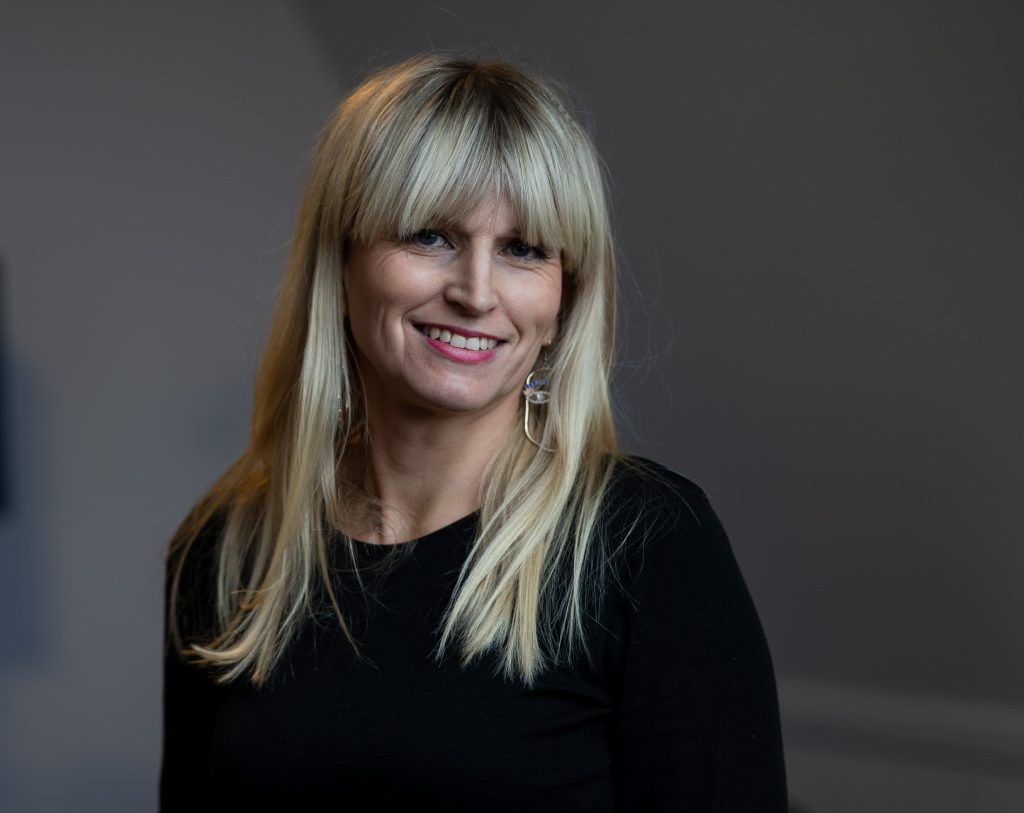
The Board of Civil Rights Defenders has appointed Sofia Walan as the new Executive Director. She will lead the organisation’s work to protect democracy and support human rights defenders worldwide. Sofia Walan will assume her new role on 8 May.
“I am proud and grateful for the trust placed in me to help lead such an innovative and influential human rights organisation as Civil Rights Defenders. We are living in a time when democracy and the rights that so many have fought for—often at great personal risk—are being pushed back. That makes the work of Civil Rights Defenders more crucial than ever, with a unique team of leading experts working every day to protect democracy and support human rights defenders,” says Sofia Walan.
She continues:
“As Executive Director, my ambition is to create the best possible conditions for our work and to build a strong and sustainable organisation for the future.”
Extensive Experience in Civil Society Leadership
Sofia Walan brings broad and extensive experience in leadership and management, with a strong focus on building high-performing teams and results-driven operations in complex, globally dispersed organisations. She joins Civil Rights Defenders from Bris, where she is currently part of the leadership team, and from her role as Chair of Fairtrade Sweden.
Previously, she served as Secretary General of the Swedish Fellowship of Reconciliation (SweFOR), working to support human rights defenders in Colombia, Guatemala, and Mexico. She has also worked on issues related to the International Monetary Fund (IMF) and the World Bank’s role in democracy-building.
The Board of Civil Rights Defenders would like to deeply thank Anders for his work. Under Anders’ leadership, Civil Rights Defenders has grown and developed greatly, gaining increased recognition, a higher turnover and becoming an important actor for democracy and human rights.
Effective immediately, John Stauffer, Legal Director and Deputy Executive Director, will step in as Acting Executive Director, sharing leadership with Karin Ancker, Chief Financial Officer, who will take on the role of Deputy Executive Director. The recruitment process for a new Executive Director will begin immediately.
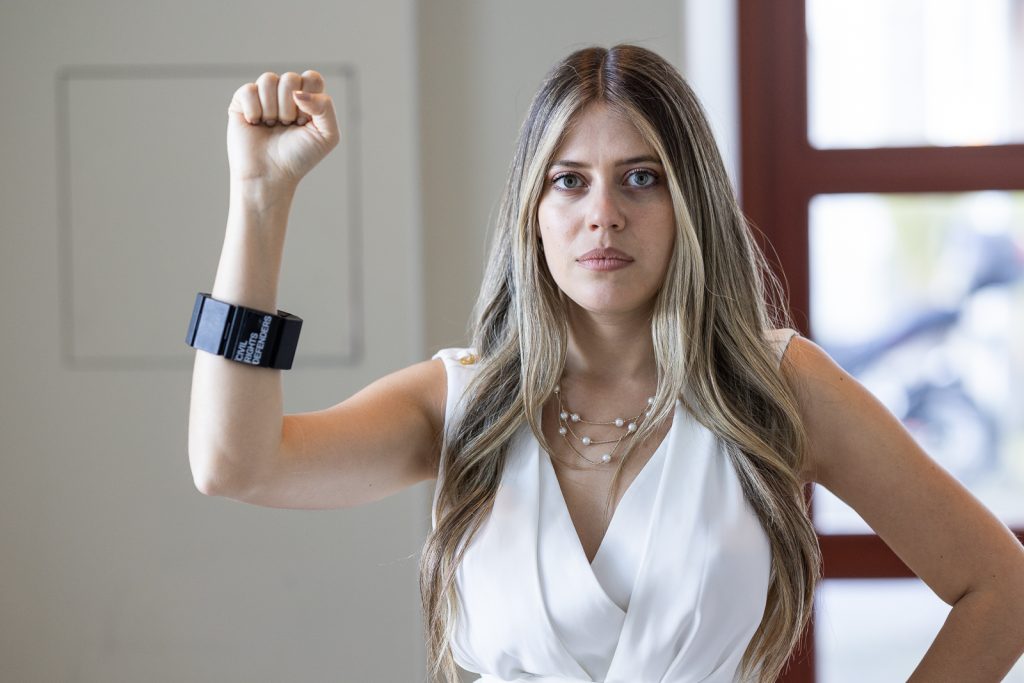
10 years ago, Civil Rights Defenders launched the Natalia Project, the world’s first assault alarm and community-based security system for human rights defenders. In the event of an attack, participants in the project can send out a distress signal so they can be located quickly and get help.
Natalia Project participant Génesis Dávila is the director and founder of Defiende Venezuela, a human rights organisation fighting for accountability and justice for victims of political persecution, people in arbitrary detention, and others who have been subjected to government-sanctioned attacks in Venezuela. In Venezuela being a human rights defender puts Génesis at risk of the very same political persecution she is trying to document.
“I face different threats on a daily basis. In general, they come from the Venezuelan regime. They harass human rights defenders because we try to protect people who are in danger and victims of human rights violations. This is something that puts us at great risk.” “It is really exhausting because then you don’t have space for other things. It’s the feeling of being chased all the time. It puts you under stress. You feel that you are never safe, wherever you are.”
In the case of an attack, the alarm is activated, and a distress signal goes off. Civil Rights Defenders and a network of human rights defenders can start investigating the situation within minutes.
“For me, my Natalia has been a game changer. It helped me feel safe. Just having this tiny device with me, knowing that there was someone on the other side of the world just waiting for my call, being ready to act if something happens gave me such a confidence. That changed everything.”
The Natalia Project device is built to be durable and easy to use and take wherever is needed.
“Everywhere I go, I bring my Natalia. If I’m about to fly somewhere, I check my passport, cellphone and my Natalia. It makes me feel safe. It’s my lucky charm.”
“Anyone who wants to support human rights can do it. You don’t have to be a lawyer, or someone waving a flag. You just need to advocate for human rights, and that will be enough.”