Posts Tagged ‘Pouran Nazemi’

Mahshid Nazemi, Iranian human rights defender, continues in spite of transnational threats

May 10, 2026

On 15 October 2025, Fariba Nawa wrote about Mahshid Nazemi, Iranian human rights defender.

Mahshid Nazemi, an Iranian human rights activist, left her home one day in the fall of 2022 to walk to the corner store to buy yogurt for dinner. The sun had set in the valley in Isparta, a city in southwestern Turkey, and the air was crisp. Nazemi pulled the hat of her coat over her head. The streets were empty. She was tired and hungry. Suddenly, she saw two cars turn on their lights. A dated, navy-colored sedan with tinted windows drove behind her slowly as she walked. Nazemi became suspicious and stopped. The car braked and a pudgy, bearded man with a khaki shirt exited, cursing at her, calling her a prostitute. “Shut your mouth or we’ll send you to Iran in a suitcase,” Nazemi recounted the man saying. “Your sister is on death row. You want to go to Iran in a suitcase?”

A year later, she stood at the exact spot in Isparta, known for its roses and lavenders, as she retold her ordeal.

Nazemi’s case underscores a broader pattern of Iranian activists abroad facing intimidation and pressure from Tehran, despite the regime’s public denials of involvement.

For Nazemi, she says her plight began long ago as a woman in Iran, where women don’t have equal rights, and the situation has been likened to gender apartheid. Women can’t sing in public, their supreme leader has said riding a bike is shameful — though some women defy the taboo and ride bikes — their testimony is considered half of a man’s in court and their right to inheritance is less than men. Nazemi has survived a lot — imprisonment, sexual harassment, death threats and a deportation camp.

The night she was followed and harassed in the street would be a prelude to a series of dubious events terrorizing her life as a dissident in exile.

During the Woman, Life, Freedom movement in fall 2022, protests erupted in Iran and in the diaspora after Mahsa Jina Amini, a 22-year-old Kurdish Iranian woman, was arrested on charges of breaking Iran’s modest dress code. Amini was then beaten to death while in custody. [https://humanrightsdefenders.blog/2023/10/19/mahsa-amini-and-woman-life-and-freedom-movement-in-iran-awarded-eus-sakharov-prize/]

At that time, Nazemi was in Turkey, which has become an opposition haven for many Iranians. She was speaking out about political prisoners and crackdowns on protesters, while also helping dissidents in Turkey get legal aid and financial support. She’s been a dogged activist on behalf of women in her native Iran. Nazemi wasn’t doing that work alone. Her oldest sister Pouran Nazemi was at the forefront of the movement in Tehran. The renowned human rights defender has been in and out of Iranian prisons throughout her life. Nazemi said it was Pouran’s sacrifices that encouraged her to become an activist, too.

A selfie of Pouran (left) and Mahshid Nazemi nine years ago in Iran. The sisters haven’t seen each other in-person for a decade.Courtesy of Mahshid Nazemi

The sisters participated in previous uprisings in Iran, demanding democratic rights for women and minorities. They were both arrested in 2016, but Mahshid Nazemi was released. Her family told her to flee, so she went to neighboring Turkey and applied for asylum to a third country. When Pouran was also released from jail, she remained in Iran. But the sisters worked as a team online across the border. They talked to the opposition media, like Voice of America Farsi, making a case for regime change and a revolution.

Instead, the hardline clerical government arrested 22,000 protesters, including Pouran once again in 2022. The government also killed about 550 people inside Iran, calling them traitors and agitators. Then the regime came for those in the diaspora.

Iran continues to target women human rights defenders abroad, and among the typical and easy-to-use methods are digital threats, such as phishing and hacking attempts, smear and defamation campaigns, as well as threats against family members in Iran,” said Michael Michaelsen, who studies Iran and transnational repression at the Citizen Lab at the University of Toronto.

Nazemi has been the victim of all these tactics but she said the regime went a step further in sending their thugs to threaten her in person that evening in 2022. She reported the incident to the Turkish police, but they didn’t believe her until they found CCTV footage of the incident. A few days later, a Turkish immigration agent called and asked her to come to their office. She thought she might be getting asylum to a third country, somewhere safer than Turkey. But instead, the agent accused her of making a fake ID card, which Nazemi denied. It’s a scene she remembers vividly.

“I didn’t make a fake card. I’m not going to admit to something I didn’t do. If you want to deport me, do so,” Nazemi told the agent. Nazemi was detained and moved into a deportation camp. “The Islamic Republic must have informants in Turkish immigration offices. Otherwise, how would I have ended up in a deportation camp, right after reporting what happened about that night,” she said.

In the camp, Nazemi said the guards beat her, pulling out half of her hair. Another Iranian migrant, who was also detained, accused her of being transgender and threw soup in her face. Nazemi said she had to disrobe in front of the other detainees to prove she was a biological woman to prevent more abuse. She said the camp almost broke her. She had medication with her and one day she took a lot of pills at once. “I didn’t take them to die, actually, but to prove something, how badly they treated us that it got me to this point,” Nazemi said. Nazemi was hospitalized outside the camp, doctors pumped her stomach and she recovered. Police released her and she returned to Isparta and appealed the deportation. Turkey denied the appeal again, but by this time Nazemi’s story was out in the Western press.

The World shared her story, along with press coverage she received in the French newspaper Le Monde — that attention helped her get a visa to France after eight years of being stuck in the Turkish asylum system. She resettled in a French village in December 2023, and continued her activism — Nazemi has expanded her cause to advocate for Afghan migrants as well.

She still gets death threats on social media. Many of the senders say they are the “soldiers of the Islamic Republic.” The direct messages in her inbox on Instagram threaten her with execution, drowning, even rape. Nazemi is under French police protection and reports all the threats.

Her sister Pouran, was released from Evin prison, and is awaiting trial on charges of moral corruption. She continues to protest the regime’s brutality against dissidents inside Iran with Nazemi. [https://humanrightsdefenders.blog/2026/01/16/many-ngos-raise-alarm-over-situation-of-detained-human-rights-defenders-in-iran-and-urge-un-human-rights-council-to-convene-a-special-session/]
https://theworld.org/stories/2025/10/15/from-turkey-to-france-iranian-womens-rights-activist-continues-her-work-despite-ongoing-threats-from-iranian-regime

Many NGOs raise alarm over situation of detained human rights defenders in Iran and urge UN Human Rights Council to convene a special session

January 16, 2026

As mass repression of protests and dissent dramatically intensifies in Iran amidst an almost complete communications shutdown, the Free Narges Coalition and more than 30 undersigned organisations (including FIDH and OMCT in the framework of the Observatory for the Protection of Humans Rights Defenders) called on 15 January 2026 for urgent and concrete actions to circumvent internet censorship, as well as raising alarm regarding the grave threats to existing and newly-arrested detainees, particularly those jailed for their human rights work, journalism, expression, activism, or peaceful assembly.

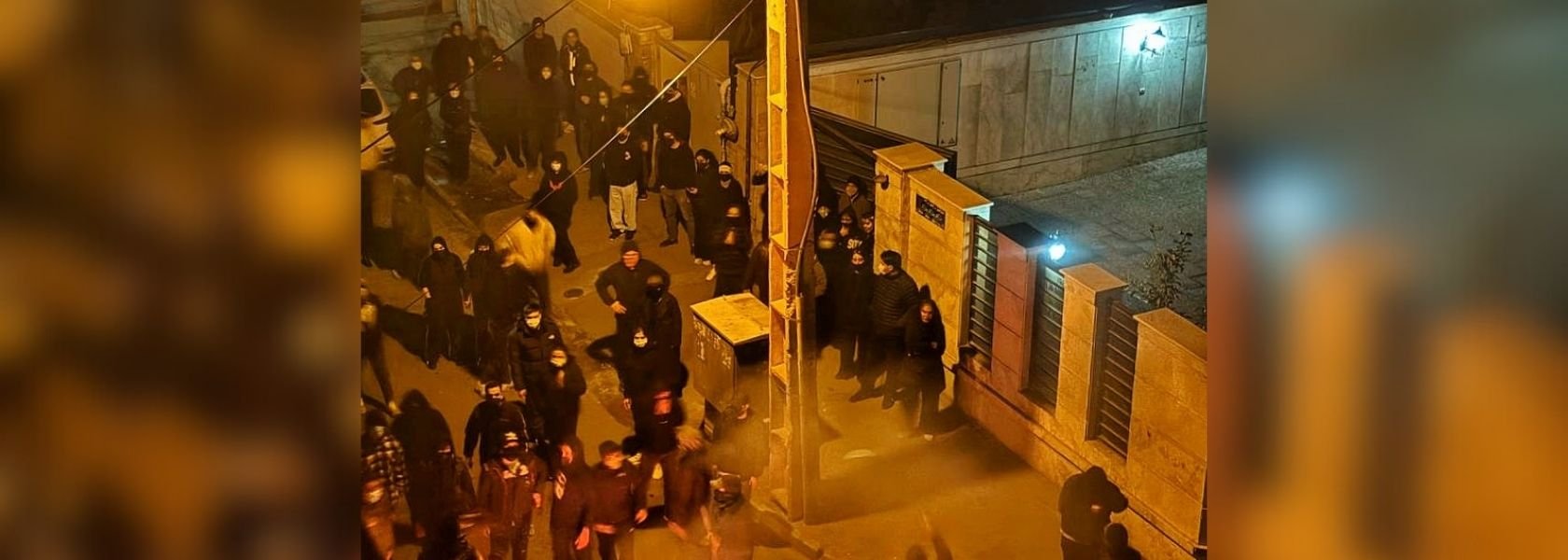
Iran is facing one of the most severe periods of repression in its recent history. Protests that began in Tehran’s Grand Bazar on December 28 against the collapse of the national currency grew in size and scope until authorities completely turned off Iran’s internet access to the outside world and began a more severe crackdown on January 8. Shocking images of dead protesters, doctors’ reports of overflowing hospitals and the lethal use of military-grade weapons and live ammunition, and the absence of access for journalists and independent media, have led to desperation of families missing loved ones, as well as grave concerns around the safety of thousands of those injured or detained. Human rights organisations and international media have been able to verify the killing of over 2,500 protesters, including children under the age of 18, and thousands injured, some severely while almost twenty thousand confirmed arrested. With the majority of the killings occurring since 8 January, amid a full-blown digital blackout that has made further verification impossible, current reports estimate the number of killings to be much higher, likely amounting to more than 6,000.

Meanwhile, in official statements, Tehran’s Prosecutor General has described protesters as vandals and threatened they will face moharebe (waging war against God), a charge that is punishable by death under Islamic Penal law. State media have also reported mass arrests of individuals they label as “rioters.”

According to NetBlocks, Iran has now experienced more than 140 hours of near-total internet shutdown since January 8. Such communications blackouts severely restrict access to independent reporting and sharing of essential and life-saving information, and create conditions in which grave human rights violations can be committed with impunity. Prior to the shutdown, human rights defenders and known dissidents both inside and outside of Iran had reported receiving threats, as authorities have attempted to suppress expressions of support for the protests online.

In this context, both recent and long-standing detainees–including human rights defenders, journalists, writers, and artists–face an acute and often overlooked risk. Past patterns in Iran demonstrate that periods of widespread unrest are accompanied by heightened abuses inside detention facilities, where these groups are particularly vulnerable to extrajudicial killing, enforced disappearance, torture, and other forms of ill-treatment. Those held in solitary confinement and denied contact with the outside world are at especially high risk.

Among those recently detained are prominent figures from Iran’s civil society, including Nobel Peace Prize Laureate Narges Mohammadi, Sepideh Gholian, Alieh Motalebzadeh, Javad Alikordi, Hasti Amiri, Pooran Nazemi, and other human rights defenders and journalists. They were violently arrested following the memorial ceremony for lawyer Khosrow Alikordi on 12 December in Mashhad, and have been held in solitary confinement, their whereabouts and condition unknown, for more than one month. Narges Mohammadi has been denied access to legal counsel and contact with her family, apart from a brief phone call on 14 December when she reported severe ill-treatment, including beatings to her head and neck with batons, as well as threats of further violence. On January 6, before the total internet shutdown, journalist and human rights defender Alieh Motalebzadeh, who has been diagnosed with cancer, was able to call her family. Her daughter reported in a video message that she did not sound well, stating that the detainees are under severe pressure. She was released on bail following deterioration of her health on 12 January. The health condition of Pouran Nazemi is reported to be dire while she remains detained. Narges Mohammadi has been hospitalized for three days after her violent arrest and arbitrary detention since 12 December. Due to the ongoing communications blackout, the families and lawyers have not been able to be in contact with them, including to inquire if their 30 day arbitrary detention order has been extended or not.

We, the undersigned organisations, express our deep concern over the escalation of the killing of protesters, as well as the serious risk of arbitrary legal charges, punishable by the death penalty, against those detained. We stress that the lives and safety of those more vulnerable under detention in Iran must not be forgotten. Human rights defenders, journalists, writers, artists, and those prosecuted due their exercise of freedom of assembly and expression are at the forefront of the peaceful struggle for fundamental human rights. They must be protected and immediately and unconditionally released, and we call for immediate actions from the international community to halt the escalating violations of human rights and humanity.

As reports of mass arrests, killings, and widespread violence continue to escalate, we stand in full solidarity with the people of Iran in their legitimate struggle for fundamental freedoms and democratic rights. We urge the international community to take urgent and concrete actions to prevent further loss of life and to ensure that Iran uphold its international human rights obligations, including through:

 Immediate and unconditional release of all those jailed in Iran for their peaceful activism or expression, including Nobel Peace Prize Laureate Narges Mohammadi, as well as human rights and women’s rights defenders, civil society activists, journalists, lawyers, writers, artists, representatives of religious and ethnic minorities, environmental and labour defenders, students, and all others detained or at risk for exercising their fundamental rights.

 Immediate restoration of full and unrestricted access to internet and telecommunications services, and an end to nationwide information blackouts that censor news reporting, facilitate repression, block the transmission of essential and life-saving communications including for medical personnel, and impede documentation of human rights violations.

 Independent, impartial, and transparent investigations into killings, torture, lethal use of force by security agents, enforced disappearances, and other serious human rights violations committed in the context of the ongoing protests, with a view to ensuring accountability in line with international law.

As every hour of inaction increases the risk of irreversible loss of human life and gross violations of human rights. The international community must act urgently to protect the detainees, ensure their safety and rights, and prevent further violations under international law.

https://www.fidh.org/en/region/asia/iran/iran-over-30-ngos-raise-alarm-over-dire-situation-for-detained-human

50 civil society organizations, urge the UN Human Rights Council to urgently convene a special session to address an unprecedented escalation in mass unlawful killings of protesters, amidst an ongoing internet shutdown imposed since 8 January to conceal grave human rights violations and crimes under international law by Iranian authorities. see:

https://ishr.ch/latest-updates/iran-calling-the-human-rights-council-to-convene-a-special-session

https://www.article19.org/resources/iran-joint-civil-society-call-for-a-hrc-special-session/

https://www.hrw.org/news/2026/01/16/joint-statement-to-member-states-of-the-united-nations-human-rights-council