Posts Tagged ‘digital rights’

APC community: lessons learnt from the cancellation of 2026 RightsCon in Zambia

May 30, 2026

On 28 May 2026 Alan Finlay for the Association for Progressive Community reflected on the implication of the cancellation.

The shock of the cancellation of RightsCon in Zambia this year is still reverberating amongst human rights defenders who are grappling with the implications for their advocacy work. Like other networks across the globe, APC was impacted by this turn of events that disrupted the plans of many of its members, as well as staff; it wasn’t just a financial blow, but the loss of an opportunity to meet and strategise face-to-face, to network with donors and other organisations, and raise awareness about key advocacy issues that needed to be pushed forward on the global digital rights agenda. 

While RightsCon 2025 was hosted in Taipei, Taiwan, AccessNow attributed the cancellation at least in part to behind-the-scenes pressure from China for Taiwanese participants to be excluded from the event in Zambia. This wasn’t necessarily something new for civil society. APC member in Taiwan Open Cultural Foundation (OCF) explained that Taiwanese civil society has seen China react strongly even to seemingly non-political international events when it believes its sovereignty claims or geopolitical interests are being challenged. JCA-NET, a member based in Japan, also pointed to several similar restrictions on participation in events in the past: “It is not uncommon for major powers to block foreign participation in important international conferences,” the organisation’s Toshi said. “Last year, the United States blocked PLO Chairman Abbas from attending the UN General Assembly. Japan also refused to issue visas to some participants for the 2023 IGF in Kyoto.” 

Neither was having a government change its mind mid-stream something extraordinary, even for AccessNow – in 2023 Costa Rica failed to grant visas-on-arrival for many RightsCon participants, despite a prior commitment from its government. 

But having an international event of this size “postponed” by a government just days before it was due to start – which the Special Rapporteur Gina Romero called a “clear violation of the rights to freedom of assembly, association, and expression” – was, for many, unprecedented. It was, as one APC member from South Asia summed up, a “sobering reminder that digital rights work does not happen in a neutral space.”….

Political deviations have become extreme and a consensus over the universality of human rights no longer exists,” said Pavel Antonov from Bluelink, an organisation based in Bulgaria and advocating for digital rights in the European Union. “National governments can no longer be trusted on their commitments. It’s a wake-up call for human rights defenders around the world.”

…“This happened to Zambia now, but this could easily happen in the US or an EU member state,” warned Antonov.

And the signs are there. “I work in the private sector for economic reasons but also for political reasons,” said one anonymous APC associate also based in the EU. “I do not work in the NGO space or in human rights anymore as I am an immigrant in an EU country with a very restricted civic space. If I expressed my views about Palestine and certain other conflicts I might lose funding and residence. I am not happy to be a victim of chilling effects, but my family and children are currently more important. A talk at the University in my city was cancelled today and raided by the police.” The question then becomes: Where do activists find a sense of certainty, of at least something they can rely on? Who can they trust? 

For many in APC, the answer lies in putting faith in their own political commitment to building bottom-up structures driven by communities. “As a fundamental principle, we should not equate the state with the diverse people living within its borders,” said Toshi. “It is important to prioritise these diverse people above all else, rather than the state.”

Part of this re-thinking how solidarity could best be actualised also raises the question of how expensive it is to participate in conferences such as RightsCon – especially in the context of the currently strained funding environment. 

“The cancellation of RightsCon imposes a significant financial burden on civil society organisations across the board, but in particular the ones in the Global South,” said Betancourt. It is not only organisations in the Global South who are struggling to find the resources to participate in the many forums that happen each year. While JAC-NET had competing advocacy priorities, and the language of the event was a barrier, RightsCon was simply too expensive for them to attend in-person despite being based in Japan. 

For some this offered a moment to pause and reflect, a chance to ask: Can things be done differently?  There was a need to “become more collaborative within the digital rights movement itself, particularly in how limited resources are used,” said Ramanujam. 

“As civil society organisations, we must work to avoid duplicating efforts, build on each other’s strengths, and work more strategically based on our different positions and capacities within the broader ecosystem.”

“I would like to see international and regional digital rights organisations and networks come together and figure out how regional and global rights convenings can build on each other,” said Chat Garcia Ramilo, APC’s Director. She mentioned several annual regional convenings “spearheaded by like-minded civil society organisations” to illustrate her point. Apart from the Digital Rights Asia-Pacific Assembly, which attracts activists, academics, techies and policy makers in that region, three of them were held in Africa alone: the Forum on Internet Freedom in Africa (FIFAFRICA), the Digital Rights and Inclusion Forum, and Bread & Net, which bills itself as the leading digital rights ”unconference” in West and North Africa. …

Most in the APC community nevertheless also emphasised how important forums such as RightsCon amongst others including the Internet Governance Forum (IGF) were for organising around digital rights. 

“We need to continue finding, creating and advocating for these spaces, acknowledging and supporting the range of expressions and reactions, even if we don’t fully agree with all parts of it,” another member from the region said. “These spaces are crucial to exchange ideas, learn from each other, get inspired but also to demonstrate collective power.” 

As we assess the impact of this year’s RightsCon cancellation, the APC network is also reflecting on the lessons learned and the tools already at our disposal to help us move forward. Overall, a call to share learnings and strengthen joint action emerged as a common thread across many reflections within the APC network.


Sharing a glimpse of what the APC community would have brought to RightsConIn a push to create alternative spaces for community exchange, when we reached out to our network for this article, we also asked: ”If RightsCon had gone ahead, what key message would you have highlighted in your sessions/interventions?”While we will not be able to reflect the full, compelling agenda and APC’s priorities for this year’s event, here we present some of the insights shared:https://www.canva.com/design/DAHKtmLB-cA/6UrGaUUEYVmbrqCoFmq10Q/view?em

https://www.apc.org/en/news/rebuilding-solidarity-and-trust-apc-community-reflects-cancellation-rightscon-and-learnings

Over 130 organisations condemn the Government of Zambia’s abrupt disruption of RightsCon

Surfshark joins forces with Amnesty International to train digital human rights defenders

May 23, 2026

Surfshark is supporting the Digital Forensics Fellowship of Amnesty International to help activists and journalists combat advanced mobile threats worldwide.

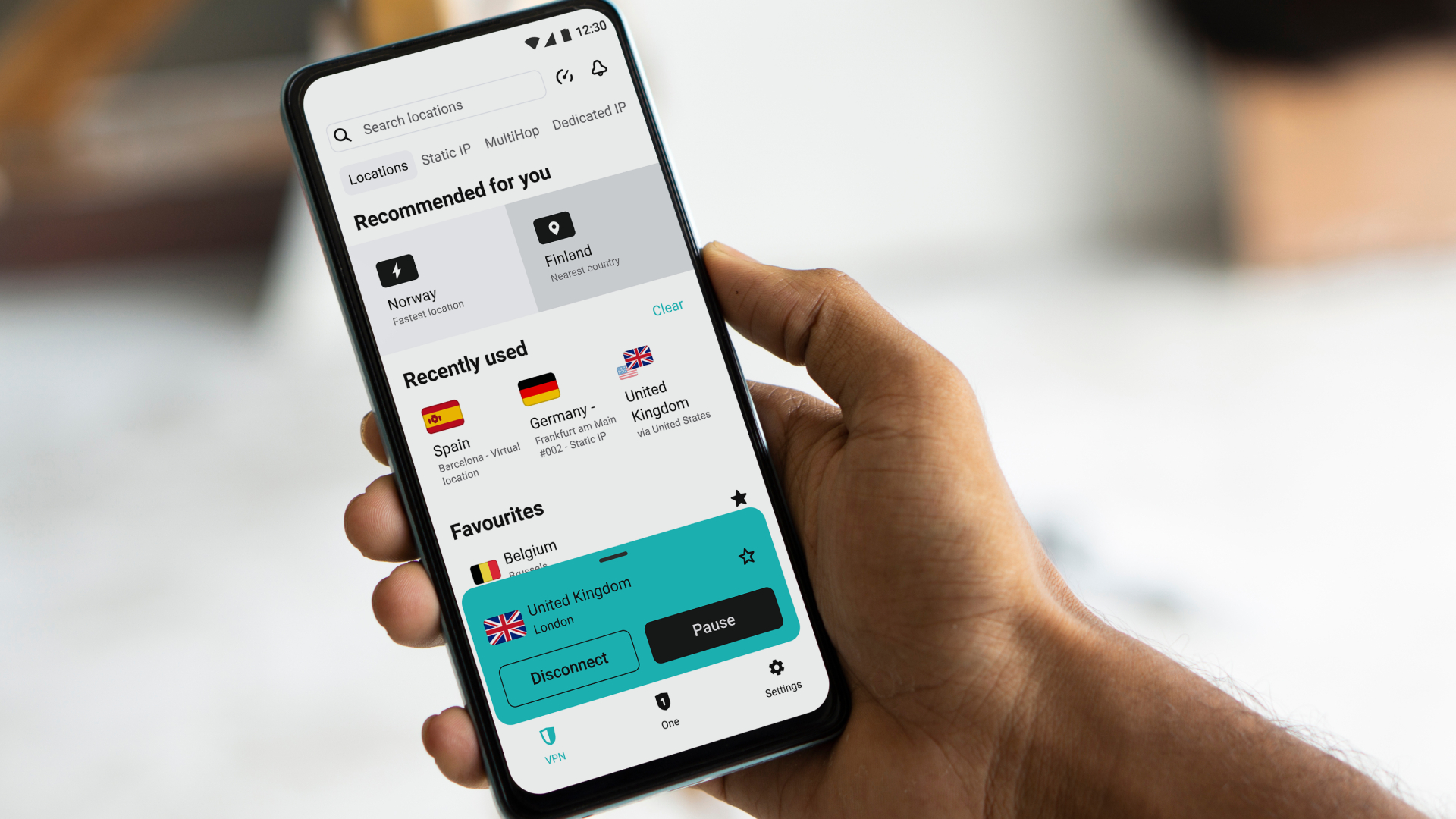
Surfshark VPN app on mobile phone
(Image credit: Surfshark)

As the threat of state-sponsored spyware and digital tracking continues to escalate, one of the VPN providers on the market is supporting efforts to protect the world’s most vulnerable internet users. Surfshark has officially announced it has become a supporting partner of Amnesty International’s Digital Forensics Fellowship (DFF). Run by Amnesty International’s Security Lab, the DFF is a highly specialized training program designed to teach human rights defenders how to conduct advanced mobile device analysis.

For the everyday user, a virtual private network acts as a shield against casual snooping and data harvesting. However, for journalists, activists, and civil society organizations, the threats are often more targeted and sophisticated. This partnership is geared toward equipping these individuals with hands-on skills in threat research, malware traffic analysis, and device forensics.

Ultimately, this initiative matters because it helps decentralize digital security. By teaching regional activists how to detect digital surveillance on their devices, Amnesty and Surfshark are helping to build a global network of experts capable of exposing human rights abuses without relying entirely on Western tech hubs for forensic analysis.

The DFF was born out of necessity following explosive revelations about global surveillance. Instead of just teaching theoretical cybersecurity, the program provides practical, hands-on experience in analyzing both Android and iOS environments. “The Digital Forensics Fellowship, or DFF, is a training program geared toward upskilling human rights defender-technologists in mobile device forensics.” A key pillar of the fellowship is its reliance on “consensual” forensics. This means that the analysis is only conducted with the informed consent of the individual or organization that has been targeted, putting the victims back in the driver’s seat.

“Our team is focused on consensual mobile device forensics, which refers to analysis and research that is done with a person or an organization,” Cyr told Surfshark. This model allows those targeted by highly sophisticated tools to understand exactly what compromised their devices, empowering them to decide on the best course of action.

While Surfshark is best known for its consumer VPN and antivirus products, the company does not build or sell digital forensics tools. However, the provider views the partnership as a necessary step in securing the broader digital ecosystem.

The reality is that securing the most at-risk internet users eventually benefits the everyday consumer. When organizations research and expose sophisticated campaigns targeting activists, it forces the broader tech industry to adopt higher security standards, increasing awareness and accountability for everyone online.

https://www.techradar.com/vpn/vpn-privacy-security/surfshark-joins-forces-with-amnesty-international-to-train-digital-human-rights-defenders

Norway presents resolution on new technology and human rights defenders at Human Rights Council 58th Session

March 19, 2025

From press release dated: 13/03/2025

New technology provides human rights defenders with tools to organize, spread information, and reach people. At the same time, many experience digital surveillance, online violence, and harassment. It is important that these issues are discussed in the UN, and therefore, Norway is presenting a resolution in the UN Human Rights Council this spring’, says Foreign Minister Espen Barth Eide.

The resolution emphasizes that human rights are universal and apply in the same manner online as offline.  It advocates for increased protection against digital threats and surveillance and ensures that new technology is not used to restrict freedom of expression, freedom of assembly, or the right to privacy. The resolution also highlights the need for dialogue with tech companies to discuss the challenges faced by human rights defenders in the digital space.

‘We want to gather broad support for the resolution and secure clear commitments from the international community to protect those who fight for our shared rights – also in the digital sphere’, says Eide.

Norway has a long tradition of advocating for the protection of human rights defenders. The new resolution is the result of close dialogue with civil society actors, technology experts, and other countries. The resolution will be presented and adopted at the UN this spring. Moving forward, Norway will work to gain as much international support as possible for the resolution’s important message.

https://www.norway.no/en/missions/wto-un/our-priorities/other-issues/pressreleasenorway/hrc58hrd/

Side event 7 March 2025 on Protection of defenders against technology-facilitated rights violations

February 25, 2025
  • Location: Physical
  • Date: 07 March 2025
  • Time: 1:00PM – 2:00PM CET
  • Address: Room XXV, Palais des Nations
  • Event language(s) English
  • RSVP Needed: no

New and emerging technologies have become a fundamental tool for human rights defenders to conduct their activities, boost solidarity among movements and reach different audiences. Unfortunately, these positive aspects have been overshadowed by negative impacts on the enjoyment of human rights, including increased threats and risks for human rights defenders. While we see the increased negative impacts of new technologies, we do not see that governments are addressing these impacts comprehensively.

Furthermore, States and their law enforcement agencies (often through the help of non-State actors, including business enterprises) often take down or censor the information shared by defenders on social media and other platforms. In other cases, we have seen that businesses are also complicit in attacks and violations against human right defenders.

Conversely, lack of access to the internet and the digital gaps in many countries and regions, or affecting specific groups, limits the potential of digital technologies for activism and movement building, as well as access to information. 

The Declaration on Human Rights Defenders, adopted in 1998, does not consider these challenges, which have largely arisen with the rapid evolution of technology. In this context, and, as part of activities to mark the 25th anniversary of the UN Declaration on human rights defenders, a coalition of NGOs launched a consultative initiative to identify the key issues faced by human rights defenders that are insufficiently addressed by the UN Declaration, including on the area of digital and new technologies. These issues are also reflected in the open letter to States on the draft resolution on human rights defenders that will be considered during HRC58. 

This side event will be an opportunity to continue discussing the reality and the challenges that human rights defenders face in the context of new and emerging technologies. It will also be an opportunity to hear directly from those who, on a daily basis, work with defenders in the field of digital rights while highlighting their specific protection needs. Finally, the event will also help remind States about the range of obligations in this field that can contribute to inform the consultations on the HRC58 resolution on human rights defenders. 

Panelists:

  • Opening remarks: Permanent Mission of Norway
  • Speakers:
    • Carla Vitoria – Association for Progressive Communications 
    • Human rights defender from Kenya regarding the Safaricom case (via video message)
    • Woman human rights defender from Colombia regarding use of new technologies during peaceful protests
    • Human rights defender from Myanmar regarding online incitement to violence against Rohingya people
  • Video montage of civil society priorities for the human rights defender resolution at HRC58
  • Moderator: Ulises Quero, Programme Manager, Land, Environment and Business & Human Rights (ISHR)

This event is co-sponsored by Access Now, Asian Forum for Human Rights & Development (FORUM-ASIA), Association for Progressive Communications (APC), Business and Human Rights Resource Centre (BHRRC), DefendDefenders (East and Horn of Africa HRD Project), Huridocs, Gulf Centre for Human Rights (GCHR), International Lesbian, Gay, Bisexual, Trans and Intersex Association (ILGA World), International Service for Human Rights (ISHR), Peace Brigades International, Privacy International, Protection International,  Regional Coalition of WHRDs in Southwest Asia and North Africa (WHRD MENA Coalition). 

for the report, see: https://ishr.ch/latest-updates/human-rights-defenders-and-new-emerging-forms-of-technology-a-blessing-or-a-curse/

https://ishr.ch/events/protection-of-defenders-against-new-and-emerging-forms-of-technology-facilitated-rights-violations

ICJ seeks Legal Adviser (Human rights and the digital space)

February 3, 2025

Although the preferred job location is Bangkok, Thailand (Hybrid), remote work is possible for candidates with the legal right to work in their country, provided the location aligns with the organization’s operational and budgetary considerations.

Start date: March 2025 – Closing date 16 Feb 2025

The International Commission of Jurists (ICJ) is a worldwide organization of judges and lawyers united in affirming international law and rule of law principles that advance human rights. Its strategic goals for 2021-2025 are: (1) to develop, defend, and strengthen international institutions, instruments, and standards on rule of law and human rights; (2) to improve domestic implementation of, and compliance with, international law and standards; (3) to bolster the effectiveness and independence of judges and lawyers; and (4) to improve access to justice for all and accountability. Headquartered in Geneva, Switzerland, ICJ has a presence in Africa, Latin America, Asia & the Pacific, Europe & Central Asia, and the Middle East.

To lead the implementation of the ICJ’s work on human rights in the digital space at the global and regional levels, we are seeking a full-time Legal Adviser. Key requirements for this role include expertise and working experience related to human rights in the digital space, excellent legal skills and sound political judgment, and proven ability to develop and carry out legal advocacy strategies.

KEY RESPONSIBILITIES

Reporting directly to the Senior Director, Legal and Policy Office, the Legal Adviser is expected to:

• Provide leadership and contribute to the design and implementation of ICJ work related to human rights in the digital space, including the work at the country, regional and global levels;

• Lead and implement work on a global project aimed at developing policy and legal action on protecting human rights in the digital civic space;

• Implement the programme work on human rights in digital space in a way that advances the strategic directions of the ICJ.

REQUIREMENTS

  • University degree in law with advanced studies in international human rights law.
  • Proven experience working in the area of international human rights law.
  • Expertise and working experience related to human rights in the digital space, including in the areas of freedom of expression, right to privacy, non-discrimination and equality, sexual and gender-based violence, and human rights and businesses enterprises.
  • Excellent legal skills and sound political judgment and proven ability to develop and carry out legal advocacy strategies.
  • Advanced expertise in general international human rights law
  • Practical legal and advocacy experience on the implementation of international human rights standards; litigation experience desirable.
  • English native speaker level; knowledge of Spanish, French, and/or Arabic an asset.
  • Demonstrated analytic and writing ability, including substantial report-writing experience;
  • Excellent written and oral communication skills;
  • Excellent interpersonal skills and ability to work as part of a multi-cultural team;
  • Demonstrated commitment to human rights and the rule of law;
  • Availability to start in March 2025 is required.

How to apply

Interested applicants should provide the materials outlined below to recruitment@icj.org by 16 February 2025, midnight Central European Time (CET). Early applications are encouraged as they will be reviewed on a rolling basis, the ICJ reserves the right to close this vacancy earlier if a sufficient number of quality applications has been received.

  1. A CV (maximum 2 pages);
  2. A cover letter;
  3. Application form filled out.

Please include “Legal Adviser HRDS” in the subject line of the application e-mail.

https://reliefweb.int/job/4129125/legal-adviser-human-rights-and-digital-space

Palestinian human rights defender:Jalal Abukhater

December 13, 2024

Jalal Abukhater works as an advocacy manager for 7amleh, a digital rights and human rights organisation based in Palestine.

He spoke to ISHR about what drove him to take action for the digital rights of his fellow Palestinians and about the responsibility of big technology companies and online platforms in the suppression of Palestinian rights and voices.

‘There is a responsibility for big tech companies to uphold human rights to make sure that they are not complicit in the violation of human rights, especially in the context of genocide.’

https://ishr.ch/defender-stories/human-rights-defenders-storyjalal-abukhater-from-palestine

Access Now – Grants for human rights defenders in 2023

May 29, 2024

On 28 May 2024 ACCESS NOW published its overview of grants in 2023: Through our Access Now Grants program — now in its ninth year —  we provide  flexible, grantee-driven financial support to the grassroots and frontline organizations confronting these threats. We do this because we believe the people most directly impacted by attacks on human rights — from Palestine to Myanmar to Ukraine and beyond — are best placed to define solutions and implement them. Below is an overview of our grant-making in 2023, including a deep dive into the humanitarian response to the Gaza crisis, which was sparked that year. 

AN OVERVIEW

In 2023, Access Now Grants awarded a total of just under $1.7 million USD, fortifying our collective efforts to defend and extend digital rights. We provided 66 grants to 63 organizations and individuals leading digital rights efforts in about 30 countries. [for details, see: https://www.accessnow.org/digital-rights-grants/]

We strive to support those who need it most. Currently, Access Now Grants reserves nearly all of our funding for people and organizations in Global Majority countries. In 2023, we awarded the highest number of grants (20) in Eastern Europe and Central Asia, followed by Asia Pacific (15), Africa (13), the Middle East and North Africa (10), Latin America and the Caribbean (7), and one grantee that works on the global level but supports journalists and human rights organizations operating in countries experiencing armed conflict and crisis

Notably, 71% of our 2023 grants supported efforts in countries that Freedom House has classified as “not free” in its Freedom in the World reporting. We also extended funding to organizations and communities we had not previously supported, including in Libya, Iraq, Palestine, Thailand, and Senegal. In addition, 25% of our grants focused on defending gender and sexuality rights and supported people who identify as women, non-binary, or LGBTQ+

In addition to ensuring we reach people with the funding they need, we work to provide the kind of longer-term support that can help organizations build momentum. In 2023, 60% of the grantees that received core, project, and discretionary grants were receiving their third or more year of consecutive funding.

SPOTLIGHT ON GAZA : It is impossible to remark on any human rights efforts in 2023 without acknowledging the genocide now unfolding in Palestine. After the Hamas attack on Israel on October 7, 2023, we have seen digital threats play a devastating role in deepening the crisis in Gaza:  from the Israeli military’s reported use of  AI technology to bomb and kill Palestinians, often with their family; to internet shutdowns that restrict Gazans’ access to life-saving information and ability to communicate; to communication platforms’ censorship of Palestinians and pro-Palestinian voices; to the documented increase in hate speech and incitement to violence against Palestinians online….

As we continue our grant-making in the year ahead, in Palestine and around the world, we remain committed to human rights organizations and activists who are fighting for justice, security, and dignity for their communities and for all of us. Their collective work is more necessary and urgent than ever.

ACCESS NOW gives a list of the grants awarded in 2023. Some grants are not included for security reasons. Others must be listed anonymously.