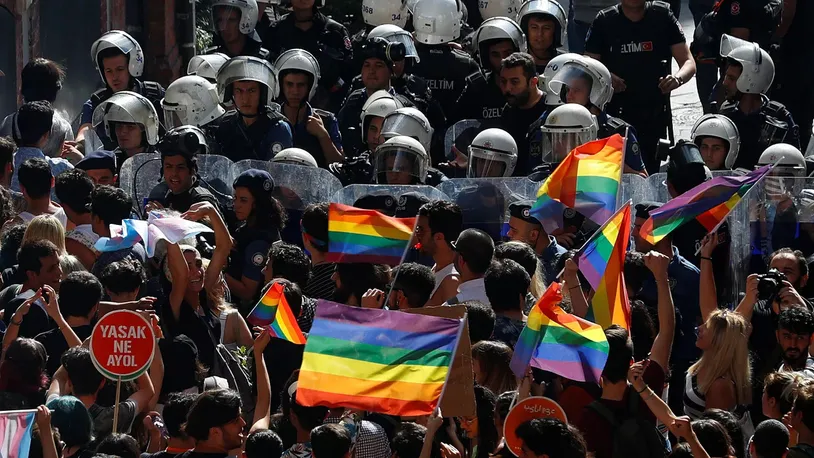
More than 450 civil society organizations from 65 countries have called on Turkey to end what they described as the criminalization of the LGBTI+ movement and release people detained solely for human rights work.
In a joint statement on 22 September 2026 titled “Stop the Criminalisation of the LGBTI+ Movement in Turkey,” the groups said human rights advocacy, publishing, organizing, membership, donations, fundraising and lawful domestic or international funding should not be treated as evidence of criminal activity and called for an end to raids and online restrictions targeting LGBTI+ organizations and human rights defenders.
The statement, published by Turkey-based Women for Women’s Human Rights (WWHR), was signed by organizations including the Association for Women’s Rights in Development (AWID), CIVICUS, the International Planned Parenthood Federation (IPPF), the International Women’s Development Agency (IWDA), PEN Norway and the World Organisation Against Torture (OMCT). CIVICUS is a global alliance of civil society organizations and activists.
The groups objected to what they described as the use of organized-crime provisions and broadly defined concepts such as “obscenity,” “morality” and “family” to criminalize LGBTI+ identities, visibility and advocacy.
The appeal follows a nationwide operation that began September 13 with police raids on LGBTI+ organizations, activists’ homes, gay bars and nightclubs, a day after Turkish authorities restricted access to social media accounts belonging to more than a dozen groups.
Organizations targeted in the investigations include the Kaos Gay and Lesbian Cultural Research and Solidarity Association (Kaos GL), the Families and Friends of LGBTI+ People Association (LİSTAG) and the Social Policy, Gender Identity and Sexual Orientation Studies Association (SPoD), as well as several other LGBTI+ and HIV-related groups.
According to Turkish media, 116 people had been detained in the raids and 82 were jailed pending trial. The cases include LGBTI+ activists and members of rights organizations as well as people accused of prostitution, drug offenses and other crimes, meaning not everyone detained or jailed in the operation was accused of activity connected to LGBTI+ advocacy.
On 29 June 2026, Amnesty published a roundup of what can be achieved when we stand together in solidarity. Despite the increasingly fractious state of the world, governments and civil society have come together to pass important laws and resolutions to tackle human rights harms, following protests and petitions from activists and campaigners.
Here a few examples but the list is worth reading in total:
In January, human rights defender Sean Binder and 23 others connected to a Search and Rescue NGO were acquitted in Greece after years on trial. Amnesty International has been campaigning in support of Sean’s case since 2018.
Eleven members of the Istanbul Bar Association’s executive committee were acquitted on 9 January, after facing charges for “spreading terrorist propaganda” and “publicly disseminating misleading information”. The 11 had been on trial over a statement issued by the Bar Association on 21 December 2024 about the killing of two journalists in northern Syria and the arrest of journalists and lawyers at a related peaceful protest in Istanbul the day before.
Human rights defenders who had been arbitrarily detained in Venezuela were released between January and May 2026. They included Javier Tarazona, Rocío San Miguel, Kennedy Tejeda, Carlos Julio Rojas and Eduardo Torres, Darío Estrada, Rosa Chirinos, and Yevhenii Trush.
Eight years after the murder of human rights defender Marielle Franco and her driver Anderson Gomes in Rio de Janeiro, and the attempted murder of Fernanda Chaves, a press officer working for Marielle, those responsible for orchestrating these crimes have finally been convicted. The conviction is a major step forward in the fight against political violence and impunity in Brazil. It is also a testament to the persistence of Marielle’s family, social movements and civil society organizations, such as Amnesty International, in demanding truth and justice over the years. Amnesty International Brazil is continuing to call for broader measures to prevent political violence and ensure effective protection for human rights defenders, especially Black leaders, women and those who challenge entrenched systems of inequality and discrimination.
Adamu Oseni (aka Hussaini Oseni) was released on 18 February 2026 after years of campaigning by Amnesty International Nigeria. Oseni had been sentenced to life imprisonment by the Ondo State High Court, for possessing a phone linked to an armed robbery, despite evidence he was not involved in the crime. After Amnesty International Nigeria submitted a pardon request on his behalf in 2024, his sentence was reduced to 20 years before he was finally released.
Million Beyene, a journalist and managing editor at Addis Standard, was abducted from the newsroom in on 15 April, by three men wearing plain clothes. It is believed he was targeted because of his work as a journalist. Amnesty International launched an Urgent Action on 27 April and he was released to his family on 28 April. Upon his release, he said:”I am currently receiving medical treatment and doing my best to recover. The experience has been difficult, and I am still coping with its impact, but I remain strong. I am deeply grateful for all your support and efforts on my behalf. It truly means a lot to me.”
A Norwegian court rejected Greece’s request to extradite Tommy Olsen, founder of the NGO Aegean Boat Report, who is wanted on criminal charges connected to his work documenting human rights violations against refugees and migrants at Europe’s borders. Following his initial arrest in Norway, Amnesty launched an Urgent Action calling on Norway to reject his extradition and stating that the charges against him were not supported by evidence and were an abuse of anti-smuggling legislation. Olsen still faces criminal proceedings against him in Greece and is subject to a European arrest warrant. Amnesty International will continue to campaign against the criminalization of solidarity with refugees and migrants.
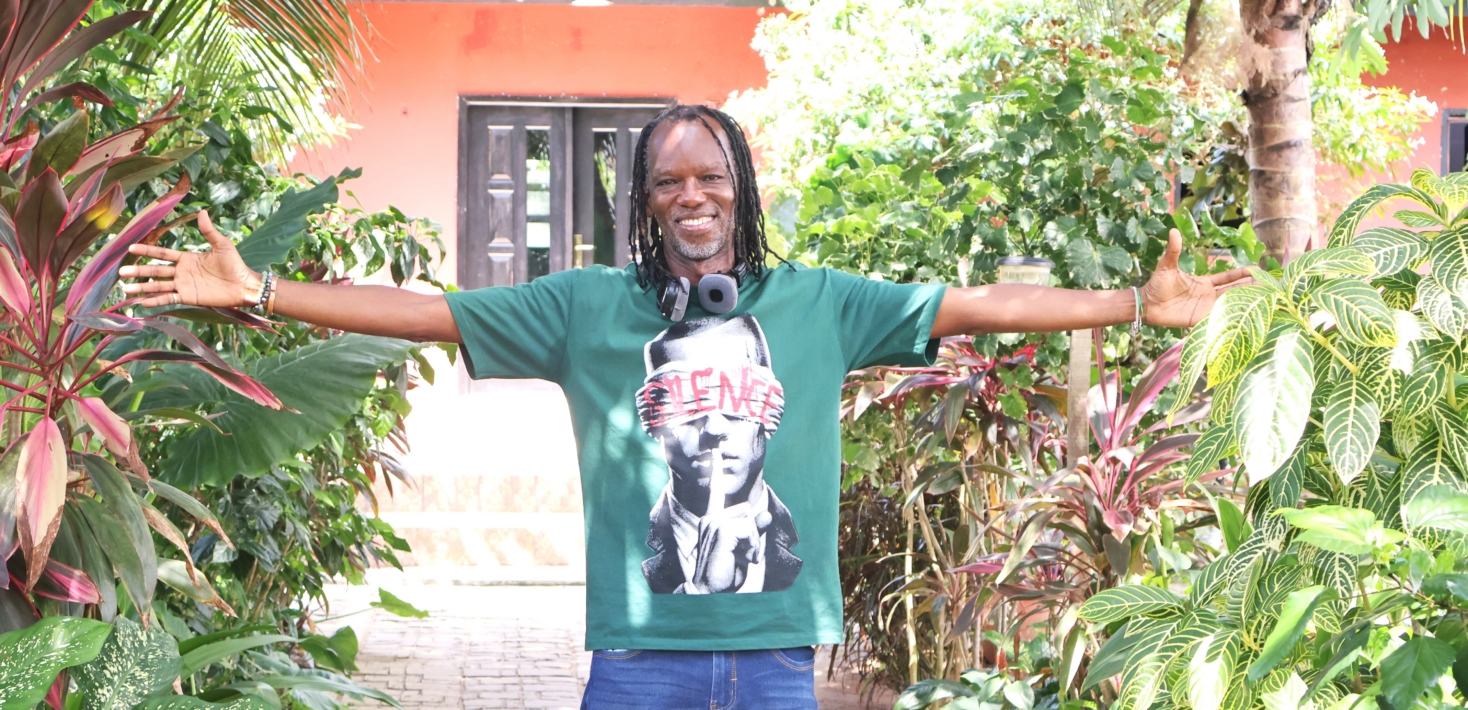
On 22 June 2026, Amnesty International wrote about the inspiring Ivorian reggae artist/ human rights defender Guillaume Konan, known as Kajeem,
Guillaume Konan, known as Kajeem, is a singer and songwriter who grew up in Abobo, a neighbourhood of Abidjan, the economic capital of Côte d’Ivoire. Now 57, he began his career in the 1990s in rap music before moving on to reggae.Kajeem is committed to defending rights and freedoms, and speaks out against restrictions on civic space in his country, particularly the right to freedom of expression. He has been working with Amnesty International for over a dozen years as a human rights ambassador.
Following the song “Osons le courage” (Let’s be brave) in 2023, which called on youth to resist injustice, he released in June 2026 the song “En toute liberté” (In total freedom) with artists Didier Awadi from Senegal and Soum Bill from Côte d’Ivoire, and the support of Amnesty International.
“I made my first visit to prisoners when I was 12, as a Catholic boy scout. It was a very formative experience for the young boy I was. I couldn’t understand how people could be put in those terrible conditions, no matter what they had done. So, when I started playing music as a teenager, I gravitated toward genres that stand up for the underdog. Freedom of expression was one of the first rights I sought to assert. Nowadays, the laws in Côte d’Ivoire regarding the internet are so vague that they have become pretexts for imprisoning whomever the authorities please. There is no worse oppression than the one carried out under the guise of the law. Being able to speak out against injustice is a fundamental right, and until the day I die, I will fight for it…. I write songs that denounce a system, not individuals.Ivorian singer Kajeem
I’ve faced various forms of pressure. Today, radio hosts are pressured not to play certain songs, and sponsors are pressured to stop supporting certain artists. The first song of mine which provoked threats was “Sergent 2 togos” (Sergeant 2 togos) released in 2006, which exposed police extortion at roadside checkpoints. I often joke that in other countries, when you’re threatened, you go to the police for protection. But I was being threatened by the police! I had to leave the country for six months.
When I released the song “Tu tournes film” (You’re shooting a movie) in 2023, I faced the same issues, but in a much more intense way. The song “Tu tournes film,” meaning “You’re just blowing hot air”, is about broken promises. An election pledge is a social contract made with the voters, but if you remind those guys of their promises, they get upset!
I woke up one morning to over 1,600 hate messages, including death threats. But I’ve never been very scared by that kind of thing, I think it’s counterproductive because a song has a life of its own, even if its author is dead! People shouldn’t see me as an enemy. I write songs that denounce a system, not individuals.
People may feel that human rights are a luxury they cannot afford because they have basic needs to meet. But how many people earn a lot of money while living under total oppression? We cannot prioritize our needs by saying, “Let’s eat first and worry about that later.” Human rights do not apply only to a certain category of countries or individuals, they are universal.
For me, the future is bright, as every day we see youth getting engaged despite all the distractions offered to them. I think of myself as a sad optimist, unlike the cheerful pessimists who seem happy but no longer believe in anything and just want to enjoy the moment. When you become aware of the realities, it makes you a little sad, but it motivates you because it shows you the work that needs to be done, and every morning, you head back into the fray.
Watch the video clip “En toute liberté” (In total freedom) with artists Kajeem, Didier Awadi and Soum Bill
In 1988 I was in Abidjan for the historic Human Rights Now! world tour concert organized by Amnesty. After that I kept running into the Amnesty team in the field, whether I was working with the Red Cross, visiting detainees, or organizing events at the university to raise awareness of human rights. We were working on the same issues, so I felt less alone. To me, Amnesty is truly like family. Our song “En toute liberté” is for all those fighting for human rights, so they have a rallying cry.”
To mark the release of the song “En toute liberté” and as part of the campaign Resist run by Amnesty International, Kajeem and Amnesty International Côte d’Ivoire are organizing a digital campaign, as well as discussions on the right to freedom of expression at universities across Côte d’Ivoire.
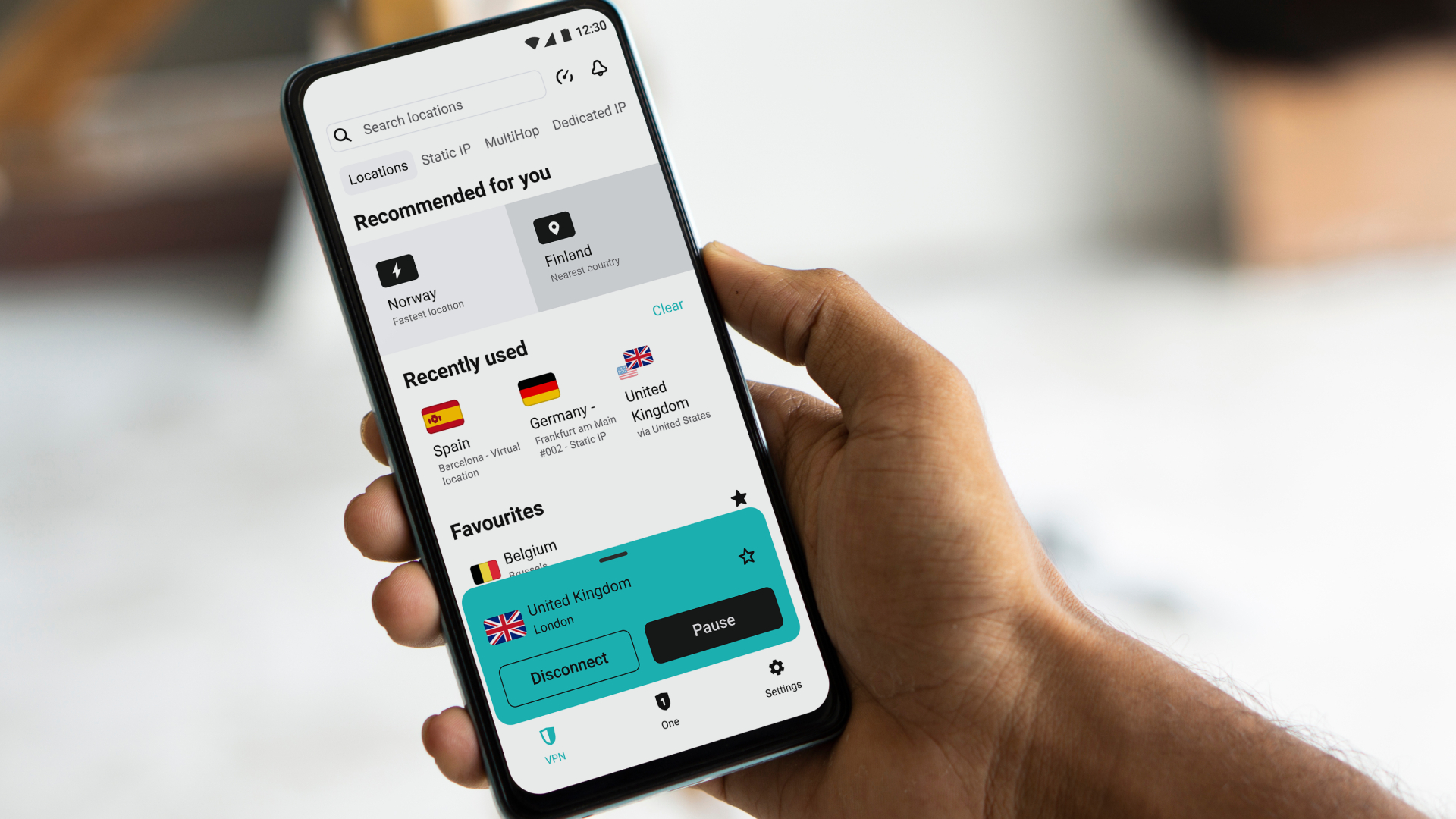
Surfshark is supporting the Digital Forensics Fellowship of Amnesty International to help activists and journalists combat advanced mobile threats worldwide.
(Image credit: Surfshark)
As the threat of state-sponsored spyware and digital tracking continues to escalate, one of the VPN providers on the market is supporting efforts to protect the world’s most vulnerable internet users. Surfshark has officially announced it has become a supporting partner of Amnesty International’s Digital Forensics Fellowship (DFF). Run by Amnesty International’s Security Lab, the DFF is a highly specialized training program designed to teach human rights defenders how to conduct advanced mobile device analysis.
For the everyday user, a virtual private network acts as a shield against casual snooping and data harvesting. However, for journalists, activists, and civil society organizations, the threats are often more targeted and sophisticated. This partnership is geared toward equipping these individuals with hands-on skills in threat research, malware traffic analysis, and device forensics.
Ultimately, this initiative matters because it helps decentralize digital security. By teaching regional activists how to detect digital surveillance on their devices, Amnesty and Surfshark are helping to build a global network of experts capable of exposing human rights abuses without relying entirely on Western tech hubs for forensic analysis.
The DFF was born out of necessity following explosive revelations about global surveillance. Instead of just teaching theoretical cybersecurity, the program provides practical, hands-on experience in analyzing both Android and iOS environments. “The Digital Forensics Fellowship, or DFF, is a training program geared toward upskilling human rights defender-technologists in mobile device forensics.” A key pillar of the fellowship is its reliance on “consensual” forensics. This means that the analysis is only conducted with the informed consent of the individual or organization that has been targeted, putting the victims back in the driver’s seat.
“Our team is focused on consensual mobile device forensics, which refers to analysis and research that is done with a person or an organization,” Cyr told Surfshark. This model allows those targeted by highly sophisticated tools to understand exactly what compromised their devices, empowering them to decide on the best course of action.
While Surfshark is best known for its consumer VPN and antivirus products, the company does not build or sell digital forensics tools. However, the provider views the partnership as a necessary step in securing the broader digital ecosystem.
The reality is that securing the most at-risk internet users eventually benefits the everyday consumer. When organizations research and expose sophisticated campaigns targeting activists, it forces the broader tech industry to adopt higher security standards, increasing awareness and accountability for everyone online.
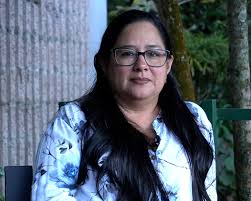
On 18 May 2026 UN experts and Human Rights Watch and Amnesty International expressed serious concern about the yearlong pre-trial detention of lawyer and woman human rights defender Ruth Eleonora López Alfaro in El Salvador.
“As time passes without the trial beginning, the presumption that detention is necessary is weakened,” the experts said.
López has been held in pre-trial detention for a year, officially authorised since 4 June 2025. During this time, she has been denied regular visits, despite precautionary measures ordered on 22 September 2025 by the Inter-American Commission of Human Rights. “This increases Ms. López’s vulnerability and puts her physical and psychological integrity at risk,” the experts said.
In maintaining judicial secrecy, the public is prevented access to hearings and the defence’s access to the criminal file is limited, thereby threatening the principle of equality of arms and the right to an adequate defence. The right to legal assistance of a lawyer of one’s choice is a cornerstone of the right to defence as established in Article 14 of the International Covenant on Civil and Political Rights.
“The circumstances of detention and the irregularities in the proceedings, point towards López being subject to reprisals because of her legitimate activities as a human rights defender and lawyer,” they said.
The experts underscored that there are elements suggesting that the criminalisation and prolonged pre-trial detention of Ruth López not only stem from her work exposing corruption and human rights violations, but also appear to reinforce patterns of social control designed to silence women leaders in the public sphere, while also seriously undermining the work of their organisations.
The experts urged the State to release Ruth López Alfaro immediately and consider alternative measures instead of keeping her in custody. They also called for the removal of the judicial secrecy imposed in the criminal proceedings, the cessation of all acts of harassment against her, and guarantees that she may carry out her human rights work without fear of reprisals. The experts are in contact with the Government of El Salvador on this matter.
The Ginetta Sagan Award honors women who are courageously defending the liberty, safety, and human rights of women and children in regions affected by serious abuses. The award provides $20,000 directly to the recipient, with unrestricted use. It recognizes women leaders who have created meaningful impact, often at great personal risk, and helps increase international visibility and protection for their work.
The award celebrates leadership, courage, and effective non-violent activism in difficult or dangerous environments
On 2 May 2026, several newspapers reported on plans to vet human rights defenders in Indonesia :
The government’s plan to screen and determine who qualifies as a human rights activist to decide who receives legal safeguards has met with backlash from civil society groups, who warn the move risks state interference in rights protections.
The plan came as the Human Rights Ministry is seeking to introduce changes to the 1999 Human Rights Law and issue a new ministerial regulation to strengthen legal protections for human rights activists, citing concerns over criminalisation against those involved in advocacy works.
To ensure legal safeguards can be provided for activists, Human Rights Minister Natalius Pigai said his ministry would form an assessor team to evaluate whether detained individuals meet the criteria as human rights defenders.
The assessment will be based on strict criteria focusing on the individual’s actions at the time of the incident rather than self-declared status or public recognition. The team will review each case individually to ensure decisions are made based on the context of ongoing legal cases.
Legal protection, the minister stressed, would only be extended to those defending public interests, particularly vulnerable or marginalised groups. Those who are proven to have acted with personal or financial motives would be excluded.
“It’s possible that someone widely known as a human rights activist, at a certain moment, may be found by the assessor team to be acting for (financial gain). In such cases, they can’t be considered a human rights activist,” Mr Pigai said on April 29, as quoted by Antara.
He added those meeting the criteria would be shielded from prosecution from the earliest stages of legal proceedings.
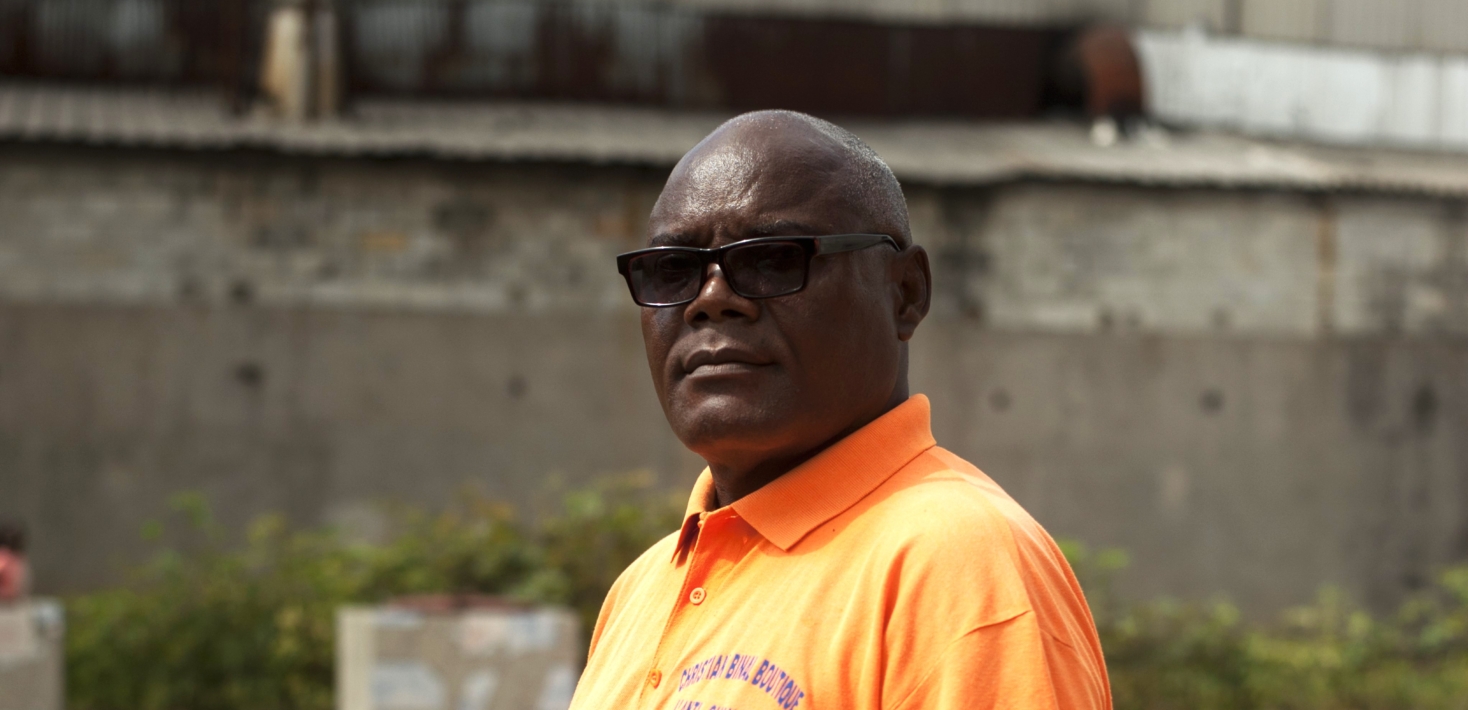
Cyrille Traoré Ndembi, 61, is the President of the Vindoulou Residents’ Collective, a neighbourhood on the outskirts of Pointe-Noire in the Republic of Congo. This retired community development specialist has been fighting to defend the residents’ right to a healthy environment since he moved there in 2019.
His house is located just ten metres from the Metssa Congo plant run by a subsidiary of the India-based Metssa Group. This recycling plant produced lead bars for export from 2013 to 2024, 50 metres from a school and in the middle of a residential area. Cyrille noticed severe health problems in his family including respiratory and digestive disorders. Blood tests on some residents showed lead levels far above the alert level set by the WHO.
Following Cyrille’s campaigning, and with the help of Amnesty International, the authorities ordered the plant’s closure in December 2024. Cyrille continues to fight for justice for his community.
“When I arrived in Vindoulou, I quickly realized the danger we were in. The air was unbreathable!
Black dust and fumes were spreading and invading our homes. Sometimes, when we went out, we couldn’t even see our nearest neighbour. The plant staff discharged oil and wastewater in front of our houses. Metal debris from the plant’s chimney fell onto our roofs. Once, I went to walk along the wall of the plant and debris fell on me like hail.
Right from the start, I had doubts about the legality of this activity in the middle of a populated area. I couldn’t understand how a substance as dangerous as lead could be recycled using processes that were, in my view, contrary to the standards and regulations in force.
‘My whole family was ill’
We arrived in Vindoulou in August 2019 and by January 2020 my whole family was ill. Our children were found to have the beginnings of pneumonia, bronchitis and bronchopneumonia. We also had diarrhoea and abdominal pains.
Across the neighbourhood, people had the same problems. I was told that the children who had moved away from Vindoulou no longer suffered from those symptoms.
The residents believed that nothing could make this company leave. For the community, it was David against Goliath. Some even called me King David.
I went door-to-door to convince people that something serious was going on. Everywhere I went, I reminded people of article 41 of our Constitution: every citizen has the right to live in a healthy environment.
I explained to people the benefits of getting organized together and taking up the fight. Today, our collective has over a hundred members.
From survivor to human rights defender
We tried to meet the directors of Metssa Congo. We met the plant’s manager, who said he was not authorized to comment on the subject. He promised us an audience with the CEO, but it never took place. They wouldn’t talk to us, simply saying that they had authorization to operate. We couldn’t even consult their environmental impact report, which is a document that we were entitled to access under the current legislation. After calling in a bailiff, I was finally able to consult another type of document, their environmental audit report produced after they had already begun operations.
In 2022, I went to meet Amnesty International’s representatives to alert them. From 2023 onwards, Amnesty investigated and provided funds to carry out blood tests on a sample of the population. We then had proof that people tested had high levels of lead in their blood.
At the time, the workers were against what I was doing. Now, most of them have joined us in our fight.Cyrille Traoré Ndembi
I took two blood tests, in March and September 2023. They showed blood lead levels above 400 µg/L. For the 17 other people tested, the levels were alarming. When the ministry carried out other tests in 2024, some ex-workers had levels of 1,000 µg/L – that’s enormous!
My youngest daughter just turned four. Of the nine children tested, she had the highest lead level, above 530 µg/L. I’m worried about her. She’s running fevers even though she has no infection.
Amnesty also helped us take legal action in 2023, to publicize our situation and, in the face of the administration’s inaction, to make a plea to the authorities. As a result, the minister [of Environment] came here and spoke to the population in December 2024. We as a collective did not have a formal audience with the minister. The authorities received Metssa Congo’s managers for an audience in Brazzaville [the Republic of Congo’s capital] several times, but never our collective! I’m not being heard. Ideally, we should be able to talk directly to the authorities.
I’ve been under pressure. Metssa filed a complaint against me alleging defamation in May 2024. I went to court, but Metssa didn’t show up. They were bolstered by the decision of the Supreme Court’s public prosecutor that allowed them to resume their activities after a suspension ordered by an administrative judge in April 2024.
One night, some young people came and threatened me. It was stressful, but I didn’t back down. At the time, the workers were against what I was doing. Now, most of them have joined us in our fight.
When the company’s operations were suspended again in June 2024 by the Ministry of Environment, we continued to fight because the word suspension meant nothing to us. We wanted to hear the word closure. When the decision was taken on 11 December 2024 to close and dismantle the plant, we were relieved, but the fight was far from over.
Several organisations came out with annual reports, including
Predatory attacks on multilateralism, international law and civil society marked 2025
The alternative on offer is a racist, patriarchal, unequal and anti-rights world order
Protesters, activists and global bodies are working to resist, disrupt and transform
The world is on the brink of a perilous new era Amnesty International warned on 21 April 2026 with the launch of its annual report, The State of the World’s Human Rights. The organisation called on governments, including Australia, to reject the politics of appeasement and collectively resist attacks on multilateralism, international law and civil society, before this emerging order takes hold.
In its assessment of the human rights situation across 144 countries, the report documents widespread violations by governments and other actors throughout 2025, alongside persistent failures of accountability, with only limited areas of progress. Many of these patterns have continued into 2026, as the international rules-based order faces sustained and coordinated pressure.
“We are confronting the most challenging moment of our age. Humanity is under attack from transnational anti-rights movements and predatory governments determined to assert their dominance through unlawful wars and brazen economic blackmail,” said Agnès Callamard, Secretary General of Amnesty International.
“World leaders have been far too submissive in the face of attacks on international law and the multilateral system. Their silence and inaction are inexcusable.”Agnès Callamard, Secretary General of Amnesty International
“The vast majority of states have been unwilling or unable to consistently denounce predatory acts by the USA, Russia, Israel or China, or to chisel out diplomatic solutions.
“World leaders have been far too submissive in the face of attacks on international law and the multilateral system. Their silence and inaction are inexcusable. It is morally bankrupt and will bring nothing but retreat, defeat and the erasure of decades of hard-fought human rights gains.
“To appease aggressors is to pour fuel on a fire that will burn us all and scorch the future for generations to come,” said Agnès Callamard…
“For the sake of humanity, the time to make history is now.”Agnès Callamard
The Inter-American Commission on Human Rights (IACHR) presents its Annual Report 2025, documenting the work it has done in compliance with the mandate to promote and protect human rights in the Americas. The report—showing, over six chapters, the results attained by IACHR mechanisms—is an instrument for institutional transparency and a reference for States, civil society, and regional and international organizations.
In a year that was full of challenges including weaknesses in democratic institutions, violence in various national contexts, the effects of climate change, and issues concerning vulnerable individuals and groups, among others, the IACHR strengthened its mechanisms and each of those mechanisms has achieved concrete results.
Our country is facing a grave threat as those in power leverage bias and disinformation to push rights-restricting legislation through at the state and federal levels. Our communities, schools, libraries, elections, and individual freedoms are being placed at risk by escalating assaults on our rights. In response, Human Rights First launched Democracy Watch in 2025, to track and expose legislative trends that endanger our civil and human rights and undermine democratic processes and institutions. Since its launch, we have tracked a proliferation of authoritarian tactics targeting our states and hurting our communities. This year we saw a wide range of legislative strategies, including rollbacks on reproductive freedom, immigrant and refugee rights, free speech, LGBTQ+ equality, voting rights, and public education.
Presenting his 2025 Annual Activity Report to the Parliamentary Assembly of the Council of Europe today, the Council of Europe Commissioner for Human Rights, Michael O’Flaherty, warned that Europe, and the rest of the world, is no longer merely in an “era of change” but is experiencing a profound “change of era” that threatens the very foundations of human rights law and practice.
“We are living in a context where our stable cultural framework is being shattered by rapid social and technological advances that surpass our capacity to grasp them,” the Commissioner stated. Highlighting the impact of artificial intelligence, the triple planetary crisis, and worsening inequality, he noted a widespread diminishment of trust between citizens and the state, as well as between generations and an increasing pressure on institutions and civil society across the continent. “Unimaginably, we risk losing our invaluable acquis of human rights law. This is the duty of our generation: to act and ensure these rights survive this transition intact”.
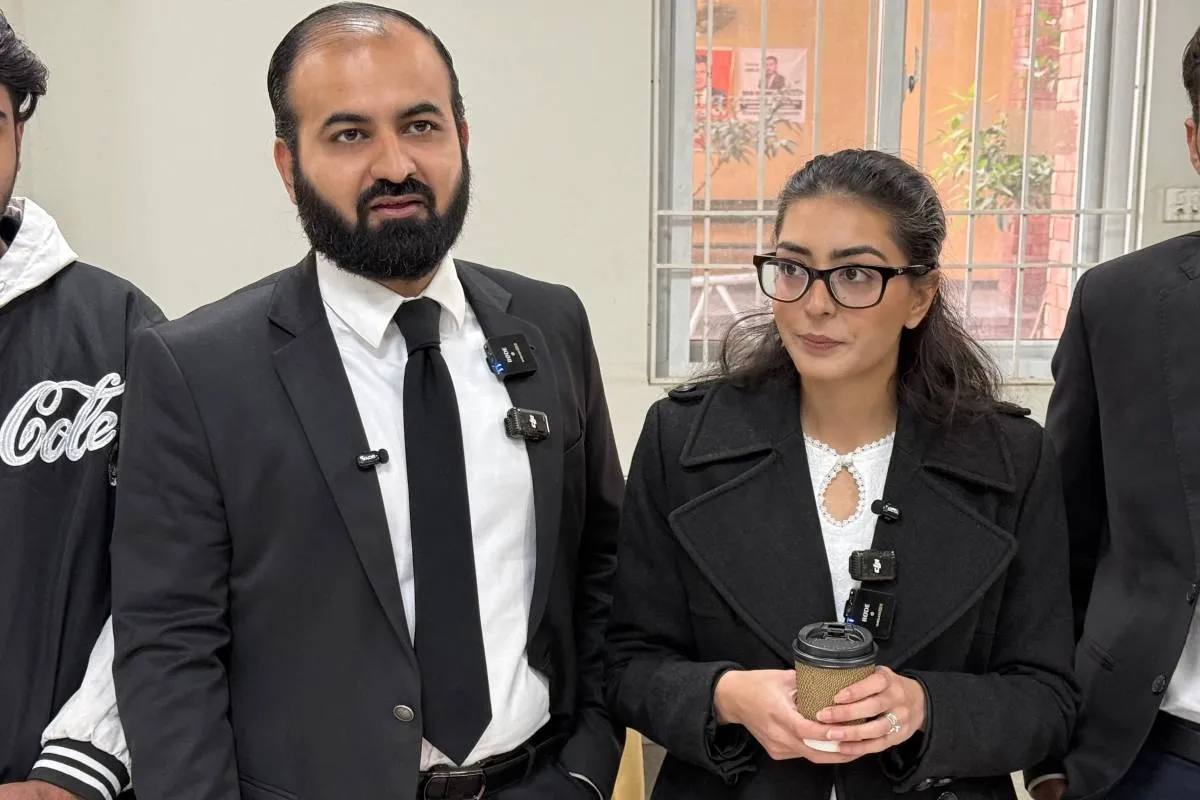
Several media (such as the CSR Journal and Barrons) and NGO (Frontline) talk about the case of human rights lawyer Imaan Mazari and her husband and fellow lawyer Hadi Ali Chattha who were sentenced 10-year-jail by an Islamabad court on 24 January 2026 over anti-state social media posts. However, the pressure and arrest haven’t been able to silence her voice. She said to media agencies, “We will not back down. Truth seems overwhelmingly difficult in this country. But we knew that when we got into this work, we’re ready to face that,”. Mazari noted that the prison term won’t dent her resolve.
Imaan Mazari is a 32-year-old human rights lawyer from Pakistan who rose to fame for fighting some of the most sensitive cases and she has been defending ethnic minorities, journalists facing defamation charges and some of her clients have been branded blasphemers. With Mazari’s coming to prominence, so did the charges by the Pakistani government for cyber terrorism and hate speech. As per a court document, Mazari has been disseminating highly offensive content.
Mazari comes from a well-known family, she is the daughter of former minister for human rights, Shireen Mazari, and her late father was one of the top paediatricians of South Asia. Because of her strong determination of fighting back despite all odds, she is being compared to Pakistan’s one of the popular human rights lawyers, late Asma Jahangir. [see: https://www.trueheroesfilms.org/thedigest/laureates/14CC52FE-5F1B-4EF8-B1F5-607ED173AACC]
Mazari is a pro bono lawyer, she has handled some of the most sensitive cases in Pakistan, e.g. enforced disappearances of ethnic Balochs, she defended Mahrang Baloch. She has also taken up blasphemy cases.
Last year, the UN special rapporteur for human rights defenders said, “Cases against her appear to reflect an arbitrary use of the legal system to harass and intimidate”. She was first targeted in a press conference held sometime in early January, where a military spokesman Lieutenant General Ahmed Sharif Chaudhry, shared Mazari’s post on X posts and filed a case against her, stating her as, “hidden elements committing subtle crimes. They operate under the guise of democracy and human rights to promote terrorism,”.