
Posts Tagged ‘congo drc’

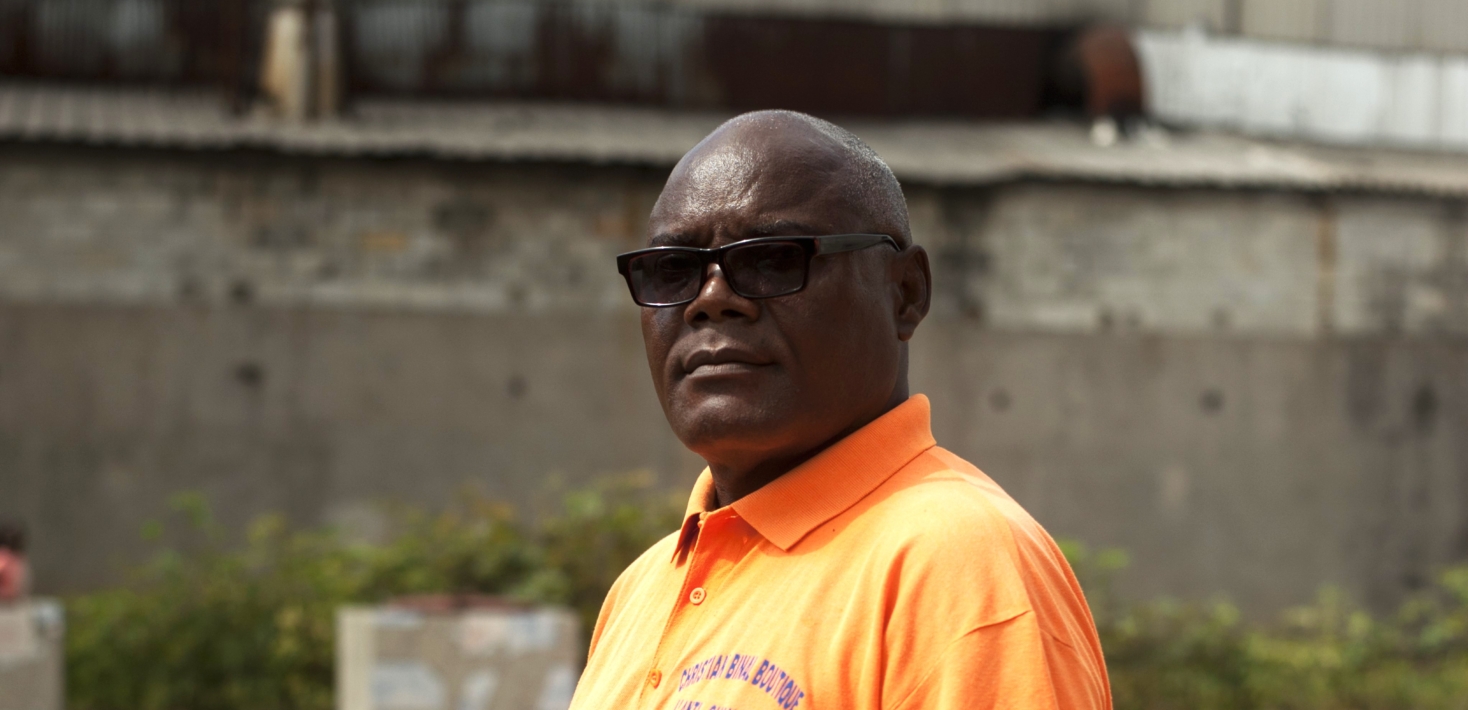
Cyrille Traoré Ndembi, from survivor to human rights defender in DRC

May 7, 2026

19 December 2025

Cyrille Traoré Ndembi, 61, is the President of the Vindoulou Residents’ Collective, a neighbourhood on the outskirts of Pointe-Noire in the Republic of Congo. This retired community development specialist has been fighting to defend the residents’ right to a healthy environment since he moved there in 2019.

His house is located just ten metres from the Metssa Congo plant run by a subsidiary of the India-based Metssa Group. This recycling plant produced lead bars for export from 2013 to 2024, 50 metres from a school and in the middle of a residential area. Cyrille noticed severe health problems in his family including respiratory and digestive disorders. Blood tests on some residents showed lead levels far above the alert level set by the WHO.

Following Cyrille’s campaigning, and with the help of Amnesty International, the authorities ordered the plant’s closure in December 2024. Cyrille continues to fight for justice for his community.

“When I arrived in Vindoulou, I quickly realized the danger we were in. The air was unbreathable!

Black dust and fumes were spreading and invading our homes. Sometimes, when we went out, we couldn’t even see our nearest neighbour. The plant staff discharged oil and wastewater in front of our houses. Metal debris from the plant’s chimney fell onto our roofs. Once, I went to walk along the wall of the plant and debris fell on me like hail.

Right from the start, I had doubts about the legality of this activity in the middle of a populated area. I couldn’t understand how a substance as dangerous as lead could be recycled using processes that were, in my view, contrary to the standards and regulations in force.

‘My whole family was ill’

We arrived in Vindoulou in August 2019 and by January 2020 my whole family was ill. Our children were found to have the beginnings of pneumonia, bronchitis and bronchopneumonia. We also had diarrhoea and abdominal pains.

Across the neighbourhood, people had the same problems. I was told that the children who had moved away from Vindoulou no longer suffered from those symptoms.

The residents believed that nothing could make this company leave. For the community, it was David against Goliath. Some even called me King David.

I went door-to-door to convince people that something serious was going on. Everywhere I went, I reminded people of article 41 of our Constitution: every citizen has the right to live in a healthy environment.

I explained to people the benefits of getting organized together and taking up the fight. Today, our collective has over a hundred members.

From survivor to human rights defender

We tried to meet the directors of Metssa Congo. We met the plant’s manager, who said he was not authorized to comment on the subject. He promised us an audience with the CEO, but it never took place. They wouldn’t talk to us, simply saying that they had authorization to operate. We couldn’t even consult their environmental impact report, which is a document that we were entitled to access under the current legislation. After calling in a bailiff, I was finally able to consult another type of document, their environmental audit report produced after they had already begun operations.

In 2022, I went to meet Amnesty International’s representatives to alert them. From 2023 onwards, Amnesty investigated and provided funds to carry out blood tests on a sample of the population. We then had proof that people tested had high levels of lead in their blood.

At the time, the workers were against what I was doing. Now, most of them have joined us in our fight.Cyrille Traoré Ndembi

I took two blood tests, in March and September 2023. They showed blood lead levels above 400 µg/L. For the 17 other people tested, the levels were alarming. When the ministry carried out other tests in 2024, some ex-workers had levels of 1,000 µg/L – that’s enormous!

My youngest daughter just turned four. Of the nine children tested, she had the highest lead level, above 530 µg/L. I’m worried about her. She’s running fevers even though she has no infection.

Amnesty also helped us take legal action in 2023, to publicize our situation and, in the face of the administration’s inaction, to make a plea to the authorities. As a result, the minister [of Environment] came here and spoke to the population in December 2024. We as a collective did not have a formal audience with the minister. The authorities received Metssa Congo’s managers for an audience in Brazzaville [the Republic of Congo’s capital] several times, but never our collective! I’m not being heard. Ideally, we should be able to talk directly to the authorities.

I’ve been under pressure. Metssa filed a complaint against me alleging defamation in May 2024. I went to court, but Metssa didn’t show up. They were bolstered by the decision of the Supreme Court’s public prosecutor that allowed them to resume their activities after a suspension ordered by an administrative judge in April 2024.

One night, some young people came and threatened me. It was stressful, but I didn’t back down. At the time, the workers were against what I was doing. Now, most of them have joined us in our fight.

When the company’s operations were suspended again in June 2024 by the Ministry of Environment, we continued to fight because the word suspension meant nothing to us. We wanted to hear the word closure. When the decision was taken on 11 December 2024 to close and dismantle the plant, we were relieved, but the fight was far from over.

UN experts warn of extreme M23 violence targeting human rights defenders in DRC

March 7, 2026

UN experts on 26 February 2026 condemned the extreme violence committed against human rights defenders by the M23 armed group in the North and South Kivu provinces, in eastern DRC.

“We are horrified by the gravity and brutality of the abuse committed against human rights defenders and their families,” the experts said.

“There are allegations of attempted killings, repeated kidnappings, torture, sexual violence and death threats at the hands of M23, targeting those peacefully documenting abuses, supporting their communities and speaking out against violations.”

Between November 2025 and February 2026, several human rights defenders in North and South Kivu were reportedly targeted by members of M23 and their collaborators, in direct connection with their human rights work.

Two women human rights defenders protesting forced expulsions of civilians in Uvira, South Kivu, were reportedly abducted and tortured by M23 elements. Their fate and whereabouts remain unknown. One woman human rights defender working on LGBT rights was abducted multiple times, severely tortured and continues to be aggressively pursued.

In another case, a human rights defender was subjected to death threats and forced into hiding. Armed men allegedly raided his home, abducted and violently assaulted his spouse in an effort to force her to reveal his whereabouts. A young human rights defender from Goma, in North Kivu, was also reportedly threatened and forced into hiding following his public writings about killings of civilians in M23-controlled areas.

“Human rights defenders operating in the Kivu provinces are paying an unbearable price,” the experts said. “Those who dare to denounce abuses by M23 are being deliberately targeted. Women human rights defenders and LGBT rights defenders, who already face stigma and discrimination, are at acute risk of sexual violence and torture.”

“M23 must immediately stop targeting human rights defenders and civilians. The ceasefire must be fully respected and not undermined by ongoing intimidation and persecution,” they added.

The experts stressed that while the reported violations are attributed to M23 members, the State retains the obligation under international human rights law to protect individuals within its jurisdiction.

“Even where violations are committed by non-State armed groups, the State has a clear obligation to exercise due diligence to prevent, investigate, punish and redress such acts,” the experts said.

“We call on the authorities to ensure prompt and impartial investigations into all allegations, to provide protection and adequate medical and psychosocial support to survivors and their families and to take meaningful steps to guarantee that human rights defenders in eastern DRC can carry out their work safely and without fear.”

“Human rights defenders are not combatants. They are not enemies, but vital actors for justice, accountability and peace,” the experts said. “When they are silenced through fear and brutality, the prospects for lasting peace in eastern DRC grow ever more distant.”

*The experts:

https://www.ohchr.org/en/press-releases/2026/02/drc-un-experts-warn-extreme-m23-violence-targeting-human-rights-defenders

https://www.devdiscourse.com/article/other/3819548-un-experts-condemn-m23-attacks-on-rights-defenders-in-dr-congo

Nobel Laureate Denis Mukwege under threat in Congo

August 5, 2020

Nobel Peace Prize Laureate, Dr Denis Mukwege, says his family has been intimidated and threatened since he denounced the recent massacre in Kipupu in Mwenga territory in South Kivu of Congo. Mukwege, who is the founder and Medical Director of Panzi Hospital and Foundations, said in a statement on Monday 3 August 2020 that since 2012 and even after two assassination attempts, he had continued to receive death threats [see also; https://humanrightsdefenders.blog/2018/10/05/breaking-news-see-which-other-awards-the-2018-nobel-peace-prize-laureates-won-already/].

Since my tweet on Sunday, July 26 denouncing the recent massacre in Kipupu in Mwenga territory in South Kivu, I have received various hate mails, and members of my family have been intimidated and threatened,” he said.

Since then[ 22 years ago], I have not ceased to campaign for the search for truth and the application of justice, without which we cannot hope for lasting peace,” he said.

While calling for peace, the Nobel Peace Prize Laurel made a case for the examination of the mapping report carried out by the United Nations High Commissioner for Human Rights, adding that the report contained a compilation of war crimes, crimes against humanity, and genocides detailed from 1993 to 2003. “Without analyzing these crimes-which mark the history of the Congo-and without justice being rendered for these crimes, no people involved in these conflicts will be able to recover or live in peace,” he said. He further said it seemed that advocating for the creation of a special jurisdiction to try crimes in the Congo scares some people who pour out their hatred on social media by pitting one against the other, often on the basis of lies. However, he said reconciliation between peoples and the establishment of reparations for the victims could not be achieved without our relentless search for the truth. “No intellectual malfeasance, no threat, no intimidation, will prevent me from expressing myself on the reality of the atrocities experienced by the populations of my country and the consequences of which I treat every day in my hospital in Bukavu,” he said.

See also: https://humanrightsdefenders.blog/2019/03/12/djimon-hounsou-set-to-play-congolese-nobel-prize-winner-denis-mukwege-in-new-film/

Read more: https://www.dailytrust.com.ng/my-family-under-threat-over-congo-massacre-tweet-peace-laureate-mukwege.html

Kidnappings of human rights defenders in DRC continue unabated

September 16, 2014

Frontline NEWlogos-1 condensed version - croppedjust published two recent reports on kidnappings in DRC. The first is that on 13 September 2014, the corpse of human rights defender Mr Mutebwa Kaboko was found in a forest, eight days after he was kidnapped by an armed group. Mutebwa Kaboko was a training facilitator for the organisation Aide Rapide aux Victimes des Catastrophes – ARVC, created in 2008 to help disaster victims, especially women and vulnerable children. Now operating in the territories of Uvira and Fizi Walungu, the association has led a campaign against the phenomenon of forced marriage.  He was abducted by men suspected of belonging to an armed group known as Mayi Mayi Yakutumba. [On 20 June 2014, Mutebwa Kaboko was abducted in a similar way by elements of Mayi Mayi Yakutumba. He had apparently denounced their presence in the locality of Katete. They had held Mutebwa Kaboko in the open forest for five days before releasing him.]

On 14 September two other human rights defenders, Ms Neema Bitu and Mr Jacques Muganga, were found back after being kidnapped and held for two days by members of a rebel group. The two defenders are investigators of l’Action des Femmes Contre la Torture – AFCT (Action for Women Against Torture), an organisation defending the rights of women based in the village of Mwaba Kangando/Kiliba, tens of kilometers from the town of Uvira near the border between Burundi and the DRC. The perpetrators are this time  suspected of belonging to Forces Nationales de Libération du Burundi, a rebel group composed mostly of Burundian combatants and operating in parts of South Kivu in the DRC. On the night of 13 September 2014, the two defenders were able to escape from their captors while they were firing on the government army. Their colleagues found them at dawn on 14 September 2014 at approximately. During their captivity, they reportedly suffered terrible beatings and now require emergency medical treatment.

This follows the abduction and detention on 1 September 2014, of human rights defenders Mr Célestin Bambone, Ms Marie Amnazo and Ms Kongwa Tulinabo [from the Action Paysanne pour le Développement et la Promotion des Droits de l’Homme (Peasant Action for the Development and Promotion of Human Rights – APDPDH), a human rights organisation based in Mugutu, in the South Kivu province and specialising in the monitoring of human rights violations in Mugutu and surrounding villages].


Intimidation of human rights defender Didier Kalemba in DRC

February 17, 2014

Frontline NEWlogos-1 condensed version - cropped reports that on 12 February 2014, human rights defender Didier Kalemba addressed a formal complaint to the public prosecutor’s office in the Democratic Republic of Congo in connection with a series of intimidatory acts that he has recently been subjected to. Didier Kalemba is a lawyer who has been acting as a protection officer for the Association Congolaise pour l’Accès à la Justice – ACAJ (Congolese Association for Access to Justice). His work mainly focuses on following up on cases of arbitrarily detained persons, particularly political prisoners or prisoners of conscience. Didier Kalemba received several calls from the same telephone number demanding him to halt his visits to the Ndolo military prison, or his family would regret his “stubbornness.”

[This is not the first time Didier Kalemba has received threats]

Threats and intimidatory acts against human rights defender Jean Pierre Muteba in DRC

April 22, 2013

On 17 April 2013, human rights defender Jean Pierre Muteba reported to the Katanga provincial office of the ANR (National Intelligence Agency), a day after receiving a written notice signed by the new director of that agency in Katanga, DRC. The notice followed incidents in which the human rights defender noted being followed by members of the same agency and complained to colleagues of receiving several threatening telephone messages from anonymous callers. However, on this occasion he was not questioned and left after two hours.

Jean Pierre Muteba is the spokesperson for the “Cadre de Concertation de la Société Civile du Katanga” (Coalition of Civil Society Groups of Katanga), a network of civil society organisations active on issues related to human rights and justice as well as social accountability for extractive industries in the DRC’s copper-rich Katanga region.

On several different occasions after 23 March 2013, the day on which a group of Maï Maï fighters known as “Bakata Katanga” invaded Lubumbashi (Katanga’s regional capital), Muteba reported receiving anonymous intimidatory messages on his mobile phone. Three days after this invasion, which caused up to thirty-five deaths according to UN sources, ten organisations affiliated with Muteba’s coalition issued a report on the incident in which they accused certain personalities within Katanga’s security, business and political spheres of being behind the violent incident. It is believed that the threats and intimidatory acts that Muteba has faced since are closely related to the role his organisation played in denouncing those who are suspected of being behind the attack on Lubumbashi and in demanding an independent investigation of the violence.

Front Line Defenders believes that the threats against Jean Pierre Muteba are directly related to his human rights work with the Coalition of Civil Society Groups of Katanga.Frontline NEWlogo-2 full version - cropped

Recent situation of human rights defenders in Africa; overview by the Observatory for the Protection of Human Rights Defenders

April 19, 2013

Intervening at the 53rd ordinary session of African Commission on Human and Peoples Rights, on  18 April 2013, the FIDH and the OMCT, in the framework of their Observatory for the Protection of Human Rights Defenders, expressed their grave concern about the situation of human rights defenders in Africa, which they stated had not observed an improvement. Violations of human rights targeting defenders have continued, notably in Algeria, Cameroon, Chad, Democratic Republic of Congo DRC, Djibouti, Egypt, Gambia, Sudan and Zimbabwe. Judicial harassment based on false accusations, accompanied by arbitrary arrests and detentions, remains the most common harassment technique, especially in Algeria and Zimbabwe, but also in Cameroon, Djibouti, Egypt, The Gambia and Sudan. In several countries, including The Gambia and DRC, defenders have also been subjected to threats and smear campaigns. In late December 2012 / early January 2013, the presence in Goma in the Kivu region of non-State armed groups notably led to increased threats against local defenders, forcing many of them to hide or flee into exile. The targeted defenders are, inter alia, members of NGOs and lawyers in Chad, DRC, Zimbabwe, journalists in Djibouti, trade unionists fighting against impunity in Algeria, Djibouti, DRC, Zimbabwe or defending land rights and the right to a healthy environment in Cameroon; defenders of the right to work in Algeria and the right to health care in Sudan; advocates for the abolition of the death penalty in The Gambia, women’s rights in DRC, The Gambia, and free and fair elections in Zimbabwe; and activists campaigning against arbitrary detention in Egypt. Some excerpts follow but the reference to the full report is below:logo FIDH_seul

OMCT-LOGO

Read the rest of this entry »