

Posts Tagged ‘Sean Binder’

Write for Rights campaign turns 25, here 7 successes

October 24, 2026

Amnesty International

This year marks the 25th anniversary of Amnesty International’s global Write for Rights campaign, which has supported more than 200 people and groups.

That’s 25 years of people taking action against injustice, writing letters and signing petitions in support of people whose human rights have been denied. Some have been imprisoned for peacefully expressing their views. Others have been targeted because of who they are or who they love. Some have been criminalized simply because they were in the wrong place at the wrong time.

More than 50 million actions have been taken – in the form of letters, emails, cards, petition signatures, social media posts and more – since Write for Rights started in 2001. Amnesty’s brilliant supporters have written letters both to those whose rights are being violated, and the person in authority who can make change happen.

People have taken action because they believe hope and humanity can win over fear.

As a result, over 100 people featured in our Write for Rights campaign have seen a positive outcome in their situation. People unlawfully detained have been released, families have been reunited and justice achieved. Just as important – individuals have been reminded that they have not been forgotten.

Here are the stories of a few of them, whose lives have changed – and even been saved – thanks to the support of people like you…


Germain Rukuki – Burundi
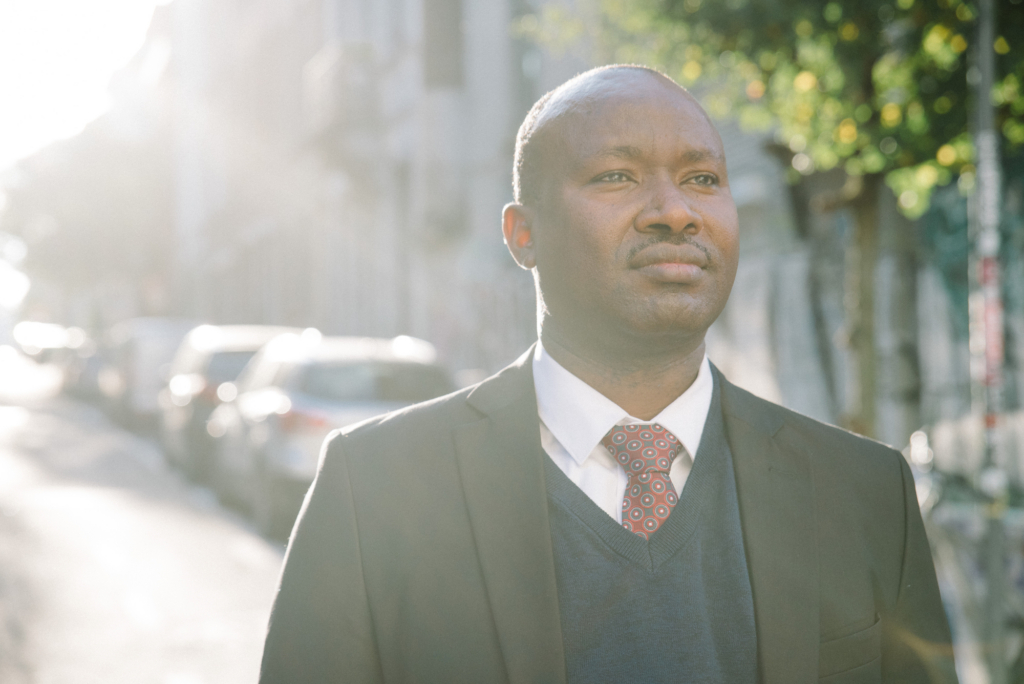
 A man stands bathed in sunlight, looking down the street.
Human rights defender Germain Rukuki was arrested in July 2017 and was serving a 32-year prison sentence after he was convicted of “rebellion” amongst other things. During Amnesty International’s global Write for Rights campaign, supporters in 37 countries took action and called for his immediate and unconditional release. He was released from prison on 30 June 2021.

On 30 June 2021, Burundian human rights defender Germain Rukuki was released from prison four years into a 32-year sentence. He had been found guilty of a number of sham charges relating to his human rights work. He was jailed before getting a chance to hold his youngest child, born just weeks after he was arrested in July 2017.

Yves Makwambala and Fred Bauma – Democratic Republic of Congo

Youth activists Yves Makwambala and Fred Bauma were released at the end of August 2016 in the Democratic Republic of Congo. An amazing 170,000 people took action for the pair as part of Write for Rights 2015. “Every letter, every visit, every word has strengthened us and reinforced our determination in this long but just struggle for freedom and democracy,” said Yves.

Seán Binder – Greece
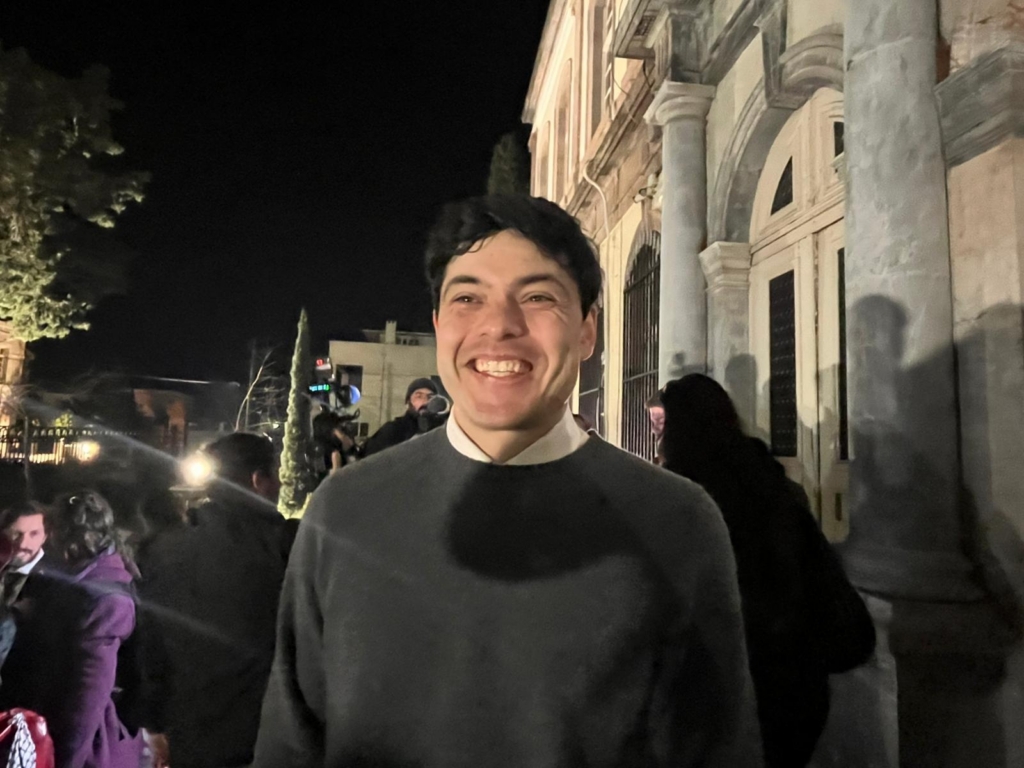
As night closes in, a man in a dark jumper stands against a brightly lit building.
After more than seven long years, Seán Binder and all 23 defendants were been cleared of all charges in Greece relating to their humanitarian rescue work on Lesvos.

In January 2026, human rights defender Seán Binder and 23 others connected to a search and rescue NGO were acquitted of all charges in Greece. After years on trial, Seán no longer faces the possibility of a 20-year prison sentence for helping refugees.

Eight years after Amnesty first called for the charges to be dropped, Seán was finally acquitted.

Moses Akatugba – Nigeria
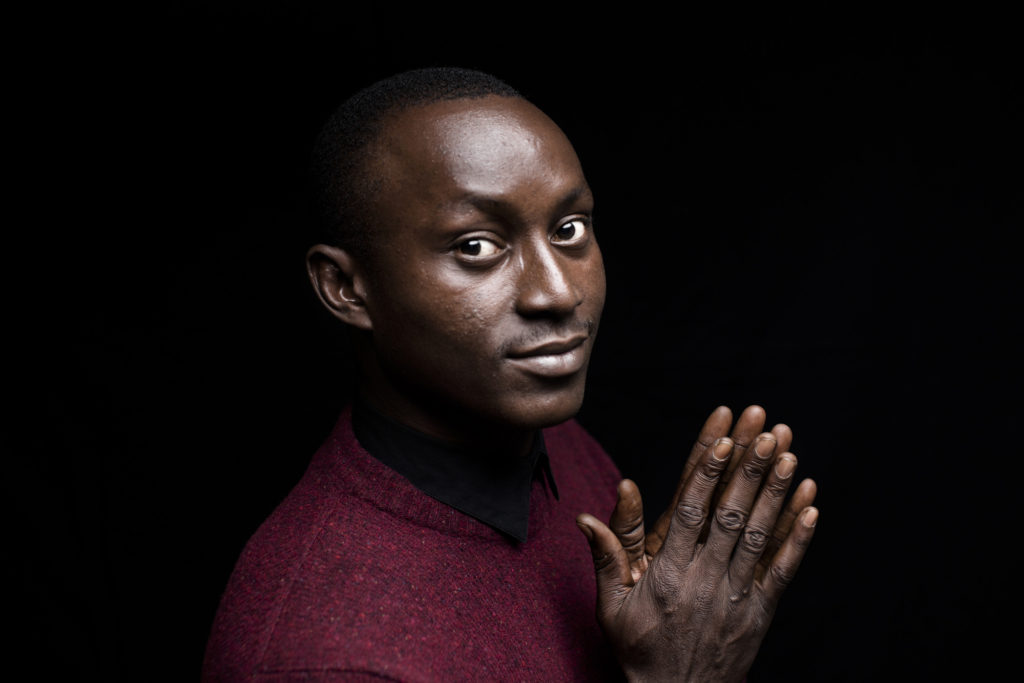
A man stands looking to camera with his hands clasped. He wears a red jumper.
Moses was waiting for the results of his secondary school exams when he was arrested by the Nigerian army in 2005, shot in the hand and beaten. After eight years in prison, he was sentenced to death by hanging. Activists including many young people and Amnesty International demonstrated outside their country’s Nigerian embassies his behalf. Moses was freed in 2019.

Moses Akatugba was a 16-year-old student when he was arrested in 2005 by police in southern Nigeria, on suspicion of armed robbery and stealing three telephones. He was tortured by police during their interrogations, beaten and suspended upside down from a ceiling fan for hours. His nails were pulled out with pliers to coerce him into signing a “confession” – the only basis for his death sentence eight years later.

Rita Mahato – Nepal 
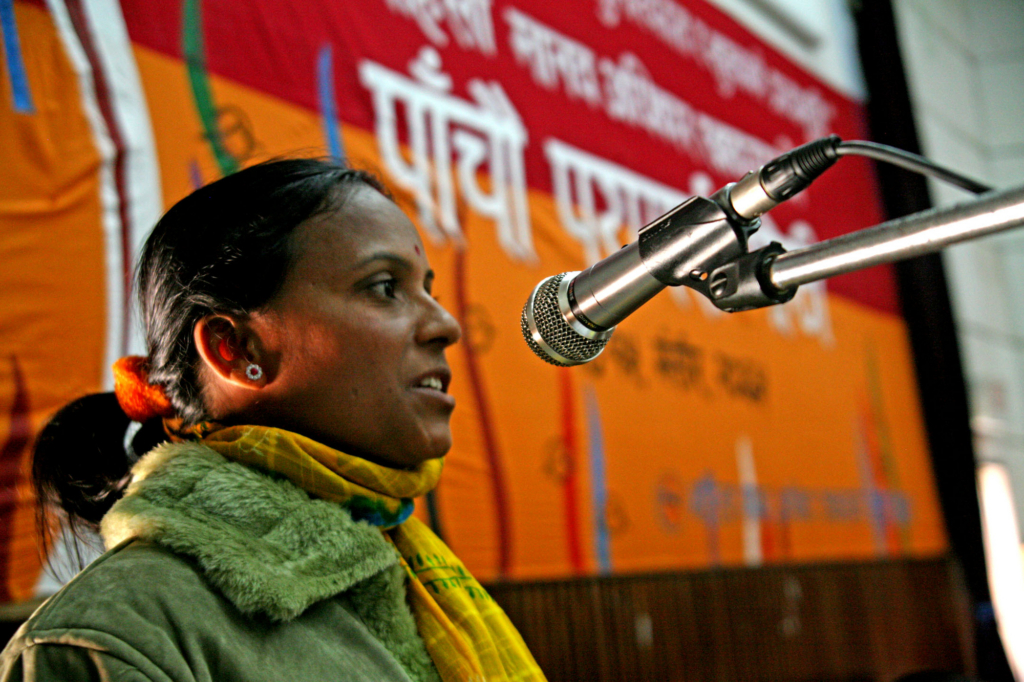
Rita Mahato Chamar is a human rights defender from Nepal.

In 2009, human rights defender Rita Mahato was threatened with death, rape and kidnapping for helping women in Nepal who had suffered acts of violence. She was a health adviser at the Women’s Rehabilitation Centre (WOREC), a leading NGO in Nepal, yet police failed to provide Rita with protection or to investigate the threats. After Amnesty took up her case for Write for Rights 2009, schools, campuses and other institutions around the world started sending letters, postcards and other materials in support of her. The publicity and posters became so widespread that the police and local authorities began calling Rita to provide support, making her feel less alone. While the harassment has ended, Rita still stands up for what she believes in.

Aleksandra (Sacha) Skochilenko – Russia
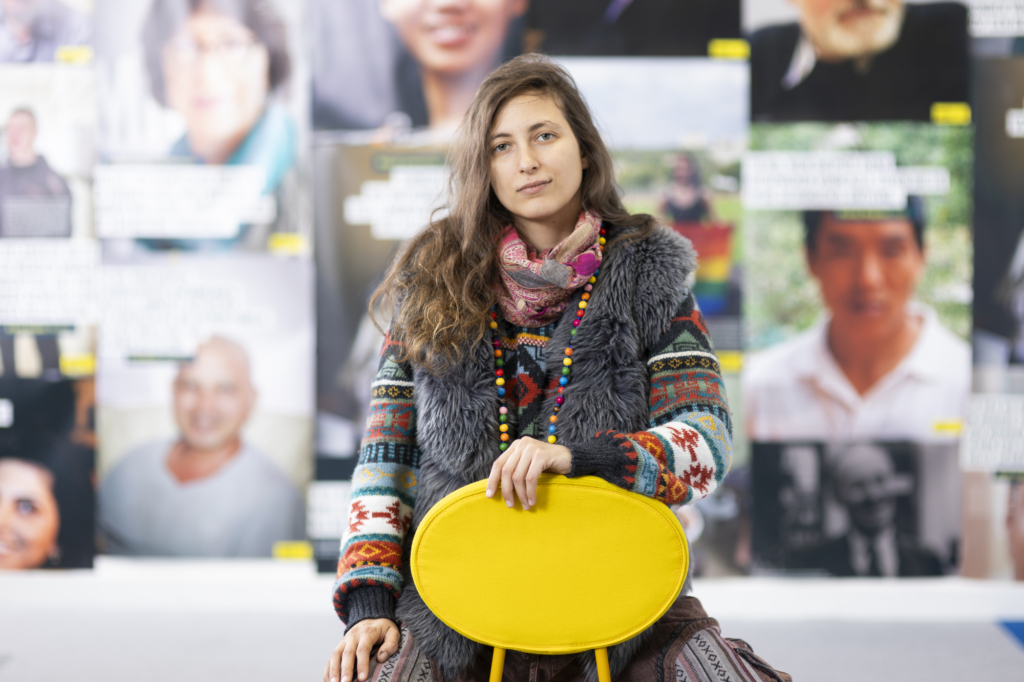
A woman with long brown hair
Aleksandra (Sasha) Skochilenko, visits Amnesty in the Netherlands, Amsterdam, to thank them from for their support.

Russian artist Aleksandra “Sacha” Skochilenko was arrested for protesting Russia’s full-scale invasion of Ukraine. In March 2022, she replaced price tags at a supermarket with paper labels that contained information censored by Russian state-run media. She was charged with “dissemination of knowingly false information about Russian Armed Forces” and sentenced to seven years in December 2023. In 2024, thanks in part to international pressure from Write for Rights 2022, Sacha was finally released as part of a huge prisoner swap, involving Russia and Belarus, who agreed to a swap with the United States, Germany, Norway, Poland, and Slovenia.  Sacha now lives in exile in Germany.

https://amnesty.ca/urgent-actions/outcome-uae-sudanese-political-activist-released-after-19-months
Amnesty International reports 31 wins for human rights in last 6 months

June 30, 2026

On 29 June 2026, Amnesty published a roundup of what can be achieved when we stand together in solidarity. Despite the increasingly fractious state of the world, governments and civil society have come together to pass important laws and resolutions to tackle human rights harms, following protests and petitions from activists and campaigners.

Here a few examples but the list is worth reading in total:

In January, human rights defender Sean Binder and 23 others connected to a Search and Rescue NGO were acquitted in Greece after years on trial. Amnesty International has been campaigning in support of Sean’s case since 2018.

Eleven members of the Istanbul Bar Association’s executive committee were acquitted on 9 January, after facing charges for “spreading terrorist propaganda” and “publicly disseminating misleading information”. The 11 had been on trial over a statement issued by the Bar Association on 21 December 2024 about the killing of two journalists in northern Syria and the arrest of journalists and lawyers at a related peaceful protest in Istanbul the day before.

Human rights defenders who had been arbitrarily detained in Venezuela were released between January and May 2026. They included Javier Tarazona, Rocío San Miguel, Kennedy Tejeda, Carlos Julio Rojas and Eduardo Torres, Darío Estrada, Rosa Chirinos, and Yevhenii Trush.

Eight years after the murder of human rights defender Marielle Franco and her driver Anderson Gomes  in Rio de Janeiro, and the attempted murder of Fernanda Chaves, a press officer working for Marielle, those responsible for orchestrating these crimes have finally been convicted. The conviction is a major step forward in the fight against political violence and impunity in Brazil. It is also a testament to the persistence of Marielle’s family, social movements and civil society organizations, such as Amnesty International, in demanding truth and justice over the years. Amnesty International Brazil is continuing to call for broader measures to prevent political violence and ensure effective protection for human rights defenders, especially Black leaders, women and those who challenge entrenched systems of inequality and discrimination.

Adamu Oseni (aka Hussaini Oseni) was released on 18 February 2026 after years of campaigning by Amnesty International Nigeria. Oseni had been sentenced to life imprisonment by the Ondo State High Court, for possessing a phone linked to an armed robbery, despite evidence he was not involved in the crime. After Amnesty International Nigeria submitted a pardon request on his behalf in 2024, his sentence was reduced to 20 years before he was finally released.

Million Beyene, a journalist and managing editor at Addis Standard, was abducted from the newsroom in on 15 April, by three men wearing plain clothes. It is believed he was targeted because of his work as a journalist. Amnesty International launched an Urgent Action on 27 April and he was released to his family on 28 April.  Upon his release, he said: ”I am currently receiving medical treatment and doing my best to recover. The experience has been difficult, and I am still coping with its impact, but I remain strong. I am deeply grateful for all your support and efforts on my behalf. It truly means a lot to me.”

A Norwegian court rejected Greece’s request to extradite Tommy Olsen, founder of the NGO Aegean Boat Report, who is wanted on criminal charges connected to his work documenting human rights violations against refugees and migrants at Europe’s borders. Following his initial arrest in Norway, Amnesty launched an Urgent Action calling on Norway to reject his extradition and stating that the charges against him were not supported by evidence and were an abuse of anti-smuggling legislation. Olsen still faces criminal proceedings against him in Greece and is subject to a European arrest warrant. Amnesty International will continue to campaign against the criminalization of solidarity with refugees and migrants.

5 Podcasts by Human Rights Defenders

January 16, 2024

On 15 January 2024, Amnesty International announced that five courageous human rights defenders from around the world have shared their hard-hitting stories on its new podcast: ‘On the Side of Humanity. How human rights defenders fight for our present and future’.

The three-part series was released to mark the 25th anniversary of the UN Declaration on Human Rights Defenders. The documentary explores how the human rights movement has evolved since the adoption of the watershed declaration.

In the podcast, Amnesty International’s Tatyana Movshevich discovers the story behind the declaration and meets brave activists from Chile, the USA, Nepal, Ireland and Ghana, all of whom have been fighting for the rights of marginalized people — and risking their lives in the process.

“Every day, human rights defenders are risking their lives, sometimes at a significant personal cost. They experience violence and discrimination simply for defending the rights of others,” said Tatyana Movshevich, Amnesty International’s Campaigner.

“For this podcast I have interviewed five incredible human rights defenders and it was inspiring to hear about their work, but also distressing to realise the enormous dangers they are facing. During our interview, Anas Aremeyaw Anas, a journalist from Ghana, told me a chilling story of how his investigation into killings linked to ritual magic in Malawi had gone terribly wrong. And it was not the only time when Anas found himself in mortal danger because of his human rights work. Far from it.”

Every day, human rights defenders are risking their lives, sometimes at a significant personal cost.Tatyana Movshevich, Amnesty International’s Campaigner

Others featured in the podcast include Lorena Donaire, a water defender from Chile whose life was turned upside down as she was tackling the catastrophic results of a mega-drought; Monica Simpson, a queer activist and artist from the USA and Durga Sob, a Dalit woman and Nepalese feminist activist, who have both been confronting long-ignored issues of racism and caste-based discrimination; and Sean Binder, a migrant rights defender from Ireland whose freedom was compromised while he was volunteering on an idyllic Greek island. [see lso: https://humanrightsdefenders.blog/2021/11/17/greeces-mistaken-deterrence-migrants-and-aid-workers-facing-heavy-prison-sentences/]

International experts that took part in the series include Mary Lawlor, the UN Special Rapporteur on the situation of Human Rights Defenders, and Hina Jilani, women rights activist and co-founder of Pakistan’s first all-women law firm.

The podcast is out now and available to stream on Spotify, Apple, Google and Deezer.

https://www.amnesty.org/en/latest/news/

Greece’s mistaken deterrence: migrants and aid workers facing heavy prison sentences

November 17, 2021
An abandoned life jacket in the Aegean Sea in 2016 | Photo: Picture-alliance/AP Photo/L.Pitarakis

A post by Marion MacGregor published on 15 November 2021in ‘Infomigrants’ brings out an awful truth which I have to face up to even though Greece is my adopted country. In the face of Turkey ‘weaponsing’ migrants, it is trying its hands at deterrence in the hope that it will diminish the pressure of inflows

Greece and other European countries are increasingly using the threat of criminal proceedings against aid workers and those migrants who ended up being marked as migrant smugglers.

Hanad Abdi Mohammad is in prison, he says, because of something he was forced to do. The Somali is serving an impossibly long sentence of 142 years (!) after he was convicted last December for driving an inflatable dinghy carrying migrants to Greece. He says that he didn’t have a choice, because the smuggler hit him in the face and threatened him with a gun before abandoning the boat in rough seas. As 28-year-old Mohammad told journalists and members of the European Parliament who visited the prison last week, he “didn’t think saving people is a crime.”

In the same prison on the Greek island of Chios two men from Afghanistan, Amir Zaheri and Akif Rasouli, both in their 20s, are also serving sentences of 50 years for similar criminal offences. The men’s convictions and staggering prison terms show how far Greece is ready to go in order to stop migrants in their tracks.

On the day the smuggler abandoned them at sea between Turkey and Greece, Mohammad and nearly three dozen other migrants were only concerned about their lives. Mohammad says that he called the Turkish coast guard repeatedly, begging to be rescued. But when it arrived, the Turkish patrol boat circled the migrants’ dinghy sending water into the boat and gradually pushing it toward Greece. In the chaos, two women fell overboard and drowned, AP reports.

The survivors were finally rescued by the Greek coast guard, and Mohammad helped others onto the rescue boat. He admitted to having driven the boat after the smuggler left. It didn’t cross his mind that would lead to him being prosecuted as a smuggler.

“It’s not possible that someone who comes to claim asylum in Greece is threatened with such heavy sentences simply because they were forced, by circumstances or pressure, to take over handling a boat,” one of the lawyers representing the three imprisoned in Chios, Alexandros Georgoulis, told AP. Greek authorities, he said, “are essentially baptizing the smuggled as the smuggler.”

From file: Sara Mardini and Seán Binder | Screenshot from Amnesty International Ireland

Greek authorities have also accused aid workers and volunteers helping migrants in Greece of serious crimes. In one widely publicized case, the Syrian human rights worker Sara Mardini, a refugee herself, and an Irish volunteer Sean Binder were arrested and detained for months in 2018 on suspicion of espionage, money laundering, human trafficking and other offenses. Due to face trial on the island of Lesbos alongside 22 other civil society activists later this week, Binder says he is “terrified.”

“I’ve had a taste of life in prison on Chios. It was all scabies and bed bugs with 17 of us packed in a cell,” Binder told The Guardian. “The police holding cells were even worse, the most awful place on earth; squalid, windowless rooms full of asylum seekers just there because authorities had nowhere else to put them.”

Giorgos Kosmopoulos, a campaigner with an Amnesty International group which plans to monitor the trial in Greece, says that this is not only happening there. “Human rights defenders across Europe are being criminalized … for helping refugees and migrants,” he told The Guardian. See also: https://humanrightsdefenders.blog/2020/10/09/mary-lawlor-condemns-criminalization-of-those-saving-lives-in-the-mediterranean/

AP reports that, according to the European Union Agency for Fundamental Rights, Germany, Italy, Malta, the Netherlands, Spain and Greece have initiated 58 investigations and legal proceedings since 2016 against private entities involved in search and rescue.

“I think it’s important to challenge these in the courts, to not at all sit back and accept that we should be cast as smugglers or spies because I offered CPR, (or) more often than not just a smile, to someone in distress,” Binder told the news agency. “It is preposterous that we should be cast as criminals. I don’t accept it….It doesn’t matter who you are, you don’t deserve to drown in the sea.“

Binder told The Guardian that he has not bought a return ticket to the UK, where he has been studying. He and Mardini face a maximum eight-year sentence, convertible into a fine. They are still under investigation for offences which could carry 25-year sentences if they are convicted.

In my view, the problem can only be tackled in a European context [see e.g. https://ec.europa.eu/home-affairs/what-we-do/policies/legal-migration-and-integration_en%5D but it seems most member states cling to outdated notion of sovereignty.

Not directly related but possibly relevant is recent legislation in Greece, adopted on November 11, 2021, that makes it a criminal offence to spread “fake news.” Human Rights Watch said that the Greek government should immediately move to revoke the provision, which is incompatible with freedom of expression and media freedom. “In Greece, you now risk jail for speaking out on important issues of public interest, if the government claims it’s false,” said Eva Cossé, Greece researcher at Human Rights Watch. “The criminal sanctions risk making journalists and virtually anyone else afraid to report on or to debate important issues such as the handling of Covid-19 or migration or government economic policy.”

While the trial began Thursday, it was almost immediately suspended. The court’s decision to adjourn, said 27-year-old Binder, a diver and German national, “is further proof of the absurdity of this case.”

https://www.commondreams.org/news/2021/11/18/drop-charges-greece-delays-trial-humanitarians-who-aided-refugees-sea

https://www.infomigrants.net/en/post/36487/greece-migrants-and-aid-workers-facing-decades-in-prison

https://www.independent.ie/regionals/kerryman/news/kerry-aid-worker-faces-trial-in-greece-41058865.html

https://www.hrw.org/news/2021/11/17/greece-alleged-fake-news-made-crime

https://reliefweb.int/report/greece/greece-guilty-verdict-migrant-rights-defenders-could-mean-more-deaths-sea-un-expert

https://www.ansamed.info/ansamed/en/news/sections/politics/2021/11/19/trial-of-aid-workers-in-greece-is-adjourned-amid-protests_5de29280-fde8-4c77-b7c2-ef878c497157.html

See also in March 2022: https://www.hrw.org/news/2022/03/17/ray-hope-fight-against-greeces-border-abuses,

and on 12 April: https://www.ohchr.org/en/press-releases/2022/04/un-committee-enforced-disappearances-publishes-findings-greece-and-niger