
Posts Tagged ‘Nepal’

Write for Rights campaign turns 25, here 7 successes

October 24, 2026

Amnesty International

This year marks the 25th anniversary of Amnesty International’s global Write for Rights campaign, which has supported more than 200 people and groups.

That’s 25 years of people taking action against injustice, writing letters and signing petitions in support of people whose human rights have been denied. Some have been imprisoned for peacefully expressing their views. Others have been targeted because of who they are or who they love. Some have been criminalized simply because they were in the wrong place at the wrong time.

More than 50 million actions have been taken – in the form of letters, emails, cards, petition signatures, social media posts and more – since Write for Rights started in 2001. Amnesty’s brilliant supporters have written letters both to those whose rights are being violated, and the person in authority who can make change happen.

People have taken action because they believe hope and humanity can win over fear.

As a result, over 100 people featured in our Write for Rights campaign have seen a positive outcome in their situation. People unlawfully detained have been released, families have been reunited and justice achieved. Just as important – individuals have been reminded that they have not been forgotten.

Here are the stories of a few of them, whose lives have changed – and even been saved – thanks to the support of people like you…


Germain Rukuki – Burundi
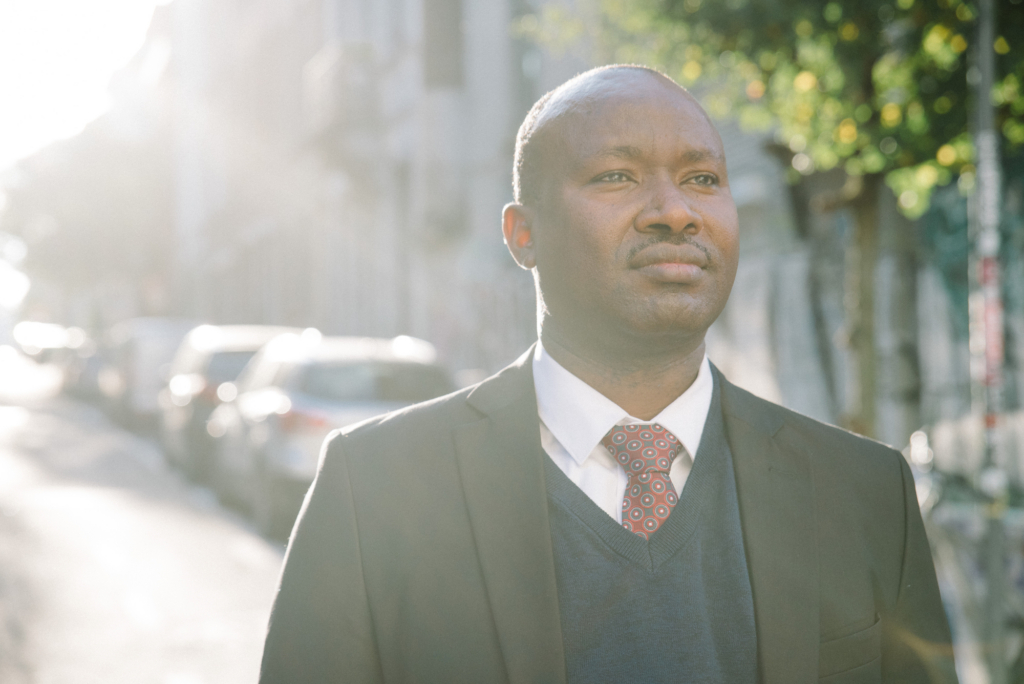
 A man stands bathed in sunlight, looking down the street.
Human rights defender Germain Rukuki was arrested in July 2017 and was serving a 32-year prison sentence after he was convicted of “rebellion” amongst other things. During Amnesty International’s global Write for Rights campaign, supporters in 37 countries took action and called for his immediate and unconditional release. He was released from prison on 30 June 2021.

On 30 June 2021, Burundian human rights defender Germain Rukuki was released from prison four years into a 32-year sentence. He had been found guilty of a number of sham charges relating to his human rights work. He was jailed before getting a chance to hold his youngest child, born just weeks after he was arrested in July 2017.

Yves Makwambala and Fred Bauma – Democratic Republic of Congo

Youth activists Yves Makwambala and Fred Bauma were released at the end of August 2016 in the Democratic Republic of Congo. An amazing 170,000 people took action for the pair as part of Write for Rights 2015. “Every letter, every visit, every word has strengthened us and reinforced our determination in this long but just struggle for freedom and democracy,” said Yves.

Seán Binder – Greece
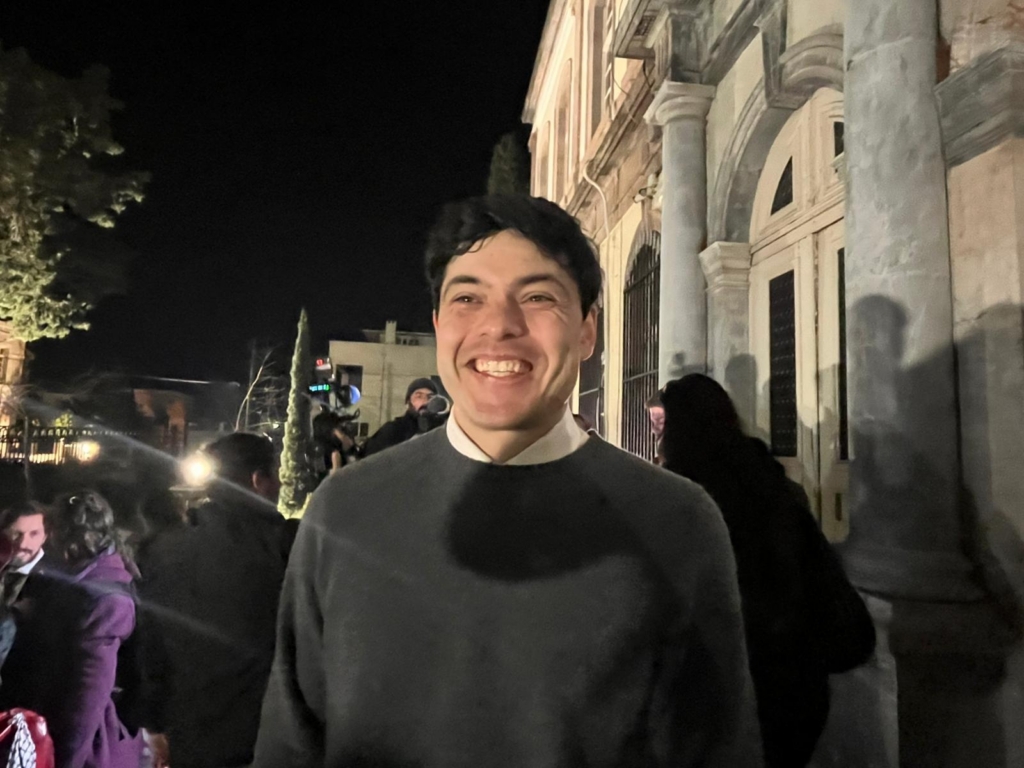
As night closes in, a man in a dark jumper stands against a brightly lit building.
After more than seven long years, Seán Binder and all 23 defendants were been cleared of all charges in Greece relating to their humanitarian rescue work on Lesvos.

In January 2026, human rights defender Seán Binder and 23 others connected to a search and rescue NGO were acquitted of all charges in Greece. After years on trial, Seán no longer faces the possibility of a 20-year prison sentence for helping refugees.

Eight years after Amnesty first called for the charges to be dropped, Seán was finally acquitted.

Moses Akatugba – Nigeria
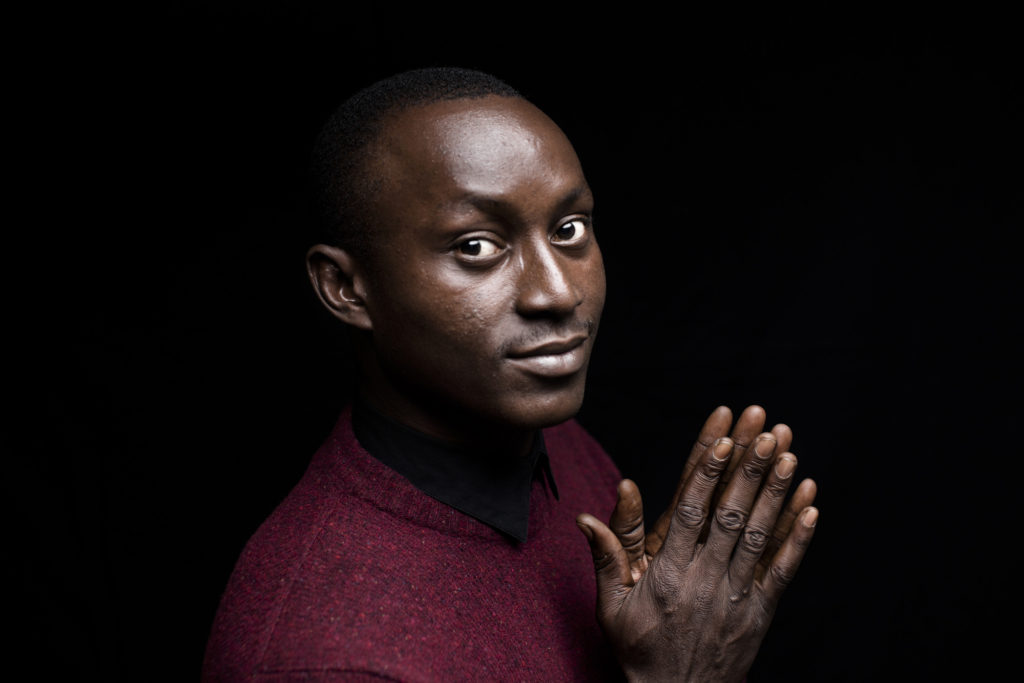
A man stands looking to camera with his hands clasped. He wears a red jumper.
Moses was waiting for the results of his secondary school exams when he was arrested by the Nigerian army in 2005, shot in the hand and beaten. After eight years in prison, he was sentenced to death by hanging. Activists including many young people and Amnesty International demonstrated outside their country’s Nigerian embassies his behalf. Moses was freed in 2019.

Moses Akatugba was a 16-year-old student when he was arrested in 2005 by police in southern Nigeria, on suspicion of armed robbery and stealing three telephones. He was tortured by police during their interrogations, beaten and suspended upside down from a ceiling fan for hours. His nails were pulled out with pliers to coerce him into signing a “confession” – the only basis for his death sentence eight years later.

Rita Mahato – Nepal 
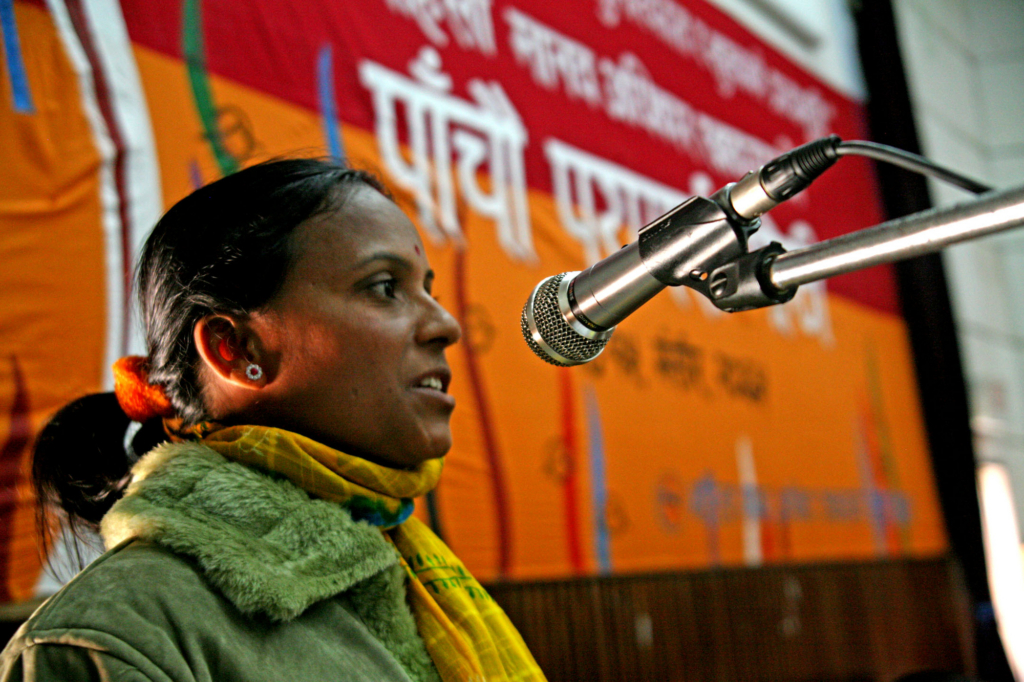
Rita Mahato Chamar is a human rights defender from Nepal.

In 2009, human rights defender Rita Mahato was threatened with death, rape and kidnapping for helping women in Nepal who had suffered acts of violence. She was a health adviser at the Women’s Rehabilitation Centre (WOREC), a leading NGO in Nepal, yet police failed to provide Rita with protection or to investigate the threats. After Amnesty took up her case for Write for Rights 2009, schools, campuses and other institutions around the world started sending letters, postcards and other materials in support of her. The publicity and posters became so widespread that the police and local authorities began calling Rita to provide support, making her feel less alone. While the harassment has ended, Rita still stands up for what she believes in.

Aleksandra (Sacha) Skochilenko – Russia
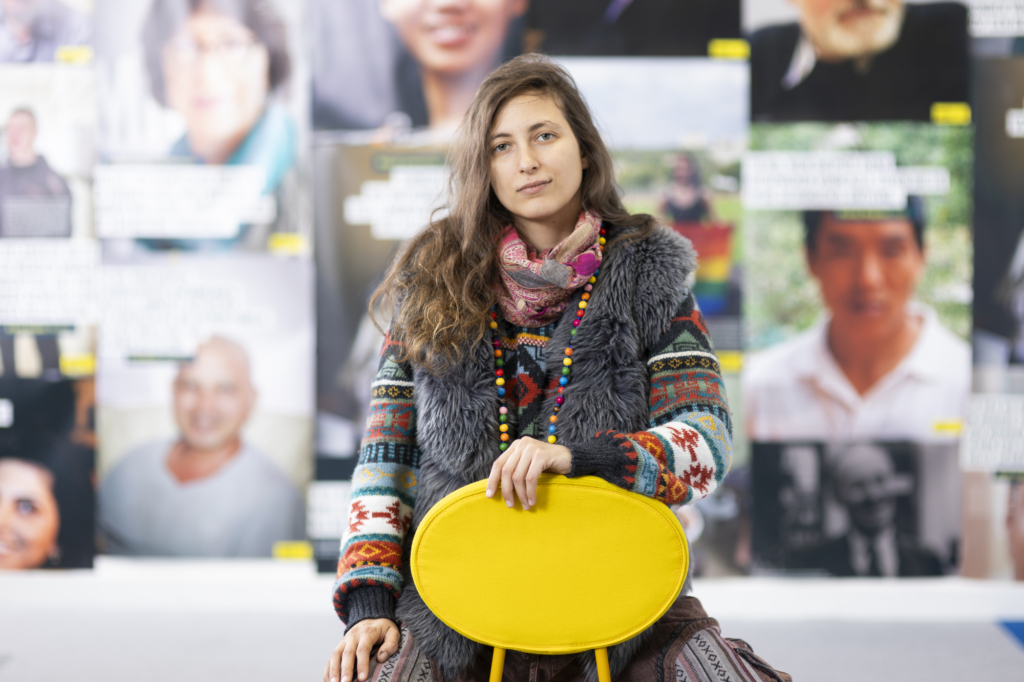
A woman with long brown hair
Aleksandra (Sasha) Skochilenko, visits Amnesty in the Netherlands, Amsterdam, to thank them from for their support.

Russian artist Aleksandra “Sacha” Skochilenko was arrested for protesting Russia’s full-scale invasion of Ukraine. In March 2022, she replaced price tags at a supermarket with paper labels that contained information censored by Russian state-run media. She was charged with “dissemination of knowingly false information about Russian Armed Forces” and sentenced to seven years in December 2023. In 2024, thanks in part to international pressure from Write for Rights 2022, Sacha was finally released as part of a huge prisoner swap, involving Russia and Belarus, who agreed to a swap with the United States, Germany, Norway, Poland, and Slovenia.  Sacha now lives in exile in Germany.

https://amnesty.ca/urgent-actions/outcome-uae-sudanese-political-activist-released-after-19-months
5 Podcasts by Human Rights Defenders

January 16, 2024

On 15 January 2024, Amnesty International announced that five courageous human rights defenders from around the world have shared their hard-hitting stories on its new podcast: ‘On the Side of Humanity. How human rights defenders fight for our present and future’.

The three-part series was released to mark the 25th anniversary of the UN Declaration on Human Rights Defenders. The documentary explores how the human rights movement has evolved since the adoption of the watershed declaration.

In the podcast, Amnesty International’s Tatyana Movshevich discovers the story behind the declaration and meets brave activists from Chile, the USA, Nepal, Ireland and Ghana, all of whom have been fighting for the rights of marginalized people — and risking their lives in the process.

“Every day, human rights defenders are risking their lives, sometimes at a significant personal cost. They experience violence and discrimination simply for defending the rights of others,” said Tatyana Movshevich, Amnesty International’s Campaigner.

“For this podcast I have interviewed five incredible human rights defenders and it was inspiring to hear about their work, but also distressing to realise the enormous dangers they are facing. During our interview, Anas Aremeyaw Anas, a journalist from Ghana, told me a chilling story of how his investigation into killings linked to ritual magic in Malawi had gone terribly wrong. And it was not the only time when Anas found himself in mortal danger because of his human rights work. Far from it.”

Every day, human rights defenders are risking their lives, sometimes at a significant personal cost.Tatyana Movshevich, Amnesty International’s Campaigner

Others featured in the podcast include Lorena Donaire, a water defender from Chile whose life was turned upside down as she was tackling the catastrophic results of a mega-drought; Monica Simpson, a queer activist and artist from the USA and Durga Sob, a Dalit woman and Nepalese feminist activist, who have both been confronting long-ignored issues of racism and caste-based discrimination; and Sean Binder, a migrant rights defender from Ireland whose freedom was compromised while he was volunteering on an idyllic Greek island. [see lso: https://humanrightsdefenders.blog/2021/11/17/greeces-mistaken-deterrence-migrants-and-aid-workers-facing-heavy-prison-sentences/]

International experts that took part in the series include Mary Lawlor, the UN Special Rapporteur on the situation of Human Rights Defenders, and Hina Jilani, women rights activist and co-founder of Pakistan’s first all-women law firm.

The podcast is out now and available to stream on Spotify, Apple, Google and Deezer.

https://www.amnesty.org/en/latest/news/

International Women’s Day 2022

March 8, 2022

International Women’s Day is today 8 March and celebratory events are being held around the world. This year’s theme is #BreakTheBias, aimed at imagining “a world free of bias, stereotypes, and discrimination.” While this special day offers hope for gender equity, it is also a reminder of the omnipresent phenomenon of violence against women, which exists regardless of the day, and needs to be addressed in a fundamental way.

See also: https://www.humanrightscareers.com/issues/why-international-womens-day-is-important/

There is too much to choose from (as usual); for last year’s see: https://humanrightsdefenders.blog/2021/03/08/celebrating-international-womens-day-in-2021/]

Still, here some concrete samples:

Upasana Rana reports Global Voices of 7 March on Nepal [https://globalvoices.org/2022/03/07/this-international-womens-day-lets-come-together-against-violence/]

On the same site Njeri Wangari tells us about how Feminist music icons from around Africa to celebrate this International Women’s Day. See her Spotify playlist with hits from artists like Fatoumata Diawara, Cesária Évora, Shishani Vranckx, Thandiswa Mazwai, and more.

Amnesty International issued a statement “International Women’s Day: Dramatic deterioration in respect for women’s rights and gender equality must be decisively reversed“

  • Alarming assaults on women’s rights around the world in 2021/22. 
  • Legal protections dismantled, and women human rights defenders now at unprecedented risk.
  • Protection and promotion of women’s and girls’ rights and support for women human rights defenders crucial, including for Covid-19 recovery. 
  • Governments must act decisively to reverse regressions and uphold human rights for women and girls. 

Catastrophic attacks on human rights and gender equality over the past twelve months have lowered protection for and upped threats against women and girls across the globe.  On International Women’s Day, the organization called for bold action to reverse erosions of human rights for women and girls.   

 “Events in 2021 and in the early months of 2022 have conspired to crush the rights and dignity of millions of women and girls.  The world’s crises do not impact equally, let alone fairly. The disproportionate impacts on women’s and girls’ rights are well-documented yet still neglected, when not ignored outright.  But the facts are clear. The Covid-19 pandemic, the overwhelming rollback on women’s rights in Afghanistan, the widespread sexual violence characterizing the conflict in Ethiopia, attacks on abortion access in the US and Turkey’s withdrawal from the landmark Istanbul Convention on Gender Based Violence: each is a grave erosion of rights in its own terms but taken together? We must stand up to and stare down this global assault on women’s and girls’ dignity,” said Amnesty’s Secretary General, Agnès Callamard. [see https://www.amnesty.org/en/latest/news/2022/03/international-womens-day-dramatic-deterioration-in-respect-for-womens-rights-and-gender-equality-must-be-decisively-reversed/]

Human Rights Watch focuses on Afghanistan: On International Women’s Day, we should remember Afghanistan, and consider what the state of women’s rights there means for the struggle for gender equality worldwide. The Taliban were notorious for violating women’s rights when they ruled Afghanistan from 1996 to 2001. So, when the Taliban took control of Afghanistan again on August 15 last year, Afghan women’s rights defenders were deeply skeptical that the new rulers would be any different from the Taliban that controlled the country before, despite their pledges to respect women’s rights. They were right.

In less than seven months since taking over, the Taliban have:

  • closed most girls’ secondary schools;
  • created barriers to women and girls pursuing higher education;
  • banned women from most paid employment;
  • abolished the Ministry of Women’s Affairs;
  • restricted women’s movement including blocking them from leaving the country alone;
  • dismantled Afghanistan’s system that provided protection from gender-based violence;
  • created barriers to women and girls accessing health care;
  • beaten and abducted women’s rights protesters;
  • silenced female journalists;
  • banned women’s sports; and
  • appointed a men-only administration.

Afghanistan is not the only country where women’s rights are under attack this International Women’s Day. But the speed and extent of the obliteration of women’s rights in Afghanistan is a warning to women around the world about the fragility of progress toward equality, how quickly it can vanish, and how few will defend it. We should all be in solidarity with Afghan women; their fight is a fight for women’s rights everywhere. [See: https://www.hrw.org/news/2022/03/08/standing-afghan-women-and-girls-international-womens-day]

Caitlin Fitzsimmons in the Sydney Morning Herald of 6 March argues that “International Women’s Day highlights climate justice as a feminist issue”. Women are on the front lines of the global climate crisis, making up 80 per cent of the 21.5 million people displaced every year by climate-related events. [See: https://www.smh.com.au/environment/climate-change/international-women-s-day-highlights-climate-justice-as-a-feminist-issue-20220303-p5a1ba.html]

On International Women’s Day, UN Human Rights stands with women and girls human rights defenders of all ages, backgrounds & identities leading our collective struggle to protect our climate and environment. See.g.:

Meet Brianna Frueran, a Pacific climate change activist fighting for her native Samoan islands’ survival.

Meet Mya Pol, a content creator from the United States who advocates for disability rights and educates people about environmentalism on her social media platform.

https://news.un.org/en/story/2022/03/1113872

Today is the International Day of the Victims of Enforced Disappearances, also in Nepal 

August 30, 2021

Enforced disappearance refers to the arrest, detention or abduction of persons by agents of the State, or those acting with State authorization or support, whose whereabouts are unknown.

Once largely the product of military dictatorships, it has become a global problem, according to the UN, with hundreds of thousands of people “disappeared” in more than 80 countries. Impunity remains widespread.

While strictly prohibited under international human rights law, the SG, Mr. Guterres said enforced disappearance continues to be used across the world as a method of repression, terror, and stifling dissent.

“Paradoxically, it is sometimes used under the pretext of countering crime or terrorism. Lawyers, witnesses, political opposition, and human rights defenders are particularly at risk,” he added. 

Having been removed from the protection of the law, victims, who can include children, are deprived of all their rights and are at the mercy of their captors. 

They are frequently tortured and know that it is unlikely anyone will come to their aid.  Some are even killed. 

“Enforced disappearance deprives families and communities of the right to know the truth about their loved ones, of accountability, justice and reparation,” the Secretary-General said.

“The COVID-19 pandemic has added to the agony and anguish of enforced disappearance, by limiting capacities to search for missing persons and investigate alleged enforced disappearance.”

It was established by the UN General Assembly, which adopted a resolution in December 2010 expressing deep concern about the rise in incidents in various regions, and increasing reports of harassment, ill-treatment and intimidation of witnesses of disappearances, or relatives of people who were disappeared.

The resolution also welcomed the adoption of the International Convention for the Protection of All Persons from Enforced Disappearance, which calls for countries to take measures to hold perpetrators criminally responsible.

“The Convention for the Protection of all Persons against Enforced Disappearances is indispensable in helping to tackle this cowardly practice. But it requires the will and commitment of those with the power to do so,” the Secretary-General said. “States must fulfil their obligations to prevent enforced disappearance, to search for the victims, and to investigate, prosecute and punish the perpetrators.”

Mr. Guterres reiterated his call for countries to ratify the Convention, and to work with the UN Committee that monitors its implementation, as well as the Working Group on Enforced Disappearances, which assists families in determining the fate of their loved ones.

On this day Amnesty International, Human Rights Watch and the International Commission of Jurists (ICJ) issued a statement that the government of Nepal should promptly enforce Supreme Court rulings and permit the regular courts to try cases of enforced disappearance and other grave international crimes. On the International Day of the Victims of Enforced Disappearances, August 30, 2021, thousands of Nepali families are no closer to knowing the truth of what happened to their missing loved ones than they were when the country’s armed conflict ended 15 years ago.

Nepal’s Supreme Court has repeatedly ordered the government to investigate gross violations of human rights and international humanitarian law during the conflict from 1996 to 2006, and to conduct a meaningful, effective transitional justice process to establish the truth and provide justice for thousands of cases of serious abuses.

“The Nepali government stands in blatant violation of express orders of the Supreme Court by failing to conduct a credible, timely transitional justice process,” said Mandira Sharma, senior legal adviser for South Asia at the ICJ.

See also: https://humanrightsdefenders.blog/2021/03/17/where-is-somchai-a-brave-wifes-17-year-quest-for-the-truth/

The International Day of the Victims of Enforced Disappearances

https://www.hrw.org/news/2021/08/30/nepal-stop-stalling-enforced-disappearance-inquiries

Profile of Barun Ghimire, human rights defender from Nepal

July 5, 2021

“The rights of migrant workers is a global problem, and actors in different jurisdictions have to come together to make a difference in this particular area,” says Barun Ghimire, a human rights lawyer based in Kathmandu, Nepal. “And we need to create a collective narrative that is based on a rights-based approach of migrant workers”.

Barun Ghimire is a human rights lawyer and programme manager at the Law and Policy Forum for Social Justice. Barun works for the protection and defence of the rights of migrant workers in Kathmandu, Nepal. 

In this video, Barun explains his work in relation to the rights of migrants, as well as how Covid-19 has affected this group, which is facing even stronger vulnerability. He also calls the international community and other actors to come together and help improve the situation of migrants workers as well as their families.  To achieve this goal, it is necessary to create a new narrative and defend and promote the rights of migrant people in vulnerable situations, especially during and after Covid-19.

Barun was also a participant in ISHR’s Human Rights Defender Advocacy Programme (HRDAP) in 2020.

https://www.ishr.ch/news/human-rights-defenders-story-barun-ghimire-nepal

3 Women human rights defenders shortlisted for Václav Havel human rights award

January 11, 2021
Vaclav Havel banner above National Museum Prague, VitVit via Wikimedia Commons, CC BY-SA 4.0

This year’s Václav Havel Human Rights Award has shortlisted three female finalists, The panel nominated Saudi women’s rights defender Loujain al-Hathloul, a group of young Buddhist nuns from a monastery in Nepal and Julienne Lusenge, who documents cases of wartime sexual violence in the Congo.

The winner will be announced at the spring session of the Parliamentary Assembly of the Council of Europe on April 19. For more on this award see: https://www.trueheroesfilms.org/thedigest/award/7A8B4A4A-0521-AA58-2BF0-DD1B71A25C8D.

Al-Hathloul heads the opposition to the ban on women driving in Saudi Arabia. She has been imprisoned since 2018. [see https://humanrightsdefenders.blog/2020/12/29/loujain-al-hathloul-sentenced-to-over-5-years-prison-by-saudi-terror-court/]

The nuns from the monastery called Amitabha Drukpa constitute a group who promotes gender equality, environmental sustainability, and intercultural tolerance in the Himalayan villages. They gained fame by transporting material help to outlying villages after an earthquake near Kathmandu in 2015. They also teach women’s self-defense and they have biked over 20,000 kilometers in protest against trading in women and girls.

Lusenge is a human rights activist who documents cases of sexual abuse and violence against women in Congo. She has contributed to the conviction of hundreds of perpetrators of acts of sexual violence against women nationwide. She was often threatened for her work.

Michael Žantovský, director of the Václav Havel Library, said: “Last year, we dedicated the autumn Prague conference, which usually takes place on the occasion of the Václav Havel Prize, to women’s rights. We are glad that the jury followed a similar point.”.

https://www.expats.cz/czech-news/article/vaclav-havel-human-rights-prize-to-celebrate-international-female-activists

Nepal: transitional justice a moving goal

August 26, 2020

Nepal continues to struggle with the implementation of of the transitional justice process. Victims of the armed conflict and human rights defenders have opposed the idea of forming a political mechanism to facilitate the conclusion of the transitional justice process, as proposed by the six-member task force formed to propose measures to end the months-long dispute within the ruling party. The idea, first proposed by Nepal Communist Party co-chair Pushpa Kamal Dahal during the Standing Committee meeting in December last year, will politicise the entire process if implemented, and work in favour of the perpetrators, they say. “I am shocked to see the recommendations. They are against the principles of jurisprudence and transitional justice,” said Ram Bhandari, chairperson of Network of the Families of Disappeared referring to the recommendations made by the task force.

“Parties should stop politicising the transitional justice process. Forming a political mechanism would be an illegal move,” Kalyan Shrestha, a former chief justice at the Supreme Court whose bench directed the government to remove the amnesty provisions in the transitional justice Act, told the Post. He said the political parties, who were the parties to the conflict, are in one place now treating the victims as the defeated force. Shrestha said that transitional justice has a universal jurisprudence and it must be abided by.

In a thoughtful piece of 26 August 2020 Mohna Ansari, Commissioner of the National Human Rights Commission of Nepal, argues that “Nepal must reboot human rights, rule of law” puts this in context:

International Day in Support of Victims of Torture 2020

June 27, 2020

UN Women/Ryan Brown After surviving military enslavement in Guatemala, Maria Ba Caal received help through an emergency grant from the UN Voluntary Fund for Victims of Torture.

26 June 2020 was the International Day in Support of Victims of Torture. Torture is an “egregious abuse of human rights”, UN Secretary-General António Guterres said. Although international law “unequivocally prohibits torture in all instances”, the UN chief pointed out that it nevertheless continues in many countries, “even those where it is criminalized”.

“On this International Day in Support of the Victims of Torture, human rights defenders and survivors of torture around the world take the opportunity to speak out against this abhorrent denial of human dignity and they act to remember and support its victims”, Mr. Guterres said in his message.

Its prohibition forms part of customary international law, which means that it is binding on every member of the international community, regardless of whether a State has ratified international treaties that expressly prohibit the practice or not, according to the UN.  Moreover, the systematic or widespread practice of torture constitutes a crime against humanity.

The UN Voluntary Fund for Victims of Torture, channels funding to assist victims of torture and their families by awarding hundreds of grants to civil society organizations worldwide for medical, psychological, legal, social and other assistance.  It contributes to the rehabilitation, reparation, empowerment and access to remedies for nearly 50,000 torture survivors each year.

And to underline that torture is still very much a problem today the Himalayan Times of 26 June writes “that despite new criminal laws, impunity for acts of torture, ill-treatment prevails in detention” in Nepal

The International Commission of Jurists (ICJ), Advocacy Forum (AF) and Terai Human Rights Defenders Alliance (THRD Alliance) have voiced concerns about the near-total failure by authorities to investigate and prosecute acts of torture in Nepal. On the occasion of the International Day in Support of Victims of Torture, the three rights organisations urged the Government of Nepal to investigate into all allegations of torture and ill-treatment, and to bring prosecutions where warranted under the criminal provisions of the Penal Code…

The ICJ has made an appeal to the Government of Nepal to establish an independent preventative mechanism for monitoring of detention centres and to become party to the Optional Protocol of the Convention on Torture. Nearly two years after provisions in the new Penal Code came into effect, not a single torture prosecution appears to have been brought. There have also been very few instances in which victims have received an effective remedy and reparation for their ill-treatment, the press release stated.

Nepal has, as per the statement, failed to meet its obligations in this regard under article 2(3) of the International Covenant of Civil and Political Rights and article 14 of the Convention Against Torture….

The AF and THRD Alliance both published reports on Friday that document instances of torture and other ill-treatment against detainees over the past year. Some 20 per cent of the more than 1,000 detainees interviewed reported some form of unlawful ill-treatment during confinement.

https://news.un.org/en/story/2020/06/1067072

https://thehimalayantimes.com/nepal/rights-organisations-urge-government-to-prosecute-acts-of-torture-ill-treatment/

Hull and Oxford University honour UN Special Rapporteur Professor Subedi

April 24, 2020

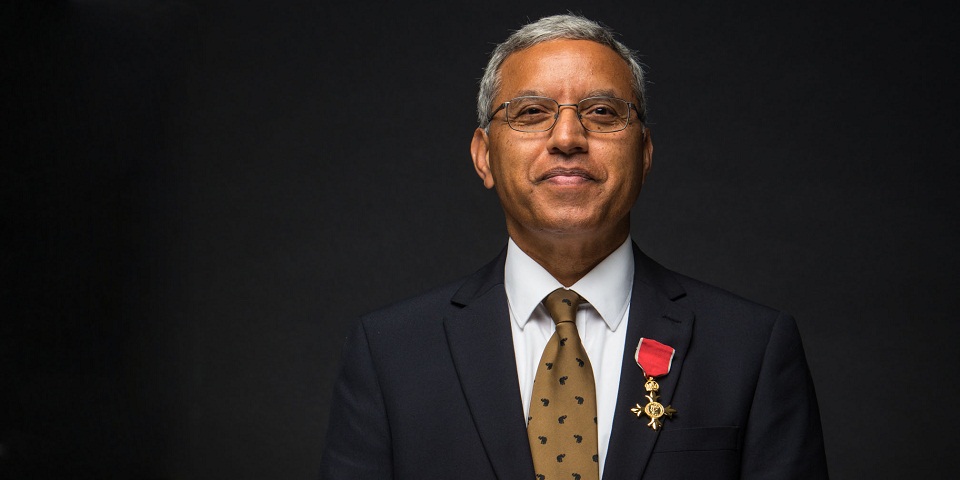
The University of Hull in the UK has awarded the degree of Doctor of Laws (LLD), honoris causa, to Professor Surya P. Subedi, QC, OBE, DCL in recognition of his accomplishments in the field of international law and human rights, the university said in a press statement. Professor Subedi had obtained an LLM with Distinction and a prize for best LLM student of the year in 1988 at Hull. Commenting on the award of such a high accolade by Hull, he said he was honored by the recognition of his accomplishments by his alma mater.

The 62-year-old professor was graduated from the Tribhuvan University, Nepal. Upon completion of his LLM, Professor Subedi won an FCO scholarship to study for a DPhil (PhD) in Law at the University of Oxford and obtained his degree with a prize in 1993. Last year, Oxford awarded him the highest degree – the Doctor of Civil Law in recognition of his contribution to international law and human rights.

This year the University of Oxford has established two awards in the name of Professor Surya Prasad Subedi.  The first prize named Dr Surya Subedi Award in Human Rights Law will be given to the outstanding performer in the Human Rights Law (Bachelor’s degree) and the second award named the Dr Surya Subedi Award for the D Phil in Law will be given for the doctoral thesis adjudged the best in the Faculty of Law. Prof Subedi expressed his happiness over the establishment of two awards by one of the world’s distinguished universities in his recognition. .

https://www.nepal24hours.com/oxford-university-establishes-two-awards-in-honour-of-prof-subedi/

https://myrepublica.nagariknetwork.com/news/hull-university-awards-doctor-of-laws-to-uk-based-nepali-professor-subedi/

https://en.wikipedia.org/wiki/Surya_Subedi

Carter Centre holds 2019 Human Rights Defenders Forum as from 12 October

October 7, 2019

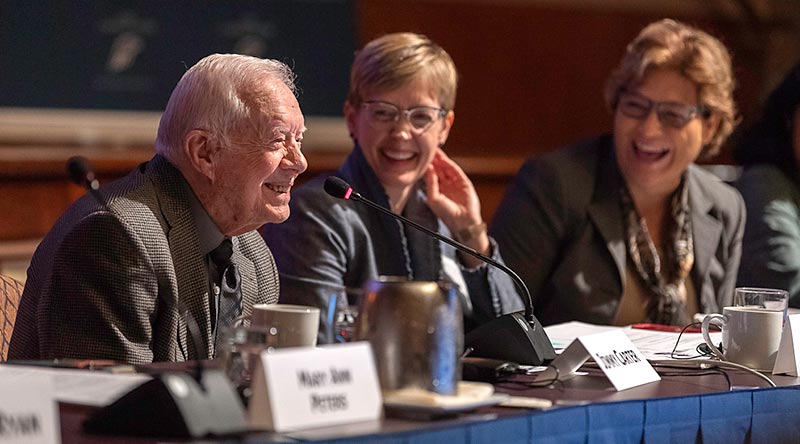
Former U.S. President Jimmy Carter speaks at the 2018 Human Rights Defenders Forum in Atlanta, GA, the theme of which was “Restoring Faith in Freedom.”

“Building Solidarity toward Equality for All” Dozens of activists, peacemakers, and community leaders from 28 countries will come together from 12-15 October for the Carter Center’s 12th Human Rights Defenders Forum. Three sessions, including a 15-minute Q&A with former U.S. President Jimmy Carter, will be livestreamed on Tuesday, 15 October. Session topics include global protection for human rights defenders, challenges for women defenders and peacemakers, and the importance of mutually supporting civil, economic, political, and social rights.

The forum this year include:

  • Hafida Benchehida, an Algerian senator since 2013 and a founding member of both the Algerian and Arab women parliamentarian networks. She is also a member of Mediterranean Women Mediators and a specialist in women’s roles in peace.
  • Mohna Ansari, a journalist-turned-attorney and a member of Nepal’s Human Rights Commission. Much of her work involves women’s rights, representation, and protection.
  • Ijam Alaz Augustine, minister for human rights and minorities affairs in Pakistan’s Lahore province, whose political career has been devoted to protecting the rights of religious minorities.
  • Fernando Carrillo Flórez, a former ambassador, minister of justice, and minister of the interior from Colombia who has published more than 14 books and 80 articles on democracy, governance, and reform of justice.
  • Maati Munjib, a journalist, professor, and president of Freedom Now, an organization devoted to protecting journalists and freedom of expression in Morocco. Because of his activism and writings, he faces a possible five years in prison. Amnesty International and other human rights groups have called for charges against him to be dropped.

Tuesday, October 15 webcast:
11:30 a.m. – 12:45 p.m.  Remarks by President Carter  Summary of the previous days’ workshops
Testimonies by human rights defenders and moderated discussion
2:15 ̶ 3:15 p.m. Discussion: “How Do We Build True Solidarity in the Struggle for Equality?”
3:50 ̶ 5 p.m.  Continued: Moderated discussion  Livestream Q&A with President Carter (4:35 to 4:50 p.m.)

During the webcast: Twitter @CarterCenter with hashtag #BuildingSolidarity.