Posts Tagged ‘Inter-American Commission on Human Rights’

Mexico’s Protection Mechanism Fails Human Rights Defenders

November 28, 2026

Eight Journalists Enrolled In The Federal Program Were Killed Between 2017 And 2022, Says Joint Probe By Amnesty And CPJ

Mexico's Protection Mechanism Fails Journalists As Threats And Killings Continue

Three years ago, journalist Alberto Amaro was at home in the central state of Tlaxcala when two gunshots rang out. His young son, who had been playing in the garden, rushed indoors in fear. By the time Amaro got to the front gate, two armed men could be seen fleeing down the street. Amaro, 38, says he promptly reported the incident to the federal body tasked with protecting journalists and asked for emergency measures. No reply came for more than 48 hours, he says. He finally approached a court, which ordered that his family be given security.

His experience is far from unique. It is one of several incidents that have revealed weaknesses in the federal Protection Mechanism for Human Rights Defenders and Journalists, a program set up in 2012 to shield people threatened because of their work. A joint investigation by Amnesty International and the Committee to Protect Journalists (CPJ) found that eight journalists enrolled in the program were killed between 2017 and 2022.

Amaro entered the program in 2019, soon after launching his outlet, La Prensa de Tlaxcala. Since then, he has faced more than 30 violent or threatening episodes, including death threats, detention, gunfire and intimidation tied to his reporting on the police, public officials and organized crime. In 2023, he reported direct death threats from a mayor, and the Mechanism rated him at high risk and assigned bodyguards.The agency later tried to withdraw his protection, even while admitting that the risk remained high. A judge sided with Amaro and ordered a full risk assessment. He says he lives with two worries: what his reporting might cost him, and whether his protection will be taken away.

Outside active war zones, Mexico remains among the most dangerous countries in the world for journalists. CPJ has recorded six journalist killings there in 2026, five of them within a span of just over two months. See also” https://humanrightsdefenders.blog/2026/06/16/front-line-defenders-global-analysis-2025-26-gives-a-detailed-and-sobering-view-of-the-violations-against-hrds/.

Priscila Pacheco, 34, has campaigned for protection for more than ten years, ever since her father, journalist Francisco Pacheco, was shot dead outside his home in Taxco, Guerrero, in 2016. He had co-founded the outlet El Foro de Taxco with his wife, Verónica, in 1998, and had reported on corruption in local government. Priscila, who was the last to see him alive, says the hardest moment was having to pick out his coffin. After further threats, Priscila, her mother and two siblings fled within days of the murder, leaving behind their home and printing press. They remain displaced more than a decade later, and no one has been held responsible for the killing.

Propuesta Cívica, a Mexican civil society group that offers legal assistance to journalists and their families, estimates that 98% of journalist homicides go unpunished. Its codirector, Vanessa Carrillo, says the underlying problem is that the Mechanism has been burdened with a duty that belongs to the entire state.

Priscila says that although the threats continue, the Mechanism has refused her personal protection because she is a public employee, working for the state-level protection mechanism in Toluca, in the State of Mexico. She describes the security given to her family as unreliable: the panic button sometimes fails, she has none of her own to carry, the cameras, locks and lights at their home are poorly maintained, and police patrols are frequently skipped or carried out only after a written request. At each annual risk review, she has to plead with more than 20 officials not to cut the limited protection her family still has.

She feels that authorities seem to act only after a direct threat is made or an attack takes place. The family has no intention of going back to Taxco while the violence continues, and Priscila says security has become an unattainable ideal for them, since the authorities themselves have let them down.

Jonathan Cuevas, 38, spent three years away from his home in Iguala, Guerrero, after receiving threats over his coverage of organized crime and local officials. In 2020, the Mechanism placed him in a safe house in Mexico City, but the threats did not stop, and he was moved between three safe houses during his time in displacement.

Cuevas says his return to Iguala owed nothing to government action. It became possible only because two rival criminal groups fighting over the area agreed to a truce in 2023, which also let other displaced journalists go home.

Even so, he says two people warned him after his return to stop writing about the local prosecutor’s office, or be killed. He eventually gave up reporting on those subjects. According to Cuevas, the Mechanism recorded the attacks he reported but did not coordinate with federal prosecutors.

He also found the protection measures inconsistent and poorly suited to his work. His panic button is useless in communities without cell coverage, where he often reports, and security patrols are irregular. He has turned down bodyguards, believing that traveling with armed men would make him a more visible target. In his view, the system prefers to keep journalists in safe houses rather than let them work. Displacement may improve safety, but it cuts reporters off from their families, communities and sources. He asks what becomes of those who want to keep practicing journalism.

The Inter-American Commission on Human Rights has stressed that the state must prevent attacks and lower risks, not just investigate them afterward. Carrillo says the system should be judged by how well it reduces risk, prevents further attacks and lets journalists work freely and safely.

Propuesta Cívica says the federal Mechanism is weakened by bureaucratic delays, a shortage of staff and a reactive approach. Protection measures are frequently inadequate, risk assessments are late, and safeguards are pulled even when threats persist.

In 2025, President Claudia Sheinbaum said the program could be given more funds if needed. Reporters Without Borders (RSF), however, says the government has made little headway on its press freedom pledges, including a promised review of the Mechanism. The Associated Press asked the Mechanism for an interview several times. A senior official declined, and the agency has not answered later requests.

Amaro spent a year in Spain with his family because of threats. After he came back, a new assessment classified him as high risk but concluded that his family was not. In 2025, authorities moved to remove his family’s bodyguards and eventually limited some of their movements. Amaro challenged these decisions in court and won.

In a recent incident, he received a call from an unknown number. The caller said he was a senior operative of the Jalisco New Generation Cartel and told him to be careful about what he writes. Although two bodyguards accompany him around the clock, Amaro says he still feels unsafe, noting that if he were to meet four armed people, they would already have the upper hand.
https://www.rozanaspokesman.com/amp/news/world/121126/mexicos-protection-mechanism-fails-journalists-as-threats-and-killi.html

ANNUAL reports on Human Rights: AI, CoE, HRF, IACHR

April 23, 2026

Several organisations came out with annual reports, including

  • Predatory attacks on multilateralism, international law and civil society marked 2025
  • The alternative on offer is a racist, patriarchal, unequal and anti-rights world order
  • Protesters, activists and global bodies are working to resist, disrupt and transform

The world is on the brink of a perilous new era Amnesty International warned on 21 April 2026 with the launch of its annual report, The State of the World’s Human Rights. The organisation called on governments, including Australia, to reject the politics of appeasement and collectively resist attacks on multilateralism, international law and civil society, before this emerging order takes hold.

In its assessment of the human rights situation across 144 countries, the report documents widespread violations by governments and other actors throughout 2025, alongside persistent failures of accountability, with only limited areas of progress. Many of these patterns have continued into 2026, as the international rules-based order faces sustained and coordinated pressure.

“We are confronting the most challenging moment of our age. Humanity is under attack from transnational anti-rights movements and predatory governments determined to assert their dominance through unlawful wars and brazen economic blackmail,” said Agnès Callamard, Secretary General of Amnesty International. 

“World leaders have been far too submissive in the face of attacks on international law and the multilateral system. Their silence and inaction are inexcusable.”Agnès Callamard, Secretary General of Amnesty International

“The vast majority of states have been unwilling or unable to consistently denounce predatory acts by the USA, Russia, Israel or China, or to chisel out diplomatic solutions.

“World leaders have been far too submissive in the face of attacks on international law and the multilateral system. Their silence and inaction are inexcusable. It is morally bankrupt and will bring nothing but retreat, defeat and the erasure of decades of hard-fought human rights gains.

“To appease aggressors is to pour fuel on a fire that will burn us all and scorch the future for generations to come,” said Agnès Callamard…

“For the sake of humanity, the time to make history is now.”Agnès Callamard

ANNUAL REPORT: THE STATE OF THE WORLD’S HUMAN RIGHTS

The Inter-American Commission on Human Rights (IACHR) presents its Annual Report 2025, documenting the work it has done in compliance with the mandate to promote and protect human rights in the Americas. The report—showing, over six chapters, the results attained by IACHR mechanisms—is an instrument for institutional transparency and a reference for States, civil society, and regional and international organizations.

In a year that was full of challenges including weaknesses in democratic institutions, violence in various national contexts, the effects of climate change, and issues concerning vulnerable individuals and groups, among others, the IACHR strengthened its mechanisms and each of those mechanisms has achieved concrete results.

Annual Report 2025

Our country is facing a grave threat as those in power leverage bias and disinformation to push rights-restricting legislation through at the state and federal levels. Our communities, schools, libraries, elections, and individual freedoms are being placed at risk by escalating assaults on our rights. In response, Human Rights First launched Democracy Watch in 2025, to track and expose legislative trends that endanger our civil and human rights and undermine democratic processes and institutions. Since its launch, we have tracked a proliferation of authoritarian tactics targeting our states and hurting our communities. This year we saw a wide range of legislative strategies, including rollbacks on reproductive freedom, immigrant and refugee rights, free speech, LGBTQ+ equality, voting rights, and public education.

Council of Europe:

In the midst of a

Presenting his 2025 Annual Activity Report to the Parliamentary Assembly of the Council of Europe today, the Council of Europe Commissioner for Human Rights, Michael O’Flaherty, warned that Europe, and the rest of the world, is no longer merely in an “era of change” but is experiencing a profound “change of era” that threatens the very foundations of human rights law and practice.

“We are living in a context where our stable cultural framework is being shattered by rapid social and technological advances that surpass our capacity to grasp them,” the Commissioner stated. Highlighting the impact of artificial intelligence, the triple planetary crisis, and worsening inequality, he noted a widespread diminishment of trust between citizens and the state, as well as between generations and an increasing pressure on institutions and civil society across the continent. “Unimaginably, we risk losing our invaluable acquis of human rights law. This is the duty of our generation: to act and ensure these rights survive this transition intact”.

https://rm.coe.int/annual-activity-report-2025-by-michael-o-flaherty-council-of-europe-co/48802b5894

Global Witness and other NGOs condemn the arrest of environmental defender Pablo Chuñil and his relatives

January 17, 2026

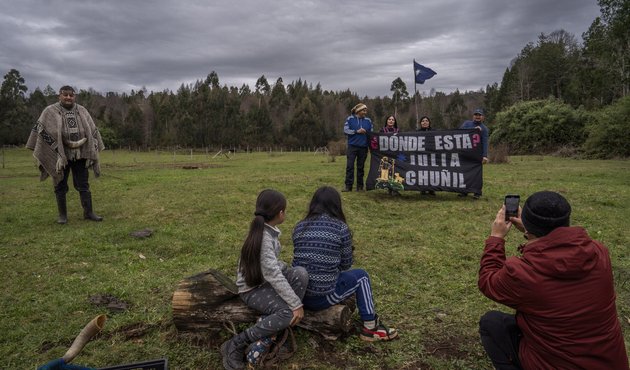
Family members and friends of Julia Chuñil display a banner that reads: “Where is Julia Chuñil?” on the land where she was last seen

Family members and friends of Julia Chuñil display a banner that reads: “Where is Julia Chuñil?” on the land where she was last seen. Tamara Merino / Global Witness

Global Witness joins organisations around the world in condemning the arrest of Pablo San Martín Chuñil, Javier Troncoso Chuñil, Jeannette Troncoso Chuñil, and Bermar Flavio Bastías Bastidas, which occurred on 14 January 2026, in the Los Ríos Region, Chile.

Pablo, Javier, and Jeannette are children of Mapuche Indigenous leader and environmental defender Julia Chuñil Catricura, president of the Putreguel Indigenous Community, who has been missing since November 8, 2024, while defending 900 hectares of native forest in the commune of Máfil.

Julia’s disappearance has been internationally denounced as a forced disappearance linked to her struggle for territorial and environmental protection against the advance of large landowners and the forestry sector.

The arrest of Pablo, Javier, Jeannette, and Bermar occurs six months after the Inter-American Commission on Human Rights (IACHR) granted precautionary measures in favour of Julia Chuñil, urging the Chilean government to increase efforts to search for her and to share information about such efforts with her family. The arrest also occurred just hours before the family was scheduled to attend the admissibility hearing before the Escazú Committee to present evidence of the State’s non-compliance.

Global Witness Senior US Policy Advisor Javier Garate said: “The arrest of Julia Chuñil’s children and relatives is to be condemned. Rather than further victimising the family, authorities should instead focus on the main suspect identified by the family and by human rights organisations.…

“This case must be viewed in the wider Latin American context of systematic violence against environmental defenders, where at least 2,253 activists have been killed and or forcibly disappeared between 2012 and 2024.

“We offer solidarity with the Chuñil family at this time. The arrested family members should be immediately released and a proper independent investigation carried out.”

Global Witness has joined organisations calling for:

  • The immediate release of Pablo San Martín Chuñil, Javier Troncoso Chuñil, Jeannette Troncoso Chuñil, and Bermar Flavio Bastías Bastidas;
  • That the Chilean State comply with the IACHR’s and the Escazú Committee’s determinations and protect, rather than criminalise, Julia Chuñil’s relatives;
  • An impartial, transparent, and effective investigation into Julia Chuñil’s disappearance, focusing on the identified main suspect;
  • An end to the criminalisation of environmental defenders and Indigenous peoples in Chile and throughout Latin America;
  • That international human rights bodies monitor this case and ensure due legal process.
  • The criminalisation of those who defend the land and territories is a crime against humanity and against the planet.

https://globalwitness.org/en/press-releases/global-witness-condemns-the-arrest-and-criminalisation-of-environmental-defender-pablo-chunil-and-his-relatives/

Inter-American Court holds Colombia responsible in the case of Jineth Bedoya

October 19, 2021

The Inter-American Court of Human Rights on Monday 19 October 2021 ruled that the state of Colombia bears responsibility for the ordeal of a female journalist who was kidnapped, raped and then tortured in 2000 by paramilitaries. Jineth Bedoya was working for the El Espectador newspaper at the time, investigating a weapons smuggling ring, when she was abducted and assaulted by far-right militia members. [see: https://www.trueheroesfilms.org/thedigest/laureates/6f49a0f6-7dd6-4f95-902c-9d9f126e0bcc]

The paramilitaries, some of whom have since been convicted, were among the forces that fought left-wing guerrillas in Colombia until their official demobilization in 2006.

The acts against Bedoya “could not have been carried out without the consent and collaboration of the (Colombian) State, or at least with its tolerance,” the court, an autonomous part of the Organization of American States (OAS), ruled on Monday.

Bedoya, now 47, hailed the decision. “October 18, 2021 goes down in history as the day when a struggle that began with an individual crime has led to the vindication of the rights of thousands of women who have been victims of sexual violence and of women journalists who leave a part of their lives in their work,” tweeted Bedoya,

Colombia “fully accepts the decision,” President Ivan Duque tweeted.

Bedoya had implicated agents of the state, in particular an “influential” general of the police force, in the attack, which started when she was kidnapped in front of La Modelo prison in the capital Bogota. The paramilitaries tortured and raped her for 16 hours before leaving her lying naked by the side of a road. Bedoya has said she has suffered two decades of “persecution, intimidation and constant threats.”

The failure to investigate violated Bedoya’s “rights to judicial guarantees, judicial protection and equality before the law,” the court ruled. It also ordered Colombia to “punish those remaining responsible for the acts of violence,” and called for other measures including the creation of a training program for public officials and security forces focused on violence against women.

The Colombian state had apologized to the journalist before the same court in March, when it also ordered the government to immediately ensure the safety of Bedoya and her mother, who had both been victims of threats — including a 1999 attack on both that the state failed to investigate.

The Press Freedom Foundation (FLIP) welcomed Monday’s “dignified” decision for a woman who “has tirelessly sought justice for more than 20 years.” And the Committee to Protect Journalists (CPJ) called it “a historic acknowledgment of the deadly dangers that Colombia’s female journalists face.”

https://www.cbsnews.com/news/jineth-bedoya-journalist-rape-torrture-colombia-responsible-court-ruling/

Inter-American Commission on Human Rights launches major report on Human Rights Defenders

March 2, 2018

While all eyes are on the ongoing session of the UN Human Rights Council in Geneva, the Inter-American Commission on Human Rights (IACHR) – on 28 February – presented its report “Toward a Comprehensive Policy to Protect Human Rights Defenders,” in the context of the 167th session of the IACHR taking place in Colombia. The purpose of this report is to provide the States in the region with guidance in developing their domestic policies, programs, and protection mechanisms for human rights defenders, in keeping with inter-American human rights standards.

“The work of defending human rights in the countries of the Americas has become extremely dangerous,” said the President of the IACHR, Commissioner Margarette Macaulay. “The levels of violence against people who defend human rights in our region are alarming, and the rates of impunity for these types of crimes are very high. The focus of the IACHR’s concern is on the violent deaths of rights defenders, the impunity that tends to surround these types of crimes, and the remaining vulnerability of all persons and groups on whose behalf the defender had worked. This makes it essential and urgent for the States to adopt effective measures to put an end to this situation,” she added.

https://humanrightsdefenders.blog/2018/02/22/amnestys-annual-report-2017-is-out-depressing-but-rays-of-hope/

https://humanrightsdefenders.blog/2017/07/15/documenting-the-killings-of-environmental-defenders-guardian-and-global-witness/

…….

“We are aware of and welcome the efforts made by some States to implement different mechanisms, laws, and policies to protect rights defenders, but unfortunately these have not been effective enough,” said the IACHR Rapporteur on Human Rights Defenders, Commissioner Francisco Eguiguren. “That is why the IACHR in this report has laid out the main components of a comprehensive protection policy, so that such a policy can be effective and so that we can manage to stop the killings and other attacks that are putting an end to the lives of rights defenders or preventing them from doing their work. The aim of the IACHR is to provide the States with a guide on developing domestic policies, programs, mechanisms, and practices for the effective protection of human rights defenders, in accordance with Inter-American human rights standards,” he indicated.

A comprehensive protection policy is based on a recognition of the State’s interrelated and interdependent obligations to enable rights defenders to freely and safely carry out their work of defending human rights. In this sense, a comprehensive protection policy refers to a broad, all-encompassing approach that requires extending protection beyond physical protection mechanisms or systems when defenders experience situations of risk. It requires implementing public policies and measures designed to respect the rights of defenders; prevent violations of their rights; diligently investigate acts of violence against them; and punish the perpetrators and masterminds of any attack on human rights defenders.

The report also analyzes the main steps forward and challenges in terms of the efforts underway in some States, such as the national protection mechanisms, legislation, and policies and programs that exist in some countries. It also makes recommendations to the States on how to ensure better implementation of prevention, protection, and investigation measures to achieve a comprehensive protection policy.

..Human rights defenders are an essential pillar for the strengthening and consolidation of democracies in the hemisphere. Acts of violence against human rights defenders not only infringe on the defenders’ own rights as human beings but also undermine the critical role they play in society and in upholding democratic standards.

Contact info María Isabel Rivero, IACHR Press and Communication Office mrivero@oas.org

http://www.oas.org/en/iachr/media_center/PReleases/2018/039.asp

IACHR Hearing on the Bahamas : “great step forward” or “defamation”?

March 27, 2015

The Bahamas are not the most talked about nation when it comes to human rights but this story is a marvelous lesson in effective diplomacy by human rights defenders.

ICHRA-meeting.jpg

A group of NGOs [i.c. the Grand Bahama Human Rights Association (GBHRA), the Caribbean Institute for Human Rights, Robert F. Kennedy Human Rights, and and the Haitian Organization for the Prevention of HIV/AIDS and STDS] managed to get a hearing on Friday 20 March 2015 before the Inter-American Human Rights Commission (IACHR) about the treatment of migrants in the country. In short: The main concern was that the Government has put into effect new immigration restrictions without any amendments to the relevant law. It was claimed that Haitians had been targeted and there had been unlawful detention as well as mistreatment. To its credit the government of the Bahamas participated in the hearing and was represented by Minister of State for Legal Affairs Damian Gomez. He refuted the allegations made by the group. [“Indeed, our support of Haiti and its people in the attainment of economic, political and social stability emanates from an abiding and unflinching belief in the dignity of our shared human condition”] Gomez added that the Government received intelligence that Haitians were being smuggled to his country for as much as US$5,000. Still, Gomez invited the IAHRC to conduct an on-site visit to the Carmichael Road Detention Centre. “We have invited them to do an onsite visit. They have indicated a willingness to accept that invitation and act on it and the ball is within their court with respect to indicating to us when they wish to come. They’ve also given us some questions at the hearing which will be answered in the course of things within the next fortnight or so, though we have no deadline within which to answer them.”


Mitchell: Activists Defamed Country

However his colleague the Minister of Immigration, Fred Mitchell, reacted very differently a few days later when he called on the Grand Bahama Human Rights Association to explain why it is attempting to “defame” the country’s name through “irresponsible” efforts. “These people who went to Washington – Bahamians – making these exaggerated claims about abuse of migrants to this country must answer the question to the Bahamian public,” he said at a press conference. “What they are doing will aid and comfort people who are trying to sabotage this country through a criminal enterprise. They have to answer that question. Their actions are irresponsible.” He added: “You can disagree with policy. There are domestic remedies for people to take if you have a difficulty with the policy. If there are specific abuses, there are domestic remedies but to actually go and defame the country in another country, I want to describe that as a particular thing, but I’ll just stay my hand for the moment. But they do have to account to the Bahamian public for their conduct, knowing what we know.”

Compare this with the tone of the Grand Bahama Human Rights Association (GBHRA) in a statement of 24 March, which thanked the government for participating in the hearing and for “sharing the view” that the Immigration Bill should be reviewed. The letter is such a beauty that I copy it below in full.  Diego Alcalá, deputy director of the Caribbean Institute for Human Rights, also used positive language and called the invitation “a great first step”.

But then the issue of reprisals..

During the hearing, petitioners also requested that the IACHR assist The Bahamas in designing and implementing a training protocol on Human Rights for State agents, including the role of human rights defenders and their protection. In his contribution, Mr Alcalá said: “Human rights defenders in The Bahamas are confronting a hostile environment that put their security and work at risk. Members of our delegation have been threatened for expressing their opinions against recent changes in migration policies. Also, high-level government officials have made expressions against them, minimising their work or even depicting it as ‘alarmist and inflammatory’.” Mr Alcalá referred to threats against GBHRA executive members Fred Smith and Joe Darville with charges of criminal libel and sedition, and pointed to the cancellation of the Kreyol Connection radio show following critical statements by the government.

Mr Smith, the GBHRA president, told The Tribune that he has made numerous complaints to the Commissioner of Police over verbal and physical attacks he has experienced due to his environmental and human rights activism. However, he did not feel the concerns are taken seriously given the government’s own proclamation against his organisation: “Joe Darville and I have been called social terrorists. Fred Mitchell (the Minister for Foreign Affairs) has threatened to have us prosecuted for criminal libel, sedition. On social media, we have had horrific accusations made against us, that we’re traitors against The Bahamas and that we should be deported.”

During Friday’s hearing, commissioner and country rapporteur Tracy Robinson responded by saying: “In relation to human rights defenders, the commission is always concerned when there are allegations of either threats or stigmatisation of human rights defenders and we ask the state to pay close attention to the allegations made. The commission has very clear rules and principles about the use of criminal laws, including criminal libel laws, in a context where human rights defenders are exercising their rights to protect the interest of others.”

The GBHRA’s reaction was coolly that it hoped Friday’s hearing would foster closer working ties with human rights groups and the government!

—–

Full text of the letter by the GBHRA:

“The Grand Bahama Human Rights Association (GBHRA) would like to publicly thank the government for participating in the recent international hearings in Washington D.C. concerning the country’s new immigration policy. 

The hearings before the Inter-American Human Rights Commission (IACHR), convened at the request of the GBHRA and its international partners, we hope will serve as an opportunity for government and human rights defenders to work together closely on reforming current immigration policy and law, specifically the proposed amendments to the Immigration Act, currently before the Senate.

Considering the reaffirmation of its commitment to human rights best practices and international law during the hearings, we are confident the government shares our view that the Bill should be reviewed in light of the comments of the IAHCR commissioners.

The GBHRA looks forward to contributing to this effort in any way it can, and more generally speaking, stands prepared to partner with government to enhance respect for individual rights, strengthen the rule of law and prevent official actions which could pose a risk to our international reputation in the long run.

We likewise thank the government for extending an invitation to the commissioners to conduct an on-site visit to The Bahamas, and have expressed our avid support for such a visit to the Commission.

The GBHRA would also like to express our formal gratitude to the commissioners, the IAHCR and the Organization of American States (OAS) as a whole, for the careful attention currently being paid to human rights issues in The Bahamas.

The commissioners performed a great service to our country during the hearings, reminding us of the expectations of international law on the question of immigration enforcement.

Specifically, their comments affirmed: that detention must be a measure of last resort, not a general rule; that children should not be detained under any circumstances; that the impact of policies on women and children must be a matter of special consideration; that due process, the presumption of innocence and access to justice must be guaranteed for all migrants; and that the government has a duty to address violence and abuse during immigration enforcement exercises.

With regard to this last point, the commissioners made it clear that the government has a responsibility to not only prosecute those who would commit violence or abuse, but also do all in its power to prevent such attacks in the first place.

The commission asked for a report in writing on the extent to which the current policy conforms with the above requirements, and the GBHRA is confident the government will promptly comply with this formal request.

Finally, the GBHRA also welcomes the commission’s offer of help in revising and redrafting the current Bill. We are sure the government will be receptive to this offer, particularly with a view to better clarifying where immigration policy ends and law begins – another issue raised by the commissioners during the hearing.”

The 5th “Inter-mechanisms”: consultations between inter-govenmental and non-governmental entities on human rights defenders

November 17, 2014

On November 12 and 13, 2014, the UN Special Rapporteur on Human Rights Defenders, Michel Forst, met with representatives of regional human rights defenders’ mechanisms, in the framework of the first part of the fifth “inter-mechanisms” meeting. Enhancing coöperation between the UN mechanism and its regional counterparts was defined as a priority by the UN Special Rapporteur in his first report to the UN General Assembly in October 2014.

The “inter-mechanisms meeting 5.1” gathered representatives from the UN, the International Organisation of “La Francophonie” (OIF), the African Commission on Human and Peoples Rights, the Inter-American Commission on Human Rights, the Office of the Commissioner for Human Rights of the Council of Europe, the OSCE/ODIHR, the European Union, as well as international NGOs. It was hosted by theOIF headquarters in Paris, and was facilitated by the Observatory for the Protection of Human Rights Defenders (FIDH-OMCT joint programme).Participants reflected on ways to enhance cooperation, if not articulation, in processing submissions and public statements about human rights defenders’ violations, and in enhancing the follow-up of individual communications and recommendations from country visits. They further discussed best practices and strategies to tackle the issue of arbitrary detention, particularly on emblematic cases.

The meeting also allowed for an exchange on the definition of reprisals and impunity, how they relate to each other, and how tackling impunity through accountability would ultimately mitigate the root-cause of reprisals.

Finally, participants had a discussion on the issue of NGO funding, including foreign funding, as well as on the protection of land rights defenders, echoing the topics of the 2013 and 2014 Annual Reports of the Observatory.

This meeting aimed to prepare an “inter-mechanisms meeting 5.2”, gathering mandate-holders themselves, which the Observatory will organise during the first quarter of 2015 at the OIF headquarters. Last but not least, FIDH and OMCT were invited by the Office of the Commissioner for Human Rights of the Council of Europe to hold the sixth meeting in Strasbourg, and a future meeting in Warsaw, by ODIHR.

“Inter-mechanisms 5.1”: enhanced cooperation will lead to better protection of human rights defenders – FIDH.

Inter-American Commission on role of Human Rights Defenders in Trinidad & Tobago case

May 15, 2014

It is not often that we can write about Trinidad and Tobago but when the Inter-American Commission on Human Rights [IACHR] calls on Trinidad and Tobago “to fully investigate and prosecute” those responsible for the murder of prominent Senior Counsel, Dana Seetahal, there is a good reason. The former state prosecutor and magistrate, was shot and killed on 4 May. This is reinforced by the legal reasoning of the IACHR which recalls “”.  ….in this sense, acts of violence and other attacks perpetrated against human rights defenders not only affect the guarantees that every human being must enjoy, but also seek to undermine the fundamental role that human rights defenders play in society and leave all those for whom they fight defenseless. “The work of human rights defenders is essential to building a solid and enduring democratic society, as they play a leading role in the pursuit of the full attainment of the rule of law and the strengthening of democracy.”

via Inter-American body calls for full probe into her murder | Trinidad Express Newspaper | News.

Guatemala: suppression and intimidation of human rights defenders is the norm

May 11, 2014

For the weekend a longer read: On 22 April 2014, human rights defender Dr Yuri Melini in Guatemala discovered that intimidating text had been painted on his front gate. The text names the member of the police provided as personal security to the human rights defender since an assassination attempt was made against him. Yuri Melini is the Director of the Centro de Acción Legal, Ambiental y Social de Guatemala (CALAS) – Legal, Environmental and Social Action Centre of Guatemala. CALAS is an organisation working for the strengthening of environmental issues, community participation and respect for the collective rights of indigenous communities in relation to environmental concerns. The human rights defender was awarded the Front Line Defenders Award in 2009. The human rights defender has previously faced harassment, intimidation, defamation and an attempt on his life as a result of his human rights work, see: http://www.frontlinedefenders.org/node/23190  [Last year eighteen human rights defenders were assassinated, a 72-percent increase over 2012, even as the country’s general murder rate has decreased.]

To place this incident in context one should read the report by Patricia DAVIS published in Eurasia Review of 28 April 2014:  “GUATEMALA: SUPPRESSING DISSENT AT HOME AND ABROAD – ANALYSIS”

After a lengthy introduction concerning the ad personam attack by Guatemalan President Molina on Tim Rieser, majority clerk on the Senate State and Foreign Operations Appropriations Subcommittee (for blocking military aid), the article dives into the numerous human rights problems in the country.  Read the rest of this entry »

Human Rights Defender Daniel Dorsainvil and wife killed in Haiti – suspicious to say the least

February 19, 2014

In a recent post I referred to the worsening climate for Human Rights Defenders in Haiti (https://thoolen.wordpress.com/2013/10/28/haiti-judicial-harassment-against-human-rights-lawyers-continues/)  and now we learn of the killing of one of the leading HRDs, Daniel Dorsainvil (or Dorsinvil) and his wife in the streets of Porte-au-Prince:

haiti_murder (Photo Credit: Facebook/Girldy Lareche Dorsinvil and Facebook/Daniel Dorsinvil)


Nicole Phillips in RYOT News of 18 February reports that on Saturday 8 February 2014, Daniel Dorsainvil and his wife Girldy Lareche were shot and killed by an unidentified man who fled the scene on a motorcycle.  The double homicide left three children without their parents, Read the rest of this entry »