
Posts Tagged ‘singers’

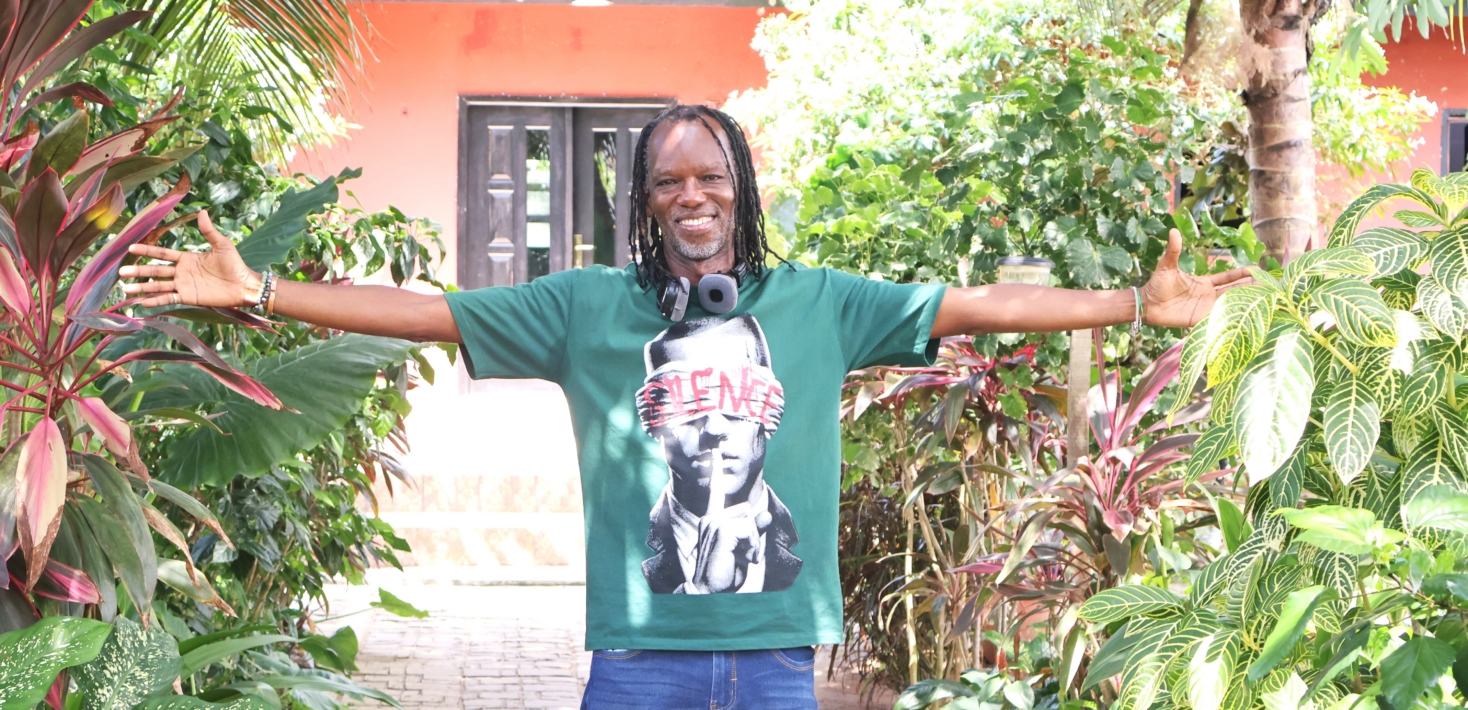
Kajeem, the Ivorian reggae-man who celebrates human rights

June 22, 2026

Amnesty International

On 22 June 2026, Amnesty International wrote about the inspiring Ivorian reggae artist/ human rights defender Guillaume Konan, known as Kajeem,

Guillaume Konan, known as Kajeem, is a singer and songwriter who grew up in Abobo, a neighbourhood of Abidjan, the economic capital of Côte d’Ivoire. Now 57, he began his career in the 1990s in rap music before moving on to reggae. Kajeem is committed to defending rights and freedoms, and speaks out against restrictions on civic space in his country, particularly the right to freedom of expression. He has been working with Amnesty International for over a dozen years as a human rights ambassador.

Following the song “Osons le courage” (Let’s be brave) in 2023, which called on youth to resist injustice, he released in June 2026 the song “En toute liberté” (In total freedom) with artists Didier Awadi from Senegal and Soum Bill from Côte d’Ivoire, and the support of Amnesty International.

“I made my first visit to prisoners when I was 12, as a Catholic boy scout. It was a very formative experience for the young boy I was. I couldn’t understand how people could be put in those terrible conditions, no matter what they had done. So, when I started playing music as a teenager, I gravitated toward genres that stand up for the underdog. Freedom of expression was one of the first rights I sought to assert. Nowadays, the laws in Côte d’Ivoire regarding the internet are so vague that they have become pretexts for imprisoning whomever the authorities please. There is no worse oppression than the one carried out under the guise of the law. Being able to speak out against injustice is a fundamental right, and until the day I die, I will fight for it…. I write songs that denounce a system, not individuals.Ivorian singer Kajeem

I’ve faced various forms of pressure. Today, radio hosts are pressured not to play certain songs, and sponsors are pressured to stop supporting certain artists. The first song of mine which provoked threats was “Sergent 2 togos” (Sergeant 2 togos) released in 2006, which exposed police extortion at roadside checkpoints. I often joke that in other countries, when you’re threatened, you go to the police for protection. But I was being threatened by the police! I had to leave the country for six months.

When I released the song “Tu tournes film” (You’re shooting a movie) in 2023, I faced the same issues, but in a much more intense way. The song “Tu tournes film,” meaning “You’re just blowing hot air”, is about broken promises. An election pledge is a social contract made with the voters, but if you remind those guys of their promises, they get upset!

I woke up one morning to over 1,600 hate messages, including death threats. But I’ve never been very scared by that kind of thing, I think it’s counterproductive because a song has a life of its own, even if its author is dead! People shouldn’t see me as an enemy. I write songs that denounce a system, not individuals.

People may feel that human rights are a luxury they cannot afford because they have basic needs to meet. But how many people earn a lot of money while living under total oppression? We cannot prioritize our needs by saying, “Let’s eat first and worry about that later.” Human rights do not apply only to a certain category of countries or individuals, they are universal.

For me, the future is bright, as every day we see youth getting engaged despite all the distractions offered to them. I think of myself as a sad optimist, unlike the cheerful pessimists who seem happy but no longer believe in anything and just want to enjoy the moment. When you become aware of the realities, it makes you a little sad, but it motivates you because it shows you the work that needs to be done, and every morning, you head back into the fray.

Watch the video clip “En toute liberté” (In total freedom) with artists Kajeem, Didier Awadi and Soum Bill

In 1988 I was in Abidjan for the historic Human Rights Now! world tour concert organized by Amnesty. After that I kept running into the Amnesty team in the field, whether I was working with the Red Cross, visiting detainees, or organizing events at the university to raise awareness of human rights. We were working on the same issues, so I felt less alone. To me, Amnesty is truly like family.   Our song “En toute liberté” is for all those fighting for human rights, so they have a rallying cry.”

To mark the release of the song “En toute liberté” and as part of the campaign Resist run by Amnesty International, Kajeem and Amnesty International Côte d’Ivoire are organizing a digital campaign, as well as discussions on the right to freedom of expression at universities across Côte d’Ivoire.
Today: Tiananmen Square 30 years ago was ‘correct’ but singing about it still not allowed

June 4, 2019

As many news outlets report today it is 30 years ago that China cracked down on Tiananmen Square. China tries mostly to forget about it and make others forget it about it too. Still, it recenty came out to defend it as the “correct policy”. “That incident was a political turbulence and the central government took measures to stop the turbulence which is a correct policy” Defence minister Wi Fenghe Wei told a regional security forum in Singapore. “The 30 years have proven that China has undergone major changes,” he said, adding that because of the government’s action at that time “China has enjoyed stability and development“. On the other hand Wu Qian, a spokesman for the defence ministry, decried the use of the word “suppression” to describe the crackdown.

But it does cover Chinese rock musician Li Zhi, who has been outspoken and sung songs about social issues including the Tiananmen Square crackdown, and has not been seen for three months. The South China Morning Post of 2 June has a detailed piece on what happened to this singer: His upcoming tour has been cancelled and his social media accounts taken down. Then his music was removed from all of China’s major streaming sites – as if his career had never existed at all. “Now this square is my grave,” Li sang. “Everything is just a dream.”

The disappearance of Li, the musician, has left fans searching for answers. On February 20, the official Weibo social media account for the 40-year-old’s concert tour posted a photograph of its team in front of a truck about to embark on scheduled performances in Sichuan province in China’s southwest. Just two days later, however, the account posted an image of a hand wearing what appeared to be a hospital wrist band and the words: “Very sorry.” The next post, published the same day, announced without explanation that the tour was cancelled and that ticket purchasers would shortly receive a refund. Fans flooded the comment section with wishes for a speedy recovery.

But the suggestion that a health issue was behind the cancellations was later thrown into doubt. A statement published in April by Sichuan’s culture department said it had “urgently halted” concert plans for a “well-known singer with improper conduct” who was previously slated for 23 performances – the same number of concerts which Li had scheduled in the province. It said 18,000 tickets were fully refunded.

..Li’s presence on the Chinese internet was completely erased. An April 21 central government directive ordered all websites to delete any audio or video content relating to five of Li’s songs, according to China Digital Times, an organisation that publishes leaked censorship instructions. The authenticity of the directive could not be independently verified.

“There’s pretty much a consensus” among those working in the industry that Li’s disappearance from public view is due to the sensitive anniversary, said a music industry professional who spoke on condition of anonymity because of fear of government retribution. “He did a number of songs that were considered politically risky, making references to June 4, 1989, and so he’s been out of the picture,” the industry professional said.

Li’s current whereabouts could not be confirmed. His company and record label did not respond to repeated interview requests. Li’s songs alluding to the Tiananmen Square protests – The Square, The Spring of 1990 and The Goddess, in honour of the Goddess of Democracy that students erected – were part of his earlier works. In recent years, the bespectacled singer has avoided making public political statements, focusing more on promoting his performances. In 2015, state-run China Daily newspaper published a profile of Li, describing him as a performer who easily sells out concerts. After years of working as an independent artist, he signed last autumn with Taihe Music Group, a major Chinese record label. Fans who knew Li as a largely apolitical entertainer expressed bewilderment online about his disappearance. Others made veiled references to China’s internet censorship. On Zhihu, a question-and-answer website similar to Quora, one user wrote that people posed questions every day about what might have happened to Li, but these posts always disappeared the next morning “as if nothing had happened at all”.

Another user said: “I don’t dare to say it, nor do I dare to ask.” A fan who has been sharing Li’s music on his personal account spoke on condition of anonymity because he feared his employers would punish him for discussing the subject. “Everyone knows the reason for Li Zhi’s disappearance,” the fan said. “But I’m sorry, I can’t tell you, because I follow China’s laws and also hope that Li Zhi can return.” Quoting one of Li’s lyrics, the fan added: “The world will be all right.” Fans continue to circulate videos of Li’s performances online. His complete discography has been uploaded onto file-sharing websites, with back-up links in case the original ones are shuttered. Some users shared tribute art, including a black T-shirt with the words “improper conduct”. A few years ago, in a performance in Taiwan, Li bounced around on stage, strumming his guitar and repeating a chorus in apparent tribute to the spirit of Chinese propaganda.

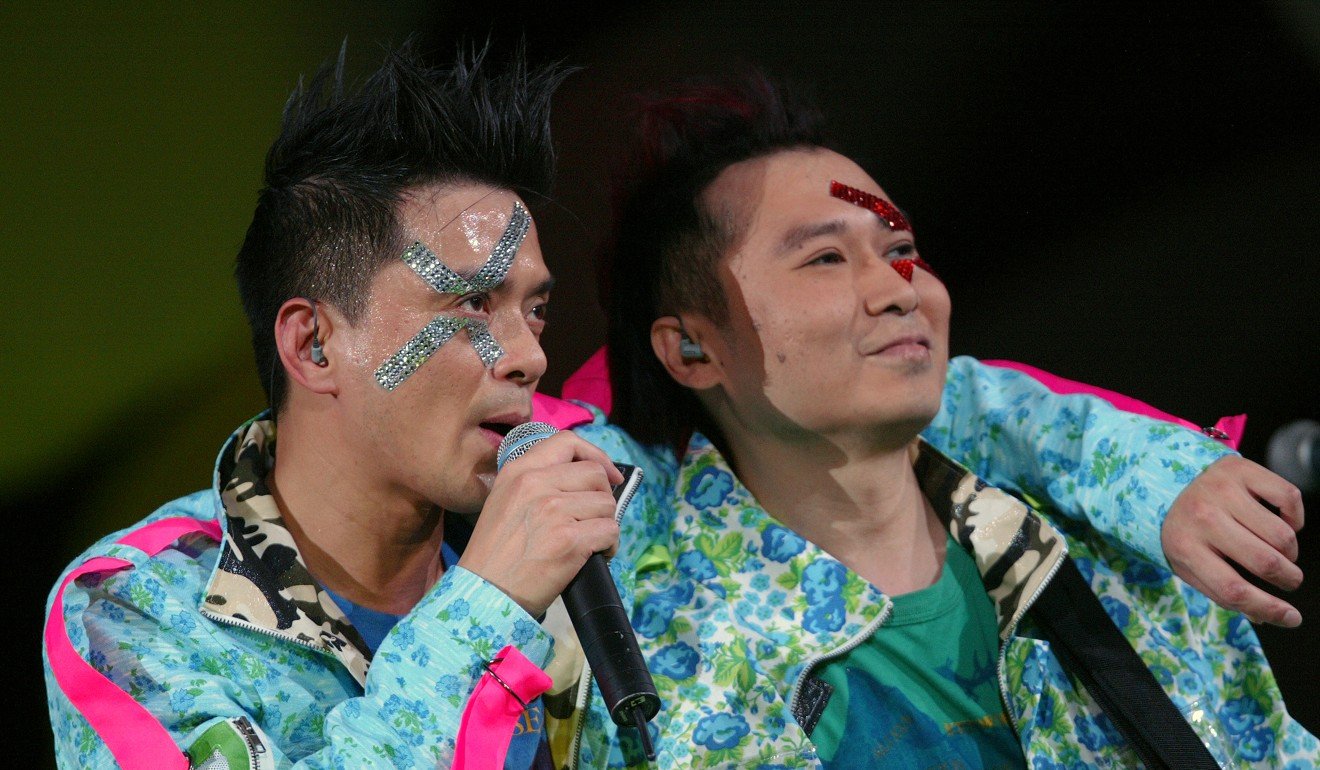
Foreign companies are not immune. Apple Music has removed from its Chinese streaming service a song by Hong Kong singer Jacky Cheung Hok-yau that references the Tiananmen crackdown. Tat Ming Pair, a Hong Kong duo, have been deleted entirely from the app. They released a song this month called Remembering is a Crime in memory of the protests.

Music by Tat Ming Pair – Anthony Wong Yiu-ming (left) and Tats Lau Yi-tat – has been deleted from the Apple Music app. Photo: K.Y. Cheng

Wikipedia also announced this month that the online encyclopaedia is no longer accessible in China. While the Chinese-language version has been blocked since 2015, most other languages could previously be viewed, Wikipedia said.

The Human Rights Foundation publised this video about China’s Million Person Muslim Prison Camps:

For the 25th anniversary see: https://humanrightsdefenders.blog/2014/06/13/25-years-tiananmen-celebrated-with-over-100-detentions/

See also: https://humanrightsdefenders.blog/2019/05/31/on-4-june-streets-around-chinese-embassy-to-be-renamed-tiananmen-square/

https://uk.news.yahoo.com/china-says-tiananmen-square-crackdown-1989-correct-policy-093500064.html

https://www.scmp.com/news/china/politics/article/3012782/outspoken-folk-rock-singer-li-zhi-disappears-china-tightens

Star power and human rights: a difficult but doable mix

February 10, 2014

RED-FACED. Jennifer Lopez performing for the leader of 'one of the world's most repressive regimes,' according to Human Rights Watch. Photo by Agence France-Presse/Igor Sasin

 (Jennifer Lopez performing for the leader Turkmenistan. (c) Agence France-Presse/Igor Sasin)

In quite a few earlier posts in this blog I have drawn attention to stars and celebrities who either support dictators or simply do not care that their actions do. So, I was quite happy to see a thoughtful piece by Jo Biddle of Agence France-Presse on 9 February 2014 analyzing this issue a bit more in-depth, with actress Scarlett Johansson as the “poster girl of Israeli apartheid”, Dennis Rodman in North Korea, and Kim Kardashian expressing her love of Bahrain. I would add, Mariah Carey who thinks nothing of singing for Gaddafi or the Angolan President, while Jennifer Lopez (picture above) did the same in Turkmenistan.

The author rightly states that when celebrities wander into complex foreign policy issues, it can be a minefield, leaving diplomats and human rights campaigners scrambling for damage control. The article mentions exceptions such as Bob Geldof, Bono, George Clooney or Angelina Jolie Read the rest of this entry »