Posts Tagged ‘politics’

Theo van Boven, a giant in the field of international human rights law: 1934 – 2026. A personal look back.

May 19, 2026

Today was the funeral of one my best friends and, more importantly, one of the most significant architects of the international human rights system as it developed in the last 50 years. Theo (Theodoor Cornelis) van Boven, was born in Voorburg on 26 mei 1934 and died peacefully in Maastricht on 9 mei 2026.

I have had the honor to work with him for many years [our lives intertwined over a long period of time and on different locations] and wrote about him several times. Most recently “Courageous Leaders and NGO Initiatives” in Ramcharan and others (ed), The Protection Roles of Human Rights NGOs, Essays in honour of Adrien-Claude Zoller, Brill Nijhoff, Leiden, 2023 (ISBN 978-90-04-51677-9), pp 614-636.

So, here a large part of the section on this great man:
This section is about a man who was crucial in getting the United Nations and NGO partners to deal with human rights protection. Much has been written about his work and the enormous contribution Theo van Boven made to the UN human rights machinery as we now know it. ..
Nowadays the United Nations has an elaborate machinery to deal with human rights violations. The system is far from perfect and still too often subject to political pressures and selectivity but there are now a great many thematic and country mandates, emergency sessions and there is an International Criminal Court against impunity. Wind back 40 years and none of this existed. The violations were there for all to see but not for the United Nations, which preferred to consider this part of the ‘internal affairs of sovereign states’. The man who would make it his life’s mission to change this, Theo van Boven, got in 1977 the position from where to do it: Director of Human Rights in the UN.

His teenage years were eaten up by the second world war. His memories of that period, his strict protestant background and his law studies in Leiden led him to enter an area that was not so obvious at the time: international human rights. He studied in the USA, wrote there a thesis on freedom of religion and soon afterwards, around 1960, he found himself as a young diplomat shaping the human rights policy of the Netherlands. A decade later the protest against the Vietnam war, the violations by the Greek colonels, the coup d’état in Chile and President Carter’s new policy on human rights pushed human rights suddenly higher on the political agenda. Theo had become an expert member of the UN Sub-commission on Human Rights and was one of the engineers of the first UN effort to investigate large-scale human rights violations, namely Chile. I myself met him when he was still a young professor lecturing on human rights in Amsterdam. Then – in the summer of 1977, the same month I started at the ICJ – he was appointed Director of the small human rights secretariat of the UN in Geneva. Here he started his work to bring dictators to accountability and to give the UN a capacity to deal with gross and systematic violations of human rights. Something that is now taken for granted but it would cost Theo his job.

Unlike his predecessors, Theo van Boven did not put all his faith in quiet diplomacy and he regularly talked about the need for the UN to address gross and systematic violations, about the mobilisation of shame and stated that the UN should care about victims. He also started to receive the victims – and the NGOs who represent them – in his office. This led to an incident that would be comic if it was not for the consequences. J. Matarollo was an Argentinean exile lobbying against the generals in his homeland who were killing left-wing opponents by the thousands. Theo agreed to hear him and told his secretary (inherited from his predecessor) to call Matarollo to give him an appointment in the early of hours of the next day. She faithfully called the Argentinean embassy assuming that he was a diplomat as these were the kind of people that normally met with the Director. The next day there was no Matarollo but an angry Note Verbale from Argentinean Ambassador Martinez accusing Theo of meeting with terrorists.

In the UN he did not conform to the image of the traditional diplomat, e.g. by pinning an anti-apartheid button on his suit, but even more so by publicly stating that NGO reports about dead bodies floating down a river in Guatemala were true, or by denouncing disappearances in Chile and Argentina. When in 1980 the government in the USA changed and Ronald Reagan and his team decided to play down violations by right-wing regimes, especially in Latin America, Theo did not flinch and openly criticised their support to these dictatorships. “Naming and shaming” by a UN official was unusual and not easily accepted by the diplomatic community. The Latin American regimes – led by Argentina and silently encouraged by the US – started a campaign to oust Van Boven as Director of Human Rights.

To complicate matters for van Boven, the new UN Secretary-General must have felt little sympathy for this particular Director, as J. Perez de Cuellar had earlier, in 1980, been appointed as Special Representative by the previous Secretary General to go to Uruguay and look into the human rights situation. His report was such a whitewash that it was heavily criticized in the Commission on Human Rights. How correct this reaction had been was shown when the famous pianist Estrella – whom de Cuellar claimed to have visited in the Libertad prison – came to Geneva and told the I.C.J and others that there had been no such visit.

In the meantime in 1980 Theo had put great energy – together with some key NGOs in creating a Working Group on Enforced Disappearances. As a mechanism focusing only on Argentina was politically not feasible, the new idea was to create a thematic mandate on the phenomenon of disappearances in the knowledge that Argentina was going to be the main target. At the decisive session the tension was enormous as the outcome of the vote was very uncertain. The Jordanian Chairman of that session had to deal with endless procedural issues, many of them proposed by Uruguay (egged on by Argentina which was only an observer). Finally, late at night the Chair felt that the resolution creating the mandate could be passed without a vote and moved to do so, but the Uruguayan Ambassador again started to put up his name plate as a sign that he wanted the floor. The Chairman quite unusually interrupting, looked directly at the Uruguayan Ambassador and said: “I URGE my brother from Uruguay NOT to do this..” The name plate slowly turned downwards again and the Chair immediately declared the resolution adopted. The NGOs and tens of Mothers and Grandmothers of the Plaza de Mayo in the public galleries started a spontaneous applause and quite a tear was shed. ..

In early 1982 the issue of Theo van Boven’s tenure as Director came to the fore. His contract had to be renewed which normally was a routine matter, but not this time. The issue came to an explosion when Theo’s opening speech to the Human Rights Commission was sent on a Friday evening to the UN Secretariat in NY for information and at the same time given to the UN Office of Information in Geneva for distribution at the time of delivery the next Monday morning. The UN Office of Information decided to make the statement available to the media that very Friday evening (with the usual proviso: “check against delivery”). The Representative of Guatemala in Geneva obtained a copy of the statement and vehemently objected to the statement. The SG’s office demanded that Theo should refrain from mentioning countries by name – which Theo refused not only out of principle but also because the press would notice the difference on Monday and assume that there had been pressure to remove the names.

As a family friend bringing the kids back from a ski outing, I happened to overhear Theo on the phone to New York agreeing to a ‘compromise’: he would mention at the beginning of his speech that certain passages were done in his ‘personal capacity’. A few days later Theo was suddenly informed that his contract would anyway not be prolonged. His announcement at a dramatic session of the Human Rights Commission grew quickly into an international diplomatic incident.

As I was on the verge of leaving the ICJ, I had some time on my hands. So I got the idea – warmly supported by Niall McDermot – to publish a book with a selection of Theo’s major speeches from the last five years. One of his Special assistants, Bertie Ramcharan, who had written a good part of them, was very helpful and we managed to get a book out within only 6 weeks. The first copy was flown in to Geneva by the publisher and presented to Theo at a public farewell which the ICJ had organised for him. NGOs, some UN staff and students showed up in such large numbers at the university hall that the fire brigade had to refuse access to late comers. Speech after speech – including by Saddrudin Aga Khan – cantered on Theo role in getting the UN machinery on human rights to deal with violations more concretely and on his support for human rights NGOs…

With Ian Guest and many others, I remain convinced that Theo’s dismissal from the UN was the result of pressure by Latin American dictatorships with support from the Reagan administration. As stated in People Matter, he was “hired and fired for the same reason: his deep commitment to human rights”.

After his dismissal Theo and his family returned to the Netherlands where many were very disappointed that there was no real interest in giving him an equivalent position in the foreign affairs department and he ‘ended up’ in the new University of Maastricht as professor of international law, where together with others such as Cees Flinterman he bent the research programme into his favourite direction: human rights. He continued his involvement in international activism in a variety of functions: with NGOs (e.g. European Human Rights Foundation, IMADR, International Alert), and with the UN (e,g. the Sub-commission on Human Rights, Special Rapporteur on Compensation 1990 -1993, Special Rapporteur on Torture 2001-2005, first Registrar of the UN Yugoslavia Tribunal). In 1998 he became the Head of the Dutch Delegation to the Rome Conference which created the International Criminal Court (ICC).

In 1985 he was called to Buenos Aires as a witness to testify against the nine military leaders (including Videla) for their human rights violations in the period 1976 en 1983. The UN had advised him not to go but he felt that he should do anything to end the impunity of these perpetrators. Theo’s testimony – he was called already on the 2nd day – was seen as crucial in establishing that the leaders of the Junta must have known about the massive violations. Theo took the same position with regard to the father of princess Maxima Zorreguieta (the wife of the king of the Netherlands). As Minister of Agriculture Jorge Zorreguieta must have known about the atrocities and should at least have taken distance instead of denying any knowledge. A position which Theo took in 2001 and was still heard defending in 2012.

In the light of Theo van Boven’s recurring clashes with Argentina it must have given him great moral satisfaction when on 26 November 2009 he received a degree honoris causa from the University of Buenos Aires as well as the highest decoration from the Government.

He was rigthly honored with 4 human rights awards, see: https://www.trueheroesfilms.org/thedigest/laureates/01889BD2-06CD-49BA-9A71-1BBFFFA9121A

ICTJ stated: “Van Boven’s commitment to the pursuit of justice was relentless. He spoke up about impunity and accountability in contexts of repression such as the military dictatorships in Argentina and Chile, where he also championed the cause of the disappeared, even when political pressure limited others from doing so. Today, ICTJ honors his voice, his perspective, and his deep-rooted legacy. Inspired by his resolve, we will continue our commitment to uphold human dignity above all else in the pursuit of justice and lasting peace all over the world, however long it takes.

https://www.ictj.org/latest-news/ictj-mourns-passing-theo-van-boven-pioneer-victims%E2%80%99-rights

https://www.icj.org/icj-mourns-the-passing-of-theo-van-boven-a-leading-light-in-the-human-rights-movement

for the Dutch speakers :

https://www.nrc.nl/nieuws/2026/05/14/voorvechter-van-mensenrechten-theo-van-boven-was-voor-de-duvel-niet-bang-a4927748?gift_token=4927748~1779425764~ZoNkCp0IEeKfgABQVoV_mg~qz1T0tF_jkfHhM3-1nfqmOps9ohrOWVEsPKAKJ5VJVA

Alleged perpetrators arrested in the murder of human rights defender Juan López in Honduras

May 14, 2026

(FILES) Honduran environmentalist Juan Lopez sits on a rock as he watches the Guapinol river on the outskirts of Tocoa, Colon department, Honduras, on September 28, 2021.
The late Honduran environmentalist Juan Lopez sits on a rock on the outskirts of Tocoa, Honduras, on September 28, 2021 [AFP]

On 12 May 2026 Al Jazeera reported that the Honduran authorities have arrested three people, including a powerful politician, accused of plotting the 2024 assassination of an environmental leader, an incident that became a symbol of government corruption. Adan Funez, former mayor of the city of Tocoa, was captured at his home on Tuesday on suspicion of masterminding the killing of Juan Lopez, following years of accusations by religious and environmental leaders.end of list

Lopez was an anti-corruption crusader who led a community effort against an iron oxide mining project in Colon, a rural region of northwestern Honduras, which activists said endangered the area’s dense jungles and crystalline waters, including protected reserve areas.

In September 2024, Lopez called on Funez to step down because of a corruption scandal. Days later, the environmental and human rights defender was shot six times in the chest and once in the head by a masked gunman, fuelling demands for justice. [https://humanrightsdefenders.blog/2024/09/26/cafod-calls-for-justice-as-another-environmental-defender-is-killed-in-honduras/]

Accusations also emerged against Funez, a power-broker in the region’s decades-long bloody agrarian conflict. The death brought back stark memories of the global outcry over the 2016 murder of Honduran environmentalist Berta Caceres.

Funez’s arrest on Tuesday comes more than a year after Lopez’s assassination.

https://www.aljazeera.com/news/2026/5/12/honduras-mayor-arrested-for-masterminding-environmentalists-killing

PEN: Number of Jailed Writers Tops 400 for First Time in 2025

May 14, 2026

On 12 May 2026 PEN America sounded the alarm on a deepening global crackdown on free expression, reporting in its Freedom to Write Index that more than 400 writers are behind bars for the first time since the Index launched in 2019.

In 2025, a total of 401 writers were jailed across 44 countries – up from 375 writers in 40 countries the year before. Over the past seven years, the number of jailed writers worldwide has risen by 68 percent, underscoring a steady and alarming escalation in the suppression of dissent.

China remains the world’s leading jailer of writers, with 119 cases – making it the only country to exceed 100 writers held behind bars. The sharpest increase came from Iran, where authorities carried out 17 new arrests, driving numbers back toward the peak levels seen during the 2022 ‘Woman, Life, Freedom’ protests. The spike signals a renewed and aggressive campaign to silence critical voices. The escalating suppression in Iran intensified in the aftermath of the June 2025 war with Israel, sweeping up both newly targeted writers and long-persecuted dissident voices. Among those arrested were online commentator Hossein Ronaghi, who was detained in June; a group of scholars and translators detained in November, including economists Parviz Sedaghat and Mohammad Maljoo, sociologist Mahsa Asadollanejad, and writer and translator Shirin Karimi; and human rights defenders and authors Narges Mohammadi and Sepideh Gholian, who were violently re-arrested while speaking at a memorial service in December.

Iran was one of three countries among the top 10 jailers of writers that were simultaneously engaged in armed conflict in 2025, along with Russia and Israel/Occupied Palestinian Territory. Authorities in these three countries repeatedly targeted writers who used anti-war language or themes in their poetry, music, scripts, commentaries, articles, or literary output, a key pattern that emerged in the 2025 data. 

In Israel/Occupied Palestinian Territory, six writers have been detained by the Israeli government over anti-war statements. Palestinian writers and commentators Mohamed Al-Atrash, Nawaf El-Amer, Radwan Qatanani, Rula Hassanein,and scholar Anwar Rostom were detained on charges of incitement or with no charges at all, in addition to Jewish-Israeli journalist and commentator Israel Frey who was investigated for terrorism, because of their commentary on the war, the genocide, and the occupation. 

In Russia the government held 18 writers in prison or detention in 2025, most targeted for their anti-war expression or suspected involvement in anti-war activity. In March, a Russian military court sentenced historian and columnist Alexander Skobov to 16 years in prison for his anti-war posts on social media. Other writers opposed to the war have fled into exile to avoid prosecution or jailing for their dissenting viewpoints.Overall, the top 10 top jailers of writers are China and its autonomous regions, including Xinjiang, Tibet, and Hong Kong (119); Iran (53); Saudi Arabia (27); Vietnam (24); Türkiye (22); Israel and the Occupied Palestinian Territory (21); Russia (18); Belarus (17); Egypt (13); and Myanmar (10).  [https://iranfocus.com/human-rights/57848-record-number-of-imprisoned-writers-worldwide-iran-ranks-second-with-53-jailed-writers/]

Several countries appeared in this year’s Index for the first time including Togo, Mozambique, and the United States. The U.S. case centers on the weeks-long detention of Sami Hamdi, a British opinion writer and columnist, who was detained in what PEN America views as part of the U.S. government’s weaponization of Immigration and Customs Enforcement (ICE). Hamdi, an outspoken critic of Israel, was on a speaking tour and had just attended a conference when ICE officers stopped him at San Francisco International Airport and held him in custody for two weeks.

The fact that the United States is in our Freedom to Write Index for the first time should be a sharp wake-up call for everyone in the country who claims to value free expression,” said Liesl Gerntholtz, managing director of the Freedom To Write Center. “No government can misuse its own detention and immigration systems to silence or intimidate independent voices and call itself a democracy.” 

For more information and to download the full report visit the 2025 Freedom to Write Index.

https://pen.org/press-release/2025-freedom-to-write-index

First European Forum on Environmental Human Rights Defenders 3-4 June 2026

May 12, 2026

The First European Forum on Environmental Human Rights Defenders (EHRDs) invites individuals and organizations committed to the promotion, protection, and respect of environmental and human rights across Europe to express their interest in participation. This landmark Forum represents a significant opportunity for Environmental Human Rights Defenders, civil society organizations, institutions, policymakers, and advocates to engage in meaningful dialogue, collaboration, and knowledge exchange on pressing environmental and human rights challenges affecting the European region.

The Forum will be held on 3–4 June 2026 at the headquarters of the Council of Europe in Strasbourg. The event is jointly organized by the Council of Europe, the Office of the United Nations High Commissioner for Human Rights, the European Union Agency for Fundamental Rights, and the mandate of the Special Rapporteur on Environmental Defenders under the Aarhus Convention. Additional collaboration is provided by the UNECE Aarhus Convention Secretariat, several Human Rights Council Special Procedure mandate holders, and a range of civil society organizations actively working throughout Europe.

Purpose of the Forum

The Forum aims to strengthen networks among Environmental Human Rights Defenders and supporting organizations while fostering regional cooperation and advocacy. Participants will have the opportunity to:

  • Share experiences and best practices
  • Discuss emerging environmental and human rights issues
  • Explore strategies for protection and advocacy
  • Build partnerships across sectors and countries
  • Contribute to discussions on policy and accountability mechanisms

The gathering is expected to attract a diverse range of participants from across the Council of Europe member states, including grassroots defenders, activists, indigenous representatives, youth leaders, academics, legal experts, international organizations, and civil society actors.

Event Format and Languages

The Forum will be conducted exclusively as an in-person event. Online participation or virtual attendance options will not be available. Participants are therefore encouraged to prepare for travel and related logistical arrangements should their participation be approved.

Registration and Selection Process

Submitting an Expression of Interest does not automatically guarantee participation in the Forum. All applications will undergo a comprehensive review and selection process conducted by the organizers. Applicants whose participation is approved will receive an official registration confirmation letter. The review process will take place on a rolling basis to allow selected participants sufficient time to make necessary arrangements, including:

  • Visa applications
  • Travel planning
  • Accommodation bookings
  • Administrative preparations

Interested individuals are therefore strongly encouraged to submit their applications as early as possible.

Funding and Financial Support

Due to limited available resources, the organizers will only be able to provide financial support to a select number of Environmental Human Rights Defenders. Funding decisions will be based on several factors, including:

  • Resource availability
  • Geographic diversity
  • Gender balance
  • Inclusion and representation criteria
  • Nature of environmental and human rights work

Applicants who meet the general participation criteria but are not selected for financial support may still receive an invitation to attend the Forum through self-funded participation.

The organizers anticipate that the majority of participants will need to finance their own attendance. Institutions, donor organizations, and networks that support Environmental Human Rights Defenders are encouraged to assist participants financially where possible.

https://www.globalsouthopportunities.com/2026/05/10/forum-14

https://impakter.com/first-european-forum-on-environmental-human-rights-defenders-what-to-expect

FIFA under fire for Peace Prize for Trump

May 2, 2026

On 19 January 2026 I reported on FIFA’s misguided effort to please President Trump with a suddenly created peace prize. See:

Now criticism within European football circles of FIFA has intensified after the president of the Norwegian Football Association, Liz Klavenes, called for the cancellation of the ‘Peace Prize’ arguing that the move constitutes a clear breach of the principle of political neutrality. Klavénes, who also sits on the Executive Committee of the Union of European Football Associations (UEFA), confirmed that she would raise this issue during the FIFA Congress, stressing the need for world football’s governing body to maintain a “distance” from political leaders.

In a notable escalation, Klavenis announced her support for an ethics complaint filed against FIFA President Gianni Infantino, over his role in awarding the trophy, amid accusations of breaching neutrality rules. According to The Athletic, the complaint — filed by the human rights organisation Fair Square — alleges that Infantino politically promoted a public figure whilst in office, as well as awarding a politically charged prize without a clear institutional process and bypassing official structures within FIFA, including the Congress. These findings suggest a possible breach of FIFA’s Code of Ethics, which requires its officials to maintain complete neutrality regarding political matters.

Klavinis believes that introducing politically charged awards into the global football system threatens the independence of the game, stressing that such initiatives must be carried out within clear institutional frameworks and free from personalisation or political agendas. She also stressed that FIFA’s credibility is linked to the extent of its commitment to the principles of transparency and governance, particularly in light of increasing international scrutiny of its decisions..

This issue is becoming increasingly sensitive as the 2026 World Cup in the United States, Canada and Mexico approaches, placing the relationship between politics and football under the microscope.

Australian footballer Jackson Irvine said football’s credibility as a force for good has been undermined by FIFA, accusing it of making a mockery of its own Human Rights Policy. Irvine took aim at FIFA’s decision to give the Peace Prize to US President Trump. “As an organisation, you would have to say decisions like the one that we saw awarding this peace prize make a mockery of what they’re trying to do with the human rights charter and trying to use football as a global driving force for good and positive change in the world,” Irvine told the Reuters news agency.

The White House has pushed back strongly against criticism of Donald Trump receiving FIFA’s inaugural Peace Prize, awarded in December for what FIFA described as “exceptional and extraordinary actions for peace.” Spokesperson Davis Ingle declared that “no one else is more deserving” and dismissed detractors as suffering from “Trump Derangement Syndrome.”

https://www.thecanary.co/global/2026/04/29/fifa-to-revoke/

https://www.mirror.co.uk/sport/football/news/world-cup-trump-fifa-infantino-37086100

https://www.msn.com/en-au/news/insight/white-house-doubles-down-on-defence-of-trump-s-fifa-peace-prize/gm-GM2F0C30BA?gemSnapshotKey=GM2F0C30BA-snapshot-5

https://www.aljazeera.com/sports/2026/4/28/before-world-cup-fifa-slammed-for-politicising-sport-with-trump-prize

and then in June 2026:

https://www.theguardian.com/football/2026/jun/03/campaign-to-deliver-biggest-complaint-fifa-has-ever-received-launches-before-world-cup

Jimmy Lai receives DW Freedom of Speech Award 2026

May 1, 2026

On 20 April 2026, DW has awarded its 12th Freedom of Speech Award to Jimmy Lai. A prominent advocate for press freedom & democracy in Hong Kong, the founder of the Apple Daily newspaper has been detained in solitary confinement since 2020.

Prozess gegen Verleger Jimmy Lai in Hongkong
Image: Anthony Wallace/AFP

On honoring Jimmy Lai, DW Director General Barbara Massing said: “Jimmy Lai has stood unwaveringly for press freedom in Hong Kong at great personal risk, even as space for independent journalism became increasingly limited. With Apple Daily, he gave journalists a platform for free reporting and a voice to the democracy movement in Hong Kong. His commitment reminds us that press freedom is never a given – it must be constantly defended. With the DW Freedom of Speech Award, we honour his indispensable dedication to democratic values.”

The DW Freedom of Speech Award will be presented on June 23, 2026, at the DW Global Media Forum, DW’s international media conference, in Bonn.

Jimmy Lai was born in southern China in 1947 and, as a young child, fled to Hong Kong in 1960. The British citizen founded the pro-democracy newspaper Apple Daily in 1995 and later became one of the city’s most prominent advocates for democracy, financially supporting democratic parties and politicians and taking part in the mass protests of 2019 and 2020. Following the introduction of China’s national security law in Hong Kong in June 2020, Lai was later arrested and has remained in custody, and in prolonged solitary confinement, since December 2020. Regardless of his British citizenship, the Hong Kong authorities continue to deny the United Kingdom consular access to him.

In early 2026, a Hong Kong court sentenced Jimmy Lai to 20 years in prison. He had been convicted in December 2025, following a two-year trial, on charges including “conspiracy to collude with foreign forces” and conspiracy to publish “seditious material.”

“One of the reasons why they put you in solitary confinement, of which my father has been for more than five years now, is to tell you that nobody cares about you, that you’re going to die alone. And all the support and this award show that that is not the case. That people who fight for freedom, people who fight for the freedom of others, are never alone,” Jimmy Lai’s son Sebastien told DW in an exclusive interview.

For more on the Freedom of Speech Award and its laureates, see: https://www.trueheroesfilms.org/thedigest/awards/b9e2c660-8e41-11ea-b31d-31ce896d8282

https://corporate.dw.com/en/jimmy-lai-receives-dw-freedom-of-speech-award-2026/a-76968037

https://amp.dw.com/en/hong-kong-pro-democracy-publisher-jimmy-lai-honored-by-dw/a-76991604

https://www.theguardian.com/world/2026/apr/30/jailed-hong-kong-pro-democracy-activist-jimmy-lai-wins-freedom-of-speech-award-in-germany

JFK Study: At the Frontlines of Environmental Justice: Indigenous Environmental Human Rights Defenders in Latin America

May 1, 2026

Indigenous environmental human rights defenders (IEHRDs) across Latin America face disproportionate levels of violence for protecting land, water, and territory. Of the 146 environmental defenders killed or disappeared in 2024, approximately one-third were Indigenous. This overrepresentation reveals the structural risks faced by Indigenous Peoples at the forefront of environmental defense.

A study by Nefeli Poulopati, Ezihe Chikwere and Paulina Macías Ortega for Kennedy Human Rights Centre published on 30 April 2026 explores who IEHRDs are, the legal protections available to them, the challenges they face, and cases that reflect their ongoing resistance and struggle across Latin America.

The study looks at Legal Frameworks, Violence against IEHRDs, Impacts of Extractivism, and looks Ahead: A Differentiated Approach…

States must adopt an intersectional approach in all measures taken to protect the rights of IEHRDs. A differentiated, preventive, and collective approach to protecting IEHRDs requires applying a gender, ethno-racial, and cultural perspective when determining the level of risk faced by an IEHRD. The ethnic reality of the territory and the traditional ways of Indigenous peoples need to be taken into account when designing protection schemes, to ensure they align with these communities’ practices. The special relationship of Indigenous Peoples to the land reinforces States’ obligation to protect IEDHRs. 

One way to fulfill this obligation is to decide on protective measures for IEHRDs in consultation with Indigenous communities, a practice that is often not followed by States. It is particularly important for governments to consider the heightened risk that IEHRDs face when they oppose development megaprojects. States should adopt the necessary measures to establish or strengthen systems to monitor and control these practices in a manner consistent with their legal obligations. 

However, as the cases above illustrate, formal recognition does not equal protection. Instead, it is the first step to rethink the colonial origins of the extractivist system that perpetuates power imbalances, thereby weakening safeguards at the regional and local levels.

To learn more about this work, visit the Civic Space Case Tracker, which maps leading ongoing judicial cases litigated by local organizations and lawyers in Asia, Africa, and the Americas.  

UN rapporteurs and NGOs raise concerns over Turkey’s treatment of human rights defenders

April 29, 2026

On April 22, 2026 United Nations special rapporteurs raised serious concerns about Turkey’s use of counterterrorism laws to judicially harass and criminalize human rights defenders and lawyers, including what they described as the misuse of the terrorism financing law, the Stockholm Center for Freedom reported.

In a letter sent to the Turkish government on February 23, 2026, but published only recently, the rapporteurs said authorities were pursuing charges including membership in a terrorist organization and terrorism financing against rights defenders and lawyers, singling out the Human Rights Association (İHD) as a particular target.

The rapporteurs pointed to the case of İHD member Hatice Onaran, who was convicted in 2024 of “violating the law on financing terrorism” after sending small amounts of money to poor and sick prisoners. They also cited the cases of four other members —Osman Süzen, Suna Bilgin, Tuğba Kahraman and Mehmet Acettin — who were charged with membership in a terrorist organization. Süzen was subsequently acquitted at a January 2026 hearing.

A fifth İHD member, İsmail Boyraz, was investigated on accusations of participating in an unlawful assembly after taking part in a teachers’ union protest. The rapporteurs also cited the case of lawyer Sabri Güngen, who was allegedly assaulted by police while meeting with a client.

The rapporteurs expressed concern over what they described as Turkey’s “apparent misuse” of terrorism financing laws in Onaran’s case, noting that providing small sums of money to support the basic needs of ill and financially disadvantaged prisoners, in line with prison regulations and under prison administration supervision does not constitute terrorism financing under international law. Onaran, who is undergoing cancer treatment, was released in February 2025 after his sentence was suspended for six months on health grounds.

They also warned that physical assault and intimidation reportedly faced by lawyers Bilgin, Süzen and Güngen while carrying out their professional duties may have been acts of retaliation for their human rights work.

The rapporteurs raised the same concern in a following statement on March 31, which warned that Turkey’s counterterrorism legislation is being used to criminalize legitimate rights advocacy and restrict fundamental freedoms.

The letter was signed by Mary Lawlor, the UN special rapporteur on human rights defenders; Gina Romero, the special rapporteur on freedom of peaceful assembly and of association; Tlaleng Mofokeng, the special rapporteur on physical and mental health; Margaret Satterthwaite, the special rapporteur on the independence of judges and lawyers; and Ben Saul, the special rapporteur on protection of rights and freedoms while countering terrorism.

https://ankahaber.net/haber/detay/un_warns_turkiye_says_lawyers_and_rights_defenders_systematically_targeted_307921

see also:

https://www.ifj.org/media-centre/news/detail/category/press-freedom/article/turkey-ifj-and-partners-condemn-escalating-use-of-disinformation-law-against-journalists-and-call-for-its-repeal

Why Temporary Relocation Programs for HRDs are Essential

April 28, 2026

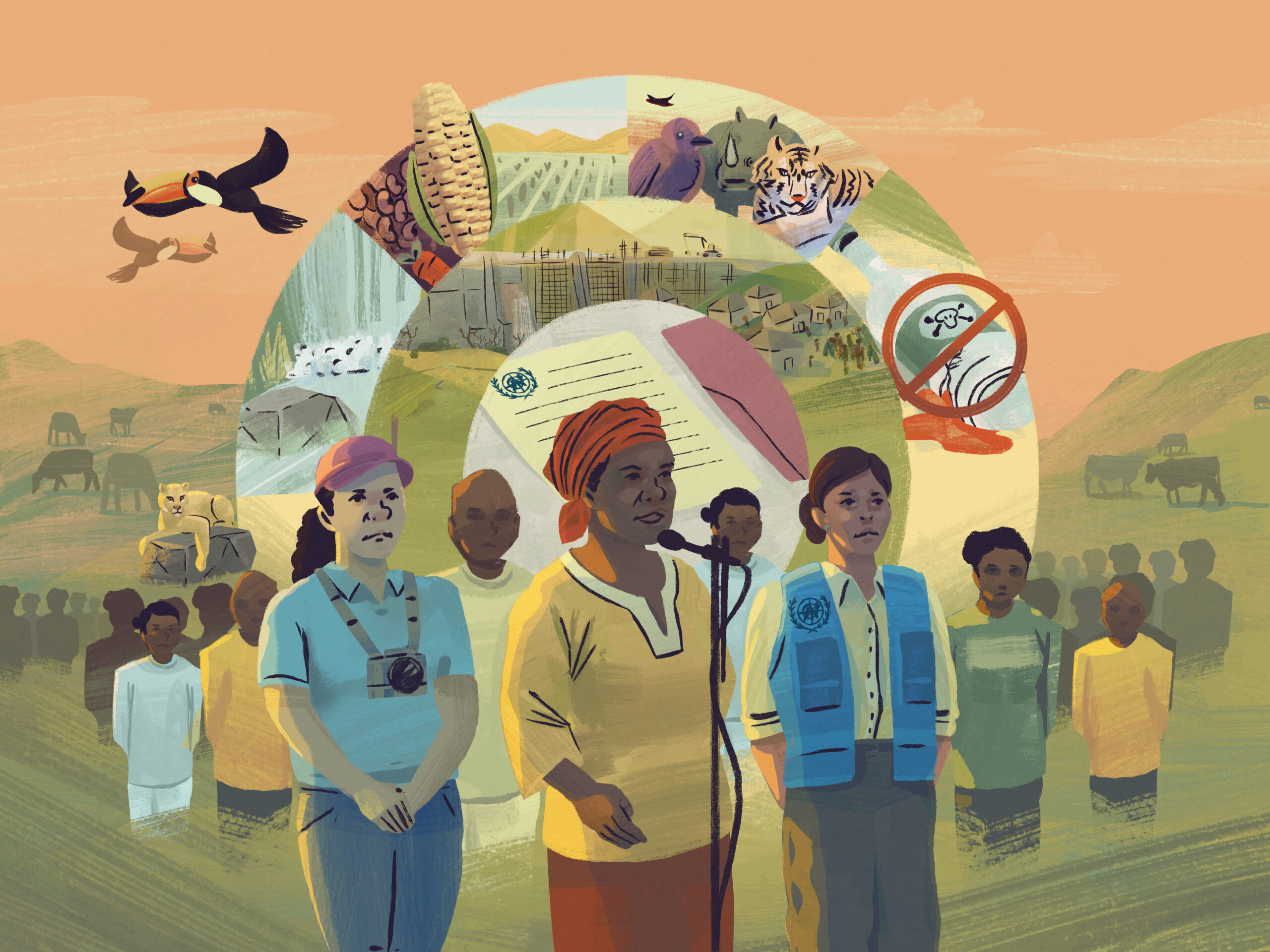
carried an article on “Protecting Those Who Protect Rights: Why Temporary Relocation Programs Are Essential”

Image

Illustration by Kevin Valenzuela

Every day, human rights defenders risk their lives to safeguard the freedoms we often take for granted. They face threats, violence, and relentless pressure simply because they choose to stand on the side of justice. Every year, different NGOs monitor the situation for human rights defenders globally and publish evidence of the attacks they are facing. Yet behind the headlines and statistics are real people – exhausted, targeted, and often left without adequate protection. For many, a safe space to take a break is not a luxury; it is a lifeline. It is the difference between burnout and resilience, between silencing and survival.

Human rights defenders work under constant pressure, facing political hostility, economic hardship, and systemic threats. The risks are severe and growing. Globally, Front Line Defenders reported at least 324 killings across 32 countries in 2024. These are not merely numbers; they reveal great risks and ongoing rights violations. Such realities underscore the urgent need for temporary relocation programs to offer defenders safety and space to continue their work.

Beyond the physical risks, defenders also face severe burnout and psychological strain. The emotional toll of their work is immense: constant exposure to threats and stories of violence can lead to secondary trauma, chronic exhaustion, and deep isolation, especially for those working without strong support systems. Temporary relocation programs help address these often‑invisible harms by offering a protected space for rest, reflection, and psychological support. As one participant from the Oslo as a Breathing Space City (Oslo Breathing Space City) program explained,

Image

“The learnings related to well-being, stress management, and sustainable engagement have influenced how I interact with colleagues and community members. I have helped normalise conversations around mental health and burnout within my professional circles”Naghma Iqtidar, Pakistani human rights defender and Oslo Breathing Space City guest during Spring 2023.

This is precisely where temporary relocation initiatives play a crucial role. Similar to other rest and respite temporary relocation programmes, Oslo Breathing Space City offer defenders a three‑month stay in Oslo tailored to their individual needs. These initiatives provide psychosocial support, opportunities to connect with other organisations, and a safer environment in which defenders can continue their activism. Importantly, they take a holistic approach to protection, addressing not only immediate security needs but also the emotional, psychological, and relational dimensions of a defender’s wellbeing in the long term. Because of this broader focus, they can create different forms of impact, which are complementary to more traditional protection tools. They not only offer safety but also create the conditions for sustainable, long‑term resilience...

Finally, the impacts of supporting individual human rights defenders with a holistic and long-term approach can have great benefits for their organisations, movements and communities at home, as the learnings and networks on an individual level can lead to concrete initiatives that are positive for many people or be passed on to colleagues and ultimately impact the organisational or community resilience. Some examples have been shared by previous participants of Breathing Space City:

Why are temporary relocation programs for human rights defenders essential?

  1. They serve as an essential fallback when other protections fall short, giving defenders the space to step away from immediate danger, regain perspective, and gather the clarity and energy they need to continue their work more effectively once they return home.
  2. They help prevent burnout and psychological harm, allowing them to sustain their activism with greater resilience over the long term.
  3. They strengthen global networks and solidarity, creating long-term impact beyond the relocation period.
  4. They contribute to stable and resilient human rights communities in regions where defenders face systemic violence and persecution.

Expanding relocation support as a lifeline for human rights defenders

Supporting them through relocation programs is not just an act of solidarity; it is a lifeline that enables them to continue their vital work with even more impact, resilience and sustainability.

There are currently numerous temporary relocation programmes worldwide, each with its own focus and reach. They need continuous funding and political support to be able to keep hosting human rights defenders. While programmes in safe countries of the Global South should be expanded, so that defenders facing stricter visa barriers can also access temporary protection, there is also a strong need to sustain programmes in the Global North. These locations often offer unique added value to guests, including access to international networks, advocacy spaces, and specialised resources. In addition, locations like Oslo support rest by providing security, easy access to nature, and a welcoming environment.

According to the latest report from ProtectDefenders.eu, about 30% of protection investment now goes to temporary relocation programs, showing that donors see relocation as a key mechanism within human rights defender protection efforts. While overall public funding for defenders remains very low relative to need, around 0.10% of total Official Development Assistance, the portion dedicated to protection, including relocation, has grown noticeably. This suggests donors recognise the urgency of investing in safety as a priority, even as broader funding remains constrained. Nonetheless, as the need is growing, more funding efforts are necessary to maintain and develop existing and new programmes. The EU Agency for Fundamental Rights recommends broadening relocation programs, increasing awareness about defenders’ work and risks, providing more adequate support during stays, and revising legal instruments to address their specific needs.

https://nhrf.no/article/2026/protecting-those-who-protect-rights-why-temporary-relocation-programs-are-essential

Secret Russian court upholds ‘foreign agent’ repression against Crimean Tatar human rights defender Lutfiye Zudiyeva

April 27, 2026
Lutfiye Zudiyeva Photo Crimean Solidarity

Lutfiye Zudiyeva Photo Crimean Solidarity

On 27 April 2026, Halya Coynash reported on the case of Crimean Tatar human rights defender Lutfiye Zudiyeva.

Russia’s Second cassation court of general jurisdiction cases has rejected Lutfiye Zudiyeva’s cassation appeal against her inclusion by the Russian justice ministry in its notorious register of so-called ‘foreign agents’. Russia is deploying all weapons to silence the courageous Crimean Tatar human rights defender and journalist, and it cannot be said that any other outcome was seriously expected.  The lawlessness was, however, even more extreme than usual with Lutfiye’s lawyer arriving for the hearing only to be told that it had been held earlier than scheduled, behind closed doors, with the justice ministry’s decision upheld.

The ‘hearing’ took place on 19 March however it was only a month later, and on the lawyer’s second attempt and she and Lutfiye were able to receive a copy of the ruling. Lutfiye’s application to take part by video link had been rejected, with the court claiming that no object grounds had been given for why the human rights defender and mother of four should come from occupied Crimea to Moscow.  The court also pointed out that her presence was not mandatory but failed to warn her that it would also speed up the hearing, thus preventing her lawyer from taking part.  Quite the contrary, with the ruling claiming that neither Lutfiye Zudiyeva nor her lawyer had “appeared”.   The one hearing, which was over before its scheduled commencement at 10.30 a.m., took place behind closed doors, before presiding ‘judge’ Yelena Regina and two colleagues, Yury Denisov and Yelena Karpacheva.  

As reported, the Russian justice ministry announced that Lutfiye Zudiyeva had been added to its ever-increasing register of alleged ‘foreign agents’ on 16 May 2025. It claimed that the renowned human rights defender and Graty journalist had “circulated false information about decisions taken by the public authorities of the Russian Federation and the policies they carry out”; that she was “under foreign influence” and “involved in political activities.” 

An appeal was lodged immediately, with this rejected on 11 August 2025 by ‘judge’ Iryna Kozlova from the Zamoskvoretsky district court in Moscow.   On that occasion, Lutfiye’s application to participate by video link from Dzhankoi, in occupied Crimea, “got held up” in the Russian postal system, however her legal representative was able to take part, and present Lutfiye’s written objections.  These were, predictably, ignored, as they were in the cassation court’s secretive hearing on 19 March 2026.  

The claims that have now been upheld by two Russian ‘courts’ were that there was proof of Lutfiye Zudiyeva being ‘under foreign influence’ in her publications in the independent Ukrainian publication Graty, in her commentary to the media and international organizations, as well as her supposed ‘membership’ of Frontline Defenders.  There would be nothing at all illegal about such membership, but it is a figment of some Russian ministry official’s imagination.  Frontline Defenders have spoken out in Lutfiye’s defence, but so have many other human rights organizations, diplomats and journalists. [https://www.frontlinedefenders.org/en/profile/lutfiye-zudiyeva]

Another bizarre claim which none of the ‘judges’ found the courage to question was that Lutfiye Zudiyeva had received money from foreign sources.  To justify this totally false claim, reference was made to money for day-to-day needs which Lutfiye’s husband had transferred to her account.  He in turn is involved in selling agricultural goods and, according to the FSB, received money between February and August 2024, from three ‘foreign nationals’ (from Ukraine, Germany and Vietnam).  In her written statement for the appeal, Lutfiye explained that in each of those cases, the person had had dual citizenship, with this something her husband could scarcely have known, as he had no right to demand a passport from buyers.  She also disputed the Russian ministry’s claim that her human rights work and journalism were ‘political activities’.

On 27 July 2023, Zudiyeva and another journalist were illegally detained, together with 12 other Crimean Tatars for trying to attend a purportedly open court hearing into the appeal against the appalling sentences passed on Crimean Tatar Mejlis leader, journalist and human rights defender Nariman Dzhelyal and two cousins, Asan and Aziz Akhtemov.  She was fined on a preposterous charge of having taken part in an unauthorized mass event, with the occupation ‘judge’, like the Russian-controlled ‘police’, ignoring the fact that she had been there as a journalist…

“I cannot calmly sit and watch as the multiple searches which take place all the time in Crimea result in children being deprived of their fathers; in elderly parents being left without their children, without care, and in women remaining without their husbands.  I believe that it is my right to have the possibility of speaking publicly about this.  And this is the least I can do as a member of society.”

https://khpg.org/en/1608815698