Posts Tagged ‘MENA region’

In Memoriam: 8 women human rights defenders who shaped the MENA region

June 15, 2026

On 4 May 2026 the Tahrir Institute for Middle East Policy (TIMEP) remembered eight women organizers from the region who fought for a better region and in whose stories we find inspiration:

Lina Ben Mhenni

“I am the activist of all causes.”Lina Ben Mhenni was a Tunisian blogger, educator, and activist whose voice rose to prominence as Tunisia’s Jasmine Revolution unfolded. Born in Tunis in 1983 and raised in a politically engaged family, she used her blog A Tunisian Girl to document censorship, women’s rights, and state repression well before the revolution began. When protests erupted after Mohamed Bouazizi’s self-immolation in December 2010, she became a leading voice reporting from inside the country. Traveling to Sidi Bouzid, Kasserine, and Regueb, she documented police brutality, sharing photos and testimonies online despite a strict media blackout. After the revolution, she continued advocating for human rights, freedom of expression, and justice for victims and their families. She also launched initiatives to support prison libraries, delivering over 45,000 books across Tunisia. Recognized internationally, she was nominated for the Nobel Peace Prize in 2011. She passed away in 2020 at the age of 36 after a long battle with lupus. [see also https://humanrightsdefenders.blog/2020/01/29/in-memory-of-tunisian-human-rights-defender-lina-ben-mhenni/]

Sarah Hegazi

Sarah Hegazi was an Egyptian queer feminist and human rights defender.  As a member of the Bread and Freedom Party in Egypt, she advocated for political prisoners, opposed the death penalty, and supported movements for freedom across the MENA region, including in Palestine, Syria, Lebanon, and Sudan. Her activism was intersectional, grounded in class struggle and solidarity. In 2017, she raised a rainbow flag at a Mashrou’ Leila concert in Cairo—an act that made her a target for state repression. As part of the anti-LGBTQI+ crackdown that followed, Sarah was arrested, detained, and subjected to torture. Sarah was fired from her job and experienced severe depression and post-traumatic stress disorder. Out of fear for her safety amid continued targeting, bullying, and repression, Sarah was forced to flee Egypt in 2018. She traveled to Canada where she sought political asylum.  While living in exile apart from her loved ones, and the country and community most dear to her, Sarah took her life on June 13, 2020. She was 30 years old.

Bahjaa Abdelaa Abdelaa

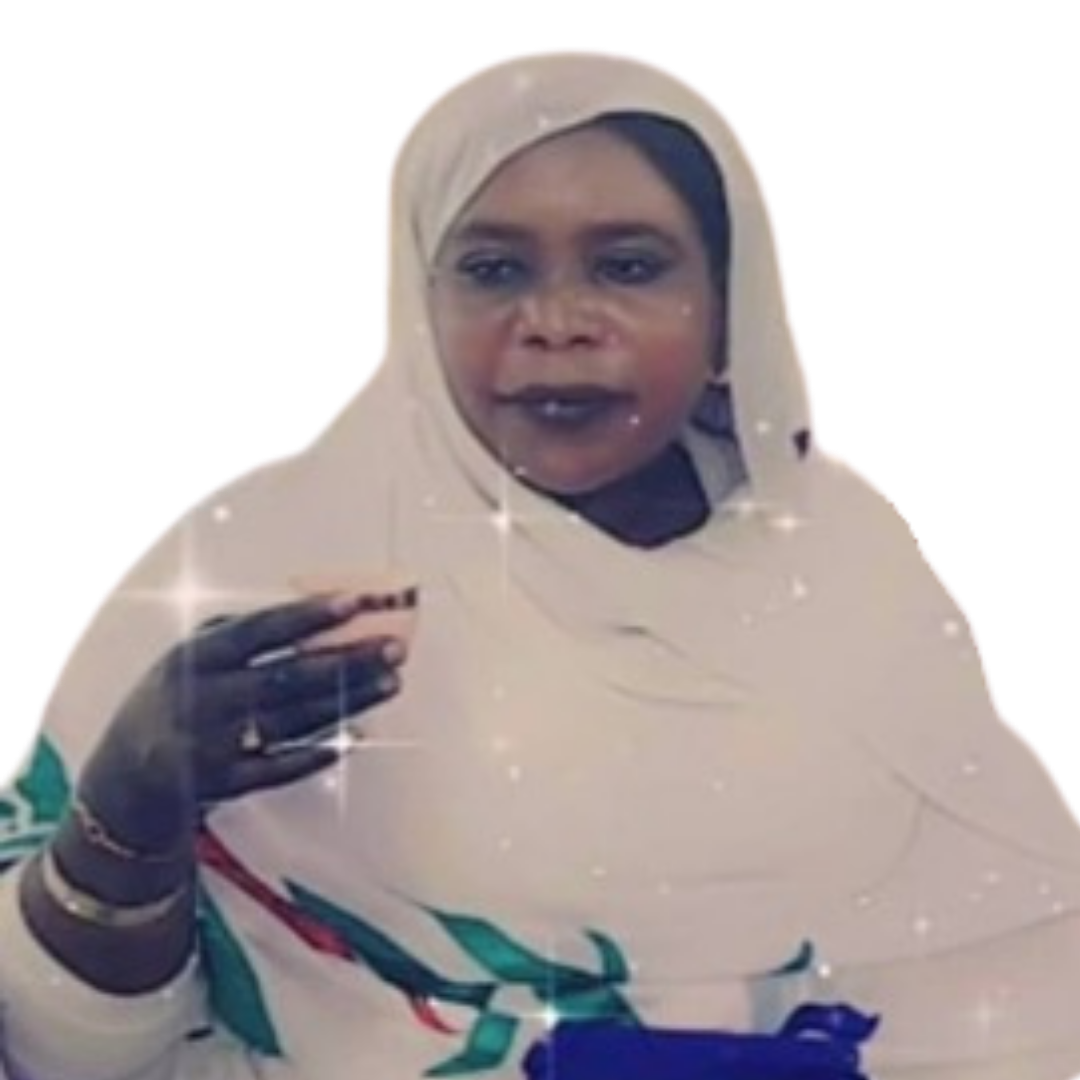
Bahjaa Abdelaa Abdelaa was a Sudanese human rights defender who worked tirelessly in support of Sudanese women. Born in Nyala, South Darfur, she was also an economist who graduated from the University of Khartoum in 2020. She was a member of the Women Revolutionary Group, which was created to advocate for women’s rights, gender equality, and social justice, as well as to support survivors of rape and sexual violence in Darfur. Bahjaa became known for her monitoring and documentation work, highlighting the pervasiveness of sexual violence during conflict. She was also part of the Darfur Collation of Women Human Rights Defenders (TMD). As the war raged in Sudan, and after receiving death threats due to her human rights work, on October 26, 2023, Bahjaa was shot and killed by unidentified gunmen while attending a relative’s funeral at Kalma camp for internally displaced people in Nyala.  She was 26 years old.
Giselle Khoury

Known as the “grande dame of Arab journalism” for her pointed interview style, Giselle Khoury was a Lebanese journalist and television personality whose career spanned almost four decades, defined by her commitment to freedom of expression and pluralism.  She began at LBC in 1985, later joined MBC, and also contributed to the launch of Al-Arabiya. She became known for hosting major political programs such as Bil Arabi and Studio Beirut, where she interviewed leading political figures from across the region. Her work continued with BBC Arabic and Sky News Arabia. As one of the first women Arab journalists to host such high-profile programs, she helped reshape the media landscape. After the 2005 assassination of her husband, journalist Samir Kassir, she co-founded the Samir Kassir Foundation to support independent journalism, monitor press freedom, and nurture new generations of media professionals. She passed away in October 2023 at the age of 62 after a battle with cancer.

Bassma Kodmani

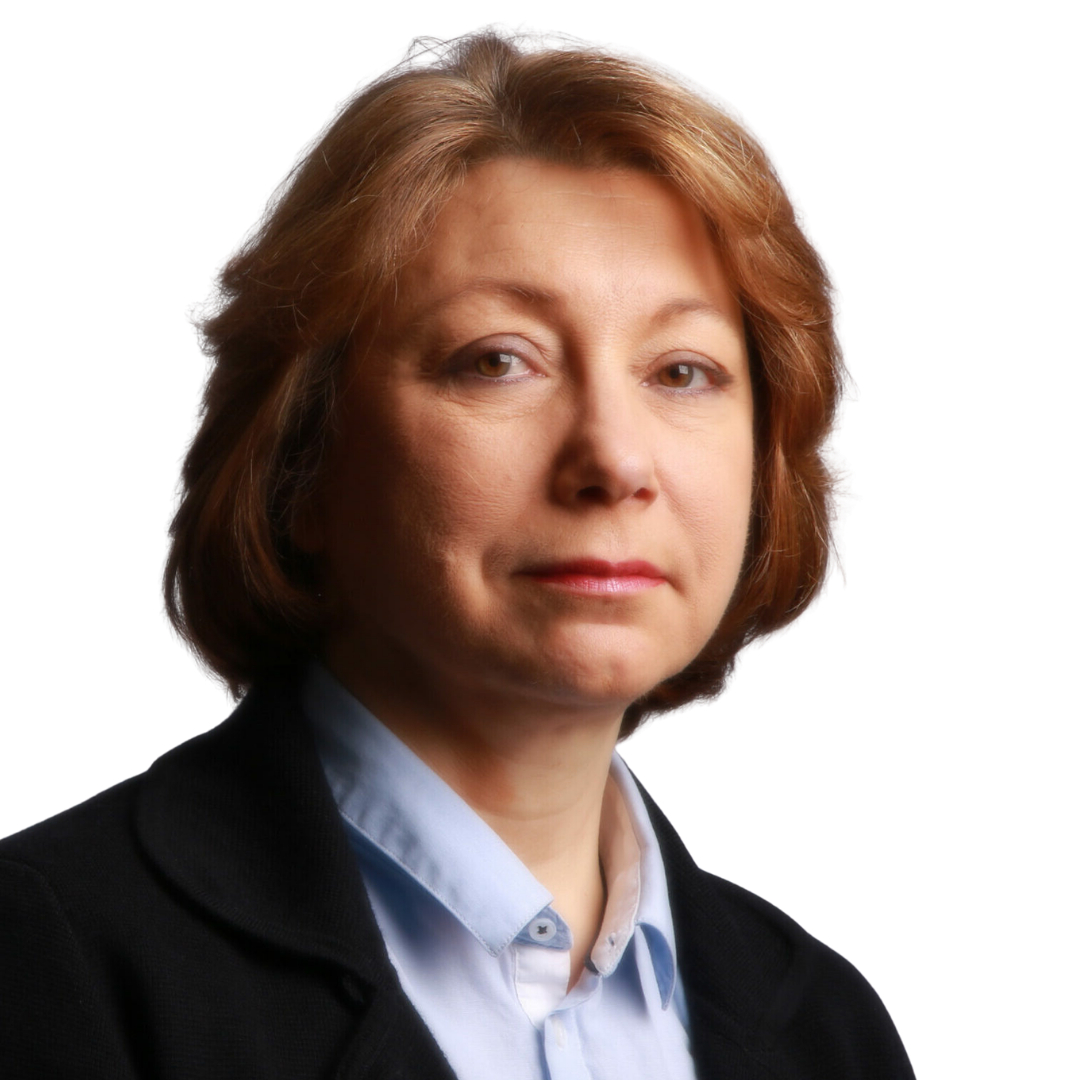
Bassma Kodmani was a Syrian academic, advocate, and political figure, whose career bridged research, policy, and activism. She co-founded the Arab Reform Initiative (ARI), a collaborative think tank “to articulate a home-grown agenda for democratic change in the Arab region,” serving as Executive Director from 2005 to 2019.  When Syrians peacefully took to the streets in 2011, Bassma took a temporary leave from ARI to serve as Head of Foreign Relations and spokesperson with the Syrian National Council, the opposition body organizing for a democratic alternative at the time, until her resignation in 2012. In 2016, she participated in the Geneva peace talks as part of the delegation of the democratic opposition. Holding a PhD from Sciences Po, Bassma authored and edited multiple works on Middle Eastern politics and conflict and was a renowned political thinker. Her vision for a Syria that embraces the equal participation of all Syrians is one that continues to inspire younger scholars today. She died of breast cancer at the age of 64.
Shireen Abu Akleh

“I chose journalism to be close to people. It might not be easy to change the reality, but at least I can bring their voices to the world.” Shireen Abu Akleh was a Palestinian-American journalist and one of the most recognizable voices in the Arab world. Born in Jerusalem in 1971, she spent over 25 years covering the realities of life under Israeli occupation. After studying journalism at Yarmouk University, she began at Voice of Palestine radio and Radio Monte Carlo before joining Al Jazeera in 1997. At a time when few Palestinian women worked as field reporters, she became a leading correspondent. She rose to prominence during the second intifada in 2000, reporting from the ground and centering the lived experiences of Palestinians—from political prisoners to families affected by displacement and violence.  On May 11, 2022, Shireen was shot and killed in a targeted attack by Israeli Defense Forces, while wearing a press vest and while covering a raid in Jenin. Her funeral, which was attacked by Israeli police forces, drew hundreds of mourners and widespread solidarity.

Salwa Bugaighis

Salwa Bugaighis was a Libyan lawyer, human rights advocate, and political figure. She was active in the 2011 Libyan Revolution, which ultimately overthrew Muammar Gaddafi. Based in Benghazi, she built her career defending political prisoners and advocating for justice under an authoritarian regime. From the start of the uprising, she was on the front lines, helping to organize protests and becoming a member of the National Transitional Council. She later resigned in protest over the lack of women’s representation. She continued her work through national dialogue initiatives aiming to bridge divisions across Libya’s fragmented society. Bugaighis was known for her outspoken criticism of armed groups and extremists. Even in the face of threats and violence, she remained committed to building democratic institutions and a more inclusive Libya.  In June 2014, after returning home following her vote in the country’s parliamentary elections, she was assassinated in a targeted attack in which gunmen stormed her home, shot and stabbed her, and abducted her husband. She was 51 years old. [see also: https://humanrightsdefenders.blog/2020/11/12/libyan-human-rights-defender-hanan-al-barassi-gunned-down-in-benghazi/]

Yanar Mohammed

Yanar Mohammed was a prominent Iraqi feminist and human rights defender.  In 1998 while living in Canada, she founded the Defense of Iraqi Women’s Rights, which in 2004, became the Organization of Women’s Freedom in Iraq (OWFI). At this point, Yanar had relocated back to Iraq, and the group created the first shelters for women fleeing domestic violence, sex trafficking, and threats of honor killings. In the years since, OWFI has operated a network of safe houses and shelters around the country and helped hundreds of women.  Yanar served as editor of the feminist newspaper Al-Mousawat and participated in protests in Tahrir Square. She regularly advocated for marginalized groups in Iraq, including displaced communities and LGBTQI+ individuals.  For years, Yanar received death threats for her work, at times having to restrict her movement. In March 2026, unidentified gunmen shot her outside her home in Baghdad. She was 66 years old. See https://humanrightsdefenders.blog/2026/03/06/on-2-march-2026-woman-human-rights-defender-yanar-mohammed-was-killed-in-baghdad/.

Profile of Tala Odeh, a young human rights defender from Jordan

March 16, 2024

Tala Odeh, a young human rights defender from Jordan, serves as a regional coordinator for the NAMA Network, immersing herself in the MENA region’s socio-political complexities. Her efforts to advocate for individual rights and address systemic issues highlight the critical need for resilience and adaptability.

ISHR has more of these profiles on https://ishr.ch/defender-stories/

https://ishr.ch/defender-stories/human-rights-defenders-story-tala-odeh-from-jordan

Arab Spring: information technology platforms no longer support human rights defenders in the Middle East and North Africa

December 18, 2020

Jason Kelley in the Electronic Frontier Foundation (EFF) of 17 December 2020 summarizes a joint statement by over 30 NGOs saying that the platform policies and content moderation procedures of the tech giants now too often lead to the silencing and erasure of critical voices from across the region. Arbitrary and non-transparent account suspension and removal of political and dissenting speech has become so frequent and systematic in the area that it cannot be dismissed as isolated incidents or the result of transitory errors in automated decision-making.

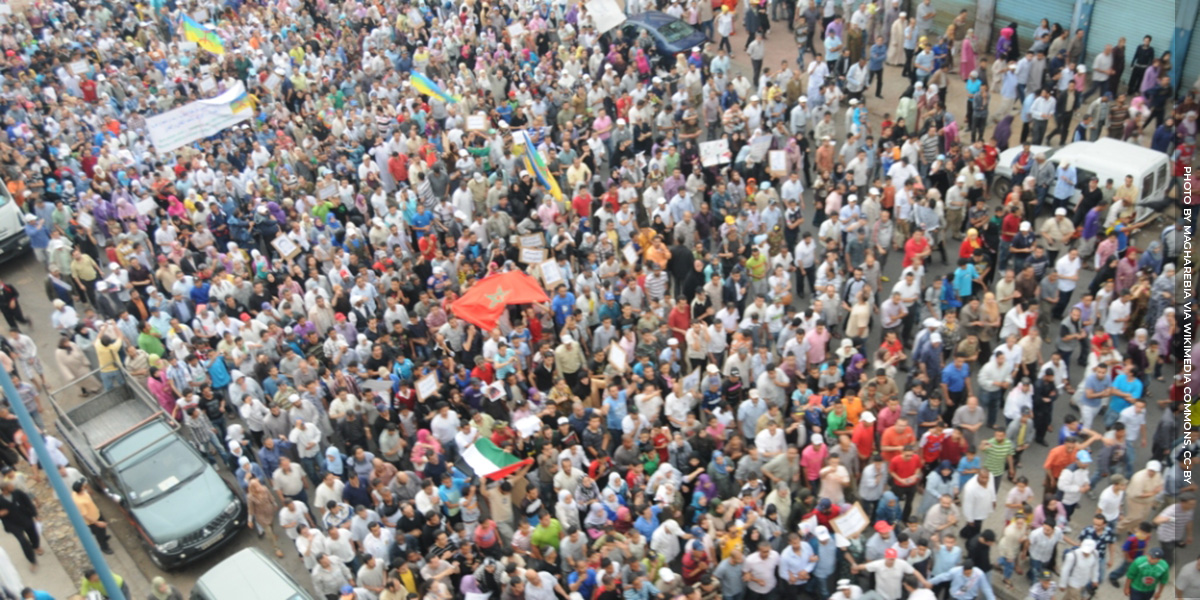
Young people protest in Morocco, 2011, photo by Magharebia

This year is the tenth anniversary of what became known as the “Arab Spring”, in which activists and citizens across the Middle East and North Africa (MENA) used social media to document the conditions in which they lived, to push for political change and social justice, and to draw the world’s attention to their movement. For many, it was the first time they had seen how the Internet could have a role to play in pushing for human rights across the world. Emerging social media platforms like Facebook, Twitter and YouTube all basked in the reflected glory of press coverage that centered their part in the protests: often to the exclusion of those who were actually on the streets. The years after the uprisings failed to live up to the optimism of the time. Offline, the authoritarian backlash against the democratic protests has meant that many of those who fought for justice a decade ago, are still fighting now.

The letter asks for several concrete measures to ensure that users across the region are treated fairly and are able to express themselves freely:

  • Do not engage in arbitrary or unfair discrimination.
  • Invest in the regional expertise to develop and implement context-based content moderation decisions aligned with human rights frameworks.
  • Pay special attention to cases arising from war and conflict zones.
  • Preserve restricted content related to cases arising from war and conflict zones.
  • Go beyond public apologies for technical failures, and provide greater transparency, notice, and offer meaningful and timely appeals for users by implementing the Santa Clara Principles on Transparency and Accountability in Content Moderation.

Content moderation policies are not only critical to ensuring robust political debate. They are key to expanding and protecting human rights.  Ten years out from those powerful protests, it’s clear that authoritarian and repressive regimes will do everything in their power to stop free and open expression. Platforms have an obligation to note and act on the effects content moderation has on oppressed communities, in MENA and elsewhere. [see also: https://humanrightsdefenders.blog/2020/06/03/more-on-facebook-and-twitter-and-content-moderation/]

In 2012, Mark Zuckerberg, CEO and Founder of Facebook, wrote

By giving people the power to share, we are starting to see people make their voices heard on a different scale from what has historically been possible. These voices will increase in number and volume. They cannot be ignored. Over time, we expect governments will become more responsive to issues and concerns raised directly by all their people rather than through intermediaries controlled by a select few.

Instead, governments around the world have chosen authoritarianism, and platforms have contributed to the repression. It’s time for that to end.

Read the full letter demanding that Facebook, Twitter, and YouTube stop silencing critical voices from the Middle East and North Africa, reproduced below:

17 December 2020

Open Letter to Facebook, Twitter, and YouTube: Stop silencing critical voices from the Middle East and North Africa

Ten years ago today, 26-year old Tunisian street vendor Mohamed Bouazizi set himself on fire in protest over injustice and state marginalization, igniting mass uprisings in Tunisia, Egypt, and other countries across the Middle East and North Africa. 

As we mark the 10th anniversary of the Arab Spring, we, the undersigned activists, journalists, and human rights organizations, have come together to voice our frustration and dismay at how platform policies and content moderation procedures all too often lead to the silencing and erasure of critical voices from marginalized and oppressed communities across the Middle East and North Africa.

The Arab Spring is historic for many reasons, and one of its outstanding legacies is how activists and citizens have used social media to push for political change and social justice, cementing the internet as an essential enabler of human rights in the digital age.   

Social media companies boast of the role they play in connecting people. As Mark Zuckerberg famously wrote in his 2012 Founder’s Letter

“By giving people the power to share, we are starting to see people make their voices heard on a different scale from what has historically been possible. These voices will increase in number and volume. They cannot be ignored. Over time, we expect governments will become more responsive to issues and concerns raised directly by all their people rather than through intermediaries controlled by a select few.”

Zuckerberg’s prediction was wrong. Instead, more governments around the world have chosen authoritarianism, and platforms have contributed to their repression by making deals with oppressive heads of state; opening doors to dictators; and censoring key activists, journalists, and other changemakers throughout the Middle East and North Africa, sometimes at the behest of other governments:

  • Tunisia: In June 2020, Facebook permanently disabled more than 60 accounts of Tunisian activists, journalists, and musicians on scant evidence. While many were reinstated, thanks to the quick reaction from civil society groups, accounts of Tunisian artists and musicians still have not been restored. We sent a coalition letter to Facebook on the matter but we didn’t receive a public response.
  • Syria: In early 2020, Syrian activists launched a campaign to denounce Facebook’s decision to take down/disable thousands of anti-Assad accounts and pages that documented war crimes since 2011, under the pretext of removing terrorist content. Despite the appeal, a number of those accounts remain suspended. Similarly, Syrians have documented how YouTube is literally erasing their history.
  • Palestine: Palestinian activists and social media users have been campaigning since 2016 to raise awareness around social media companies’ censorial practices. In May 2020, at least 52 Facebook accounts of Palestinian activists and journalists were suspended, and more have since been restricted. Twitter suspended the account of a verified media agency, Quds News Network, reportedly on suspicion that the agency was linked to terrorist groups. Requests to Twitter to look into the matter have gone unanswered. Palestinian social media users have also expressed concern numerous times about discriminatory platform policies.
  • Egypt: In early October 2019, Twitter suspended en masse the accounts of Egyptian dissidents living in Egypt and across the diaspora, directly following the eruption of anti-Sisi protests in Egypt. Twitter suspended the account of one activist with over 350,000 followers in December 2017, and the account still has yet to be restored. The same activist’s Facebook account was also suspended in November 2017 and restored only after international intervention. YouTube removed his account earlier in 2007.

Examples such as these are far too numerous, and they contribute to the widely shared perception among activists and users in MENA and the Global South that these platforms do not care about them, and often fail to protect human rights defenders when concerns are raised.  

Arbitrary and non-transparent account suspension and removal of political and dissenting speech has become so frequent and systematic that they cannot be dismissed as isolated incidents or the result of transitory errors in automated decision-making. 

While Facebook and Twitter can be swift in responding to public outcry from activists or private advocacy by human rights organizations (particularly in the United States and Europe), in most cases responses to advocates in the MENA region leave much to be desired. End-users are frequently not informed of which rule they violated, and are not provided a means to appeal to a human moderator. 

Remedy and redress should not be a privilege reserved for those who have access to power or can make their voices heard. The status quo cannot continue. 

The MENA region has one of the world’s worst records on freedom of expression, and social media remains critical for helping people connect, organize, and document human rights violations and abuses. 

We urge you to not be complicit in censorship and erasure of oppressed communities’ narratives and histories, and we ask you to implement the following measures to ensure that users across the region are treated fairly and are able to express themselves freely:

  • Do not engage in arbitrary or unfair discrimination. Actively engage with local users, activists, human rights experts, academics, and civil society from the MENA region to review grievances. Regional political, social, cultural context(s) and nuances must be factored in when implementing, developing, and revising policies, products and services. 
  • Invest in the necessary local and regional expertise to develop and implement context-based content moderation decisions aligned with human rights frameworks in the MENA region.  A bare minimum would be to hire content moderators who understand the various and diverse dialects and spoken Arabic in the twenty-two Arab states. Those moderators should be provided with the support they need to do their job safely, healthily, and in consultation with their peers, including senior management.
  • Pay special attention to cases arising from war and conflict zones to ensure content moderation decisions do not unfairly target marginalized communities. For example, documentation of human rights abuses and violations is a legitimate activity distinct from disseminating or glorifying terrorist or extremist content. As noted in a recent letter to the Global Internet Forum to Counter Terrorism, more transparency is needed regarding definitions and moderation of terrorist and violent extremist (TVEC) content
  • Preserve restricted content related to cases arising from war and conflict zones that Facebook makes unavailable, as it could serve as evidence for victims and organizations seeking to hold perpetrators accountable. Ensure that such content is made available to international and national judicial authorities without undue delay.
  • Public apologies for technical errors are not sufficient when erroneous content moderation decisions are not changed. Companies must provide greater transparency, notice, and offer meaningful and timely appeals for users. The Santa Clara Principles on Transparency and Accountability in Content Moderation, which Facebook, Twitter, and YouTube endorsed in 2019, offer a baseline set of guidelines that must be immediately implemented. 

Signed,

Access Now
Arabic Network for Human Rights Information — ANHRI
Article 19
Association for Progressive Communications — APC
Association Tunisienne de Prévention Positive
Avaaz
Cairo Institute for Human Rights Studies (CIHRS)
The Computational Propaganda Project
Daaarb — News — website
Egyptian Initiative for Personal Rights
Electronic Frontier Foundation
Euro-Mediterranean Human Rights Monitor
Global Voices
Gulf Centre for Human Rights (GCHR)
Hossam el-Hamalawy, journalist and member of the Egyptian Revolutionary Socialists Organization
Humena for Human Rights and Civic Engagement
IFEX
Ilam- Media Center For Arab Palestinians In Israel
ImpACT International for Human Rights Policies
Initiative Mawjoudin pour l’égalité
Iraqi Network for Social Media – INSMnetwork
I WATCH Organisation (Transparency International — Tunisia)
Khaled Elbalshy – Daaarb website – Editor in Chief
Mahmoud Ghazayel, Independent
Marlena Wisniak, European Center for Not-for-Profit Law
Masaar — Technology and Law Community
Michael Karanicolas, Wikimedia/Yale Law School Initiative on Intermediaries and Information
Mohamed Suliman, Internet activist
My.Kali magazine — Middle East and North Africa
Palestine Digital Rights Coalition (PDRC)
The Palestine Institute for Public Diplomacy
Pen Iraq
Quds News Network
Ranking Digital Rights
Rima Sghaier, Independent
Sada Social Center
Skyline International for Human Rights
SMEX
Syrian Center for Media and Freedom of Expression (SCM)
The Tahrir Institute for Middle East Policy (TIMEP)
Taraaz
Temi Lasade-Anderson, Digital Action
WITNESS
Vigilance Association for Democracy and the Civic State — Tunisia
7amleh – The Arab Center for the Advancement of Social Media

https://www.eff.org/deeplinks/2020/12/decade-after-arab-spring-platforms-have-turned-their-backs-critical-voices-middle

Call for nominations for Samir Kassir Award for Freedom of the Press goes ahead in MENA region

February 28, 2020
The European Union launched a call for nominations for the “Samir Kassir Award for Freedom of the Press” at the Delegation of the European Union to Lebanon. During the press conference, Ambassador Ralph Tarraf reaffirmed the European Union’s commitment to pursue Samir Kassir’s struggle for free speech and an independent free press. [for more on this and many other awards relating to freedom of the press, see: http://www.trueheroesfilms.org/thedigest/awards/samir-kassir-award-for-freedom-of-the-press]
The contest is open to candidates from North Africa, the Middle East, and the Gulf until 1 April, 2020, and three awards will be granted for: the best opinion article, investigative article, and audiovisual news report. The contributions must be centered on subjects relating to rule of law, human rights, good governance, fight against corruption, freedom of expression, democratic development and citizen participation. The jury will be composed of seven voting members from Arab and European media and one observer representing the European Union. The names of the jury members will be communicated during the prize-awarding ceremony, which will take place on 2 June 2020 in Beirut, marking the 15th memorial of Samir Kassir’s assassination.

https://en.annahar.com/article/1131572-european-union-launches-the-15th-editionon-of-the-samir-kassir-award-for-freedom

NEW TACTICS in Human Rights: 2013 accomplishments and plans for 2014

January 3, 2014

We start the year with a little survey of what New Tactics in Human Rights accomplished in 2013: they trained 114 human rights defenders from the Middle East and North Africa [MENA region] on Strategic Effectiveness method and expanded their capacity in the MENA region for training and mentorship for human rights defenders. New material, including 20 new human rights tactics, were added to the website and there is now a French-language landing page. New Tactics also launched an Arabic version of its website and online community. In the Arabic-language community, it hosted 6 online conversations that engaged 60 human rights defenders from around the MENA region. In its English-language community, it hosted 10 online conversation that engaged 153 human rights defenders. Summaries of all of these conversations can be found on its website. In 2014 it will launch its New Tactics Strategy Toolkit, an online collection of tools to help defenders create effective strategies.

via Our 2013 accomplishments & plans for 2014.