Posts Tagged ‘Yanar Mohammed’

In Memoriam: 8 women human rights defenders who shaped the MENA region

June 15, 2026

On 4 May 2026 the Tahrir Institute for Middle East Policy (TIMEP) remembered eight women organizers from the region who fought for a better region and in whose stories we find inspiration:

Lina Ben Mhenni

“I am the activist of all causes.”Lina Ben Mhenni was a Tunisian blogger, educator, and activist whose voice rose to prominence as Tunisia’s Jasmine Revolution unfolded. Born in Tunis in 1983 and raised in a politically engaged family, she used her blog A Tunisian Girl to document censorship, women’s rights, and state repression well before the revolution began. When protests erupted after Mohamed Bouazizi’s self-immolation in December 2010, she became a leading voice reporting from inside the country. Traveling to Sidi Bouzid, Kasserine, and Regueb, she documented police brutality, sharing photos and testimonies online despite a strict media blackout. After the revolution, she continued advocating for human rights, freedom of expression, and justice for victims and their families. She also launched initiatives to support prison libraries, delivering over 45,000 books across Tunisia. Recognized internationally, she was nominated for the Nobel Peace Prize in 2011. She passed away in 2020 at the age of 36 after a long battle with lupus. [see also https://humanrightsdefenders.blog/2020/01/29/in-memory-of-tunisian-human-rights-defender-lina-ben-mhenni/]

Sarah Hegazi

Sarah Hegazi was an Egyptian queer feminist and human rights defender.  As a member of the Bread and Freedom Party in Egypt, she advocated for political prisoners, opposed the death penalty, and supported movements for freedom across the MENA region, including in Palestine, Syria, Lebanon, and Sudan. Her activism was intersectional, grounded in class struggle and solidarity. In 2017, she raised a rainbow flag at a Mashrou’ Leila concert in Cairo—an act that made her a target for state repression. As part of the anti-LGBTQI+ crackdown that followed, Sarah was arrested, detained, and subjected to torture. Sarah was fired from her job and experienced severe depression and post-traumatic stress disorder. Out of fear for her safety amid continued targeting, bullying, and repression, Sarah was forced to flee Egypt in 2018. She traveled to Canada where she sought political asylum.  While living in exile apart from her loved ones, and the country and community most dear to her, Sarah took her life on June 13, 2020. She was 30 years old.

Bahjaa Abdelaa Abdelaa

Bahjaa Abdelaa Abdelaa was a Sudanese human rights defender who worked tirelessly in support of Sudanese women. Born in Nyala, South Darfur, she was also an economist who graduated from the University of Khartoum in 2020. She was a member of the Women Revolutionary Group, which was created to advocate for women’s rights, gender equality, and social justice, as well as to support survivors of rape and sexual violence in Darfur. Bahjaa became known for her monitoring and documentation work, highlighting the pervasiveness of sexual violence during conflict. She was also part of the Darfur Collation of Women Human Rights Defenders (TMD). As the war raged in Sudan, and after receiving death threats due to her human rights work, on October 26, 2023, Bahjaa was shot and killed by unidentified gunmen while attending a relative’s funeral at Kalma camp for internally displaced people in Nyala.  She was 26 years old.
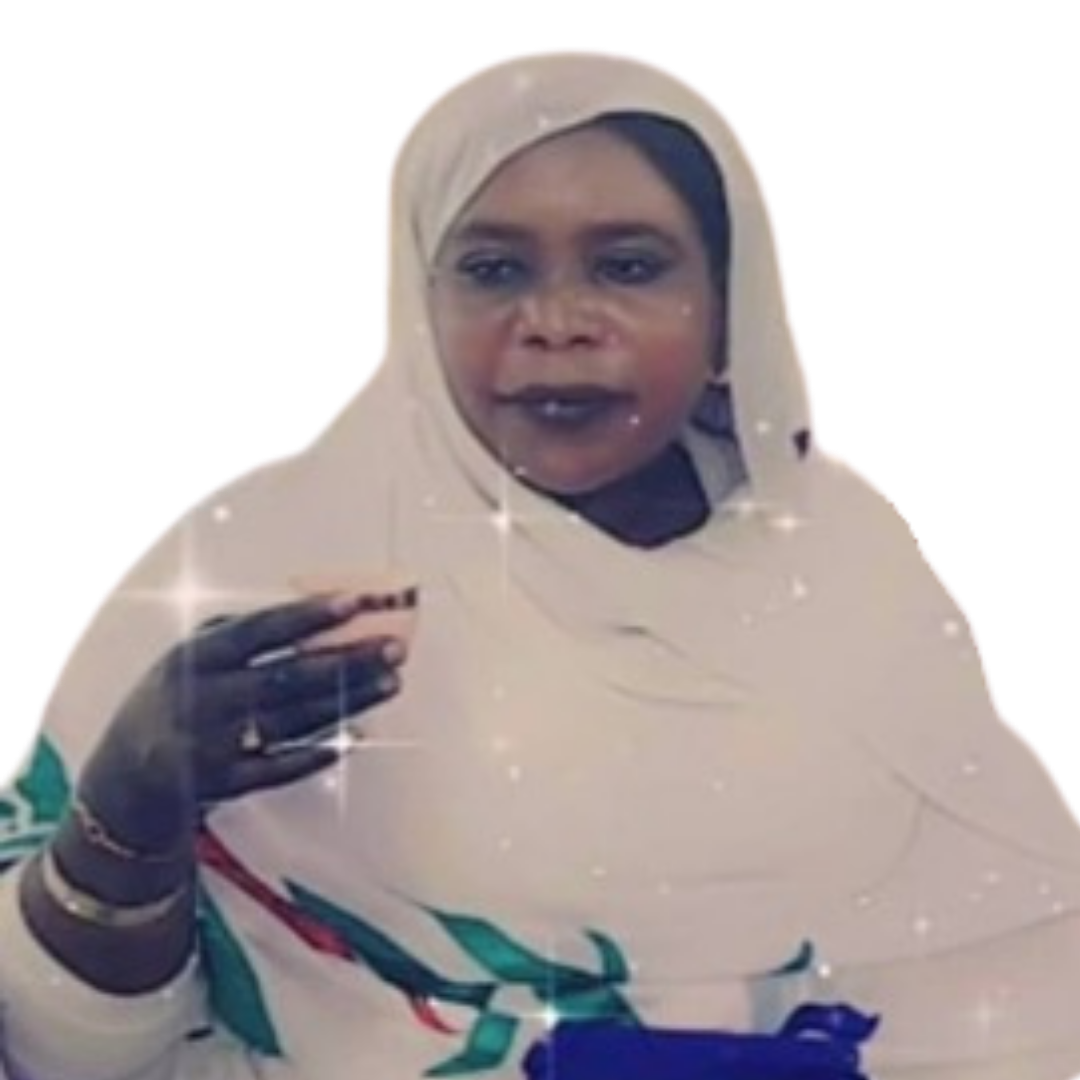
Giselle Khoury

Known as the “grande dame of Arab journalism” for her pointed interview style, Giselle Khoury was a Lebanese journalist and television personality whose career spanned almost four decades, defined by her commitment to freedom of expression and pluralism.  She began at LBC in 1985, later joined MBC, and also contributed to the launch of Al-Arabiya. She became known for hosting major political programs such as Bil Arabi and Studio Beirut, where she interviewed leading political figures from across the region. Her work continued with BBC Arabic and Sky News Arabia. As one of the first women Arab journalists to host such high-profile programs, she helped reshape the media landscape. After the 2005 assassination of her husband, journalist Samir Kassir, she co-founded the Samir Kassir Foundation to support independent journalism, monitor press freedom, and nurture new generations of media professionals. She passed away in October 2023 at the age of 62 after a battle with cancer.

Bassma Kodmani

Bassma Kodmani was a Syrian academic, advocate, and political figure, whose career bridged research, policy, and activism. She co-founded the Arab Reform Initiative (ARI), a collaborative think tank “to articulate a home-grown agenda for democratic change in the Arab region,” serving as Executive Director from 2005 to 2019.  When Syrians peacefully took to the streets in 2011, Bassma took a temporary leave from ARI to serve as Head of Foreign Relations and spokesperson with the Syrian National Council, the opposition body organizing for a democratic alternative at the time, until her resignation in 2012. In 2016, she participated in the Geneva peace talks as part of the delegation of the democratic opposition. Holding a PhD from Sciences Po, Bassma authored and edited multiple works on Middle Eastern politics and conflict and was a renowned political thinker. Her vision for a Syria that embraces the equal participation of all Syrians is one that continues to inspire younger scholars today. She died of breast cancer at the age of 64.

Shireen Abu Akleh

“I chose journalism to be close to people. It might not be easy to change the reality, but at least I can bring their voices to the world.” Shireen Abu Akleh was a Palestinian-American journalist and one of the most recognizable voices in the Arab world. Born in Jerusalem in 1971, she spent over 25 years covering the realities of life under Israeli occupation. After studying journalism at Yarmouk University, she began at Voice of Palestine radio and Radio Monte Carlo before joining Al Jazeera in 1997. At a time when few Palestinian women worked as field reporters, she became a leading correspondent. She rose to prominence during the second intifada in 2000, reporting from the ground and centering the lived experiences of Palestinians—from political prisoners to families affected by displacement and violence.  On May 11, 2022, Shireen was shot and killed in a targeted attack by Israeli Defense Forces, while wearing a press vest and while covering a raid in Jenin. Her funeral, which was attacked by Israeli police forces, drew hundreds of mourners and widespread solidarity.

Salwa Bugaighis

Salwa Bugaighis was a Libyan lawyer, human rights advocate, and political figure. She was active in the 2011 Libyan Revolution, which ultimately overthrew Muammar Gaddafi. Based in Benghazi, she built her career defending political prisoners and advocating for justice under an authoritarian regime. From the start of the uprising, she was on the front lines, helping to organize protests and becoming a member of the National Transitional Council. She later resigned in protest over the lack of women’s representation. She continued her work through national dialogue initiatives aiming to bridge divisions across Libya’s fragmented society. Bugaighis was known for her outspoken criticism of armed groups and extremists. Even in the face of threats and violence, she remained committed to building democratic institutions and a more inclusive Libya.  In June 2014, after returning home following her vote in the country’s parliamentary elections, she was assassinated in a targeted attack in which gunmen stormed her home, shot and stabbed her, and abducted her husband. She was 51 years old. [see also: https://humanrightsdefenders.blog/2020/11/12/libyan-human-rights-defender-hanan-al-barassi-gunned-down-in-benghazi/]

Yanar Mohammed

Yanar Mohammed was a prominent Iraqi feminist and human rights defender.  In 1998 while living in Canada, she founded the Defense of Iraqi Women’s Rights, which in 2004, became the Organization of Women’s Freedom in Iraq (OWFI). At this point, Yanar had relocated back to Iraq, and the group created the first shelters for women fleeing domestic violence, sex trafficking, and threats of honor killings. In the years since, OWFI has operated a network of safe houses and shelters around the country and helped hundreds of women.  Yanar served as editor of the feminist newspaper Al-Mousawat and participated in protests in Tahrir Square. She regularly advocated for marginalized groups in Iraq, including displaced communities and LGBTQI+ individuals.  For years, Yanar received death threats for her work, at times having to restrict her movement. In March 2026, unidentified gunmen shot her outside her home in Baghdad. She was 66 years old. See https://humanrightsdefenders.blog/2026/03/06/on-2-march-2026-woman-human-rights-defender-yanar-mohammed-was-killed-in-baghdad/.

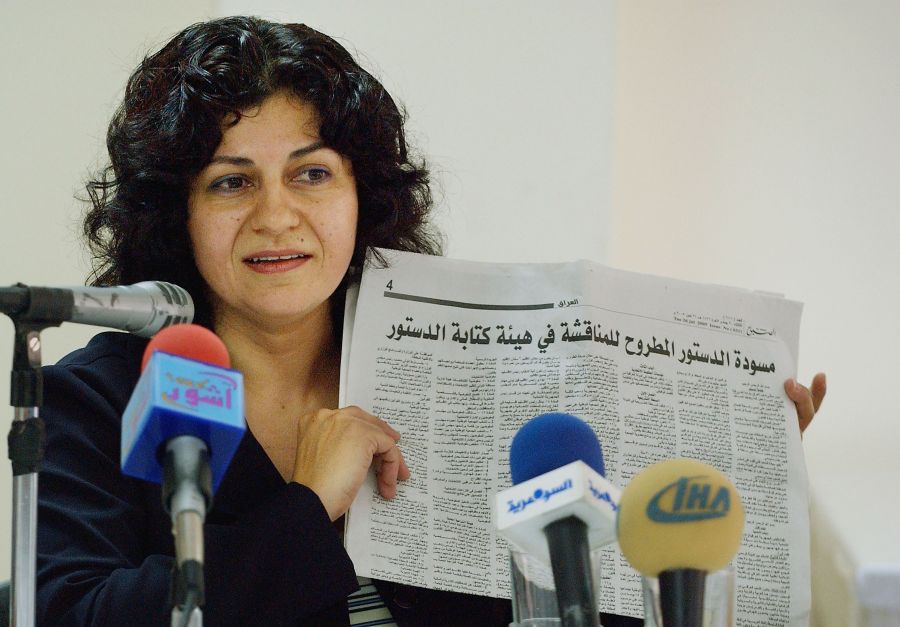
On 2 March 2026 woman human rights defender Yanar Mohammed was killed in Baghdad.

March 6, 2026

On 2 March 2026, woman human rights defender and feminist Yanar Mohammed was killed in an armed attack in front of her residence in northern Baghdad.

Yanar Mohammed was a prominent Iraqi woman human rights defender and feminist, and the co-founder and director of the Organisation of Women’s Freedom in Iraq (OWFI). Since 2003, she had worked to protect women facing gender-based violence, including domestic abuse, trafficking, and so-called ‘honour killings.’ Under her leadership, OWFI established a network of safe houses across several Iraqi cities, providing protection and support to hundreds of women. Yanar Mohammed led these efforts despite all the ongoing impediments and risks. She was a strong advocate for secularism and women’s equality. Throughout her activism, Yanar Mohammed faced death threats and, at times, was forced to restrict her movement. {see also: https://humanrightsdefenders.blog/2019/01/07/women-human-rights-defenders-in-iraq-have-to-live-dangerously/]

According to an offical statement from OWFI, on 2 March 2026 at 9:00, two unidentified gunmen on motorcycles opened fire on Yanar Mohammed as she stood outside her home. She was quickly transported to the hospital, however, despite the effort of medical personnel, she succumbed to her injuries.

Reportedly, Yanar Mohammed had returned to Baghdad from Canada just a few days prior to her assassination, raising concerns about the potential surveillance and monitoring of her movements.


Read more about Yanar: vday.link/yanarmohammed

Download the urgent appeal

https://www.frontlinedefenders.org/en/case/iraq-killing-woman-human-rights-defender-and-feminist-yanar-mohammed

https://amnesty.ca/human-rights-news/ensure-accountability-yanar-mohammed-iraq/

https://civicus.org/index.php/media-resources/news/8143-iraq-assassination-of-whrd-yanar-mohammed-emblematic-figure-of-the-feminist-movement-condemned

https://jinhaagency.com/en/actual/un-calls-on-iraq-to-hold-killers-of-yanar-mohammed-accountable-and-end-impunity-38702

On 24 April 2026 UN experts condemned the murder of Iraqi human rights defender Yanar Mohamed in March by unknown perpetrators and urged the government to act swiftly to ensure accountability.

https://www.scoop.co.nz/stories/WO2604/S00230/iraq-un-experts-demand-investigation-into-murder-of-woman-human-rights-defender.htm

Women Human Rights Defenders in Iraq have to live dangerously

January 7, 2019
Activist Hana Adwar speaks as she follows online news of the the assassination of Tara Fares in Baghdad. (AP)
Activist Hana Adwar (AP)

Human rights activism is a risky business in the Middle East in general but it is more so in Iraq where female activists have been targeted, wrote Oumayma Omar on 6 January 2019, based in Baghdad for the Arab Weekly. A series of killings in 2018 sparked fears of a coordinated campaign to silence successful and outspoken women in Iraq. In August and September 2018, four prominent women were assassinated, including activist Soad al-Ali in Basra and Tara Fares in Baghdad. They had campaigned for women’s freedoms and rights in a conservative, tribal society.

The new political situation in Iraq has been detrimental on all Iraqis, especially women,” said Yanar Mohammed, president of the Organisation of Women’s Freedom in Iraq (OWFI) from self-exile in Canada.. “After the US-led invasion (2003), a new political system was created leading to a most sectarian, tribal and religious society where women’s lives don’t have much weight.” [see also: https://humanrightsdefenders.blog/2016/10/01/iraqi-human-rights-defender-yanar-mohammed-laureate-of-2016-rafto-prize/]

Discriminatory practices against women have become a fait accompli and the norm in Iraqi families in rural areas as well as big cities, including Baghdad, after the rise to power of Islamist parties. “They introduced extremist religious ideas based on hatred for women and viewing them as sexual and reproductive tools,” added the human rights defender…Despite intimidations and accusations of promoting secularism and encouraging women to go against their families, OWFI, which provides shelters for women who survive domestic violence, has been expanding since it was established in 2003.

Activist Hana Addour, president of Al-Amal organisation, said entrenched tribal values are still largely applied although Iraq has endorsed the Universal Declaration of Human Rights, which stipulates freedoms of expression, movement, opinion and the right to choose a partner without force or intimidation……She refuted as “baseless” accusations that activists were provoking women against social traditions. “We did not import our ideas and we do not contest customs or religious texts,” Addour said. “We only seek to implement the constitution by rejecting forced and early marriages and many other matters that we cannot accept under any pretext.”

Conversation with Yanar Mohammed on trafficking in Iraq

May 19, 2016

The Organization of Women’s Freedom in Iraq focuses on protecting women’s human rights, including fighting against trafficking of women and girls, and operates six safe houses for women survivors of violence. The Global Fund for Women interviewed its President, Yanar Mohammed who speaks about her work and the impact from the conflict with ISIS.

Yanar, you’ve been an activist and a defender of women’s rights in Iraq for over 13 years. What do you think are the main challenges women in Iraq are facing right now?
We focused in the last year on working against trafficking in women and girls and expanding a new network, the Network of Anti-Trafficking of Women in Iraq. We started the network in 2013, barely nine months before ISIS began gaining ground in Iraq. As ISIS grew, they started their attacks against women in the north of Iraq, including against the women of Yazidi faith. They trafficked them in broad daylight.

Trafficking in women and girls is now a tactic used by opposing groups in instances of sectarian violence in Iraq. Women and girls are looked upon as the representatives of a community’s honor, and so the sexual exploitation of women and girls belonging to a certain community is seen as the most effective way to humiliate and break it. Unfortunately, it is therefore not a surprise that the so-called Islamic State, ISIS, as a Sunni group, has targeted non-Sunni Muslim women and girls such as Shi’a Muslims, Christians, and Yazidis. Retaliations ensue and wars are led on women’s bodies.

When ISIS began to enslave women, we found that this was the time when we should rise to the occasion and highlight the issue of trafficking in society and the government. This is an issue that needs to be addressed by laws, practices, programs, and by some understanding from the society as to what it means that a woman gets compromised, gets exploited, and gets enslaved. So we set up this network, which is now about 40 NGOs working together on the issue. We began to talk about trafficking in women and girls, especially sexual exploitation, and address it as something that’s not only happening under ISIS but also happening in Iraq more broadly, without anybody daring to give it any importance.

Beyond ISIS, orphans and widows of war in Iraq who are extremely impoverished have fallen prey to sexual exploitation. They are being used and exploited and violated daily in Iraq, without anybody thinking of it as a human rights issue. So this is our focus; we have decided we will work on this until we get the government to pass laws that make the suffering of these women less, and also that open the way for us to protect the women from this kind of violence.

Is there any legislation right now against trafficking?
We demanded that the government pass a law for the financial support of Yazidi women when they step out of their enslavement. When they come back to areas of Iraq that are not under ISIS control, they should be compensated just like prisoners of war for the sufferings they went through. And we were so happy when it took only a few months and the Iraqi government decided to give monthly stipends for survivors in May 2015. That was the first success of the network. At the time nobody else had demanded this kind of support for ISIS survivors, so we felt that we were on the right track and that we should proceed to the rest of our demands that we needed in order to address violence against women.

What would you say is the level of public awareness around the issue of trafficking?
We have struggled a lot to make many words and terms debatable in our society—to remove the taboo. I will give you an example: in 2003 when we began to talk about honor killings and how it needs to stop, everybody was disgusted with us and saying that women’s groups should refrain from speaking about taboo and sexual issues, and that we do not address women’s rights in a way that they find acceptable. It took us almost 5 years to make discussion of honor killings a mainstream argument. Now when you go to Iraq, the issue of honor killing has become such a regular thing to talk about. There are so many NGOs that are standing against it, talking about it, are lobbying against it. Whenever we have an issue like this, we find ourselves the first ones on the front lines to address it until, it becomes a mainstream argument. Now as we talk about trafficking and discuss sexual exploitation of women and girls this issue is a very taboo and difficult issue to address.

How many women and girls in Iraq are at risk of being trafficked?
The dilemma of displacement in Iraq is huge because of ISIS. The number of displaced people is two million, going to three million. Most of these are women, because the men are either in the Iraqi army fighting ISIS or have been recruited into militias also heading to fight ISIS, or stuck in the cities defending them. It may be impossible to give the exact number, but we can estimate that out of the 1.5 million women who are displaced, half of them are between ages 16 and 30—the biggest age group at risk of trafficking. So I would say not less than 100,000 women are being trafficked at this point in Iraq.

So the political instability caused by ISIS is increasing the threat of trafficking for women and girls, even if ISIS is not doing the trafficking directly.
Yes. ISIS has created the most ugly reality of trafficking, where they defend it as a religious right. They say it is their right to enslave the “spoils of war” who are not of Muslim faith. They describe them as faithless and as less of human beings whose enslavement makes them better, makes them closer to Islam. ISIS has brought an example that has totally shocked the region and shocked it in a way as to taking us back to a time when people had no human rights, basically. And they are trying to make it a fact to force on the people of Iraq, Syria, and maybe other places if they are allowed to expand.

Can you tell me about the shelters that your group runs?
Our shelters are currently keeping safe women who survive trafficking. They are also getting educated; our shelters are not only a place for women to rest and be safe, they are also schools for social transformation for women to turn from victims into defenders of women. We only had one shelter until 2008; since then we have expanded to have six shelters all over the country. We also have a pipeline from the southern city of Busra, to direct violated women to our shelters in Baghdad. And we have many supporters in the network of the 40-plus NGOs, who are our eyes and ears in more than nine cities in Iraq and are guiding women who are in need of shelter to us. I like to put it in a very short story: our organization was able to spread its wings over most of the Iraqi cities in the last few years.

However, the Iraqi government is not facilitating our undertaking of women into our shelters. And it boils down to one point—we need a piece of legislation from the Iraqi government to provide legal status to shelters that are run by NGOs or other private sector groups. Although the government does not have a law that says that our shelters are illegal, they do have a law that allows the ministry of social affairs to determine if they should stay open. So some of the tribal and misogynist officials did tell us in the past that we are doing an illegal thing, but they did not shut us down.

So, although we are protecting women from trafficking and domestic violence and all that—although we are doing the duty of the government, the duty the government is not taking seriously and do not want to move on, and although they should be supporting us and applauding us for doing their job, in reality they confront us, telling us that our sheltering of women is promoting promiscuity, that it is encouraging women to go against their families and have full sexual freedoms and come stay in our shelters. So some governmental officials have intimidated us in the past, telling us we are doing something illegal, when we are protecting women.

What can the international community do to help Iraqi women be empowered and experience less violence?
We are asking the international community to ask the legal committee in the Iraqi parliament to legislate for the legal status of our shelters. Letters that are addressed to the Iraqi parliament—and specifically to the legal committee of the Iraqi parliament—asking them to legislate for the legal status of women’s shelters that are run by the NGOs. This would be a great help to us.

Would you say that action now is especially important to protect women? Is right now a critical moment?
Right now is a very critical moment because ISIS is at the point where it can be defeated. It has lost the social support of those among the Sunni groups in Western Iraq that were supporting it because people saw the atrocities that ISIS can commit against them. It is a very special moment in time to act against ISIS, but is the kind of action we are seeking a military one, where we have more US army in Iraq? No.

Our experiences of the last 13 years tell us that US intervention in Iraq never brought us anything good. It always has caused more deterioration. Now is the time to have a political intervention, and to ask the Iraqi government to stop its sectarian, politics that gave way to ISIS, as well as empower the Iraqi army so that they can regain the cities that were taken by ISIS.

What are some of the other forms of violence that women come up against in Iraq?
We have many kinds of violence we undergo, and we know what is making this kind of violence worse, which is Islamist extremist parties reaching power. Some of these parties have shown us a terrible example of what they want to bring to Iraq, including legislating for Jaafari law. This law allows the marriage of a 9-year-old girl to an adult man—in other words it legalizes pedophilia in Iraq. It also allows men to be polygamous, and allows for getting rid of wives if they are not sexually pleasant for husbands.

The amount of humiliating material in this law against women is incredible, and out of this era. It’s something that modern humanity cannot even bear to hear of. We must keep this legislation outside of parliament, because the law was not passed, but it is still waiting for us. The Islamist political parties are just waiting for some stability and for the moment when they feel stronger to bring back this legislation. And that would really be the end for Iraqi women.

Source: In Conversation: Yanar Mohammed on trafficking in Iraq – Global Fund for Women