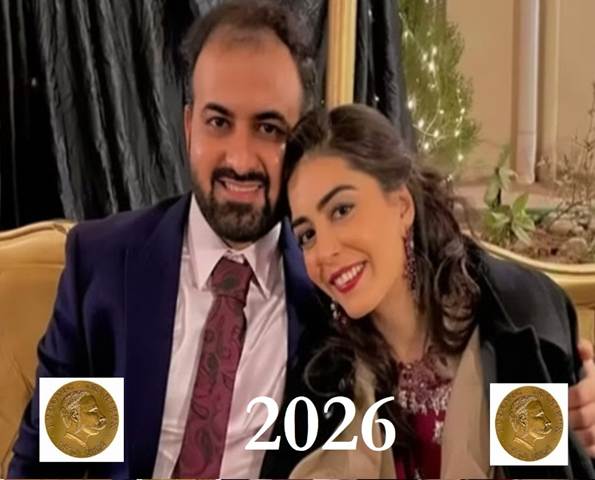
On 16 June 2026, media reported that lawyers Imaan Zainab Mazari and her husband, Hadi Ali Chattha, have been awarded the 2026 Ludovic Trarieux International Human Rights Prize in recognition of their work for human rights and marginalised communities.
The statement noted that, in recent years, Imaan and Chattha had carried out their work “against a backdrop of growing pressure on lawyers and human rights defenders in Pakistan, according to international organisations and observers”.
“By awarding the 2026 Ludovic Trarieux International Human Rights Prize, the jury recognised the professional and personal contribution of Imaan Mazari and Hadi Ali Chattha to the defence of the rule of law, fundamental freedoms and access to justice,” the statement said.
At least 358 defenders killed in 28 countries for their peaceful work in 2025
Courageous human rights defenders (HRDs) around the world often chart the course in the struggle against injustice but need the international community’s support to sustain their lifesaving work amid an increasingly hostile landscape, Front Line Defenders said as it launched its flagship report on 15 June 2026.
The report also reveals statistics gathered and verified by the HRD Memorial – which Front Line Defenders coordinates – documenting the killings of at least 358 HRDs in 28 countries in 2025. The countries with the highest number of killings documented were Colombia (165), Mexico (43), Palestine (43), Brazil (22) and Honduras (13). Defenders working on land, environmental and peasant communities rights (23.46%); HRDs working on Indigenous peoples’ rights (17.03%); and those documenting violations in conflict (9.78%) were the most commonly targeted. (See pp. 6-13 for complete data.)
“From drastic funding cuts and raging conflicts, to creeping repression even in countries that once supported them, 2025 saw some incredibly challenging times for human rights defenders around the world,” said Alan Glasgow, CEO of Front Line Defenders. “Defenders show tremendous resilience to uphold human rights – we owe them a debt of gratitude and support to keep their fight alive.”
Wide-ranging risks to HRDs
According to Front Line Defenders’ data, arbitrary arrest/detention continued to be one of the most commonly reported violations against HRDs around the world, in addition to threats/other harassment, surveillance, legal action and death threats (see pp. 14-21 for a more detailed breakdown, including by region and by gender).
Globally, the five most targeted areas of human rights defence were: LGBTIQ+ rights (9.5%); freedom of expression (9.4%); women’s rights (6.9%); human rights movements (6.1%) and freedom of assembly / protest movements (5.4 %). While they account for smaller proportions individually, land, environmental and Indigenous Peoples’ rights account for 8.7% of the total when considered collectively.
Regionally, the most commonly reported violations against HRDs were: arbitrary arrest or detention in the Middle East and North Africa (32.5%) and Asia-Pacific (16.1%); death threats in the Americas (24.2%); threats or other harassment in sub-Saharan Africa (15.3%); and legal action in Europe and Central Asia (14.9%). Front Line Defenders also documented a wide range of digital threats against HRDs, including online surveillance/censorship, social media online threats of violence or harassment, phone surveillance, interrogation and having their devices confiscated or destroyed.
The combination of the more repressive environment and reduction in funds was felt in practice: human rights defenders had to stop their work and shutter their organisations.
Voices of determination
The report includes numerous voices of HRDs speaking directly about the challenges they face.
Among them are contributions from HRDs in Guatemala, DRC, Malaysia, Tunisia, Ecuador, Eswatini/Swaziland, Occupied Western Sahara, and Egyptian HRDs facing transnational repression while in exile in Europe.
Lutfiye Zudiyeva, a prominent Crimean Tatar woman human rights defender and journalist who has been criminalised for her work, penned a foreword to the report in which she said: “For this movement to be sustainable and to effect long-term systemic change, we need consistent support from the international community, from governments, and from citizens. HRDs should be supported, and be able to live and work without fear, knowing that they are not alone.”
On 4 May 2026 the Tahrir Institute for Middle East Policy (TIMEP) remembered eight women organizers from the region who fought for a better region and in whose stories we find inspiration:
Lina Ben Mhenni
“I am the activist of all causes.”Lina Ben Mhenni was a Tunisian blogger, educator, and activist whose voice rose to prominence as Tunisia’s Jasmine Revolution unfolded. Born in Tunis in 1983 and raised in a politically engaged family, she used her blog A Tunisian Girl to document censorship, women’s rights, and state repression well before the revolution began. When protests erupted after Mohamed Bouazizi’s self-immolation in December 2010, she became a leading voice reporting from inside the country. Traveling to Sidi Bouzid, Kasserine, and Regueb, she documented police brutality, sharing photos and testimonies online despite a strict media blackout. After the revolution, she continued advocating for human rights, freedom of expression, and justice for victims and their families. She also launched initiatives to support prison libraries, delivering over 45,000 books across Tunisia. Recognized internationally, she was nominated for the Nobel Peace Prize in 2011. She passed away in 2020 at the age of 36 after a long battle with lupus. [see also https://humanrightsdefenders.blog/2020/01/29/in-memory-of-tunisian-human-rights-defender-lina-ben-mhenni/]
Sarah Hegazi
Sarah Hegazi was an Egyptian queer feminist and human rights defender. As a member of the Bread and Freedom Party in Egypt, she advocated for political prisoners, opposed the death penalty, and supported movements for freedom across the MENA region, including in Palestine, Syria, Lebanon, and Sudan. Her activism was intersectional, grounded in class struggle and solidarity. In 2017, she raised a rainbow flag at a Mashrou’ Leila concert in Cairo—an act that made her a target for state repression. As part of the anti-LGBTQI+ crackdown that followed, Sarah was arrested, detained, and subjected to torture. Sarah was fired from her job and experienced severe depression and post-traumatic stress disorder. Out of fear for her safety amid continued targeting, bullying, and repression, Sarah was forced to flee Egypt in 2018. She traveled to Canada where she sought political asylum. While living in exile apart from her loved ones, and the country and community most dear to her, Sarah took her life on June 13, 2020. She was 30 years old.
Bahjaa Abdelaa Abdelaa
Bahjaa Abdelaa Abdelaa was a Sudanese human rights defender who worked tirelessly in support of Sudanese women. Born in Nyala, South Darfur, she was also an economist who graduated from the University of Khartoum in 2020. She was a member of the Women Revolutionary Group, which was created to advocate for women’s rights, gender equality, and social justice, as well as to support survivors of rape and sexual violence in Darfur. Bahjaa became known for her monitoring and documentation work, highlighting the pervasiveness of sexual violence during conflict. She was also part of the Darfur Collation of Women Human Rights Defenders (TMD). As the war raged in Sudan, and after receiving death threats due to her human rights work, on October 26, 2023, Bahjaa was shot and killed by unidentified gunmen while attending a relative’s funeral at Kalma camp for internally displaced people in Nyala. She was 26 years old.
Giselle Khoury
Known as the “grande dame of Arab journalism” for her pointed interview style, Giselle Khoury was a Lebanese journalist and television personality whose career spanned almost four decades, defined by her commitment to freedom of expression and pluralism. She began at LBC in 1985, later joined MBC, and also contributed to the launch of Al-Arabiya. She became known for hosting major political programs such as Bil Arabi and Studio Beirut, where she interviewed leading political figures from across the region. Her work continued with BBC Arabic and Sky News Arabia. As one of the first women Arab journalists to host such high-profile programs, she helped reshape the media landscape. After the 2005 assassination of her husband, journalist Samir Kassir, she co-founded the Samir Kassir Foundation to support independent journalism, monitor press freedom, and nurture new generations of media professionals. She passed away in October 2023 at the age of 62 after a battle with cancer.
Bassma Kodmani
Bassma Kodmani was a Syrian academic, advocate, and political figure, whose career bridged research, policy, and activism. She co-founded the Arab Reform Initiative (ARI), a collaborative think tank “to articulate a home-grown agenda for democratic change in the Arab region,” serving as Executive Director from 2005 to 2019. When Syrians peacefully took to the streets in 2011, Bassma took a temporary leave from ARI to serve as Head of Foreign Relations and spokesperson with the Syrian National Council, the opposition body organizing for a democratic alternative at the time, until her resignation in 2012. In 2016, she participated in the Geneva peace talks as part of the delegation of the democratic opposition. Holding a PhD from Sciences Po, Bassma authored and edited multiple works on Middle Eastern politics and conflict and was a renowned political thinker. Her vision for a Syria that embraces the equal participation of all Syrians is one that continues to inspire younger scholars today. She died of breast cancer at the age of 64.
Shireen Abu Akleh
“I chose journalism to be close to people. It might not be easy to change the reality, but at least I can bring their voices to the world.” Shireen Abu Akleh was a Palestinian-American journalist and one of the most recognizable voices in the Arab world. Born in Jerusalem in 1971, she spent over 25 years covering the realities of life under Israeli occupation. After studying journalism at Yarmouk University, she began at Voice of Palestine radio and Radio Monte Carlo before joining Al Jazeera in 1997. At a time when few Palestinian women worked as field reporters, she became a leading correspondent. She rose to prominence during the second intifada in 2000, reporting from the ground and centering the lived experiences of Palestinians—from political prisoners to families affected by displacement and violence. On May 11, 2022, Shireen was shot and killed in a targeted attack by Israeli Defense Forces, while wearing a press vest and while covering a raid in Jenin. Her funeral, which was attacked by Israeli police forces, drew hundreds of mourners and widespread solidarity.
Salwa Bugaighis
Salwa Bugaighis was a Libyan lawyer, human rights advocate, and political figure. She was active in the 2011 Libyan Revolution, which ultimately overthrew Muammar Gaddafi. Based in Benghazi, she built her career defending political prisoners and advocating for justice under an authoritarian regime. From the start of the uprising, she was on the front lines, helping to organize protests and becoming a member of the National Transitional Council. She later resigned in protest over the lack of women’s representation. She continued her work through national dialogue initiatives aiming to bridge divisions across Libya’s fragmented society. Bugaighis was known for her outspoken criticism of armed groups and extremists. Even in the face of threats and violence, she remained committed to building democratic institutions and a more inclusive Libya. In June 2014, after returning home following her vote in the country’s parliamentary elections, she was assassinated in a targeted attack in which gunmen stormed her home, shot and stabbed her, and abducted her husband. She was 51 years old. [see also: https://humanrightsdefenders.blog/2020/11/12/libyan-human-rights-defender-hanan-al-barassi-gunned-down-in-benghazi/]
Yanar Mohammed
Yanar Mohammed was a prominent Iraqi feminist and human rights defender. In 1998 while living in Canada, she founded the Defense of Iraqi Women’s Rights, which in 2004, became the Organization of Women’s Freedom in Iraq (OWFI). At this point, Yanar had relocated back to Iraq, and the group created the first shelters for women fleeing domestic violence, sex trafficking, and threats of honor killings. In the years since, OWFI has operated a network of safe houses and shelters around the country and helped hundreds of women. Yanar served as editor of the feminist newspaper Al-Mousawat and participated in protests in Tahrir Square. She regularly advocated for marginalized groups in Iraq, including displaced communities and LGBTQI+ individuals. For years, Yanar received death threats for her work, at times having to restrict her movement. In March 2026, unidentified gunmen shot her outside her home in Baghdad. She was 66 years old. See https://humanrightsdefenders.blog/2026/03/06/on-2-march-2026-woman-human-rights-defender-yanar-mohammed-was-killed-in-baghdad/.
The shock of the cancellation of RightsCon in Zambia this year is still reverberating amongst human rights defenders who are grappling with the implications for their advocacy work. Like other networks across the globe, APC was impacted by this turn of events that disrupted the plans of many of its members, as well as staff; it wasn’t just a financial blow, but the loss of an opportunity to meet and strategise face-to-face, to network with donors and other organisations, and raise awareness about key advocacy issues that needed to be pushed forward on the global digital rights agenda.
While RightsCon 2025 was hosted in Taipei, Taiwan, AccessNow attributed the cancellation at least in part to behind-the-scenes pressure from China for Taiwanese participants to be excluded from the event in Zambia. This wasn’t necessarily something new for civil society. APC member in Taiwan Open Cultural Foundation (OCF) explained that Taiwanese civil society has seen China react strongly even to seemingly non-political international events when it believes its sovereignty claims or geopolitical interests are being challenged. JCA-NET, a member based in Japan, also pointed to several similar restrictions on participation in events in the past: “It is not uncommon for major powers to block foreign participation in important international conferences,” the organisation’s Toshi said. “Last year, the United States blocked PLO Chairman Abbas from attending the UN General Assembly. Japan also refused to issue visas to some participants for the 2023 IGF in Kyoto.”
But having an international event of this size “postponed” by a government just days before it was due to start – which the Special Rapporteur Gina Romero called a “clear violation of the rights to freedom of assembly, association, and expression” – was, for many, unprecedented. It was, as one APC member from South Asia summed up, a “sobering reminder that digital rights work does not happen in a neutral space.”….
“Political deviations have become extreme and a consensus over the universality of human rights no longer exists,” said Pavel Antonov from Bluelink, an organisation based in Bulgaria and advocating for digital rights in the European Union. “National governments can no longer be trusted on their commitments. It’s a wake-up call for human rights defenders around the world.”
…“This happened to Zambia now, but this could easily happen in the US or an EU member state,” warned Antonov.
And the signs are there. “I work in the private sector for economic reasons but also for political reasons,” said one anonymous APC associate also based in the EU. “I do not work in the NGO space or in human rights anymore as I am an immigrant in an EU country with a very restricted civic space. If I expressed my views about Palestine and certain other conflicts I might lose funding and residence. I am not happy to be a victim of chilling effects, but my family and children are currently more important. A talk at the University in my city was cancelled today and raided by the police.” The question then becomes: Where do activists find a sense of certainty, of at least something they can rely on? Who can they trust?
For many in APC, the answer lies in putting faith in their own political commitment to building bottom-up structures driven by communities. “As a fundamental principle, we should not equate the state with the diverse people living within its borders,” said Toshi. “It is important to prioritise these diverse people above all else, rather than the state.”
Part of this re-thinking how solidarity could best be actualised also raises the question of how expensive it is to participate in conferences such as RightsCon – especially in the context of the currently strained funding environment.
“The cancellation of RightsCon imposes a significant financial burden on civil society organisations across the board, but in particular the ones in the Global South,” said Betancourt. It is not only organisations in the Global South who are struggling to find the resources to participate in the many forums that happen each year. While JAC-NET had competing advocacy priorities, and the language of the event was a barrier, RightsCon was simply too expensive for them to attend in-person despite being based in Japan.
For some this offered a moment to pause and reflect, a chance to ask: Can things be done differently? There was a need to “become more collaborative within the digital rights movement itself, particularly in how limited resources are used,” said Ramanujam.
“As civil society organisations, we must work to avoid duplicating efforts, build on each other’s strengths, and work more strategically based on our different positions and capacities within the broader ecosystem.”
“I would like to see international and regional digital rights organisations and networks come together and figure out how regional and global rights convenings can build on each other,” said Chat Garcia Ramilo, APC’s Director. She mentioned several annual regional convenings “spearheaded by like-minded civil society organisations” to illustrate her point. Apart from the Digital Rights Asia-Pacific Assembly, which attracts activists, academics, techies and policy makers in that region, three of them were held in Africa alone: the Forum on Internet Freedom in Africa (FIFAFRICA), the Digital Rights and Inclusion Forum, and Bread & Net, which bills itself as the leading digital rights ”unconference” in West and North Africa. …
Most in the APC community nevertheless also emphasised how important forums such as RightsCon amongst others including the Internet Governance Forum (IGF) were for organising around digital rights.
“We need to continue finding, creating and advocating for these spaces, acknowledging and supporting the range of expressions and reactions, even if we don’t fully agree with all parts of it,” another member from the region said. “These spaces are crucial to exchange ideas, learn from each other, get inspired but also to demonstrate collective power.”
As we assess the impact of this year’s RightsCon cancellation, the APC network is also reflecting on the lessons learned and the tools already at our disposal to help us move forward. Overall, a call to share learnings and strengthen joint action emerged as a common thread across many reflections within the APC network.
Sharing a glimpse of what the APC community would have brought to RightsConIn a push to create alternative spaces for community exchange, when we reached out to our network for this article, we also asked: ”If RightsCon had gone ahead, what key message would you have highlighted in your sessions/interventions?”While we will not be able to reflect the full, compelling agenda and APC’s priorities for this year’s event, here we present some of the insights shared:https://www.canva.com/design/DAHKtmLB-cA/6UrGaUUEYVmbrqCoFmq10Q/view?em
On 3 May 2026, UNHCR published “I am addicted to the truth”: A Venezuelan journalist finds safety and purpose in Canada“, written by Zeba Tasci in Ottawa.
For more than 15 years, Venezuelan journalist Halim Naim built his career on one principle: telling the truth. “I am addicted to the truth,” he says. However, that commitment came at a cost. Reporting in a country where freedom of expression was steadily eroding, Halim faced threats, censorship, and detention. As his visibility grew, so did the risks. Despite the danger, he continued his work—leading political coverage, interviewing senior public and political figures, reporting national events, and defending the public’s right to be informed. But the pressure intensified. After speaking about contested elections and giving a platform to opposition voices, threats extended beyond him to his family.
“I separated from my family to protect them,” he recalls. Soon after, Halim fled Venezuela. He sought refuge in Colombia, where he continued advocating for human rights and supporting fellow Venezuelan refugees. But life remained uncertain. Without secure legal status and amid ongoing safety concerns, he struggled to rebuild. “I felt like I was working in hiding.”
In 2025, after years living in exile, he was identified by UNHCR as a journalist at risk and was referred to Canada’s Human Rights Defenders resettlement program. The program is designed to protect individuals who face threats because of their work defending human rights—journalists, activists, and community leaders whose voices are often targeted. For many, it offers a rare and urgent lifeline: a safe pathway out of danger and a chance to continue their human rights work in freedom.
For Halim, the process moved quickly. Within months, he and his family arrived in Canada. “Canada saved me,” he says simply. Beyond safety, the program also provided recognition. “I never felt like a number. I felt like a professional who could contribute.”
By offering a pathway to safety and a supportive resettlement process, the program allows human rights defenders not only to escape persecution, but to rebuild their lives with dignity and purpose. It also enables them to continue contributing their expertise, whether through journalism or advocacy, in their new communities.
Canada’s Human Rights Defenders program offers safety to people defending human rights and face serious risk because of their work. These individuals may be journalists, lawyers, activists, environmental defenders, people working in women’s rights, LGBTQI+ activists, and community leaders. In 2025, UNHCR identified over 100 cases to be recommended for the program.
Halim hopes to use his experience to contribute both to Canada, and one day, Venezuela. His goal remains the same: telling the truth to defend human rights. For Halim, the program that brought him to safety represents something larger than his own story: a commitment to protecting those who speak out against injustice, and ensuring voices are not lost.
“Exile did not silence us. Exile ignited voices, made them stronger, made them more solid, more secure.”
On 28 May 2026, an important milestone was reached: ten years since the creation of ProtectDefenders.eu. Over the past decade, the EU Human Rights Defenders Mechanism has supported more than 97,000 defenders worldwide and become one of the most comprehensive international protection initiatives for human rights defenders at risk.
The anniversary comes at a challenging moment. Across all regions, defenders face escalating repression, shrinking civic space, conflict, transnational repression, digital surveillance and increasing restrictions on fundamental freedoms. At the same time, funding ecosystems supporting civil society and human rights work are under unprecedented pressure, while protection needs continue to grow.
Together, they send a strong and timely political signal: human rights defenders are essential to democratic and resilient societies; protecting them is a shared responsibility; and continued political and financial support for the EU Human Rights Defenders mechanism remains critical at a time when demand for protection far exceeds available resources. Their contributions also reaffirm the importance of ensuring the continuity and future strengthening of the Mechanism as part of the EU’s broader commitment to human rights worldwide.
Despite an increasingly difficult environment, ProtectDefenders.eu directly supported more than 10,460 human rights defenders in over 110 countries during the reporting period through emergency assistance, temporary relocation, advocacy, legal and psychosocial support, digital protection and organisational resilience initiatives. Yet the report also highlights a stark reality: current resources allow the Mechanism to respond to only a fraction of the legitimate requests for support received.
As the report makes clear, this is not the time to scale back protection efforts. It is a moment to reinforce collective commitment, strengthen protection systems and invest in the resilience of those who defend rights and freedoms around the world.
In response to the annual call for inputs from the UN Secretary-General, ISHR, on 28 May 2026, has submitted 66 cases of intimidation and reprisals against human rights defenders engaging with the UN from 24 countries.
ISHR’s submission shows that reprisals against people engaging with the United Nations remain widespread and increasingly sophisticated. Human rights defenders continue to face travel bans, arbitrary detention, surveillance, online harassment, attacks on family members, and misuse of national security laws aimed at silencing cooperation with UN human rights mechanisms.
Key trends highlighted in the report include the growing recognition of transnational repression as a form of retaliation, increasing self-censorship among defenders, and the expanding use of digital surveillance and legal restrictions to intimidate civil society. At the same time, the report notes stronger international attention to reprisals within the Human Rights Council, General Assembly, and Treaty Bodies, alongside continued gaps in accountability and protection for those targeted.
ISHR also submitted information and followed-up on numerous cases, including in Algeria, Bahrain, Belarus, Burundi, Cameroon, China, Djibouti, Egypt, France, Guatemala, India, Israel & United Sates of America, Morocco, Nicaragua, Peru, Russia, Rwanda, Saudi Arabia, Sudan, Thailand, Venezuela, Vietnam and Yemen.
On Tuesday 12 May 2026 the Guardian reported that more than 110 Nobel laureates have called for the immediate and unconditional release of Narges Mohammadi, the imprisoned Iranian human rights activist and Nobel peace prize laureate, after she was transferred to hospital amid concerns over her rapidly deteriorating health
In a statement 112 Nobel laureates urged the Iranian authorities and the international community to act “without delay” to secure Mohammadi’s release and ensure her continued access to medical treatment.
The human rights activist has experienced severe weight loss, unstable blood pressure and serious cardiac symptoms while in detention, and was found unconscious in her cell after a possible heart attack. Mohammadi’s transfer to hospital is only a temporary respite and her representatives fear she will be returned to prison if her condition improves.
The signatories included 26 Nobel laureates in chemistry, 12 in economics, five in literature, 29 in medicine, 11 peace laureates and 29 in physics, and include the authors Annie Ernaux and JM Coetzee.
Iranian human rights activist and 2023 Nobel Peace Prize laureate Narges Mohammadi has returned to her home after being discharged from hospital, her foundation said.
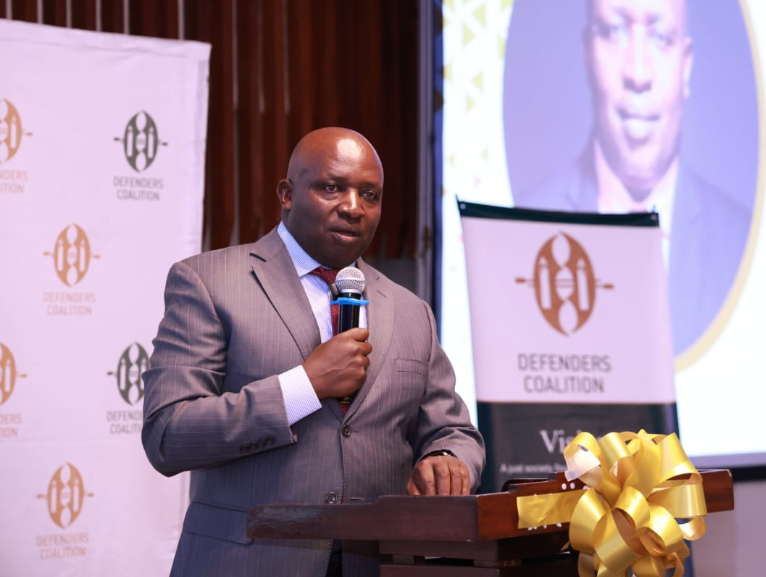
Defenders Coalition executive director Kamau Ngugi during the launch of the organisation’s 2026 Strategic Plan at a Nairobi hotel/HANDOUT
An ambitious initiative aimed at strengthening the protection and capacity of human rights defenders in Kenya has been unveiled amid growing concerns over shrinking civic space and rising threats against activists.
Defenders Coalition, a national organisation that works primarily to protect Human Rights Defenders (HRDs) in Kenya, announced plans to establish Haki Village, a resource hub designed to offer safety, training and support to those championing justice and accountability across the country.
Speaking during the launch, Defenders Coalition Executive Director Kamau Ngugi said the initiative would serve as a safe haven for activists and civil society actors operating in increasingly difficult environments. “It will be a safe space for research, wellness, training and protection,” Ngugi said. The launch comes at a time when concerns are growing over the safety of individuals and groups who speak against injustices, corruption and abuse of power, especially as political activities ahead of the 2027 elections begin to intensify.
Kenya National Commission on Human Rights (KNCHR) chairperson Claris Ogangah, who was the chief guest at the event, welcomed the initiative, saying it comes at a critical moment when many human rights defenders require protection and institutional support. “Anybody who speaks against injustice needs to be protected,” Ogangah said.
She noted that the establishment of Haki Village complements the work already being undertaken by KNCHR and various civil society organisations seeking to safeguard civic space and uphold democratic freedoms in the country. Ogangah warned that the period leading to the 2027 General Election is likely to witness increased political activity, including campaign rallies and demonstrations that may at times turn violent.
Ngugi said the initiative forms part of the organisation’s broader 2026 Strategic Plan, which will guide interventions over the next five years.
According to him, the civic space in Kenya continues to face increasing pressure and could deteriorate further as the country approaches the next General Election.
“The civic space in Kenya is repressed and may narrow towards closed status as we head to the 2027 General Elections and beyond,” he said.
Ngugi observed that threats against human rights defenders are becoming more complex and sophisticated even as both global and local environments for activism grow increasingly uncertain.
He further argued that many countries, including Kenya, often fail to fully recognise and protect the important role played by human rights defenders, exposing them to intimidation,
On the occasion of World Press Freedom Day (May 2026), the Freedom Cartoonists Foundation, in partnership with the City of Geneva, paid tribute to the talent and courage of cartoonists working under difficult circumstances.
The Kofi Annan Courage in Cartooning Award 2026, honouring their exceptional contribution to human rights and freedom of expression, was presented at the Geneva Graduate Institute, in the presence of Joseph Stiglitz, 2001 Nobel Prize laureate in Economics, former Chief Economist of the World Bank and Professor at Columbia University.
More on the Kofi Annan Courage in Cartooning Award, see: https://www.trueheroesfilms.org/thedigest/awards/f60cb3d4-c79a-43aa-9b5c-351c56c02ae1. It is awarded every two years by the Freedom Cartoonists Foundation and the City of Geneva. In alternating years, the Prize is presented by partner organisation Cartoonists Rights in the United States.
Chaired by Kenneth Roth, former Executive Director of Human Rights Watch, the international jury has chosen to share the 2026 Prize between two laureates: Safaa Odah (Palestine) and Jimmy “Spire” Ssentongo (Uganda).
The Laureates [film portraits made by True Heroes Films]
Safaa Odah is a Palestinian cartoonist living in Gaza. Before the escalation of the war in 2023, she produced drawings, comic strips and posters on women’s empowerment and for young audiences. Since October 2023, her drawings have depicted the terrible daily life of Gazans during the war. Her simple, almost naive line stands firm against the din of bombs. Safaa Odah’s favourite themes are universal – family love, grief, hunger and poverty, peace – and offer a poignant perspective on the occupation and displacement of Gaza’s population. Her drawings express what words fail to convey and bear witness to a horror that the world tolerates. She continues to draw cartoons under extremely difficult conditions, using whatever materials she can gather – for instance drawing on the plastic tarpaulin that serves as her family’s tent – and publishing them on social media.Amid extreme violence and utter destitution, the Palestinian artist has been documenting the harrowing situation of Gaza’s population for two and a half years. The family home was destroyed in a bombing two years ago, and Safaa Odah and her family now live in the Khan Younis camp.
Jimmy “Spire” Ssentongo is a Ugandan academic, columnist, portraitist, author and award-winning self-taught cartoonist. He has worked, among others, for the Ugandan newspaper The Observer since 2006. Holding a PhD in Philosophy, he served as Associate Dean of the Faculty of Arts and Social Sciences at Uganda Martyrs University. Frequently harassed, Spire has been in the crosshairs of the authorities since the 2020 pandemic. In March 2024, he received death threats after launching an anti-corruption campaign on X – #UgandaParliamentExhibition – calling on parliament to be held accountable. Spire’s humour and critical analytical mind amplify the reach of his cartoons, which have become popular and viral. The Ugandan intellectual uses them to denounce corruption, institutional abuses and the excesses of power. A victim of cyberbullying, he long kept a low profile. In January 2026, he temporarily took refuge in Belgium to escape growing pressure ahead of the presidential election.