Posts Tagged ‘Palestine’

58th Session of the Human Rights Council: Assessment and Key Outcomes by CIVICUS and ICJ

April 26, 2025

The 58th regular session of the UN Human Rights Council ran from February 24 to April 4, 2025, resulting in 32 Resolutions and 14 Universal Period Review adoptions.

The session included a high-level segment attended by over 100 dignitaries, thematic panels addressing the rights of specific vulnerable groups, interactive dialogues, and debates on country-specific reports. This session also marked key anniversaries of the Beijing Declaration and the Convention on the Elimination of All Forms of Racial Discrimination. The Human Rights Council plays a crucial role in addressing global violations and continues to serve as a platform for activists and victims of violations. In the face of multiple intersecting crises and conflicts, democracy erosion, and authoritarianism on the rise, Council decisions continue to wield considerable power to improve civil society conditions, particularly in fragile contexts where civic actors are particularly affected by widespread human rights violations and abuses, while offering unique opportunities for the negotiation of higher human rights standards.

I have on the past used other such reports by the ISHR and the UHRG (see below) but thought that this time I should highlight other NGOs:

https://ishr.ch/latest-updates/hrc58-civil-society-presents-key-takeaways-from-the-session/

CIVICUS contributed to the outcomes of the Council session through engagement on key Resolutions, delivery of statements, and organisation of events. We sounded the alarm on the global erosion of civic space and the growing repression of civil society across multiple regions. 

Regional Developments: Africa

A strong Resolution on South Sudan was adopted, extending the mandate of the Commission on Human Rights in South Sudan (CHRSS).

Regional Developments: Asia Pacific

A Resolution on Myanmar’s human rights situation was adopted by consensus amid escalating violence and widespread impunity.

Regional Developments: Americas

The Resolution on Nicaragua renewed the mandate of the Group of Human Rights Experts (GHREN) on Nicaragua.

Regional Developments: Europe

Key resolutions were adopted on Ukraine and Belarus, continuing international monitoring mechanisms.

Regional Developments: Middle East

Resolutions on Iran and Syria were adopted, with mixed results on addressing severe human rights concerns.

Several important thematic resolutions were adopted during the session.

Civil Society Challenges

Ahead of the 58th session, CIVICUS raised attention on the increasing restrictions imposed on civil society. CIVICUS engaged in key side events during HRC58, spotlighting democracy, child human rights defenders, and intersectional approaches to civic space.

 A detailed post-session report is available via this link.

The International Commission of Jurists (ICJ):

The International Commission of Jurists (ICJ), together with partner organizations, participated actively in the 58th session. Civil society’s critical engagement is essential in calling on the Council and its member States to respond to the plight of victims of human rights violations. In this regard, the ICJ was pleased to ensure that our partner from the African Albinism Network delivered our joint statement on the tenth anniversary of the mandate of the Independent Expert on the enjoyment of human rights by persons with Albinism. Maintaining effective access to the UN in Geneva for civil society is key to ensure that people can themselves participate or be represented in the discussions at the Council that concern them directly. With regard to this, the ICJ denounces all attempts to undermine civil society participation, including the intimidation of human rights defenders during side events, observed again at this HRC session.

At the outset, the ICJ welcomes the adoption of a number of important resolutions renewing, extending or creating mandates under the HRC purview, among which the following were adopted without a vote:

  • a resolution extending the mandate of the Independent International Commission of Inquiry on the Syrian Arab Republic for a period of one year;
  • a resolution establishing an open-ended intergovernmental working group for the elaboration of a legally-binding instrument on the promotion and protection of the human rights of older persons;
  • a resolution renewing the mandate of the Special Rapporteur on the promotion and protection of human rights and fundamental freedoms while countering terrorism for a period of three years;
  • a resolution renewing the mandate of the Special Rapporteur on the right to food for a period of three years;
  • a resolution extending the mandate of the Special Rapporteur on the situation of human rights in Myanmar for a period of one year;
  • a resolution renewing the presence of the Office of the High Commissioner in Seoul, for a period of two years with the same resources and extending the mandate of the Special Rapporteur on the situation of human rights in the Democratic People’s Republic of Korea(DPRK) for a period of one year.

While regretting the failure to adopt them by consensus, the ICJ also welcomes the adoption of other important resolutions by a majority of the votes:

  • a resolution extending the mandate of the Commission of Inquiry on Ukraine for a period of one year;
  • a resolution renewing the mandate of the Special Rapporteur on the situation of human rights in Belarus for a period of one year and extending the mandate of the Group of Independent Experts on the Situation of Human Rights in Belarus for a period of one year;
  • a resolution renewing the mandate of the Group of Human Rights Experts on Nicaragua for a period of two years;
  • a resolution extending the mandate of the Special Rapporteur on the situation of human rights in the Islamic Republic of Iran for a period of one year and deciding that the Independent International Fact-Finding Mission on the Islamic Republic of Iran should continue for one year with an updated mandate to address the recent and ongoing violations of human rights; and
  • a resolution extending the mandate of the independent human rights expert tasked with undertaking the monitoring of the human rights situation in Haiti, for a renewable period of one year.

This session discussed armed conflicts whose intensity had continued to increase, including in Gaza, Ukraine, the DRC and Myanmar.

……Unsurprisingly, the situation in the Occupied Palestinian Territory was one of the most-discussed throughout the 58th session. Many countries voiced strong support for the Palestinian people and their human rights, with many calling for a two-State solution based on Israel’s withdrawal to its pre-1967 borders and with East Jerusalem as Palestine’s capital. The ICJ commends the many States who intervened during the negotiations and adoption of the resolutions on the situation in the OPT to emphasize the need for accountability, and who voiced their support for the International Criminal Court and the International Court of Justice and their respective recent decisions on Israel/Palestine. The resolution adopted at this session titled “the human rights situation in the Occupied Palestinian Territory, including East Jerusalem, and the obligation to ensure accountability and justice” invited the General Assembly to consider establishing an ongoing international, impartial and independent mechanism to assist in the investigation and prosecution of persons responsible for the most serious crimes under international law committed by all parties in the Occupied Palestinian Territory, including East Jerusalem, and Israel since 2014.

Earlier in the year, on 7 February 2025, the Council had already held a special session to discuss the human rights situation in the east of the Democratic Republic of the Congo, where armed clashes between Congolese forces and the Rwanda-backed M23 movement had been ongoing, and had escalated since January 2025. The special session had resulted in the adoption of a resolution requesting the High Commissioner to urgently establish a fact-finding mission to report on events since January 2022. The resolution had also established an independent COI composed of three experts appointed by the HRC President to continue the work of the fact-finding mission. At the 58th session, the ICJ and many countries expressed grave concern about the human rights situation in the DRC, and during the Enhanced Interactive Dialogue with the High Commissioner and the Team of Experts at the end of the session many of the same themes and concerns heard during the special session were raised again.

Threats to Multilateralism

This 58th session took place in the context of increasing threats against multilateralism. In particular, this session started in the aftermath of the United States and Israel announcing that they would boycott the Council by not engaging with it. In addition, on 27 February – the day before the interactive dialogue with the Group of Human Rights Experts on Nicaragua, when the HRC was scheduled to discuss the serious human rights violations committed by the State apparatus, including executions, torture and arbitrary detentions – Nicaragua announced its decision to withdraw from the Council.

Accountability

The ICJ regrets the attempts by some countries at this session to undermine accountability mechanisms by presenting them as political tools purportedly interfering in the internal affairs of the States concerned and encroaching upon their sovereignty. The human rights organization recalls that such spurious arguments contradict the international human rights law obligations freely agreed upon and undertaken by States and disregard the fact that, as the 1993 Vienna Declaration states, “the promotion and protection of all human rights is a legitimate concern of the international community”.

With regards to the situation in Syria following the fall of the Assad regime, the need for accountability was high on the HRC’s agenda throughout the 58th session. ….In this regard, the ICJ particularly welcomes the adoption of the resolution on the situation in Syria, which encouraged the interim authorities to grant the COI necessary access throughout the country and to cooperate closely with the Commission. The ICJ also notes the authorities’ declared commitment to investigating the recent spate of violations and abuses, including through the newly established fact-finding committee to investigate the events in the west of the Syrian Arab Republic in March 2025. In this connection, the human rights organization called for investigations to be demonstrably independent, prompt, transparent and impartial…

As usual, a number of country situations were not on the agenda of the Council but would actually require much greater scrutiny. At the 58th session, the ICJ expressed particular concern on the situation in Tunisia and Eswatini among others, where attacks on independent judges and lawyers are a key manifestation of deepening authoritarianism in these countries…

The impact of the liquidity crisis and the withdrawal of critical support was also discussed during informal negotiations on the resolution renewing the mandate of the Special Rapporteur on the promotion and protection of human rights and fundamental freedoms while countering terrorism. While in the end the resolution is short, there was much debate about specific phrasing concerning the resources provided to the mandate. The ICJ participated in the interactive dialogue with the Special Rapporteur, stressing the need for coordination and cooperation between civil society and regional systems to address counterterrorism laws that violate human rights and fundamental freedoms of civil society actors, highlighting in particular the situations in Venezuela and Eswatini. The ICJ reiterated the importance of the Special Rapporteur being adequately resourced in order to fully address these challenges.

Oral Statements

General Debate, Item 2: HRC58: ICJ Statement on the situation of human rights in Tunisia, Sri Lanka, and Guatemala

General Debate, Item 4: HRC58: ICJ statement on the human rights situation in Eswatini, Myanmar and Afghanistan

Belarus: HRC58: ICJ statement on human rights situation in Belarus 

Albinism: HRC58: ICJ statement on persons with albinism during Interactive Dialogue with the Independent Expert 

Venezuela: HRC58: ICJ statement on civil society repression and ongoing human rights violations in Venezuela

Counterterrorism: HRC58: ICJ statement on the use of counterterrorism laws to suppress dissent in Venezuela and Eswatini

Transitional Justice: HRC58: ICJ statement on OHCHR report, urging progress in transitional justice for Libya and Nepal

General Debate, Item 10: HRC58: The ICJ calls for urgent action on escalating human rights violations in the Democratic Republic of the Congo and the impact of the U.S. foreign aid pause

Side events

ICJ International Advocacy Director, Sandra Epal-Ratjen, spoke at a high-level event on the right to a clean, healthy and sustainable environment

The ICJ organized a joint side-event on the situation in Tunisia

—

https://www.civicus.org/index.php/media-resources/news/united-nations/geneva/7609-58th-regular-session-of-the-human-rights-council-post-session-assessment-and-key-outcomes

https://www.icj.org/hrc58-the-un-human-rights-council-ends-a-six-week-intense-session-in-perilous-times-for-multilateralism/

Some rabbis want to be human rights defenders!

April 3, 2025
ICN Logo

Image: RHR

Image: RHR

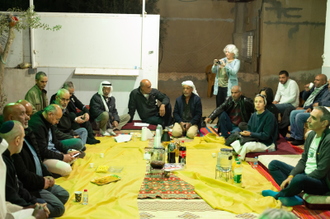
On 29 March 2025 Rabbis for Human Rights wrote: “This week, we took part in a moving Iftar meal-the traditional dinner that breaks the daily fast during the month of Ramadan-together with residents and activists from the Negev. The event was held in collaboration with the Regional Council for the Unrecognized Villages.

We sat together around one table, broke bread, listened to stories, and felt both the pain-and the hope. It was a moment of deep human connection between communities fighting for justice, equality, and a safer future.

But alongside the warmth and solidarity, we cannot ignore the harsh reality: In just the first half of 2025, more than 2,000 structures in unrecognized villages in the Negev have been demolished-a dramatic increase from previous years. The destruction of Umm al-Hiran last November still echoes-a whole community erased to make way for a new Jewish settlement.

True solidarity is not just a slogan-it is presence, listening, and action. We will continue to stand with these communities, amplify their voices, and work toward a future in which every person can live with dignity and security.

As Jews and as Rabbis, our commitment to justice is unconditional-it is at the heart of our identity.

As Ramadan draws to a close next week, we wish all our Muslim friends and partners a joyous Eid al-Fitr (Eid Mubarak).

May this holiday bring you and your families happiness, abundance, and blessings. We hope these festive days offer moments of comfort, renewal, and peace to all!”

This is not our Judaism.

Every day Rabbis from our organization are taking to the streets to protest against the government and for the protection of democracy. Rabbis for Human Rights’ staff and board members are on the streets every day, raising their voices to end the horrific bloodshed in Gaza, to bring the hostages home, and to call for an immediate ceasefire.

As rabbis and human rights defenders, we believe in the sanctity of every human life. This war must end now!

Read more about Rabbis for Human Rights: www.rhr.org.il/eng

Tags: Rabbis For Human Rights, RHR, Iftar, Holy Land, Israel, Palestine

https://www.indcatholicnews.com/news/52042

Palestinian human rights defender:Jalal Abukhater

December 13, 2024

Jalal Abukhater works as an advocacy manager for 7amleh, a digital rights and human rights organisation based in Palestine.

He spoke to ISHR about what drove him to take action for the digital rights of his fellow Palestinians and about the responsibility of big technology companies and online platforms in the suppression of Palestinian rights and voices.

‘There is a responsibility for big tech companies to uphold human rights to make sure that they are not complicit in the violation of human rights, especially in the context of genocide.’

https://ishr.ch/defender-stories/human-rights-defenders-storyjalal-abukhater-from-palestine

10 December 2024: Human Rights Day

December 10, 2024

Here a few highlights for this year from UN and NGOs sources:

While commemorating the 76th anniversary of the Universal Declaration of Human Rights, the United Nations Secretary-General Antonio Guterres said that “human rights are under assault”. “Whether economic, social, civic, cultural or political, when one right is undermined, all rights are undermined,” Guterres said in a post on X. “Let’s protect, defend and uphold all human rights for all people,” he added. In a video message, The UN secretary-general said “we must stand up for all rights — always.”

Achim Steiner UNDP Administrator added his voice:

..As we mark Human Rights Day 2024, we are reminded that human rights are not abstract ideals. They are vital tools for addressing these pressing challenges and advancing dignity and justice for all. 

… the United Nations Development Programme (UNDP) works to support human rights solutions that strengthen accountability, protect communities and foster peace, recovery, and stability. This includes partnering with National Human Rights Institutions, which often represent the frontline defenders of human rights. … Local initiatives also remain key. That includes women in Somalia who are being supported to lead peace efforts including assisting those facing violence, discrimination, and injustice. “I have resolved numerous local disputes…I feel motivated when I see I have been able to change people’s lives positively,” says Fatuma who led a local Peace Working Group.

As the accelerating climate emergency threatens the ability of current and future generations to enjoy their right to a clean, healthy, and sustainable environment, UNDP is focusing on access to justice, working with the United Nations Environment Programme (UNEP) and OHCHR to help communities claim their rights. …The private sector also has a pivotal role to play. UNDP supports the implementation of the UN Guiding Principles on Business and Human Rights including to advance sustainable practices that protect the environment. Indeed, technology offers both risks and opportunities to advance human rights. The Global Digital Compact aims to create an inclusive, open, safe, and secure digital space that respects, protects and promotes human rights. Tech-enabled UNDP tools like iVerify and eMonitor+ deployed in over 25 countries to monitor and address false narratives and hate speech show the potential. It is now crucial to adopt a rights-based approach to technologies like A.I., addressing ethical challenges, protecting data, and tackling biases to mitigate risks today and unlock immense benefits for the generations to come. [https://humanrightsdefenders.blog/2024/09/27/united-nations-adopts-ground-breaking-pact-for-the-future-to-transform-global-governance/]

——

The NGO Index on Censorship spotlights four people standing up for human rights around the world:

Despite the declaration, all around the world human rights are being challenged, degraded and attacked. That is why this year, on Human Rights Day, we pay tribute to five human rights defenders who have worked tirelessly to defend people’s rights and have been persecuted as a result. 

Jemimah Steinfeld, CEO at Index on Censorship said:  “In this increasingly polarised and authoritarian world these people stand out as beacons of hope and light. It’s depressing to think that over 75 years since the Declaration, we still need a day like this but that should not detract from the bravery and fortitude of these people. May their example show us all how we can all better fight injustice.” 

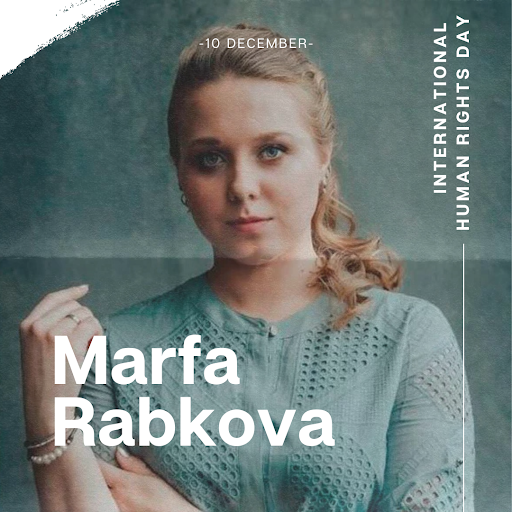
Marfa Rabkova (Belarus) Marfa Rabkova is a human rights defender who has been behind bars since 17 September 2020. She has long been targeted by the Belarusian authorities as a result of her civic activism. Marfa became head of the volunteer service at the Human Rights Centre Viasna in 2019. During the 2020 presidential election, she joined the “Human Rights Defenders for Free Elections” campaign, which registered over 1,500 election observers. When peaceful protests began to take place after the election, she helped document evidence of torture and violence against demonstrators.  Marfa was indicted on a long list of charges, including inciting social hostility to the government and leading a criminal organisation. She was sentenced to 14 years and 9 months in prison in September 2022, after nearly two years of pre-trial detention. Index on Censorship calls for her immediate and unconditional release.  See also:
https://humanrightsdefenders.blog/2021/03/22/belarus-end-reprisals-against-human-rights-defenders/

https://www.indexoncensorship.org/2024/12/human-rights-day-2024-a-tribute-to-human-rights-defenders/

https://www.undp.org/speeches/administrators-statement-human-rights-day-10-december-2024

https://www.coe.int/sl/web/commissioner/-/on-human-rights-day-the-commissioner-calls-for-action-to-realise-the-universal-declaration-s-vision

https://www.ohchr.org/en/stories/2024/12/celebrating-human-rights-day-around-world

The 2024 Right Livelihood Laureates

October 8, 2024

2024 Right Livelihood Laureates face off against the marginalisation of Indigenous Peoples, Israel’s illegal settlements, dangerous development projects in Mozambique and human rights violations committed with impunity to demand a just future for all.

THE 2024 LAUREATES:

Joan Carling “For raising Indigenous voices in the face of the global ecological breakdown and her leadership in defending people, lands and culture.” Joan Carling is a Filipino Indigenous activist who has been defending the rights of Indigenous Peoples for more than 30 years. Her work spans grassroots and international levels, focusing on human rights, sustainable development, climate justice and the fight against land exploitation. [https://humanrightsdefenders.blog/2016/11/02/joan-carling-indigenous-land-rights-defender-from-the-philippines/]

Issa Amro / Youth Against Settlements “For their steadfast non-violent resistance to Israel’s illegal occupation, promoting Palestinian civic action through peaceful means.” Issa Amro is a Palestinian human rights activist who has dedicated his life to peaceful resistance against Israeli occupation in the West Bank city of Hebron. Together with the activist group he founded, Youth Against Settlements, he strives to create a future where Palestinians live freely and with dignity. [https://humanrightsdefenders.blog/tag/issa-amro/]

Anabela Lemos / Justiça Ambiental! “For empowering communities to stand up for their right to say no to exploitative mega-projects and demand environmental justice.” Anabela Lemos is a Mozambican environmental activist and Director of Justiça Ambiental! (JA!), an organisation committed to fighting corporate-led projects that displace communities, damage livelihoods and intensify climate change in Mozambique.

Forensic Architecture “For pioneering digital forensic methods to ensure justice and accountability for victims and survivors of human and environmental rights violations.” Forensic Architecture is a pioneering research agency dedicated to uncovering and documenting the truth about environmental and human rights violations using cutting-edge open-source investigation and digital modelling techniques.

https://www.trueheroesfilms.org/thedigest/awards/97238E26-A05A-4A7C-8A98-0D267FDDAD59

“Amid the chaos of violence, greed and injustice that is affecting so many people around the world, the 2024 Right Livelihood Laureates reignite hope,” said Ole von Uexkull, Right Livelihood’s Executive Director.

https://preview.mailerlite.io/emails/webview/326585/134181621937997150

Israeli continues to target human rights defenders in the West Bank

July 29, 2024

The Israeli authorities continue to target human rights defenders in the Occupied West Bank, including East Jerusalem, through prolonged administrative detention without charge, humiliation and ill treatment, an independent expert said calling for an end to such treatment.

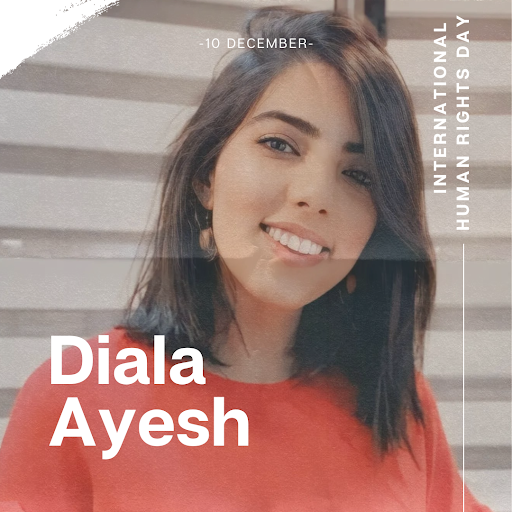
“UN Special Procedures experts, including myself, have raised similar concerns multiple times, and this time I want to bring to the attention of the Israeli government the recent cases of Mr. Bassem Tamimi, Mr. Omar al-Khatib, Ms. Baraa Odeh, Ms. Sumoud Mtair and Ms. Diala Ayesh,” said Mary Lawlor, UN Special Rapporteur on the situation of human rights defenders.

The five human rights defenders were arrested between October 2023 and March 2024, either from their home or as they returned from abroad. They were ordered to be held in administrative detention for periods ranging from four to six months, subject to unlimited renewal. Two of them have yet to be released.

Bassem Tamimi, from Ramallah, is an organiser of peaceful protests against the illegal occupation of Palestinian lands; Omar al-Khatib, from Jerusalem, campaigns against the forced eviction of Palestinian families from the Jerusalem neighbourhood of Sheikh Jarrah; Baraa Odeh, from Bethlehem promotes youth rights; Sumoud Mtair, from Hebron, is active in the Palestinian Anti-Apartheid Wall Campaign; and Diala Ayesh is a human rights lawyer who documents the detention conditions of Palestinian prisoners detained in Israel. All but al-Khatib and Ayesh were released at the end of their administrative detention periods.

“All five human rights defenders were arrested without warrant. They were not given any reason as to why there were being detained. They were all interrogated without the presence of a lawyer. They were not allowed contact with their families,” Lawlor said.

“Four of them were reportedly slapped, beaten, humiliated, sent from one prison to another in the space of one or two days, and made to sign documents in Hebrew they could not understand. The three women detainees have been held in deplorable conditions, in dirty cells and given insufficient and poor-quality meals.”

https://www.miragenews.com/un-expert-israel-must-halt-targeting-1282213/

https://thepeninsulaqatar.com/article/24/07/2024/un-official-calls-on-israeli-authorities-to-stop-targeting-palestinian-human-rights-defenders

Human rights defenders working in war zones such as Ukraine and Israel

July 1, 2024

On 20 June 2024 Swissinfo spoke with human rights defenders from Ukraine and Israel about how they operate in tough contexts. The main tasks of human rights defenders include investigating, collecting information about, and reporting rights violations. They raise public awareness to ensure that human rights are respected. But how do they work in a war zone or in an environment where a large part of public opinion is against them? SWI swissinfo met activists from Ukraine and Israel in Geneva’s Palais des Nations, where they had come to meet delegations and attend side-events during a session of the Human Rights CouncilExternal link .

“We are documenting testimonies from victims of the war in Ukraine,” says Lyubov Smachylo, an analyst with the Ukrainian organisation Media Initiative for Human Rights (MIHR).

MIHR’s main office is in Kyiv. It has direct access to victims and witnesses of rights violations, such as Ukrainians living in the north of the country – formerly under Russian occupation and now back under Ukrainian rule – or former prisoners in Russian jails. Smachylo, who lives between Kyiv and Paris, analyses documented testimonies of human rights violations committed by Russia. These include Russian armed forces acting with generalised impunity, the arbitrary detention of civilians – often accompanied by torture and ill-treatment – and in some cases enforced disappearances.
Lyubov Smachylo from the Ukrainian Media Initiative for Human Rights. Courtesy of Lyubov Smachlyo

MIHR is one of the few NGOs able to gather information on the ground. Virtually no international organisation can go into the occupied Ukrainian regions, not even the Office of the UN High Commissioner for Human Rights (OHCHR). The International Committee of the Red Cross (ICRC), for example, has only limited access to Ukrainian prisoners of war. This absence of accountability and the underreporting of abuses mean there is an increased risk of mistreatment and of perpetrators going unpunished.

Among other things, the MIHR deals with prisoners of war and civilians who have been arrested in the Russian-occupied regions of Ukraine or who are being detained in unknown places. Beatings and torture are rife, and some have died because of the poor detention conditions, says Smachylo.

“We know of 55 places of detention in the occupied regions of Ukraine and 40 in Russia, where a total of at least 1,550 Ukrainian civilians are being held,” says Smachylo. Contacted by SWI, the ICRC did not comment on whether it has access to the occupied regions. More More Human Rights Council: Fundamental or fundamentally flawed?

This content was published on Jun 30, 2021 The Human Rights Council, convening in Geneva, is mired in US-China rivalry, while the Council also faces criticism from developing countries. Read more: Human Rights Council: Fundamental or fundamentally flawed Increasingly hostile environment

Tal Steiner is meanwhile a human rights lawyer and director of the Public Committee Against Torture in Israel (PCATI). The NGO holds Israel accountable on its use of torture, which is not illegal in the country, although there is an absolute prohibition on torture enshrined in international human rights instruments such as the Universal Declaration of Human Rights. Steiner says her NGO’s work has become particularly difficult since the Hamas attacks of October 7 and the Israeli-Palestinian war. Israel has restricted access to political prisoners, while rights defenders find themselves in an increasingly hostile environment where they are regularly branded as“defending terrorists”.

The political prisoners to which Steiner has access include Palestinians living in Israel and in the West Bank as well as Jewish Israeli citizens.

“Working on the issue of torture – or on any issue in Israel that affects human rights in terms of security – has never been easy,” she says.
Tal Steiner, right, pictured with Miriam Azem, advocacy associate at the Legal Center for Arab Minority Rights in Israel (ADALAH). Keystone/AFP/Coffrini

Compassion for Palestinian prisoners and the view that human rights apply to everyone have been greatly diminished since the war, Steiner explains.“This means that the circle that supports our work has become smaller.”

According to her, many Israelis have opted for security above human rights. Many also harbour feelings of vengeance towards Palestinians.“We saw this, for example, at the Israeli Prison Service (IPS),” Steiner says. There, extreme overcrowding since October 7 has led to a severe deterioration in conditions, including limited access to basic needs like water, electricity, food, and medical care. Human rights groups have also noted cases of severe beating of detainees and prisoners, sexual harassment and intimidation.

Miriam Azem also took part in the SWI interview with Steiner. The international advocacy expert works for Palestinian organisation Adalah, which defends Palestinians living in Israel and the occupied territories in Israeli courts. “Since October 7, the attitude towards our lawyers has changed a lot,” she says. This has become apparent in disciplinary committees, which handle disputes in universities.“Since the beginning of the war, over 120 disciplinary proceedings have been initiated against Palestinian students – citizens of Israel – for statements made on their private social media accounts” she says.

She cites the example of Palestinian students with Israeli citizenship who have been accused of inciting terrorism on the basis of unfounded arguments. Adalah attorneys, who have represented 95 Palestinian students facing this charge,“were questioned regarding their loyalty to Israel”, Azem says.

According to Azem, there has been an increase in arrests and interrogations due to posts on social media. “The vast majority of these posts do not meet any criminal threshold. Nevertheless, the accusations against activists were grounded in Israel’s Counter-Terror Law, which carries severe imprisonment penalties,” she says. More More Is Geneva still the capital of peace?

In February, PCATI and Adalah, together with two other Israeli organisations, sent an urgent appeal to the UN Special Rapporteur on Torture, Alice Jill Edwards. They called on Edwards to intervene immediately to stop torture and the systematic mistreatment of Palestinian prisoners in Israeli detention facilities. Apart from private lawyers, these are the only four organisations that can currently visit Israeli prisons – Israel has denied the ICRC access.

“We are therefore the only ones who can report what we have seen there,” says Steiner. Around 10,000 Palestinian prisoners are currently in Israeli custody, many of them detained without trial. However, no one is allowed to visit the Israeli military camps for prisoners from the Gaza Strip. PCATI fears a“new Guantanamo” is being established there, in reference to the US facility in Cuba where prisoners were held indefinitely without trial in the aftermath of the terrorist attacks on September 11, 2001.

In their appeal to the UN rapporteur, the four organisations also expressed concern about the dehumanising rhetoric being used by some members of the Israeli government. The Minister of National Security, Itamar Ben-Gvir, in charge of the IPS, has repeatedly spoken out in favour of subjecting Palestinians to degrading and inhumane treatment.

In the meantime, UN rapporteur Edwards has called on Israel to investigate the numerous allegations of torture against detained Palestinians. Since the attacks of October 7, it is estimated that thousands of Palestinians including children have been detained, she has written. Edwards says she received allegations of individuals being beaten, kept blindfolded in cells, handcuffed for excessive periods, deprived of sleep, and threatened with physical and sexual violence. Burnouts and death threats

Burnout and death threats are also part of the job. Smachylo says the war which stretches through the whole of Ukraine is an added strain on a very stressful job. Activists and staff members of her organisation spend hours writing reports detailing torture and mistreatment of Ukrainian citizens by the Russian authorities. She particularly highlights the risk of burnout for those who regularly carry out missions in the field.

The Geneva-based World Organization against Torture (OMCT), which cooperates with the NGO, provides financial support for their psychological and therapeutic retreats.

Steiner, for her part, draws particular attention to the huge amount of work involved.“In view of the grief over the tragedies of October 7 and the war in the Gaza Strip, cooperation between Israelis and Palestinians is proving to be a challenge right now,” she says. For her, it is fundamental that every detainee has the right to defense.

Smear campaigns have also targeted her work. For example, the Israeli TV station Channel14, the equivalent of the rightwing US station Fox News, made a derogatory programme about PCATI and other organisations campaigning for Palestinian rights. The title:“Disgrace: the Israeli activists who take care of the treatment of Hamas terrorists”. The program led to harassment and threatening phone calls. Some of the emails Steiner received were about rape and death threats, others targeted her family.

“We are aware that we are operating in an environment that is very hostile to our work,” says Azem.“As an NGO registered in Israel, we are extremely cautious.” Steiner adds that the persecution of NGOs in Israel and Palestine has a long history. Six Palestinian human rights organisations have been classified as terrorist by Israel. And several bills currently envisage a higher taxation rate for Israeli NGOs in order to block their work.

https://menafn.com/1108388272/Silence-Threats-Burnout-Challenges-For-Human-Rights-Defenders-In-Times-Of-War

Member states back International Criminal Court

June 19, 2024

On 17 June 2024, Maria Elena Vignoli, Senior Counsel, International Justice Program of HRW, reported on several statements by States to rejects recent intimidation efforts.

Ninety-three member countries of the International Criminal Court (ICC) have declared their “unwavering support” for the court in the face of recent threats. The June 14 statement by an unprecedented number of ICC members across the globe follows a slew of threats, particularly after ICC Prosecutor Karim Khan announced on May 20 that he was seeking arrest warrants against two senior Israeli officials, including Prime Minister Benjamin Netanyahu, along with three Hamas leaders.

The joint statement reconfirmed ICC members’ support for the court “as an independent and impartial judicial institution” and their committment to defending the ICC, its officials, and those cooperating with it from any political interference and pressure. It follows similar expressions of support by the Presidency of the ICC Assembly of States Parties, several ICC member countries—including UN Security Council members—the high representative of the European Union, UN special procedures, and nongovernmental organizations.

In April, amid speculation ICC warrants for crimes committed in Gaza were imminent, 12 US senators threatened to sanction Khan should he pursue cases against top Israeli officials. Netanyahu also called on governments to prevent the court from issuing warrants. Khan’s office denounced the threats, noting that the ICC can also prosecute individuals for obstructing justice. [see also earlier: https://humanrightsdefenders.blog/2021/02/19/large-group-of-ngos-call-on-biden-administration-to-repeal-icc-sanctions/]

On June 4, after the warrant applications were announced, the US House of Representatives passed a bill aimed at imposing sanctions against the ICC, its officials, and those supporting investigations at the court involving US citizens or allies. The bill is now under consideration in the US Senate. The proposed law is reminiscent of the sanctions imposed by President Donald Trump on the previous ICC prosecutor to intimidate the court from pursuing cases against US and Israeli personnel for crimes committed in Afghanistan and Palestine. President Joe Biden revoked those sanctions in 2021 and has so far opposed the current bill.

The ICC is also in Russia’s crosshairs. In 2023, Russian authorities issued arrest warrants against Khan and six ICC judges after the ICC issued an arrest warrant against Russian President Vladimir Putin and another Russian official for war crimes committed in Ukraine. Russian lawmakers also enacted a law criminalizing cooperation with the ICC.

In both the Palestine and Ukraine investigations, ICC officials are simply doing their job. The joint statement sends a strong message that ICC members have the court’s back and will not bow to efforts to undermine its independence.

https://www.hrw.org/news/2024/06/17/international-criminal-court-members-speak-out

Human Rights Defenders issues at the 56th session of the UN Human Rights Council

June 12, 2024

The UN Human Rights Council will hold its 56th regular session at Palais des Nations in Geneva from 18 June and 12 July 2024. And as always the excellent Alert of the International Service for Human Rights permits me to hightlight what concerns HRDs most. To stay up-to-date you can follow @ISHRglobal and #HRC56 on X, and look out for the Human Rights Council Monitor.

Civil Society Access and Participation The UN is facing a severe liquidity crisis due to member states not paying their membership dues in full and on time. This shortfall is impacting victims and survivors of human rights violations. The crisis risks being used to impose restrictions on civil society participation, although online and hybrid modalities offer cost-effective and environmentally friendly solutions. Over 100 human rights organisations have called on all states to promptly pay their dues to address the liquidity crisis. Additionally, this session States have the opportunity to continue to build on the good practices adopted in the past years and allow for a broader, more inclusive, effective and climate-friendly human rights system, including by providing remote access to informal consultations on HRC resolutions that can greatly benefit from the analysis and lived experiences of human rights defenders.

Thematic issues Issues on the agenda At this 56th session, the Council will discuss a range of civil, political, economic, social and cultural rights through dedicated debates with the mandate holders and the High Commissioner, including with the Special Rapporteur on extrajudicial, summary or arbitrary executions, the Special Rapporteur on the right to freedom of expression, the Special Rapporteur on the rights to freedom of peaceful assembly and of association, the Special Rapporteur on promotion and protection of human rights in the context of climate change, the Special Rapporteur on contemporary forms of racism, racial discrimination, xenophobia and related intolerance In addition, the Council will hold dedicated debates on the rights of specific groups including with: The Independent Expert on protection against violence and discrimination based on sexual orientation and gender identity, the Special Rapporteur on the rights of Internally Displaced Persons, the Special Rapporteur on violence against women and girls, the Special Rapporteur on independence of judges and lawyers

The Council will also hold debates on interrelation of human rights and thematic issues including with: The High Commissioner on new and emerging technologies.

The new incoming Independent Expert on violence and discrimination on the basis of sexual orientation and gender identity, Graeme Reid, will present his first report focusing on freedom of expression, assembly and association.

Environment and Climate Justice The Special Rapporteur on Internally Displaced Persons will present her report on planned relocations of people in the context of the adverse effects of climate change and disasters. This report is building up on previous reports by other mandates and will also look at laws and policies at the national, regional, and international levels. The newly appointed Special Rapporteur on Climate Change will also present her first report looking at the upcoming priorities and some reflections of the progress achieved on some issues in the last 5 years. The report will also provide a snapshot of some other key topics and the impacts on some particular groups. The Special Rapporteur will also present two country visits reports: Honduras and the Philippines. There is currently a call for inputs for her upcoming General Assembly report on access to information on climate change and human rights. The Working Group on Business and Human Rights will present its report on investors, Environmental, Social, and Governance (ESG) approaches and human rights. The report will raise awareness of the responsibilities of investors and will clarify responsibilities on how to align their ESG approaches to human rights. On Thursday 20 June, the President of the Human Rights Council is organising a high-level informal Presidential discussion on ‘The important link between climate change, food security and health security’. The discussion should address the important role of environmental human right defenders in promoting and securing the full realisation of the right to a clean, healthy and sustainable environment; and recognition of the obligation of States to prevent, protect and promote their work in an enabling environment.

International Solidarity Civil society and international experts have continued to raise grave concern at the attacks on fundamental freedoms when advocating for the human rights of Palestinians by authorities in Western countries, including in universities. The High Commissioner deplored the ‘sharp rise in hatred globally – including anti-Semitism and Islamophobia’. In her report to the Council, the Independent Expert on International Solidarity called on States to ‘eliminate the criminalization of international solidarity expressions and symbols and calls for accountability for violations of public international law norms, such as calls for peace, self-determination or decolonization and the ending of apartheid or genocide […] stressing that States ‘should not conflate them with ‘manifest support of terrorism’ or antisemitism in relevant legislation or regulations’. The Special Rapporteur on racism also raised concern at ‘accusations of antisemitism on the basis of legitimate criticism of treatment of Palestinians by Israel’ in her report following her visit to the United States.

The Special Rapporteur on Education, following her visit to the United States, stressed that the International Holocaust Remembrance Alliance (IHRA) definition conflating criticism of Israel with antisemitism is being used to crackdown against pro-Palestinian protesters, including individuals who ‘self-identify as belonging to the Jewish community or represent Jewish student associations’. The Rapporteur addressed violations against students following the organisation of ‘mass encampments at nearly 40 universities in more than 25 states across the country’, including the detention of more than 2000 individuals, raids by fully armed police on university campuses requested by educational institutions to ‘disperse demonstrators and dismantle encampments’.   During the session, and especially in the ID with the experts on International Solidarity, Education, Freedom of Expression, Freedom of Assembly and Association, we urge States to call for an end to the repression and criminalisation of groups and individuals advocating for the human rights of the Palestinian people, including through the instrumentalization of anti-Semitism (IHRA definition) and anti-terrorism policies, including in universities, and especially in the West (including in Austria, France, Germany,  Italy, United States, United Kingdom).

Reprisals
HRC56 is a key opportunity for States to raise concerns about specific cases of reprisals and demand that governments provide an update on any investigation or action taken toward accountability. This month ISHR launched a new campaign regarding cases. ISHR urges States to raise these cases in their statements:

Cao Shunli was a prominent Chinese human rights defender, who sought to share information on the human rights situation in China with the United Nations in Geneva. Cao was arbitrarily detained and died in prison 10 years ago. [for more saee: https://humanrightsdefenders.blog/tag/cao-shunli/]

Abdulhadi Al-Khawaja is a Bahraini-Danish advocate known for his unwavering commitment to freedom and democracy. In April 2011 during the Bahrain chapter of what is known as the ‘Arab Spring’ uprisings, while he was leading peaceful demonstrations, Abdulhadi was violently arrested. He went missing for two months and, in June 2011, after a military trial, he was condemned to life-imprisonment on terrorism-related charges, despite grave concerns from the international community about unfair trials. [s`eae also: https://humanrightsdefenders.blog/2022/11/29/mea-laureate-abdulhadi-al-khawaja-facing-new-charges-for-protesting-injustice-in-jau-prison/ and https://www.trueheroesfilms.org/thedigest/laureates/4d45e316-c636-4d02-852d-7bfc2b08b78d]

Pham Doan Trang is an author, blogger, journalist and pro-democracy activist from Viet Nam. Trang was prosecuted for her articles and reports on the human rights situation in Viet Nam, including an analysis of a 2016 report on the Formosa Ha Tinh Steel Plant environmental disaster that was shared with the United Nations. See also: https://www.trueheroesfilms.org/thedigest/laureates/fe8bf320-1d78-11e8-aacf-35c4dd34b7ba and https://humanrightsdefenders.blog/tag/pham-doan-trang/].

Khurram Parvez and Irfan Mehraj are two Kashmiri human rights defenders. They have conducted ground-breaking and extensive human rights documentation in the Indian-administered Jammu and Kashmir, including through their work within the Jammu Kashmir Coalition of Civil Society (JKCCS). In 2016, Indian authorities arrested Khurram a day after he was barred from traveling to Geneva to attend the 33rd session of the Human Rights Council. See also: https://www.trueheroesfilms.org/thedigest/laureates/81468931-79AA-24FF-58F7-10351638AFE3 and https://humanrightsdefenders.blog/tag/khurram-parvez/. Meanwhile, on 20 March 2023, Irfan was summoned for questioning and arbitrarily detained by the NIA in Srinagar also under provisions of the UAPA and other laws. The NIA targeted Irfan for being ‘a close associate of Khurram Parvez.’ Both Khurram and Irfan are presently in pre-trial detention in the maximum-security Rohini prison in New Delhi, India.

See also: https://menarights.org/en/articles/egypt-un-experts-call-government-stop-targeting-and-retaliating-against-human-rights

Country-specific issues on the agenda

The Council will consider updates, reports on and is expected to consider resolutions addressing a range of country situations, in some instances involving the renewal of the relevant expert mandates. These include: Interactive Dialogues with the High Commissioner and the Special Rapporteur on Myanmar Enhanced Interactive Dialogue with the Special Rapporteur on Afghanistan Interactive Dialogue with the Independent international fact-finding mission for the Sudan Interactive Dialogue with the Commission of Inquiry on the Occupied Palestinian Territory and Israel Interactive Dialogue with the Special Rapporteur on Eritrea Interactive Dialogue with the Special Rapporteur on Belarus Interactive Dialogue with the Commission of Inquiry on Syria Interactive Dialogue with the Special Rapporteur on Burundi Interactive Dialogue with the High Commissioner on Venezuela Interactive Dialogue with the High Commissioner on Libya Interactive Dialogue with the Independent Expert on Central African Republic Interactive Dialogue with the High Commissioner on Ukraine and interim report of SG on Crimea Interactive Dialogue with the High Commissioner on Colombia

Afghanistan On 18 June, Richard Bennett, Special Rapporteur on Afghanistan will present his most recent report on the ‘phenomenon of an institutionalized system of discrimination, segregation, disrespect for human dignity and exclusion of women and girls’ (HRC res. 54/1). The report provides a multidimensional understanding of the design, commission and impact of the harms resulting from the Taliban’s institutionalized system of gender-based oppression. We welcome the Special Rapporteur’s view expressed in the report that the framing of gender apartheid most fully encapsulates the institutionalized and ideological nature of the abuses in the country. We note that the report of the Working Group on Discrimination Against Women to be presented at this session also noted the pattern of large-scale systematic violations of women’s and girls’ fundamental rights in Afghanistan ‘constitutes an institutionalized framework of apartheid based on gender and merits an unequivocal response.’ ISHR considers that the pursuit of justice for Afghan women and girls demands a multifaceted approach harnessing the strengths of various accountability mechanisms, including the establishment of an accountability mechanism for crimes against humanity; with strategic coordination exerting heightened pressure on the Taliban. See also: https://www.afintl.com/en/202406121393

Sudan On 18 June, the Fact-Finding Mission on Sudan will provide its first oral update to the HRC. Since the conflict erupted between the Sudanese Armed Forces and the Rapid Support Forces (RSF) on 15 April 2023, more than 30 thousand people have been killed while 10 million and a half have been displaced, a majority of which are women and children. Half of the population is now on the verge of famine, and 2.5 million could die of starvation by September. The continued fighting in El Fashir portends a repeated massacre and ethnic cleansing of the Masalit in El Geneina last year. In Aljazeera at least one hundred people were killed by RSF on 5 June, the area is facing grave human rights violations since last December.  Meanwhile, the attacks on women’s rights groups and local response initiatives continue unabated.bHumanitarian responders get arbitrarily arrested, and smeared as traitors by the warring parties, some sentenced for up to 2 years and even killed. States should call for an immediate ceasefire, protection of civilians and adherence to international law by all parties in the conflict. 

Occupied Palestinian Territory and Israel On 19 June, the Independent International Commission of Inquiry on the Occupied Palestinian Territory, including East Jerusalem, and Israel will present its report addressing the 7 October attacks by Palestinian armed groups and the commencement of Israel’s war on Gaza.

Venezuela The High Commissioner will present his report on 3 July with his Office staff still operating from Panama. The Maduro government has still not permitted the return of the Office on the terms of its original mandate. With Presidential elections to be held on 28 July, concerns increase about the safety of human rights defenders and opposition figures. Uncertainty has recently been increased by the re-introduction (and then rapid postponement of adoption) of the NGO Law. HRDs Javier Tarazona and Rocío San Miguel remain wholly unjustifiably detained. States must engage actively in the dialogue with the High Commissioner to make clear their support of the essential work of human rights defenders and of the UN’s essential, multifaceted regime scrutinising the human rights situation in the country. Situations of concern that are not on the Council’s agenda

Algeria The sustained repression against the pro-democracy movement and human rights defenders in Algeria was addressed in the end-of-session statements of the Special Rapporteur on freedom of association and assembly as well as the Special Rapporteur on human rights defenders who conducted official visits to Algeria in 2023. These were the first visits since 2016 by UN mandate holders to the country. The Special Rapporteur on Freedom of Assembly and Association addressed the ‘criminalisation of civil society work‘, and the ‘suspension or dissolution of political parties and associations, including prominent human rights advocacy organisations’ (including RAJ and LADDH), as well as ‘overly restrictive laws and regulations’ hindering their work.


Bahrain Thirty-three civil society organisations reiterated that thirteen years since Bahrain’s popular uprising, systemic injustice has intensified and political repression targeting dissidents, human rights defenders, clerics and independent civil society has effectively shut any space for the peaceful exercise of the right to freedom of expression or peaceful activism in the country. Despite the recent royal pardon issued on 8 April 2024, which included the release of more than 650 political prisoners, marking a change in State policy from previous royal pardons, the pardon excluded many individuals who played significant roles in the 2011 pro-democracy uprising, with an estimated 550 political prisoners remaining behind bars. HRC56 provides an important opportunity to address these developments in States’ national and joint statements, including during the Interactive Dialogues with the Special Rapporteurs and Independent Expert on Health, Freedom of Expression, Peaceful Assembly and Association, Independence of Judges and Lawyers and International Solidarity. We urge States to call for the release of all those arbitrarily, including human rights defenders and opposition activists Abdulhadi Al-Khawaja, Abduljalil Al-Singace, Hassan Mushaima and Sheikh Ali Salman as well as death row inmates Mohammed Ramadhan and Husain Moosa, who have now spent over a decade unlawfully detained following torture and unfair trials and remain at immanent risk of execution.

China The adoption on 4 July of the outcome of China’s fourth UPR review, which exposed strong international condemnation over grave abuses in January, is a key opportunity for States to urge China to fully implement recommendations emanating from existing findings by UN bodies. Any rejection by the Chinese government of UPR recommendations referring to UN expert mechanisms or to constructive cooperation with the UN system should be promptly condemned. Ahead of the second anniversary of the publication of the damning OHCHR Xinjiang report, and its authoritative findings of possible crimes against humanity in the Uyghur region, States should request updates on the implementation of the report’s recommendations. To uphold the integrity of its mandate and put an end to China’s exceptionalism, the HRC must also establish a monitoring and reporting mechanism on the country, as repeatedly called for by over 40 UN experts and hundreds of human rights groups globally. States should further urge the UN High Commissioner to strengthen follow-up action on his Office’s Xinjiang report, including through public calls for implementation, through translation of the report, and through an assessment of its implementation. States should raise serious concerns at the repression of peaceful protests by over 100 Tibetans who opposed a hydropower project in Derge County, affecting villages and monasteries. States should unequivocally call out the adoption of yet-another national security law further criminalising dissent and human rights promotion in Hong Kong, considered a ‘regressive step’ by High Commissioner Türk. States should echo the latter’s call to ‘release immediately and unconditionally all those arbitrarily arrested and detained under these laws.’ States should further ask for the prompt release of human rights defenders arbitrarily detained or disappeared, including feminist activist Huang Xueqin, human rights lawyers Ding Jiaxi, Yu Wensheng and his wife Xu Yan, legal scholar Xu Zhiyong, Uyghur doctor Gulshan Abbas, Hong Kong lawyer Chow Hang-tung, and Tibetan climate activist A-nya Sengdra.

Occupied Western Sahara ISHR is concerned over the situation of Saharawi human rights defenders, including lawyer M`hamed Hali, who has been arbitrarily deprived of his right to practice in the Moroccan judicial system due to opinions expressed in support of the right to self-determination for the people of Western Sahara. His hearing is scheduled on 27 June in front of Morocco´s highest court. We urge States to address  the crackdown on Sahrawi civil society including: during the Interactive Dialogues with the Special Rapporteurs on Freedom of Expression, Peaceful Assembly and Association, to call on Morocco to immediately put an end to ‘the systematic and relentless targeting of human rights defenders in retaliation for exercising their rights to freedom of association and expression to promote human rights in Western Sahara’; during the Interactive Dialogue with the Special Rapporteur on the Independence of Judges and Lawyers to call on Morocco to reinstate M’hamed Hali’s right to practice as a lawyer, stressing that this case sets a dangerous precedent for the independence of lawyers; and during the Interactive Dialogue with the Independent Expert on International Solidarity  to reiterate the recommendation of the expert that ‘States should eliminate the criminalization of international solidarity expressions and symbols and calls for accountability for violations of public international law norms, such as calls for peace, self-determination or decolonization […]’ in the case of Western Sahara.  

Saudi Arabia On 4 July, the Council will consider Saudi Arabia’s fourth UPR outcome, as the authorities announce whether they have accepted or rejected recommendations issued by States in January. The recommendations address widespread and systematic rights violations in the Kingdom, and have the potential to bring about significant change. They include, but are not limited to: calls for the release of prisoners of conscience, many of whom are serving decades-long prison sentences for peacefully exercising their basic rights, and the repealing of travel bans imposed on human rights defenders following their release; the abolition of the death penalty for child defendants, with several young men at imminent risk of execution for alleged crimes committed as minors; and a raft of legislative measures, including ratifying key international human rights treaties and revising repressive laws. States should use this key opportunity to urge Saudi Arabia to accept them in good faith, and crucially implement them.

Tunisia In May 2024, Tunisian authorities waged an unprecedented crackdown against Black migrants and refugees, and civil society organisations defending their rights. On 6 May, in the opening address to a National Security Council meeting, Tunisian President Kais Saied reiterated discriminatory and hateful remarks against Sub-Saharan migrants and refugees while inciting against civil society organisations, describing them as ‘traitors and [foreign] agents’ and ‘rabid trumpets driven by foreign wages’, because of their receipt of foreign funding and their ‘insulting’ of the state. The president questioned the sheltering of asylum seekers and refugees by the Tunisian Council for Refugees (CTR) – a nongovernmental organization, partner of the UNHCR, which supports the registration of asylum claims – and described asylum seekers and refugees residing in Tunisia as illegal. President Saied suggested that CSOs should only work with the state and under its instructions. Since 3 May, Tunisian authorities have arrested and opened investigations against the heads or members of at least six organisations working on migrant and refugee rights and against racial discrimination, including the CTR. Five people, including WHRD Saadia Mosbah, President of Mnemty, have remained in pre-trial detention, under unfounded accusations of financial crimes. On 14 May, the Prime Minister announced that a new association law is being finalized, which would replace Decree-Law 88, an internationally lauded legislation that that safeguards Tunisia’s right to the freedom of association. During the interactive dialogues with the Special Rapporteurs on Freedom of Assembly and Association, and Freedom of Expression, we urge States to call on Tunisia to put an end to the crackdown on civil society, immediately release all those arbitrarily detained, including individuals providing support or advocating for the rights of migrants and refugees, and to firmly condemn the escalating smear campaign and stigmatisation of human rights and humanitarian organisations receiving foreign funding and working with migrants and refugees, supported by the president’s speeches, often making use of discriminatory and racist language against Black migrants and Black people.

Adoption of Universal Periodic Review (UPR) reports During this session, the Council will adopt the UPR working group reports on Belize, Central African Republic, Chad, China, Congo, Jordan, Malaysia, Malta, Mauritius, Mexico, Monaco, Nigeria, Saudi Arabia, Senegal. ISHR supports human rights defenders in their interaction with the UPR. This session of the Council will provide an opportunity for Chad, China, Congo, Mauritius, Nigeria to accept recommendations made in relation to human rights defenders, as proposed in ISHR’s briefing papers.

Side events

19 June at 13:00 (room XXV): ISHR will hold a side event to launch the Declaration +25: A supplement to the UN Declaration on human rights defenders. See https://humanrightsdefenders.blog/2024/06/08/launch-of-the-hrd-declaration25/.

Open Society Institute will hold a side event on human rights in Afghanistan 19 June at 15:00:

American Civil Liberties Union will hold a side event on human rights in the United States of America

On 25 June at 16:00: Center for Justice and International Law will hold a side event on human rights in Guatemala

26 June at 14:00: Amnesty International will hold a side event on the protection of freedom of expression and assembly

On 27 June at 14:00: International Bar Association will hold a side event on gender apartheid: Case studies

On 3 July at 12:00: Friedrich Ebert Stiftung will hold a side event on climate change and human mobility

On 3 July at 17:00: Third World Network will hold a side event on business accountability in the context of armed conflict

On 4 July at 15:00: Earthjustice will hold a side event on Protection of Environmental Human Rights Defenders #HRC55:

Alert to the Human Rights Council’s 56th session

Front Line Defenders: 2024 Award for Human Rights Defenders at Risk

May 31, 2024

On 31 May 2024, Front Line Defenders announced the five winners of its top distinction, the 2024 Award for Human Rights Defenders at Risk, at a special ceremony in Dublin this morning. Laureates from each of the major global regions travelled to Ireland to accept the Award, including:

  • Africa: Gamito dos Santos Carlos of AJOPAZ, the Youth Association for Peace (Mozambique)
  • Americas: The Trans women collective Muñecas de Arcoíris (Honduras), represented by Jennifer Bexara Córdova
  • Asia and the Pacific: Sammi Deen Baloch of the Voice for Baloch Missing Persons (Balochistan, Pakistan)
  • Europe and Central Asia: Doros Polykarpou of KISA (Cyprus)
  • Middle East and North Africa: We Are Not Numbers (Gaza, Palestine), represented by Ahmed Alnaouq

“Given the immensity of the challenges we face and the adverse forces working against human rights in many parts of the world, it might seem tempting to lose hope that a better world is even possible,” said Alan Glasgow, Executive Director of Front Line Defenders. “But these courageous human rights defenders have defied that temptation and inspire us to keep hope alive. They say ‘no’ to the perpetrators and ‘yes’ to optimism – they know a fairer, more equal, rights-respecting world is worth fighting for.

For more on the Annual Front Line Defenders Award for Human Rights Defenders at Risk and it many laureates, see: https://www.trueheroesfilms.org/thedigest/awards/2E90A0F4-6DFE-497B-8C08-56F4E831B47D

The 2024 Front Line Defenders Award winners are:

Gamito dos Santos Carlos, a human rights defender from Nampula, northern Mozambique, is the executive director of AJOPAZ, the Youth Association for Peace. His human rights work centres around social, civil and political rights and accountability. Gamito has been advocating for the protection of human rights activists and engaging with young people to advocate for significant social change in his community, to foster justice and sustainable decision-making by authorities. He is also a member of the Friends of Amurane Association for a Better Mozambique -KÓXUKHURO, as well as an analyst and Provincial Coordinatorof the Mozambican Network of Human Rights Defenders (RMDDH). He has faced ongoing intimidation for his human rights work, including repeated raids on his home and the loss of his job, and in March 2023 he was kidnapped and tortured after he organised a demonstration.

Muñecas de Arcoíris (Rainbow Dolls) is a collective of trans women from the city of Tegucigalpa and Comayagüela in Honduras, founded in 2008. Muñecas works under the LGTBI+ Arcoíris Association of Honduras with the aim of creating a safe space for trans sex worker women. The members of Muñecas started as volunteers of the Arcoíris Association, where they became more aware of the situation that trans people were facing in Honduras. With the support of the Arcoíris Association, Muñecas members received training related to their rights as LGTBI+ people. They then started to document human rights violations specifically against trans women in 2006 and two years later, on 31 October 2008, the collective was formally created as a trans women organisation. Most of its members are sex workers, informal workers, stylists, and housekeepers,among others.

Sammi Deen Baloch is a Baloch woman human rights defender from Mashkai, Awaran District of Balochistan province,Pakistan. She is the General Secretary of the Voice for Baloch Missing Persons (VBMP), a non-governmental organisation that represents and supports victims and relatives of enforced disappearances in Balochistan. In June 2009, at the age of 10, Sammi’s father, Dr Deen Mohammed Baloch, was forcibly disappeared in Khuzdar, Balochistan. She began persistently campaigning for the release of her father, which further led to her deeper, collective involvement in advocating against enforced disappearances in Balochistan by state forces.

Doros Polykarpou is a leading human rights defender and founding member of KISA (the Movement for Equality, Support, and Anti-Racism). He is an expert on migration, asylum, discrimination, racism, and trafficking in Cyprus. For over 27 years, he has dedicated himself to defending and advocating for the rights of people on the move and tackling discrimination and xenophobia in Cyprus, navigating the unique socio-political environment of the small island nation with strong conservative elements. This has exposed him and the organisation to a backlash, and earlier this year KISA’s office was targeted by a bomb attack. [see also: https://humanrightsdefenders.blog/2024/01/19/attack-against-cypriot-anti-racism-ngo-kisa/]

We Are Not Numbers (WANN) is a youth-led Palestinian nonprofit project established in the Gaza Strip in 2014, with the aim of telling the everyday, human stories of thousands of Palestinians. Their vision is to spread Palestinian voices and narratives, based on respect for human rights through the work of peaceful, non-violent, youth led Palestinians. When co-founder Ahmed Alnaouq lost his 23-year-old brother, Ayman, during an Israeli military attack on Palestinians in the summer of 2014, he was devastated, and sunk into a depression from which he thought he would never escape. During this time, he met American journalist Pam Bailey, who encouraged him to celebrate his brother’s legacy by writing a story about him. Like many young people in Gaza, Ahmed was majoring in English literature to improve his language skills. Pam published the story on a Western news website, which was well-received beyond expectation. Ahmed and Pam realised that writing the story had brought some healing to him and that this could be done on a much bigger platform.

https://www.frontlinedefenders.org/en/statement-report/inspirational-human-rights-defenders-five-continents-receive-front-line-defenders