Archive for the 'human rights' Category

Bahrain: #FreeNabeel campaign more urgent than ever in view of resumption USA security assistance

July 8, 2015

Nedal Al Salman , Head of International Relations and Women & Children’s Rights Advocacy of the Bahrain Centre for Human Rights [BCHR], launched today a day of solidarity for the president of the BCHR, Nabeel Rajab, with videos of supportive MEP’s. There is an urgent resolution adopted by the EU Parliament about Bahrain and in particular the case of Nabeel Rajab. [https://thoolen.wordpress.com/2015/01/20/video-statement-of-troublemaker-nabeel-rajab-who-is-on-trial-today/]

You can join in the campaign by recording your self on video, state your name and the organisation you represent and say a few words about Nabeel Rajab and call for his release. Your video/photo can be shared on twitter under the hashtag #FreeNabeel [https://thoolen.wordpress.com/tag/nabeel-rajab/]

How difficult it is to match human rights diplomacy with geopolitical considerations is shown in the OP-ED in the New York Times of 7 July 2015 by Sayed Alwadaei, the director of advocacy at the Bahrain Institute for Rights and Democracy:

“Last week, the State Department announced the resumption of “security assistance” to Bahrain. This ended a four-year ban on the transfer of arms that the United States put into effect in 2011, after the Bahraini government’s harsh crackdown on Arab Spring protests. In a statement, the State Department argued that Bahrain had made enough progress in human rights reform to be rewarded by ending the embargo, even though the human rights situation in Bahrain was not “adequate.” The State Department dedicated 49 pages of its 2014 report on human rights, released last month, to Bahrain.

It is a damning document: detailing arbitrary detention, torture, prison overcrowding, constraints on free speech and more. The decision to renew security assistance — in the words of a State Department spokesman, “armored personnel vehicles, MRAPs, Humvees, TOW missiles, arms and ammunition, that kind of thing” — is not only incongruous but also shortsighted, with potentially disastrous consequences.

Prince Zeid Ra’ad Zeid al-Hussein of Jordan, the United Nations high commissioner for human rights, criticized acts of torture in Bahrain in his opening remarks at a session of the Human Rights Council in June. He called for “an immediate investigation” into allegations of torture in Bahrain’s prisons and for the release of “all those detained in connection with their peaceful activities.”

If Prince Zeid were a Bahraini, he could probably be arrested on charges of “insulting a statutory body” — as happened to the human rights defender Nabeel Rajab after he called for prosecution of officials who committed torture in prison. He now faces at least 10 years in prison on various charges relating to his activism.

I was arrested on March 16, 2011, a day after the government announced a state of emergency, a month after the protests started. A military court sentenced me to prison for protesting and talking to the media. What they did to me in prison will stay with me for life.

On my first day in Jaw Prison, about 20 miles south of the capital, Manama, an officer spat on me, grabbed me by the hair and threw me against a wall. During interrogation, another smacked me in the face and dared me to raise my arms to shield myself. They told me I’d be beaten even more if I did.

While I was in detention, four people were tortured to death, as Human Rights Watch has reported. In the interrogation rooms, we always thought of those who had been killed, wondering who might be the fifth. After my release from prison, I fled Bahrain and in 2012 sought asylum in Britain. This January, Bahrain revoked my citizenship, along with that of 71 others, leaving me stateless.

Bahrain’s situation has not improved since 2011. Last November, an inmate was beaten senseless and thrown into solitary confinement, where he died from his wounds during the night. In March, a prison riot broke out. Prisoners were angry about their treatment in overcrowded and unsanitary conditions, and about the unfair trials that had put more than a thousand of them there. Prison authorities are accused by prisoners of responding with excessive force.

What happened next was incomparable to what I was put through. According to a report published last month by a coalition of rights groups, including my own, prisoners said that police officers used birdshot and tear gas against inmates inside corridors and cells. Inmates were rounded up, beaten and held in the courtyards, where they spent weeks sitting in Bahrain’s heat. Former prisoners allege that officers forced inmates to kneel and lick their boots. An imprisoned academic named Abduljalil al-Singace has been on a hunger strike for over 100 days, in protest of the ill treatment suffered by prisoners in March. (There are growing concerns for his health.)

In light of the continuing abuses, the State Department’s praise of the release of the political prisoner Ibrahim Sharif as a sign of “meaningful reform progress” is absurd. Never mind that Mr. Sharif, sentenced to five years in 2011, had served most of his sentence, and that as a political prisoner, he should never have been imprisoned to begin with. And as one political prisoner was released, another, Sheikh Ali Salman, received a four-year sentence for his opposition activities. The police also called in his deputy for questioning last week, after he made a speech against torture in prison.

When the United States expressed concerns a few weeks ago to the Human Rights Council in Geneva about “the continuing criminal cases on grounds of political expression and assembly,” Bahrain rejected them as groundless. It is Bahrain’s prerogative to disregard its American ally’s qualms, but must the United States reward such disrespect by renewing military assistance?

The answer lies in geopolitics. Persian Gulf monarchs are on high alert as the United States nears a nuclear deal with their regional rival, Iran. They want to protect their position as the West’s strategic partners and maintain their influence in the Middle East. At the same time, the rise of the Islamic State is a potent threat to their security, which America seeks to bolster militarily. Resuming arms transfers rekindles not only the American-Bahraini relationship but also the hugely important American-Saudi one.

But these diplomatic considerations come at the cost of relinquishing whatever moral standing the United States had in Bahrain. Ending the suspension of military assistance was a misuse of America’s substantial leverage to bring positive change to the human rights situation in Bahrain and the Gulf, which has only deteriorated since 2011. For Bahrainis striving for a democratic country, America’s move is completely regressive.

President Obama promised a “tough conversation” with the Gulf monarchs when he met them in May. Was this the outcome of that conversation?”
Losing Leverage on Bahrain – The New York Times.

8 Must-Read Stories from the US Human Rights Reports selected by Catherine Russell

July 2, 2015
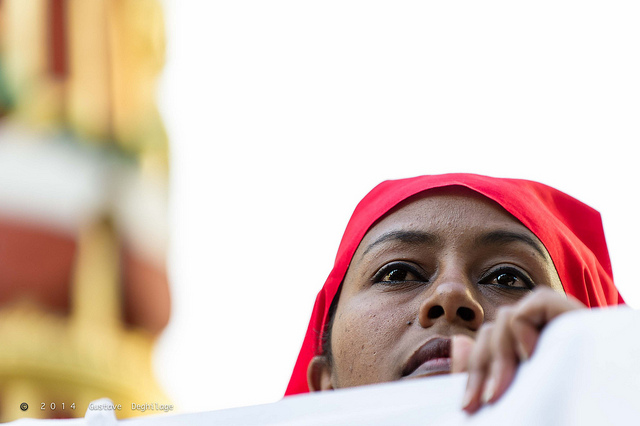
Catherine Russell, the U.S. Ambassador-at-Large for Global Women’s Issues, wrote in the Huffington Post of 1 July 2015 a piece which highlights 8 stories about women taken from the State Department’s annual human rights reports, that she says would not reach the evening news but are a must. Here is her selection:

2015-07-01-1435772655-6505904-HRRblog.jpg

[Photo: Gustave Deghilage ]

In Nepal, a mother may be denied the ability to confer her Nepali citizenship to her children if the father’s identity is unknown or he is not Nepali. This is not uncommon: 27 countries discriminate against women in their ability to pass citizenship on to their children. Too often this results in a child who is stateless, meaning he or she may not be able to access basic services like health care and education.

In Afghanistan, a survey found that 39 percent of Afghan women between the ages of 20 and 24 were married before the age of 18 — making them part of a global trend where one in three girls in the developing world is married as a child — and Afghan women who marry later in life often don’t have a choice in their marriage. These stories and statistics exist despite laws against early and forced marriage.

A story in the Nigerian report highlights the case of a college student who reported that a soldier lured her to a police station and raped her repeatedly. The soldier was reportedly “disciplined” for leaving his post, but as of December nothing else had happened.

In Burma, there is an effort underway to enact legislation that would mandate that women can’t have children more than once every three years. There are obvious questions as to how such a law would be enforced. Many are concerned that it would only be enforced in areas where many members of minority groups live.

Fortunately, the news is not all bad.

In Afghanistan, the national electoral commission’s gender unit focused on women’s political participation in the 2014 election, and increased the number of women who helped determine their country’s future.

In Brazil, the federal government operates a toll-free nationwide hotline for women to report intimate partner violence, while in India, a partnership between state government and civil society led to the launch of a crisis center for survivors of rape, dowry harassment, and domestic violence.

Another partnership — between government and civil society in Guinea — is helping to educate Guinean health workers on the dangers of female genital mutilation. The report says that more than 60 health facilities have integrated FGM/C prevention into their services thanks to this effort.


You can follow Catherine Russell on Twitter: www.twitter.com/AmbCathyRussell

8 Must-Read Stories From the Human Rights Reports | Catherine Russell.

Unlawful Communication Surveillance of Amnesty International: tip of iceberg

July 2, 2015
An article “BRITISH TRIBUNAL FLIP-FLOPS ON WRONGFUL SURVEILLANCE OF AMNESTY INTERNATIONAL” by Jenna McLaughlin on 2 July 2015 reveals that a British tribunal (Investigatory Powers Tribunal) in charge of investigating public abuse of surveillance admitted that the U.K. government’s spy agency illegally retained communications it swept up from Amnesty International.
Featured photo - British Tribunal Flip-Flops on Wrongful Surveillance of Amnesty International
Amnesty International protest in London by Malcolm Park/Getty

In the e-mail sent to Amnesty late Wednesday, the president of the tribunal said the unlawful retention of communications it had previously said affected an Egyptian group had in fact affected Amnesty. Amnesty International responded understandably with outrage. In a press release, it described the tribunal’s email as a “shocking revelation” that “made no mention of when or why Amnesty International was spied on, or what was done with the information obtained.

The revelation that the UK government has been spying on Amnesty International highlights the gross inadequacies in the UK’s surveillance legislation,” Salil Shetty, Amnesty’s secretary general, said in a statement. He added something even more important:  “If they hadn’t stored our communications for longer than they were allowed to by internal guidelines, we would never even have known. What’s worse, this would have been considered perfectly lawful.” The tribunal did not rule that the U.K. spy agency’s initial interception of communications was unlawful; just that retention rules had been violated.

AI now joins the company of other non-governmental organizations targeted by the Government Communications Headquarters – or GCHQ, the U.K. equivalent of the U.S.’s National Security Agency. Those include Unicef and Médecins du Monde, according to top-secret documents released by The Guardian in December 2013.

http://www.theguardian.com/uk-news/2015/jul/01/gchq-spied-amnesty-international-tribunal-email

IPT Flip-Flops on Unlawful GCHQ Surveillance of Amnesty International.

Swaziland NGO welcomes release of HRDs with new hope for independence of the Judiciary

July 2, 2015

As many international NGOs (e.g.: Human Rights First, Front Line, the Human Rights Foundation, ISHR and several trade unions) have already welcomed the release of two human rights defenders in Swaziland, it is perhaps interesting to give the local take on it through an article in the Swaziland Observer of 2 July 2015 at hand of Noxolo Nkabinde: “Bheki, Thulani sacrifice not in vain SCCCO”.

The Swaziland Coalition of Concerned Civic Organisations (SCCCO) says the sacrifices made by Nation Magazine Editor Bheki Makhubu and human rights lawyer Thulani Maseko were not in vain..“When they wrote those articles, Bheki and Thulani could not have imagined the events that were to follow. They, as concerned members of the public and as human rights defenders, were simply articulating the sentiments of a nation, frustrated and rapidly losing faith in the justice system. As we continue to stand with them, we believe the pain they and their families have gone through is another building-block towards freedom – their sacrifice has not been in vain,” SCCCO said in their statement. They added that their charge, arrest, conviction and imprisonment were never justified and believed they were vindicated.

Interestingly the NGO gives big credits to the judiciary “We commend the judges of the Supreme Court for this ruling. We welcome this, amongst their first acts in office, as a sign that perhaps our judiciary is turning a corner towards the better path of justice. The past few years have increasingly eroded our confidence in the judiciary – the impeachment proceedings of the former chief justice exposed but a fragment of the rot that had set in the judiciary.  But as we all know, that situation has been created and nurtured over time, and it’s predilection  for injustice has its roots in an environment that is hostile to free speech, in particular the speech that dissents with the status  quo. And so our rejoicing is bitter-sweet:  this is not about the individuals who previously occupied and abused judicial office; nor is it about their heinous conduct during this and other cases – the problem of the judiciary, just as with the other structures of governance, is systemic, and our new judges and their successors will remain vulnerable to outside influence as long as the structural flaws are not addressed.

This was also an opportunity to restore both the dignity of and confidence in the judiciary.  It could also serve as an opportunity to develop and grow the country’s jurisprudence in a way that promotes a culture of human rights and good democratic governance.

The SCCCO anticipates an era of respect for the rule of law under the new Supreme Court Judges Qinisile Mabuza and Mbutfo Mamba: “We note in the appointments the presence of judges such as Qinisile Mabuza and Mbutfo Mamba who have a proven track record of fairness and we look forward to an era where such judges are not punished for being principled…We call on all the judicial officers, even as they have taken the judicial oath/affirmation of office, to also recall the following constitutional provisions: Whereas all the branches of government are the Guardians of the Constitution, it is necessary that the Courts be the ultimate Interpreters of the Constitution”.
The article adds with a sad note that in the meantime the Swaziland Office of the Media Institute of Southern Africa (MISA) has been closed due to lack of funding.

See background in: https://thoolen.wordpress.com/2014/03/19/swaziland-should-immediately-release-two-human-rights-defenders-arrested-on-17-march/

Observer.

London discussion on business and human rights defenders on 14 July

June 28, 2015

The International Service for Human Rights [ISHR] and the Business & Human Rights Resource Centre [BHRRC] organize a well-stocked panel on “Business and the protection of human rights defenders” on 14 July 2015 (12h30-14h30) in London: DLA Piper, 3 Noble Street, London. RSVP by Friday 10 July. The discussion.. Read the rest of this entry »

New Tactics in Human Rights: ‘conversation’ on photography now running!

June 24, 2015

New Tactics in Human Rights is currently having an on-line conversation on “The Use of Photography in Advancing Human Rights“. It lasts until 26 June.

Photography (as images in general) is a powerful tool that can create awareness and effect change. The visual narrative created through photographs can move individuals to a place and understanding of people, geographies, and events that would otherwise be impossible. Used as a tool to document, educate, move, and inform, photographs can be a powerful resource in the efforts of human rights practitioners when used effectively and ethically.

There is even a human rights award for photography in the area of human rights: http://www.brandsaviors.com/thedigest/award/anthropographia-awards.

I have written several posts about the power of images, through the Geneva-based True Heroes Films (THF) [https://thoolen.wordpress.com/tag/true-heroes-films/] and in general [e.g. https://thoolen.wordpress.com/2014/12/30/round-up-of-2014-in-human-rights-images/].

New Tactics in Human Rights.

Scholars at Risk publishes first Academic Freedom Monitoring Report: Free2Think

June 23, 2015

SAR Free to Think report

“Attacks on higher education are at crisis levels”

Today, 23 June 2015, Scholars at Risk [SAR] released the first report of its Academic Freedom Monitoring Project at the United Nations in Geneva,: “Free to Think”. The culmination of four years of monitoring and analysis by SAR staff and researchers around the world, the report analyzes 333 attacks on higher education communities in 65 countries from January 2011 to May 2015, demonstrating the pressing need to raise awareness and document attacks on higher education: Read the rest of this entry »

The MOOCs are coming to human rights education (thanks to AI and edX partnering)

June 19, 2015

Yesterday (18 June 2015) Amnesty International announced something that is (rather will be) something new in human rights education: a series of Massive Open Online Courses (MOOCs). Who knows, the horrible acronym may one day be as normal as HRDs or AI itself. For this to come about Amnesty International is partnering with edX, a global leader in online education founded by Harvard University and MIT.  The first MOOCs will be available later this year. The free online courses will be designed by human rights and education experts from across Amnesty International.

Read the rest of this entry »

Human rights defenders and their organizations are at the heart of the protection of natural resources

June 19, 2015

The link between human rights defenders and the exploitation of natural resources was the focus of this year’s report (18 June 20150 by the United Nations Special Rapporteur on the rights to freedom of peaceful assembly and of association, Maina Kiai. He called for a new treaty binding businesses to respect fundamental human rights, and for States and corporations to fully engage with civil society organizations in the context of natural resource exploitation.

Corporations play an outsized role in the decision-making processes about exploitation of natural resources. But they are not subject to legally binding human rights obligations,” Mr. Kiai told the UN Human Rights Council during the presentation of his latest report. “It is time to address this issue more robustly; corporations must not escape responsibility to safeguard human rights.

I am aware that some would rather strengthen compliance with the Guiding Principles than have a binding treaty. But this should not be an either/or matter: Both should be pursued to protect human rights.”

The Special Rapporteur also highlighted States’ responsibility to recognize civil society organizations, including affected communities, as key actors in the context of natural resource exploitation.  “Authorities endeavour to silence individuals and associations that express opposition to natural resource exploitation processes,” the independent expert said.

In his report, the Special Rapporteur argues that States’ and corporations pervasive disregard of communities and associations’ input in the natural resources sector is counterproductive and divisive, and is likely contributing to an erosion of confidence in the world’s prevailing economic system.

The rights to freedom of peaceful assembly and of association are instrumental in achieving sustainable and mutually beneficial exploitation of natural resources,” he said. “These rights help foster increased transparency and accountability in the exploitation of resources and inclusive engagement throughout the decision-making chain.”

During his presentation, Mr. Kiai also warned that authorities have increasingly sought to stifle expressions of criticism and opposition by cracking down, often with unnecessary force, on peaceful protests; arresting, harassing, prosecuting and imprisoning human rights defenders; enacting restrictive legislation on associations; and interfering with the operations of civil society organizations.

Peaceful protests are banned from sites where natural resource exploitation takes place and the situation is not any better in relation to the right to freedom of association,” he noted. “Individuals and associations who express opposition to natural resource exploitation processes are vilified as ‘anti-development’, ‘unpatriotic’, and even as ‘enemies of the State’”.

“This intolerance is reflected in countries in the global North, and the global South,” the Special Rapporteur said. “Nevertheless, I remain optimistic because of the incredible courage and determination of activists and ordinary people who refuse to be cowed or defeated, even if it means paying with their lives.”

The Special Rapporteur’s full report (A/HRC/29/25/Add.3) is at: http://ap.ohchr.org/documents/dpage_e.aspx?m=189

For the UN Guiding Principles on Business and Human Rights: http://www.ohchr.org/EN/Issues/Business/Pages/Tools.aspx


Natural resources sector: UN expert calls for binding human rights treaty for corporations.

Human rights defenders in DRC get support from over 200 NGOs

June 18, 2015

On 15 June 2015, 0ver 200 human rights NGOs urge the Democratic Republic of Congo to show respect for freedom of expression and assembly by freeing the “Filimbi activists“.  Expression, Assembly The two activists were arrested three months ago, on 15 March during a pro-democracy youth workshop in the Democratic Republic of CongoFred Bauma and Yves Makwambala were arrested at the workshop organized to launch “Filimbi,” a platform to encourage Congolese youth to peacefully and responsibly perform their civic duties. Read the rest of this entry »