Discover utopia3, the new podcast in partnership with the FIFDH
Conversations with those who think, make and struggle for Human Rights every day, in their own way.
Activists, filmmakers, researchers and writers meet every year at the FIFDH in Geneva to debate the most pressing human rights issues. utopia3 invites them to express themselves on their background, their motivations and the meaning they give to the human rights of today and tomorrow.
The interviews are conducted by Davide Rodogno, Professor of International History at the Graduate Institute of International and Development Studies in Geneva, and by David Brun-Lambert, cultural journalist.
Episode 1 – Joe Sacco
The legendary cartoonist and reporter Joe Sacco has been criss-crossing the planet for 30 years through his prodigious immersive graphic investigations, interweaving past and present, with a focus on the stigmas of war and its tragic consequences. In this first episode of utopia3, Joe Sacco talks about being rooted and uprooted, the genesis of a good story, the aftermath of colonialism and the recent protests around the globe.
Joe Sacco’s new book, Paying The Land, has just been published .
The next episodes of utopia3
1st June: Perla Joe Maalouli, Lebanese Activist
5th June: Yves Daccord, Former Director of the ICRC
12th June: Burhan Sönmez, Writer
19th June: Alaa Salah, Figure of the Sudanese Revolution
26th June: Ilse and Femke Van Velzen, Filmmakers, and Ruth Hopkins, Investigative Journalist
3rd July: Lauren Anders Brown, Filmmaker, and Ayanda Dlamini, Feminist Activist from Eswatini
utopia3 is recorded at The Spot Podcast Factory studio in Geneva, in collaboration with the FIFDH. The series is produced by David Brun-Lambert and Davide Rodogno (editorial directors), Martial Mingam (art director), Julie Noyelle (coordinator) and Julien Babel (artwork).
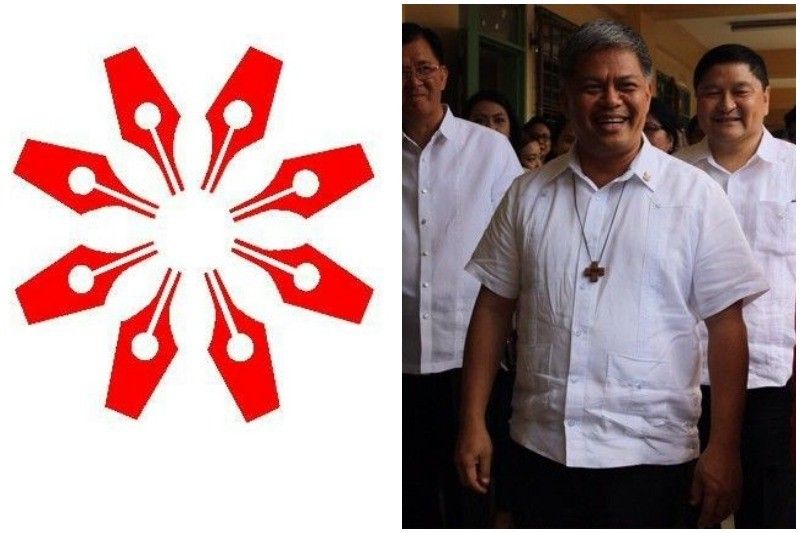
On 28 May 2020 Gaea Katreena Cabico (Philstar.com) reported that Amnesty International Philippines has recognized the Philippine Center for Investigative Journalism and Br. Armin Luistro for exposing inequalities and standing up for the vulnerable sectors of the society.
PCIJ—an independent, non-profit media agency—was named as the Ignite Awards’ most distinguished human rights defender in the group category. It produced investigative reports on President Rodrigo Duterte’s statement of assets, liabilities and net worth, election spending of senatorial candidates, the government’s brutal drug war, the country’s congested jails, among others.
Luistro was conferred the most distinguished human rights defender in the individuals category. Aside from PCIJ and Luistro, Lorenzo Miguel Relente and Michael David Tan were the recipients of Young Outstanding Human Rights Defender and Art that Matters for Literature, respectively.
“This season’s recipients come from varying rights backgrounds, from press freedom and right to education to gender equality and SOGIESC rights but they share one dedication, that is to the fight for basic rights of Filipinos,” Butch Olano, Amnesty International Philippines section director, said.
Protection International Kenya (PIK) – a registered a non-governmental organization in Kenya with support from its headquarters in Belgium – seeks a Research Consultant for Protection strategies implemented by grassroots WHRDs Organizations. Closing date for applications 12 June 2020.
The research findings will be used for future capacity building of WHRDs, advocacy on the promotion and protection of WHRDs/HRDs at national, regional and global level and for dissemination purposes. PIK, with the support of Protection International Africa and Protection International Global, will publish the findings and disseminate among its partners, donors, government officials and all other stakeholders.
Swedish operator Tele2 is to provide IoT connectivity to the Civil Rights Defenders’ Natalia Project, allowing those in the program who feel under threat to use a specially issued wearable device to send a distress signal with a GPS location to nearby local contacts, as well as to the Civil Rights Defenders headquarters in Stockholm. [The Internet of things (IoT) is a system of interrelated computing devices, mechanical and digital machines provided with unique identifiers (UIDs) and the ability to transfer data over a network without requiring human-to-human or human-to-computer interaction]. In the future, Tele2 will provide IoT connectivity to every unit in the Natalia Project, including roaming on more than 450 networks worldwide
The Natalia Bracelet is named in honor of Natalia Estemirova, a human rights activist who was abducted and murdered in Chechnya in 2009.
Phyllis Omido, a Kenyan environmental human rights defender who participates in the Natalia Project, said the scheme has freed her from fear as she knows that someone is watching over her, adding that no tangible change can be achieved when one constantly lives in fear of retribution.
On 28 May 2020 Bulawayo News reported that Kwekwe-based human rights defender Nkosilathi Moyo said he was putting together a war chest to assist victims of State-sponsored violence.
Moyo launched his fight for democracy in 2015 when he travelled to the Netherlands and met European Union’s human rights ambassadors lobbying them to support human rights defenders in Zimbabwe. During the visit he also met Queen Maxima of the Netherlands and lobbied her to support efforts to improve democracy back home.
Speaking to Southern Eye on Monday, Moyo said the recent events that saw MDC Alliance’s Harare West MP Joanah Mamombe, youth leaders Cecilia Chimbiri and Netsai Marova, and Amalgamated Rural Teachers’ Union of Zimbabwe gender secretary Moreblessing Nyambara tortured at the hands of suspected State security agents, had motivated him to set up the fund.
Prior to the COVID-19 crisis, I established the community human rights defenders academy which trained more than 80 defenders in Midlands province, empowering them with skills to enhance human rights and democracy in Zimbabwe.”
“Now in light of the upsurge in violations against activists with the height of that madness being abduction of an MP Joanah Mamombe and others, I have been jolted to act. So far I have written to foreign embassies in Harare, international donors and other development partners to solicit for a financial facility that would support victims of human rights violations. We have also started putting together resources with local partners for the same cause,” Moyo said.
In the past, Moyo through his organisation Zimbabwe Youths in Politics, raised awareness on good governance and tenets of democracy mostly among rural dwellers.
“What we are realising is that autocratic regimes take advantage of poverty among political activists to suppress them and violate their rights at will. But with the kind of funding we are putting together, that will not be the case. Activists need to be supported to meet medical bills, legal representation costs, programming of their activities and compensation to their families in extreme cases. So that is the motivation of our current efforts. We should not wait for the worst to happen, then we start running around to look for resources. A ready fund must be there,” Moyo said.
Having just posted a report on the prolifiration of intergovernmental responses to the Corona virus pandemic [https://wp.me/pQKto-4ob], it perhaps good to point to the webinar that Business & human rights is organising on 4 June 2020 on Risks and Protection of Human Rights Defenders.
This webinar will have a focus on the risks and protection of HRDs, particularly labour rights and land/environmental defenders and ensuring their participation in the post-pandemic recovery.
It will have two parts: a closed and an open session. The closed session – happening on Jitsi – will be a safe space for civil society organisations, human rights defenders, including labour rights and land and environmental defenders, labour unions, and journalists to jointly define practical recommendations on what governments and companies can do to address human rights situation, particularly of labour, land, environmental defenders and civic freedoms, in the context of COVID-19. This part of the webinar is invite-only.
The second part – happening on Zoom – will be an open session, will be an opportunity for civil society, defenders, and journalists to interact with government and business representatives and discuss how companies, governments and civil society can work together to ensure all stakeholders are able to shape recovery efforts, and make sure they are human rights compliant. Anyone is free to join us in the public session by RSVP-ing below.
Event details
Event type
Webinar
Location
Online (Jitsi & Zoom)
Organisation
The Asian Forum for Human Rights and Development & Business & Human Rights Resource Centre
Amnesty International will soon (31 May 2020) challenge in a Jerusalem court a travel ban that the Israeli government imposed on its campaigner for Israel and Palestine, Laith Abu Zeyad.
On 26 May 2020 a group of local NGOs (Adalah – The Legal Center for Arab Minority Rights in Israel, B’Tselem, Bimkom – Planners for Planning Rights, Breaking the Silence, Gisha, HaMoked: Center for the Defence of the Individual, Ir Amim, Haqel – In Defense of Human Rights, Human Rights Defenders Fund, Physicians for Human Rights – Israel, The Association for Civil Rights in Israel, The Public Committee Against Torture in Israel Torat Tzedek, Yesh Din, Zazim – Community Action) issued a joint statement against the restrictionon movement of Laith Abu Zeyad, AI’s campaigner for Israel and Palestine: We stand in solidarity with our colleague from Amnesty International, Laith Abu Zeyad, and demand that Israel lift the movement restrictions barring him from leaving the Occupied Territories. His petition against the restrictions imposed upon him will be heard on 31 May 2020. Targeting Abu Zeyad is yet another example of Israel’s increased persecution and punishment of human rights organizations in recent years. This includes preventing international activists and human rights workers from entering the country and forming a ministry that creates blacklists and engages in censorship. Imposing draconian restrictions and denying millions of Palestinians freedom of movement have been a routine part of Israel’s occupation policy for 53 years. Israel comprehensively violates Palestinians’ right to travel abroad, while regarding its citizens’ rights to do so as fundamental. If it looks like political persecution and sounds like political persecution – it is political persecution, and it must stop.
In remarkable solidarity Omar Shakir, Human Rights Watch’ Israel and Palestine Director, wrote about the case in detail:
As a Palestinian from the West Bank, Abu Zeyad must obtain an Israeli-issued permit to enter significant parts of the West Bank under Israeli control, including East Jerusalem, and Israel itself. Yet Palestinians applying for permits face what the Israeli rights group B’Tselem describes as an “arbitrary, entirely non-transparent bureaucratic system.” Most can travel abroad only by land via Jordan through the Israeli-controlled Allenby Crossing. Israeli authorities denied Abu Zeyad a permit in September 2019 to enter occupied East Jerusalem, where he had hoped to accompany his mother, who needed cancer treatment, to a hospital just three kilometers from his home but on the other side of the separation barrier. She died there in December without her son by her side.
In October 2019, Israeli authorities at the Allenby Crossing barred Abu Zeyad from traveling to Jordan to attend a relative’s funeral, citing undisclosed “security reasons,” despite his never having been convicted for a security offense. Authorities provided no further information and designated the evidence as “secret,” meaning even his attorney will not be able to see it in court. And of course, without a permit to enter Jerusalem, Abu Zeyad cannot attend his own court hearing.
New Defense Minister and Alternate Prime Minister Benny Gantz, who warned in his campaign that the previous government’s attacks on independent institutions jeopardized the country’s future, can signal a new direction by lifting Abu Zeyad’s travel ban. He is empowered to do so as he holds the defense portfolio. Israel’s international friends should also find their voice. A government that kicks out a Human Rights Watch director and bans an Amnesty International campaigner from traveling without disclosing the reasons will not hesitate to go after others, much less end systematic rights abuse, unless there is greater global pressure.
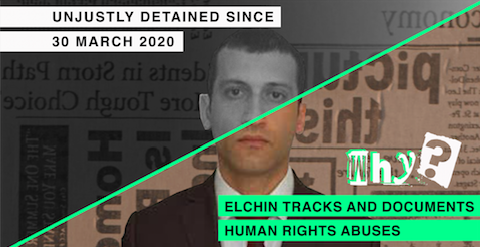
As a human rights lawyer and journalist, Elchin Mammadis used to speaking his mind. The 42-year old attorney presides over the Social Union of Legal Education of Sumgait Youth (SULESY), a non-governmental organisation that provides free legal assistance to low income families and non-profits. His busy schedule also includesda job as the editor in chief of Yukselish Namine, a newspaper specializing in human rights concerns. On 30 March 2020, a few days after he had published online a critical report on the human rights situation in Azerbaijan, police officers arrested Elchin at his home in Sumgait, a town north of the capital Baku. The police claimed to have found stolen jewellery at his office.
The next day, Sumgait City Court remanded Elchin Mammad in custody for three months as a criminal suspect. The father of two young children remains detained under trumped-up charges at Shuvalan pre-trial detention centre no. 3. This latest twist is nothing new to Elchin. He has faced harassment from the authorities in connection with his human rights work since 2015, when his organisation was investigated. He was subjected to arbitrary detention, repeatedly summoned and questioned by the police. He was also placed under travel restrictions in connection with the investigation.
On 15 May, the government officially stated that there are 46 COVID-19 infected inmates in the country. This puts Elchin’s life at risk, particularly as he suffers from hepatitis C. Azerbaijan’s prison system is plagued by severe overcrowding, while food, medication, sanitation, and even drinking water are substandard. This has led to the European Court of Human Rights repeatedly ruling that detention conditions in the country amount to inhuman and degrading treatment. In times of pandemic, such an environment risks becoming an incubator for the novel coronavirus.
Elchin’s case is particularly emblematic of the Azerbaijani authorities’ abusive and arbitrary methods used to silence critical voices. In 2014, the government launched an unprecedented crackdown on civil society. Prominent human rights defenders joined other political prisoners in Azerbaijan’s jails, on fabricated criminal charges of financial irregularities. Although most were released after spending years in prison, as a result of international pressure, the situation of defenders remains precarious
The authorities have seized the coronavirus outbreak as an opportunity to intensify the crackdown on civil society. On 19 March, President Ilham Aliyev used his yearly address to the nation on the Novruz Bayrami holiday to promise “new rules” for the duration of the pandemic, threatening to clear the country of “traitors” and “enemies” and to “isolate the fifth column”. To people like Elchin, who has dedicated his life to the defence of the downtrodden, these ominous words might now ring like a death sentence.
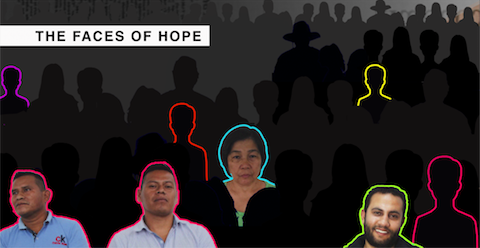
Defending the right to housing for vulnerable communities, exposing corruption and torture, speaking up against injustice, raising their voices for the rights of indigenous peoples or of minorities, upholding miners’ rights, peacefully demonstrating against discrimination or for access to clean water. All are legitimate ways to affirm our common rights. And yet, such activities have led many human rights defenders around the world to prison. During the COVID-19 pandemic, detention may come with serious risks. Like other inmates, defenders face overcrowding and poor sanitary conditions, with basic protective measures a distant dream. Worse, they may be denied access to health care as a form of punishment. These brave people are among the most exposed to contracting the virus, and among the least likely to receive proper treatment.
Following UN High Commissioner for Human Rights Michelle Bachelet’s call to governments to “release every person detained without sufficient legal basis, including political prisoners, and those detained for critical, dissenting views” to prevent catastrophic rates of COVID-19 infection, OMCT launched in May 2020 a global campaign calling for the release of all human rights defenders detained worldwide, including those in pre-trial detention.
Human Rights Defenders work to ensure journalists are free to keep us informed about how our governments are responding to the pandemic and about the effects of quarantine measures; they denounce the abuse of power and police violence that can result from the state of emergency; they champion the needs of discriminated communities; they call on States to protect our housing and labour rights as jobs disappear; they demand that women’s sexual and reproductive rights not be neglected as healthcare systems focus on the virus. In short, human rights defenders make sure no one is left behind.
…..Let’s bring this solidarity to all the arbitrarily detained human rights defenders whose lives are at risk. Join our campaign and ask for their release using #FacesOfHope. They need us. And we need them too.
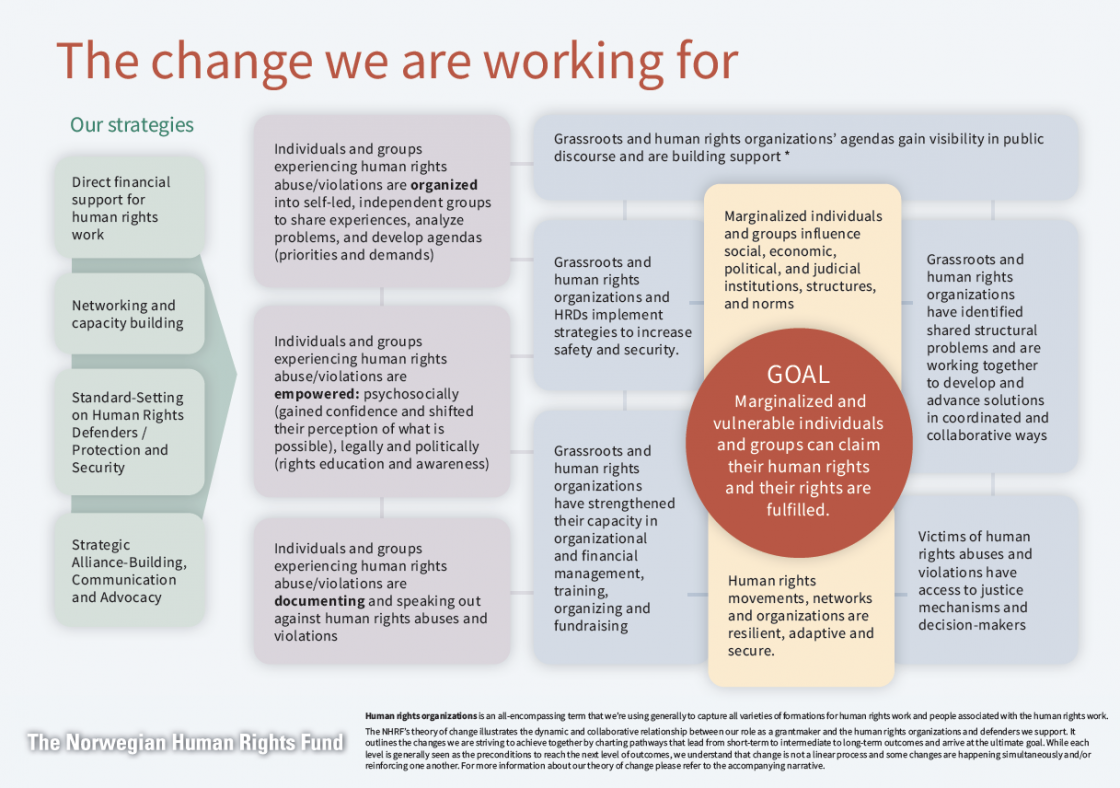
The development of the theory of changewas a participatory process involving the NHRF Secretariat, its Board, NHRF local consultants, and a selection of grantee partners. It is a living document that represents our theory of how change is created and driven forward. It articulates expected outcomes and their preconditions that, together, form pathways of change that lead to the overall goal. We understand these processes to be non-linear, interconnected, interdependent, mutually reinforcing, and occurring simultaneously or separately. The theory of change will guide our work as a partner and grantmaker by informing the support we provide to human rights work to achieve the defined outcomes and overall goal. It is one of the key elements used in our monitoring, evaluation, and learning processes. We will regularly review and refine the theory of change as we assess if our interventions are bringing about change and if the pathways of change are accurate and realistic.




 Hans Thoolen on Human Rights Defenders and their awards