Posts Tagged ‘joint statement’

Ales Bialiatski free but more human rights defenders must be released in Belarus

December 16, 2025
Belarus: All arbitrarily detained human rights defenders must be released - Civic Space

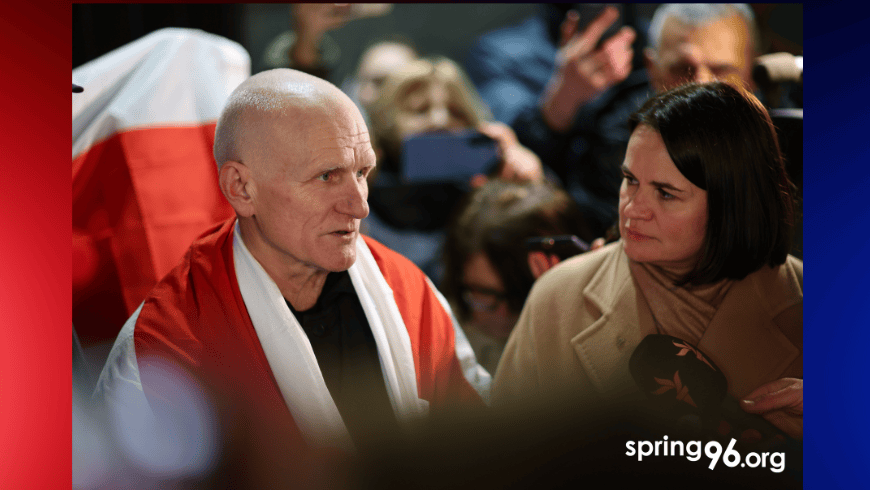
On 13 December, Belarus dictator Aliaksandr Lukashenko released over 100 political prisoners following an agreement with the United States to lift sanctions on Belarusian potash. Among the released are prominent human rights defenders and Viasna members Ales Bialiatski [Nobel Peace prize and 10 others: https://www.trueheroesfilms.org/thedigest/laureates/72682FFF-628F-4A5D-B6B3-52A776FF0E47] and Uladzimir Labkovich, as well as key opposition figures, such as Maryia Kalesnikava [see https://www.trueheroesfilms.org/thedigest/laureates/beff3c8d-0e20-4e88-9efb-cdfcb4c26f40], Viktar Babaryka and lawyer Maksim Znak [https://www.trueheroesfilms.org/thedigest/laureates/cbaf0097-1062-4a82-98ea-f5221f53c3fd]. This positive development, however, constitutes a necessary but insufficient step, as all arbitrarily detained human rights defenders, including former FIDH Vice President and Viasna colleague Valiantsin Stefanovic, Viasna team member Marfa Rabkova [https://humanrightsdefenders.blog/2024/12/10/10-december-2024-human-rights-day/], and woman human rights defender Nasta Loika [https://humanrightsdefenders.blog/2025/08/12/harsh-detention-conditions-of-nasta-loika-in-belarus/]must be released now. 

The undersigned organisations recall that Ales Bialiatski, and Uladzimir Labkovich were arbitrarily detained on 14 July 2021, prosecuted, and sentenced to 10 and 7 years in prison respectively on 3 March 2023 in retaliation for their legitimate and peaceful human rights activities. Their imprisonment constituted a grave violation of Belarus’ international human rights obligations, including the rights to freedom of expression, association, and fair trial.

While their release brings long-overdue relief to them, their families, their colleagues and the human rights community around the world, we stress that this step remains insufficient as long as hundreds of human rights defenders, journalists, lawyers, activists, and political opponents remain arbitrarily detained in Belarus on politically motivated charges solely for exercising their fundamental freedoms, and repressions against Belarusian dissidents continue unabated. In particular, Valiantsin Stefanovic, former Vice President of FIDH arrested along Ales Bialiatski and Uladzimir Labkovic in July 2021, women human rights defender and Viasna member Marfa Rabkova, detained since September 2020, and founder of Human Constanta woman human rights defender Nasta Loika, arbitrarily detained since September 2022, were not among the released political prisoners. Alongside them, numerous human rights journalists, lawyers, and trade union activists remain arbitrarily detained, including Andrzej Poczobut, Katsiaryna Andreyeva, Ihar Ilyash, Danil Palianski, Pavel Dabravolski, Andrei Aliaksandrau, and many others. 

The undersigned organisations call on the Belarusian authorities to immediately and unconditionally release all political prisoners and all those arbitrarily detained, to put an end to judicial harassment and reprisals against civil society, and to repeal repressive legislation used to criminalise peaceful dissent and freedom of expression. The authorities must also ensure full rehabilitation, including the quashing of convictions and restoration of civil and political rights, for all those unlawfully detained for years.

The undersigned organisations further urge the international community to continue to closely monitor the situation in Belarus and to take all available legal, political, and diplomatic measures to ensure accountability for the grave human rights violations and international crimes, including by referring the situation to the International Criminal Court. 

Signatories:

International Federation for Human Rights (FIDH), in the framework of the Observatory for the Protection of Human Rights Defenders

World Organisation Against Torture (OMCT),  in the framework of the Observatory for the Protection of Human Rights Defenders

Human Rights Center Viasna

Human Rights Center, Georgia

ILI Foundation, Kazakhstan

Civil Society Institute, Armeniaia

Public Association “Dignity”, Kazakhstan

Promo-LEX Association, Moldova

Norwegian Helsinki Committee, Norway

Östgruppen (Swedish Initiative for Democracy and Human Rights)

Austausch e.V., Germany

Belarusian Helsinki Committee (BHC) 

Hungarian Helsinki Committee, Hungary

Human Rights Center of Azerbaijan, Azerbaijan

aditus foundation, Malta

LIBERECO – Partnership for Human Rights, Germany/Switzerland

Redress

The International Bar Association’s Human Rights Institute (IBAHRI) 

ARTICLE 19

People In Need

aditus foundation

Front Line Defenders

Bir Duino-Kyrgyzstan

European Platform for Democratic Elections (EPDE)

International Society for Fair Elections and Democracy (ISFED)

Human Rights Centre ZMINA, Ukraine

Center for Civil Liberties, Ukraine

https://www.article19.org/resources/belarus-all-arbitrarily-detained-human-rights-defenders-must-be-released/

https://uk.news.yahoo.com/freed-nobel-laureate-bialiatski-sees-121508187.html

https://nashaniva.com/en/383735

NGO Statement on the International Day of Political Prisoners (30 October)

October 30, 2025
Freedom House Logo - Torch next to words Freedom House

On this International Day of Political Prisoners, the NGOs mentioned below stand together to affirm a simple truth: no one should be imprisoned for exercising their fundamental rights or for peacefully expressing their beliefs. Yet around the world, there are an estimated one million political prisoners, who are unjustly detained for political reasons. These individuals—journalists, human rights defenders, democratic opposition leaders, religious leaders, artists, and ordinary citizens—represent the conscience of their societies. Their imprisonment is an assault not only on their freedom, but on the shared principles of human dignity and justice.

The International Day of Political Prisoners originated in the Soviet Union in 1974, when  political prisoners collectively held a one-day hunger strike. Soviet prisoners of conscience repeated this protest every October 30, supported by demonstrations of solidarity in major cities. In response to Vladimir Putin’s ongoing and deepening repression, Russian political prisoners rekindled the tradition in 2021. In the years since, it has become an international day of solidarity with political prisoners worldwide.

Political imprisonment corrodes the rule of law, silences dissent, undermines press freedom, and weakens the foundations of democracy. Authoritarian governments use it to suppress opposition, instill fear, and consolidate control. Each unjust detention sends a chilling message to others who seek to speak truth to power.

We, as organizations who advocate on behalf of those unjustly detained around the world, call on democratic governments to continue to make the release of political prisoners a global priority—to raise these cases consistently in bilateral and multilateral forums, to request information and specific actions be taken on the prisoners’ behalf, to support accountability mechanisms, and to continue to provide support to organizations that advocate on behalf of those unjustly detained and provide legal and humanitarian assistance to them and their families. Solidarity with the unjustly detained must be sustained, coordinated, and visible.

We also stand in solidarity with the families, lawyers, and civil-society organizations who continue to advocate for freedom in the face of repression. Their courage reminds us that the defense of liberty is a collective responsibility.

On this day, and every day, we reaffirm our shared commitment to the universal right to freedom of thought, expression, association, and belief. The world’s political prisoners must not be forgotten—and their freedom must remain a global cause.

Signed:

  1. Freedom House
  2. Free Russia Foundation
  3. McCain Institute
  4. National Endowment for Democracy
  5. Abdorrahman Boroumand Center for Human Rights in Iran
  6. Al-Tahreer Association for Development (TAD)
  7. Amnesty International
  8. Center for Civil Liberties
  9. Committee to Protect Journalists
  10. Freedom Now
  11. George W. Bush Institute
  12. Global Magnitsky Justice Campaign
  13. Human Rights Center Viasna
  14. Human Rights Defense Center Memorial
  15. Human Rights First
  16. Human Rights Foundation
  17. Human Rights Watch
  18. International Republican Institute
  19. James W. Foley Legacy Foundation
  20. Lantos Foundation for Human Rights & Justice
  21. Oma Organization for Human Rights and Democracy Promotion
  22. Organization for Community Civic Engagement
  23. OVD-Info
  24. Political and Governance Development Academy
  25. Socio-Economic Rights and Accountability Project (SERAP)
  26. The 30 October Foundation
  27. The Raoul Wallenberg Centre for Human Rights
  28. Victims of Communism Memorial Foundation
  29. World Liberty Congress

https://freedomhouse.org/article/joint-statement-international-day-political-prisoners

https://goodlander.house.gov/media/press-releases/goodlander-helps-introduce-resolution-supporting-international-day-of-political-prisoners/

Central Asia Leaders Must Deliver on Human Rights Pledges Made at Summit say NGOs

April 26, 2025
Photo and copyright: European Union.

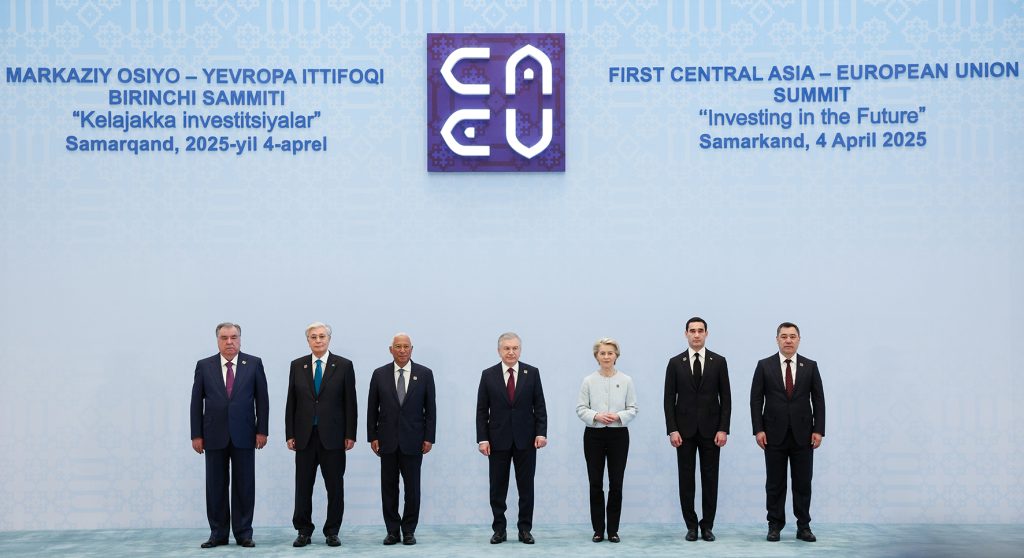
On 10 April 2025 Civil Rights Defenders, along with seven other international human rights organizations, commend the commitments made at the EU-Central Asia Summit in Samarkand. We urge Central Asian leaders to prioritize human rights and uphold the civil and political freedoms enshrined in their national constitutions and international treaties. The commitments to peace, security, democracy, and the elevation of relations to a strategic partnership must be matched by concrete actions to protect human rights.

On Friday, April 4, the Uzbek city of Samarkand hosted the first ever EU – Central Asia Summit where high-level officials – all five regional presidents and European Council President António Costa and European Commission President Ursula von der Leyen – discussed economic cooperation and agreed to bring their existing partnership to a new strategic level. At the end of the summit, participants issued a joint declaration that, among others, stated their commitment to freedom of expression and association, creating an enabling environment for civil society and independent media, protection of human rights defenders, as well as to respecting the rights of women and children. According to an official press release, the European Commission promised to invest €12 billion in the region to strengthen transport links and deepen cooperation on critical raw materials, digital connectivity, water, and energy.

Paragraph 3 of the joint declaration says: “We are committed to cooperate for peace, security, and democracy, to fully respect international law, including the UN Charter and the fundamental principles of respect for the independence, sovereignty and territorial integrity of all States, within their internationally recognised borders. We emphasised the importance of achieving as soon as possible, a comprehensive, just, and lasting peace in Ukraine in accordance with the principles of the Charter of the United Nations. We emphasized the need to uphold the principles of the OSCE by the participating States. We reconfirmed the obligation of all States to refrain in their international relations from the threat or use of force, to respect international humanitarian law and underlined the need for peaceful resolution of conflicts.”

In paragraph 16, the “EU and Central Asian leaders reiterated that the promotion and protection of rule of law, human rights and fundamental freedoms is a common fundamental value. Ensuring freedom of expression and association, an enabling environment for civil society and independent media, protection of human rights defenders as well as the respect for the rights of women, the rights of the child, and labor rights remain at the core of EU–Central Asia relations. The EU reiterated its readiness to support efforts in this regard at regional as well as at national level.” 

Furthermore, in paragraph 15 the “Participants affirmed the need for their continued commitment to enhanced cooperation and the development of new approaches in the joint fight against organised crime, violent extremism, radicalisation, terrorism, drug trafficking, trafficking in human beings, migrant smuggling, cyber threats, including cybercrime and disinformationas well as addressing Chemical, Biological, Radiological and Nuclear risks whilst safeguarding human rights and media freedom [emphasis added].”

Civil Rights Defenders, International Partnership for Human Rights (IPHR), Araminta, Freedom Now, Norwegian Helsinki Committee, People in Need, International Federation for Human Rights (FIDH), and the World Organisation Against Torture (OMCT) welcome these declared commitments and urge the leaders of each Central Asian nation to take immediate steps to fulfill their promises. They should start by releasing from prison all journalists, bloggers, lawyers, human rights defenders, civil society activists, and political opponents who have been prosecuted and convicted on retaliatory and unsubstantiated charges. They should also repeal legislation containing provisions that directly contradict their declared commitment to human rights standards. 

The Central Asian governments should also end–and establish safeguards to prevent–the misuse of anti-extremism and anti-disinformation policies and security tools to restrict, persecute, and/or criminalize legitimate civil society activity. While enhanced cooperation in the joint fight against organized crime, violent extremism and terrorism, and disinformation are a welcome development, these types of laws and cooperation initiatives have been instrumentalized by the Central Asian governments against legitimate civil society actors, media and political opposition activists, including for imprisonment on lengthy sentences and transnational repression extending to the territory of the European Union. 

In particular:

  • In Kazakhstan, President Kassym-Jomart Tokayev should order the release from custody of activist Aigerim Tleuzhanova, political opposition party leader Marat Zhylanbayev, satirist blogger Temirlan Ensebek, and labor rights activist Erzhan Elshibayev among others prosecuted on politically motivated charges, We believe that these individuals were targeted in direct retaliation for exercising their civil and political rights, and authorities have failed to provide any credible evidence to support the allegations levelled against them. Kazakh authorities should repeal or thoroughly revise broadly worded criminal code provisions penalising the involvement in ‘’extremist’’ activities, ‘’incitement’’ to discord and the spread of ‘’false’’ information, which are frequently misused to target critics, including in some of the cases mentioned above. Kazakh authorities should also drop their declared plans to adopt a so-called “foreign agents’” law, cease the public attacks on the LGBTIQ community, and end reprisals against NGOs-recipients of foreign grants.
  • In Kyrgyzstan, it is welcome that President Sadyr Japarov pardoned Temirov Live associated journalist Azamat Ishenbekov this week, although he should not have been imprisoned in the first place. Authorities should also quash the charges against his colleagues convicted on similar charges, releasing Makhabat Tajibek Kyzy  and lifting the probational sentences imposed on Aike Beishekeyeva and Aktilek Kaparov. We believe all four journalists were targeted in retaliation for their critical opinions and independent journalism. Authorities should also release independent journalist Kanyshay Mamyrkulova and drop the criminal charges initiated against her and others in apparent retaliation for social media posts critical of the government. In addition, they should reverse the court ruling that ordered the liquidation of independent news organization Kloop Media and stop pressuring other independent media. They should repeal the law on so-called “foreign representatives” and revoke vaguely worded provisions that prohibit the dissemination of “false’’, defamatory or insulting information, as well as content that ‘’promotes non-traditional sexual relations’’. This legislation severely violates the fundamental freedoms of expression, association, and assembly.
  • In Tajikistan, President Emomali Rakhmon should take immediate steps to release from prison the eight independent journalists Rukhshona Hakimova, Abdusattor Pirmuhammadzoda, Ahmad Ibrohim, Abdullo Ghurbati, Daler Imomali, Khurshed Fozilov, Khushom Gulyam, and Zavqibek Saidamini. Human rights activists and lawyers Ulfatkhonim Mamadshoeva, Buzurgmehr Yorov, Manuchehr Kholiknazarov, and Faromuz Irgashov should also be freed without delay. By imprisoning these individuals the Tajik authorities have cemented a climate of fear among civil society actors – a record that must be reversed. Tajik authorities should also cease its continued crackdown in the Gorno-Badakshan Autonomous Region and its systematic use of transnational repression to target government opponents abroad, including in EU countries. Several individuals who were forcibly returned to Tajikistan in  2024 were tortured, arrested and handed lengthy prison sentences after closed trials. 
  • In Turkmenistan, President Serdar Berdimuhamedov should take concrete steps to rectify his government’s extremely poor human rights record, free political prisoners, and allow space for an independent civil society to develop. The government should publicly declare tolerance towards criticism in the media and end wide ranging internet censorship. Authorities should immediately end attacks and harassment of critics of the regime both inside the country and abroad, including veteran human rights defender and journalist Soltan Achilova, who has repeatedly been barred from leaving the country. They should also decriminalize homosexuality while adopting legislation to criminalize domestic violence.  
  • In Uzbekistan, President Shavkat Mirziyoyev should order to quash wrongful convictions and free from prison and retaliatory psychiatric ward lawyer Dauletmurat Tadzhimuratov, activists Nargiz Keldiyorova and Dildora Khakimova and blogger Valijon Kalonov. All these human rights defenders have been targeted with retaliatory prosecution and convicted on unsubstantiated charges for publicly expressing their opinions about the state of affairs in the country. The Uzbek government should also repeal the law on so-called “undesirable foreign persons,” decriminalize male homosexuality, and remove all legal provisions and bureaucratic obstructions that prevent independent civil society groups from engaging in legitimate human rights work.

We urge the leaders of each Central Asian nation to demonstrate that they have the political will to deliver on their declared commitments made at the Samarkand summit and to respect human rights and civil and political freedoms protected by their national constitutions and international treaties ratified by them. We call on the EU to ensure that the commitments expressed in the joint declaration are followed through and that Central Asian governments are held accountable for violations of their human rights obligations under EU cooperation instruments, including bilateral partnership and cooperation agreements and preferential trade schemes. In line with the EU’s value-based partnership with the Central Asian countries, advancing connectivity, trade, and investment should go hand in hand with efforts to promote concrete progress in human rights and rule of law in these countries. The steps listed above are merely a suggested choice of actions that we urge the Central Asia governments to implement without delay. Much more needs to be done for addressing past and ongoing abuses that respect and protect citizens’ rights and freedoms.

Signtures

Civil Rights Defenders

International Partnership for Human Rights (IPHR)

Araminta,

Freedom Now

Norwegian Helsinki Committee

People in Need

International Federation for Human Rights (FIDH)

World Organisation Against Torture (OMCT)

NGOs demand end to crackdown on peaceful Human Rights Defenders in Turkey

April 10, 2025

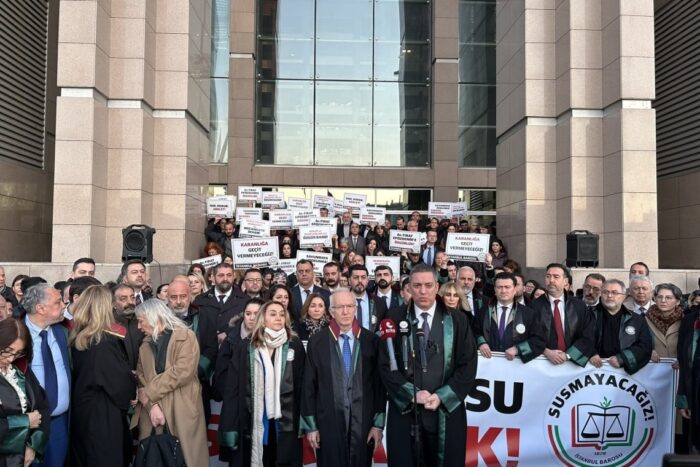
On 4 April 2025 a joint statement by 13 international, regional and national civil society organisations, strongly condemned violations of the right to protest in Turkey, including police brutality, ill-treatment that may amount to torture, mass arbitrary detentions, and the systematic persecution of human rights defenders. 

Mass protests erupted across Turkey on 19 March 2025, following the detention of more than 100 individuals —including the Mayor of Istanbul, Ekrem İmamoğlu. These arrests, made as part of investigations into allegations of “corruption” and “terrorism”, and their timing have raised widespread concerns that the charges are politically motivated – just days before İmamoğlu’s    expected presidential candidacy. 

In the immediate aftermath of the arrests, authorities imposed sweeping restrictions, including days-long blanket bans on gatherings across multiple cities, restricted access to several social media platforms curbing access and preventing the dissemination of information, and shut down major public transportation routes in İstanbul, all in a systematic effort to suppress dissent and mobilisations. 

Despite these measures, thousands have continued to gather in protest across the country since 19 March. While protests have been overwhelmingly peaceful, journalists and civil society organisations have documented grave human rights violations in several locations, and particularly in Saraçhane, Istanbul, including an indiscriminate and disproportionate display of police violence and brutality that may amount to torture and other ill-treatment, including beatings with batons, demonstrators being kicked while subdued on the ground, close-range targeting with Kinetic Impact Projectiles (KIPs), as well as the indiscriminate use of chemical irritants and water cannons. Based on widely circulated footage and public testimonies, and in line with the UN Committee Against Torture’s recommendations to Turkey following its periodic review in 2024, the Human Rights Foundation of Turkey (TİHV) has also denounced the use of restraint methods that inflict unnecessary pain, such as prolonged handcuffing behind the back and stress positions. These practices, known to cause serious health consequences, have at times been publicised by police officers themselves via personal accounts, seemingly as a tactic of intimidation.

Reports have stated that protesters who have been met with excessive police force have suffered grave and long-lasting injuries such as head trauma and eye damage due to tear gas cartridges and KIPs, burns and respiratory issues due to the indiscriminate and widespread use of tear gas and water cannons, which in some cases resulted in their hospitalisation. The full extent of the injuries, as well as the physical and psychological toll on protesters’ health, will only become clear in the following months. 

According to the report of Human Rights Association (İHD), as of 27 March 2025, a total of 1,879 people—including children, lawyers, journalists, students, union leaders and human rights defenders—have been taken into custody during protests and house raids on the grounds of inciting protests, engaging in violence, concealing their faces with masks, and using bats or other objects. Over 260 of them have been placed in pre-trial detention, while judicial control measures have been imposed on 468 individuals simply for exercising their right to peaceful protest. Istanbul Bar Association Child Rights Committee reported that among the arrested in İstanbul, 20 were under the age of 18

Progressive Lawyers Association (ÇHD) also highlights incidents of torture, ill-treatment and sexual violence in detention facilities.  Lawyers have denounced the treatment of seven female detainees who were subjected to beatings as well as unjustified strip searches while in custody. According to a released testimony, another female victim reported being groped by a police officer while handcuffed behind the back and forcefully pinned to the ground and that she soiled herself out of fear during the ordeal. She was reportedly placed under house arrest after her testimony. The Turkish Medical Association has recalled the importance of medical examinations upon entry in custody and detention to prevent and document torture and other ill-treatment.

Human rights defenders, including those monitoring the protests, have also become targets of State repression during the protests. Journalists and media organisations covering protests have also been persecuted, infringing on the right to freedom of expression and the right to information. As of 28 March, at least 14  journalists were detained after covering the protest. 

Lawyers representing those who were arbitrarily detained in the context of protests, were also targeted. At least 14 lawyers were detained, including the lawyer of İmamoğlu, demonstrating the State authorities’ disregard for the rule of law and the right to defence, due process and justice. In the midst of the protests as part of the general intimidation strategy against lawyers, on 21 March the Istanbul Bar Association’s executive board was dismissed by the decision of İstanbul 2nd Civil Court of First Instance- a move that raises serious concerns of further attacks on the independence of the legal profession and the detainees’ right to legal representation. Following the decision, police interfered as lawyers attempted to march from the courthouse in Çağlayan to the Istanbul Bar Association building in Taksim to protest the decision.

Signatories:

  • ARTICLE 19
  • Asociación Unidad de Defensa Jurídica, Registro y Memoria para Nicaragua (AUDJUDRNIC)
  • CIVICUS: World Alliance for Citizen Participation
  • EuroMed Rights
  • Front Line Defenders
  • Gulf Centre for Human Rights (GCHR)
  • ILGA-Europe
  • United Against Torture Consortium (UATC), through its following members:
    • The International Rehabilitation Council for Torture Victims (IRCT)
    • Omega Research Foundation
    • Redress
    • And the World Organisation Against Torture (OMCT)
  • Unidad de Protección a Defensoras y Defensores de Derechos Humanos – Guatemala (UDEFEGUA)
  • Within the framework of the Observatory for the Protection of Human Rights Defenders:
    • International Federation for Human Rights (FIDH)
    • World Organisation Against Torture (OMCT)

see also: https://humanrightsdefenders.blog/tag/turkey/

https://www.frontlinedefenders.org/en/statement-report/end-brutal-crackdown-peaceful-protest-and-human-rights-defenders

Human rights defenders globally need increased political and financial support

March 11, 2025

During the 58th regular session of the Human Rights Council, ISHR delivered a statement during the Interactive Dialogue with the Special Rapporteur on Human Rights Defenders affirming that human rights, peace and security are deeply interconnected, and the importance of the international system to human rights defenders.

The international system – to which many human rights defenders turn for justice, solidarity and accountability – is under attack. 

Already weakened by double standards by States from all regions, human rights and the rule of law are being destroyed by a cabal of authoritarian leaders and unaccountable corporations. We thank the Special Rapporteur and other experts for their 27 February statement on this issue.  

It was gratifying to see the rapid solidarity of many States with Ukraine following Friday’s White House confrontation with one such authoritarian. It is disheartening that the shortsighted response of many of those same States to the existential human rights funding crisis is to increase security spending by reducing development assistance. Human rights, peace and security are deeply interconnected. 

Of course, no single State can fill the US gap or counter its influence, but a diverse group of States with a shared interest in universal rights and the rule of law must do so. Human rights defenders globally need your increased political and financial support, now. Our common interests are not served by lawlessness and raw power. 

Madame Rapporteur, thank you for endorsing the Declaration on Human Rights Defenders +25. Read with the 1998 Declaration, it elaborates authoritative standards on the rights of defenders, and State and non-State actors’ obligations to respect and protect them.  

Finally, alongside 196 organisations, ISHR calls on States to support a strong Norway-led resolution on human rights defenders and technology at this session. 

https://ishr.ch/latest-updates/hrc58-human-rights-defenders-globally-need-increased-political-and-financial-support

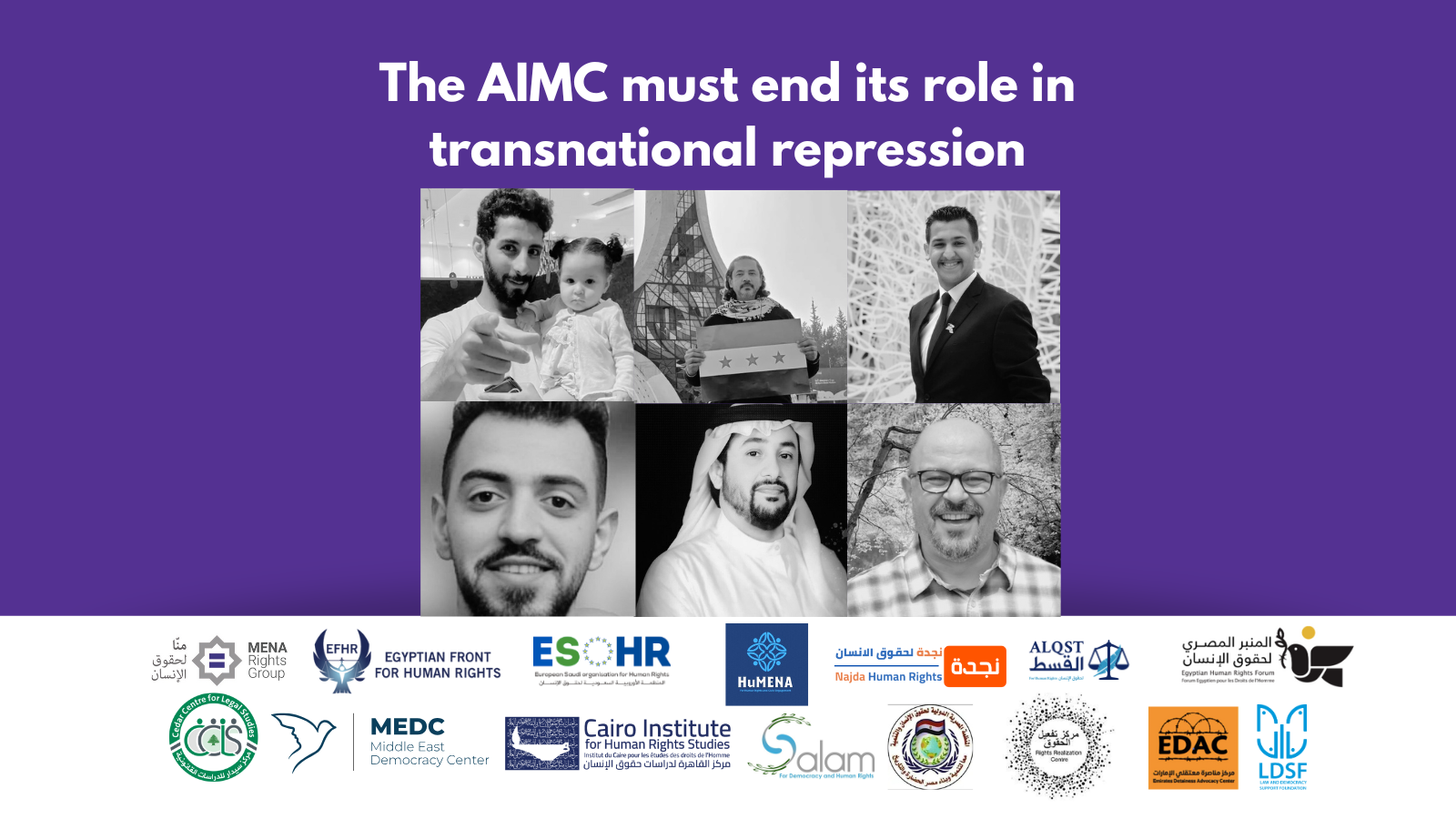
The Arab Interior Ministers’ Council must end its role in transnational repression

February 20, 2025

MENA Rights Group leads a coalition of 15 civil society organisations in urging the Arab Interior Ministers’ Council to cease its facilitation of arbitrary extraditions of peaceful dissidents and human rights defenders across Arab League countries and to align its legal framework and systems with international human rights law

From left to right: Ahmed Kamel, Abdelrahman al-Qaradawi, Salman al-Khaldy, Hassan al-Rabea, Khalaf al-Romaithi, Sherif Osman

February 17, 2025The undersigned organisations call on the Arab Interior Ministers’ Council (AIMC) to cease its facilitation of arbitrary extraditions of peaceful dissidents and human rights defenders across Arab League countries and to align its legal framework and systems with international human rights law.

On Sunday, February 16, 2025, the AIMC held its 42nd annual conference in its headquarters in Tunis. Often misleadingly referred to as “Arab INTERPOL”, the AIMC is an Arab League body tasked with enhancing cooperation among Arab states in the fields of internal security and crime prevention. Through its Department of Criminal Prosecution and Data, the AIMC circulates state-requested warrants to liaison divisions in Member States and facilitates wanted individuals’ extradition.

Although extraditions for “crimes of a political nature” are explicitly prohibited by the AIMC’s legal framework, specifically article 41 of the Riyadh Arab Agreement for Judicial Cooperation, they still occur in practice. Lacking an oversight body to prevent the abuse of its systems, the AIMC has become the perfect tool for Arab League states to request politically motivated extraditions.

Between 2022 and 2025, MENA Rights Group has documented the unlawful extraditions of four individuals: Khalaf al-Romaithi, Hassan al-Rabea, Salman al-Khaldy, and Abdulrahman al-Qaradawi. Currently, one individual is facing an imminent risk of extradition: Ahmed Kamel.

Ahmed Kamel is an Egyptian national currently detained in Saudi Arabia, where he had been living for a decade. In reprisal for peacefully protesting during the Arab Spring in Cairo in 2011 and 2014, Kamel faces imminent extradition to Egypt, where he may be subjected to human rights abuses including torture.

Despite their prohibition, Arab states continue to request and fulfil politically motivated extraditions, weaponising domestic laws which conflate peaceful criticism and human rights activism with terrorism or threats to state security.

Furthermore, the AIMC’s legal framework makes no reference to international human rights standards. More specifically, it fails to mention the principle of non-refoulement, enshrined in article 3 of the UN Convention against Torture, which provides that individuals must not be extradited to a country where they would face torture. 

UN Special Procedures mandate holders have raised concerns over the AIMC’s operations in a communication addressed to the Arab League, notably raising the impossibility for individuals to access their criminal file and challenge their arrest warrant. However, the UN experts have been provided with no response, and the Council has yet to undertake any reform.

As the AIMC continues to facilitate grave human rights violations across the Arab region, substantial change is required to ensure peaceful dissidents and human rights defenders are not at risk of transnational repression.

The undersigned organisations therefore urge the AIMC to immediately halt its facilitation of politically motivated extraditions, and undertake urgent reforms, in consultation with civil society, to align its legal framework and systems with international human rights law.

Signatories:

  1. MENA Rights Group
  2. Egyptian Front for Human Rights
  3. Egyptian Organization for Human Rights
  4. ESOHR
  5. Cedar Centre for Legal Studies 
  6. Law and Democracy Support Foundation – LDSF 
  7. Middle East Democracy Center (MEDC)
  8. ALQST for Human Rights
  9. Egyptian Human Rights Forum ( EHRF)
  10. Rights Realization Centre / مركز تفعيل الحقوق
  11. Salam for Democracy and Human Rights
  12. Najda for Human Rights
  13. Emirates Detainees Advocacy Center (EDAC) 
  14. HuMENA for Human Rights and Civic Engagement
  15. Cairo Institute for Human Rights Studies (CIHRS)

https://menarights.org/en/articles/aimc-must-end-its-role-transnational-repression-say-ngos

Joint civil society statement on the fifth anniversary of the “Xiamen gathering” crackdown

February 11, 2025

On the fifth anniversary of the “Xiamen Gathering” crackdown, 34 civil society organisations (on 10 February 2025) across the world reaffirm their solidarity with Chinese human rights defenders and lawyers persecuted for advocating for human rights:

26 December 2024 marked the fifth anniversary of the crackdown on the “Xiamen gathering”, a private gathering that about 20 Chinese human rights defenders and lawyers convened in Xiamen, China in December 2019 to discuss the situation of human rights and civil society in China. In the weeks after, Chinese authorities interrogated, harassed, detained and imprisoned every participant who was not able to leave China then and subjected almost all of them, including some families and friends, to travel bans, up to the present day, under the pretext of national security.

Among those detained were legal scholar Xu Zhiyong and human rights lawyer Ding Jiaxi. Both are leading human rights defenders who spearheaded the “New Citizens’ Movement”, empowering citizens as rights-bearers to advocate for a more equal, rights-respecting and free society, and to combat corruption, wealth inequality and discrimination in access to education. In 2014, Xu and Ding were both sentenced to four years and three and a half years in prison, respectively, for participating in the New Citizens’ Movement and charged with “gathering a crowd to disturb public order”.

From 26 December 2019, and over the weeks that followed, the Chinese authorities forcibly disappeared both under Residential Surveillance at a Designated Location (RSDL), a criminal procedure allowing secret detention for up to six months without access to legal counsel or family. RSDL is considered by UN Special Procedures experts to constitute secret detention and a form of enforced disappearance, and may amount to torture or other ill-treatment. While held under RSDL, both men were subjected to torture and other ill-treatment, before being charged with the national security crime of “subversion of State power”. They were subsequently convicted in a secret trial and handed severe prison sentences of 14 and 12 years, respectively, in April 2023. Despite multiple calls from the UN High Commissioner for Human Rights Volker Türk and from UN Special Procedures’ experts as recently as November 2024, China has failed to address these grave violations.

These cases are emblematic of a broader and alarming trend of persecution  of human rights defenders and lawyers in China. Authorities systematically employ RSDL, harsh national security charges, torture and other ill-treatment, prolonged detention, travel bans and harassment to silence dissent and dismantle independent civil society. The use of vague charges such as “subversion of State power” or “picking quarrels and provoking trouble” has become a routine tactic to criminalise human rights work, despite UN human rights experts’ repeated call for them to be repealed. Victims often face prolonged pre-trial detention, lack of due process, restricted access to lawyer and adequate healthcare, and torture or other ill-treatment aimed at extracting forced ‘confessions’.

This systematic repression is further reflected in the cases of human rights lawyers Xie Yang and Lu Siwei, feminist activist Huang Xueqin, labour activist Wang Jianbing, and citizen journalist Zhang Zhan, all of whom are currently subjected to arbitrary detention or imprisonment  . UN Special Procedures’ experts have recently described these cases as part of “recurring patterns of repression, including incommunicado detention and enforced disappearance aimed at […] silencing human rights defenders and dissenting or opposing views critical of the Government”.

As we commemorate the fifth anniversary of the crackdown, we, organisations and activists from all over the world, continue to stand in solidarity with all human rights defenders and lawyers in China who courageously advocate for justice despite knowing the risks of doing so.

We urge the Chinese government to:

  1. Immediately and unconditionally release all human rights defenders and lawyers arbitrarily detained or imprisoned for their human rights work, including Xu Zhiyong and Ding Jiaxi;
  2. End the systematic crackdown on civil society, including harassment, unjustified detention, enforced disappearance, and imprisonment of human rights defenders and lawyers;
  3. Amend laws and regulations, including national security legislation, the Criminal Law and the Criminal Procedure Law, to bring them fully in line with international human rights standards;
  4. Rescind the travel bans imposed on the gathering participants as well as their friends and families immediately.

Signatories:

  1. Alliance for Citizens Rights
  2. Amnesty International 
  3. Asian Lawyers Network (ALN) (Japan)
  4. CIVICUS: World Alliance for Citizen Participation
  5. Free Tibet (United Kingdom)
  6. Human Rights in China
  7. India Tibet Friendship Society Nagpur Maharashtra (India)
  8. International Bar Association’s Human Rights Institute (IBAHRI)
  9. International Campaign for Tibet
  10. International Federation for Human Rights (FIDH), within the framework of the Observatory for the Protection of Human Rights Defenders
  11. International Service for Human Rights (ISHR) 
  12. International Tibet Network
  13. Judicial Reform Foundation (Taiwan) 
  14. Lawyers for Lawyers (Netherlands)
  15. LUNGTA – Active for Tibet (Belgium)
  16. PEN America (United States)
  17. Safeguard Defenders (Spain) 
  18. Swiss Tibetan Friendship Association (Switzerland)
  19. Taiwan Association for Human Rights (Taiwan)
  20. The 29 Principles (United Kingdom)
  21. The Network of Chinese Human Rights Defenders 
  22. The Rights Practice (United Kingdom)
  23. Tibet Justice Center (United States)
  24. Tibet Solidarity (United Kingdom)
  25. Voluntary Tibet Advocacy Group (V-TAG) (Netherlands)
  26. World Organisation Against Torture (OMCT), within the framework of the Observatory for the Protection of Human Rights Defenders
  27. Acción Solidaria (Venezuela)
  28. Amnistía Internacional Chile (Chile)
  29. CADAL (Argentina)
  30. Centro de Derechos Humanos Fray Francisco de Vitoria OP, A.C. (Mexico)
  31. CONTIOCAP – Coordinadora Nacional de Defensa de Territorios Indígenas Originarios Campesinos y Áreas Protegidas en Bolivia (Bolivia)
  32. Movimiento Autónomo de Mujeres (Nicaragua)
  33. Red Nacional de Organismos Civiles de Derechos Humanos Todos los Derechos para todas, todos y todes (Mexico)
  34. Voces de Tíbet (Mexico)

https://ishr.ch/latest-updates/joint-civil-society-statement-on-the-fifth-anniversary-of-the-xiamen-gathering-crackdown

https://safeguarddefenders.com/en/blog/fifth-anniversary-xiamen-gathering-crackdown

23 rights groups call for release of Istanbul Bar board member Fırat Epözdemir

February 7, 2025
Photo: Evrensel

Twenty-three human rights organizations have called for the immediate release of İstanbul Bar Association executive board member Fırat Epözdemir, who was arrested last week over alleged ties to the outlawed Kurdistan Workers’ Party (PKK), the Media and Law Studies Association reported February 3, 2025,

Advocacy groups condemned his detention as unlawful and part of a broader crackdown on human rights defenders and legal professionals in Turkey.

The Human Rights Defenders Solidarity Network (İHSDA) issued a statement denouncing Epözdemir’s arrest and urging authorities to drop the charges. The statement, signed by multiple rights organizations, emphasized that targeting lawyers and human rights advocates with judicial harassment is unacceptable.

Epözdemir was arrested Saturday by an İstanbul court on charges of “membership in an armed terrorist group” and “disseminating terrorist propaganda.”

Prosecutors in İstanbul accuse Epözdemir of joining a PKK-linked WhatsApp group in 2015, during the peak of clashes between Kurdish militants and Turkish security forces in the country’s predominantly Kurdish southeast.

The PKK has waged an armed insurgency against the Turkish state since 1984, a conflict that has left more than 40,000 people dead. 

Epözdemir’s legal team has faced severe restrictions in accessing case files due to a confidentiality order, preventing them from reviewing the evidence against him. Authorities also imposed a 24-hour ban on lawyer visits without providing a clear justification, raising concerns of due process violations.

The joint statement criticized the prosecution’s reliance on a decade-old public event and phone conversations as grounds for Epözdemir’s arrest, calling the charges baseless and politically motivated.

His detention, rights groups argue, is an attack on the legal profession and human rights advocacy in Turkey. They linked his arrest to broader efforts to suppress dissent, noting that members of the İstanbul Bar Association have faced mounting pressure after issuing a statement regarding two journalists killed in Syria.

“Lawyers and bar associations must not be criminalized for their advocacy and defense of fundamental rights,” the statement said. “We reject all attempts to silence human rights defenders and demand the immediate and unconditional release of Fırat Epözdemir.”

Among the signatories were the MLSA, the Human Rights Association (İHD), Civil Rights Defenders, the Turkish Human Rights Foundation (TİHV) and numerous other civil society organizations.

UN special rapporteurs note human rights violations against Gülen movement in Turkey – Erdogan disagrees vehemently

December 7, 2024

The Turkish government has refused to respond to allegations of systematic repression against individuals allegedly affiliated with the Gülen movement made by United Nations special rapporteurs, according to official documents published on Friday by the Office of the United Nations High Commissioner for Human Rights.

In a joint letter dated October 7, 2024, seven UN special rapporteurs asked the Turkish government about alleged measures of “systematic repression against persons ostensibly affiliated with the Gülen Movement through the misuse of counter-terrorism legislation, and the concomitant impact on civil society, human rights defenders, political dissidents, and journalists.”

The allegations center on Turkey’s treatment of people allegedly associated with the faith-based Gülen movement, inspired by the late Muslim cleric Fethullah Gülen.

In its response via a diplomatic note dated October 30, the Turkish government refrained from answering the allegations brought up by the special rapporteurs and instead listed their accusations against the Gülen movement and requested the “Special Procedures of the Human Rights Council not to allow FETÖ and its members to abuse these mechanisms, and to dismiss their allegations.”

FETÖ is a derogatory acronym used to refer to the Gülen movement as a terrorist organization.

Turkish President Recep Tayyip Erdoğan has been pursuing followers of the Gülen movement since corruption investigations revealed in 2013 implicated then-Prime Minister Erdoğan and some members of his family and his inner circle.

Dismissing the investigations as a Gülenist coup and conspiracy against his government, Erdoğan designated the movement a terrorist organization and began to target its members. He intensified the crackdown on the movement following an abortive putsch in 2016 that he accused Gülen of masterminding. The movement has strongly denied involvement in the coup attempt or any terrorist activity.

The rapporteurs outlined practices they say violate international human rights laws, including arbitrary arrests, torture, transnational renditions and surveillance abuses.

The UN Rapporteurs said these individuals face intensified crackdowns involving mass detentions, forced disappearances and unjust prosecutions under vague anti-terrorism laws. Between June 2023 and June 2024, more than 8,800 people were detained and 1,500 were charged with terrorism offenses, they said.

Among the rapporteurs’ chief concerns was the treatment of children detained as part of these operations. In May 2024, 16 children were arrested in İstanbul and allegedly subjected to psychological pressure, physical torture and denial of legal counsel. The UN rapporteurs described these actions as clear violations of international protections for children under the Convention on the Rights of the Child.

The rapporteurs also criticized Turkey’s use of public “grey lists,” wanted lists where individuals — ranging from journalists to human rights defenders — are labeled as terrorists, often without evidence or due process. These lists, which include photos and personal details, are made public alongside monetary rewards for information leading to their capture. This practice, according to the rapporteurs, endangers lives, undermines freedoms and creates a “hitman economy.”

Another key concern involved transnational renditions. The rapporteurs alleged that Turkey has systematically abducted and forcibly returned suspected Gülen affiliates from other countries under vague bilateral security agreements. Victims were reportedly detained in secret, subjected to torture and coerced into confessions used in prosecutions.

The misuse of surveillance powers also drew heavy criticism. Turkey’s intelligence agency was accused of fabricating evidence from the ByLock messaging app to convict thousands of people on tenuous charges of affiliation with the Gülen movement. The UN noted that such actions lack due process and violate privacy rights under international law.

The rapporteurs called on Turkey to address these alleged violations, halt ongoing abuses and ensure compliance with international human rights standards. They expressed particular concern about the government’s expansive interpretation of anti-terrorism laws, which they argue target legitimate political activity, dissent and human rights advocacy.

The letter was authored by seven UN special rapporteurs and a UN expert, including Mary Lawlor, special rapporteur on the situation of human rights defenders; Alice Jill Edwards, special rapporteur on torture and other cruel, inhuman or degrading treatment or punishment; and Fionnuala Ní Aoláin, special rapporteur on the promotion and protection of human rights while countering terrorism. Other contributors included Gabriella Citroni, chair-rapporteur of the Working Group on Enforced or Involuntary Disappearances and Irene Khan, special rapporteur on freedom of opinion and expression.

Soltan Achilova again banned from traveling to receive her award

November 21, 2024

The undersigned human rights organisations, which together represent the Jury for the Martin Ennals Award for Human Rights Defenders, condemn the continued harassment against 2021 Martin Ennals Award Finalist and woman human rights defender from Turkmenistan, Soltan Achilova. This morning, Soltan Achilova and her daughter were once again prevented from travelling to Geneva. As in 2023, Soltan Achilova was set to be recognized for her valuable contributions to the documentation of human rights violations in Turkmenistan by the Martin Ennals Foundation.

Soltan Achilova is a woman human rights defender and journalist, who continues to work in Turkmenistan, one of the most repressive and isolated countries in the world, ranking 176th out of 180 countries in terms of press freedom and working conditions for journalists. She has been reporting about her country for over a decade. Her pictures of daily life are one of the few sources of documentation of human rights violations occurring in Turkmenistan. As a result of this work, she remains under constant surveillance by Turkmen authorities and has suffered numerous incidents of harassment, intimidation, and threats. Despite the challenges, Soltan Achilova persists in her human rights work, regularly sending information and pictures outside the country so that government authorities can be held accountable. [see: https://humanrightsdefenders.blog/tag/soltan-achilova/]

On the morning of 20 November 2024, Soltan Achilova and her daughter Maya Achilova were scheduled to travel from Ashgabat to Geneva, to participate in the Martin Ennals Award ceremony. At 6:30 a.m. local time, according to the information received by the Martin Ennals Foundation, a group of law enforcement officers pushed Soltan Achilova, her daughter and her daughter’s husband into an ambulance and brought them to the specialised hospital “Infectious Disease Control Centre” in the Choganly neighbourhood of Ashgabat, located near the Ashgabat International Airport. Maya Achilova reported to the Foundation that her husband, her mother and herself are being retained at the medical facility, guarded by the security forces, and that one of the security service agents is in possession of the keys to Soltan Achilova’s apartment. Thereby, Turkmen authorities have once again prevented Soltan Achilova from travelling to Geneva, Switzerland, where she would finally be recognized as a Finalist of the 2021 Martin Ennals Award for her documentation of land grabs and forced evictions of ordinary citizens in Ashgabat.

Turkmen authorities have prevented woman human rights defender Soltan Achilova from traveling freely outside of her country on several occasions; the latest occurring as recently as November 2023. In the early hours of 18 November 2023, Soltan Achilova and her daughter were stopped by Turkmen government officials from boarding their flight to Switzerland. A customs official took their passports, wet them with a damp rag and declared the passports to be ruined, preventing Soltan and Maya Achilova from boarding the plane. Despite receiving assurances at high-level from Turkmen authorities that Soltan Achilova would not be prevented from traveling once again, the authorities continue to harass the woman human rights defender with travel restrictions and arbitrary detention.

The human rights organisations that make up the Jury of the Martin Ennals Award, as well as the Martin Ennals Foundation, once again condemn Turkmen authorities for their continued harassment of woman human rights defender and photojournalist Soltan Achilova and her family members and call for their immediate release. The organisations jointly call upon the Turkmen authorities to provide all the necessary assistance to enable her travel outside of Turkmenistan. Finally, the organisations renew their calls for Turkmenistan to fully implement their human rights obligations, including, inter alia, allowing human rights defenders and journalists to conduct their work without fear of reprisals.

Following the writing of this statement, an article containing further details was published by the Chronicles of Turkmenistan, an online publication of the Turkmen Initiative for Human Rights, which, according to its author, has also been in contact with Soltan Achilova’s family.

Signatories:

Amnesty International

Human Rights Watch

World Organisation Against Torture (OMCT)

International Service for Human Rights (ISHR)

International Federation for Human Rights (FIDH)

HURIDOCS

Human Rights First

Front Line Defenders

Brot für die Welt

International Commission of Jurists

The Martin Ennals Foundation

https://www.frontlinedefenders.org/en/statement-report/turkmen-authorities-yet-again-prevent-woman-human-rights-defender-and-2021-martin

https://www.reuters.com/world/journalist-seized-turkmenistan-ahead-swiss-award-ceremony-say-rights-groups-2024-11-21/