Posts Tagged ‘India’

Seven International NGOs demand unconditional release of Indian HRD Umar Khalid

September 17, 2025

On 12 September, 2025 the seven rights groups described Khalid’s prolonged imprisonment as a “violation of his rights” and an instance of “selective persecution”, asserting that he was arrested on “politically motivated and spurious charges” on 13 September 2020.

Alongside Amnesty International, the signatories include: CIVICUS, FORUM-ASIA, Front Line Defenders. International Commission of Jurists, International Federation for Human Rights (FIDH) and World Organisation Against Torture (OMCT).

The statement expressed deep concern over the invocation of the anti-terror law UAPA (Unlawful Activities Prevention Act) and the repeated denial of bail to Khalid.

“These repeated bail denials combined with persistent delays, and the continued absence of trial proceedings, amount to a violation of his right to a fair trial, including speedy trial, guaranteed under the International Covenant on Civil and Political Rights (ICCPR), to which India is a state party, as well as under the Constitution of India,” the statement read.

The groups further highlighted the unequal application of bail standards, particularly in cases related to the 2020 Delhi riots and anti-CAA protests, saying:

“We are further concerned about the discriminatory application of bail standards in cases arising from the violence surrounding the CAA protests and more broadly in cases involving the UAPA. While similarly situated accused have been granted bail, Khalid continues to be denied relief. Such unequal treatment violates the principle of equality before the law and sets a deeply troubling precedent.”

The rights organizations also drew attention to the role of the Delhi Police and political leaders during the 2020 Delhi riots, where Khalid and other Muslim activists were implicated.

“Independent investigations, including by Amnesty International India, Human Rights Watch and Delhi Minorities Commission, have documented the role of the Delhi Police in human rights violations during the CAA protests and the ensuing violence,” the statement said.
“Police officers were recorded engaging in beatings, torture and other ill-treatment, and arbitrary arrests, and in some cases standing by as mobs attacked protesters.”

The statement noted that Indian courts have repeatedly criticized the police investigations, describing them as: “Very poor,” “callous,” and “fraught with multiple flaws,” with documented instances of fabricated cases and manipulated records.

It further condemned the role of senior political leaders, who were seen delivering inflammatory hate speeches, branding protesters as “traitors” or “anti-nationals”, and openly inciting violence.

“Despite the existence of video and documentary evidence, no meaningful accountability measures have been taken against implicated political figures or police officials,” the statement added.

The rights groups emphasized that Khalid’s prolonged detention is not an isolated incident, but part of a larger pattern of repression against those exercising their constitutional rights to freedom of expression and association.

“Other students and human rights activists, including Gulfisha Fatima, Sharjeel Imam, Khalid Saifi, Shifa-ur-Rehman and Meeran Haider, also remain in detention for their peaceful opposition to the CAA, while police officials and political leaders responsible for incitement or complicity in violence continue to enjoy impunity,” the groups noted.
“This selective prosecution erodes public trust in the justice system, entrenches impunity for state actors, and criminalises free expression.”

The seven international organizations demand:

The immediate and unconditional release of Umar Khalid

The equal application of bail standards

An end to the discriminatory treatment of human rights defenders

Accountability for police officers and political leaders implicated in incitement and violence

The repeal of the UAPA.

https://www.amnestyusa.org/press-releases/india-umar-khalids-five-year-imprisonment-without-trial-exemplifies-derailment-of-justice/

https://thehindustangazette.com/latest-news/selective-persecution-seven-international-rights-groups-demand-unconditional-release-of-umar-khalid-39661

Repressive Laws Are Increasingly Being Used to Silence Activists Across Asia

July 29, 2025

Josef Benedict and Rajavelu Karunanithi published a piece in the Diplomat of 18 July 2025 describing how from Hong Kong to India, governments are passing and weaponizing new laws to pursue and jail whoever speaks up for human rights.

Four years ago, on the 32nd anniversary of the 1989 Tiananmen Square massacre, plain clothes police arrested human rights lawyer and pro-democracy activist Chow Hang-tung outside her office in Hong Kong. Her alleged crime? Publishing two social media posts advertising a public vigil to remember the notorious crackdown in Tiananmen Square. At the time, Chow was the vice-chair of the now defunct Hong Kong Alliance in Support of the Patriotic Democratic Movement of China, the main organizer of annual Tiananmen vigils…

Sadly, such repression is not unique to Hong Kong. Across Asia, authoritarian and democratic governments alike are passing and weaponizing new laws – in clear violation of international law and standards – to pursue and jail whoever speaks up for human rights. Today, on Nelson Mandela International Day, we call for the release of Chow Hang-tang, who is part of CIVICUS’ Stand As My Witness campaign, as well as other human rights defenders unjustly locked up in Asia around the world.

The CIVICUS Monitor, which tracks civic space conditions across the world, now rates Hong Kong’s civic space as “closed,” the worst possible ranking. Hundreds remain behind bars as police systematically use the new laws to arrest and prosecute people on trumped-up charges. Often, the process itself becomes the punishment as activists spend years in detention before they are even tried…

Meanwhile, Hong Kong authorities are trying to take their repression international, by offering bounties for activists-in-exile charged under the National Security Law and by arresting the father of a prominent U.S.-based activist, Anna Kwok.

..Hong Kong’s National Security Laws have become something of a model for other Asian governments looking to stifle dissent.

Look no further than India, often called the world’s largest democracy, where Prime Minister Narendra Modi’s government resorts to similar laws to consolidate power and silence his critics. Dozens of activists have been jailed under the Unlawful Activities Prevention Act (UAPA), a draconian anti-terror law. Under the UAPA’s provisions, activists remain in pre-trial detention for long periods and are denied bail, including human rights defender Khurram Parvez, who was arrested in November 2021. His trial has yet to start, four years on. [see also: https://www.trueheroesfilms.org/thedigest/laureates/81468931-79AA-24FF-58F7-10351638AFE3]

In neighboring Pakistan, the government also weaponizes anti-terror legislation against activists like Mahrang Baloch, who languishes in prison on terror charges for speaking out against ongoing violations of ethnic minority rights by the Pakistan security forces in Balochistan. [see also: https://humanrightsdefenders.blog/2025/05/28/un-experts-alarmed-by-arbitrary-detention-of-azerbaijani-human-rights-defender-mammadli/]

In Thailand, more than 270 individuals have been arrested or prosecuted under lese-majeste or royal defamation laws since early 2020, many of whom have received long consecutive sentences from the courts. Human rights lawyer Arnon Nampa, for instance, received multiple convictions and 26 years in jail for calling for democratic reforms and reforms of the Thai monarchy. [see also: https://www.trueheroesfilms.org/thedigest/laureates/1e7ce01b-7927-41f1-b7d4-2c563ee235cc]

Meanwhile, Cambodia’s Han Manet regime has used “incitement” laws as their weapon of choice to silence activists, journalists, and members of the opposition.

With legal repression spreading across Asia, the international community must do more to push back and stand with these brave activists. Foreign governments must not only speak out when activists are convicted, but step in much earlier when these human rights defenders are arrested. Diplomats should visit wrongly arrested activists in detention, monitor their trials, and engage with their families. Foreign governments must also use international platforms like the United Nations Human Rights Council and bilateral meetings to highlight their cases and call for their release. 

Activists-in-exile also need support and assistance, especially when they face transnational repression. The recent G-7 Leaders’ Statement on Transnational Repression was a good start, but strong rhetoric must now turn into serious action. Failure to undertake such actions will see a further regression of democracy and repression of civic freedoms in Asia and elsewhere.

https://thediplomat.com/2025/07/repressive-laws-are-increasingly-being-used-to-silence-activists-across-asia/

Henri Tiphagne slams India’s ‘zero accountability’ on torture

June 26, 2025

Human Rights activist Henry Tiphagne at the press meet

Human Rights activist Henry Tiphagne at the press meetInstagram/peopleswatch

On 25 June 2025 Azeefa Fathima wrote how – at the release of the Global Index on Torture in Geneva, human rights defender Henri Tiphagne of India’s People’s Watch slammed India for failing to ratify the UN Convention Against Torture and for allowing systemic impunity in custodial deaths.

India’s human rights record on custodial torture came under sharp international criticism at the launch of the Global Index on Torture in Geneva on Tuesday, June 25, with prominent rights advocate Henri Tiphagne accusing the country of “zero accountability” in cases of police brutality and deaths in custody.

Drawing attention to the fifth anniversary of the custodial deaths of Jeyaraj and Benix in Tamil Nadu, Henri said, “The father and son were tortured and died in judicial custody. They were produced before a judicial magistrate after medical examination, having already changed clothes three times due to bleeding. The trial has gone on for five years, across 262 hearings, and is still ongoing, while the family continues to face reprisals.”

Henri, who is the Executive Director of People’s Watch, criticised India for being among eight countries listed in the Global Index for ongoing torture and reprisals against victims and human rights defenders. “We are yet to ratify the Convention Against Torture, despite over 41 countries having recommended it. The National Human Rights Commission (NHRC) has existed for 32 years and has not prosecuted even one police officer responsible for extrajudicial killings or torture,” he said…

He said that India must “bow down in shame” for its continued failure to ratify the UN convention and for its “zero accountability” in cases of custodial torture and deaths.

India is one of eight countries globally, alongside Libya, Honduras, Belarus, Colombia, Turkey, the Philippines and Tunisia, flagged for systemic torture and reprisals against survivors and human rights defenders. [see https://humanrightsdefenders.blog/2025/02/25/looking-towards-2025-blog-post-by-omct-secretary-general-gerald-staberock/]

The National Human Rights Commission (NHRC), established 32 years ago, has never successfully prosecuted a single police officer involved in torture or extrajudicial killings, Henri noted, and said, “We are the only country with so many human rights institutions, and yet they are not functioning. The NHRC has even been downgraded in Geneva, and this speaks volumes”.

Human Rights activist Henry Tiphagne at the press meet

Explained: Why India’s NHRC faces a downgrade from ‘A’ to ‘B’ status

https://www.thenewsminute.com/tamil-nadu/at-geneva-event-henri-tiphagne-slams-indias-zero-accountability-on-custodial-torture

Indian Human Rights Defender G.N. Saibaba passes away

October 21, 2024

Human rights defender and former professor at the University of Delhi, Gokarakonda Naga (G.N.) Saibaba passed away on 12 October 2024 due to a cardiac arrest at the Nizam’ Institute of Medical Sciences Hospital at Hyderabad, India. On 7 March 2024, G.N. Saibaba was released from the Nagpur Central Jail after nearly a decade of imprisonment. In March 2024 he was acquitted of all charges by the Nagpur bench of the Bombay High Court, after being falsely accused of having links with banned Maoist organisations, and charged with serious offences including under the Unlawful Activities Prevention Act (UAPA).

G.N. Saibaba suffered from severe health conditions which worsened during his time in prison. These health conditions included polio related disabilities, a heart condition, a brain cyst, hypertension and breathing difficulties. While in prison, the human rights defender G.N. Saibaba was held in solitary confinement in a windowless cell and kept under constant CCTV surveillance. He contracted COVID-19 twice whilst in prison, in January 2021 and in February 2022, leading to further deterioration of his health condition. In a letter to his wife, G.N. Saibaba had spoken about his ill-treatment in prison stating that he had received no treatment for his ailments despite recommendations by doctors at the Government Medical College Hospital that he receive immediate medical attention. The United Nations Special Rapporteur on Human Rights Defenders had previously called for his release on medical grounds, calling on the “Indian authorities to immediately ensure that G.N. Saibaba has continuous and unrestricted access to health care, including adequate treatment and rehabilitation.”

Even though G.N. Saibaba was released prior to his demise, the ill-treatment suffered by the human rights defender and denial of healthcare during his imprisonment contributed to his already severe health issues. G.N. Saibaba never fully recovered from his time in prison which had prevented him from receiving urgent medical intervention. Front Line Defenders believes that his wrongful imprisonment is at least partially responsible for his untimely demise. It calls on Indian authorities to revise draconian counter-terrorism laws such as the UAPA and ensure that the legitimate work of human rights defenders is not criminalised.

Front Line Defenders holds the Indian authorities accountable for the death of G.N. Saibaba and calls for adequate monetary compensation to be awarded to his family.

https://www.frontlinedefenders.org/en/statement-report/human-rights-defender-gn-saibaba-passes-away

Join the campaign #EndReprisals: 4 examples of eminent HRDs being silenced

May 16, 2024

Human rights defenders and civil society are the voices of our communities. These voices must be at the heart of decision and policy making at all levels. Yet, some States and non-states actors feel those voices are too loud. Cao Shunli, Chinese human rights defender, victim of reprisals who died in detention 10 years ago. Around the world, inspiring voices echo Cao’s ambition, on different issues and in different contexts, but with the same aspiration: promoting and protecting human rights. In so doing, many have engaged with the United Nations to share evidence of abuses with experts and States. Regrettably, some are facing the same form of reprisals as Cao, and are now arbitrarily detained. 

These include Trang in Viet Nam, Irfan and Khurram in India and Abdulhadi in Bahrain.

It’s time to take a stand. Join us in our campaign to #EndReprisals and call for the release of Trang, Abdulhadi, Khurram and Irfan. Let’s ensure that no one else faces Cao’s fate. Their voices deserve to be heard, and their freedom and lives must be protected.

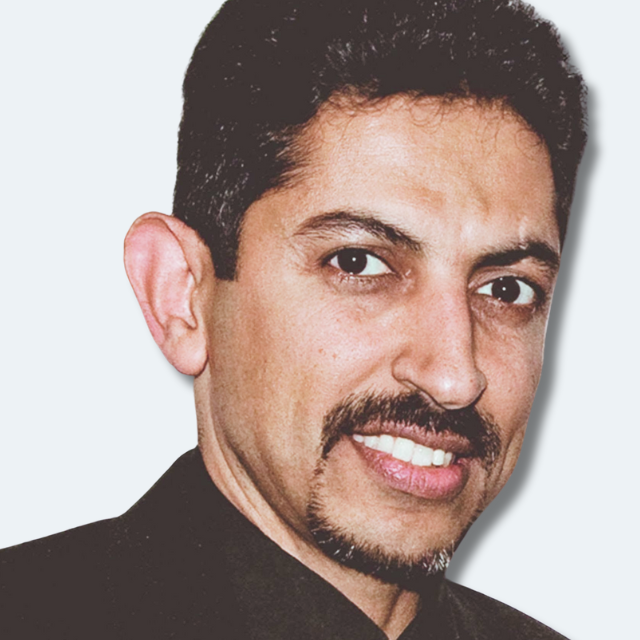
Abdulhadi Al-Khawaja

Abdulhadi Al-Khawaja is a Bahraini-Danish advocate known for his unwavering commitment to freedom and democracy. An outspoken human rights defender he serves as a source of inspiration for activists in Bahrain and globally. Abdulhadi has protested Bahrain’s unlawful detention and torture of several civilians since he was a student. He received political asylum in Denmark with his family where he continued his advocacy work, documenting human rights violations in Bahrain. 

He became the first civil society representative to speak at the first Universal Periodic Review of Bahrain in 2008.  He is the co-founder of both the Gulf Centre for Human Rights and the Bahrain Center for Human Rights, as well as the laureate of the 2022 Martin Ennals Award. [https://www.trueheroesfilms.org/thedigest/laureates/4d45e316-c636-4d02-852d-7bfc2b08b78d]

Abdulhadi Al-Khawaja was included for five times in the Secretary-General report on reprisals, noting “allegations of arbitrary arrest, torture and lengthy sentence following his engagement with United Nations human rights mechanisms.” In 2012, the Working Group on Arbitrary Detention found the detention of Abdulhadi arbitrary.

See also: https://humanrightsdefenders.blog/tag/abdulhadi-alkhawaja/

Pham Doan Trang

Pham Doan Trang is an author, blogger, journalist and pro-democracy activist from Viet Nam. She is a well-known advocate for human rights and has written on a wide range of human rights topics, including LGBTQI+ rights, women’s rights, environmental issues and on the suppression of activists.

She is considered among the most influential and respected human rights defenders in Viet Nam today. She has always been a major source of inspiration and mentorship for Vietnamese civil society and the next generation of human rights defenders.

Trang received the Reporters Without Borders 2019 Press Freedom Prize for Impact and was the Laureate of a Martin Ennals Award in 2022. As well as the Homo Homini in 2017 and the Women of Courage 2022. See: https://www.trueheroesfilms.org/thedigest/laureates/fe8bf320-1d78-11e8-aacf-35c4dd34b7ba

Trang was prosecuted for her articles and reports on the human rights situation in Viet Nam, including an analysis of a 2016 report on the Formosa Ha Tinh Steel Plant environmental disaster that was shared with the United Nations. See also: https://humanrightsdefenders.blog/tag/pham-doan-trang/

Trang was the subject of several communications by special procedures mandate holders and an Opinion by the Working Group on Arbitrary Detention in 2021, which found her deprivation of liberty arbitrary. On 2 November 2022, experts addressed Trang’s detention, including restriction of her right to family visits and her deteriorating health status. 

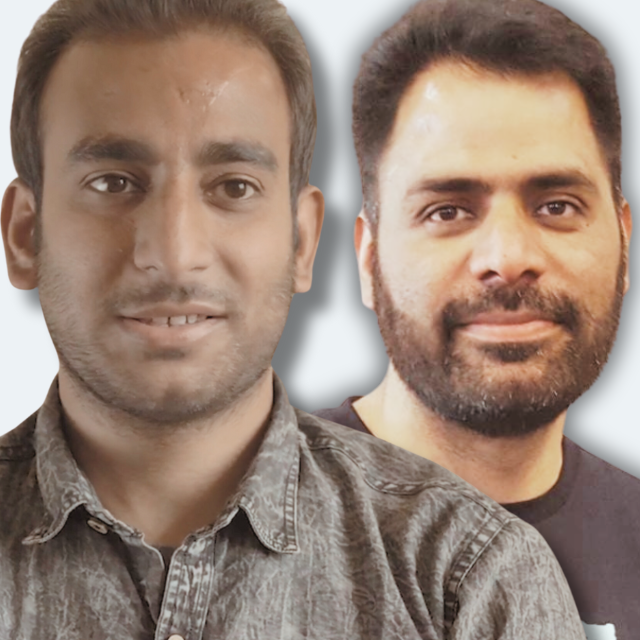
Irfan Mehraj and Khurram Parvez

Khurram Parvez and Irfan Mehraj are two Kashmiri human rights defenders. They have conducted ground-breaking and extensive human rights documentation in the Indian-administered Jammu and Kashmir, including through their work within the Jammu Kashmir Coalition of Civil Society (JKCCS) – Khurram as founder and programme coordinator, and Irfan as a researcher.

Both activists have been internationally recognised for their work. Khurram is the Chairperson of the Asian Federation against Involuntary Disappearances (AFAD), Deputy General Secretary of the International Federation for Human Rights (FIDH) and a laureate of the 2023 Martin Ennals Award. [see: https://www.trueheroesfilms.org/thedigest/laureates/81468931-79AA-24FF-58F7-10351638AFE3]

Irfan is a well-regarded independent journalist with frequent contributions to Kashmiri, Indian and international news outlets. He is the founder of Wande Magazine and is an editor at TwoCircles.net. See also: https://humanrightsdefenders.blog/2023/09/05/un-special-rapporteurs-express-serious-concern-about-kashmiri-human-rights-defenders/

On 22 November 2021, Khurram was arrested again by the Indian Government, this time by India’s National Investigation Agency (NIA) under the Unlawful Activities (Prevention) Act (UAPA) and other laws, reportedly on allegations of “terrorism funding, being a member of a terrorist organisation, criminal conspiracy, and waging war against the state.” He remains in arbitrary detention to this day. 

Meanwhile, on 20 March 2023, Irfan was summoned for questioning and arbitrarily detained by the NIA in Srinagar also under provisions of the UAPA and other laws.  The NIA targeted Irfan for being ‘a close associate of Khurram Parvez.’ Both Khurram and Irfan are presently in pre-trial detention in the maximum-security Rohini prison in New Delhi, India. If convicted, Khurram and Irfan could face life imprisonment or even the death penalty.  

Khurram’s situation has been included in the Secretary-General’s report on reprisals since 2017 and Irfan’s case was included in the 2023 report.

In June 2023, United Nations experts expressed serious concerns regarding the charges against and arrest of Irfan and Khurram, stating that their continued detention is ‘designed to delegitimise their human rights work and obstruct monitoring of the human rights situation in Indian-administered Jammu and Kashmir.’ The United Nation Working Group on Arbitrary Detention (WGAD) published an opinion in the same year, finding Khurram’s detention arbitrary. 

What do we want? It’s simple. We want Irfan, Khurram, Trang and Abduhadi to be freed so they can continue their work without fear of further reprisals, and we want accountability for Cao. 

How do we achieve this?

We mobilise diplomatic missions, encouraging them to speak out and raise individual cases of reprisals against defenders at the UN and in other spaces and hold their peers to account. We convince the UN Secretary General and his team to acknowledge and document ALL cases of reprisal and intimidation by including them in his annual report on reprisals and intimidation against defenders engaging or seeking to engage with the UN and its human rights mechanisms. We push the UN system to establish clearer protocols on how to consistently and effectively prevent, respond and follow up on cases of reprisals.  We encourage governments, activists, and concerned individuals to stand in solidarity with human rights defenders and organisations who are subjected to reprisals and intimidations.

What can you do?

To achieve our goals, we are drawing attention to some of the most emblematic cases of reprisals that illustrate how human rights defenders are prevented from or punished for engaging with the UN.   Here are impactful actions you can take:

Write to State representatives at the UN in Geneva and New York

ISHR’s #EndReprisals database

In order to assist stakeholders with research, analysis and action on cases of reprisals and intimidation, ISHR launched an online database compiling cases or situations of intimidation and reprisals documented by the United Nations (UN) Secretary-General between 2010 and 2020.

  • 878 Cases of intimidation and reprisals against human rights defenders engaging with the UN reported by the UN Secretary General between 2010 and 2020.
  • 81 Countries were cases of reprisals were documented by the UN Secretary-General between 2010 and 2020.
  • 13 Reports published by the UN Secretary General on intimidation and reprisals.

Visit ISHR’s #EndReprisal database

https://ishr.ch/campaign/endreprisals2024

UN High Commissioner on National Human Rights Institutions

May 16, 2024

On 08 May 2024 the OHCHR published the address by Volker Türk, UN High Commissioner for Human Rights, to the 2024 Global Alliance of National Human Rights Institutions Annual Conference:

…The role that National Human Rights Institutions (NHRIs) can play in this era of global crises is more crucial than ever. An era of deepening divisions between our human family, where inequalities are widening, where poverty is at levels not witnessed in a generation.

…It implies that everyone can – and must – be a partner in the human rights movement. Including the private sector. This conference will address some of the big questions on the impacts – both negative and positive – that business can have on human rights.

On climate change, how can business avoid and avert harm, and instead innovate and adapt to be part of the solution?

On civic space, particularly in the online world, how can business live up to their responsibilities to enable and nourish freedom of expression and at the same time protect the human rights defenders bravely demanding change? More broadly, how can regulatory and policy measures on human rights work best for business, and how can we guarantee the necessary protection and support for affected individuals and communities?

And of course, ultimately, how can NHRIs leverage their unique mandate to guide and support businesses in addressing these issues?

The private sector is a key piece of the architecture needed to rebuild trust, and to restore faith in the unifying power of human rights. The landmark Edinburgh Declaration provides a robust framework to help NHRIs in these efforts.

And NHRIs are also playing a crucial role in ensuring governments live up to their responsibilities to implement effective remedies for the individuals and communities harmed by business-related activities.

As you well know, the United Nations Guiding Principles on Business and Human Rights were developed to protect against human rights abuse by business activity. The gold standard to ensure that business is held accountable. That business keeps on enhancing and adapting their practices to put human rights front and centre. And that victims of abuse have access to remedy.

Over the past thirty years, my Office has worked closely with Member States and their NHRIs to better promote and protect all human rights at the national level. A growing interest from countries in not only establishing NHRIs, but ensuring that they are independent, and that they are effective…

To date, 120 NHRIs have been accredited by the Global Alliance in an internationally legitimate process serviced by my Office. Eighty-eight of those have received ‘A’ status for their full compliance with the Paris Principles, the standards which all NHRIs must meet.

At the international level, too, my Office has supported NHRIs and their regional and global networks to engage with the UN human rights mechanisms, including the treaty bodies and the Human Rights Council, its Universal Periodic Review and the Special Procedures…

https://www.ohchr.org/en/statements/2024/05/high-commissioner-addresses-global-alliance-national-human-rights-institutions

see also: https://www.thehindu.com/news/national/why-nhrc-international-accreditation-is-under-review-explainer/article68141899.ece

Kofi Annan Courage in Cartooning Award 2024

May 10, 2024

On World Press Freedom Day, May 3, the Freedom Cartoonists Foundation recognized the talent and
courage of cartoonists working under difficult circumstances. The Kofi Annan Courage in Cartooning Award 2024 was presented by Nobel Peace Prize laureate Dr. Shirin Ebadi of Iran, during a public ceremony at the Geneva Graduate Institute, in presence of CNN’s international chief anchor Christiane Amanpour. For more on this award see: https://www.trueheroesfilms.org/thedigest/awards/f60cb3d4-c79a-43aa-9b5c-351c56c02ae1. This award is presented every two years in alternance with a prize presented by the allied organization Cartoonists Rights in the United States.
The accompanying international exhibition Cartooning for Freedom, visible on the shores of Lake Geneva until June 2, 2024, features nearly 60 press cartoons selected by Freedom Cartoonists, in partnership with Cartooning for Peace in Paris.
Chaired by Kenneth Roth, former Executive Director of Human Rights Watch, the international jury shares the 2024 Prize between two winners: Rachita Taneja (India) and Zunzi (Hong Kong).

see also: https://humanrightsdefenders.blog/2022/05/10/new-kofi-annan-courage-in-cartooning-award-to-ukrainian-and-hungarian-press-cartoonists/

For Chappatte, president of the Foundation, “Both brilliantly embody the fundamental values of editorial cartooning: talent, freedom of spirit, and courage. With a bit of mischief.

https://www.barrons.com/news/indian-hong-kong-satirists-win-press-cartoon-award-8db6c9b8

Civil society view of the 55th session of the UN Human Rights Council

April 12, 2024

At the 55th Human Rights Council session, 22 civil society organisations share reflections on key outcomes and highlight gaps in addressing crucial issues and situations [see: https://humanrightsdefenders.blog/2024/02/26/human-rights-defenders-issues-at-the-55th-session-of-the-human-rights-council/]:

The failure of States to pay their membership dues to the United Nations in full and in time, and the practice of conditioning funding on unilateral political goals is causing a financial liquidity crisis for the organisation, the impacts of which are felt by victims and survivors of human rights violations and abuses. … Without the resources needed, the outcomes of this session can’t be implemented. The credibility of HRC is at stake. 

We welcome the adoption of three resolutions calling for the implementation of effective accountability measures to ensure justice for atrocity crimes committed in the context of Israel‘s decades long colonial apartheid imposed over the Palestinian people, and for the realisation of the Palestinian people’s right to self-determination. Special Procedures expressed their profound concern about “the support of certain governments for Israel’s strategy of warfare against the besieged population of Gaza, and the failure of the international system to mobilise to prevent genocide” and called on States to implement an “arms embargo on Israel, heightened by the International Court of Justice’s ruling […] that there is a plausible risk of genocide in Gaza […].”   This session, the Special Rapporteur on the OPT concluded that the actions of Israel in Gaza meet the legal qualifications of genocide. 

We deplore the double standards in applying international law and the failure of certain States to vote in favor of ending impunity. This undermines the integrity of the UN human rights framework, the legitimacy of this institution, and the credibility of those States. From Palestine, to Ukraine, to Myanmar, to Sudan, to Sri Lanka, resolving grave human rights violations requires States to address root causes, applying human rights norms in a principled and consistent way. The Council has a prevention mandate and UN Member States have a legal and moral duty to prevent and ensure accountability and non-recurrence for atrocity crimes, wherever they occur.

We want to highlight and specifically welcome the adoption of the first ever resolution on combating discrimination, violence and harmful practices intersex persons. The resolution builds on growing support in the Council on this topic and responds to several calls by the global coalition of intersex-led organisations. The resolution takes important steps in recognising that discrimination, violence and harmful practices based on innate variations of sex characteristics, such as medically unnecessary interventions, takes place in all regions of the world. We welcome that the resolution calls for States to take measures to protect the human rights of this population and calls for an OHCHR report and a panel discussion to address challenges and discuss good practices in protecting the human rights of intersex persons.

We welcome the renewal of the mandate of the Independent Expert on the enjoyment of human rights by persons with albinism. As attested by human rights defenders with albinism, the mandate played an invaluable role by shedding light on human rights violations against persons with albinism through ground breaking research, country visits, and human rights training, and ensuring that defenders with albinism are consulted and take part in the decision-making. The organisations also welcomed the inclusion of language reflecting the important role played by “organizations of persons with albinism and their families”, and the reference to the role of States in collaboration with the World Health Organization, “to take effective measures to address the health-related effects of climate change on persons with albinism with a view to realizing their right to the enjoyment of the highest attainable standard of physical and mental health, particularly regarding the alarming incidence of skin cancer in this population, and to implement the recommendations of the report of the Independent Expert in this regard”.

We welcome the adoption of the resolution on the renewal of the mandate of the Special Rapporteur on the human right to a clean, healthy and sustainable environment. We also welcome the update of the title of the mandate acknowledging the recognition of this right by the Human Rights Council in its resolution 48/13 on 8 October 2021 and the General Assembly resolution 76/300 on 28 July 2022. We also welcome the inclusion of gender-specific language in the text, and we call on the Special Rapporteur to devote a careful attention to the protection of environmental human rights defenders for their strong contribution to the realisation of the right to a clean, healthy, and sustainable environment, as called for by several States. We also welcome that the Council appointed for the first time a woman from the global south to fulfill this mandate, and we welcome the nomination of another woman as Special Rapporteur on the promotion and protection of human rights in the context of climate change. 

We welcome the resolution on countering disinformation, which addresses new issues whilst once again rejecting censorship and reaffirming the ‘essential role’ that the right to freedom of expression plays in countering disinformation. We welcome the specific focus on girls – besides women – as well as risks associated with artificial intelligence, gender-based violence, and electoral processes. We urge States to follow the approach of the resolution and to combat disinformation through holistic, positive measures, including by ensuring a diverse, free and independent media environment, protecting journalists and media workers, and implementing comprehensive right to information laws. Importantly, we also urge States to ensure that they do not conduct their own disinformation campaigns. At the same time, social media companies have an essential role to play and should take heed of the resolution by reforming their business models which allow disinformation to flourish on their platforms. The resolution also mandates the Advisory Committee to produce a new report on disinformation, and it is absolutely essential that this report mirrors and reinforces existing standards on this topic, especially the various reports of the Special Rapporteur on freedom of opinion and expression.

Whilst we welcome the technical renewal of the resolution on freedom of religion or belief, we regret that the parallel resolution on combating intolerance (widely known by its original name Resolution 16/18) was not tabled at the session. Since 2011, these duel resolutions have been renewed each year, representing a consensual and universal framework to address the root causes of hate based on religion or belief in law, policy, and practice. We call on the OIC to once again renew Resolution 16/18 in a future session, while ensuring no substantive changes are made to this consensual framework. We also urge all States to reaffirm their commitment to Resolution 16/18 and the Rabat Plan of Action and adopt comprehensive and evidence-based national implementation plans, with the full and effective participation of diverse stakeholders.

We welcome the adoption of the resolution on prevention of genocide and its focus on impunity, risks and early warnings, as well as the paragraph reaffirming that starvation of civilians as a method to combat is prohibited under international humanitarian law; however, we regret that the resolution fails to adequately reflect and address serious concerns relating to current political contexts and related risks of genocide. 

We welcome the adoption of the resolution on the rights of the child: realising the rights of the child and inclusive social protection, strengthening the implementation of child rights-compliant inclusive social protection systems that benefit all children. We also welcome the addition of a new section on child rights mainstreaming, enhancing the capacity of OHCHR to advance child rights mainstreaming, particularly in areas such as meaningful and ethical child participation and child safeguarding.  We remain concerned by persisted attempts to weaken the text, especially to shift the focus away from children as individual right-holders, to curtail child participation and remove the inclusion of a gender perspective.

We welcome the adoption of the resolution on torture and other cruel, inhuman or degrading treatment or punishment which addresses effective national legislative, administrative, judicial or other measures to prevent acts of torture. We welcome the new paragraph urging States concerned to comply with binding orders of the International Court of Justice related to their obligations under the Convention Against Torture.

We welcome the adoption of a new resolution on the human rights situation in Belarus. The Belarusian authorities continue their widespread and systematic politically-motivated repression, targeting not only dissent inside the country, but also Belarusians outside the country who were forced to flee for fear of persecution. Today, almost 1,500 prisoners jailed following politically-motivated charges in Belarus face discriminatory treatment, severe restriction of their rights, and ill-treatment including torture. The resolution rightly creates a new standalone independent investigative mechanism, that will inherit the work of the OHCHR Examination, to collect and preserve evidence of potential international crimes beyond the 2020 elections period, with a view to advancing accountability. It also ensures the renewal of the mandate of the Special Rapporteur who remains an essential ‘lifeline’ to Belarusian civil society.

We welcome the resolution on technical assistance and capacity building in regard to the human rights situation in Haiti and emphasis on the role civil society plays in the promotion and protection of human rights and the importance of creating and maintaining an enabling environment in which civil society can operate independently and free from insecurity. We similarly welcome the call on the Haitian authorities to step up their efforts to support national human rights institutions and to pursue an inclusive dialogue between all Haitian actors concerned in order to find a lasting solution to the multidimensional crisis, which severely impacts civil society. We welcome the renewal of the mandate of the designated expert and reference to women and children in regard to the monitoring of human rights situation and abuses developments, as well as encouragement of progress on the question of the establishment of an office of the Office of the High Commissioner in Haiti. We nonetheless regret that the resolution does not address the multifaceted challenges civil society faces amidst escalating violence, fails to further address the link between the circulation of firearms and the human rights violations and abuses, and does not identify concrete avenues for the protection of civilians and solidarity action to ensure the safety, dignity and rights of civilians are upheld.

We welcome the adoption of the resolution on Iran, renewing the mandate of the Special Rapporteur on human rights in Iran and extending for another year the mandate of the Independent International Fact-Finding Mission on Iran. The continuation of these two distinct and complementary mandates is essential for the Council to fulfill its mandate of promotion and protection of human rights in Iran. However, given the severity of the human rights crisis in the country, we regret that this important resolution remains purely procedural and fails to reflect the dire situation of human rights in Iran, including the sharp spike in executions, often following grossly unfair trials. It also fails to address the increased levels of police and judicial harassment against women and girls appearing in public without compulsory headscarves, human rights defenders, lawyers, journalists and families of victims seeking truth and justice, and the continued pervasive discrimination and violence faced by women and girls, LGBTI+ persons and persons belonging to ethnic and religious minorities in the country.  

We welcome the adoption by consensus of the resolution on Myanmar, which is a clear indication of the global concern for the deepening human rights and humanitarian crisis in the country as a result of the military’s over three-year long brutal war against the people resisting its attempted coup. We further welcome the Council’s unreserved support for Myanmar peoples’ aspirations for human rights, democracy, and justice as well as the recognition of serious human rights implications of the continuing sale of arms and jet fuel to Myanmar.

We welcome the resolution on the situation of human rights in Ukraine stemming from the Russian aggression. The latest report of the Independent International Commission of Inquiry (COI) reveals disturbing evidence of war crimes, including civilian targeting, torture, sexual violence, and the unlawful transfer of children. These findings underscore the conflict’s brutality, particularly highlighted by the siege of Mariupol, where indiscriminate attacks led to massive civilian casualties and infrastructure destruction. The report also details the widespread and systematic torture and sexual violence against both civilians and prisoners of war. Moreover, the illegal deportation of children emerges as a significant issue, as part of a broader strategy of terror and cultural erasure. The COI’s mandate extension is crucial for ongoing investigations and ensuring justice for victims. 

By adopting a resolution entitled ‘advancing human rights in South Sudan,’ the Council ensured that international scrutiny of South Sudan’s human rights situation will cover the country’s first-ever national elections, which are set to take place in De­cember 2024. With this resolution, the UN’s top human rights body extended the mandate of its Com­mis­sion on Human Rights in South Sudan.

We welcome the resolution on the human rights situation in Syria and the extension of the mandate of the Independent International Commission of Inquiry (COI), which will continue to report on violations from all sides of the conflict in an impartial and victim-centered manner. Syria continues to commit systematic and widespread attacks against civilians, in detention centers through torture, arbitrary detention and enforced disappearance and through indiscriminate attacks against the population in Idlib. We welcome that the resolution supports the mandate of the Independent Institution of the Missing People and calls for compliance with the recent order on Provisional Measures by the ICJ – both initiatives can play a significant role in fulfilling victims’ rights to truth and justice and should receive support by all UN Member States. In a context of ongoing normalisation, the CoI’s mandate to investigate and report on human rights abuses occurring in Syria is of paramount importance.

We continue to deplore this Council’s exceptionalism towards serious human rights violations committed by the Chinese government. At a time when double-standards are enabling ongoing atrocity crimes to be committed in Palestine, sustained failure by Council Members, in particular OIC countries, to promote accountability for crimes against humanity against Uyghurs and Muslim peoples in China severely undermines the Council’s integrity, and its ability to prevent and put an end to atrocity crimes globally. Findings by the OHCHR, the UN Treaty Bodies, the ILO and over 100 letters by UN Special Procedures since 2018 have provided overwhelming evidence pointing to systematic and widespread human rights violations across the People’s Republic of China. We reiterate our pressing call for all Council Members to support the adoption of a resolution establishing a UN mandate to monitor and report on the human rights situation in China, as repeatedly urged by UN Special Procedures. We further echo Special Procedures’ call for prompt and impartial investigations into the unlawful death of Cao Shunli, and all cases of reprisals for cooperation with the UN.

We regret the Council’s silence on the situation in India despite the clear and compounding early warning signs of further deterioration that necessitate preventive action by the Council based on the objective criteria. The latest of these early warning signals include the recent notification of rules to implement the highly discriminatory Citizenship Amendment Act by the Bharatiya Janata Party-led government just weeks before the election, along with recent intercommunal violence in Manipur and ongoing violence against Muslims in various parts of India amid increasing restrictions on civic space, criminalisation of dissent and erosion of the rule of law with political interference.

We further regret that this Council is increasingly failing to protect victims of human rights violations throughout the Middle East and North Africa, including in Algeria, Bahrain, Egypt, Libya, Saudi Arabia, and Yemen. The people of Yemen and Libya continue to endure massive ‘man-made’ humanitarian catastrophes caused in large part by ongoing impunity for war crimes, crimes against humanity and other grave violations of international law. In Algeria, Egypt, Bahrain, Saudi Arabia and in other MENA countries, citizens are routinely subjected to brutal, wide-spread human rights violations intended to silence dissent, eradicate independent civil society and quash democratic social movements. Countless citizens from the MENA region continue to hope and strive for a more dignified life – often at the cost of their own lives and freedom. We call on this Council and UN member States to rise above narrow political agendas and begin to take steps to address the increasing selectivity that frequently characterises this Council’s approach to human rights protection and promotion. 

We regret that once more, civil society representatives faced numerous obstacles to accessing the Palais and engaging in discussions, both in person and remotely, during this session. The UN human rights system in Geneva has always and continues to rely on the smooth and unhindered access of civil society to carry out its mandate. We remind UN Member States, as well as UNOG, that the Council’s mandate, as set out in HRC Res 5/1, requires that arrangements be made, and practices observed to ensure ‘the most effective contribution’ of NGOs. Undermining civil society access and engagement not only undermines the capacities and effectiveness of civil society but also of the UN itself.

Signatories:

  1. All Human Rights for All in Iran
  2. Asian Forum for Human Rights and Development (FORUM-ASIA)
  3. Association Arc pour la defense des droits de l’homme et des revendication democratique/culturelles du peuple Azerbaidjanais Iran -”ArcDH”
  4. Balochistan Human Rights Group
  5. Cairo Institute for Human Rights Studies
  6. Child Rights Connect (CRCnt)
  7. CIVICUS
  8. Commonwealth Human Rights Initiative (CHRI)
  9. Egyptian initiative for Personal Rights (EIPR)
  10. Ensemble contre la Peine de Mort
  11. Franciscans International
  12. Gulf Center for Human Rights
  13. Impact Iran
  14. International Bar Association’s Human Rights Institute (IBAHRI)
  15. International Federation for Human Rights (FIDH)
  16. International Lesbian and Gay Association (ILGA)
  17. International Service for Human Rights (ISHR)
  18. Kurdistan Human Rights Network
  19. Kurdpa Human Rights Organization
  20. PEN America
  21. The Syrian Legal Development Programme (SLDP)
  22. United 4 Iran

see also: https://www.eeas.europa.eu/delegations/un-geneva/eu-human-rights-council_en

https://www.fidh.org/en/international-advocacy/united-nations/human-rights-council/55th-human-rights-council-session-israel-palestine-belarus-iran

India – not satisfied with its ranking – planning to develop own democracy index

April 2, 2024

The New Indian Express of 22 March 2024 reports (based on Al Jazeera) that Prime Minister Narendra Modi government has approached a major Indian think tank to develop its own democracy ratings index that could help it counter recent downgrades in rankings issued by international groups that New Delhi fears could affect the country’s credit rating. The Observer Research Foundation (ORF), which works closely with the Indian government on multiple initiatives, is preparing the ratings framework,

On June 2023, The Guardian reported that the Indian government has been secretly working to keep its reputation as the “world’s largest democracy” alive after being called out by researchers for serious democratic backsliding under the nationalist rule of the Narendra Modi government, according to internal reports seen by The Guardian.

Despite publicly dismissing several global rankings that suggest the country is on a dangerous downward trajectory, officials from government ministries have been quietly assigned to monitor India’s performance, minutes from meetings show, The Guardian said. Al Jazeera revealed that the Observer Research Foundation (ORF), which works closely with the Indian government on multiple initiatives, is preparing the ratings framework. The new rankings system could be released soon, an official was quoted as saying.

Global human rights NGO Amnesty International has continued to highlight the erosion of civil rights and religious freedom under the Narendra Modi regime.

Amnesty in its India 2022 report noted that arbitrary arrests, prolonged detentions, unlawful attacks and killings, internet shutdowns and intimidation using digital technologies, including unlawful surveillance as major concerns faced by minority groups, human rights defenders, dissenters and critics of the Union government. [see also: https://www.amnesty.org/en/latest/news/2024/03/india-crackdown-on-opposition-reaches-a-crisis-point-ahead-of-national-elections/]

Similarly, Human Rights Watch has also continued to highlight the crackdown on civil society and media under the Modi government citing persecution of activists, journalists, protesters and critics on fabricated counterterrorism and hate speech laws. The vilification of Muslims and other minorities by some BJP leaders and police inaction against government supporters who commit violence are also among HRW’s concerns in India.

Notably, the ‘Democracy Index’, prepared by The Economist Group’s Economist Intelligence Unit, had downgraded India to a “flawed democracy” in its 2022 report due to the serious backsliding of democratic freedom under the Modi government.

Similarly, the US-based non-profit organization Freedom House had lowered India’s standing from a free democracy to a “partly free” democracy in its global freedom and internet freedom ratings, while V-Dem Institute, a Sweden-based independent research institute, had classified India as an “electoral autocracy”, as part of its 2022 Democracy report. for more on ranking, see: https://humanrightsdefenders.blog/tag/ranking/

https://www.newindianexpress.com/nation/2024/Mar/22/centre-planning-its-own-democracy-index-amid-global-rankings-downgrade

Pegasus spyware now turned on Indian media

January 3, 2024

Voice of America on 28 December, 2023 reported that the founding editor of one of India’s largest news websites is among the journalists to be targeted by the Pegasus spyware. A joint investigation by the rights group Amnesty International and The Washington Post, published Thursday, found evidence that the invasive spyware is being used again to target media in India.

Made and marketed by Israeli company the NSO Group, the spyware can be used to access a phone’s messages and emails, peruse photos, eavesdrop on calls, track locations and even film the owner with the camera. [see also: https://humanrightsdefenders.blog/tag/pegasus/]

In the latest research, forensic investigations found evidence of the spyware on the iPhones of Siddharth Varadarajan of the news website The Wire, and Anand Mangnale of The Organized Crime and Corruption Reporting Project, or OCCRP.

Increasingly, journalists in India face the threat of unlawful surveillance simply for doing their jobs, alongside other tools of repression, including imprisonment under draconian laws, smear campaigns, harassment, and intimidation,” Donncha Ó Cearbhaill, who heads Amnesty International’s Security Lab, said in a statement.

Amnesty reported that it first suspected renewed Pegasus activity during regular monitoring by its researchers in June. It investigated further after Apple sent notifications to iPhone users in October warning they had been targeted by “state sponsored attackers.” Around 20 politicians and journalists in India received the notifications. Amnesty then carried out a forensic analysis for individuals who received the warnings.

Around that time, the OCCRP had been investigating an Indian tycoon, Gautam Adani, who is an ally of Prime Minister Narendra Modi and founder of the multinational conglomerate known as the Adani Group.

Mangnale told the French news agency AFP he was targeted “within hours” of sending questions to the Adani Group on behalf of the OCCRP.

Varadarajan told the Post he believes the attempted hacking may be related to opposition to the detention of a prominent news publisher in New Delhi.

In a statement, Amnesty’s Ó Cearbhaill highlighted the chilling effect spyware has on media freedom.

“Targeting journalists solely for doing their work amounts to an unlawful attack on their privacy and violates their right to freedom of expression,” Ó Cearbhaill said.

In 2021, New Delhi was accused of using Pegasus to surveil journalists, opposition politicians and activists, with leaked documents showing the spyware had been used against more than 1,000 Indian phone numbers. Prime Minister Modi’s main rival, Rahul Gandhi, was among those targeted.

The government denied conducting “illegal surveillance” but refused to cooperate with a Supreme Court probe into the allegations, the findings of which have not been made public.

Following the October notifications sent by Apple, Indian authorities were reported to be investigating whether opposition politicians were targeted.

Ashwini Vaishnaw, the information and technology minister, said the government was “concerned” by the complaints.

The Washington Post reported that one day after Apple sent the notifications, government officials in India announced they would investigate the security of Apple devices.

——

The Washington Post (WP) reported Wednesday that following Apple’s October alert about alleged government hacking attempts on iPhones of independent Indian journalists and opposition politicians, Indian government officials swiftly retaliated against Apple.

It is reported that officials of the Bharatiya Janta Party (BJP), the ruling party, hurried to contain the fallout after journalists and politicians shared Apple’s warnings. The government administration pressured Apple to retract warnings, leading to a heated discussion. Under government pressure, Apple India acknowledged potential mistakes in threat detection and sought to downplay warnings globally. However, during a November meeting, Apple defended its stance against Indian officials’ scrutiny.

India’s opposition leaders and journalists received Apple alerts, warning of potential state-sponsored i

https://www.voanews.com/a/journalists-government-critics-in-india-targeted-with-pegasus-spyware/7416268.html

https://www.jurist.org/news/2023/12/wp-india-government-retaliated-against-apple-after-government-phone-hacking-claims/