Archive for the 'Human Rights Defenders' Category

Strange case of inter-arab feud by using HRDs in Geneva

April 3, 2025

Watan News on 30 March 2025 came with a rather remarkable story about the UAE’s covert efforts to damage Qatar and Saudi Arabia’s reputations through paid campaigns using African NGOs Human rights sources in Geneva. Whether this is all true or not I cannot say, but it is worth reporting on.

Watan writes that “human rights circles in Geneva’ have revealed the United Arab Emirates’ involvement in leading coordinated incitement campaigns against its adversaries, using African organizations in exchange for financial bribes to attack Abu Dhabi’s opponents and whitewash its own dire human rights record. According to the source, Abu Dhabi’s campaign aims to bring in so-called “victims,” such as migrant workers, to testify before the UN Human Rights Council in an effort to damage Qatar’s international reputation.

Reliable reports indicate that the UAE has continuously funded this campaign over the past three years. Several human rights organizations and active institutions in Geneva have reportedly received large sums of money to support anti-Qatar activities. The funds are reportedly channeled through the UAE Embassy in Geneva and a key intermediary, Issa Al-Arabi, a Bahraini national who acts as a liaison for the UAE in supporting various rights groups at the UN.

According to the source, the campaign is being executed by the Rencontre Africaine pour la Défense des Droits de l’Homme (African Meeting for the Defense of Human Rights) under the leadership of Nishkarsh Singh, along with the Tomoko Development and Cultural Union (TACUDU) led by Fazal-ur-Rehman, and the International Network for Human Rights (INHR).

Another UN source said that the UAE’s campaign is coordinated by key figures within the diplomatic and human rights community in Geneva and Washington, primarily operating within the INHR network.

This organization plays a major role in organizing human rights events at the UN, with a team of participating legal and diplomatic experts.

Notable individuals involved include:

  • Biro Diawara – A veteran human rights activist in Geneva for over 20 years, representing African civil society including journalists, parliamentarians, religious leaders, and human rights defenders. He has strong ties to African delegations in New York, Geneva, and the continent, with a focus on Sudan, West Africa, and his native Guinea.
  • Clément N. Voule – Former UN Special Rapporteur on the Rights to Freedom of Peaceful Assembly and of Association. After completing his term in the summer of 2024, he joined the Geneva Human Rights Institute in September. A Togolese international lawyer, he specializes in human rights and security sector reform and holds multiple roles within Geneva’s human rights community.
  • Jane Galvão – Director of Resource Mobilization at INHR and Global Health Advisor. With over 20 years of experience managing health programs, she has worked on infectious diseases and women’s and children’s health, managing over $750 million in funding for organizations like UNITAID and WHO.
  • Eric N. Richardson – Founding President of INHR. A former U.S. diplomat and attorney, he led the U.S. team at the UN Human Rights Council in Geneva from 2013 to 2016. With experience in countries like China, North Korea, Libya, Tunisia, New Zealand, and Israel, he now focuses on mediation efforts with Amnesty International and teaches law at the University of Michigan and UC Berkeley.
  • John Shyamana – Expert in Social and Economic Rights, New York. With over 30 years of experience, he specializes in child policy, labor rights, and social welfare, having worked with the U.S. Congress and state legislatures on legislative and advocacy efforts.
  • Kumar – Senior Human Rights Advisor, Washington D.C. Former Advocacy Director for Amnesty International USA. With more than two decades of experience, he has championed human rights and humanitarian causes worldwide, particularly in Asia, Afghanistan, and Myanmar.
  • Jeff Landsman – Managing Director and Treasurer at INHR. A certified financial planner and seasoned international buyer, he oversees the institute’s financial operations and strategic planning.
  • Asel Alimbayeva – Program Officer and Director, INHR Geneva. Fluent in English, French, Russian, and Kazakh. She has worked at the UN Office in Geneva and Kazakhstan’s Permanent Mission, leading social media and HR operations at the institute.
  • Pedro Cherinos Terrones – Legal Advisor, Lima. A Peruvian lawyer specializing in international trade, business law, human rights, and compliance with international law.
  • Sean Wessing – AI and Innovation Specialist, Bologna. Holds dual Master’s degrees from SAIS–Johns Hopkins and Bologna Business School. Leads fundraising and AI governance projects at INHR.
  • Zaf Haseem – Videographer and Reconciliation Specialist, Asia. A conflict mediator who has worked in Sri Lanka, Burma, Indonesia, and the Central African Republic, using film as a training tool for peacebuilding.

UAE’s Smear Campaign Targeting Qatar and Saudi Arabia

Diplomatic sources indicate that the UAE is recruiting African civil society organizations to conduct media and human rights attacks against Qatar. These efforts are expected to intensify during the UN Human Rights Council sessions in June and September 2025, with a major campaign planned for the September session. Additionally, the UAE is reportedly preparing similar activities within the African Union Commission, targeting both Qatar and Saudi Arabia as part of its escalating geopolitical rivalry in Africa.

These developments underscore rising regional tensions in Africa, where the UAE is leveraging human rights tools and diplomatic influence to advance its political agenda.

They also raise serious concerns about the independence of some Geneva-based human rights organizations, which are increasingly being used as instruments of political influence rather than neutral advocacy.

https://www.watanserb.com/en/2025/03/30/uae-accused-of-funding-smear-campaigns-through-african-ngos/?amp=1

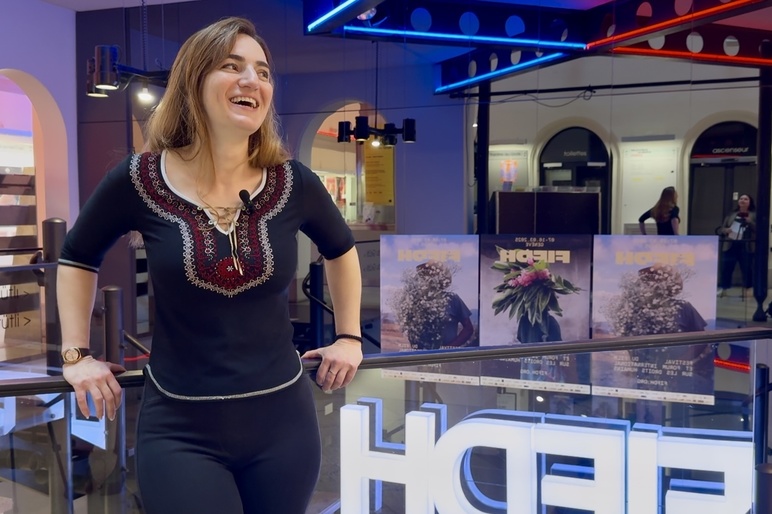
FIFDH and OMCT Spotlight Syrian Film Director Lina

April 3, 2025
IMG 8656

Born in Damascus, Syria, Lina is a filmmaker, journalist, and human rights defender, who in 2011 decided to pick up her camera and start filming, without a plan, but with the knowledge that she has a story to tell. What ensued are five years of conflict, arbitrary arrests, as well as torture and ill-treatment in detention, but also of hope that things would get better, despite a veto. Five Seasons of Revolution was recently screened at the International Film Festival and Forum on Human Rights in Geneva, in an event co-hosted by OMCT, partner of the festival. In this interview, Lina tells us more about her process and the challenges she encountered in the making of the film, as well as her hopes for the future of Syria.

What made you decide to start filming?

We started shooting in the summer of 2011, and a lot was already happening in Syria, but it was not clear how things were going to go. I was optimistic, thinking it would be over in six months, maybe a year, with a release within two years. It took 12 years.

It took more than five years of filming, and then many more to edit, because the country hadn’t stabilised, and the characters’ decision to participate in the film shifted with every new development, for their own safety. We had to go back, take characters out, then put them back in, and make amendments to the storyline. But it wasn’t all negative. During this time, deepfake technology improved and gave us a solution for the anonymity issue of some of the characters who chose to stay in Syria in a way that is safe and does not interfere with the visual narrative.

What was the most challenging part about the filming process?

Not knowing where it’s heading. As a filmmaker, you have, even in documentaries, a rough script, or an idea of where you are heading, but we couldn’t. It was like surfing, we just had to keep up with weird twists and turns. At some point, there were so many arrests in the group that I was filming, the characters just kept going in and out of jail, and at any given moment, we would lose one of them. I was arrested several times and the rest of the film crew had to come up with plan Bs for ‘what if we lose the director, who also happens to be the camera person and the sole contact to all the other characters, how do we finish the film?’ There was even one editing session that was held in my absence because I was detained, and they didn’t know when I would be released. It was really challenging.

What was the most challenging part about having to change your identity several times throughout filming?

It was very confusing, but it was also very necessary. In order to make it work, you have to internalise it to a certain extent, which was challenging. This confuses your relationships with the people you’re working with, with the people you’re socialising with, with the people that trust you, despite only knowing your fake name. Very strong bonds are formed under extremely difficult conditions and something always felt wrong about not being able to be fully honest with people. it also created these compartments of who I am because different parts of me had different names in different places… and they didn’t always get along. Walking out of it was also a challenge. Normalising being one person and only using one name, only answering to one name. It was quite a journey. 

Towards the end of the documentary, you talk about your experience with your arrest. Did what you experienced in custody change your approach to the film, or your activism? 

 I did not encounter anything during my arrest that I did not previously know exists and happens. What was detrimental was the repetition of detentions because you know you might get away with it once, maybe twice, if you’re lucky three times. But when I was released for the third time, I realised I did not know anybody that survived a fourth arrest. I felt like a cat with seven lives and I was really running out of them. I think this affected not only my decision-making in the film, but decision-making in my life in general, which obviously had consequences. 

What are three things you hope people remember after watching your film?

Number one is that simplistic reductionist scenarios of war into black and white, good and bad are never true. Number two is that nobody has a blueprint for what to do in these cases. People improvise, people try to find solutions on the spot under pressure, and these are not always ideal. But also, people can be much braver than they think, because at the end of the day we are survivors, all of us, and there is a lot more to us than we sometimes give ourselves credit for. And number three, friendship is really important. 

You are a filmmaker, but also a human rights defender. What are your hopes now for Syria and its people?

I hope people will be able to recover. I hope people will be given a break, given a chance to process everything they went through, given a bit of time to find a way out of this gigantic mess. It will take generations to rebuild the country. I understand that people have endured so much for so long that they cannot take one more day of it, so there is understandably also a lot of emotions. I just hope that we have the ability to open our hearts a bit more, understand each other a bit more and that people will in return give us the chance to process everything….

https://www.omct.org/en/resources/blog/it-becamefifdh-omct-spotlight-syrian-film-director-lina

Some rabbis want to be human rights defenders!

April 3, 2025
ICN Logo

Image: RHR

Image: RHR

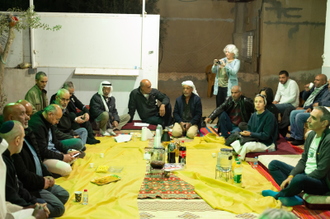
On 29 March 2025 Rabbis for Human Rights wrote: “This week, we took part in a moving Iftar meal-the traditional dinner that breaks the daily fast during the month of Ramadan-together with residents and activists from the Negev. The event was held in collaboration with the Regional Council for the Unrecognized Villages.

We sat together around one table, broke bread, listened to stories, and felt both the pain-and the hope. It was a moment of deep human connection between communities fighting for justice, equality, and a safer future.

But alongside the warmth and solidarity, we cannot ignore the harsh reality: In just the first half of 2025, more than 2,000 structures in unrecognized villages in the Negev have been demolished-a dramatic increase from previous years. The destruction of Umm al-Hiran last November still echoes-a whole community erased to make way for a new Jewish settlement.

True solidarity is not just a slogan-it is presence, listening, and action. We will continue to stand with these communities, amplify their voices, and work toward a future in which every person can live with dignity and security.

As Jews and as Rabbis, our commitment to justice is unconditional-it is at the heart of our identity.

As Ramadan draws to a close next week, we wish all our Muslim friends and partners a joyous Eid al-Fitr (Eid Mubarak).

May this holiday bring you and your families happiness, abundance, and blessings. We hope these festive days offer moments of comfort, renewal, and peace to all!”

This is not our Judaism.

Every day Rabbis from our organization are taking to the streets to protest against the government and for the protection of democracy. Rabbis for Human Rights’ staff and board members are on the streets every day, raising their voices to end the horrific bloodshed in Gaza, to bring the hostages home, and to call for an immediate ceasefire.

As rabbis and human rights defenders, we believe in the sanctity of every human life. This war must end now!

Read more about Rabbis for Human Rights: www.rhr.org.il/eng

Tags: Rabbis For Human Rights, RHR, Iftar, Holy Land, Israel, Palestine

https://www.indcatholicnews.com/news/52042

Winning human rights films in Thessaloniki and Geneva 2025

March 22, 2025
Comedian Noam Shuster-Eliassi speaks at the Thessaloniki International Documentary Festival awards. Looking on (in striped sweater) is 'Coexistence, My Ass!' director Amber Fares.

Comedian Noam Shuster-Eliassi speaks at the Thessaloniki International Documentary Festival awards. Looking on (in striped sweater) is ‘Coexistence, My Ass!’ director Amber Fares. Matthew Carey

Coexistence, My Ass!, a film about Israeli comedian Noam Shuster-Eliassi who dares to advocate for peaceful coexistence between Israelis and Palestinians, won the Golden Alexander Sunday at the Thessaloniki International Documentary Festival, TiDF’s top award.

Shuster-Eliassi attended the awards ceremony in the Greek port city, along with director Amber Fares and fellow members of the production. The comedian, whose one-woman show became the basis for the documentary, acknowledged her parents who were on hand for the event.

“My first political teacher, my father, is up there [in the balcony]. The first memory I have of my father is him going in and out of Israeli military prison for refusing to serve in the occupied Palestinian Territories,” Shuster-Eliassi noted. “Our activism and how we demonstrate equality, and freedom, and liberation is not just in one protest or one activity or one thing or one joke. It’s demonstrating what we envision the alternative is with your body, with your languages… using our privilege to make sure that my Palestinian friends will be free.”

“Two weeks ago, a Palestinian comedian, a colleague of mine, made jokes in Israel and the police showed up in at his home and took him and arrested him for telling jokes,” Shuster-Eliassi said. “And I’m here because there is still a little crack of freedom of speech that I get because of my privilege as an Israeli Jew.”

On a more humorous note, Shuster-Eliassi also brought up the president of Ukraine, Volodymyr Zelenskyy. “When I changed from political activism into comedy, it was because I heard that in The Ukraine, a Jewish comedian wrote a sitcom about becoming the president and he became the president!” she said. “So, I thought if I want to take my political career seriously, I need to start writing jokes because I know that when you’re laughing, you’re listening.”

Winning the Golden Alexander automatically qualifies Coexistence, My Ass! for consideration as Best Documentary Feature at the Academy Awards. In addition to the Golden Alexander, Fares’s film also won the Human Rights in Motion Award, presented by the Council of Europe.

While in Geneva the 23rd FIFDH announced its winners:

The documentary The Brink of Dreams by Nada Riyadh and Ayman El Amir and the crime-drama Santosh by Sandhya Suri have received the Grand Prizes at the Geneva-based human rights gathering

The 23rd FIFDH announces its winners

The Brink of Dreams by Nada Riyadh and Ayman El Amir (left) and Santosh by Sandhya Suri

The 23rd Geneva International Film Festival and Forum on Human Rights (FIFDH) has concluded its 7-16 March run, drawing in over 31,000 attendees and hosting experts to dissect current affairs, move beyond shock and inspire collective action. Showcasing global films that highlight human rights, the festival reaffirmed its status as a key event for audiences and professionals alike, fostering dialogue on pressing geopolitical and social challenges.

At the closing ceremony, Laila Alonso Huarte and Laura Longobardi, the festival’s co-editorial directors, mentioned: “We’re proud to see that the winning films are not only powerful and innovative in cinematic terms, but also warrant international support given the filmmakers’ commitment to and courage in confronting the many social, political and economic challenges in their countries.”

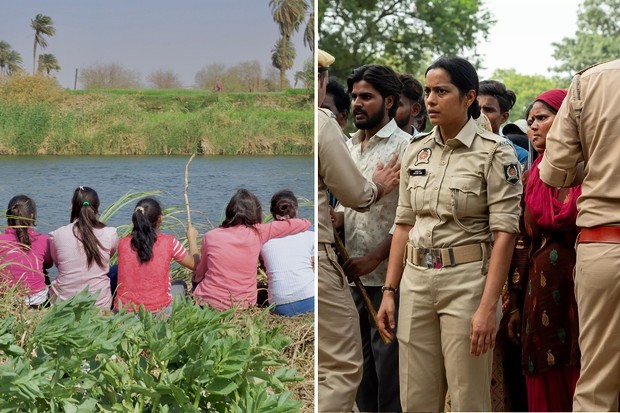
In the International Documentary Competition, the jury awarded the Geneva Grand Prix, valued at CHF 10,000 (€10,300) and sponsored by the city of Geneva, to The Brink of Dreams [+] by Nada Riyadh and Ayman El Amir. Highlighting their decision, the jury stated, “This poignant film follows the aspirations of five young Egyptian women seeking freedom – a freedom threatened by traditions and restrictions imposed in their village. Rich in cinematic creativity, it tackles sensitive issues such as forced marriage and sexual harassment, exposing how women’s rights remain precarious in the region.”

Here is the full list of award winners at the 23rd FIFDH:

International Documentary Competition

Geneva Grand Prix
The Brink of Dreams [+] – Nada Riyadh, Ayman El Amir (Egypt/France/Denmark/Qatar/Saudi Arabia)

FIFDH Gilda Vieira de Mello Prize
Khartoum [+] – Anas Saeed, Rawia Alhag, Ibrahim Snoopy Ahmad, Timeea Mohamed Ahmed, Phil Cox (Sudan/UK/Germany/Qatar)

Youth Jury Prize – Documentary
Writing Hawa [+] – Najiba Noori, Rasul Noori (France/Netherlands/Qatar/Afghanistan)

Fiction Competition

Fiction Grand Award
Santosh [+] – Sandhya Suri (UK/Germany/France/India)
Special Mentions
Cosmos – Germinal Roaux (Switzerland/France/Mexico)
Sugar Island [+] – Johanné Gómez Terrero (Dominican Republic/Spain)

Youth Jury Prize – Fiction
In the Land of Brothers [+] – Raha Amirfazli, Alireza Ghasemi (Iran/France/Netherlands)

Focus Competition

Vision for Human Rights Award
There Is Another Way – Stephen Apkon (USA/Palestine/Israel)

Special Jury – In Hospitals/Convergences Award
Flying Hands [+] – Paula Iglesias, Marta Gómez (Spain)

Special Jury – In Correctional Facilities/La Brenaz Jury Award
Life Is Beautiful [+] – Mohamed Jabaly (Norway/Palestine)

Champ-Dollon Jury Award
Riverboom – Claude Baechtold (Switzerland)

https://deadline.com/2025/03/2025-thessaloniki-international-documentary-festival-awards-1236327780/

https://cineuropa.org/en/newsdetail/475100

FIFDH GENEVA 2025 Awards

Global Alliance of National Human Rights Institutions – annual meeting 2025

March 21, 2025

Οn 12 March 2025 the United Nations High Commissioner for Human Rights Volker Türk addressed the Annual Meeting of the Global Alliance of National Human Rights Institutions

…Our partnership is especially crucial today, when the international system and the global consensus on human rights are under tremendous pressure. Across all regions, we see attempts to ignore, undermine and redefine human rights, to pit one right against another.

Women’s rights are one such example. 

The history of women’s rights has always been one of ebbs and flows. There have been incredibly important advances – universal suffrage, the right to work, property, inheritance, and economic rights – followed by setbacks. 

It has never been a straight path, but there has been progress overall. And the setbacks are temporary, because you cannot turn back the clock on gender equality and on the rights of women and girls. Even if there are those who loudly will try do so, you cannot. 

What is clear is that we cannot take anything for granted and must never be complacent.

Today, among other examples, the challenges include online and offline violence against women and girls, arbitrary limits to sexual and reproductive health and rights, resurgent toxic ideas about masculinity, especially among young men. 

Then there are the extreme cases of oppression and persecution of women such as in Afghanistan and parts of Yemen. 

Amidst all of this, against tremendous odds, and at great personal cost, women human rights defenders have remained steadfast in pushing for gender equality for women everywhere. 

More broadly, despite progress over decades, women still go unrecognized and ignored in many areas of life. 

In a world largely built by men, for men, the gender data gap persists. We need to address the invisibility of women on the data front. For example, women are still largely overlooked when it comes to science, healthcare, and the development of new technologies. According to Harvard University, 70 percent of the people impacted by chronic pain are women. And yet, 80 percent of pain studies are conducted on male mice, or on men.

For women with disabilities, women of African descent, indigenous women and other minorities, the disparities are even greater. For example, there is a 2:1 gender gap in internet access in favour of men with disabilities compared to women with disabilities.

Nearly 60 percent of women’s employment globally is in the informal economy, but the value of that work is often excluded from economic indicators. Women’s productivity and contributions are not captured or valued. And the COVID-19 pandemic made it clear that economies depend on women’s unpaid care work. 

There is a high risk that women will continue to be invisible as an overwhelmingly male generation of engineers develop AI systems and other new technologies.

Women and girls face entrenched discrimination, perpetuated by harmful power dynamics that subjugate and oppress half the world’s population.

Unless we dismantle structural inequalities piece by piece; and until we have full gender parity and equality, women’s rights will be vulnerable to fierce pushback and even manipulation.

The primary duty to promote and protect the rights of women and girls rests with States, in line with international human rights law.

But everyone in society – companies, including social media companies, civil society organisations, and national human rights institutions – has a role to play, and a stake in this issue. 

So much of the progress on women’s rights has been due to mobilisation at the national level. You are the best examples of that.

For example, painstaking advocacy by women human rights defenders led to the adoption of laws and policies on violence against women in a number of countries.

The private sector is working in collaboration with Governments to help to close the gender pay gap in a number of other countries.

These examples of success can inspire communities in other regions, inform international standards and improve the situation for women everywhere. 

As national human rights institutions, your role in promoting and protecting human rights is key. You are uniquely placed as advocates of international law and experts on the national context. 

Human rights are about facts. That is why our work to monitor and report on gender equality at the national level is crucial for legal and policy reform. You can also come up with creative new ideas on how to make women visible in data. 

Human rights are about the law. The right of women, in all their diversity, to have an equal say in all decisions that shape their societies, economies, and futures, is non-negotiable. Your advocacy for full gender parity across all policy areas, from economics to climate, from the design and roll-out of digital technologies to peace negotiations, can help make that law a lived reality on the ground. There are myriad examples within your own work of how to do that.

Within your institutions, you can lead by example by setting a high standard of gender parity and ensuring gender equality in staffing at all levels.

And human rights are about compassion – the glue that unites us in our common humanity. With our societies so divided, we need urgently open spaces for dialogue and joint action by different constituencies who may not always agree: Governments, companies, civil society, religious and faith leaders.  You are uniquely placed to build that space and bring various communities together in a public space for open debate and dialogue.

—-

The UNDP Administrator Achim Steiner participated via videolink.

https://www.ohchr.org/en/statements-and-speeches/2025/03/hc-turk-addresses-global-alliance-national-human-rights

https://www.undp.org/speeches/statement-high-level-opening-ganhri-annual-conference-2025

Yasmine Al-Mashaan, a Syrian human rights defender, on transitional justice

March 20, 2025

On 12 March 2025 the OHCHR published the feature:

Two women looking at the camera

From left:Human rights defenders Sofija Todorovic (Serbia) and Yasmin Al-Mashaan (Syria) © OHCHR/Gabriela Gorjón

“I’m the only girl of six siblings. And suddenly I lost five brothers between 2012 and 2014,” said Yasmine Al-Mashaan, a Syrian human rights defender and victim. “Before they were taken, they were around to love and protect me. I think it’s my duty to give them a little bit of their love and to fight for truth and justice for them and for everyone,” said Al-Mashaan, a former pharmaceutical assistant.

She spoke during an enhanced interactive dialogue on transitional justice at the 58th session of the Human Rights Council in Geneva, Switzerland, where UN Human Rights Chief Volker Türk presented a report on lessons learned and good practices related to transitional justice in the context of sustaining peace and sustainable development.

“In 2018, I co-founded, along with other families of forcibly disappeared persons, the Caesar Families Association, which brings together families who identified their loved ones among the victims in the photos smuggled out of Syria in 2013, known as the Caesar Photos,” Al-Mashaan said.

Her brother Oqba, one of her two disappeared brothers, was among the photos. 

Türk emphasized that transitional justice tackles the demons of the past to build a better future.

“It grapples with difficult questions about truth and memory. It looks for justice, in all its complex and myriad forms,” he said. “And it helps to repair the institutional and social fabric of fractured societies. Above all, transitional justice is about victims, dignity and healing.”

According to the Office’s report, in the aftermath of a conflict or large-scale and serious human rights violations and abuses, States have an obligation to provide truth, justice, reparation and guarantees of non-repetition. The report showcases some 36 victim-centred, inclusive, and gender-responsive transitional justice efforts led by victim associations and grass-roots organizations from dozens of countries, from Colombia to Syria, and Chad to Timor Leste.

However, Türk said, the path to peace is never easy.

“Transitional justice is often held up and slowed down by political instrumentalization, discriminatory or selective design and focus, insufficient buy-in of affected populations, and weak State institutions,” he said.

Women and youth as a driving force

Türk said that civil society, including grass-roots organizations often led by women and youth, play a crucial role in overcoming these challenges.

Sofija Todorovic, Programme Director of Youth Initiative for Human Rights in Serbia, who also participated in the dialogue, believes the role of youth organizations in transitional justice is indispensable.

“These organizations ensure that the voices and perspectives of young people are integrated into the policies and strategies shaping their future,” she said. “In many cases, their mission extends to educating youth about the history that has been deliberately concealed from them.”

Todorovic’s determination was fuelled by the realization that her country had hidden the truth from her.

“My State and the institutions within my State didn’t give me the right to truth and to make informed conclusion about the past, but rather they forced only one side of the story of the past,” she said. “And I think that that it’s unfair.”

She emphasized the need to address intergenerational trauma in transitional justice efforts.

“Only people who have space to heal can be able to build functional democracy,” she said. “We need a political climate that will resolve the trauma, not exploit it.”

Both Todorovic and Al-Mashaan’s organizations exemplify the power of women’s leadership, resilience, and strategic action in advancing transitional justice despite significant obstacles.

Justice and peace

Leyner Palacios Asprilla, a Colombian human rights defender and former Truth Commission member currently leading the Unit for Victims of the Chocó Region, participated in the dialogue via video message. The situation in his region remains so critical that he couldn’t leave the victims he works with alone.

For Palacios Asprilla, UN Human Rights in Colombia has been instrumental in navigating the challenges of consolidating peace, protecting victims, and defending human rights.

“Today, the world cannot forget our country because we have not yet crossed the finish line or overcome the obstacles to reach a point of tranquillity,” he said. “Colombia is an example to the world in its commitment to consolidating peace. But the world must not forget that this task is not yet complete.”

Türk said that in this fragmented world, transitional justice is an essential and creative problem-solving approach. It must be grasped, nurtured and used to build durable peace.

Many countries, including Nepal, Syria, and Bangladesh, have enormous opportunity to move towards justice and peace, he said.

Key takeaways

In preparing the report, UN Human Rights organized consultations with 70 women and 70 men from more than 77 countries, including representatives of national entities implementing transitional justice measures, victims’ associations and civil society organizations, regional and international human rights protection systems, and transitional justice experts and practitioners.

The report identifies seven key lessons in advancing transitional justice:

  1. Documenting human rights violations is essential for accountability and future justice.
  2. Marginalized victims must be included, ensuring their experiences are recognized.
  3. Victims’ associations play a crucial role in advocacy and justice efforts.
  4. Immediate legal, medical, and psychological support helps victims navigate trauma.
  5. International human rights mechanisms provide accountability when national justice fails.
  6. Universal jurisdiction and international courts offer alternatives when domestic options are blocked.
  7. Grassroots memory and memorialization preserve historical truth and prevent future atrocities.

see also: Transitional justice and human rights Report by UN Human Rights

https://www.ohchr.org/en/stories/2025/03/transitional-justice-confronting-past-building-future

Council of Europe adopts international convention on protecting lawyers

March 20, 2025

ImageCouncil of Europe - Conseil de l'Europe 

Alert reader Prof Rick Lawson drew my attention to this item which strengthens the notion that lawyers are human rights defenders [It is a topic on which I made on of my first interventions as ICJ Executive Secretary as far back as 1981 and miraculously still available on the internet https://www.icj.org/wp-content/uploads/1981/01/independence-of-judges-and-lawyers-conference-report-1981-eng.pdf]:

The Council of Europe has adopted on 12 March 2025 the first-ever international treaty aiming to protect the profession of lawyer. This is to respond to increasing reports of attacks on the practice of the profession, whether in the form of harassment, threats or attacks, or interference with the exercise of professional duties (for example, obstacles to access to clients).

Lawyers play a key role in upholding the rule of law and securing access to justice for all, including to vindicate possible human rights violations. Therefore, public confidence in justice systems also depends on the role played by lawyers.

The Council of Europe Convention for the Protection of the Profession of Lawyer covers lawyers and their professional associations, whose role is vital in defending lawyers’ rights and interests as a profession. The Convention addresses entitlement to practise, professional rights, freedom of expression, professional discipline and specific protective measures for lawyers and professional associations.

Under the Convention, states must ensure that lawyers can carry out their professional duties without being the target of any form of physical attack, threat, harassment or intimidation or any improper hindrance or interference. Where such circumstances could amount to a criminal offence, parties must conduct an effective investigation. Parties must also ensure that professional associations can operate as independent, self-governing bodies.

The Convention will be opened for signature on 13 May, on the occasion of the Council of Europe Foreign Affairs ministers’ meeting in Luxembourg.At least eight countries, including six member states of the Council of Europe, must ratify it for it to enter into force. Compliance with the Convention will be monitored by an expert group and a committee of the parties.

see also: https://humanrightsdefenders.blog/2017/03/09/independence-of-the-legal-profession-subject-of-side-event-on-16-march-2017/

Explanatory report of the Convention 

https://www.coe.int/en/web/portal/-/council-of-europe-adopts-international-convention-on-protecting-lawyers

Norway presents resolution on new technology and human rights defenders at Human Rights Council 58th Session

March 19, 2025

From press release dated: 13/03/2025

New technology provides human rights defenders with tools to organize, spread information, and reach people. At the same time, many experience digital surveillance, online violence, and harassment. It is important that these issues are discussed in the UN, and therefore, Norway is presenting a resolution in the UN Human Rights Council this spring’, says Foreign Minister Espen Barth Eide.

The resolution emphasizes that human rights are universal and apply in the same manner online as offline.  It advocates for increased protection against digital threats and surveillance and ensures that new technology is not used to restrict freedom of expression, freedom of assembly, or the right to privacy. The resolution also highlights the need for dialogue with tech companies to discuss the challenges faced by human rights defenders in the digital space.

‘We want to gather broad support for the resolution and secure clear commitments from the international community to protect those who fight for our shared rights – also in the digital sphere’, says Eide.

Norway has a long tradition of advocating for the protection of human rights defenders. The new resolution is the result of close dialogue with civil society actors, technology experts, and other countries. The resolution will be presented and adopted at the UN this spring. Moving forward, Norway will work to gain as much international support as possible for the resolution’s important message.

https://www.norway.no/en/missions/wto-un/our-priorities/other-issues/pressreleasenorway/hrc58hrd/

York Centre for Applied Human Rights offers Sam Pegram Scholarship 2025/26

March 19, 2025

CAHR announces details of the Sam Pegram Scholarship for the 2025/26 academic year

The Sam Pegram Scholarship provides one international student with full funding to pursue an LLM in International Human Rights Law and Practice offered by the York Law School and the Centre for Applied Human Rights.

  • Funding: Full tuition fee waiver, travel and visa costs, accommodation and living costs, and overseas placement. 
  • Academic year: 2025/26
  • Open to: International (including EU) students
  • Qualification level: Postgraduate taught
  • Number available: 1

This is a full scholarship that covers tuition fees, accommodation, travel and visa costs, including an overseas placement to South Africa, and a monthly living stipend for one individual student.

The scholarship is generously provided by The Sam Pegram Humanitarian Foundation in memory of Sam Pegram, a caring, kind and talented young man who tragically died in the Ethiopian Airlines’ Boeing 737 Max crash, in 2019, en route to Nairobi.

After spending two years volunteering and working for humanitarian NGOs in Jordan, Sam came to the University of York to study the LLM in International Human Rights Law and Practice. After graduating, he secured a role as a research policy assistant for the Norwegian Refugee Council in Geneva, where he was working when he died.

Sam was a wonderful presence in the classroom. He was committed, thoughtful and reflexive in his fieldwork. He was deeply committed to humanitarianism, the rights of people on the move, and social justice in a broad sense. He remains deeply missed by his friends and family here at York, in Lancashire where he was from, and around the world.

Through this scholarship, others will have the opportunity to study on this course and make a positive difference for the rights of people on the move and human rights more generally.

Eligibility 

Open to International (including EU) students only.

In order to be eligible, you must also have an offer for a place on this course: LLM International Human Rights Law and Practice

To apply, you must also:

  • have applied to study on the LLM in International Human Rights Law and Practice at the University of York on a full-time basis
  • demonstrate that you have limited financial resources and that you need the scholarship to pursue your postgraduate studies
  • demonstrate a passion for human rights, either through your previous academic studies, professional work, or volunteer activities
  • have a demonstrable specific interest in migration issues, and that you wish to pursue or consolidate a career working on issues affecting people on the move, including generally and in relation to their social exclusion
  • have some lived experience of human rights challenges or migration issues.

How to apply 

Apply online before the deadline on Saturday, 31st May 2025, 11.59pm BST

https://www.york.ac.uk/cahr/news/2025/sam-pegram-scholarship-2025/

IDRC is funding research on how to defend rights in a hostile context

March 19, 2025

On 14 March 2025, IDRC announced that it is funding research to uphold fundamental democratic freedoms and address rising threats to peoples’ rights. The CAD4.13 million investment supports six projects across five regions:

Ugandans demonstrating in Kampala hold up posters of women who have been kidnapped and murdered.

Demonstrators in Kampala, Uganda, march in 2018 to draw attention to the murders, kidnappings and, activists claim, a lack of action by the police in response. Frederic Noy/Panos Pictures

The freedom to associate, participate in decision-making and express views is fundamental to democracy. Yet, in many countries around the world, these hard-won political and civil rights are being questioned and eroded through physical attacks, online intimidation, smear campaigns, digital surveillance and the lack of response from authorities when attacks occur. Legal and policy restrictions limit individual rights such as same-sex unions and reproductive health services while, increasingly, obstacles like funding bans and censorship are reducing the ability of people and organizations to contest these measures. 

Research is needed to inform the strategies and actions of organizations, groups and movements that advocate for the respect for human rights. Research institutions, networks, and women’s rights and LGBTI+ organizations are leading IDRC-supported research to:

  • understand what drives the erosion of rights in each context 
  • analyze the strategies used to counter these trends 
  • explore how to strengthen rights defenders, for example through alliance-building and cross-movement solidarity
  • generate policy recommendations to safeguard rights 

Read about the projects

Addressing gender discrimination and violence — focus on Eastern and Southern Africa

Defending against gender backlash: Strategies of resilience in Southeast Asia

Enhancing the promotion and protection of human rights and gender equality in Sierra Leone and Liberia

Protecting LGBTIQ+ human rights movements and organizations in Honduras, Guatemala and El Salvador

Upholding rights at a time of global backlash: Strategies in the Middle East and North Africa

Fostering a solidarity network: Collective learning and action in support of gender equality

The six research projects are connected through a common research agenda aimed at producing insights across regions and globally.

https://idrc-crdi.ca/en/news/new-research-explores-how-defend-rights-hostile-context