Archive for the 'Front Line' Category

Frontline calls for action on case of Lina Attalah in Egypt

November 12, 2026

On 11 November 2026, woman human rights defender and journalist, Lina Attalah, is due to appear before the New Cairo Misdemeanor Court in appeal proceedings concerning a 2024 in absentia conviction, where she was sentenced to one year in prison. She was convicted on charges of disseminating false information and operating a website without a licence. These charges had arisen from her legitimate journalistic work.

Lina Attalah is an Egyptian woman human rights defender, journalist and co-founder and editor-in-chief of Mada Masr, an independent bilingual news outlet established in Cairo in 2013. She is a prominent advocate for independent journalism and press freedom in Egypt. Lina Attalah previously served as managing editor of the Egypt Independent and has reported extensively on political, social and human rights issues across Egypt and the wider Middle East. Her journalism has addressed sensitive issues including state accountability, immigration, conflict and freedom of expression.

Lina Attalah has received international recognition for her work, including the 2020 Knight International Journalism Award from the International Center for Journalists. She was also named among TIME magazine’s 100 most influential people in 2020. As a result of her human rights and journalistic work, the woman human rights defender has faced persistent judicial harassment and intimidation.

Meet Lina Attalah

Front Line Defenders

https://www.frontlinedefenders.org/en/case/lina-attalah-risk-imprisonment-amid-escalating-judicial-harassment

Amnesty and Front Line demand that Israel immediately releases Palestinian farmer and land defender Ghassan Najjar

November 11, 2026

العربية

“Israeli authorities must immediately release Ghassan Najjar who was arrested solely because of his peaceful activism to protect the olive harvest season in Burin. Israeli intelligence agents had explicitly threatened Ghassan Najjar, co-founder of Burin’s Land and Farming Agricultural Cooperative, that he would be arrested if he did not stop his activism. His activism includes community organizing, supporting mutual aid among farmers through the cooperative, organizing an annual Kite Festival in the village and leading numerous cultural initiatives. Ghassan Najjar had been facing repeated threats since the start of the olive harvest season and their frequency intensified during the week prior to his arrest.

“A military interrogator informed Ghassan Najjar’s lawyer that he is likely to be placed under administrative detention, a tactic systematically used by Israeli authorities to punish and persecute Palestinians by holding them indefinitely without charges or trial based on secret evidence they cannot access. As of October 2026, Israeli authorities had been holding 3,101 Palestinians under administrative detention. Ghassan Najjar had already spent nearly a decade in Israeli jails, mostly under administrative detention. His first arrest came when he was just 15 years old.

“Like Palestinian human rights defender Ayman Bani Owda and countless other Palestinians, Ghassan Najjar is being hounded by a discriminatory justice system that has played a key role in legitimizing and maintaining Israel’s system of apartheid and unlawful occupation. States with influence on Israel must use their leverage to pressure Israeli authorities into releasing all arbitrarily detained Palestinians, including Ghassan Najjar, and finally end their use of administrative detention.”

Burin is a Palestinian village located south of Nablus, in the occupied West Bank. For over two decades, the village has been subjected to frequent attacks by Israeli settlers and repeated military raids by Israeli forces, significantly affecting the daily lives and livelihoods of its residents. These incidents include assaults on Palestinian residents and their property, damage to agricultural land, and restrictions on farmers’ access to their lands, particularly during the olive harvest season.

In addition to his role in Burin’s Land and Farming Agricultural Cooperative, Ghassan Najjar, 36, is the coordinator for the Sumoud network supporting farmers and shepherds, including during the olive harvest season. He is currently held in the Huwara military detention facility.

https://www.frontlinedefenders.org/en/profile/ghassan-najjar

The laureates of the 2026 Front Line Defenders Award are..

October 10, 2026

On 8 October 2026 Front Line Defenders announced the five laureates of its prestigious 2026 Award for Human Rights Defenders at Risk, which was presented at a special ceremony in Dublin this morning:

  • Africa: Laurinda Manuel Gouveia (Angola)
  • Americas: Adda Vyctoria Caetano (Brazil)
  • Asia and the Pacific : Umar Khalid (India)
  • Europe and Central Asia: Ljiljana (Serbia)
  • Middle East and North Africa: Ahmadreza Haeri (Iran)

“There is a powerful wave of people who believe there is a better path despite the worrying state of affairs for human rights defenders (HRDs) around the world today; a wave of those who believe in a brighter future. This year’s laureates are emblematic of this wave of positive change,” said Alan Glasgow, CEO of Front Line Defenders.

“These laureates represent the defenders from every corner of the world who are courageously and peacefully standing up for justice and equality. Arbitrary detention, torture, death threats, judicial harassment, smear campaigns: these are some of the hazards of standing up for human rights and, still, these laureates have refused to stay silent.”

The Annual Front Line Defenders Award for Human Rights Defenders at Risk was established in 2005 to honour HRDs who make outstanding contributions to the promotion and protection of the ]uman rights of others, often at great personal risk. The Award focuses international attention on their work and struggles, giving them a greater national and international platform to speak about the issues they defend.[see hhttps://trueheroesfilms.com/equip/digest/?sort=most&award=2E90A0F4-6DFE-497B-8C08-56F4E831B47D]

This year’s laureates were selected from among hundreds of candidates put forward in a secure, public nomination process carried out between November 2025 and January 2026.

The winners receive support to bolster their protection, including digital and physical security, advocacy, visibility, wellbeing and more. The laureates received the Award at a ceremony at Trinity College Dublin today, which was attended by foreign diplomats and representatives of the Irish government and Department of Foreign Affairs, civil society and media organisations among others.

View a photo booklet of the Award winners

Africa

Laurinda Manuel Gouveia is an Angolan woman human rights defender who has promoted women’s rights, fundamental freedoms and participatory democracy for over a decade. In 2021 she co-founded the Balumukenu Association, which trains young people, violation documentss and builds civic participation. Her School of Human Rights and Community Leadership has seed helped at least four new youth movements. Arrested several times for her work, she once spent 73 hours in a police cell with her seven-month-old baby. Despite this, what keeps Laurinda going is a belief that Angola can change, and that every generation bears responsibility for its own moment. She has helped secure the release of four activists imprisoned for exercising their freedoms and civic and participation is now campaigning for Inécio Pessela, a 15-year-old paralysed after being shot by police at 14 during the 2025 taxi drivers’ strike.

“When young people know their rights, organise themselves and involved, they cease to be mere spectators to reality and become agents of change.” Laurinda Manuel Gouveia

Americas

Adda Vyctoria Caetano is a trans Black quilombola woman, artist, cultural producer and leader of her community, the Quilombo Conceichocéo dos Caetanos in Brazil’s northern state of Cear. As National Coordinator of CONAQ’s LGBTQIAPN+ Collective, she works to strengthen the political organisation and visibility of LGBTQIAPN+ people within the quilombola (the term quilombolo’ refers to communities of Black ancestry linked to the slave of resistancery in Brazil), her role in CONAQ’s National Collective of Quilombola Women. Facing threats, intimidation, online attacks and attempts tocredit dis dis her public leadership roles, she has built support networks and turned individual threats into collective protection. Every advocacy for the LGBTQIAPN+ community and defence of quilombola rights are steadfast.

“I fight for ownership of our territories because territory is life, ancestry and the future. I fight so that no one has to hide who they are in order to have the right to belong.” Adda Vyctoria Caetano

Asia and the Pacific

Umar Khalid is a well known name in India today. To those who try to silence his work, he is an “enemy of the state” and an “antinational”, but to others, he is a national hero, a voice of the people, and a human rights defender. For the last six years, Umar Khalid has been shackled behind bars for his leadership in the peaceful and democratic civil movement against the unconstitutional and anti-Muslim amendments to India’s citizenship laws. The law, which accompanied increasingly hostile climate of growing Hindu nationalism, threatens to disproportionately strip Muslims of documentation and legal status. Umar Khalid, with a steady trajectory defending students’, minorities’ and citizens’ rights, is seen as one of the key voices speaking out out against this injustice. Several major international human rights organisations, as well as the United Nations Working Group on Arbitrary Detention, have highlighted the illegality of his arrest and detention.[see https://humanrightsdefenders.blog/2026/02/20/international-ngos-call-for-the-immediate-release-of-umar-khalid-in-india/]

“We won’t respond to violence with violence. We won’t respond to hate with hate. If they spread hate, we will respond to it with love.”

Because he remains jailed, Umar Khalid was unable to travel to Dublin to receive his receive Award.

Europe and Central Asia

Ljiljana Nešić is a Serbian human rights defender, feminist, and peace activist who has advanced and protected women’s rights for more than 33 years. Throughout her career, she has been dedicated to supporting women victims of domestic and intimate partner violence (including that perpetrated by soldiers who returned from the Yugoslav wars), advocating for gender equality, women’s safety, and access to justice, with a particular focus on women living in rural andalised margin communities in southern Serbia. She is now the President of ‘ene za mir (Women For Peace). She has faced detention, defamation, threats, including threats of sexual violence, and hacking. The threats have increased significantly in the last few years, and in December 2025 her home was broken into ransacked in what is believed to be an act of intimidation. She says she has never felt as unsafe in her work as she does now, but she continues.

“Let your courage be gentle. Let your word be a bridge. And let your heart never settle for a world where women are silent and peace is a privilege.”

Middle East and North Africa

Ahmadreza Haeri is an Iranian Kurdish human rights defender and anti-death penalty campaigner who has dedicated his life to defending the dignity and fundamental rights others. On 9 September 2026, he was released after three and a years half of imprisonment, during which physical assault, solitary confinement nor judicial harassmented succeed in silencing his courageous defence of prisoners ’ rights, including their right life. Ahmadreza is one of the initiators of the “No to Death Penalty on Tuesdays” campaign, a grassroots, prisoner-led movement against prisoner executions in Iran. For years, Iran has typically been among the world’s most prolific state executioner, and executions announced in 2025, with at least 2,159 people hanged, according to Amnesty International. Prisoners across tens of prisons now participate in the weekly hunger strikes each Tuesday (executions are often scheduled on Wednesdays) despite pity consequences.

“They are seeking death, while we are fighting for life. I am certain that in our struggle for the right to life, there is no defeat.” Ahmadreza Haeri

*Despite being recently released, Ahmadreza Haeri remains in Iran and was also unable to travel to Dublin to receive his Award due to security reasons.

https://www.frontlinedefenders.org/tr/node/9395

Two human rights defenders continue to be prosecuted in Greece in spite of everything..why??

October 6, 2026

On 3 October 2026 Human Rights Watch and others lament the weird insistence of Greece to go ahead with the prosecution of two prominent human rights defenders as a politically-motivated attempt to silence their efforts to expose abuses against migrants, The trial of the two activists, Panayote Dimitras and Tommy Olsen, is set to begin on the Greek island of Rhodes on 6 October 2026. See also: https://humanrightsdefenders.blog/2025/11/21/human-rights-defenders-in-greece-on-trial-for-baseless-charges-for-assisting-people-on-the-move/

“The upcoming trial of Panayote Dimitras and Tommy Olsen is a blatant attempt to criminalize and silence their legitimate human rights work,” said Eva Cossé, senior Europe researcher at Human Rights Watch. “Prosecutors should drop this politically motivated case against Dimitras and Olsen once and for all.”

Dimitras, founder and president of the Greek nongovernmental group Greek Helsinki Monitor, and Olsen, a Norwegian national and founder of the nongovernmental group Aegean Boat Report, are being prosecuted alongside two Cameroonian asylum seekers on charges of “forming or joining for profit and by profession a criminal organization with the purpose of facilitating the entry and stay of third country nationals into Greek territory.” If convicted, they face up to 20 years in prison.

The charges brought against the activists in early 2023 stem from their peaceful human rights and humanitarian work, Human Rights Watch said. The indictment seeks to criminalize the defendants’ practice of notifying Greek authorities and international bodies of the whereabouts of newly arrived asylum seekers and migrants on the Greek islands, to help ensure that they have access to the country’s asylum procedure and not be pushed back to Türkiye.

Dimitras and Olsen have for years documented and exposed human rights violations against asylum seekers and migrants, including violent pushbacks by Greek authorities, that have been characterized as “systematic” by the European Court of Human Rights.

On May 15, a Norwegian appeals court rejected Greek authorities’ request to extradite Olsen, who lives in Norway, to Greece through a European Arrest Warrant. The Norwegian court concluded that the acts described by Greek authorities do not constitute criminal offenses under Norwegian law, noting that assisting someone in initiating an asylum procedure is a lawful act protected by international treaties. The court also found that extraditing Olsen to Greece would present a real risk of violating his right to freedom of expression.

Because Greek prosecutors have maintained arrest warrants, including the European Arrest Warrant, against Olsen, Olsen faces arrest and detention if he travels to Greece to defend himself. Dimitras who lives in Greece, is not in detention but is subject to a travel ban preventing him from leaving the country. The court summons specifies that, under Greek law, defendants will be tried in their absence if they do not appear or are not represented by a lawyer.

Proceeding on that basis would amount to an in absentia prosecution under international law. Under international law, including the European Convention on Human Rights, to which Greece is a party, anyone convicted in absentia, who later returns to the country where the conviction was issued, should have the opportunity to a fresh determination of the merits of their case by a court there.

The prosecution of Dimitras and Olsen is part of a wider, well-documented pattern of Greek authorities misusing criminal and administrative law to harass and intimidate human rights activists and civil society organizations defending the rights of asylum seekers and migrants. In January, a Greek court on the island of Lesbos acquitted 24 humanitarian workers of similar charges, after prosecutors subjected them to a devastating seven-year legal ordeal.

Despite this high-profile acquittal, Greek authorities have failed to change course, Human Rights Watch said. In February, the Greek government passed a migration law that makes membership in a nongovernmental organization an aggravating circumstance in migration-related criminal offenses, in some cases elevating them to felonies, with draconian penalties.

In 2023, the then-United Nations special rapporteur on the situation of human rights defenders, Mary Lawlor, stated in a report to the UN Human Rights Council that “human rights lawyers, humanitarian workers, volunteers and journalists [working on migration in Greece] have been subjected to smear campaigns, a changing regulatory environment, threats and attacks, and the misuse of criminal law against them, to a shocking degree.” Lawlor has also said that the criminal investigation against Dimitras and Olsen “strongly appears” to be arbitrary.

“The Norwegian court firmly recognized that helping people present themselves to seek asylum is not a crime,” Cossé said. “Greek authorities should take a cue from the court and end this farce by dropping the case and halting the weaponization of criminal law against human rights defenders.”

https://www.hrw.org/news/2026/10/03/greece-rights-defenders-on-trial

https://euobserver.com/241141/they-want-to-shut-me-up-norwegian-activist-fights-20year-greek-prison-threat-over-asylum-aid

https://www.fidh.org/en/issues/human-rights-defenders/greece-migrants-rights-defenders-tommy-olsen-and-panayote-dimitras-to

https://www.frontlinedefenders.org/en/case/continued-judicial-harassment-and-trial-against-human-rights-defender-panayote-dimitras

https://ecre.org/mediterranean-ngo-questions-states-willingness-to-save-lives-after-latest-tragedy-%E2%80%95-trial-of-human-rights-defenders-in-greece-postponed-until-april-2027-%E2%80%95-european-court-cond/

Reprisals against human rights defenders threaten civic space in Malaysia – serious concern about human rights defenders Amir Hariri Abd Hadi and Chew Chuan Yang

September 25, 2026

ARTICLE 19 and CIVICUS: World Alliance for Citizen Participation denounce the intimidation and restrictions of human rights organisations MANDIRI and HAYAT, and their representatives, MANDIRI Executive Director Amir Harir Hadi, and MANDIRI Finance Director and HAYAT Chief Executive Officer (CEO) Dobby Chew. The recent incidents signal an intensified, worrying pattern of harassment against human rights defenders in Malaysia, directly undermining the ability of civil society to advocate for accountability and reforms without fear of reprisal.  We stand in solidarity with Amir Hadi, Dobby Chew, and their organisations. Our organisations also urge the authorities to immediately reinstate affected bank accounts, lift the travel bans imposed on Amir Hadi and Dobby Chew, and drop the investigations against them. 

On 11 September, MANDIRI confirmed that Amir Harir Hadi’s personal bank account had been frozen under Section 44(1) of the Anti-Money Laundering, Anti-Terrorism Financing and Proceeds of Unlawful Activities Act (AMLA) 2001 until further instructions from the police. The bank accounts of Dobby Chew, as well as those belonging to MANDIRI and HAYAT have also been blocked. MANDIRI also confirmed that, as of 14 September, they have not received an official letter or notice from the police regarding an investigation into the matter.  

Authorities’ harassment of MANDIRI started in May 2026 after a call by Kamil Munim, political secretary to the finance minister and chief of the youth wing of the People’s Justice Party (PKR), for an investigation into alleged foreign funding that had been channelled to organisations, individuals, and politicians. Munim urged the authorities to carry out the investigations in the interest of protecting national security from political activities.  

A week prior, on 3 September, Amir Hadi confirmed that he had been banned from travelling abroad, shortly after Dobby Chew faced issues returning to Kuala Lumpur from Jakarta. Dobby has since been informed that he is also under a travel ban. 

‘Restricting the movement and financial operations of human rights organisations and defenders without transparency, due process, or clear legal justification is disproportionate and unnecessary. Such measures interfere with the legitimate work of civil society organisations, hampering their ability to operate independently, defend human rights, and support communities that they serve,’ said Alfred Wu, Head of the Asia-Pacific Programme at ARTICLE 19.

Both Amir Hadi and Dobby Chew voluntarily presented themselves to the Bukit Aman police station on 14 September to seek clarification regarding the frozen bank accounts and travel bans, having received no prior contact or information from the authorities on these restrictions. 

In recent months, human rights defenders have come under increasing pressure. Examples include investigations into the former CEO of the Center to Combat Corruption and Cronyism (C4 Center), Pushpan Muruguah, for allegedly committing an activity detrimental to parliamentary democracy; investigations into political commentators and academics; the arrest of youth activists Hamdin Nordin, Fakrurrazzi Khairur Rijal, and Ahsanul Akmal Sulam in connection with allegations of misuse of power involving the Malaysian Anti-Corruption Commission (MACC); probes into activist Shakila Zen for allegedly defaming a royal institution by linking it to sand mining activities; and travel restrictions imposed on three activists from the electoral rights group BERSIH, Asraf Sharafi Azhar, Anas Nor’azim, and Alyaah Hani.  

‘Taken together, this string of incidents points to a troubling pattern of pressure against those who dare speak out and seek accountability. This risks entrenching a culture ofintimidation and silencing critical voices, which cannot be normalised. As Malaysia moves towards its next general elections, the authorities should instead be doing the opposite: ensuring a safe and enabling environment for human rights defenders to operate in and hold those in power accountable without fear of reprisal. A protected civic space is not only essential for credible elections, but for a healthy and resilient democracy,’ said Josef Benedict, Civicus Asia Pacific Researcher.

Serious concern about the arrest and detention of human rights defenders, Amir Hariri Abd Hadi and Chew Chuan Yang in Malaysia

The Centre for Independent Journalism (CIJ) has called on authorities to stop targeting human rights defenders and instead ensure transparency and accountability in matters involving corruption.

The call came after Mandiri executive director Amir Hariri Abd Hadi and finance director Dobby Chew were arrested on Sept 22 under Section 4(1)(a) of the Anti-Money Laundering, Anti-Terrorism Financing and Proceeds of Unlawful Activities Act 2001 (AMLA).

On 22 September 2026 Frontline issued a call for the release of Amir Hariri Abd Hadi and Chew Chuan Yang in Malysia.

https://www.article19.org/resources/malaysia-reprisals-against-human-rights-defenders-threaten-civic-space

https://www.sinardaily.my/article/741140/focus/national/stop-targeting-rights-defenders-cij-tells-authorities-after-mandiri-case

https://www.frontlinedefenders.org/en/case/amir-hariri-abd-hadi-and-chew-chuan-yang-arrested-under-anti-money-laundering-law

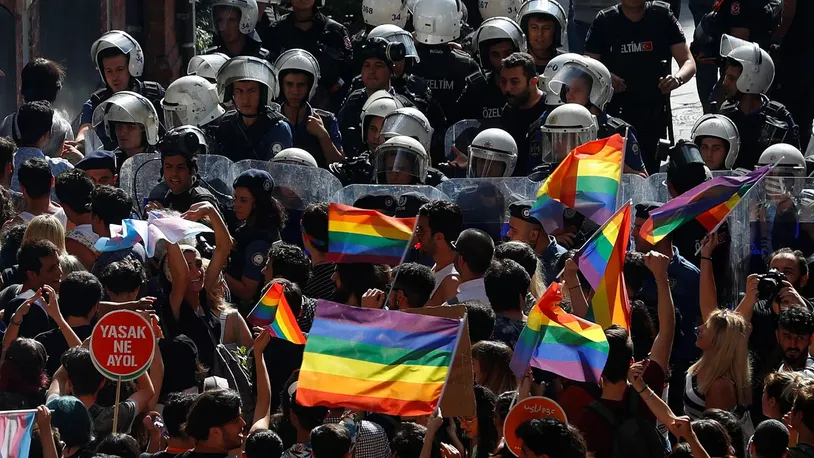
450 NGOs urge Turkey to end criminalization of LGBTI+ movement

September 24, 2026

More than 450 civil society organizations from 65 countries have called on Turkey to end what they described as the criminalization of the LGBTI+ movement and release people detained solely for human rights work.

In a joint statement on 22 September 2026 titled “Stop the Criminalisation of the LGBTI+ Movement in Turkey,” the groups said human rights advocacy, publishing, organizing, membership, donations, fundraising and lawful domestic or international funding should not be treated as evidence of criminal activity and called for an end to raids and online restrictions targeting LGBTI+ organizations and human rights defenders.

The statement, published by Turkey-based Women for Women’s Human Rights (WWHR), was signed by organizations including the Association for Women’s Rights in Development (AWID), CIVICUS, the International Planned Parenthood Federation (IPPF), the International Women’s Development Agency (IWDA), PEN Norway and the World Organisation Against Torture (OMCT). CIVICUS is a global alliance of civil society organizations and activists.

The groups objected to what they described as the use of organized-crime provisions and broadly defined concepts such as “obscenity,” “morality” and “family” to criminalize LGBTI+ identities, visibility and advocacy.

The appeal follows a nationwide operation that began September 13 with police raids on LGBTI+ organizations, activists’ homes, gay bars and nightclubs, a day after Turkish authorities restricted access to social media accounts belonging to more than a dozen groups.

Organizations targeted in the investigations include the Kaos Gay and Lesbian Cultural Research and Solidarity Association (Kaos GL), the Families and Friends of LGBTI+ People Association (LİSTAG) and the Social Policy, Gender Identity and Sexual Orientation Studies Association (SPoD), as well as several other LGBTI+ and HIV-related groups.

According to Turkish media, 116 people had been detained in the raids and 82 were jailed pending trial. The cases include LGBTI+ activists and members of rights organizations as well as people accused of prostitution, drug offenses and other crimes, meaning not everyone detained or jailed in the operation was accused of activity connected to LGBTI+ advocacy.

https://www.omct.org/en/resources/urgent-interventions/turkey-mass-arbitrary-detention-of-lgbtqi-human-rights-defenders

https://www.ifj.org/media-centre/news/detail/category/press-releases/article/tuerkiye-global-unions-express-their-unwavering-solidarity-with-lgbti-organisations-activists-and-human-rights-defenders

https://www.hrw.org/news/2026/10/12/turkiye-end-internet-censorship

https://www.hrw.org/news/2026/10/13/turkiye-cop31-host-curbs-environment-defenders

https://www.ohchr.org/en/press-releases/2026/10/turkiye-un-experts-alarmed-crackdown-lgbti-human-rights-defenders-and-civil

https://www.frontlinedefenders.org/pt/node/9377

Open letter by NGOs to forthcoming EU-CELAC ministerial meeting on Security

September 23, 2026

To the leaders of Latin America and the Caribbean and the European Union,

As you gather in the forthcoming EU-CELAC ministerial meeting, security will be in everyone’s minds: security of your populations; international security in the context of a growing number of armed conflicts around the world; as well as transnational security challenges, such as transnational crime and drug trafficking.

This security framing is not baseless.The deterioration of the security situation in the continent results from the complex interplay of state policies, corporate interests, transnational criminal groups, high levels of corruption and geopolitical dynamics. Latin America and the Caribbean remains one of the most dangerous regions of the world to be a human rights defender. According to data from the HRDMemorial, a global consortium of human rights organisations coordinated by Front Line Defenders dedicated to verify and document killings of human rights defenders, 274 human rights defenders were killed in 2025 in the Americas.

However, the undersigned organisations share the concern that the securitisation of politics and policies, rather than achieving safer societies and lowering levels of violence, is being misused to unduly target human rights defenders and civil society, undermine the rule of law as well as to push through an economic agenda of extractivism without proper consultation and safeguards nor a popular mandate.

The instrumentalisation of counter terrorism and other security legislation is nothing new and has been extensively documented, including against indigenous communities in the Americas and pro Palestine peaceful protesters in Europe. Human rights defenders have long been accused of being part of “extremist” or criminal organisations; and the finances of leading human rights organisations on both regions have been hit with false accusations of money laundering, financing of terrorism, foreign influence or tax evasion, weaponising the international security and financial normative architecture to cripple their legitimate and peaceful human rights work.

From these trends we are seeing a model emerge and grow rapidly across the Americas. This model, perfected and championed in El Salvador by the government of Nayib Bukele, follows a similar pattern: successive states of emergency justified under guise of security for the population, growing militarisation that enables arbitrary arrests, prolonged pretrial detention, violation of fair trial rights, harsh penalties, high-lethality police, deaths in custody, torture, sexual violence and enforced disappearances in what international jurists and experts have concluded may constitute crimes against humanity.

At the last EU-CELAC summit, on 9 November 2025, both sides jointly recognised “the role of civil society organisations and human rights defenders” and committed to combat “transnational organised crime and drug trafficking […] in full compliance with international law”. We note with alarm that the reality on the ground seems to be very different, as a slate of punitive measures and restrictive legislation, including foreign agents laws modelled on Russian legislation, is adopted across the region.

Human rights defenders are targeted and stigmatised as pawns of criminal groups – while boundaries between state institutions, private economic interests and criminal networks are often blurred and go unexamined. In this context, securitisation is not only a response to crime, it is used to facilitate economic interests by enabling governments and private actors to gain access to land, suppress resistance to projects, and concentrate power without transparency or oversight.

Security narratives become a justification for militarisation, restriction or closure of civic space and criminalisation of defenders, silencing them and ultimately clearing the path for extractive and infrastructure projects so they can move forward with little to no opposition. Too often, the international community reads this dynamic as a necessary trade-off between human rights and security and progress, which in turn reinforces the narratives used by these governments to sell this choice to their voters.

Respect for human rights and the rule of law have been jointly and repeatedly endorsed by all participants in successive EU-CELAC summits and other forums. The forthcoming EU-CELAC ministerial meeting thus presents an important opportunity for partners from both sides of the ocean to push back on this narrative of security versus human rights and democracy.

As both sides deepen their cooperation on security and strategic investment, through the Global Gateway and partnerships on critical raw materials and other sectors, all cooperation must be firmly anchored in values that both regions share: rule of law, human rights and respect for international norms and standards. To accept restrictions on civic space and attacks on human rights defenders as necessary for security and economic development is a cold and false trade off that betrays those values.

The leaders of Latin America and the Caribbean and the European Union must be clear: there can be no sustainable security, responsible value chains and sustainable development goals without human rights and democratic institutions. Human rights defenders and civil society are not enemies, but play a crucial role in their societies, and must be allowed to carry out their legitimate human rights work.

Therefore, the undersigned organisations call on EU-CELAC leaders to issue a joint declaration dedicated to protect civic space and human rights defenders, and the rule of law committing to:

  • End the misuse of anti-terrorism and financial laws against civil society and publicly reject the criminalisation of human rights defenders;
  • ensure the rule of law and human rights safeguards in security and investment frameworks and in region to region cooperation, including under the Global Gateway and in any cooperation on critical raw minerals;
  • Condemn the indiscriminate and prolonged use of states of emergencies,and the creeping militarization of multiple aspects of public life, including military ownership of infrastructure and resources;
  • Develop policies to combat organized crime that are grounded in human rights, address the root causes of socio economic conflicts, and integrate anti-corruption measures;
  • Condemn the adoption of “foreign agent” laws and legal instruments designed to restrict civic space and foreign funding for human rights and non-governmental organisations.

In parallel, we urge you to act for mutual accountability in upholding the international human rights commitments of EU and LAC states by:

  • Maintaining continued international scrutiny for violations in EU-LAC exchanges and in multilateral forums, and promoting relevant structural reforms;
  • Condition cooperation and technical assistance on issues of security and justice on compliance with human rights standards and judicial guarantees;
  • Pro-actively and publicly support human rights organizations, journalists, defenders and families of victims through joint public declarations, robust diplomatic efforts and concrete cooperation; on protection programmes, psychosocial support, legal assistance and sustainable financing;
  • Promote effective legislation and policies for the protection of human rights defenders and ensure adequate funding for their implementation.

Download the Joint Letter

On behalf of the following organizations:

  • ActionAid
  • Amnesty International
  • Asociación Nacional de Centros (ANC) del Perú
  • CELAC – EU Civil Society Working Group
  • Coordinadora de la Mujer
  • Coordinadora de ONGs Española
  • Esquel
  • EU – LAT Network
  • European Network OIDHACO – International Office for Human Rights- Action Colombia
  • International Federation for Human Rights – FIDH
  • Foro para las Relaciones CELAC-UE
  • Front Line Defenders
  • Protection International
  • World Organisation Against Torture – OMCT

https://www.frontlinedefenders.org/en/statement-report/re-securitization-militarization-and-its-impact-human-rights

Bahraini Police Seize Prominent Human Rights Defender Naji Fateel in Dawn Raid

August 24, 2026

In a Blog for Human Rights First published on 20 August, 2026 Brian Dooley decries the arrest of Naji Fateel in Bahrain.

Around 5am on Tuesday morning this week, Naji Fateel was woken up by police banging hard on his bedroom door. They grabbed and arrested the Bahraini Human Rights Defender, and took him into custody.

Speaking today from jail, he described how startled he was at what happened, because in 2024, after spending a decade in prison for his human rights work, he was given a “Royal Pardon” and told was no longer wanted by the police. “They rushed into the house, terrifying the children, terrifying my mother, first thing in the morning. They dragged me out and put me on a bus,” he said.

Naji Fateel

Fateel is a prominent peaceful activist, known internationally for his human rights work. He was arrested in 2013 and sentenced to 15 years in prison. In 2016, while already imprisoned, he was given another fifteen-year sentence following his alleged role in prison unrest at the notorious Jau Prison the year before. That sentence was later reduced to ten years on appeal. Human Rights First was among those, including various UN mechanisms, regularly calling for his release over the years. I raised his case repeatedly, including in testimony I gave to the U.S. Congress in 2022.

Although he should never have been jailed in the first place, Bahrain’s ruling family – its unelected government – issued him a pardon in 2024, assuring him he had no more prison time to serve. But now he is back in jail.

The pretext for seizing him appears to be a fine imposed by the bizarre 2016 judgement over prison protests. In addition to the prison time, the sentence ordered Fateel and 56 other defendants to pay over $1million between them towards repairing alleged damage to the prison during the unrest, mostly to its air conditioning system.

Fateel says that when police put him on the bus they cited this collective punishment as the reason he was taken from his home and arrested in a dawn raid.

“They said, ‘You have a fine.’ I said ‘There was no need for you to do this – if you had called me and told me to come to your office, I would have come.’”

Fateel also said he had been specifically told, in a call with the police two days before the early morning raid, that there was no need for him to report to the police offices for anything.

He said the police who stormed his home showed no arrest warrant, and that the way they targeted him “was a method of intimidation.” He said today too that he and four others arrested that same morning have been told they will be brought before the Public Prosecution Office to be charged with crimes.

Not for the first time, Bahrain’s security forces seem to be exhibiting a dangerous mix of brutality and incompetence. Fateel should be released immediately, as should the other human rights activists still jailed in Bahrain for their peaceful criticism of the government

https://www.humanrightsfirst.org/library/bahraini-police-seize-prominent-human-rights-defender-naji-fateel-in-dawn-raid

https://www.frontlinedefenders.org/en/case/re-arrest-and-detention-human-rights-defender-naji-fateel-following-royal-pardon

Environmental defender Pablo López Alavez released after more than 15 years

August 19, 2026

On 27 March 2026, Pablo López Alavez was released following a ruling by the High Court of Justice of the State of Oaxaca on appeal. The decision revised the legal classification of the offences and imposed a sentence of 15 years and 3 months imprisonment for the offence of simple homicide. Taking into account the time the human rights defender had spent in detention since his arbitrary arrest on 15 August 2010, the court considered the sentence to have been served and ordered his immediate release. Although the sentence remains in force, his release represents a significant step forward after more than 15 years of detention. Due to concerns for Pablo’s safety and that of his family, as well as for security reasons, this information is only being made public now.

Pablo has been released after a fight for justice and freedom of over 15 years, led by his wife, the woman human rights defender Yolanda Pérez Cruz, and organisations from the state of Oaxaca, as well as Mexican and international civil society organizations. Activists, collectives and human rights organisations celebrate the release of our colleague Pablo López Alavez, a Zapotec forest defender originally from the community of San Isidro Aloapam, Oaxaca. This long journey would not have been possible without the support and solidarity shown from all corners of the world. We thank all the organisations, individuals and collectives who never gave up on their efforts and commitment to securing his release over the course of more than 15 years. We thank the international bodies for their sensitivity in highlighting the political use of the criminal justice and the prison system to criminalise and impose prolonged punishment on human rights defenders in Mexico.

On 15 August 2010, the human rights defender was arbitrarily detained and tortured by a group of armed individuals without an arrest warrant. In the years that have passed since then, Pablo was detained and subjected to further violations of his human rights, including the right to a fair trial.

His family were forcibly displaced from their community due to the constant and serious threats they have faced as a result of their struggle for justice and the defence of human rights: so they are currently under protective measures granted by the Oaxaca State Human Rights Ombudsman’s Office (DDHPO). We emphasise that Pablo’s detention and his family’s forced displacement have had profound impacts on their well-being, including chronic illnesses, cultural and community displacement, as well as the necessity of having to learn Spanish against their will and adapt to an urban, mestizo environment.

The fight for justice continues. We, the undersigned organisations, call on the Federal Judiciary to conduct a thorough review of the case, as the ruling that convicted him lacks a solid basis. In order to put an end to the criminalisation that the defender has faced for more than 15 years, an acquittal must be issued in favour of the forest defender and comprehensive measures must be adopted to provide redress for the harm caused. This implies ensuring that the authorities responsible for the serious violations committed against him are properly investigated, prosecuted and punished, as well as implementing all necessary measures to protect his physical integrity and psychological well-being, as well as that of his family and the organisations that have supported them. Finally, our organisations emphasise the obligation of the Mexican authorities to establish robust guarantees of non-repetition.

The conviction was issued without taking into account the serious inconsistencies and contradictions in the evidence presented by the prosecution. Nor did it give due consideration to the evidence presented by the defence, which demonstrated that the human rights defender was elsewhere when the events of which he was accused took place.

Nine years after the UN Working Group on Arbitrary Detention issued Opinion 23/2017, which concluded that Pablo’s deprivation of liberty is arbitrary and motivated by his legitimate work in environmental defence; and that, similarly, in December 2020, a group of United Nations Special Rapporteurs issued the joint communication UA MEX 14/2020 calling for his release and the adoption of comprehensive reparatory measures; both of these opinions by international United Nations experts remain unfulfilled.

We therefore demand that the State of Mexico, in compliance with its international obligations, put an end to the serious and systematic violations of the rights of the forest defender Pablo López Alavez, and we call on the authorities to:

  • Comply immediately with the recommendations set out in Opinion 23/2017 and UN Urgent Action UA MEX 14/2020, including comprehensive redress and guarantees of non-repetition;
  • Overturn the conviction issued on 27 March 2026 and acquit Pablo López Alavez, given the lack of a proper assessment of the evidence, which resulted in his wrongful imprisonment and prevented him from continuing to defend the territory;
  • Ensure comprehensive and effective protection measures for him and his family, who remain under constant harassment and threat;
  • Refrain from the misuse of criminal law against defenders of the territory and indigenous peoples, and ensure that no unfounded criminal proceedings are initiated or pursued on the grounds of the legitimate exercise of their defence of human rights.

https://www.frontlinedefenders.org/en/statement-report/release-forest-defender-pablo-lopez-alavez-after-15-years-7-months-and-12-days

Front Line Defenders Global Analysis 2025/26 gives a detailed and sobering view of the violations against HRDs

June 16, 2026

At least 358 defenders killed in 28 countries for their peaceful work in 2025

Courageous human rights defenders (HRDs) around the world often chart the course in the struggle against injustice but need the international community’s support to sustain their lifesaving work amid an increasingly hostile landscape, Front Line Defenders said as it launched its flagship report on 15 June 2026.

The Front Line Defenders Global Analysis 2025/26 gives a detailed panorama of the violations against HRDs at risk in countries around the world last year.

The report also reveals statistics gathered and verified by the HRD Memorial – which Front Line Defenders coordinates – documenting the killings of at least 358 HRDs in 28 countries in 2025. The countries with the highest number of killings documented were Colombia (165), Mexico (43), Palestine (43), Brazil (22) and Honduras (13). Defenders working on land, environmental and peasant communities rights (23.46%); HRDs working on Indigenous peoples’ rights (17.03%); and those documenting violations in conflict (9.78%) were the most commonly targeted. (See pp. 6-13 for complete data.)

“From drastic funding cuts and raging conflicts, to creeping repression even in countries that once supported them, 2025 saw some incredibly challenging times for human rights defenders around the world,” said Alan Glasgow, CEO of Front Line Defenders. “Defenders show tremendous resilience to uphold human rights – we owe them a debt of gratitude and support to keep their fight alive.”

Wide-ranging risks to HRDs

According to Front Line Defenders’ data, arbitrary arrest/detention continued to be one of the most commonly reported violations against HRDs around the world, in addition to threats/other harassment, surveillance, legal action and death threats (see pp. 14-21 for a more detailed breakdown, including by region and by gender).

Globally, the five most targeted areas of human rights defence were: LGBTIQ+ rights (9.5%); freedom of expression (9.4%); women’s rights (6.9%); human rights movements (6.1%) and freedom of assembly / protest movements (5.4 %). While they account for smaller proportions individually, land, environmental and Indigenous Peoples’ rights account for 8.7% of the total when considered collectively.

Regionally, the most commonly reported violations against HRDs were: arbitrary arrest or detention in the Middle East and North Africa (32.5%) and Asia-Pacific (16.1%); death threats in the Americas (24.2%); threats or other harassment in sub-Saharan Africa (15.3%); and legal action in Europe and Central Asia (14.9%). Front Line Defenders also documented a wide range of digital threats against HRDs, including online surveillance/censorship, social media online threats of violence or harassment, phone surveillance, interrogation and having their devices confiscated or destroyed.

The combination of the more repressive environment and reduction in funds was felt in practice: human rights defenders had to stop their work and shutter their organisations.

Voices of determination

The report includes numerous voices of HRDs speaking directly about the challenges they face.

Among them are contributions from HRDs in Guatemala, DRC, Malaysia, Tunisia, Ecuador, Eswatini/Swaziland, Occupied Western Sahara, and Egyptian HRDs facing transnational repression while in exile in Europe.

Lutfiye Zudiyeva, a prominent Crimean Tatar woman human rights defender and journalist who has been criminalised for her work, penned a foreword to the report in which she said: “For this movement to be sustainable and to effect long-term systemic change, we need consistent support from the international community, from governments, and from citizens. HRDs should be supported, and be able to live and work without fear, knowing that they are not alone.”

View an interactive online version of the Global Analysis

Download the full Global Analysis as a PDF

https://www.frontlinedefenders.org/en/statement-report/human-rights-defenders-need-support-sustain-fearless-work-increasingly-hostile