Author Archive

Secretary-General’s 2024 Report on Responsibility to Protect

June 28, 2024

On 27 June 2024 the Global Centre for the Responsibility to Protect published a summary of the UN Secretary-General’s 16th report on the Responsibility to Protect (R2P), entitled “Responsibility to Protect: The commitment to prevent and protect populations from atrocity crimes.” Within the report the Secretary-General issues a stark warning about worrying global trends, including increasing violations and abuses of International Humanitarian Law (IHL) and International Human Rights Law (IHRL), and articulates challenges that UN member states and the international community have faced in upholding R2P over the past two decades. The Secretary-General asserts, however, that there are still opportunities to shift the current course of events through a more nuanced and strategic approach to prevention and protection by actors across all levels.

KEY POINTS

The Global Centre for the Responsibility to Protect would like to highlight the following key points from the report:

SECTION II. GLOBAL PATTERNS IN THE ONGOING COMMISSION OF ATROCITIES

As requested by many member states during the 2023 UN General Assembly debate on R2P, the Secretary-General takes stock of current global trends with regard to the risk of and commission of mass atrocity crimes. This section highlights the dire trends across three main areas: violations of IHL in the context of growing violent conflict worldwide, violations of and failures to institutionalize protections for human rights and factors that create enabling environments for perpetrators to commit atrocity crimes.

Patterns of violations of international humanitarian law

In recent years the world has experienced a dramatic rise in violent armed conflicts. Throughout many of these crises, parties to the conflict have increasingly employed methods and means of warfare with complete disregard for human life and in flagrant violation of international law and various treaty obligations. The IHL principles of distinction, proportionality, necessity and precaution are routinely violated by both state and non-state actors. There has also been an escalating pattern in the indiscriminate use of explosive weapons in populated areas, as well as targeted attacks on civilian infrastructure and cultural heritage. Drawing upon the Secretary-General’s annual reports on other related issue areas – including the Protection of Civilians, Children and Armed Conflict and Conflict Related Sexual Violence – the section highlights further worrying trends in violations against civilian populations, as well as the targeting of civilians on the basis of their religion, ethnicity, nationality, race, descent, gender and other identity factors. The Secretary-General further notes the man-made humanitarian consequences of these conflicts, including the global forced displacement crisis and the record number of people facing acute food insecurity.

Acts that violate IHL may also constitute war crimes and may amount to crimes against humanity, ethnic cleansing or genocide. Depriving civilians of objects indispensable to their survival, including through blocking access to humanitarian aid, may amount to war crimes.

Patterns of violations and abuses of human rights

The Secretary-General recalls that throughout history, atrocity crimes have often been precipitated by serious violations and abuses of human rights by state and non-state actors. Many human rights violations and abuses may themselves constitute or amount to an atrocity crime if certain thresholds or conditions are met.

The report notes that in many situations, violations and abuses of human rights have risen alongside democratic backsliding and patterns of targeted attacks by governments against actual and/or perceived dissenting voices. As some governments have stripped societies of human rights protections, they have also increased attacks on political opponents, human rights defenders and civil society, the media and other critical voices, sometimes through arbitrary detention, torture, enforced disappearances, extrajudicial killings and other violations in a manner that may amount to crimes against humanity. The Secretary-General particularly highlighted the regression in women’s and girl’s rights.

Environments conducive to atrocity crimes

Atrocity crimes do not occur in a vacuum; they are often preceded by structural, societal and political factors that create an enabling environment for their commission. Some factors may facilitate crimes by creating the means, motives and opportunities for perpetrators to act or may inhibit their mitigation. While cautioning that the list is not exhaustive, the Secretary-General highlights trends related to several key enablers of atrocity crimes, including the continuation and expansion of discriminatory policies and practices targeting populations on the basis of identity – such as threats and attacks against indigenous populations – unconstitutional changes of government, shrinking of civic space, the spread of non-state armed groups, the role of new and emerging digital technologies in proliferating hate speech and capacity for mass surveillance and the impacts of climate change.

The report notes how each of these factors may impact societal resilience to atrocity crimes, particularly when combined with established trends in violations of IHL and IHRL. For example, in countries experiencing democratic backsliding and shrinking civic space, there are often corresponding human rights issues, including arbitrary deprivation of life and liberty, removal of due process guarantees and reversal of women’s rights, among others. Similarly, as the presence and capacity of non-state armed groups has expanded, their ability to perpetrate crimes against humanity and war crimes targeting populations has also increased. Moreover, efforts to regain territorial control and combat such groups have exacerbated fragile security situations and state actors themselves have perpetrated potential atrocity crimes in the name of counterterrorism.

SECTION III. ADVANCES AND CHALLENGES IN PREVENTING ATROCITY CRIMES AND PROTECTING POPULATIONS

This section focuses on advancements in prevention, protection and justice and accountability processes since the inception of R2P. It also reflects upon the numerous normative, conceptual and operational challenges that need to be confronted to improve the prevention of atrocity crimes and the protection of populations.

Advances in prevention and protection

The report acknowledges the progress made in understanding the processes that lead to atrocity crimes and in conceptually understanding early warning signs for atrocities, noting in particular the UN’s Framework of Analysis for Atrocity Crimes, previous Secretary-General’s reports and work within the UN Peacebuilding Commission. Efforts have also been made by states, as well as networks, such as the Global Action Against Mass Atrocity Crimes and the Global Network of R2P Focal Points, to expand early warning expertise and capacities for response.

The Secretary-General notes the expansion of international investigative bodies and mechanisms mandated to assist in the collection, consolidation and preservation of evidence of potential atrocity crimes, as well as the monitoring and advocacy on country situations by the UN High Commissioner for Human Rights. In this regard, the report acknowledges how some of these bodies have utilized the Framework of Analysis for Atrocity Crimes in their assessments of situations with ongoing crimes or potential atrocity risks.

The section also acknowledges the progress made in transitional justice and memorialization as methods for dealing with the past and promoting truth, justice and non-recurrence. Moreover, the Secretary-General notes how national courts, international criminal courts and tribunals and the International Court of Justice have all played critical roles in holding perpetrators accountable for atrocity crimes.

Further challenges in prevention and protection

The advances highlighted by the Secretary-General demonstrate the depth of relevant information on risks, the existing potential to prevent their occurrence and the available institutional capacity to protect vulnerable populations and hold perpetrators of atrocity crimes accountable. They also expose the failure of the international community to prevent and protect populations from atrocity crimes. The report articulates four key challenges that contribute to the failure to realize the promise of R2P.

First, the international community has not capitalized on opportunities to start prevention initiatives before risk factors emerge. States and regional and international bodies need to more consistently take preemptive steps, such as instituting policies, systematic research, practices and structures that identify risk indicators and inform policy makers to enable societal resilience to atrocity crimes, including through the development of measures, laws and initiatives that protect the rights of all populations, prevent their marginalization and inhibit the development of the drivers of direct violence.

Second, improved understanding of the risk factors and gathering of early warning has not always translated into assessments and timely decision making. Due to the exceptional nature of atrocity crimes, patterns that lead to their commission are often not acknowledged or the potential trajectory of early warning information is not adequately anticipated, resulting in a lack of timely decision making.

Third, due to the lack of timely preventive action, discussions on response often occur when options are more limited and when decision-makers across all levels are more polarized.

Fourth, even when the risks are understood or clearly articulated, priority is not sufficiently given to develop adequate and appropriate measures to protect affected populations amidst other considerations decision-makers face in a particular situation. Moreover, the Secretary-General emphasizes the need to ensure that the knowledge and expertise of affected communities are centered in policy, practice and understanding.

SECTION IV. UNDERSTANDING EFFECTIVE PREVENTION AND PROTECTION

To address the challenges put forward in Section III, the Secretary-General highlights several aspects of prevention and protection that states and other actors should consider in order to bolster efforts to limit the occurrence and impact of atrocity crimes.

Prevention as a continuous process

The best way to disrupt the actions that lead to atrocity crimes is to approach prevention and protection as part of a continuous, permanent process. This includes not only a response to imminent and emerging risks, but also instituting policies, practices and structures that build long-term societal resilience to atrocity crimes. In this sense, the early prevention of atrocities is not significantly distinct from practices that support good governance: ensuring respect for the rule of law, supporting a competent and independent judiciary, protecting human rights, enabling civil society and the media to operate without interference or fear of reprisals and creating a political culture that favors tolerance and diversity. These are steps that governments can take to build the institutional architecture to prevent the drivers of atrocities from emerging.

Embodying prevention as a continuous process also includes consistent monitoring and assessment of risks amidst societal transformation and, when necessary, instituting necessary reforms to confront those risks.

A unique framework for atrocity crimes prevention

The Secretary-General invokes the atrocity prevention lens as a strong framework for enabling actors to better understand and more adequately respond to the drivers of crimes. Application of this lens includes identifying factors and indicators and assessing dynamics as they pertain to the risk and potential commission of atrocity crimes, guiding the necessary action at the domestic, regional and international level to prevent their perpetration and to effectively protect populations. This lens compels actors to reframe analysis and intelligence-gathering in order to recognize patterns of behavior and dynamics that may enable or precede atrocity crimes. The atrocity prevention lens also assists in identifying specific vulnerabilities of certain populations – including ethnic and religious minorities, women, populations with distinct sexual orientations and gender identities, children, disabled populations and others – and detects factors that may put them at particular risk to atrocity crimes.

The atrocity prevention lens may also represent an added value for existing conflict prevention, conflict resolution and protection agendas as it compels decision-makers to devise political strategies to counter threats and to avoid solutions that may exacerbate societal cleavages, structural exclusion or violence among groups. As it provides a more tailored understanding of the broader political landscape and how it relates to the threat to populations at risk, stakeholders can better understand what factors in the political process may act as triggers for wider violence or atrocities and what actions by state and non-state actors may exacerbate vulnerabilities faced by certain populations or regions of the country.

Prevention and protection: a cooperative effort

The report emphasizes that effective protection is only possible when informed by preventive assessments. The best outcomes will be reached when prevention and protection are implemented together.

Multiple forms of protection in action

When populations need protection, there are a variety of effective and complementary international instruments that can be utilized. Diverse entities within the UN, national governments and regional bodies, as well as independent human rights institutions, human rights defenders, civil society, and independent media, can all play a critical role in documenting and drawing attention to violations and abuses of human rights, threats to the physical integrity of populations and patterns in attacks.

Legal protection
At the heart of prevention and protection of atrocity crimes lies the legal guarantee of protection provided by states through constitutional and legislative policies, as well as through compliance with international protection instruments, including the Convention on the Prevention and Punishment of the Crime of Genocide, the Convention against Torture and Other Cruel, Inhuman or Degrading Treatment or Punishment, the International Covenant on Civil and Political Rights, the International Covenant on Economic, Social and Cultural Rights and other rights-based instruments. Domestic legal frameworks should be designed in a manner that protects all populations by ensuring equal access to public services and full human right protections. The UN and other states parties to various conventions can also provide legal protection by reminding states of their obligations to populations under the respective conventions and, when necessary and permitted by the relevant treaty body, issue formal complaints about non-compliance.

Preventive diplomacy, good offices and mediation
Preventive diplomacy and mediation aimed at reducing tensions, averting violent escalations and negotiating among parties to conflicts or disputes is a necessary component of ensuring the long-term success of protection efforts. Negotiations among trusted leaders have prompted conflicting parties to step back from violent rhetoric and escalatory action, make political commitments to halt abuses and rethink the tactics utilized in protected civilian spaces. Domestic actors, such as local community and religious leaders, civil society activists and women’s and youth groups, also play a crucial role in de-escalating situations and in engendering dialogue between warring parties or groups.

Physical protection
The Secretary-General notes that a security sector that is community-based and respects international norms and standards on prevention is one of the most important actors in ensuring physical protection of all populations from atrocity crimes. This is particularly the case if the security sector is equipped with knowledge of the atrocity prevention lens and an understanding of the unique vulnerabilities of populations they may be protecting. When necessary, the UN Security Council may authorize regional or international forces to provide physical protection. However, the Secretary-General cautions that states should consider the use of force as a last resort because military action may have a devastating impact on populations.

Humanitarian aid and humanitarian protection
Many of the situations where atrocity crimes are ongoing have resulted in dire man-made humanitarian emergencies as populations flee en-masse and, in some cases, civilian infrastructure is attacked and humanitarian aid blocked. It is essential that humanitarian actors be provided access to all populations, including those in conflict areas, and that there be accountability for any actor who blocks or diverts aid. The Secretary-General further notes that there is growing recognition of the importance of developing a long-term, comprehensive plan and integrated framework to bridge the divide between humanitarian relief, development assistance and peacebuilding.

SECTION V. UPHOLDING THE RESPONSIBILITY TO PROTECT: CONCLUSION AND THE WAY FORWARD

The Secretary-General concludes by reminding states that next year will mark 20 years since the adoption of R2P at the 2005 World Summit and emphasizing the need to produce more tangible results in preventing atrocities and protecting populations. The Secretary-General further encourages states, regional bodies and UN entities to assess and further develop their capacities to prevent mass atrocities.

PACE’s Petra Bayr on ensuring protection of women human rights defenders

June 28, 2024

On 25 june 2024, when adopting a resolution today based on the report by Petra Bayr (Austria, SOC), PACE strongly condemned the frequent attacks perpetrated against women human rights defenders, and called for an end to impunity for perpetrators of violence.

The resolution emphasises that women human rights defenders – which include activists, NGO members, health workers, private sector actors, researchers, lawyers, students, teachers, artists, trade unionists, bloggers and journalists – act “in a peaceful and legal way to promote and protect human rights”. The Assembly deplores that they face attacks and specific threats, both on and offline, and are often victims of intersecting forms of discrimination

In this context, PACE called on member States to “repeal laws, policies and practices that affect women human rights defenders, in all their diversity, and unduly restrict their activities”. It also recommended guaranteeing their protection, by ensuring a secure and enabling environment in which to carry out their activities, and prosecuting the perpetrators of attacks and threats, including members of police forces.

Finally, PACE called on national parliaments to support women human rights defenders through practical actions and the introduction of new policies.

https://pace.coe.int/en/news/9529/ensuring-protection-of-women-human-rights-defenders

Geneva Roadmap 40/11 series on 4 July: How are environmental defenders protected in the regions?

June 27, 2024

This event, organized on the occasion of the 56th session of the Human Rights Council and of the 28th Working Group of the Parties to the Aarhus Convention, as part of the Geneva Roadmap 40/11 series, provides a platform for experience sharing around with different protection mechanisms.

About this Session

Today, some specific instruments, such as the Aarhus Convention, regional processes and mechanisms are playing a growing and rapidly transforming role for environmental defenders in terms of new standards, collaborative efforts and plans. Yet, how effective are these instruments, processes and mechanisms in supporting and protecting environmental defenders in different parts of the world? What are the lessons in terms of the relevance and effectiveness of regional human rights and environmental protection mechanisms? How can ongoing experiences by civil society organizations and defenders help shape new and strengthened regional approaches? There is wide recognition of the different situations across regions as well as relevant lessons from ongoing initiatives.

On the occasion of both the 56th Session of the UN Human Rights Council and of the 28th Working Group of the Parties to the Aarhus Convention, on access to information, public participation and access to justice in environmental matters, this event will aim to gather views from various stakeholders on the question: “How are environmental defenders protected in the regions?”

Geneva Roadmap 40/11 Series

Five years ago, on 21 March 2019, the Human Rights Council adopted Resolution 40/11 – Recognizing the contribution of environmental human rights defenders to the enjoyment of human rights, environmental protection and sustainable development – without a vote.

Following the adoption of the resolution, platforms, coalitions and networks of defenders met in February 2020 to launch the Geneva Roadmap 40/11 to foster the implementation of this Resolution.

Building on previous Geneva Roadmap 40/11 efforts in relation to global human rights mechanisms, this year’s events organized by the University of Geneva, Earthjustice, the International Service for Human Rights, with the support of the Geneva Environment Network, will focus on the protection mechanisms provided at the regional level for environmental defenders.

To attend on-line, register with: https://ungeneva.webex.com/webappng/sites/ungeneva/meeting/register/3e557712421b4e8ead22641b4d3bab74?ticket=4832534b000000078514d3e000931fd016c9cc18835becb6ccd518f1a5e9a6bf63a5563f32a1a932&timestamp=1719521373667&RGID=r18b54211d7fc07219656ed6fdab82df1

https://www.genevaenvironmentnetwork.org/events/how-are-environmental-defenders-protected-in-the-regions-geneva-roadmap-40-11/#scroll-nav__3

Julian Assange is free – but press freedom questions

June 26, 2024

All main media and many NGOs spent considerable attention on the release from prison of Julian Assange [see also: https://www.trueheroesfilms.org/thedigest/laureates/129BFFBD-4F20-45B0-B029-78668832D473 – he won 3 human rights awards].  

But many, such as the NGO ARTICLE 19, have a warning: However, this is not a slam-dunk win for press freedom. The US should have never brought these charges. The single remaining criminal count of conspiring to obtain and disclose classified US national defence documents puts investigative journalism at severe risk in the United States and beyond. Journalists that cover national security, the armed forces and defence do this day in and day out as part of providing transparency and accountability to hold abuses of power in check.

‘We are all at risk if the government can hold an archaic law, the Espionage Act, over the heads of journalists to silence them.’  The charge under the Espionage Act undermines the principles of media freedom, accountability, and independent journalism that Assange, his legal team, and campaigners had championed throughout his case, which began in 2012. The fact that his release from Belmarsh prison is a result of plea deal is a clear reminder of how important it is to redouble our efforts defending media freedom and pushing for accountability. 

See more on this: https://humanrightsdefenders.blog/tag/julian-assange/

https://www.bbc.com/news/articles/cxee24pvl94o

https://www.theguardian.com/commentisfree/article/2024/jun/25/julian-assange-wikileaks-press-freedom-biden-administration

Dejusticia: Fellowship Program for Human Rights Defenders from the Global South

June 26, 2024

On 25 June 2024, Isabel de Brigard and Christy Crouse described this fellowship programme taking place in Bogota:

Dejusticia’s work as part of the human rights movement has always been carried out alongside individuals and partner organizations with whom we have collaborated to advance various agendas. The value of these encounters drives us to constantly seek ways to better articulate our work with leaders, activists, and professionals from different areas of the human rights movement in Colombia and different countries of the Global South. As part of this effort, the Fellowship Program for activists and human rights defenders from the Global South was born. With this program, we seek to generate South-South collaboration ties that are sustained over time and contribute both to building a more coordinated and organized civil society, as well as supporting the individual efforts of those who work for global justice on a daily basis.

What does the program entail? Dejusticia provides fellowships for cohorts of 5 to 8 human rights defenders who come to Bogota, Colombia, to live and work here for periods of 3 to 6 months. They are integrated into one of Dejusticia’s teams to work with its researchers on collaborative projects. The program offers fellows a collaborative and creative space to reflect on various relevant issues, strengthen their work in the struggle for social and environmental justice, and get inspired by new strategies, approaches and possibilities of transformative actions. 

For those who in their places of origin often face risks derived from the work they do, Dejusticia offers a quiet and safe space for research, advocacy, and fellowship with those who share their struggles. The program is a useful opportunity for exchange, in which those who come to Dejusticia can explore our tools and action-research strategies to enrich the work they do in their home countries, while Dejusticia learns from their experience and that of their organizations.  

A new kind of profile for fellows 

The program we designed at Dejusticia takes a slightly different approach. We look for human rights defenders and activists with three key characteristics: (1) people who are at risk due to threats, armed conflict, an authoritarian government, or obstruction of their work; (2) people who may be at risk of burnout from their job; and (3) people linked to a human rights organization in the global south that is interested in working with Dejusticia. 

This approach has allowed us to receive people from Brazil, India, Mexico, Nigeria, Turkey, Venezuela, among other countries. Our fellows are professionals and activists in political science, law, sociology, communications, and more, many with extensive experience, as well as people who are just beginning their careers. Welcoming each of the people who have participated in the program has been an opportunity to add hospitality to the strategies with which we seek to strengthen the human rights movement in the Global South. And in the same vein, programs like this one are a fundamental part of our efforts to strengthen the voice and presence of actors from the Global South in debates, academic production, and the setting of human rights agendas.

Cohort 2023

In the second semester of 2023 we had a cohort of fellows whose time with Dejusticia was enormously enriching. 

Jorge Lule, for example, is a political scientist and public administrator from Mexico, specializing in public security issues and conflict analysis. He has worked on issues of militarization, drug policy, serious human rights violations and international crimes. During his fellowship at Dejusticia, he collaboratively wrote an article, with a researcher of the Transitional Justice line, regarding the serious crisis of disappearances and the search for missing persons faced by both countries. This text was published in Dejusticia’s Global Blog and in the Mexican news portal Animal Político. 

Another fellow, Danielly Rodriguez, comes from Venezuela and is an activist and social documentarian. She has a long history of telling the stories of  Venezuelans, their struggle against authoritarianism and in favor of human rights. She has been working in the field of human rights for more than 11 years, especially through documentary photography. According to her, the fellowship at Dejusticia helped her understand other contexts of human rights situations, both in the countries of the other fellows and in Colombia. It also confirmed her belief that although we are separated by borders, there are situations that affect us in very similar ways.

Miracle Joseph comes from Nigeria and joined the tax justice team. With a background in geography, he specializes in economic, social and behavioral geography, focusing on the connections between government policies and social patterns. His main project at Dejusticia was an investigation that aimed to understand how corruption affects the advancement of human rights and sustainable development in Nigeria, focusing on health, education and climate change.

Finally, Fabian Hernandez is a young activist from the Colombian Caribbean region with campesino roots, linked to the peasant resistance movement in the department of Cesar. He is active in social movements, especially in the struggle for the recovery of land, water and ecosystems. Fabián strengthened his research skills and exchanged tools with Dejusticia’s Land and Peasant Rights team, which he joined during his stay. During this time he wrote a text on autonomy and peasant resistance in the Sumapaz region and organized a discussion with peasant leaders from different parts of Colombia to discuss the challenges and stakes in agroalimentary farming territories.

Having these four talented and committed people be part of our team in 2023 was a great privilege and an opportunity to learn and build valuable partnerships. By the middle of 2024 we will have a new cohort, which will continue to enable us to strengthen the knowledge, experiences, and collaborative networks essential to the work of those of us who fight for global justice.

https://www.dejusticia.org/en/fellowships-program/

https://www.dejusticia.org/en/human-rights-in-the-global-south/

What is the human rights funders network (HRFN)?

June 24, 2024

Human rights funders network (HRFN) is a NETWORK OF FUNDERS in the global south, east, and north dedicated to resourcing HUMAN RIGHTS ACTION around the world. Its members boldly SUPPORT MOVEMENTS leading us toward a more just future.

For almost 30 years, Human Rights Funders Network (HRFN) has brought funders together to collaborate, strategize, and advance the field of global human rights grantmaking. Today, we are crafting an HRFN that relentlessly builds toward justice, works with love, and continues to serve as a space for funders to strategize together and with movements.

Its vision is a peaceful future where rights are protected and upheld, the planet is cared for, and all people can live and love with dignity.

Learn more about HRFN programs, member events, and emerging human rights issues.

Lawlor: more than 400 human rights defenders, journalists in DRC targeted within a year

June 22, 2024

On 19 June 2024, Mary Lawlor, Special Rapporteur on the situation of human rights defenders expressed alarm at increasing targeting of human rights defenders in the Democratic Republic of Congo (DRC), particularly in villages and provinces in the east of the country, as the armed conflict intensifies.

Attacks, intimidation and killings of human rights defenders continue on a daily basis in the Democratic Republic of Congo, despite repeated calls for authorities to step up efforts to investigate human rights violations in the country and arrest and bring perpetrators to justice,” she said

From June 2023 to April 2024, the United Nations Joint Human Rights Office in the DRC documented incidents of intimidation, threats of physical violence, attacks and acts of reprisals targeting 387 human rights defenders and 67 journalists, perpetrated by both State agents and armed groups.

Lawlor noted that two women human rights defenders, members of the Youth Movement for Change (LUCHA), had been facing violence and death threats from Twigwaneho armed group since November 2023.

“When LUCHA organised public protests against recent attacks on their village in the South Kivu province, the rebel group sent armed forces to arrest them, forcing them to flee and go into hiding. To this day, they continue to receive death threats and live in hiding,” the expert said. One of the women’s mothers was abducted by the same rebel group in February 2024 and reportedly executed for not revealing her daughter’s whereabouts.

Obedi Karafuru, a human rights defender and head of the workers’ committee, was shot dead by unidentified men in his home village in rebel-held Rutshuru territory in North Kivu province. The Special Rapporteur noted that he had been working to secure fair compensation for former workers on a logging project and had been complaining to authorities for the past four years about death threats against him and his colleagues. “No investigation has been opened into the murder,” Lawlor said.

A human rights defender received death threats in February 2022 when he questioned the effectiveness of the Government’s state of emergency in North Kivu, stating that authorities had failed to guarantee the safety of the population. “The death threats forced him into hiding, as State authorities never responded to his call for protection,” the expert said. Four women human rights defenders from the women-led organisation Tous pour la Paix et la Cohésion Sociale, have been victims of kidnapping and violence following activities they organised around women’s rights.

The expert noted that the DRC adopted a law on the protection of human rights defenders in 2023, which meets the minimum international standards, and ensures special protection for women human rights defenders as well as physical protection of human rights defenders and their families.

“Many executions of human rights defenders are preceded by death threats,” Lawlor said, referring to the report she presented to the Human Rights Council in 2021. “Unless the physical integrity of human rights defenders is guaranteed, they will not be able to fully contribute to the construction of a just society that respects human rights,” she said.

“I call on authorities in the DRC to take all necessary measures to ensure a safe working space and protection for human rights defenders, as well as to guarantee the exercise of their rights to freedom of peaceful assembly and association and to effectively and reliably investigate all cases of executions in accordance with international standards, including the Minnesota Protocol, and bring those responsible to justice,” Lawlor said.

This statement is endorsed by Gina Romero, Special Rapporteur on the rights to freedom of peaceful assembly and of association; Morris Tidball-Binz, Special Rapporteur on extrajudicial, summary or arbitrary executions.

Distributed by APO Group on behalf of Office of the UN High Commissioner for Human Rights (OHCHR).

see also: https://humanrightsdefenders.blog/2022/05/13/floribert-chebeya-dr-congo-policeman-sentenced-to-death-for-murder/

https://www.news24.com/news24/africa/news/war-on-activists-more-than-400-human-rights-defenders-journalists-in-drc-targeted-within-a-year-20240620

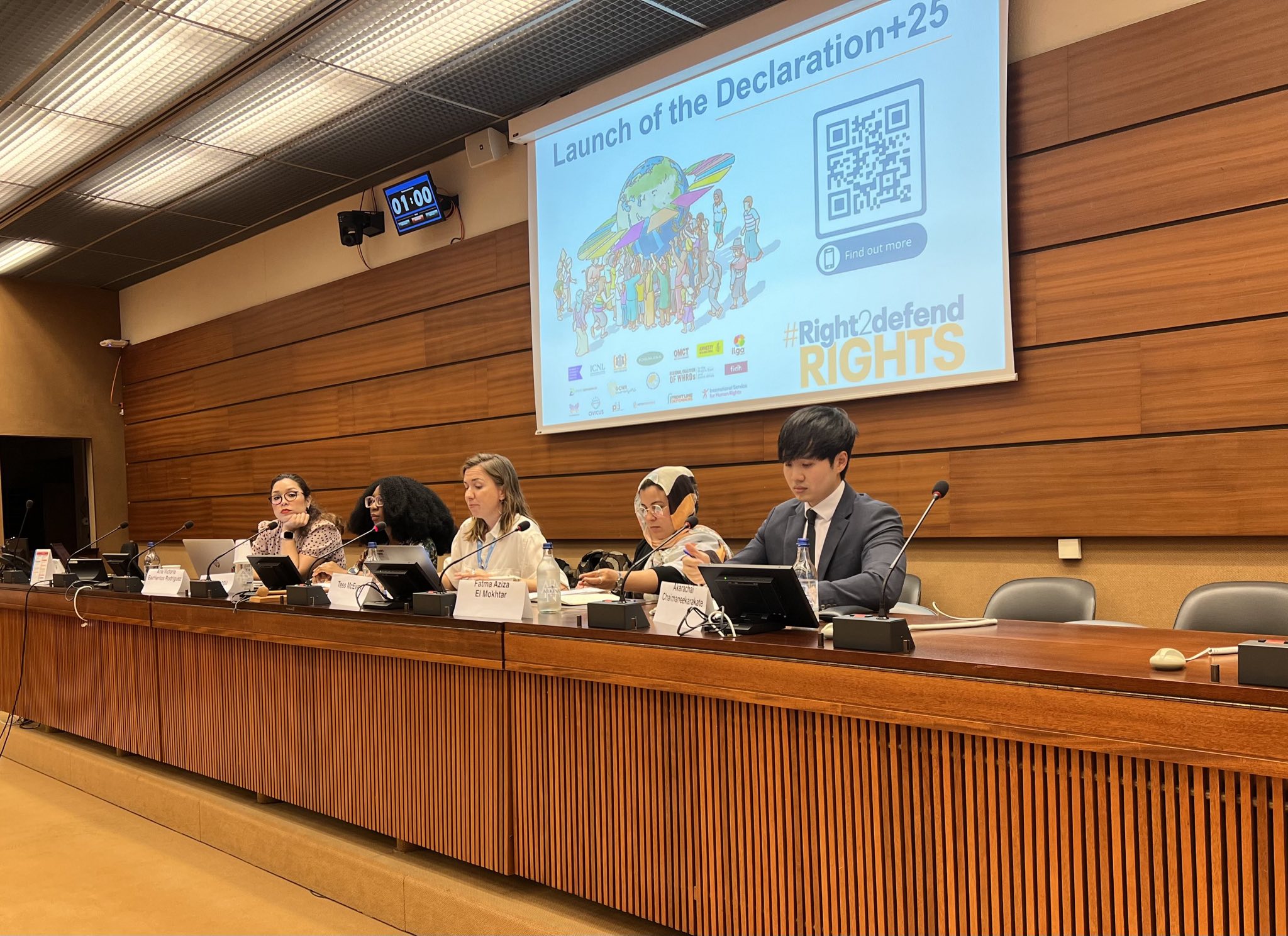
Breaking news: UN Declaration protecting human rights defenders updated with the Declaration +25

June 20, 2024

19 June 2024: in a ground-breaking initiative, civil society organisations worldwide have united to produce an authoritative articulation of the international legal framework for the protection of human rights defenders.

Following a year-long project involving consultations with human rights defenders, a coalition of 18 international (full list below) and regional human rights organisations released the Declaration +25, a landmark document systematising relevant developments in regional and international human rights law and standards of the last 25 years.

The principles contained in the two documents together represent a baseline for the protection and promotion of human rights defenders while addressing their enduring and evolving needs.

https://ishr.ch/25-years-un-declaration-on-human-rights-defenders/

To download: https://ishr.ch/defenders-toolbox/resources/declaration-25

‘The 1998 Declaration was a turning point in human rights history,’ the coalition of 18 international and regional human rights groups said today, ‘it recognised the importance and legitimacy of human rights defenders, and the need to protect the right to defend human rights.’

However, the Declaration has never been fully implemented or enforced, and human rights defenders have had to adapt their work to rising issues such as the climate crisis, racism, discrimination, the backlash against sexual and reproductive rights, but also to new threats – including digital surveillance, and different forms of stigmatisation, and criminalisation.

‘With grassroots and frontline activists’ lived experiences and concerns at its heart, the Declaration + 25 will help tackle the current challenges faced by human rights defenders. It will also be a major step towards fulfilling the promise of the 1998 Declaration: enshrining in law the protection of human rights defenders around the world.’

The project commenced in 2023 with the coalition conducting online and in person consultations with defenders to identify the key issues they face in the defence of human rights that were not fully addressed by the 1998 Declaration, and analyse developments in international and regional contexts and jurisprudence.

Over 700 human rights defenders from all regions of the world took part in these consultations, which, along with inputs from legal and human rights experts and civil society organisations, fed into the Declaration + 25. The document was adopted unanimously at a two-day experts’ meeting in Bangkok, Thailand in April 2024. The result is a call to action to governments, multilateral organisations, businesses, and civil society to protect human rights defenders and their activities.

‘People everywhere have the right to defend human rights and unite to achieve justice for all, and States have an obligation under international law to protect those exercising that right, and ensure they can work freely and safely,’ the 18 rights groups emphasised.

‘The Declaration +25 is a powerful new tool and reminder of the existing standards and principles that States, corporations and society at large must implement to protect and enable human rights defenders across the world for the years to come.’

The Declaration+25 was formally launched on Wednesday 19 June at a side event in Geneva, on the margins of  the 56th session of the United Nations Human Rights Council. [https://humanrightsdefenders.blog/2024/06/08/launch-of-the-hrd-declaration25/]


List of participating organisations: 

  • Amnesty International 
  • Asia Pacific Forum on Women, Law and Development (APWLD) 
  • CIVICUS 
  • Defend Defenders 
  • FIDH 
  • FORUM-ASIA 
  • Front Line Defenders 
  • Gulf Centre for Human Rights 
  • ICNL 
  • ILGA World 
  • IM Defensoras 
  • International Service for Human Rights (ISHR) 
  • OMCT 
  • Peace Brigades International 
  • Protect Defenders 
  • Protection International 
  • The Regional Coalition for WHRDs in South-West Asia and North Africa (known as WHRDMENA) 
  • Robert F. Kennedy Human Rights

https://ishr.ch/latest-updates/civil-society-unveils-new-supplement-of-un-declaration-protecting-human-rights-defenders

Call for applications for Lorenzo Natali Prize

June 19, 2024

The Lorenzo Natali Journalism Prize, sponsored by the European Commission (EU), is inviting applications that recognise excellence in writing, radio, and broadcast journalism on the theme of development, democracy, and human rights around the world. Sewe: https://www.trueheroesfilms.org/thedigest/awards/D49ECF35-4B42-444D-B4FA-F7ACE2BF65BC

This year’s contest is focused on related issues of gender equality, human development, climate, environment and energy, digital and infrastructure, sustainable growth and jobs, youth, migration and forced displacement, peace, and governance.

The application encouraged journalists committed to defending democracy and human rights can enter a competition.

The contest has four award categories: Best Emerging Journalist, Investigative Journalism, Feature Journalism, and Special Photojournalism.

Works must have been published or broadcast between May 30, 2023, and May 24, 2024.

https://www.icirnigeria.org/lorenzo-natali-prize-2024-32nd-edition-seeks-entries/

Member states back International Criminal Court

June 19, 2024

On 17 June 2024, Maria Elena Vignoli, Senior Counsel, International Justice Program of HRW, reported on several statements by States to rejects recent intimidation efforts.

Ninety-three member countries of the International Criminal Court (ICC) have declared their “unwavering support” for the court in the face of recent threats. The June 14 statement by an unprecedented number of ICC members across the globe follows a slew of threats, particularly after ICC Prosecutor Karim Khan announced on May 20 that he was seeking arrest warrants against two senior Israeli officials, including Prime Minister Benjamin Netanyahu, along with three Hamas leaders.

The joint statement reconfirmed ICC members’ support for the court “as an independent and impartial judicial institution” and their committment to defending the ICC, its officials, and those cooperating with it from any political interference and pressure. It follows similar expressions of support by the Presidency of the ICC Assembly of States Partiesseveral ICC member countries—including UN Security Council members—the high representative of the European UnionUN special procedures, and nongovernmental organizations.

In April, amid speculation ICC warrants for crimes committed in Gaza were imminent, 12 US senators threatened to sanction Khan should he pursue cases against top Israeli officials. Netanyahu also called on governments to prevent the court from issuing warrants. Khan’s office denounced the threats, noting that the ICC can also prosecute individuals for obstructing justice. [see also earlier: https://humanrightsdefenders.blog/2021/02/19/large-group-of-ngos-call-on-biden-administration-to-repeal-icc-sanctions/]

On June 4, after the warrant applications were announced, the US House of Representatives passed a bill aimed at imposing sanctions against the ICC, its officials, and those supporting investigations at the court involving US citizens or allies. The bill is now under consideration in the US Senate. The proposed law is reminiscent of the sanctions imposed by President Donald Trump on the previous ICC prosecutor to intimidate the court from pursuing cases against US and Israeli personnel for crimes committed in Afghanistan and Palestine. President Joe Biden revoked those sanctions in 2021 and has so far opposed the current bill.

The ICC is also in Russia’s crosshairs. In 2023, Russian authorities issued arrest warrants against Khan and six ICC judges after the ICC issued an arrest warrant against Russian President Vladimir Putin and another Russian official for war crimes committed in Ukraine. Russian lawmakers also enacted a law criminalizing cooperation with the ICC.

In both the Palestine and Ukraine investigations, ICC officials are simply doing their job. The joint statement sends a strong message that ICC members have the court’s back and will not bow to efforts to undermine its independence.

https://www.hrw.org/news/2024/06/17/international-criminal-court-members-speak-out