Author Archive

Human rights defender’s profile: Óscar Calles from Venezuela

July 24, 2024

Óscar Calles is a journalist and human rights defender from Venezuela. Since 2019, he has been working for PROVEA, one of the country’s most prominent rights groups.

In an interview with ISHR, he recalled his experience of witnessing and broadcasting mass protests in his country in 2017, and how harshly these were repressed. This, he said, led him to take direct action in the defence of human rights and civil liberties.

Human rights organisations, activists and defenders only exist to ensure that all persons can live with dignity,’ says Oscar Calles. ‘Do not turn your backs on the hundreds of victims who are still awaiting justice to this day,’ he further urges States at the UN Human Rights Council, calling on to renew a key accountability mechanism for Venezuela.

In June 2024, Óscar was also one of 16 defenders who participated in ISHR’s Human Rights Defender Advocacy Programme (HRDAP)

https://ishr.ch/defender-stories/human-rights-defenders-story-oscar-calles-from-venezuela

United Arab Emirates convicts scores of defendants in a mass trial, sentencing 40 to life in prison

July 22, 2024

The Abu Dhabi Federal Court of Appeal in the United Arab Emirates (UAE) sentenced 43 individuals to life in prison in a mass trial on Wednesday 3 July 2024, according to the UAE’s state-run news agency, WAM. The trial, which has been criticized by human rights organizations for allegedly targeting dissidents, involved charges linked to the Muslim Brotherhood, a group designated as a terrorist organization by the UAE government. WAM reported the verdicts shortly after human rights advocates released statements announcing the sentences. Alongside the life sentences, five defendants received 15-year prison terms and another five were sentenced to 10 years. The court dismissed the cases of 24 defendants.

According to WAM, the court ruled that those convicted “have worked to create and replicate violent events in the country, similar to what has occurred in other Arab states—including protests and clashes between the security forces and protesting crowds—that led to deaths and injuries and to the destruction of facilities, as well as the consequent spread of panic and terror among people.”

While WAM did not identify those sentenced by name, and specific details regarding the trial are not clear, Joey Shea, a researcher focusing on the UAE for Human Rights Watch, noted a few prominent figures involved in the case to the Associated Press (AP).

On 10 July 2024, Human Rights First condemned the secret trial and sentencing of dozens of activists in the United Arab Emirates:

Washington’s ally has again today demonstrated its violent repression,” said Senior Advisor Brian Dooley. “The Biden administration has struck millions of dollars of arms deals with the UAE dictatorship, and failed to sanction its officials responsible for cracking down on peaceful dissent. The message from Washington to the UAE has been clear for many years: Do what you want, there will be no consequences.”

Among those reportedly sentenced to life in prison after a mass trial is prominent legal scholar Nasser bin Ghaith. He graduated with honors from Case Western Reserve University School of Law in Ohio with an LLM in U.S. and Global Legal Studies in 2001. Another of those in the mass sham trial — which included 84 defendants — was Ahmed Mansoor, who received his Bachelor’s Degree in Electrical, Computer, & Energy Engineering and his Master’s in Telecommunications for the University of Colorado, Boulder. Human Rights First is still waiting for confirmation on the outcome of his case in the trial. [see https://www.trueheroesfilms.org/thedigest/laureates/074ACCD4-A327-4A21-B056-440C4C378A1A]

Bin Ghaith, Mansoor, and other prominent activists in the trial were already in prison serving long sentences for their peaceful activism.

https://www.amnesty.org.uk/press-releases/uae-scores-convicted-sham-trial-uae84

https://www.newsweek.com/uae-court-sentences-40-people-life-prision-mass-trail-report-1923443

https://apnews.com/article/uae-mass-trial-dissidents-2108263bffe49915a866eecc64d1b605

https://www.middleeasteye.net/news/uae-un-experts-shocked-after-dozens-sentenced-life-mass-trial

Sara Nabil, a human rights defender, from Afghanistan

July 6, 2024

Sara Nabil is a human rights defender and artist from Afghanistan. She spoke to ISHR about her dream of one day seeing a ‘free democratic Afghanistan, where each human being [regardless of which] gender they are, man or woman, neutral or other genders, [would be] treated equally.’

Stand in solidarity with Sara and other women human rights defenders from Afghanistan: join us in our campaign to push for UN experts and States to explicitly and publicly recognise the situation in Afghanistan as a form of gender apartheid and the need for an accountability mechanism to address gross human rights violations against women.

Human rights groups ‘appalled’ at Egypt being added to safe countries list by Ireland

July 5, 2024
Human Rights Groups ‘Appalled’ At Egypt Being Added To Safe Countries List
Amnesty Ireland said it was “appalled” at the decision by Helen McEntee to add Egypt, an act it called “deeply reckless”.

On 2 July 2024 Cate McCurry in breakingnews.ie reported that human rights groups have criticised the decision to add countries such as Egypt and Malawi to Ireland’s list of “safe” countries for asylum applications as concerning and “reckless”. The Irish Government made five additions to its list of safe countries on Tuesday: Brazil, Egypt, India, Malawi and Morocco.

Countries added to this list are viewed by the Government as places where “there is generally and consistently no persecution”, no torture, and no armed conflicts. The proposal by Minister for Justice Helen McEntee was approved at Cabinet on Tuesday, meaning protection applications from these countries are to be accelerated from Wednesday following an “extensive review” by the department.

Amnesty Ireland said it was “appalled” at the decision by Ms McEntee to add Egypt, an act it called “deeply reckless”.

This categorisation is particularly shocking, given the protracted human rights and impunity crisis in Egypt, where thousands are arbitrarily detained, and where Amnesty International has consistently documented the use of torture and other ill-treatment and enforced disappearances.”

“No country is safe for everyone. But, putting Egypt with its abysmal human rights record on such a list is deeply reckless. Under Irish and EU law, the Minister for Justice may do so only if there is generally no persecution, torture, or inhuman or degrading treatment in that state. That absolutely cannot be said of Egypt.” As an illustration only, see https://humanrightsdefenders.blog/tag/egypt/

Egypt Researcher at Amnesty International, Mahmoud Shalaby, said that since 2013 the Egyptian authorities have been “severely repressing” the rights to freedom of expression, association and peaceful assembly.

“Dissidents in the country remain at risk of persecution solely for expressing critical views,” he said. “Thousands of arbitrarily detained solely for exercising their human rights or after grossly unfair trials or without legal basis.”

Chief executive of the Irish Refugee Council, Nick Henderson, said they were very concerned at the designation of Morocco, Malawi and Egypt as “safe”.

“Frankly, when you look at some of the human rights information from countries such as Egypt, I’m quite staggered and flabbergasted how they could be designated as safe,” he told RTE’s News at One.

The introduction of accelerated processing in November 2022 has had a significant impact on the number of applications from those countries, which have dropped by more than 50 per cent in that time.

https://www.breakingnews.ie/ireland/human-rights-groups-appalled-at-egypt-being-added-to-safe-countries-list-1645204.html

Amnesty finds that young human rights defenders face online harassment for posting on human rights

July 3, 2024
Amnesty International
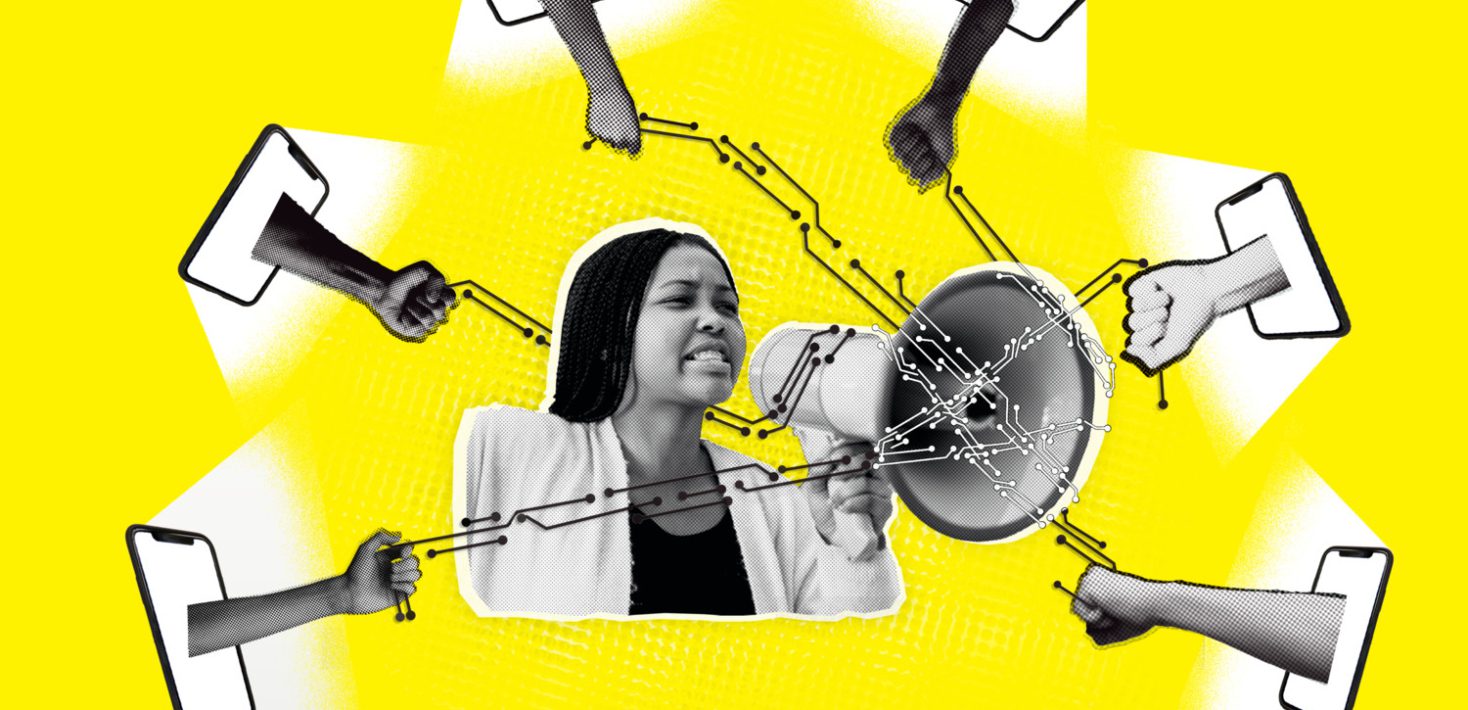
an illustration with a young person speaking into a megaphone. Around them are images of fists coming out of phone screens.

On July 1, 2024 AI published the findings of a survey which says that three out of five child and young human rights defenders face online harassment in connection with their activism, according to a new analysis of 400 responses to an Amnesty International questionnaire, distributed to young activists across 59 countries. More than 1400 young activists participated in the survey conducted as a part of Amnesty International’s global campaign to “Protect the Protest.”

Of those, 400 youth activists aged between 13 to 24 years agreed to the publication of their data.

They faced harassment in the form of hateful comments, threats, hacking and doxing which is often linked to offline abuse and political persecution often perpetrated by state actors with little or no response from Big Tech platforms resulting in the silencing of young people. 

The highest rates of online harassment were reported by young activists in Nigeria and Argentina.

“I have been harassed […] by a stranger because of my pronouns. The stranger told me it is not possible to be a ‘they/them’ and kept sending messages about how I am crazy for identifying the way I identify. I had to ignore the person’s messages,” said a 17-year-old Nigerian queer LGBTI activist who asked not to be identified.

Another young activist – 21-year-old male Nigerian LBGTI rights activist said, “People disagree with my liberal progressive views, and immediately check my profile to see that I am queer Nigerian living in Nigeria, and they come at me with so much vitriol. I am usually scared to share my opinion on apps like TikTok because I can go viral. The internet can be a very scary place,” he said adding that, “Someone cat fishing as a gay man, lured me into coming out to see him after befriending me for a while, and then he attacked me with his friends. This is Nigeria, I couldn’t go to the police for secondary victimization.”

Twenty-one percent of respondents say they are trolled or threatened on a weekly basis and close to a third of the young activists say that they have censored themselves in response to tech-facilitated violence, with a further 14 percent saying they have stopped posting about human rights and their activism altogether.

“I always think twice before making a comment, when I express my political position, I start to get many comments that not only have to do with my position, but also with my body, my gender identity or my sexuality,” said Sofía*, a 23-year-old human rights defender from Argentina shared her experience on X formerly known as Twitter.

The survey respondents said they faced the most abuse on Facebook, with 87 percent of the platform’s users reporting experiences of harassment, compared to 52 percent on X and 51 percent on Instagram.

The most common forms of online harassment are upsetting and disrespectful “troll” comments (60 percent) and upsetting or threatening direct messages (52 percent).

Five percent of the young activists say they have faced online sexual harassment, too, reporting that users posted intimate images (including real and AI-generated images) of them without consent.

For many of the survey participants harassment in relation to their online activism is not limited to the digital world either. Almost a third of respondents reported facing offline forms of harassment, from family members and people in their personal lives to negative repercussions in school, police questioning and political persecution.

Twenty-year-old non-binary activist Aree* from Thailand shared their experience of facing politically motivated prosecution in five different cases whilst they were still a child.

Abdul* a 23-year-old Afghan activist reported being denied work at a hospital after authorities found out about his social media activism.

The Israel-Gaza war currently stands out as an issue attracting high levels of abusive online behaviour, but the threat of online harassment appears to be omnipresent across all leading human rights issues. Peace and security, the rule of law, economic and gender equality, social and racial justice, and environmental protection all served as “trigger topics” for the attacks.

However, the way young activists are targeted varies and appears to be closely linked to intersectional experiences of discrimination, likely harming survivors of identity-based abuse in longer lasting ways than issue-based harassment.

Twenty-one percent of respondents say they have been harassed in connection with their gender and twenty percent in connection with their race or ethnicity. Smaller percentages said they face abuse in connection with their socio-economic background, age, sexual orientation and/or disabilities.

“At first it was simply hateful comments since the posts I published were daring and spoke openly about LGBT rights, which later made me receive threats in private messages and it went further when my account was hacked,” said Paul a 24-year-old activist from Cameroon, on being targeted for his LGBTI related activism adding that, “For 2 years, I have been living in total insecurity because of the work I do as an advocate for the rights of my community online.”

For Paul and many other young activists, online harassment is having deep effects on their mental health. Forty percent of the respondents say they have felt a sense of powerlessness and nervousness or are afraid of using social media. Some respondents have even felt unable to perform everyday tasks and felt physically unsafe. Accordingly, psychological support is the most popular form of support which young activists call for, ahead of easier to use reporting mechanisms and legal support.

Many of the young activists voiced frustrations over leading social media platforms’ failure to adequately respond to their reports of harassment saying the abusive comments are left on the platforms long after being flagged.

Some respondents also felt that social media platforms are playing an active part in silencing them; multiple activists reported that they found posts about the war in Gaza removed, echoing previous reports of content advocating for Palestinian rights being subject to potentially discriminatory moderation by various platforms.

Others highlighted platforms’ role in enabling state-led intimidation and censorship campaigns, undermining activists’ hope for government regulation to provide answers to the challenge of tech-facilitated violence.

Amnesty International has previously documented the repression of peaceful online speech by states including India, the Philippines and Vietnam and is currently calling for global solidarity actions in support of women and LGBTI activists facing state-backed online violence in Thailand.

*The young activists’ names have been changed to protect their identities.

Green human rights defenders of Mother Nature jailed in Cambodia

July 3, 2024

Five Cambodian activists record a podcast.
Five Mother Nature activists, from left to right Ly Chandaravuth, Thun Ratha, Yim Leanghy, Phuon Keoraksmey, and Long Kunthea on June 11, 2024. © 2024 Private

Cambodia has jailed 10 environmental activists who had sounded the alarm on river pollution for plotting against the government – a case critics have decried as politically motivated. Members of the group Mother Nature were charged in 2021 after they documented waste run-off into Phnom Penh’s Tonle Sap river, near the royal palace. [see: https://www.trueheroesfilms.org/thedigest/laureates/d41428d8-4b96-4370-975e-f11b36778f51]

Three of them, including Spanish co-founder Alejandro Gonzalez-Davidson, who were also convicted of insulting the king, were sentenced to eight years’ jail and fined $2,500 (£1,980). The seven others were handed six-year terms. Prosecutors have never explained how the activists had violated the law against insulting the king or conspiring against the government.

Since its founding in 2013, Mother Nature has campaigned against environmentally destructive projects and raised questions on how natural resources are managed in the South East Asian country. They document their findings in playful and informative videos that they post on Facebook, where they have 457,000 followers.

Environmental groups have long accused Cambodia’s leaders of profiting from the country’s natural resources. The government denies this and says Mother Nature is encouraging social unrest. Gonzalez-Davidson, who was earlier banned from entering Cambodia, called the verdict a “disastrous decision by the Hun family regime”.

Opposition political parties were dismantled, independent media outlets were shut and dozens of activists were jailed under the decades-long rule of former prime minister Hun Sen, who stepped down last year to pave the way for his son, Hun Manet, to assume leadership.

Under Hun Manet, Mother Nature activists have continued to criticise what they describe as an unequal enforcement of laws in favour of companies and the wealthy elite.

Four of the convicted activists attended the hearings and were immediately arrested following the verdict. Representatives of local NGO the Cambodian League for the Promotion and Defence of Human Rights (Licadho) who were present outside the Phnom Penh court said the arrests were violent, with “at least two of [them] dragged by their necks”. Arrest warrants have been issued for the six others, including Gonzalez-Davidson.

Earlier in the day, dozens of Mother Nature supporters marched towards the court where the activists were due to receive the verdict. Dressed in white – the traditional colour of mourning in the country – some of the supporters held up hand-written posters that read “We need freedom” and “We need rights”. Others held white flowers.

The verdict “sends an appalling message to Cambodia’s youth that the government will side with special interests over the environment every chance it gets,” said Human Rights Watch’s deputy Asia director Bryony Lau.

“It is astounding to criminalise activities of youths who are advocating for clean water in Phnom Penh, protecting mangrove forests in Koh Kong and warning against the privatisation of land in protected areas and characterising it as an attack against the state,” said Licadho’s outreach director Naly Pilorge.

Several of those convicted today had already served jail terms in the past. One of them, Long Kunthea, told BBC in an interview last year that she is willing to take on the risks of her activism to “for positive change”.

Kunthea was previously jailed for more than a year for organising protests to protect the Mekong river from further pollution. See also: https://humanrightsdefenders.blog/2021/06/22/continued-harassment-of-mother-nature-defenders-in-cambodia/

https://www.bbc.com/news/articles/c1340lze6ppo

https://www.hrw.org/news/2024/07/02/cambodia-environmental-activists-sentenced-6-8-years

https://www.reuters.com/world/asia-pacific/cambodian-court-jails-environmental-activists-plotting-against-government-2024-07-02/

https://civicus.org/index.php/media-resources/news/8128-civicus-global-campaign-urges-the-release-of-mother-nature-cambodia-activists

William Collins to publish two books by late Ukrainian author Victoria Amelina

July 2, 2024

A book of first-hand accounts of the war in Ukraine by Victoria Amelina is to be published posthumously by William Collins. Publication for Looking at Women Looking at War: A War and Justice Diary is scheduled for February 2025. It will be followed by a novel in 2026.

Amelina, who died exactly a year ago as a result of a missile strike in Kramatorsk, was a well-known novelist and children’s author in Ukraine. Rights to her unfinished non-fiction book were pre-empted by Arabella Pike at Williams Collins from Emma Shercliff at Laxfield Literary Associates. It will be published in the US by St Martin’s Press and translation rights have been sold in France (Gallimard), Italy (Guanda), Korea and Georgia.

Amelina’s book follows 11 female journalists, human rights defenders, lawyers, and volunteers documenting war crimes in Ukraine while the war is still ongoing. It includes Nobel Peace Prize Laureate Oleksandra Matviichuk, and chronicles Amelina’s own transformation from novelist and mother into a war crimes researcher.

Pike said: “After hearing the cruel news of Victoria’s death, it was a small consolation to us that she knew her vitally important book would be published in English. We at William Collins are so proud to publish her account of the hideous war crimes happening daily in Ukraine and regret deeply that this must be posthumous.

Arabella Tetyana Teren, head of PEN Ukraine, said: “This book is the voice of Ukraine fighting for its freedom and future. This book is the voice of a writer who, in the most difficult time for her country, chose the role of testifying about the war crimes of the Russians and seeking punishment for the perpetrators. This book was born from love—the author’s love for her country and her heroines, and our love for the talented Ukrainian writer, brave woman, and our dear friend, whose life was taken by Russia.”.”

Amelina, who was 37 when she died, worked in the high-tech industry for ten years before becoming a writer and lived in the US in 2019/20. She travelled extensively to talk about her work with Truth Hounds, and her poetry, essays and prose have appeared in publications including the Irish Times, the Dublin Review of Books, The Guardian and the New Yorker. Victoria was the founder of a literary festival in a city named New York in the Donetsk region, Ukraine. [see also: https://humanrightsdefenders.blog/2023/10/12/5th-dublin-arts-and-human-rights-festival-in-october-2023/]

https://www.thebookseller.com/rights/william-collins-to-publish-two-books-by-late-ukrainian-author-victoria-amelina

Athletes ‘human rights defenders’ need protection says Volker Turk

July 1, 2024
Athletes who are ‘human rights defenders’ need protection, says UN

(REUTERS)

On 1 July 2024 Arab News reported that Volker Turk, the UN High Commissioner for Human Rights stated rhat “when athletes use their voice to promote equality in sport, they are human rights defenders”.
They often speak out at great risk to themselves and to their careers, in a context that has not always been open to criticism from the inside. Because — as in other areas — power dynamics are still very much at play in the sporting world, and more is needed to dismantle them.”
Turk, who did not name any athletes, said those who use their voice to address issues in their sport or in society should be protected and given “avenues to speak out and seek redress, safely and without fear of reprisals.”
Turk was speaking at the UN Human Rights Council in Geneva on a panel alongside Thomas Bach, the president of the International Olympic Committee (IOC), on human rights and the Olympics ahead of the Paris Summer Games.

https://www.arabnews.com/node/2541151/world

Human rights defenders working in war zones such as Ukraine and Israel

July 1, 2024

On 20 June 2024 Swissinfo spoke with human rights defenders from Ukraine and Israel about how they operate in tough contexts. The main tasks of human rights defenders include investigating, collecting information about, and reporting rights violations. They raise public awareness to ensure that human rights are respected. But how do they work in a war zone or in an environment where a large part of public opinion is against them? SWI swissinfo met activists from Ukraine and Israel in Geneva’s Palais des Nations, where they had come to meet delegations and attend side-events during a session of the Human Rights CouncilExternal link .

We are documenting testimonies from victims of the war in Ukraine,” says Lyubov Smachylo, an analyst with the Ukrainian organisation Media Initiative for Human Rights (MIHR).

MIHR’s main office is in Kyiv. It has direct access to victims and witnesses of rights violations, such as Ukrainians living in the north of the country – formerly under Russian occupation and now back under Ukrainian rule – or former prisoners in Russian jails. Smachylo, who lives between Kyiv and Paris, analyses documented testimonies of human rights violations committed by Russia. These include Russian armed forces acting with generalised impunity, the arbitrary detention of civilians – often accompanied by torture and ill-treatment – and in some cases enforced disappearances.
Lyubov Smachylo from the Ukrainian Media Initiative for Human Rights. Courtesy of Lyubov Smachlyo

MIHR is one of the few NGOs able to gather information on the ground. Virtually no international organisation can go into the occupied Ukrainian regions, not even the Office of the UN High Commissioner for Human Rights (OHCHR). The International Committee of the Red Cross (ICRC), for example, has only limited access to Ukrainian prisoners of war. This absence of accountability and the underreporting of abuses mean there is an increased risk of mistreatment and of perpetrators going unpunished.

Among other things, the MIHR deals with prisoners of war and civilians who have been arrested in the Russian-occupied regions of Ukraine or who are being detained in unknown places. Beatings and torture are rife, and some have died because of the poor detention conditions, says Smachylo.

“We know of 55 places of detention in the occupied regions of Ukraine and 40 in Russia, where a total of at least 1,550 Ukrainian civilians are being held,” says Smachylo. Contacted by SWI, the ICRC did not comment on whether it has access to the occupied regions. More More Human Rights Council: Fundamental or fundamentally flawed?

This content was published on Jun 30, 2021 The Human Rights Council, convening in Geneva, is mired in US-China rivalry, while the Council also faces criticism from developing countries. Read more: Human Rights Council: Fundamental or fundamentally flawed Increasingly hostile environment

Tal Steiner is meanwhile a human rights lawyer and director of the Public Committee Against Torture in Israel (PCATI). The NGO holds Israel accountable on its use of torture, which is not illegal in the country, although there is an absolute prohibition on torture enshrined in international human rights instruments such as the Universal Declaration of Human Rights. Steiner says her NGO’s work has become particularly difficult since the Hamas attacks of October 7 and the Israeli-Palestinian war. Israel has restricted access to political prisoners, while rights defenders find themselves in an increasingly hostile environment where they are regularly branded as“defending terrorists”.

The political prisoners to which Steiner has access include Palestinians living in Israel and in the West Bank as well as Jewish Israeli citizens.

“Working on the issue of torture – or on any issue in Israel that affects human rights in terms of security – has never been easy,” she says.
Tal Steiner, right, pictured with Miriam Azem, advocacy associate at the Legal Center for Arab Minority Rights in Israel (ADALAH). Keystone/AFP/Coffrini

Compassion for Palestinian prisoners and the view that human rights apply to everyone have been greatly diminished since the war, Steiner explains.“This means that the circle that supports our work has become smaller.”

According to her, many Israelis have opted for security above human rights. Many also harbour feelings of vengeance towards Palestinians.“We saw this, for example, at the Israeli Prison Service (IPS),” Steiner says. There, extreme overcrowding since October 7 has led to a severe deterioration in conditions, including limited access to basic needs like water, electricity, food, and medical care. Human rights groups have also noted cases of severe beating of detainees and prisoners, sexual harassment and intimidation.

Miriam Azem also took part in the SWI interview with Steiner. The international advocacy expert works for Palestinian organisation Adalah, which defends Palestinians living in Israel and the occupied territories in Israeli courts. “Since October 7, the attitude towards our lawyers has changed a lot,” she says. This has become apparent in disciplinary committees, which handle disputes in universities.“Since the beginning of the war, over 120 disciplinary proceedings have been initiated against Palestinian students – citizens of Israel – for statements made on their private social media accounts” she says.

She cites the example of Palestinian students with Israeli citizenship who have been accused of inciting terrorism on the basis of unfounded arguments. Adalah attorneys, who have represented 95 Palestinian students facing this charge,“were questioned regarding their loyalty to Israel”, Azem says.

According to Azem, there has been an increase in arrests and interrogations due to posts on social media. “The vast majority of these posts do not meet any criminal threshold. Nevertheless, the accusations against activists were grounded in Israel’s Counter-Terror Law, which carries severe imprisonment penalties,” she says. More More Is Geneva still the capital of peace?

In February, PCATI and Adalah, together with two other Israeli organisations, sent an urgent appeal to the UN Special Rapporteur on Torture, Alice Jill Edwards. They called on Edwards to intervene immediately to stop torture and the systematic mistreatment of Palestinian prisoners in Israeli detention facilities. Apart from private lawyers, these are the only four organisations that can currently visit Israeli prisons – Israel has denied the ICRC access.

“We are therefore the only ones who can report what we have seen there,” says Steiner. Around 10,000 Palestinian prisoners are currently in Israeli custody, many of them detained without trial. However, no one is allowed to visit the Israeli military camps for prisoners from the Gaza Strip. PCATI fears a“new Guantanamo” is being established there, in reference to the US facility in Cuba where prisoners were held indefinitely without trial in the aftermath of the terrorist attacks on September 11, 2001.

In their appeal to the UN rapporteur, the four organisations also expressed concern about the dehumanising rhetoric being used by some members of the Israeli government. The Minister of National Security, Itamar Ben-Gvir, in charge of the IPS, has repeatedly spoken out in favour of subjecting Palestinians to degrading and inhumane treatment.

In the meantime, UN rapporteur Edwards has called on Israel to investigate the numerous allegations of torture against detained Palestinians. Since the attacks of October 7, it is estimated that thousands of Palestinians including children have been detained, she has written. Edwards says she received allegations of individuals being beaten, kept blindfolded in cells, handcuffed for excessive periods, deprived of sleep, and threatened with physical and sexual violence. Burnouts and death threats

Burnout and death threats are also part of the job. Smachylo says the war which stretches through the whole of Ukraine is an added strain on a very stressful job. Activists and staff members of her organisation spend hours writing reports detailing torture and mistreatment of Ukrainian citizens by the Russian authorities. She particularly highlights the risk of burnout for those who regularly carry out missions in the field.

The Geneva-based World Organization against Torture (OMCT), which cooperates with the NGO, provides financial support for their psychological and therapeutic retreats.

Steiner, for her part, draws particular attention to the huge amount of work involved.“In view of the grief over the tragedies of October 7 and the war in the Gaza Strip, cooperation between Israelis and Palestinians is proving to be a challenge right now,” she says. For her, it is fundamental that every detainee has the right to defense.

Smear campaigns have also targeted her work. For example, the Israeli TV station Channel14, the equivalent of the rightwing US station Fox News, made a derogatory programme about PCATI and other organisations campaigning for Palestinian rights. The title:“Disgrace: the Israeli activists who take care of the treatment of Hamas terrorists”. The program led to harassment and threatening phone calls. Some of the emails Steiner received were about rape and death threats, others targeted her family.

“We are aware that we are operating in an environment that is very hostile to our work,” says Azem.“As an NGO registered in Israel, we are extremely cautious.” Steiner adds that the persecution of NGOs in Israel and Palestine has a long history. Six Palestinian human rights organisations have been classified as terrorist by Israel. And several bills currently envisage a higher taxation rate for Israeli NGOs in order to block their work.

https://menafn.com/1108388272/Silence-Threats-Burnout-Challenges-For-Human-Rights-Defenders-In-Times-Of-War

Humanists International awarded grants to 13 projects worldwide through 2024 Grants Program

July 1, 2024

Humanists International announced on 24 June 2024 that it has awarded grants to 13 projects worldwide. This initiative, awarding a total of £36,300 through the 2024 Grants Program, provides financial support to bolster humanist endeavors and empower organizations working to advance humanist values across the globe.

The grant program in 2024 was made possible thanks to a very generous legacy gift left to the organization by the late Professor Dabir Tehrani, who was a long-standing supporter of Humanists International.

The call for applications, opened from April to May, attracted a wide range of proposals. Selected projects, kicking off this month, will continue until January 2025. Grants were awarded exclusively to Members and Associates of Humanists International, focusing on five key areas:

  • Development Grants: Supporting the growth and sustainability of humanist organizations, particularly in developing countries.
  • Digital Humanism Grants: Encouraging projects that utilize technology to promote humanist values online.
  • Humanist Ceremonies Grants: Building capacity for humanist celebrants to offer alternative ceremonies like weddings and funerals.
  • Regional Networking Meetings Grants: Facilitating gatherings and collaboration between humanist organizations within specific regions.
  • Young Humanist Grants: Empowering young people to become active participants in the humanist movement.

For members interested in applying for future grants, Humanists International also offers the year-round Cafe Humaniste Grant. This program supports small, in-person, or online gatherings where members can discuss any topic related to humanism.

Dooyum Dominic Ingye, Project Head at Advocacy for Alleged Witches, one of the grant recipients, said:

“We are truly honored and grateful that the Advocacy for Alleged Witches (AFAW) has been selected to receive the Humanists International Development Grant for our project. This funding will make a significant difference in our ability to advocate for justice, provide legal aid, and empower alleged witches to stand up against the discrimination and violence they face.”

Javan Lev Poblador, Membership Development Officer of Humanists International, commented:

“We are delighted to support these 13 projects making a tangible difference in local and international communities by promoting humanism. These grants will equip our Members and Associates with vital resources to grow and extend their impact.”

https://humanists.international/2024/06/humanists-international-supports-13-global-humanist-projects-in-2024/