Listen to the stories of four human rights defenders who have been banned from travelling by their own governments simply for trying to cooperate with the United Nations. Can you guess which suitcase belongs to whom?
Location: Geneva, Switzerland Date: 16 September 2025, 10:00AM – 5:00PM CEST
Some States use travel bans as reprisals against human rights defenders who cooperate with the United Nations. These acts of retaliation are designed to isolate, intimidate, and silence them.
A travel ban may be less visible than a prison cell, but its impact is deeply damaging. It restricts defenders from attending UN meetings, carrying out their work, reuniting with family or seeking international protection.
Travel bans take many forms, including cancelling or confiscating passports, detaining defenders attempting to exit a country, denying defenders the right to leave or enter back into their own countries, and placing defenders on terrorist lists.
Through this exhibition, we unpack the stories of four human rights defenders who have been barred from entering or leaving in their own countries under arbitrary travel bans. These are not just about State reprisals against activists, they are stories of people whose lives have been disrupted, whose voices have been silenced, and whose basic freedoms have been trampled. They are also stories of resilience and perseverance in seeking positive social change.
Their voices defend human rights. Travel bans silence them: #EndReprisals!
“Today, I want to recognise the many human rights defenders who risk their lives around the world, and the courage and dedication of all my UN Human Rights staff,” said UN Human Rights Chief Volker Türk in his video message for World Humanitarian Day. “The sacrifice of our colleagues strengthens our resolve to continue their essential work.”
Twenty-two years ago, a devastating attack struck the United Nations headquarters at the Canal Hotel in Baghdad, Iraq. The bombing claimed the lives of 22 UN staff members and left more than a hundred others injured. It was a day that profoundly shook the humanitarian community and continues to resonate decades later.
In Geneva, Switzerland, colleagues, families, and friends gathered at the UN Human Rights headquarters to pay tribute — not only to those killed in Baghdad but to all humanitarian workers who have lost their lives in service across the globe.
Each year, 19 August is observed as World Humanitarian Day, a moment to recognize those who dedicate themselves to alleviating human suffering, and to remember the victims of humanitarian crises worldwide.
This year’s ceremony included a reading of the names of the 22 UN staff members who perished in the 2003 Baghdad attack, along with colleagues killed in Afghanistan, Haiti, and Rwanda, followed by a minute of silence. Flowers were later placed at the memorial to Sergio Vieira de Mello, the Secretary-General’s Special Representative for Iraq at the time, who also died in the bombing.
Nada Al-Nashif, the UN Deputy High Commissioner for Human Rights and a survivor of the Canal Hotel bombing, reflected on her experience when she was UNDP Country Director in Iraq during the commemoration in Geneva.
“We were caught up in a feverish excitement at the thought of what could be achieved, the endless possibilities of support, advice, assistance,” she said. “Even as we took daily risks and coped with the unrelenting pressure of delivering, we were sustained by a certain innocence — the belief that the big blue UN flag was our protection, its folds sufficiently strong to make us untouchable.”…
“Over two decades later, it is a humbling story of recovery that I am proud to tell; a journey of individual and collective resilience, a re-dedication to our cause, the cause of global justice and dignity, guided by an extraordinary commitment to service and the deep awareness that as humans, we are one.”
The event also highlighted the grave risks humanitarian workers face today, including targeted attacks that have led to deaths, injuries, abductions, and detentions. With 2024 marking the deadliest year on record for humanitarian personnel, concerns are growing that 2025 could prove even worse.
From Afghanistan to Sudan, from Gaza to Venezuela, humanitarian and human rights workers continue their missions under severe risks and limited access. With nearly 60 armed conflicts ongoing around the globe, the scale and complexity of crises are growing, and so are their human rights implications.
At the ceremony through prerecorded videos, staff from Haiti and Sudan remarked on the importance of humanitarian work.
Abdelgadir Mohammed, a Human Rights Analyst with UN Human Rights in Sudan, highlighted that the escalation of conflict in March and April 2025 has triggered a sharp rise in human rights violations, including ethnically targeted attacks and widespread sexual and gender-based violence, particularly in Darfur.
“I believe that human rights save lives,” he said. “I believe that human rights monitoring and reporting plays a critical role in protecting affected populations.”
Marie Sancia Dossier, a Protection Officer for UN Human Rights in Haiti, noted that as of 2025, nearly 85 percent of the capital’s metropolitan area is under the control of armed gangs, whose influence continues to expand across the country.
“Our motivation is an act of rebuilding and strengthening social cohesion, the rule of law and respect for human rights,” she said. “We are not only implementers. Together with institutions and civil society, we are co-builders of resilience, justice and social transformation. Our aim is to see a country where rights are respected, where institutions serve citizens, and where every person, regardless of their situation, can live in safety and dignity.”
At the 59th Human Rights Council session, civil society organisations share reflections on key outcomes and highlight gaps in addressing crucial issues and situations. Full written version below.
We join others who have expressed grave concern about the UN’s financial situation throughout the session. We deplore that we are in this position primarily due to the failure of some States to pay their assessed contributions in full and on time. We regret that this crisis is currently affecting the Council’s ability to deliver its mandate. Today, UN Member States are sending a clear message that human rights and their implementation are optional and not inalienable. We call on all States to pay their dues to the UN in full and without delay, both now and in future years, and strengthen the human rights pillar of the UN by substantially increasing its regular budget. [see: https://humanrightsdefenders.blog/tag/united-nations/]
We welcome the Council’s decision to renew, once more, the Mandateof theIndependent Expert on protection against violence and discrimination based on sexual orientation and gender identity, following a call from more than 1,259 organisations from 157 countries and territories. While the mandate was supported by the overwhelming majority of Council members, we regret that a mandate focusing on core human rights issues such as freedom from violence and discrimination was once again put for a vote.
We welcome the adoption of the resolution on civil society space. The resolution acknowledges important civil society initiatives such as Declaration +25 and addresses key and emerging trends such as strategic lawsuits against public participation (SLAPPs), the phenomenon of transnational repression, and foreign funding legislation, as well as other restrictive legislation including counter-terrorism legislation. We regret, however, that language on transnational repression has been weakened throughout the negotiations and does not take a step forward in terms of defining the phenomenon and its patterns. ..
We welcome the adoption of the resolution on human rights and climate change in relation to climate finance. As acknowledged by the resolution, climate finance is a tool for addressing climate change and it is also important for the enjoyment of human rights when finance prioritises equity, climate justice, social justice, inclusion and just transition processes. … We also regret that, notwithstanding the support expressed by numerous delegations, this resolution is blatantly silent in recognising the positive, important, legitimate and vital role that environmental human rights defenders (EHRDs) play in the promotion and protection of human rights and the environment, particularly in the context of climate change. As recognised by the HRC resolution 40/11, EHRDs are one of the most exposed and at risk around the world. The Inter-American Court on Human Rights has recently ruled in its Advisory Opinion on “Climate Emergency and Human Rights” that EHRDs play a fundamental role due to the urgency, gravity and complexity to address the climate emergency. We will not have climate justice without consulting, listening and including EHRDs in climate actions and initiatives, including this annual resolution.
We express our support for a new strong resolution on the safety of journalists, adopted by consensus and co-sponsored by over 70 countries from all world regions, signalling a renewed international commitment to prevent, protect and remedy all human rights violations against journalists. The resolution becomes the first across the UN to recommend a range of concrete, specific measures to
It is concerning that the Council could not find consensus on the resolution on access to medicines, vaccines and other health products. States should acknowledge that intellectual property rights can be a barrier for access to health products, especially in public health emergencies and should act with a view to finding human-rights compliant solutions. States should further ensure that the benefits of scientific progress is available, accessible, acceptable and of good quality to all people, without discrimination.
We welcome the resolution on new and emerging digital technologies and human rights. The resolution reaffirms the need for human rights due diligence and impact assessments throughout the life cycle of new and emerging digital technologies, and crucially calls upon States to refrain from or cease the use of artificial intelligence applications that are impossible to operate in compliance with international human rights law. The resolution importantly mandates OHCHR to expand its work on UN system-wide promotion, coordination, and coherence on matters related to human rights in new and emerging digital technologies.
We welcome the rejection by the Council of an unprecedented, harmful draft resolution (L.1/Rev.1) presented in bad faith by Eritrea to discontinue the mandate of the Special Rapporteur. The voting result (25 against, 4 in favour) is clear and will deter similar initiatives to terminate mandates. The Pandora’s Box remains closed for now. We welcome the adoption of resolution L.7, which extends the mandate of the Special Rapporteur and enables continued scrutiny of Eritrea‘s dire human rights situation.
We welcome the adoption by consensus of the resolution on the situation of human rights of Rohingya Muslims and other minorities in Myanmar—a strong signal of the Council’s continued prioritization of their plight. As violence between the Myanmar military and Arakan Army escalates, Rohingya face renewed existential threats. We recognize the efforts made to align the resolution closer to the evolving situation on the ground, including its recognition of the role of Arakan Army along with the Myanmar military in perpetuating violence and targeting Rohingya. We also welcome the resolution’s acknowledgment of the worsening humanitarian crisis due to dwindling aid that is driving more Rohingya to risk dangerous journeys by sea. The call for protection of Rohingya across borders and respect for non-refoulement is vital. We support the resolution’s emphasis on accountability and reparations as prerequisites for safe, voluntary, and dignified return of Rohingya refugees. However, we regret its failure to call for an end to arms and jet fuel sale and transfers that continue to fuel ongoing violence.
We emphasize the vital role of investigative mechanisms and, in the context of the UN’s liquidity crisis, we urge all those involved, including the Secretary-General and the High Commissioner, to allocate sufficient resources for these mechanisms to operate. All UN Member States must pay their dues in full and on time. As the conflict in Sudan, now in its third year, shows no sign of abating, resulting in the world’s largest displacement crisis and egregious atrocities against civilians, the work of the Fact-Finding Mission (FFM) should continue. At HRC60, extending its mandate will be a priority.
We continue to deplore this Council’s exceptionalism towards serious human rights violations in China, including crimes against humanity. In his global update to this Council session, High Commissioner Türk indicated he remains ‘concerned about lack of progress on much-needed legal reform to ensure compliance with international human rights law’ and ‘regret[s] that there has not yet been a resolution to the individual cases [the OHCHR has] raised]’. It is imperative that the Council take action commensurate with the gravity of UN findings, by establishing a monitoring and reporting mechanism on China as repeatedly urged by over 40 UN experts since 2020. We urge China to genuinely engage with the UN human rights system to enact meaningful reform, and ensure all individuals and peoples enjoy their human rights, on the basis of recommendations from the OHCHR Xinjiang report, UN Treaty Bodies, and UN Special Procedures.
This Council’s continued silence on the human rights crisis in Egypt remains of major concern. The human rights situation in Egypt is worse than at any point in its modern history and continues to deteriorate. During its UPR process, Egypt rejected or dismissed as “already implemented” recommendations related to serious human rights violations 134 times. In particular, Egypt either rejected or dismissed recommendations to release political prisoners and end arbitrary arrests 12 times, to stop attacks against independent civil society and journalists 19 times, and to end torture and ill-treatment 6 times. The goverment also refused to ensure accountability for those who have committed torture and other human rights violations 7 times, and rejected or dismissed recommendations to halt violance and discrimination against women, minorities and members of the LGBT+ community 25 times, including repeatedly rejecting calls to criminalize marital rape, as well as forced virginity and anal exams. In this context, action by the HRC to address these violations is as important as ever.
Watch the video of the statement below:
Signatories:
African Centre for Democracy and Human Rights Studies (ACDHRS)
Asian Forum for Human Rights and Development (FORUM-ASIA)
Sixteen activists completed the 2025 Human Rights Defender Advocacy Programme in Geneva to strengthen their advocacy skills. During the programme, they called for reforms to the UN human rights system, and helped secure the renewal of the expert mandate on sexual orientation and gender identity.
Held from 9 to 20 June 2025, the on-site part of HRDAP25 took place during the 59th session of the UN Human Rights Council. The programme blended online learning with face-to-face sessions in Geneva. Defenders explored UN human rights mechanisms such as the Human Rights Council, Special Procedures, Universal Periodic Review, and Treaty Bodies. They practiced advocacy techniques, developed strategic roadmaps, and engaged directly with mechanisms to push for real change at home.
It was intensive but very good. The platform is so user friendly, everyone can learn and take time to revisit, consult, see examples, and ask questions. The possibility to have online sessions and work in groups was very useful for me. Elena Petrovska, LGBTI Equal Rights Association for Western Balkans and Turkey, North Macedonia
Participants came from a wide range of regions and contexts, including Colombia, Guatemala, Nigeria, Indonesia, Tunisia, Lebanon, Nepal, India, Uganda, Cameroon, Syria, North Macedonia, Tibet and Sierra Leone. Their work focuses on LGBTIQ+ rights, environmental justice, transitional justice, gender equality, protection of migrants, business and human rights, and the protection of communities at risk.
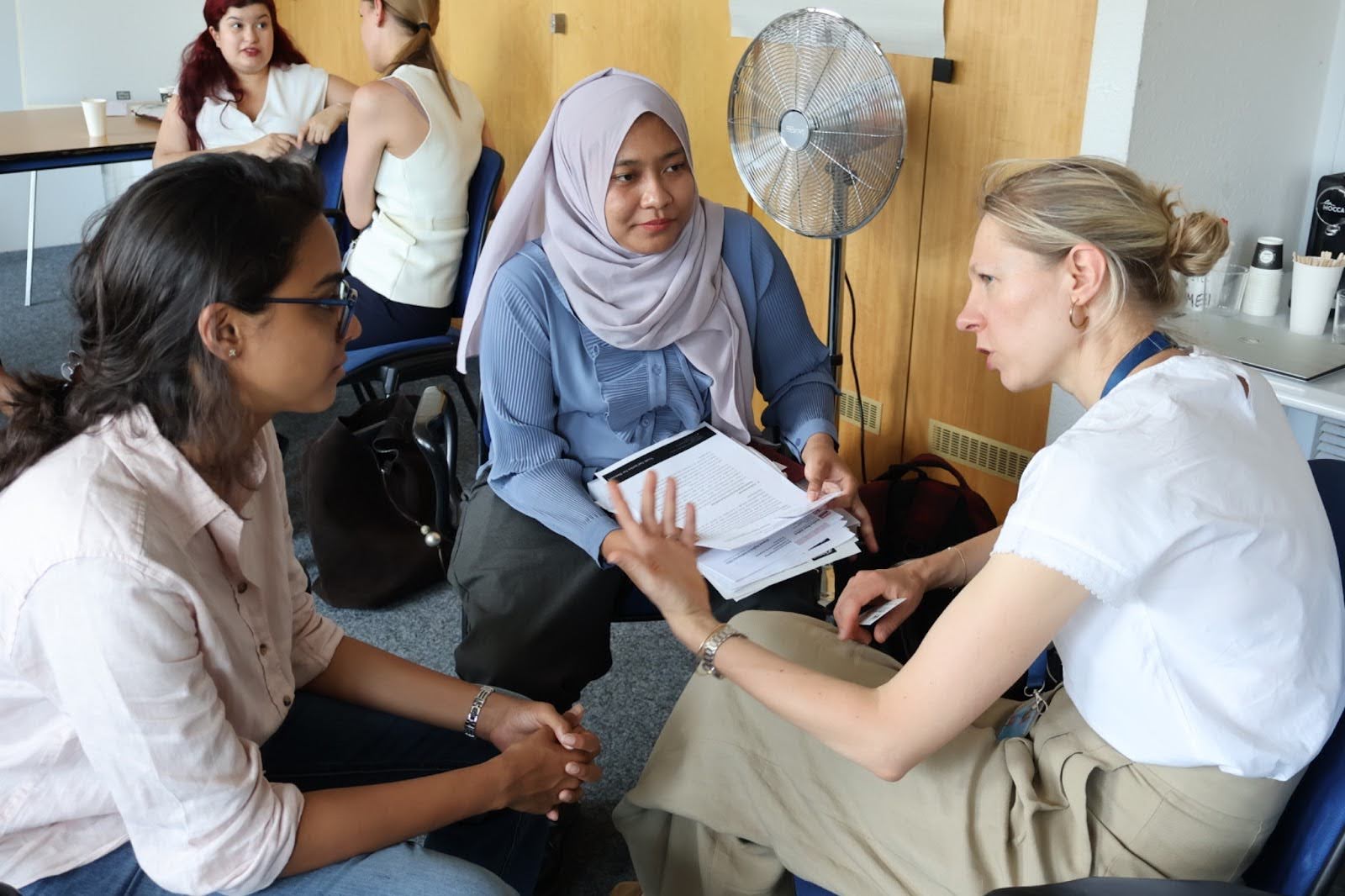
Each day was filled with learning opportunities, advocacy and reflection. In April and May, the group enjoyed online training and coaching sessions which were then built upon with a packed in-person programme that gave participants the background preparation needed to engage with the various mechanisms and relevant stakeholders while in Geneva. They applied and practiced the knowledge and skills gained in a few different ways, which included: an NGO breakfast with the High Commissioner for Human Rights, where participants could ask very detailed and pertinent questions about the current situation; a brown bag lunch with experts from the Committee on Civil and Political Rights, where the group received first person tips on how to submit information and engage with Treaty Bodies; and meetings with UN Special Procedures (Business and human rights, Climate Change, Enforced Disappearances, Extreme Poverty) and their staff, were participants could start personal relationships with those experts and share their advocacy journey and plans.
Photo: ISHR
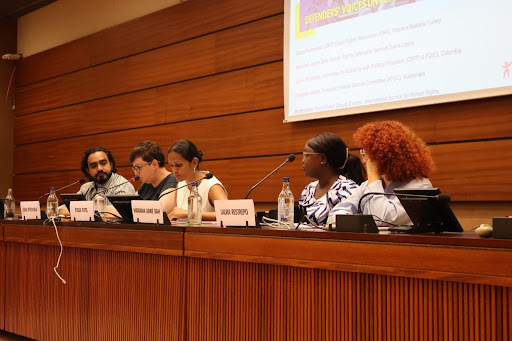
Defenders also participated in a powerful public side event about the reform of the UN human rights system. They shared lived experiences and challenges with over 30 States, calling for deeper access, stronger accountability, and genuine inclusion in the ongoing UN80 reform process. Laura Restrepo from Colombia reflected: ‘The UN must look inward and acknowledge its own colonial legacies — in who speaks, who decides, and whose knowledge counts. It must shift power toward grassroots and frontline communities.’
Throughout the programme, defenders stood up for key causes. Several participants joined the global campaign to #RenewIESOGI, advocating for the continuation of the UN mandate on Sexual Orientation and Gender Identity. Their voices contributed to a successful outcome: the Human Rights Council renewed the mandate for three more years, reaffirming its importance as a tool to combat discrimination and protect LGBTIQ+ communities.
Photo: ISHR
The sense of care and community ran deep. HRDAP helped participants’ work grounded in the values of solidarity and justice, and built their confidence to keep advocating at all levels. HRDAP25 not only provided skills and relevant exposure but also created a space for collaboration and resilience. Speaking during the public side event on UN reform, Pooja Patel, ISHR’s Deputy Executive Director, reminded States: ‘Human rights defenders are not only on the front lines of crises, they are on the front lines of solutions.’
Human Rights activist Henry Tiphagne at the press meetInstagram/peopleswatch
On 25 June 2025 Azeefa Fathima wrote how – at the release of the Global Index on Torture in Geneva, human rights defender Henri Tiphagne of India’s People’s Watch slammed India for failing to ratify the UN Convention Against Torture and for allowing systemic impunity in custodial deaths.
India’s human rights record on custodial torture came under sharp international criticism at the launch of the Global Index on Torture in Geneva on Tuesday, June 25, with prominent rights advocate Henri Tiphagne accusing the country of “zero accountability” in cases of police brutality and deaths in custody.
Drawing attention to the fifth anniversary of the custodial deaths of Jeyaraj and Benix in Tamil Nadu, Henri said, “The father and son were tortured and died in judicial custody. They were produced before a judicial magistrate after medical examination, having already changed clothes three times due to bleeding. The trial has gone on for five years, across 262 hearings, and is still ongoing, while the family continues to face reprisals.”
Henri, who is the Executive Director of People’s Watch, criticised India for being among eight countries listed in the Global Index for ongoing torture and reprisals against victims and human rights defenders. “We are yet to ratify the Convention Against Torture, despite over 41 countries having recommended it. The National Human Rights Commission (NHRC) has existed for 32 years and has not prosecuted even one police officer responsible for extrajudicial killings or torture,” he said…
He said that India must “bow down in shame” for its continued failure to ratify the UN convention and for its “zero accountability” in cases of custodial torture and deaths.
The National Human Rights Commission (NHRC), established 32 years ago, has never successfully prosecuted a single police officer involved in torture or extrajudicial killings, Henri noted, and said, “We are the only country with so many human rights institutions, and yet they are not functioning. The NHRC has even been downgraded in Geneva, and this speaks volumes”.
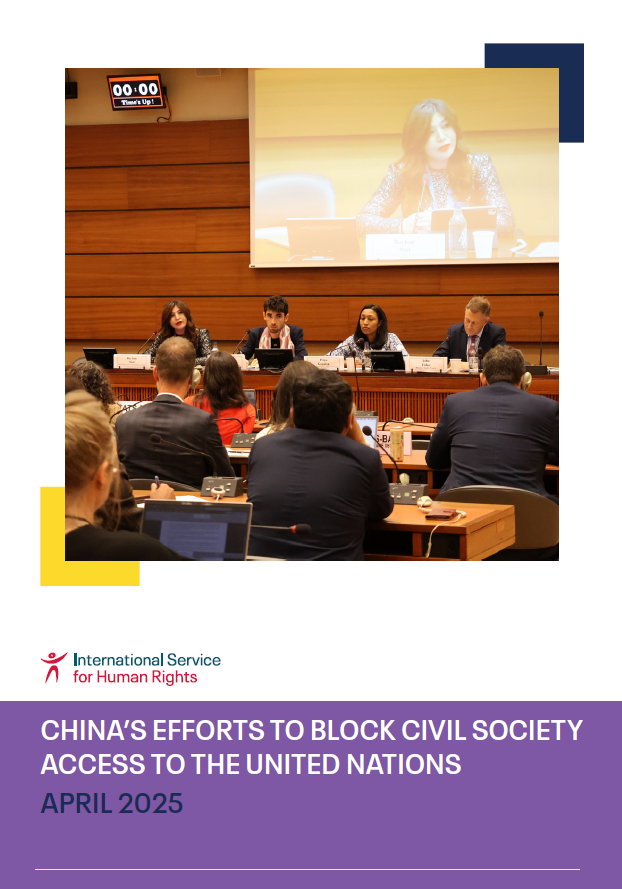
In a new report, ISHR analyses China’s tactics to restrict access for independent civil society actors in UN human rights bodies. The report provides an analysis of China’s membership of the UN Committee on NGOs, the growing presence of Chinese Government-Organised NGOs (GONGOs), and patterns of intimidation and reprisals by the Chinese government.
In the report, published on 28 April 2025 the International Service for Human Rights (ISHR) uncovers the tactics deployed by the Chinese government to restrict access to UN human rights bodies to independent civil society actors and human rights defenders, and intimidate and retaliate against those who do so.
These tactics include using its membership of the UN Committee on NGOs to systematically defer NGO applications, increasing the presence of GONGOs to limit space for independent NGOs and advance pro-government narratives, systematically committing acts of intimidation and reprisals against those seeking to cooperate with the UN, weaponising procedural tactics to silence NGO speakers and threatening diplomats not to meet with them, and opposing reform initiatives and efforts at norm-setting on safe and unhindered civil society participation at the Human Rights Council.
These tactics strongly contrast China’s stated commitment to being a reliable multilateral leader. They stem from the Chinese Party-State’s primary foreign policy objective of shielding itself from human rights criticism and enhancing its international image by restricting and deterring critical civil society voices, crowding out civil society space with GONGOs, and stalling and diverting reform initiatives.
While China is the focus of this report, the issues addressed are systemic. Based on this report’s findings, ISHR puts forward a set of targeted recommendations to UN bodies and Member States, aimed at protecting civil society space from interference and restrictions. The recommendations are designed to strengthen UN processes and prevent any State from manipulating international mechanisms to suppress independent voices. These include:
Reforming the Committee on NGOs to increase transparency, limit abuse of deferrals, and ensure fair access to UN bodies for independent NGOs;
Strengthening protection mechanisms against reprisals, including rapid response to incidents inside UN premises, public accountability for perpetrators, and consistent long-term follow-up on unresolved cases;
Curbing the influence of GONGOs by distinguishing clearly between independent and State-organised NGOs, and better documenting their presence and impact; and,
Strengthening measures at the Human Rights Council and other UN bodies to make civil society participation safer, more inclusive, and less vulnerable to obstruction
The report has been featured prominently in a global investigation by the International Consortium of Investigative Journalists (ICIJ) launched on 28 April 2025.
Watan News on 30 March 2025 came with a rather remarkable story about the UAE’s covert efforts to damage Qatar and Saudi Arabia’s reputations through paid campaigns using African NGOs Human rights sources in Geneva. Whether this is all true or not I cannot say, but it is worth reporting on.
Watan writes that “human rights circles in Geneva’ have revealed the United Arab Emirates’ involvement in leading coordinated incitement campaigns against its adversaries, using African organizations in exchange for financial bribes to attack Abu Dhabi’s opponents and whitewash its own dire human rights record. According to the source, Abu Dhabi’s campaign aims to bring in so-called “victims,” such as migrant workers, to testify before the UN Human Rights Council in an effort to damage Qatar’s international reputation.
Reliable reports indicate that the UAE has continuously funded this campaign over the past three years. Several human rights organizations and active institutions in Geneva have reportedly received large sums of money to support anti-Qatar activities. The funds are reportedly channeled through the UAE Embassy in Geneva and a key intermediary, Issa Al-Arabi, a Bahraini national who acts as a liaison for the UAE in supporting various rights groups at the UN.
According to the source, the campaign is being executed by the Rencontre Africaine pour la Défense des Droits de l’Homme (African Meeting for the Defense of Human Rights) under the leadership of Nishkarsh Singh, along with the Tomoko Development and Cultural Union (TACUDU) led by Fazal-ur-Rehman, and the International Network for Human Rights (INHR).
Another UN source said that the UAE’s campaign is coordinated by key figures within the diplomatic and human rights community in Geneva and Washington, primarily operating within the INHR network.
This organization plays a major role in organizing human rights events at the UN, with a team of participating legal and diplomatic experts.
Notable individuals involved include:
Biro Diawara – A veteran human rights activist in Geneva for over 20 years, representing African civil society including journalists, parliamentarians, religious leaders, and human rights defenders. He has strong ties to African delegations in New York, Geneva, and the continent, with a focus on Sudan, West Africa, and his native Guinea.
Clément N. Voule – Former UN Special Rapporteur on the Rights to Freedom of Peaceful Assembly and of Association. After completing his term in the summer of 2024, he joined the Geneva Human Rights Institute in September. A Togolese international lawyer, he specializes in human rights and security sector reform and holds multiple roles within Geneva’s human rights community.
Jane Galvão – Director of Resource Mobilization at INHR and Global Health Advisor. With over 20 years of experience managing health programs, she has worked on infectious diseases and women’s and children’s health, managing over $750 million in funding for organizations like UNITAID and WHO.
Eric N. Richardson – Founding President of INHR. A former U.S. diplomat and attorney, he led the U.S. team at the UN Human Rights Council in Geneva from 2013 to 2016. With experience in countries like China, North Korea, Libya, Tunisia, New Zealand, and Israel, he now focuses on mediation efforts with Amnesty International and teaches law at the University of Michigan and UC Berkeley.
John Shyamana – Expert in Social and Economic Rights, New York. With over 30 years of experience, he specializes in child policy, labor rights, and social welfare, having worked with the U.S. Congress and state legislatures on legislative and advocacy efforts.
Kumar – Senior Human Rights Advisor, Washington D.C. Former Advocacy Director for Amnesty International USA. With more than two decades of experience, he has championed human rights and humanitarian causes worldwide, particularly in Asia, Afghanistan, and Myanmar.
Jeff Landsman – Managing Director and Treasurer at INHR. A certified financial planner and seasoned international buyer, he oversees the institute’s financial operations and strategic planning.
Asel Alimbayeva – Program Officer and Director, INHR Geneva. Fluent in English, French, Russian, and Kazakh. She has worked at the UN Office in Geneva and Kazakhstan’s Permanent Mission, leading social media and HR operations at the institute.
Pedro Cherinos Terrones – Legal Advisor, Lima. A Peruvian lawyer specializing in international trade, business law, human rights, and compliance with international law.
Sean Wessing – AI and Innovation Specialist, Bologna. Holds dual Master’s degrees from SAIS–Johns Hopkins and Bologna Business School. Leads fundraising and AI governance projects at INHR.
Zaf Haseem – Videographer and Reconciliation Specialist, Asia. A conflict mediator who has worked in Sri Lanka, Burma, Indonesia, and the Central African Republic, using film as a training tool for peacebuilding.
UAE’s Smear Campaign Targeting Qatar and Saudi Arabia
Diplomatic sources indicate that the UAE is recruiting African civil society organizations to conduct media and human rights attacks against Qatar. These efforts are expected to intensify during the UN Human Rights Council sessions in June and September 2025, with a major campaign planned for the September session. Additionally, the UAE is reportedly preparing similar activities within the African Union Commission, targeting both Qatar and Saudi Arabia as part of its escalating geopolitical rivalry in Africa.
These developments underscore rising regional tensions in Africa, where the UAE is leveraging human rights tools and diplomatic influence to advance its political agenda.
They also raise serious concerns about the independence of some Geneva-based human rights organizations, which are increasingly being used as instruments of political influence rather than neutral advocacy.
New and emerging technologies have become a fundamental tool for human rights defenders to conduct their activities, boost solidarity among movements and reach different audiences. Unfortunately, these positive aspects have been overshadowed by negative impacts on the enjoyment of human rights, including increased threats and risks for human rights defenders. While we see the increased negative impacts of new technologies, we do not see that governments are addressing these impacts comprehensively.
Furthermore, States and their law enforcement agencies (often through the help of non-State actors, including business enterprises) often take down or censor the information shared by defenders on social media and other platforms. In other cases, we have seen that businesses are also complicit in attacks and violations against human right defenders.
Conversely, lack of access to the internet and the digital gaps in many countries and regions, or affecting specific groups, limits the potential of digital technologies for activism and movement building, as well as access to information.
The Declaration on Human Rights Defenders, adopted in 1998, does not consider these challenges, which have largely arisen with the rapid evolution of technology. In this context, and, as part of activities to mark the 25th anniversary of the UN Declaration on human rights defenders, a coalition of NGOs launched a consultative initiative to identify the key issues faced by human rights defenders that are insufficiently addressed by the UN Declaration, including on the area of digital and new technologies. These issues are also reflected in the open letter to States on the draft resolution on human rights defenders that will be considered during HRC58.
This side event will be an opportunity to continue discussing the reality and the challenges that human rights defenders face in the context of new and emerging technologies. It will also be an opportunity to hear directly from those who, on a daily basis, work with defenders in the field of digital rights while highlighting their specific protection needs. Finally, the event will also help remind States about the range of obligations in this field that can contribute to inform the consultations on the HRC58 resolution on human rights defenders.
Panelists:
Opening remarks: Permanent Mission of Norway
Speakers:
Carla Vitoria – Association for Progressive Communications
Human rights defender from Kenya regarding the Safaricom case (via video message)
Woman human rights defender from Colombia regarding use of new technologies during peaceful protests
Human rights defender from Myanmar regarding online incitement to violence against Rohingya people
Video montage of civil society priorities for the human rights defender resolution at HRC58
Moderator: Ulises Quero, Programme Manager, Land, Environment and Business & Human Rights (ISHR)
This event is co-sponsored by Access Now, Asian Forum for Human Rights & Development (FORUM-ASIA), Association for Progressive Communications (APC), Business and Human Rights Resource Centre (BHRRC), DefendDefenders (East and Horn of Africa HRD Project), Huridocs, Gulf Centre for Human Rights (GCHR), International Lesbian, Gay, Bisexual, Trans and Intersex Association (ILGA World), International Service for Human Rights (ISHR), Peace Brigades International, Privacy International, Protection International, Regional Coalition of WHRDs in Southwest Asia and North Africa (WHRD MENA Coalition).
Posted on 6 January 2025 – Closing date 15 January 2025
The International Federation for Human Rights (FIDH) is an international non-governmental organisation (NGO) composed of nearly 200 national human rights organisations from more than 115 countries. FIDH is a nonpartisan, non-sectarian, apolitical, and not for profit organisation. Since 1922, FIDH has been defending all human rights – civil, political, economic, social, and cultural – as set out in the Universal Declaration of Human Rights.
FIDH are now recruiting : A Delegate to the United Nations (F∕M) – Indefinite-term contract based in FIDH Geneva office
The FIDH’s Delegation in Geneva
Represents FIDH before Geneva-based international organizations and institutions, the Office of the United Nations High Commissioner for Human Rights (OHCHR); in particular, the UN Human Rights Council (HRC) and the UN Human Rights Treaty Bodies;
Organizes the participation of FIDH’s member and partner organizations in the work of UN human rights bodies and mechanisms (support and assistance with regard to the submission of “parallel” or “alternative” reports, lobbying and advocacy, communication, etc.): mainly the UN Human Rights Council (including the Universal Periodic Review (UPR) mechanism), treaty monitoring bodies, and special procedures;
Prepares and implements the interventions of lobbying and advocacy at the Human Rights Council, and defines advocacy strategies;Feeds UN human rights protection bodies and mechanisms, in particular UN special procedures and OHCHR’s sections and branches, based on information from FIDH member and partner organizations and develops the strategic analysis of institutional developments and advocacy opportunities;
Relays and reports on activities and events to FIDH’s International Secretariat based in Paris.
Direct superviser : The representative, Head of the FIDH Delegation to the United Nations in Geneva
Applicants should send their CV and a brief cover letter (in English) by email recrutement@fidh.org quoting reference FIDH DELEGATE in the subject line.
The Martin Ennals Award for Human Rights Defenders honors individuals and organizations who have shown exceptional commitment to defending human rights, despite the risks involved. The Martin Ennals Award aims to support the tireless struggles of these activists.[For more on the award and its laureates, see: https://www.trueheroesfilms.org/thedigest/awards/043F9D13-640A-412C-90E8-99952CA56DCE]
To qualify for the Award 2025, the nominees must:
Be currently active in the promotion and protection of human rights
Not employ or advocate violence
Not be self-nominated
Be in need of protection
We encourage nominations of activists under 30 years of age to reflect the growing number of young persons joining the human rights movements in their countries. Post-humous nominations are not eligible. The deadline for nominations is open ended for now. Nominees must also read and acknowledge the Martin Ennals Foundation Ethical Guidelines.
Nominate your human rights champion now by filling out the nomination form (available in ENGLISH, FRENCH) and send it to info@martinennalsaward.org.
The Martin Ennals Award is a unique collaboration between ten of the world’s leading human rights organizations, who form the independent Jury that selects winners of the Award. In the first half of each year, a nomination cycle takes place over several months, at the end of which the winners of the Martin Ennals Award — or Laureates — are selected by the Jury. The names of the Laureates will be publicly announced to the public shortly before the ceremony. Mark your calendar for the Award Ceremony 2025 which will take place in the third trimester of the year in Geneva.
Learn more about the nomination process and our ethical guidelines here: