Lewis Hamilton has just won the Bahrain Grand Prix [which was canceled in 2011 amid violent clashes after an uprising demanding political reforms]. It was the occasion for F1 chief Bernie Ecclestone to says that the Azerbaijan “Baku European Grand Prix” will make its début in 2016, despite concerns over the country’s human rights record. Earlier this week, the sport’s official website carried a notice stating that “The Formula One Group is committed to respecting internationally recognized human rights in its operations globally.” Asked if the human rights situation in Azerbaijan had been checked out with a view to hosting next year’s race, Ecclestone said “We have” before adding “I think everybody seems to be happy. There doesn’t seem to be any big problem there.”
One wonders where he got this idea as the Human Rights Watch report (and that of other NGOs, such as FIDH/OMCT, see link below) on Azerbaijan for 2015 was damning:
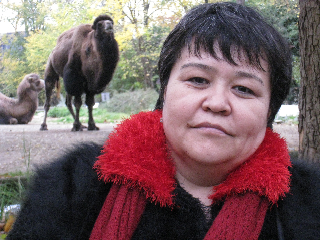
Today , 27 March 2015, the FIDH published a moving portrait of Mutabar Tadjibaeva, the well-known Uzbek human rights defender, under the title “If I were told that I only have one day left to live, I would spend it fighting for human rights.” A statement that in her case is not an exaggeration!
“If I were told that I only have one day left to live, I would spend it fighting for human rights,” says Mutabar Tadjibaeva, President of the organization Fiery Hearts Club. The 52-year-old Uzbek journalist and activist arrived in France in 2009 as a political refugee. She is no longer welcome In her native country, which has been governed for a quarter of a century by the dictator Islam Karimov. In Uzbekistan, Mutabar investigated drug trafficking, corruption and human rights violations. She endured threats, prison, torture and rape; her fight came at a high price.
In 2002, while this activist was fighting to make publicly known the case of Alimuhammad Mamadaliev, who had been tortured and killed by the police, she herself ended up behind bars for several days. In April 2005, was kidnapped by secret service agents and subjected to horrific treatment. These men would never worried about having to answer for their deeds. But even in the face of such injustice, Mutabar Tadjibaeva continued her activism and journalism until she was imprisoned three years later, on 7 October 2005, just before boarding a plane headed for Dublin where she was to participate in an international conference on human rights. She was arrested by police and, a year later, sentenced to eight years in prison, where she was subjected to torture. She was accused of engaging in illegal activities against the State during demonstrations where several hundred people had lost their lives in May 2005 in Andijan, an industrial city. It is clear to Mutabar that her arrest was for purely political reasons. She was one of many victims of State repression that followed the events of 2005.
“I know very well what prison in Uzbekistan is like and the torture. That is why I have decided to devote me life to fighting for human rights. When I was in jail, I dreamt that one day I would be free. I would tell the prison guards that I would get out of there and write a book on what I had lived through,” she recalls. On 18 May 2008, while still in prison, she was granted the Martin Ennals Award for human rights defenders. She was released a few months later and, on 10 December of that same year, Mutabar Tadjibaeva came to Paris where she accepted the Liberté, Égalité, Fraternité Award on behalf of the Fiery Hearts Club. Banned from Uzbekistan for almost ten years, the organisation took shelter in France in 2011. It will celebrate the 15th year of its existence this year. Every day, dozens of people come to her in search of assistance. She seeks out lawyers and funding, prepares reports and files individual complaints to the UN. Despite the modest means at her disposal and a state of health weakened by the torture she suffered, Mutabar wants to help those who are in same situation as she was in ten years earlier. Her wish is that human rights defenders take more of an interest in the situation in Uzbekistan. Mutabar Tadjibaeva has enjoyed the support of FIDH, and her organisation is now officially a member. “It is thanks to the support of the FIDH that I was able to keep my promise, that is, write my book entitled “Prisoner of the Island of Torture.” I worked with an Uzbek journalist and it is thanks to those recordings that I was able to tell my story. Otherwise, it would have been too hard psychologically,” Mutabar recalls. In the book, which has been published in Uzbek, Russian, French, and English, she shares her memories of prison and decries the cruelty of the regime.
For Mutabar, the challenge lies not in Karimov’s departure, but in regime change. “His departure could set off a war among the clans. The country is corrupt, there is no respect for the law. Karimov the dictator is not the only one to blame for the fact that people are being killed in prisons and tortured; the politicians who support the regime are also to blame. I want Uzbekistan to become a democratic country and dissidents like me to be able to return there and live,” she said. However, as Mutabar sees it, a return to her country is not within the realm of the possible.
On 29 March, Islam Karimov will be running for President for the fourth time, thereby violating Article 90 of the Constitution, which does not allow more than two terms. Mutabar Tadjibaeva and her friends have set up a virtual electoral commission to organise a vote on the Internet. This alternative platform has rejected the candidacy of the president. “When I decided to come to France as a political refugee,” she concluded, “I was afraid that I would not be able to do anything for my country remotely. But, now I see that if you are motivated and supported, anything is possible.”
During the adoption of the Universal Periodic Review (UPR) report on Egypt in the UN Human Rights Council on 20 March 2015 the Women Human Rights Defenders International Coalition (for the composition see below), made a forceful statement about the terrible situation of women human rights defenders in that country.
“The systematic judicial harassment faced by many women human rights defenders is highlighted through the emblematic case of the seven women defenders2 arrested on 21 June 2014 for protesting peacefully against the Protest and Public Assembly Law (No. 107), who faced arduous hassles including prolonged pre-trial detention. Their sentence was finally reduced to two years of imprisonment and two years of surveillance by the appeals court in December 2014. [The seven are: Ms. Sanaa Seif, Ms. Yara Sallam, Ms. Hanan Mustafa Mohamed, Ms. Salwa Mihriz, Ms. Samar Ibrahim, Ms. Nahid Bebo and Rania El-Sheikh]
Furthermore, we strongly condemn the killing of Shaimaa ElSabbagh during a peaceful protest on 24 January 2015. She was taking part in a gathering to commemorate the fourth anniversary of the 25 January revolution. We call on the Egyptian government to ensure a prompt, independent and effective investigation to identify the perpetrator and hold them to account. In this connection, we are deeply concerned that Azza Soliman from the Centre for Egyptian Women’s Legal Assistance (CEWLA), who was witness to the incident and testified before the Prosecutor’s Office, is now targeted as a suspect and charges have been brought against her under the public assembly law.
Finally, we express our continued dismay over sexual violence against women in online and offline public spaces. Though a national strategy to combat violence against women has been announced, we emphasise the need for it to be comprehensive and holistic with involvement of all relevant ministries and stakeholders, as well as adequate budget allocation. During the UPR, the government highlighted a new amendment to the Penal Code article 306, which addresses sexual harassment. This amendment is far insufficient in its scope as it only considers sexual harassment a crime if the intent of the perpetrator is proven to be related to obtaining sexual benefits…”
The Coalition members: Amnesty International, Asia Pacific Forum on Women, Law and Development (APWLD), Asian Forum for Human Rights and Development (FORUM-ASIA), Association for Progressive Communications (APC), Association for Women’s Rights in Development (AWID), BAOBAB for Women’s Human Rights, Centre for Reproductive Rights, Centre for Women’s Global Leadership, Coalition of African Lesbians, Front Line Defenders, Human Rights First, Information Monitor (INFORM), International Federation for Human Rights, International Service for Human Rights (ISHR), International Women’s Rights Action Watch Asia-Pacific (IWRAW-AP), Isis International, ISIS Women’s International Cross- Cultural Exchange, Just Associates (JASS), The Latin American and Caribbean Committee for the Defense of Women’s Rights (CLADEM), MADRE, Nazra for Feminist Studies, Peace Brigades International, Rainbow Rights Project Inc, Urgent Action Fund for Women’s Human Rights, Women Living Under Muslim Laws (WLUML), Women’s Global Network for Reproductive Rights, WOmen’s Initiatives for Gender Justice, Women’s Rehabilitation Centre (WOREC), World Organisation against Torture (OMCT).
I was in Geneva last week where a number of interesting meetings took place. One of the side events I attended (a picture went out on Twitter), concerned the crucial issue of “ Human rights defenders and national security”, on 9 March organized by a group of NGOs (International Service for Human Rights, Article 19, the International Federation for Human Rights (FIDH), Human Rights House Foundation, the International Commission of Jurists and the World Organisation Against Torture).
The panel was moderated by ISHR Director Phil Lynch, and had a very knowledgeable speakers such as Michel Forst, Special Rapporteur on Human Rights Defenders; Hina Jilani, Pakistani human rights lawyer and former Special Representative on Human Rights Defenders; Jimena Reyes, Director of the Americas Desk at FIDH; Roselyn Hanzi from Zimbabwe Lawyers for Human Rights; Gerald Staberock, Director of the World Organisation against Torture (OMCT); and Tanele Maseko, human rights defender from Swaziland.
A short report below:
Restrictions on human rights defenders
Phil Lynch opened the discussion by referring to unequivocal examples of restrictions imposed on human rights defenders by the operation of counter-terrorism laws, with examples cited including the recent amendments to the Australian Security Intelligence Organisation Act in Australia which criminalises the disclosure of information about ‘special intelligence operations’, even where such disclosures expose or relate to serious human rights abuses; draft legislation in China which vaguely defines ‘terrorism’ to include ‘thought, speech or behavior’ that is ‘subversive’ or seeks to ‘influence national policy making’, and Law 8/2015, passed recently in Egypt, which allows individuals and associations which ‘infringe public order’ or ‘harm national unity or national security’ to be designated as terrorists. Concern was also expressed that renewed US efforts to combat extremism do not contain adequate human rights safeguards and that the imperative to counter-terrorism is being used as a subterfuge by regimes in allied States – such as Bahrain, China, Egypt and Saudi Arabia – to further restrict and repress civil society.
Panelists built on these examples throughout the discussion, referring to significant limitations on, and prosecution of, human rights defenders under the guise of national security in their regions, including the prosecution of indigenous activists campaigning against major development projects in Chile under the Anti-Terrorist Act; human rights defenders being spied on by intelligence authorities in Cuba which consequently contributed to their murder; human rights defenders in Zimbabwe being charged for allegedly participating in a disruptive demonstration, or under the Official Secrets Act which forbids the release of information, even if that information regards human rights violations; and human rights defenders being imprisoned and labelled terrorists for voicing disagreement with the government in Swaziland. Members of the audience provided further examples, including defenders in South Korea being charged under a law that prohibits support for North Korea.
Legislation protecting the rights of defenders
‘A schizophrenia currently exists in many countries where authorities laud their own human rights mechanisms in the international sphere and then actively criminalise the activities of human rights defenders at home,’ said Hina Jilani. It is essential that along with a national law for the protection of human rights defenders, counter terrorism laws do not impose restrictions on those protections.
‘Counter terrorism laws should be developed in a manner that fights terrorism, while at the same time, respecting the legitimate work of human rights defenders,’ said Gerald Staberock of OMCT.
The panelists also stressed the importance of ensuring the rights of human rights defenders are not constrained under other laws, such as laws prohibiting criticism of the head of state, emir or the army.
Independence of the judiciary and the military
The discussion also highlighted the necessity to ensure the independence of the judiciary. In this regard, Jimene Reyes of FIDH referred to the use of the judicial system in Cuba as an ‘instrument of uncritical oppression’. Members of the audience identified the importance that the judiciary, as well as the executive, must be able to recognise and respect the legitimate activities of human rights defenders.
Similarly the importance of the separation between the State and the military was emphasised. Ms Reyes stressed the risk for human rights defenders if they are ‘considered by the military to be the enemy’.
Importance of civil society participation
While there is a clear trend of governments using counter-terrorism legislation to conflate the legitimate activities of human rights defenders with actions that threaten national security, the panelists were in clear consensus that human rights defenders and a strong and healthy civil society is essential to the stability of the State and good governance.
‘The work of human rights defenders and other civil society actors is crucial to address inequality and to promote good governance, accountability and inclusive development, all of which contribute to national security,’ said Phil Lynch of ISHR. ‘However, to ensure this is possible, it is essential to raise national and international awareness of the pitfalls of counter-terrorism legislation and the importance of civil society participation’.
The event concluded with a reflection of the need to counter the ‘rhetoric of fear’ and firmly establish that ‘the rights to peaceful assembly and of association do not encourage extremism, chaos, or violence but are, in fact, the best antidotes we have against all of these ills’.
Myself and others brought up the need to fight back in the public domain and the media against campaign to delegitimize the work of human rights defenders and show more the positive contribution their legitimate work brings to society.
[The high-level segment of the Council session has called on all States to fully implement Human Rights Council Resolution 22/6, which was led by Norway and adopted by consensus in March 2013. It urges States to ensure that ‘measures to combat terrorism and preserve national security … do not hinder the work and safety’ of human rights defenders.]
11 February 2015 marks the 36th anniversary of the Islamic regime in Iran. Karim Lahidji, President of the International Federation for Human Rights (FIDH), answers questions about freedoms and liberties in Iran today. The very experienced and well-respected Iranian exile recalls briefly the historical background and states the record on freedom of religion in Iran: Read the rest of this entry »
On 6 February 2015, the Observatory for the Protection of Human Rights Defenders, an OMCT-FIDH joint programme, welcomed the decision of 28 January of the Russian Supreme Court to reject the complaint filed by the Ministry of Justice against the Society “Memorial”.
[Since its foundation in the final years of the Soviet Union, the network “Memorial”, consisting in a number of independent NGOs under the same society, is known for exposing Soviet-era repression, commemorating victims of violations and monitoring the current human rights situation in the Russian Federation and other post-Soviet countries.]
“The complaint filed by the Justice Ministry, was a clear attempt to harass and discredit the Society “Memorial”, undermine its tremendous human rights work and expeditiously lead to its closure. It followed years of harassment, in the form of defamation through slandering media campaigns and acts of vandalism targeting the group’s headquarters in Moscow.Russian civil society organisations are facing a deep and systematic clampdown”, said OMCT Secretary General Gerald Staberock.
[Human Rights Center “Memorial” is currently fighting a separate battle against an official move to label it a “foreign agent” under the controversial law targeting NGOs that receive foreign funding. Moreover, under a newly proposed piece of legislation, currently debated in the State Duma of the Russian Federation, foreign organisations would face being labelled as “undesirable” and closure and local NGOs engaged in cooperation with such bodies would face criminal charges.]
“While the decision of the Supreme Court dismissing the complaint against the Society “Memorial” should be welcomed, we remain deeply concerned by the constant threats to human rights defenders in the Russian Federation in the context of an ever increasing repressive legal framework and frequent attacks targeting human rights defenders”, said FIDH President Karim Lahidji.
The Observatory recalls in this context the recent brutal attack on lawyer Mourad Magomedov, who works with the Human Rights Centre Memorial in Daghestan, by five unknown men in Makhachkala, Dagestan.
Today, 20 January, a verdict is expected in the trial of Nabeel Rajab, an internationally recognized human rights defender in Bahrain. President of the Bahrain Center for Human Rights (BCHR), Deputy Secretary General of the International Federation for Human Rights (FIDH), and a member of Human Rights Watch’s Advisory Board, Rajab is charged with insulting public institutions via Twitter. A huge number of NGOs (see below) strongly condemn the politically motivated prosecution of Nabeel Rajab and call on the Government of Bahrain to drop all charges against the peaceful human rights defender. The video statement was prepared by True Heroes Films (THF).
On 1 October 2014, Rajab was arrested after hours of interrogation regarding one of his tweets. Rajab had just returned to Bahrain from a months-long advocacy tour, which included appearances at the 27th Session of the UN Human Rights Council in Geneva and the European Parliament in Brussels, as well as meetings with foreign ministries throughout Europe. Charged with insulting public institutions under article 216 of Bahrain’s penal code, Rajab was granted bail on 2 November 2014, but was banned from leaving the country.
[Rajab is one of many Bahrainis who have been victimized by the government’s intensified campaign to silence dissent: On 28 December, Sheikh Ali Salman, General-Secretary of Bahrain’s largest opposition party Al-Wefaq, was arrested for his political and human rights activism. Earlier in December, human rights defender Zainab al-Khawaja was sentenced to four years in prison for insulting the king and ripping up his picture, while her sister Maryam al-Khawaja, Director of Advocacy of the Gulf Center for Human Rights, was sentenced to one year in prison for allegedly assaulting a police officer during her arrest in August 2014. – https://thoolen.wordpress.com/2014/09/12/bahrain-travails-of-a-family-of-human-rights-defenders/]
The next ‘logical’ step by Russia in curtailing the work of human rights defenders is in the making: on 20 January the Russian Parliament (Duma) will debate a bill to declare certain foreign and international organisations as ‘unwanted’ and to fine anyone working with such entities. The Observatory, a joint programme of FIDH and OMCT, issued a statement today calling on the Duma to drop this bill.
If adopted, the law will complement an already very restrictive legislative arsenal used to silence all forms of criticism against the regime in contradiction with international human rights instruments ratified by Russia and will allow authorities to ban legitimate human rights activities, though they are protected under international law. On January 14, the State Duma Committee on Constitutional Legislation recommended that the lower house pass a bill to ban “undesirable foreign organisations” in Russia and ban cooperation with them. The bill, presented initially by two members of Parliament, would allow the Prosecutor General’s Office, upon consultation with the Foreign Ministry and based on information provided by the interior and security agencies, to ban foreign and international organisations that “threaten the defence or security of the State” or “public order and health”.
Paul Mwilambwe, a major suspect in the CongoleseChebeya-Bazana case was indicted by a Senegalese court and placed under judicial supervision in Dakar on 8 January 2015. This decision was taken following a criminal complaint based on universal jurisdiction filed on 2 June 2014 by lawyers of the FIDH Litigation Action Group (LAG) and the families of Floribert Chebeya and Fidèle Bazana, the two Congolese human rights defenders who were assassinated in June 2010. FIDH hopes that these efforts of the Senegalese judicial authorities contribute to identifying the persons responsible for these assassinations and the disappearance of these two human rights defenders.
“That Paul Mwilanbwe has been indicted and heard by an independent investigative judge is a fundamental step on the road to truth and, we hope, to the justice which has not been available to the victims’ families in DRC” , said Patrick Baudouin, FIDH Honorary President. “This is the first time since the Hissène Habré case that a case based on extra-territorial jurisdiction is being tried in Senegal, a step which sends a strong, positive signal showing that the Senegalese judiciary intends to play an active role in the fight against impunity for the most serious crimes committed in Africa”.
“Since the Democratic Republic of Congo did not provide for equitable judicial proceedings, we initiated the proceedings in Senegal to ensure that an impartial and independent investigation would be carried out and that full information would be obtained on the murder and the enforced disappearance of the victims, Floribert Chebeya and Fidèle Bazana. We wanted an independent judge to hear Paul Mwilambe, an actor in this tragedy, and this has happened today,” said Assane Dioma Ndiaye, a lawyer for the FIDH LAG and for the Chebeya and Bazana families.
Paul Mwilambwe, a major in the Congolese National Police force (PNC), was in charge of security for the office of General John Numbi, Head of the PNC at the time of the events, in the premises where Floribert Chebeya and Fidèle Bazana were killed. Shortly after these killings, Paul Mwilambwe fled to a country somewhere in Africa before going to Senegal. In a filmed interview with France 24 (in French), whilst still on the run, Mwilambwe testified and denounced his own participation and the role and involvement of senior members of the Congolese police, including General John Numbi in the enforced disappearance and murder of the two human rights defenders.
“For us, this indictment gives us great hope to obtain the truth and justice that was refused to us in Congo where the justice system is bogged down. I want to know where my husband was buried. I want someone to tell me where he is. And I want to be able to bury him with dignity” , said Marie-José Bazana, the wife of Fidèle Bazana whose body has still not been found.
[Background: On 2 June 2010, Floribert Chebeya, Executive Director of the NGO Voix des sans Voix (Voice of the Voiceless – VSV), was found dead in his car in a suburb of Kinshasa. His close associate Fidele Bazana was reported missing. The day before, the two human rights defenders had shown up at PNC headquarters to meet with its Director, the Inspector-General, and General John Numbi. They did not emerge from this meeting alive. Faced with the public outcry triggered by the murder of Mr. Chebeya and disappearance of Mr. Bazana, the Congolese authorities were obliged to open an investigation. This investigation culminated in the precautionary suspension of General John Numbi and the imposition of murder indictments for eight police officers, including Paul Mwilambwe, who fled.
On 23 June 2011, following a trial marked by numerous incidents the military court on 23 June 2011 in Kinshasa acknowledged the civil responsibility of the Congolese state for the murder of Mr. Chebeya, as well as in the abduction and illegal detention of Mr. Bazana by several of its officers. The court convicted five of the eight police officers accused. Four were sentenced to death and one to life imprisonment. Three of those condemned to death are still on the run, and three of the police officers found to have played a role in the disappearance of Mr. Bazana, have since been acquitted. On 7 May 2013, the Military High Court, sitting as a court of appeal, declared itself incompetent to investigate the procedural issues in the case and decided to turn the proceedings over to the Supreme Court, operating as a constitutional court. In practice, this decision suspended the appeal proceedings, which remain deadlocked in DRC to date. In addition, Congolese authorities have never instituted proceedings to investigate the role played by General John Numbi, who has since been replaced as Head of the PNC, despite evidence and the complaints filed by the families of the two human rights defenders.]
Yesterday, 19 December 2014, the Istanbul High Criminal Court acquitted Ms. Pınar Selek,an academic known for her commitment towards the rights of the most vulnerable communities in Turkey. She was prosecuted for allegedly causing a bomb to explode in Istanbul’s Egyptian bazaar on July 9, 1998, and for membership in a terrorist organisation.
Previously, the Istanbul Special Heavy Penal Court No. 12 had acquitted her on three occasions: in 2006, 2008, and 2011. Notwithstanding, the Supreme Court quashed the first two acquittal decisions and requested the lower court to convict her. In, 2013, the Istanbul Special Heavy Criminal Court No. 12 deferred to the Supreme Court’s request and sentenced Ms. Pınar Selek to life imprisonment, while the case was still pending before the Supreme Court. On June 11, 2014, the Criminal Chamber No. 9 of the Supreme Court decided to overturn the conviction on procedural grounds. [https://thoolen.wordpress.com/2014/07/09/pinar-selek-case-in-turkey-the-supreme-court-overturns-life-sentence-against-pinar-selek/]
“Countless procedural irregularities have been observed during the trial. She should have never been prosecuted in the first place. This decision should now become final”, recalled Martin Pradel, Lawyer at the Paris Bar, who has been observing the legal process for the Observatory since 2011.
The Observatory (a coöperation between FIDH and OMCT) has been particularly mobilised on this case, through the publication of nine urgent alerts, six trial observations and demarches towards the Turkish authorities and the international community at the highest level. For more information see Observatory mission report published in April 2014, available in English on the following web links: http://www.omct.org/files/2014/04/22642/turkey_mission_report_pinar_selek_2014.pdf


 Hans Thoolen on Human Rights Defenders and their awards