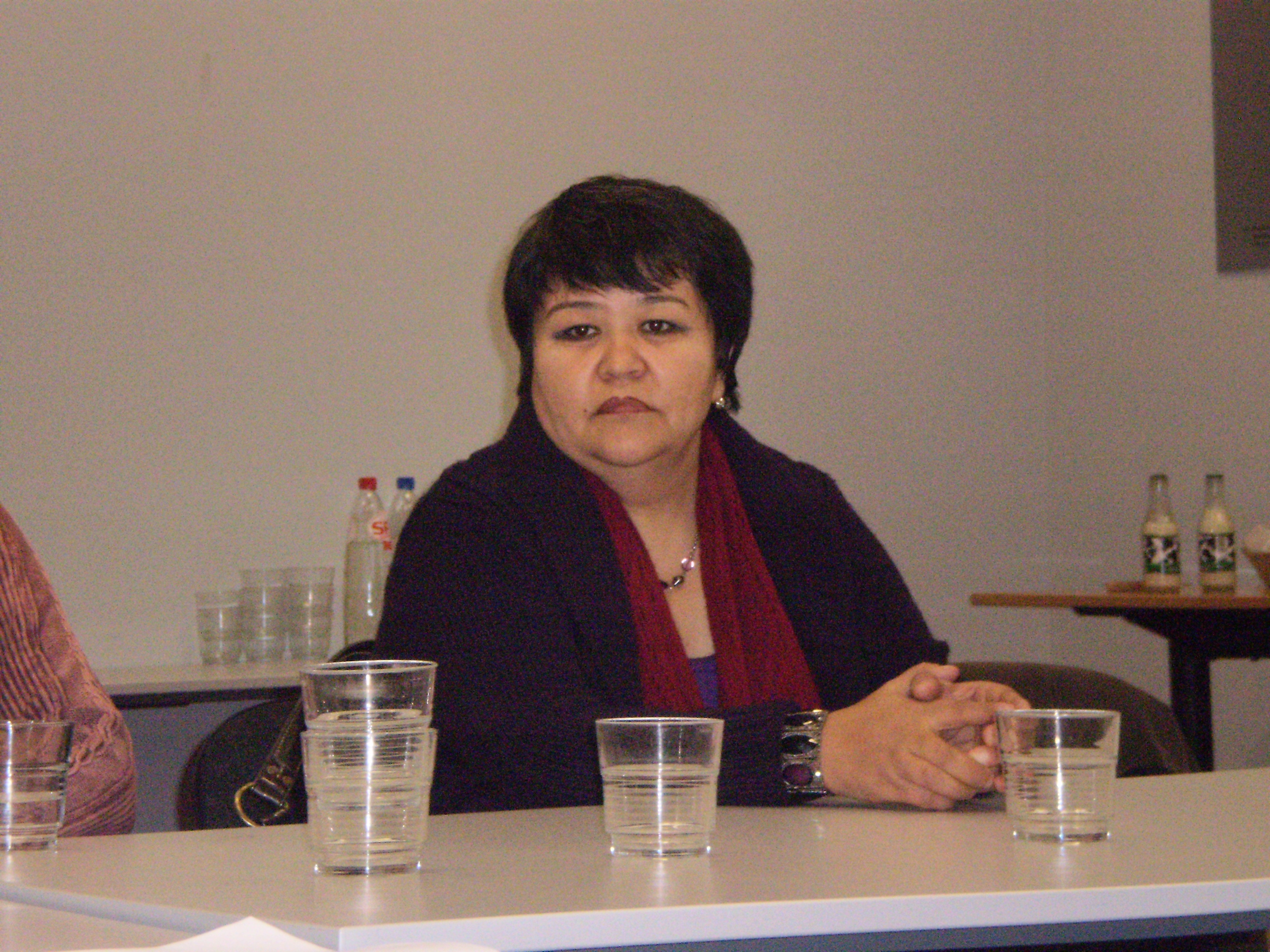
The article starts by mentioning the attack on Soni Sori (see more below on her). Reports suggest that oil paint mixed with chemicals was thrown on her face by unknown assailants. This attack, … and other reports of intimidation of persons such as lawyers and journalists working in the Jagdalpur area raises the question of the safety of human rights defenders and shows that there isn’t enough being done by the State machinery to defend the defenders….
Srishti Agnihotri then makes the interesting point that “it is not necessary to be correct to qualify as a human rights defender”. E.g. the criticism of Human Rights Defenders on a particular development project may not be legally correct. However, this does not and should not disentitle them to the protection of the State against violence and reprisals. The reason for this will become clear when we examine the role human rights defenders play in a society.
These Defenders face problems, in many parts of the world, and India is not an exception. Often the work being done by human rights defenders brings them in conflict with vested interests such as the land mafia, the mining lobby, or other corporations. A case in point is the story of Satyendra Dubey, an officer in the Indian Engineering Service, who lost his life due to exposing corruption in a highway construction project. At other times, the advocacy done by them requires them to be critical of the State action including in areas where there is considerable unrest….
This gives room for propaganda that human rights defenders or NGOs are ‘anti-development’ or even ‘anti-national’. It leads to them facing the wrath of more draconian security legislations, or attacks on them by vested interests. It is very easy to make the mistake of thinking ‘Why should we use state resources to protect those who are critical of the State? The obvious answer, is that the State may not always be correct. Given the great power state and corporate entities enjoy, their ability to make mistakes if unchecked is also correspondingly large. A hard reckoning of the work done by human rights defenders shows that they act as an essential check and balance on the State, and throw light on existing state-industry nexus, to protect the rights of people. The State derives its legitimacy from an implicit contract with its citizens, which necessitates a mechanism to check that the State adheres to this contract, and this is a function carried out by the human rights defenders. In this sense, human rights defenders are necessary for a healthy functioning democracy.
………
While there are general laws that can be (and are) used to protect these defenders, but those working for the enactment of a special law argue that the role of the law is also to play a certain ‘normative, expressive and educative’ function. By this, they mean that a special law to protect human rights defenders will also confer legitimacy on the work that they are doing, and create an enabling environment where they may do so peacefully.
Of course, the enactment of a special law is not adequate to ensure the protection of human rights defenders. It has to go hand in hand with better law and order, better legal services in areas where these defenders work, transparency in governance, toleration of dissent by the State machinery, and continued proactive action by the Focal Point for the protection of Human Rights Defenders, at the National Human Rights Commission.
This focal point is involved in providing assistance to such Rights defenders, and following alleged violations of their rights. Although there has been greater collaboration between the NHRC and Human Rights defenders, much needs to be done to ensure that defenders can work in a safe and enabling environment.
The Times of India of 10 February 2016 takes to task the State of Chhattisgarh – echoing Amnesty India – that it should do more to protect a woman journalist, Malini Subramaniam, in Bastar. “This attack is another indicator of the increasingly hostile atmosphere in which journalists and human rights defenders operate in Chhattisgarh,” said Makepeace Sitlhou, Campaigner at Amnesty International India. Malini herself said: “This is not an attack on me as a person but as a journalist reporting incidents on the ground, something that they don’t want“. [The statement said, a group of over 20 people gathered outside the home of journalist Malini Subramaniam on February 7. They urged her neighbours to stone her house and chanted slogans suggesting that she was an agent for Maoist armed groups. Later that day, an anti-Maoist group released a public statement accusing her of presenting a distorted picture of Bastar and promoting Maoist ideology.]
On 21 February 2016 Saurav Datta in Catchnews poses the question “Why is Chhattisgarh govt scared of human rights defenders?“. Isha Khandelwal, Shalini Gera and Nikita Agarwal, all in their late 20s, keep looking furtively behind their backs while packing her bags from Jagdalpur in western India’s Chhattisgarh district. They are afraid that a posse of policemen may descend upon them and subject them to custodial torture. They also fear that that they would be implicated under various provisions of the Chhattisgarh Special Security Act, a law roundly criticised by civil liberties activists as being dangerously oversweeping in its scope and ambit. The moot question here is – why should be a ragtag coalition of lawyers, operating on a shoestring budget, be subjected to state repression? The piece then goes into the background of the Indian system of legal aid and how the state administration undercuts all this in practice.
 has covered a lot cases in India including in the State of Chhattisgarh such as those of Malini Subramaniam and the members of the Jagdalpur Legal Aid Group mentioned above (https://www.frontlinedefenders.org/node/29909 and https://www.frontlinedefenders.org/node/306160).
Front Line – on 22 February 2016 – also reported the attack on human rights defender Soni Sori who was assaulted on 20 February by three unidentified men as she travelled from Jagdalpur to her home. The perpetrators halted the vehicle and threw a black substance on her face, resulting in intense burning and her hospitalization. She is a human rights defender who advocates for the rights of indigenous peoples in India, with a focus on women’s rights. She works in Chhattisgarh, where the long-term conflict between Maoists and government security forces has greatly affected the indigenous people in the area. During the attack, the perpetrators threatened to carry out a similar assault on the daughter of Soni Sori, lest the human rights defender halt the efforts she had undertaken to bring justice against a high-ranking police official from the Bastar district of Chhattisgarh. Soni Sori had recently been attempting to file a complaint against the police official in relation to their involvement in an alleged extra-judicial killing in the Mardum area of Bashar. In July 2015, the police official in question allegedly called for the “social exclusion” of the human rights defender and members of her family. [Soni Sori has previously been targeted by the authorities on several occasions https://www.frontlinedefenders.org/taxonomy/term/18892 and https://www.frontlinedefenders.org/node/29351]
On 8 January 2016, the Observatory for the Protection of Human Rights Defenders (a joint programme of the World Organisation Against Torture (OMCT) and the International Federation for Human Rights (FIDH), called on the Indian government to release on bail and stop the ongoing judicial harassment of Mr. Ajimuddin Sarkar. Mr. Sarkar is a renowned human rights defender who has investigated cases of human rights violations perpetrated by the police and Border Security Forces (BSF), and who has been instrumental in denouncing several other human rights violations in Murshidabad district. He was arbitrarily arrested on 22 September 22 and only on 8 December, 2015 released on bail, since the de facto complainant filed an affidavit stating that she did not bring any allegation of rape against Mr. Sarkar and she had no knowledge of the related criminal case against him. Mr. Sarkar is currently receiving medical treatment, both physical and psychological, as his mental and physical health conditions deteriorated significantly during the past months in detention.[The Observatory recalls that it is not the first time Mr. Sarkar has been intimidated, judicially harassed and ill-treated by the police – see background information].
See also my earlier: https://thoolen.wordpress.com/2016/01/17/india-human-rights-defenders-being-silenced-by-the-court/
Sources:
http://www.newsgram.com/who-is-defending-the-defenders-in-india-human-rights/ (first published at Kafila.org.)
Why is Chhattisgarh govt scared of human rights defenders?
http://timesofindia.indiatimes.com/city/raipur/Chhattisgarh-must-act-against-intimidation-of-woman-journalist-in-Bastar-Amnesty-says/articleshow/50934124.cms
http://www.omct.org/human-rights-defenders/urgent-interventions/india/2016/01/d23556/