Archive for the 'Human Rights Defenders' Category

19 August: World Humanitarian Day honours human rights defenders

August 20, 2025
A group of people gather around a statue.

“Today, I want to recognise the many human rights defenders who risk their lives around the world, and the courage and dedication of all my UN Human Rights staff,” said UN Human Rights Chief Volker Türk in his video message for World Humanitarian Day. “The sacrifice of our colleagues strengthens our resolve to continue their essential work.”

Twenty-two years ago, a devastating attack struck the United Nations headquarters at the Canal Hotel in Baghdad, Iraq. The bombing claimed the lives of 22 UN staff members and left more than a hundred others injured. It was a day that profoundly shook the humanitarian community and continues to resonate decades later.

In Geneva, Switzerland, colleagues, families, and friends gathered at the UN Human Rights headquarters to pay tribute — not only to those killed in Baghdad but to all humanitarian workers who have lost their lives in service across the globe.

Each year, 19 August is observed as World Humanitarian Day, a moment to recognize those who dedicate themselves to alleviating human suffering, and to remember the victims of humanitarian crises worldwide.

This year’s ceremony included a reading of the names of the 22 UN staff members who perished in the 2003 Baghdad attack, along with colleagues killed in Afghanistan, Haiti, and Rwanda, followed by a minute of silence. Flowers were later placed at the memorial to Sergio Vieira de Mello, the Secretary-General’s Special Representative for Iraq at the time, who also died in the bombing.

Nada Al-Nashif, the UN Deputy High Commissioner for Human Rights and a survivor of the Canal Hotel bombing, reflected on her experience when she was UNDP Country Director in Iraq during the commemoration in Geneva.

We were caught up in a feverish excitement at the thought of what could be achieved, the endless possibilities of support, advice, assistance,” she said. “Even as we took daily risks and coped with the unrelenting pressure of delivering, we were sustained by a certain innocence the belief that the big blue UN flag was our protection, its folds sufficiently strong to make us untouchable.”…

“Over two decades later, it is a humbling story of recovery that I am proud to tell; a journey of individual and collective resilience, a re-dedication to our cause, the cause of global justice and dignity, guided by an extraordinary commitment to service and the deep awareness that as humans, we are one.”

The event also highlighted the grave risks humanitarian workers face today, including targeted attacks that have led to deaths, injuries, abductions, and detentions. With 2024 marking the deadliest year on record for humanitarian personnel, concerns are growing that 2025 could prove even worse.

From Afghanistan to Sudan, from Gaza to Venezuela, humanitarian and human rights workers continue their missions under severe risks and limited access. With nearly 60 armed conflicts ongoing around the globe, the scale and complexity of crises are growing, and so are their human rights implications.

At the ceremony through prerecorded videos, staff from Haiti and Sudan remarked on the importance of humanitarian work.

Abdelgadir Mohammed, a Human Rights Analyst with UN Human Rights in Sudan, highlighted that the escalation of conflict in March and April 2025 has triggered a sharp rise in human rights violations, including ethnically targeted attacks and widespread sexual and gender-based violence, particularly in Darfur.

“I believe that human rights save lives,” he said. “I believe that human rights monitoring and reporting plays a critical role in protecting affected populations.”

Marie Sancia Dossier, a Protection Officer for UN Human Rights in Haiti, noted that as of 2025, nearly 85 percent of the capital’s metropolitan area is under the control of armed gangs, whose influence continues to expand across the country.

“Our motivation is an act of rebuilding and strengthening social cohesion, the rule of law and respect for human rights,” she said. “We are not only implementers. Together with institutions and civil society, we are co-builders of resilience, justice and social transformation. Our aim is to see a country where rights are respected, where institutions serve citizens, and where every person, regardless of their situation, can live in safety and dignity.” 

https://www.ohchr.org/en/stories/2025/08/honouring-lives-lost-service-humanity

Deluge of NGO criticism greets 2024 US State Department Report on human rights

August 20, 2025

The Trump administration’s omission of key sections and manipulation of certain countries’ rights abuses degrade and politicize the 2025 US State Department human rights report, Human Rights Watch, Amnesty International, Human Rights First and many other NGOs concluded .

On August 12, 2025, the State Department released its “Country Reports on Human Rights Practices” covering the year 2024. The report omits several categories of rights violations that were standard in past editions, including women, LGBT people, persons with disabilities, corruption in government, and freedom of peaceful assembly. The administration has also grossly mischaracterized the human rights records of abusive governments with which it has or is currently seeking friendly relations.

By undermining the credibility of the report, the administration puts human rights defenders at risk, weakens protections for asylum seekers, and undercuts the global fight against authoritarianism. 

This year’s human rights report may strictly keep with the minimum statutory requirements but does not acknowledge the reality of widespread human rights violations against whole groups of people in many locations.  As a result, Congress now lacks a widely trusted, comprehensive tool from its own government to appropriately oversee US foreign policy and commit resources. Many of the sections and rights abuses that the report omits are extremely important to understanding the trends and developments of human rights globally, Human Rights Watch said.

On Israel, the State Department disregards the Israeli authorities’ mass forced displacement of Palestinians in Gaza, their use of starvation as a weapon of war, and their deliberate deprivation of water, electricity, medical aid, and other goods necessary for civilians’ survival, actions that amount to war crimes, crimes against humanity, and acts of genocide. The State Department also fails to mention vast damage and destruction to Gaza’s essential infrastructure and the majority of homes, schools, universities, and hospitals.

The report is dishonest about abuses in some third countries to which the US is deporting people, stating that the US found “no credible reports of significant human rights abuses” in El Salvador, although they cite “reports” of extrajudicial executions, enforced disappearance, and mistreatment by police. The administration has transferred to El Salvador’s prisons, despite evidence of torture and other abuses. 

The State Department glosses over the Hungarian government’s escalating efforts to undermine democratic institutions and the rule of law, including severe curbs on civil society and independent media, and abuses against LGBT people and migrants. It also fails to acknowledge that Russian authorities have widely used politically motivated imprisonment as a tool in their crackdown on dissent, and its prosecutions of individuals for “extremism” for their alleged affiliation with the LGBT movement. 

Compare: https://humanrightsdefenders.blog/2024/05/04/us-state-department-2023-country-reports/

https://www.hrw.org/news/2025/08/12/us-rights-report-mixes-facts-deception-political-spin

https://www.amnestyusa.org/press-releases/u-s-state-departments-human-rights-report-puts-politics-above-human-rights/

https://www.state.gov/reports/2024-country-reports-on-human-rights-practices/

https://theweek.com/politics/state-department-stance-human-rights

https://www.bushcenter.org/publications/what-to-know-about-the-state-departments-new-human-rights-reports

Judi Aldalati is a Syrian human rights defender

August 14, 2025

Judi Aldalati is a Syrian journalist, a researcher and human rights defender. She told ISHR how seeing the early days of the Arab Spring led her to pursue the defence of human rights and shared her aspirations for the future of Syria amidst the uncertainty that has followed the collapse of the Assad regime.

https://ishr.ch/defender-stories/human-rights-defenders-story-judi-aldalati-from-syria

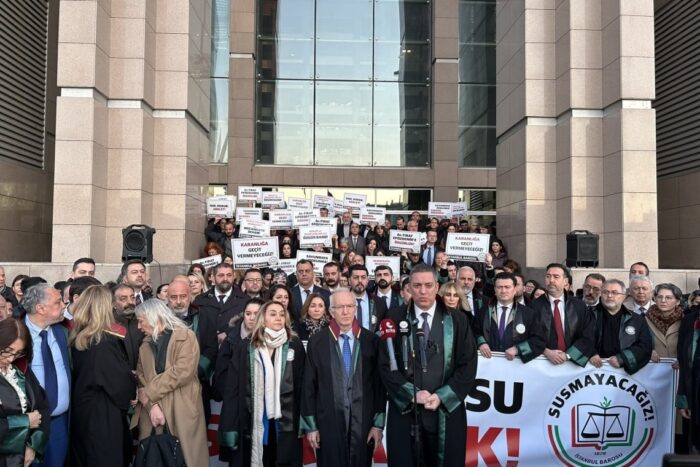
Reprisal: Turkish human rights defender Enes Hocaoğulları arrested for a speech he made at a Council of Europe

August 13, 2025

On 5 August 2025, human rights defender Enes Hocaoğulları was detained at the Ankara Esenboğa Airport, on his return to Türkiye due to an arrest warrant issued by an Istanbul court, in connection with ongoing investigations into a speech he made at the 48th session of the Congress of Local and Regional Authorities of the Council of Europe on 27 March 2025.

Enes Hocaoğulları is a youth and LGBTI+ rights defender based in Ankara, Türkiye. Since 2022, he works as the International Advocacy and Fundraising Coordinator at ÜniKuir Association, an LGBTI+ rights organisation in Türkiye. His focus is on diplomatic engagement, monitoring youth rights, reporting and advocacy. His climate activism during his high school years eventually evolved into a fight for human rights and democracy. In February 2025, he was selected as the youth delegate from Türkiye for the Congress of Local and Regional Authorities of the Council of Europe.

On 5 August 2025, human rights defender Enes Hocaoğulları was detained at the Ankara Esenboğa Airport, on his return to Türkiye due to an arrest warrant issued by an Istanbul court, in connection with ongoing investigations into a speech he made at the 48th session of the Congress of Local and Regional Authorities of the Council of Europe on 27 March 2025.

The judgeship ruled for the pre-trial detention of Enes Hocaoğulları, justifying the decision by stating that there is strong suspicion that the human rights defender might flee. This is despite the fact that he returned to Türkiye aware of the risk of arrest upon arrival. Following the pre-trial arrest decision, he was transferred to Sincan Prison in Ankara.

In February 2025, Enes Hocaoğulları was selected as the youth delegate of Türkiye for the Congress of Local and Regional Authorities of the Council of Europe. On 24-27 March 2025, the human rights defender attended the 48th session of the Congress, where he delivered several speeches, including on 27 March 2025, when he gave a speech detailing police violence imposed on protesters in Türkiye, including attacks with tear gas, rubber bullets and water cannons, and the strip search of detained students. He called on the international community to act against the human rights violations in Türkiye.

The speech, which was recorded and posted online, went viral on social media. This led to a smear and hate campaign against the youth and LGBTI+ rights defender, accusing him of being a traitor, foreign agent and a queer who wants to “spread LGBTI+ ideology”. Additionally, investigations were initiated by Ankara and Istanbul Chief Public Prosecutors’ Office under articles 216 (inciting public to hatred and hostility) and 217/A (defamation law) of the Turkish Penal Code respectively, which were later consolidated under Ankara prosecutor’s office. An additional investigation was initiated by the Kırşehir Prosecutor’s Office under article 301 of the Turkish Penal Code (insulting the Turkish nation, the Republic of Turkey, or the institutions and organs of the state).

Front Line Defenders believes that the human rights defender was solely arrested for his peaceful human rights work and for exercising his right to free expression to explain the human rights violations that he has personally witnessed. It is particularly worrying that he was targeted for a speech that he made at the Council of Europe, which Türkiye is a member of.

https://www.frontlinedefenders.org/en/case/human-rights-defender-enes-hocaogullari-arrested-speech-he-made-council-europe-meeting

https://www.frontlinedefenders.org/en/profile/enes-hocaogullari

Harsh detention conditions of Nasta Loika in Belarus

August 12, 2025

In an update on its website on 6 August 2025, Front Line Defenders in raising alarm over the worsening conditions of detention for prominent Belarusian human rights defender Nasta Loika, currently held in Homel Correctional Facility No. 4. On August 1, independent Belarusian media reported that Loika had been transferred to a secure housing unit under harsher detention conditions — a common punitive tactic used by the Belarusian authorities against political prisoners. [see also; https://humanrightsdefenders.blog/2023/11/07/the-sad-story-of-nasta-loika-human-rights-defender-behind-bars-in-belarus/]

As described in the statement, these stricter conditions mean confinement in a tiny 4-square-meter cell without privacy or proper sanitation:

Loika’s ongoing persecution is part of a broader crackdown on civil society in Belarus. A lawyer and educator, she has long been involved in documenting state abuses, challenging Belarus’s vague and punitive “anti-extremist” legislation, and advocating for migrants and stateless persons. Her organization, Human Constanta, was forcibly dissolved by the state in 2021 as part of an orchestrated campaign against human rights groups. It now operates in exile.

Nasta Loika has been imprisoned since June 2023, when the Minsk City Court sentenced her to seven years in prison, accusing her of “incitement to social enmity.” In a further act of repression, she was later added to the KGB’s list of individuals “involved in terrorist activities.” Her supporters have also been targeted: in May 2025, the Instagram page @let_nasta_go, which calls for her release, was declared “extremist.”

In early July 2025, a pro-government Telegram channel claimed Aliaksandr Lukashenka had pardoned Loika, publishing a photo of a handwritten pardon request. While her colleagues acknowledged the handwriting resembled hers, they could not confirm whether the letter was written freely or under coercion. Later, another Telegram channel associated with the Belarusian police dismissed the report as a hoax.

“Front Line Defenders is deeply appalled by the continued persecution of Nasta Loika,” the organization said in its statement. “The organisation condemns the use of strict conditions of detention as part of the reprisals against her for peaceful and legitimate human rights work. Front Line Defenders expresses grave concern about the inhumane conditions of detention the woman human rights defender is enduring and reiterates its call to the Belarus authorities to quash Nasta Loika’s conviction and facilitate her immediate release.”

https://spring96.org/en/news/118431

NGOs Call for the Immediate Release of Saudi Human Rights Defender Mohammed al-Bejad

August 12, 2025

408a97e1-ef4d-47ff-aa24-7db77f73988f

We, the undersigned organizations, express deep concern over the continued arbitrary detention of the Saudi human rights defender Mohammed al-Bejadi more than two years beyond his sentence. His continuing detention, along with countless others, demonstrates that despite a recent spate of prisoner releases, the Saudi authorities’ severe repression of rights activists and critics remains. We call for his immediate release, along with all others arbitrarily detained in the kingdom for peacefully exercising their fundamental freedoms.

Al-Bejadi, a founding member in 2009 of the now-banned Saudi Civil and Political Rights Association (ACPRA), has been arrested and imprisoned three times for his peaceful human rights activism, most recently on 24 May 2018 during a crackdown on women’s rights defenders. He was subsequently sentenced to an egregious 10-year prison term, with five years suspended, which expired in April 2023.

More than two years later, he remains in Buraydah Prison, where he has been denied access to legal representation. According to ALQST, an independent Saudi human rights group, he has also experienced torture and other ill-treatment, including physical abuse and prolonged incommunicado detention.

The UN Special Rapporteur on human rights defenders, Mary Lawlor, highlighted al-Bejadi’s case in April 2025 to draw attention to a worrying trend in Saudi Arabia, in which the authorities continue to hold prisoners past their completed sentences, in violation of basic international standards and Saudi Arabia’s own laws.

Two other prominent human rights defenders, Mohammed al-Qahtani – another ACPRA co-founder –and Essa al-Nukheifi, were held arbitrarily for more than two years beyond their prison terms before being conditionally released in January 2025.

In other instances, when political prisoners have neared the end of their prison terms Saudi authorities have retried them and increased their sentences. Besides inflicting further injustice on these people after years of arbitrary imprisonment, the failure to release prisoners whose sentences have concluded creates fear that they too may be retried.

Saudi authorities have released dozens of people imprisoned for peacefully exercising their rights in recent months, yet continue to arbitrarily hold many more. Released prisoners continue to face heavy restrictions, such as arbitrary travel bans and having to wear an ankle monitor.

Meanwhile, the Saudi authorities’ record of rights violations continues to deteriorate, notably with their escalating use of the death penalty, including the recent execution of a prominent Saudi journalist Turki al-Jasser, and a notable surge in executions of foreign nationals for non-violent drug-related offences.

Al-Bejadi is one of several people arbitrarily imprisoned whose activism stretches back for decades. He spent four months in prison without charge or trial from September 2007 to January 2008, and was again jailed for more than five years, from March 2011 to April 2016, after taking part in a protest outside the Ministry of Interior. During that protest he said: “I do not have a family member in detention, but we must defend not only our own family but our whole country and all those who are oppressed. All prisoners of conscience are my family.”

The undersigned organizations call on the Saudi authorities to immediately and unconditionally release Mohammed al-Bejadi, all others detained beyond the completion of their prison sentences, and all individuals who are imprisoned for the peaceful exercise of their fundamental rights and freedoms.

Signatories:

  1. ALQST for Human Rights
  2. DAWN
  3. European Saudi Organisation for Human Rights (ESOHR)
  4. FairSquare
  5. Freedom House
  6. Gulf Centre for Human Rights (GCHR)
  7. Human Rights Watch
  8. HuMENA for Human Rights and Civic Engagement
  9. International Federation for Human Rights (FIDH), within the framework of the Observatory for the Protection of Human Rights Defenders
  10. MENA Rights Group
  11. Middle East Democracy Center (MEDC)
  12. World Organisation Against Torture (OMCT), within the framework of the Observatory for the Protection of Human Rights Defenders

https://www.hrw.org/news/2025/08/07/ngos-call-for-the-immediate-release-of-saudi-human-rights-defender-mohammed-al

New report: a retrospective on the Business frameworks and actions to support defenders

August 10, 2025

ISHR launched a new report  that summarises and assesses progress and challenges over the past decade in relation to initiatives to protect human rights defenders in the context of business frameworks, guidance, initiatives and tools that have emerged at local, national and regional levels. The protection of human rights defenders in relation to business activities is vital.

Defenders play a crucial role in safeguarding human rights and environmental standards against adverse impacts of business operations globally. Despite their essential work, defenders frequently face severe risks, including threats, surveillance, legal and judicial harassment, and violence.  

According to the Business and Human Rights Resource Centre (BHRRC), more than 6,400 attacks on defenders linked to business activities have been documented over the past decade, emphasising the urgency of addressing these challenges.  While this situation is not new, and civil society organisations have constantly pushed for accountability for and prevention of these attacks, public awareness of the issue increased with early efforts to raise the visibility of defenders at the Human Rights Council and the adoption of key thematic resolutions, as well as raising defenders’ voices at other foras like the UN Forum on Business and Human Rights. 

The report ‘Business Frameworks and Actions to Support Human Rights Defenders: a Retrospective and Recommendations’ takes stock of the frameworks, tools, and advocacy developed over the last decade to protect and support human rights defenders in the context of business activities and operations.

The report examines how various standards have been operationalised through company policies, investor guidance, multi-stakeholder initiatives, legal reforms, and sector-specific commitments. At the same time, it highlights how despite these advancements, the actual implementation by businesses remains inadequate. Effective corporate action remains insufficient, highlighting a critical gap that must be urgently addressed to ensure defenders can safely carry out their vital work protecting human rights and environmental justice. In order to address this, drawing on case studies, civil society tracking tools, and policy analysis, the report identifies key barriers to effective protection and proposes targeted recommendations
Download the report

Buscarita Roa: one of the last of the Abuelas

August 10, 2025

A group of women dressed in black and wearing white headscarves

Women dressed as the mothers and grandmothers of the Plaza de Mayo gather in Buenos Aires, Argentina, in March. Photograph: Rodrigo Abd/AP

On Wednesday 6 August 2025 the Guardian carried an interview with Buscarita Roa, one of the last of the Abuelas.” ..

Argentina’s 1976-83 military dictatorship tortured, killed and “disappeared” an estimated 30,000 people – political opponents, students, artists, union leaders: anyone it deemed a threat. Hundreds of babies were also taken, either imprisoned with their parents, or given to military families. The Abuelas de Plaza de Mayo have fought for almost 50 years to find these grandchildren. Buscarita Roa is one of two surviving active members.

On 28 November 1978, my 22-year-old son, José, his wife, Marta, and their baby daughter, Claudia, joined the list of those “disappeared”. A squad of Argentina’s military police stormed their home and I couldn’t find out any more. I went everywhere to look for them – police stations, courthouses, army camps, churches. I was desperate. But nobody would answer me. Every door was closed. It was a suffocating, hermetic time.

Then one day, not long after they were taken, I watched as a group of women walked in circles around the Plaza de Mayo in Buenos Aires. These mothers and grandmothers had started to gather, demanding answers about their missing relatives. I recognised one of the women. She said come with us, and I did.

We – who would become known as the Abuelas – didn’t know each other before. But we would meet every week and walk round and round the square, identifying each other with our white headscarves.

At first some of the husbands came, but we knew they risked being “disappeared” too, so then the men stayed at home and we went alone. It was still dangerous, a terrifying time, and some of the first mothers were taken themselves.

When the police ordered us to leave, and we didn’t, they charged at us on horseback. But we were younger then, so we could run.

Together we started going to the police stations and the courts, searching for answers. We cried in front of them, and they told us to go away, they didn’t want to see us. We knew the dictatorship was watching us from afar.skip past newsletter promotion

My granddaughter’s disappearance haunted my life. She was only eight months old when she was taken, and whenever I would see a little girl who looked like her, I would follow her, unable to stop until I saw her face. If there were people at my front door I would think, oh she must have come home. Other times, people would tell us they had seen a neighbour with a new baby. So we would go to their houses, trying to glimpse the child, to see if they looked like one of ours. We were doing crazy, desperate things, but it was all we had.

Many years passed before we started to receive any information. Most people didn’t believe us, and those that did thought our sons were terrorists. Still, we continued to go to Plaza de Mayo to pray for the return of our children. And when the country’s economic situation improved, we started travelling abroad to share our story too.

In 2000, I found my granddaughter, and was able to hug her again for the first time in two decades. People had come forward with their suspicions, and a judge agreed to investigate. We learned that Claudia had been taken to the clandestine detention centre “El Olimpo” with her mother, where she was kept for three days before being illegally adopted by a military family. They created a fake birth certificate, signed by a military doctor. My son and daughter-in-law were tortured and killed.

Claudia was in my heart every day that she was missing. I can’t explain what I felt when I found her. It was a pure, overwhelming joy. But I was also afraid, fearful that she would reject me. By then she was 21, and had been raised by a military family. I couldn’t invade my granddaughter’s life just like that, she needed to figure out the terrible truth and start trusting us. Slowly, over long afternoons of mate [a traditional herbal drink], we got to know each other and have built a beautiful relationship.

Belonging to the Abuelas helped me to heal. We laughed, we cried and we became friends. We were relentless too – we women have not rested once in half a century. But while some of us found our grandchildren, others only found bodies, and most of us found nothing at all. And then there is the battle of time; it is cruel and many of the Abuelas have died. There were once many of us, and now there are fewer than 10.

Estela de Carlotto, the president of the Abuelas, and I are the two last active members. But we are growing old too, and I don’t know how much further life will take us. We have found 140 of the grandchildren, with the last reunited last month, but we estimate that nearly 300 are still missing.

The ones we have found have now taken up the mantle. This is the legacy de Carlotto and I leave behind: a generation of grandchildren still looking for the others.

My lifelong work has consisted of searching for my son and daughter-in-law. I am 87 years old now, but I will never give up.

As told to Harriet Barber

https://www.theguardian.com/global-development/2025/aug/06/grandmothers-argentina-disappeared-legacy-reunited

Peruvian Environmental defender Hipólito Quispe Huamán killed

August 5, 2025
cover image

Environmental activist Hipólito Quispe Huamán was shot and killed Saturday night in the Madre de Dios region of southeastern Peru, in what authorities suspect was a targeted attack linked to his work defending the Amazon rainforest, AFP reported on 29 July 2025.

Quispe Huamán was driving along the Interoceanic Highway when he was gunned down, according to local prosecutors. Karen Torres, a regional prosecutor, told reporters that investigators are considering his environmental advocacy as the likely motive.

This is a murder with a firearm of yet another defender of the Madre de Dios region,” she was quoted as saying by AFP.

Quispe Huamán had served as an active member of the Tambopata National Reserve Management Committee and was a vocal opponent of deforestation and illegal land use in the Peruvian Amazon. His killing has sparked outrage from human rights and environmental organizations, which say the attack reflects a growing pattern of violence against Indigenous leaders and environmental defenders in the region.

“We condemn the murder of environmental defender Hipólito Quispe Huamán in Madre de Dios, another victim of the growing violence against those who protect our territories and ecosystems,” said the National Coordinator for Human Rights (CNDDHH) in a statement posted on social media. “Not one more death!”

Hipólito Quispe Huamán. Photo courtesy of CNDDHH (on X).

Quispe Huamán’s brother, Ángel, called for accountability. “I demand justice for my brother’s death. This kind of thing cannot happen,” he told local media.

The Ministry of Justice has pledged to support the legal defense of Quispe Huamán’s family and ensure the perpetrators are brought to justice. However, critics say the government’s response mechanisms remain under-resourced. The Intersectoral Mechanism for the Protection of Human Rights Defenders, led by the Ministry of Justice, has faced ongoing criticism for lacking the budget and personnel needed to respond effectively to threats.

Attacks against environmental defenders have increased across Peru’s Amazonian regions, where extractive industries, drug trafficking, and illegal land grabs often operate with impunity. In July 2024, the Interethnic Association for the Development of the Peruvian Rainforest (AIDESEP) declared a state of emergency after an Indigenous leader was tortured and killed in central Peru, citing escalating threats from coca growers and criminal networks.

According to Global Witness, at least 54 land and environmental defenders have been murdered in Peru since 2012—more than half of them Indigenous. Many of these killings remain unsolved.

Quispe Huamán’s death has reignited calls for stronger protections for those who safeguard the rainforest and Indigenous territories. As investigations continue, activists and family members are demanding not only justice—but a systemic response to end the violence.

Gladys Mbuya, a human rights defender from Cameroon

August 5, 2025

Gladys Mbuya is a lawyer by profession, a human rights defender, and a peace crusader. She is the founder of the Liberal Law Office in Cameroon and serves as the president of the International Federation of Women Lawyers for Cameroon. She also holds a role as a traditional leader.

Her work centres on promoting the recognition and respect of human rights, particularly the rights of women and girls. She represents women and girls in court who cannot afford legal fees and actively advocates for the revision of laws that discriminate against them.

Gladys faced intimidation, threats, and even attempts at arrest for her activism, yet remains steadfast in her mission. She has defended numerous individuals – including prominent activists – in cases involving arbitrary detention and violations of free expression and assembly. She was part of the legal team that defended Mimi Mefo, Ndoki Michèle, and Agbor Balla, which led to their cases being dropped at the court.

‘Human rights defence work is a noble cause. The international community should continue standing by human rights defenders. They should increase the volume of political pressure on our governments for them to fulfil their obligations under all the international conventions they have ratified.’

https://ishr.ch/defender-stories/human-rights-defenders-story-gladys-fri-mbuya-epse-luku-from-cameroon