Posts Tagged ‘african region’

NGO Forum at the 89th session of the African Commission: panel discussion on the growing issue of transnational repression of HRDs in Africa

October 21, 2026

At the NGO Forum ahead of the 89th session of the African Commission, in October 2026, a high-level panel discussion tackled the growing issue of transnational repression in Africa. The discussion, titled ‘From Restrictive Laws to Transnational Repression: Protecting Human Rights Defenders in Africa’, was the first ever panel on the topic of transnational repression in this space.

It featured Aua Baldé of the UN Working Group on Enforced or Involuntary Disappearances, Ralmeg Gandaho, President of Changement-Social (Bénin), and Basma Mostafa, Director of Programs at the Law and Democracy Support Foundation and herself an exiled journalist and activist directly affected by transnational repression. (Basma Mostafa was unable to attend in person due to visa issues. Her statement was read on her behalf by ISHR’s Salomé Boucif)

This discussion built on our ongoing work on transnational repression: in June, ISHR convened a retreat for UN human rights experts that culminated in a landmark statement by over 130 UN Special Procedures mandate holders and Treaty Body members calling for a decisive international response to transnational repression.[https://humanrightsdefenders.blog/2026/09/28/over-130-human-rights-experts-issue-global-call-for-states-to-end-transnational-repression/]

At the ACHPR’s 89th session, ISHR further called on the Commission to adopt a resolution on transnational repression and carry out a comprehensive, continent-wide study examining its nature, scale, patterns, methods, perpetrators, affected populations and impact on the enjoyment of human rights.

The panel opened from a clear premise: a conducive national legal framework is a precondition for the safe and effective work of human rights defenders, as affirmed by Aua Baldé. Yet across Africa, the opposite trend is now dominant.

In Angola, a 2025 law on the status of non-governmental organisations allows the State to monitor, suspend and financially restrict civil society organisations. In Zimbabwe, the Private Voluntary Organization Act adopted in 2025 confers sweeping discretionary powers on the executive to over-regulate and interfere in the governance and operations of NGOs. And in Uganda, the Protection of Sovereignty Act, signed into law in May 2026, created broad controls over who may receive foreign funding and who may be labelled a ‘foreign agent’.

Speaking from the experience of defenders in West Africa and particularly Benin, Ralmeg Gandaho illustrated how such frameworks translate into daily intimidation, criminalisation and surveillance of those who document violations and hold power to account.

A central thread of the discussion was that crossing an international border does not guarantee safety. For Basma Mostafa, transnational repression ‘should not be understood simply as a collection of isolated incidents’. Instead, she stressed, it is a ‘governance strategy’ used by States to ‘extend control beyond their territory’.

Drawing on the work of the Law and Democracy Support Foundation with exiled defenders, journalists and political activists, she identified several recurring patterns: proxy punishment and reprisals against family members, the weaponisation of legal and counter-terrorism frameworks, including politically motivated prosecutions and convictions in absentia, the misuse of administrative and consular measures such as travel bans and the refusal to renew documents, digital transnational repression and more.

Mostafa’s account of the case of Egyptian activist Mariam Abdelbasette illustrated how these practices intersect: her husband was reportedly deported from Oman to Egypt, following a procedure that allegedly involved INTERPOL, without meaningful due process and subsequently disappeared, while she herself faced travel restrictions, politically motivated terrorism-related accusations, threats of deportation and sustained intimidation of her and her family.

The panel stressed that the target is not only the individual defender. The broader objective is to create fear and silence entire communities, to make people think twice before speaking, organising, documenting violations, engaging with the media or cooperating with the United Nations.

When a journalist sees a colleague’s family arrested, the message reaches hundreds of journalists. When an activist’s relatives are detained, it reaches an entire exile community. Self-censorship becomes a survival strategy, undermining freedom of expression, independent journalism and cooperation with international human rights mechanisms.

Aua Baldé underlined that the cross-border nature of these threats challenges conventional approaches to human rights protection, which are typically organised around a single jurisdiction.

She emphasised that States must not be allowed to evade their human rights obligations by facilitating, outsourcing or benefiting from acts of repression carried out beyond their borders.

Recommendations

The panel called on the African Commission and the UN human rights system to:

  1. Adopt a dedicated resolution formally recognising transnational repression as a distinct and growing human rights challenge in Africa.
  2. Establish a joint task force on transnational repression bringing together the relevant ACHPR special mechanisms — on human rights defenders, freedom of expression, refugees and asylum seekers, reprisals and enforced disappearances — and UN human rights mechanisms, to ensure a coordinated and victim-centred response.
  3. Undertake a comprehensive continental study on transnational repression in Africa, examining patterns such as proxy punishment, digital repression, forced return, deportation, the misuse of counter-terrorism frameworks and cross-border security cooperation.
  4. Pay greater attention to the targeting of family members and proxy punishment, one of the most widespread and least addressed forms of transnational repression in the region.
  5. Design protection mechanisms with the meaningful participation of affected communities, guided by the principle that nothing about targeted communities should be discussed without targeted communities.

The panel concluded that, when repression crosses borders, protection and accountability must cross borders too.

Regional and international institutions must work together, including under the Addis Ababa Roadmap on cooperation between the ACHPR and UN Special Procedures, to ensure that defenders do not lose access to protection simply because their cases extend beyond a single country.
https://ishr.ch/latest-updates/ngo-forum-from-restrictive-laws-to-transnational-repression-protecting-human-rights-defenders-in-africa

https://ishr.ch/latest-updates/achpr89-training-17-inspiring-defenders-from-africa-strengthened-their-capacity-and-advocated-at-ngo-forum/

Bouayach urges stronger human rights protection across Africa

February 12, 2026

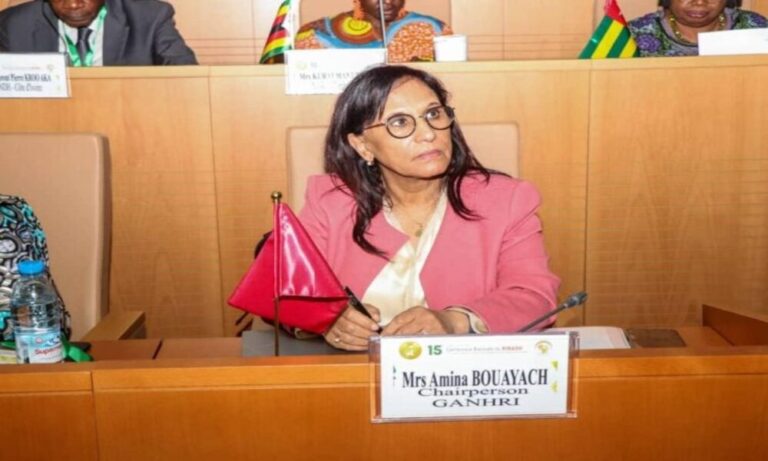
Amina Bouayach, President of the Global Alliance of National Human Rights Institutions (GANHRI), has issued a powerful call for the reinforcement of human rights mechanisms across Africa.

Speaking at the African Network of National Human Rights Institutions (ANNHRI) conference in Yaoundé, Bouayach warned that the continent’s legal frameworks are under unprecedented strain from a “triple threat” of security instability, climate change, and health crises. As the head of Morocco’s National Human Rights Council (CNDH), she emphasized that these overlapping emergencies are systematically eroding the rule of law and the capacity of states to meet their international obligations.

Bouayach highlighted a concerning global decline in multilateralism, noting that human rights are increasingly being sidelined in international discourse. She argued that international treaties and regional African mechanisms must be viewed as complementary rather than competing forces. According to her vision, while international laws provide the global benchmark, regional bodies are essential for adapting those standards to local African realities. She stressed that bridging the gap between high-level commitments and national legislation is the only way to restore citizen trust in state institutions.

The address identified several critical “blind spots” in the current continental approach, specifically pointing to the limited use of African legal mechanisms and the persistent barriers to justice for the general population. Bouayach cited the devastating conflict in Sudan—where access to basic healthcare and food has collapsed—and the chronic insecurity in Somalia as prime examples of how state fragility directly translates into human rights violations. She noted that recognizing these failures is not an admission of weakness but a necessary act of “clear-sightedness” required to move toward genuine reform.

To combat these trends, Bouayach urged African states to fully align their national institutions with the Paris Principles, the international gold standard for institutional independence and effectiveness. She concluded by calling for a surge in resources and guaranteed autonomy for human rights defenders, asserting that the rule of law must remain the non-negotiable pillar of Africa’s long-term stability and economic development.

https://apanews.net/bouayach-urges-stronger-human-rights-protection-across-africa/

A network of legal professionals for the protection of human rights defenders in Africa

February 4, 2026

On 29 January 2026 ISHR, in collaboration with its various partners, announced that it has established a network of legal professionals for the protection of human rights defenders in Africa

Legal professionals and human rights defenders from several African countries came together to finalise the establishment of a network for the protection of human rights defenders in Africa.

This Network aims to be a space for collaboration, solidarity and strategic legal action, with a view to strengthening the collective response to violations of the rights of human rights defenders in Africa. Its establishment is part of a project implemented by the International Service for Human Rights with the support of Open Society Foundations, and in collaboration with national and regional human rights networks.

Participants at this regional meeting reviewed the Network’s founding charter, defining its principles, governance and operating procedures, and identifying common priorities for strengthening the legal protection of human rights defenders on the continent.

Participants noted that in some African countries, violations, criminalisation and impunity persist, even in contexts with specific legal frameworks. Emphasising the need to move beyond isolated approaches, participants agreed to strengthen regional coordination among legal professionals.

During the meeting, the Network members agreed on a set of common principles and values, including a defender-centred approach, commitment, solidarity, independence, apoliticality, professionalism, integrity, and confidentiality. They also defined clear criteria for the Network’s engagement in situations of violations, in order to ensure responsible, strategic actions that respect the safety of defenders.

The meeting also served as an opportunity to discuss the legal challenges faced by defenders in different national contexts, as well as regional and international mechanisms that could strengthen their access to justice and protection.

The members of the Network committed to continuing the work begun at this meeting and to translating the adopted recommendations into concrete actions:

  1. For countries that have not yet adopted an act on the recognition and protection of human rights defenders, to adopt such legislation.
  2. For countries that have adopted such legislation, to implement it and establish national mechanisms for the protection of human rights defenders.

https://ishr.ch/latest-updates/launch-of-the-network-of-legal-professionals-for-the-protection-of-human-rights-defenders-in-africa

DefendDefenders’ 20th anniversary in Africa: 15 human rights defenders stories

November 6, 2025

As part of DefendDefenders’ 20th anniversary commemorations, it has gathered 15 stories that reflect the impact of its work over the past two decades. Through interviews with human rights defenders (HRDs), key partners, and friends, these stories highlight our journey as told by those we have worked with, stood alongside, and served. They include reflections from those present at our founding 20 years ago, as well as from partners who have walked this path with us. We are deeply grateful for the personal experiences shared, and we celebrate the memories and milestones we have achieved together. We are because you are. 

Environmental defenders call for better protection by the African Commission

November 11, 2023

The Environmental Rights Agreement Coalition called on the African Commission on Human and Peoples’ Rights to develop an environmental rights agreement to increase public participation and protect environmental rights defenders. The Environmental Rights Agreement (ERA) Coalition organised, on 21 October 2023, a side event on the margins of the 77th Ordinary Session of the African Commission on Human and Peoples’ Rights (African Commission).

Participants shared information on the movement for an environmental rights legal framework for Africa, lessons learned and generated wider support for the ERA movement. Joseph Burke, Head of Universal Rights Group Africa noted some progress in the protection of the environment globally such as the African Leaders Nairobi Declaration on Climate Change and Call to Action, Paris Agreement and the Regional Agreement on Access to Information, Public Participation and Justice in Environmental Matters in Latin America and the Caribbean (ESCAZU Agreement). However, environmental rights defenders continue to face significant barriers to the conduct of their activities. According to Global Witness, one environmental defender was killed every two days in 2022 while the rest were subjected to violence, harassment and criminalisation. In its statement before the African Commission, ISHR reiterated this worrisome trend on the African continent.

Rights of Indigenous communities not recognised

Two panellists reviewed national trends in Kenya and Tanzania on the protection of environmental rights and public participation. In Kenya, Emily Kinama, Research and Litigation Associate at Katiba Institute stated that there do not exist laws which cater for environmental rights in Kenya. Civil society organisations have used public interest litigation to challenge laws that criminalise environmental and land rights defenders but the impact of these actions has, at times, been marginal because of strategic lawsuits against public participation. ‘Indigenous peoples’ rights are not recognised despite the African Court on Human and Peoples’ Rights’ judgment in the Ogiek case reiterating the obligations of Kenya to promote and protect their rights. This judgement has not been implemented by Kenya, six years after it was handed down’, said Kinama. She concluded by stating that ‘Kenya should continue to recognise their rights and pass laws and processes following the historical injustice stage and ensure the participation of Indigenous population in the protection of the environment given that Indigenous peoples have been protecting it since time immemorial’. 

The relevance of inclusive participation

In her presentation, Miriam Tikoine, from the Maasai Women Development Organization, highlighted the necessity to involve the Maasai, and other pastoral communities in environmental and climate change debates, and to raise their awareness on environmental matters for them to understand the importance of protecting the environment.

Farmers should be trained on how to face climate change issues and adapt their farming practices; youth, traditional leaders and women should understand carbon credit-related concerns so that they can take action. If everyone is not involved, climate change and environmental concerns will remain a matter of just a few.

Litigating environmental rights

The African Commision’s Special Rapporteur on Human Rights Defenders and Focal Point on Reprisals, Commissioner Remy Lumbu, called on States to strengthen human and environmental rights education, transparency and accountability in extractive industries to prevent leonine contracts which only benefit powerful businesses and sacrifice the interests and rights of present and future generations. Environmental rights defenders raise their voices against such contracts and stand against State and business’ practices which endanger the planet. Commissioner Lumbu said that this role played by environmental defenders has been recognised by the African Commission which has established this mechanism to remind States of their obligations, send urgent appeal letters or publish press releases when environmental defenders are in danger. These efforts must be honed by increased litigation activism, before national and African human rights bodies, on the part of NGOs. 

We have not had enough communications on environmental rights concerns. NGOs must start challenging behaviours of States before the African Commission or the Court. If 40 NGOs decide to work on one case each, we will have 40 environmental rights-related cases before the African Commission in one year.

The need for an environmental rights instrument

The Coalition called the Special Rapporteur, and the African Commission as a whole, to champion a process geared towards the development and the adoption of an environmental rights instrument.

The impact of businesses has crossed on people leading them into poverty. As civil society organisations, we have realised we need to protect our resources and planet and those who put their lives at risk. Environmental rights defenders are at the forefront but have been victims of several human rights violations including arbitrary killings. With the massive onslaught of business in Africa, our resources and individuals protecting them must be protected by a tailor-made legal instrument as other regions have done.

https://ishr.ch/latest-updates/achpr77-environmental-defenders-call-for-better-protection-by-the-african-commission/

Ubuntu Hub in Accra will serve as a safe haven for Human Rights Defenders

March 28, 2022

Accra set to house threatened African Human Rights Defenders

An interesting example of what African NGOs can do in their own region for human rights defenders:

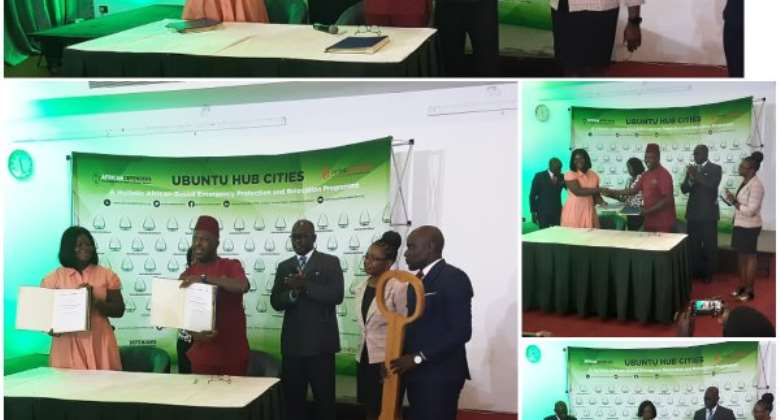
The Gender Centre for Empowering Development (GenCED) and African Defenders, a Pan-African Human Rights Defenders (HRDs) Network, have signed a Memorandum of Understanding (MoU) to set up the 7th Ubuntu Hub in Accra.

The Hub will serve as a safe haven for Human Rights Defenders and in some instances, their families within the continent who are subjected to attacks, threats, violence, and extreme pressure as a consequence of their human rights works.

The MoU would ensure that such victims are given medical, social, educational and psychosocial support in Accra or another African country if they so will, to ensure their wellbeing and development.

Mr Shire said it was prudent for Africa to stay alive and support each other to close the gaps such as threatening, torturing, murmuring, and crying caused as a result of the lack of protection of its people.

A feasibility study conducted by the parties proved that Accra in Ghana was the most suitable host for the initiative as its political, security, and human rights records gave the idea that the city provided an appropriate environment for the relocation of at-risk HRDs, he said.

“Why do human rights defenders need to travel to Finland, just to seek a safe haven, why can’t we seek one from another country within our own continent,” he said.

He explained that the cost of relocating African HRDs at risk to another continent was prohibitory expensive, and the HRDS often faced cultural displacement, stigmatization and cultural and language barriers, hence, finding themselves unable to actively continue their human rights activism when relocated outside of the continent.

In 2019, he said the African Defenders, therefore, launched the Ubuntu Hub Cities, with the aim of providing at-risk African HRDs, with options for safe internal and external temporary relocation without having to leave their home continent.

The initiative since its inception has created a Hub in Kampala, Abidjan, Tunis, Johannesburg, Pretoria, and Cape Town.

Through their diverse local partnerships, Mr Dire said relocation also provided an opportunity for HRDs at risk to learn and share experiences, so that, they could have a positive impact on the host community and return home with enhanced capacities to protect and promote human rights.

Under the Ubuntu Hub Cities Initiative, he mentioned HRDs, Journalists, Writers and Scholars, Trade Union Workers, Human Right Lawyers and Artists as some of the groups they supported.

Ms Esther Tawiah, the Executive Director, GenCED, said African leaders had to stay true to the power and give voice to the ordinary citizen who gave them the mandate.

https://www.modernghana.com/news/1147846/accra-set-to-house-threatened-african-human-rights.html

AFREWATCH wins Business and Human Rights Award 2021

December 14, 2021

At the United Nations Forum on Business and Human Rights, the 2021 award recipient was announced: AFREWATCH — a small, courageous organization headquartered in Democratic Republic of Congo that focuses on the human rights and environmental impacts of extractive companies in Africa.

Here a 3-minute video announcing the award: https://www.humanrightsandbusinessaward.org/announcement-2021-recipient-of-the-human-rights-and-business-award/. The video features two Advisory Network members announcing the award (Abiodun Baiyewu and Seema Joshi), followed by the Executive Director of AFREWATCH (Emmanuel Umpula) accepting the award.

AFREWATCH researches and reports on abuses by mining and oil companies and by governments; engages with government officials to advocate for improvements in law and practice; presses for extractive companies to pay their fair share of taxes, and helps grassroots community organizations build their capacity.  

For more on this award and its laureates, see: https://www.trueheroesfilms.org/thedigest/awards/fd511ca0-10f0-11ea-8f61-d1d879c27588

https://www.humanrightsandbusinessaward.org/award-recipient/afrewatch/

Amnesty documents continued undermining of regional human rights mechanisms in Africa

October 21, 2020

For a second consecutive year, Amnesty International has documented how African governments are grossly undermining regional human rights bodies by failing to comply with their decisions, ignoring their urgent appeals, neglecting to report to them on national human rights situations and starving them of resources they desperately need for operations. Governments also neglected the rights of people with disabilities and older persons by failing to ratify treaties relating to their protection.

In the second edition of The State of African Regional Human Rights Bodies and Mechanisms 2019-2020, released on the African Human Rights Day, Amnesty International said the mechanisms established to safeguard human rights across the continent are facing enormous challenges, and at least one is facing an existential threat. [for last year’s see: https://humanrightsdefenders.blog/2019/10/21/the-state-of-the-african-regional-human-rights-bodies-and-mechanisms/]

“Given the magnitude of gross human rights violations across the continent, regional human rights bodies play a critical role in providing justice and accountability,” said Netsanet Belay, Amnesty International’s Director for Research and Advocacy.

“These mechanisms must be protected and fully supported. They serve as vital alternative channels for people to seek justice and effective remedies when national systems are compromised or inadequate.” 

Amnesty International’s report reviews and analyses the performance of Africa’s human rights treaty bodies:  the African Commission on Human and Peoples’ Rights (African Commission); the African Committee of Experts on the Rights and Welfare of the Child (African Children’s Committee); and the African Court on Human and Peoples’ Rights (African Court).

Existential crisis for African human rights court 

The report raises alarm that future of the African Court on Human and Peoples’ Rights is in jeopardy following decisions by three governments – Benin, Côte d’Ivoire and Tanzania – to withdraw the right of individuals and NGOs to directly file cases before the court. Rwanda withdrew this right in 2016 bringing to four the number of countries that are now restricting access to this vital pathway to justice.

Amnesty International found that Benin, Côte d’Ivoire and Tanzania withdrew this right in response to decisions they perceived as unfavorable, and amid rising intolerance towards human rights defenders and a general deterioration of human rights conditions nationally…..

—–

https://www.amnestyusa.org/press-releases/regional-human-rights-bodies-struggle-to-uphold-rights-amid-political-headwinds-in-africa/

Podcast series “Exile Shall Not Silence Us” now complete

August 10, 2020

AfricanDefenders‘ podcast series, “Exile Shall Not Silence Us”, is now complete and fully available for you to listen to. “Exile Shall Not Silence Us” (which I announced on 22 June 2020: https://humanrightsdefenders.blog/2020/06/22/exile-shall-not-silence-us/) is a podcast series on the situation of African human rights defenders (HRDs) in exile. The podcast is based on a research that collected the testimonies of more than 120 HRDs and in-depth case studies, and it features interviews with four exiled HRDs. It  highlights the professional, security, socio-economic, and psychosocial challenges of HRDs in exile in Africa, but most of all their achievements and resilience strategies.

Episode#1 gives an overview of the main findings of the research on the situation of African HRDs in exile, with key issues and current trends.

Episode #2 features an anonymous interview with a young woman HRD from Zimbabwe in exile in South Africa. She not only sheds light on the challenges faced by HRDs in and outside Zimbabwe, but also on the complex and painful relationship between exile and motherhood.

Episode#3 explores the challenges HRDs face after returning from exile through an interview with  a formerly exiled Gambian journalist.

Episode #4 explores the challenges and contradictions of internal displacement, as well as the multiple layers of vulnerability faced by HRDs in conflict-ridden areas through an anonymous interview with a Cameroonian woman HRD.

Episode#5 zooms in on Egypt where we speak to an Egyptian HRD in exile in Tunis who tells us about his experience, his hopes, and what he has been learning from Tunisian civil society.

Listen to all the episodes here› <https://app.getresponse.com/click.html?x=a62b&lc=B5QJao&mc=IN&s=9JQZDZ&u=Bl16k&z=Eh2xCOx&>

EXILE SHALL NOT SILENCE US!


EXILE SHALL NOT SILENCE US!

June 22, 2020

On 19 June, 2020 AfricanDefenders launched a podcast series on African human rights defenders in exile  

“If you have to leave, leave. But refuse to keep quiet. Silencing you is what all oppressive regimes want. Don’t stop defending others because you are outside your country. Defending others is defending ourselves.”  Interview with an African HRD in exile  

Human rights defenders (HRDs) in Africa face grave risks in conducting their invaluable work of promoting the rights of others, protecting the environment, and holding the powerful to account. All too often, they are forced to leave their homes to seek protection, after threats, surveillance, judicial harassment, arbitrary arrests, enforced disappearance, torture, and targeting of colleagues and family members.

Exile impacts every aspect of a person’s life, and no experience of exile is the same. Exiled HRDs face serious challenges in their human rights work, such as losing legitimacy in the eyes of their government and their communities, collecting information remotely in a safe manner, and accessing funding. Many exiled HRDs also continue to face security concerns, worry about the safety of colleagues and family members in their country of origin, and struggle with socio-economic integration in their host country. Exile can also take a toll on their wellbeing and family dynamics.

Yet, the majority of exiled HRDs continue their human rights work, disseminating the information received by monitors on the ground through regional and international advocacy and campaigning, mobilising diaspora communities, and at times (re-)establishing organisations in exile. If authoritarian governments, corrupt leaders, and violent militia groups aimed to silence HRDs by forcing them into exile, their strategy has largely failed.

Based on research that collected the testimonies of more than 120 HRDs, in-depth case studies, and live interviews with four exiled HRDs, Exile Shall Not Silence Us is a podcast series that highlights the professional, security, socio-economic, and psychosocial challenges of HRDs in exile in Africa, but most of all their achievements and resilience strategies.

In episode 1, Cristina Orsini, Senior Programme Officer at AfricanDefenders, gives an overview of the main findings of the research on the situation of African HRDs in exile. Listen to Episode 1