At the end of 2025 the International Federation for Human Rights (FIDH), one of the world’s oldest human rights movements and Human Rights Watch were declared “undesirable” by the Russian Federation. For FIDH the designation was made by the Prosecutor General of Russia on 13 November, and on 1 December, Russia’s Ministry of Justice included FIDH in its register of “undesirable organizations“, which currently contains 281 entities, including several FIDH members, such as the Center for Civil Liberties (CCL), the Norwegian Helsinki Committee (NHC), the Helsinki Foundation for Human Rights (HFHR), and Truth Hounds.
“This ignoble move not only further threatens and endangers our Russian members, partners, their staff, and ordinary Russian citizens supporting our human rights work. It also sends a clear message that Russia is no friend of the global human rights movement“, said Alexis Deswaef, FIDH President. “This designation of FIDH as an ‘undesirable organisation’ demonstrates the importance of our commitment to supporting those who defend human rights, whether in Russia or in exile. FIDH will continue to pursue this commitment more than ever.”
Under the “undesirable organisations” law, adopted in 2015 and further tightened in 2021 and 2024, the Prosecutor General’s Office has the power to declare as “undesirable” any foreign or international organisation that is deemed “a threat to the foundations of the constitutional order of the Russian Federation, the defense capability of the country or the security of the state“.
Concretely, “undesirable organisations” are banned from engaging in any activities inside Russia, including the publication or dissemination of any information, carrying out financial transactions, and providing financial or other assistance to local organisations and individuals. The “participation in the activities” of an “undesirable organisation” is subject to administrative and criminal liability, including up to four years of imprisonment. Any Russian citizen or organisation cooperating with an “undesirable organisation“, even if residing outside Russia, faces administrative penalties and, in the case of individuals, criminal liability. In practice, the vague wording of the law has led to the punishment of individuals simply for reposting information disseminated by an “undesirable organisation” on social media platforms, even if the original posts predated the organisation’s designation as “undesirable“.
“For over three decades, Human Rights Watch’s work on post-Soviet Russia has pressed the government to uphold human rights and freedoms,” said Philippe Bolopion, executive director at Human Rights Watch. “Our work hasn’t changed, but what’s changed, dramatically, is the government’s full-throttled embrace of dictatorial policies, its staggering rise in repression, and the scope of the war crimes its forces are committing in Ukraine.”
The Prosecutor General’s Office made the decision to ban Human Rights Watch on November 10, as follows from the Ministry of Justice’s register of “undesirable” organizations updated today. The official reasons for the designation are not known.
On 24 July, Russia’s Ministry of Justice added the Norwegian-Russian organisation SmåRådina (SmåRådina: for Democracy in Russia) to the register of “undesirable” organisations. The Russian authorities have not publicly explained the reasons for the decision.
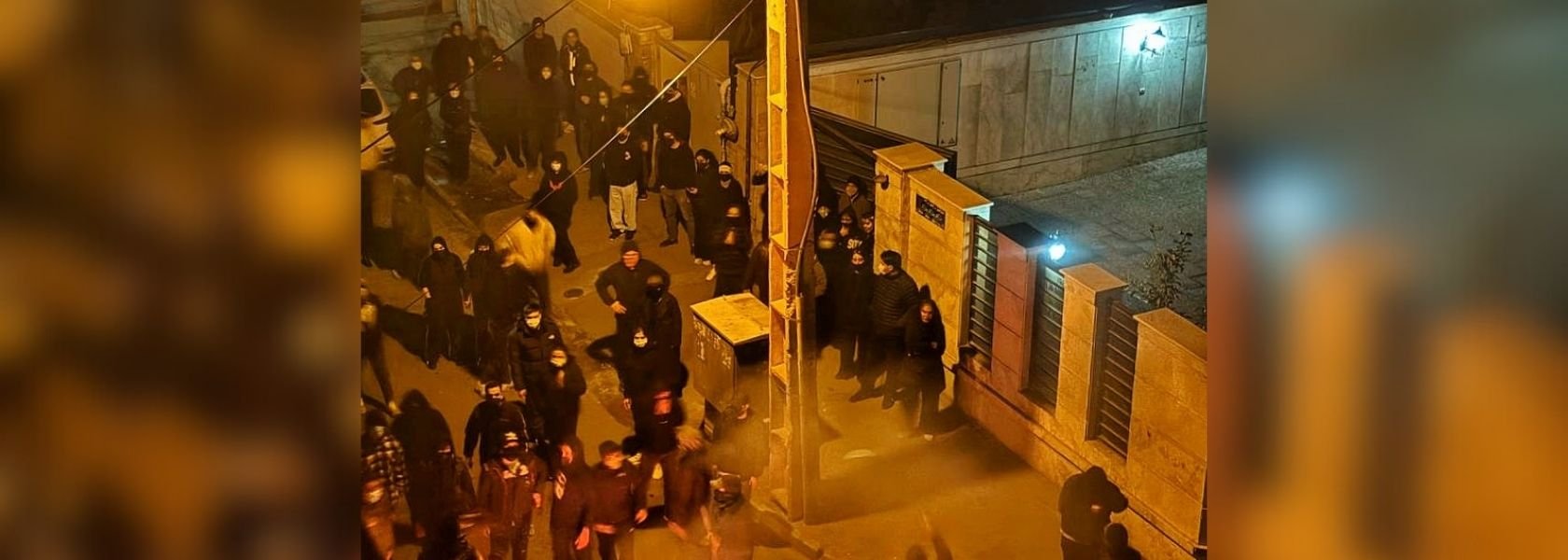
As mass repression of protests and dissent dramatically intensifies in Iran amidst an almost complete communications shutdown, the Free Narges Coalition and more than 30 undersigned organisations (including FIDH and OMCT in the framework of the Observatory for the Protection of Humans Rights Defenders) called on 15 January 2026 for urgent and concrete actions to circumvent internet censorship, as well as raising alarm regarding the grave threats to existing and newly-arrested detainees, particularly those jailed for their human rights work, journalism, expression, activism, or peaceful assembly.
Iran is facing one of the most severe periods of repression in its recent history. Protests that began in Tehran’s Grand Bazar on December 28 against the collapse of the national currency grew in size and scope until authorities completely turned off Iran’s internet access to the outside world and began a more severe crackdown on January 8. Shocking images of dead protesters, doctors’ reports of overflowing hospitals and the lethal use of military-grade weapons and live ammunition, and the absence of access for journalists and independent media, have led to desperation of families missing loved ones, as well as grave concerns around the safety of thousands of those injured or detained. Human rights organisations and international media have been able to verify the killing of over 2,500 protesters, including children under the age of 18, and thousands injured, some severely while almost twenty thousand confirmed arrested. With the majority of the killings occurring since 8 January, amid a full-blown digital blackout that has made further verification impossible, current reports estimate the number of killings to be much higher, likely amounting to more than 6,000.
Meanwhile, in official statements, Tehran’s Prosecutor General has described protesters as vandals and threatened they will face moharebe (waging war against God), a charge that is punishable by death under Islamic Penal law. State media have also reported mass arrests of individuals they label as “rioters.”
According to NetBlocks, Iran has now experienced more than 140 hours of near-total internet shutdown since January 8. Such communications blackouts severely restrict access to independent reporting and sharing of essential and life-saving information, and create conditions in which grave human rights violations can be committed with impunity. Prior to the shutdown, human rights defenders and known dissidents both inside and outside of Iran had reported receiving threats, as authorities have attempted to suppress expressions of support for the protests online.
In this context, both recent and long-standing detainees–including human rights defenders, journalists, writers, and artists–face an acute and often overlooked risk. Past patterns in Iran demonstrate that periods of widespread unrest are accompanied by heightened abuses inside detention facilities, where these groups are particularly vulnerable to extrajudicial killing, enforced disappearance, torture, and other forms of ill-treatment. Those held in solitary confinement and denied contact with the outside world are at especially high risk.
Among those recently detained are prominent figures from Iran’s civil society, including Nobel Peace Prize Laureate Narges Mohammadi, Sepideh Gholian, Alieh Motalebzadeh, Javad Alikordi, Hasti Amiri, Pooran Nazemi, and other human rights defenders and journalists. They were violently arrested following the memorial ceremony for lawyer Khosrow Alikordi on 12 December in Mashhad, and have been held in solitary confinement, their whereabouts and condition unknown, for more than one month. Narges Mohammadi has been denied access to legal counsel and contact with her family, apart from a brief phone call on 14 December when she reported severe ill-treatment, including beatings to her head and neck with batons, as well as threats of further violence. On January 6, before the total internet shutdown, journalist and human rights defender Alieh Motalebzadeh, who has been diagnosed with cancer, was able to call her family. Her daughter reported in a video message that she did not sound well, stating that the detainees are under severe pressure. She was released on bail following deterioration of her health on 12 January. The health condition of Pouran Nazemi is reported to be dire while she remains detained. Narges Mohammadi has been hospitalized for three days after her violent arrest and arbitrary detention since 12 December. Due to the ongoing communications blackout, the families and lawyers have not been able to be in contact with them, including to inquire if their 30 day arbitrary detention order has been extended or not.
We, the undersigned organisations, express our deep concern over the escalation of the killing of protesters, as well as the serious risk of arbitrary legal charges, punishable by the death penalty, against those detained. We stress that the lives and safety of those more vulnerable under detention in Iran must not be forgotten. Human rights defenders, journalists, writers, artists, and those prosecuted due their exercise of freedom of assembly and expression are at the forefront of the peaceful struggle for fundamental human rights. They must be protected and immediately and unconditionally released, and we call for immediate actions from the international community to halt the escalating violations of human rights and humanity.
As reports of mass arrests, killings, and widespread violence continue to escalate, we stand in full solidarity with the people of Iran in their legitimate struggle for fundamental freedoms and democratic rights. We urge the international community to take urgent and concrete actions to prevent further loss of life and to ensure that Iran uphold its international human rights obligations, including through:
Immediate and unconditional release of all those jailed in Iran for their peaceful activism or expression, including Nobel Peace Prize Laureate Narges Mohammadi, as well as human rights and women’s rights defenders, civil society activists, journalists, lawyers, writers, artists, representatives of religious and ethnic minorities, environmental and labour defenders, students, and all others detained or at risk for exercising their fundamental rights.
Immediate restoration of full and unrestricted access to internet and telecommunications services, and an end to nationwide information blackouts that censor news reporting, facilitate repression, block the transmission of essential and life-saving communications including for medical personnel, and impede documentation of human rights violations.
Independent, impartial, and transparent investigations into killings, torture, lethal use of force by security agents, enforced disappearances, and other serious human rights violations committed in the context of the ongoing protests, with a view to ensuring accountability in line with international law.
As every hour of inaction increases the risk of irreversible loss of human life and gross violations of human rights. The international community must act urgently to protect the detainees, ensure their safety and rights, and prevent further violations under international law.
50 civil society organizations, urge the UN Human Rights Council to urgently convene a special session to address an unprecedented escalation in mass unlawful killings of protesters, amidst an ongoing internet shutdown imposed since 8 January to conceal grave human rights violations and crimes under international law by Iranian authorities. see:
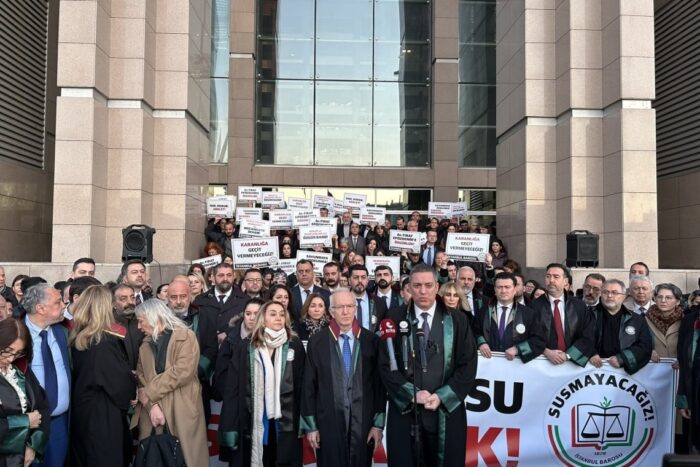
On 5 January 2026 the International Commission of Jurists and many other NGOs issued a joint statement calling on the authorities to immediately terminate the abusive criminal proceedings and drop charges ahead of the 26 Istanbul Heavy Penal Court’s expected final hearing scheduled for 5 to 9 January 2026.
The continued prosecution of the president and 10 executive board members of the Istanbul Bar Association, and the prosecutor’s request for their conviction on terrorism charges are a damning reflection of the troubled state of the rule of law and democratic norms in Turkey.
The prosecutor seeks the criminal conviction of all eleven members of the Bar’s elected leadership – President Prof. İbrahim Özden Kaboğlu, Ahmet Ergin, Bengisu Kadı Çavdar, Ekim Bilen Selimoğlu, Ezgi Şahin Yalvarici, Fırat Epözdemir, Hürrem Sönmez, Mehmedali Barış Beşli, Metin İriz, Rukiye Leyla Süren, and Yelde Koçak Urfa – on the charge of “spreading terrorist propaganda” under Article 7/2 of the Anti-Terrorism Law, solely for issuing a public statement on 21 December 2024 concerning the killing of two journalists in northern Syria and the arrest of journalists and lawyers at a related peaceful protest in Istanbul the day before.
The trial prosecutor’s final opinion confirms and deepens the concerns raised by 56 international organisations in the joint statement of January 2025, condemning the initiation of criminal and civil proceedings against the Bar’s leadership, and in the April 2025 joint statement, which deplored the removal of the elected board and the escalating attacks on lawyers across Turkey. A group of the organisations also submitted a joint amicus curiae brief in which they concluded that the proceedings violate Turkey’s obligations under international human rights law and constitute an unjustified interference with the independence of the legal profession.
A clear misuse of criminal law
In his final opinion, the prosecutor alleges that by referring to the two individuals killed in Syria as journalists and by citing international humanitarian law applicable to the protection of civilians and media workers in conflict zones, the Bar leadership “treated as a war crime” an operation carried out by security forces, thereby intentionally legitimising and disseminating the ultimate separatist aims of the Kurdistan Workers’ Party (PKK). The prosecutor further asserts that describing those killed as journalists “encouraged” membership of the PKK and “made its methods appear legitimate”, amounting to “press and media–based terrorist propaganda” under Article 7/2 of the Anti-Terrorism Law. These allegations, which claim that a lawful, rights-based statement consciously advanced the objectives of an armed organisation, are wholly unfounded and legally unsustainable.
As emphasised in both joint statements in January and April 2025 and the amicus curiae brief in September 2025, the Istanbul Bar Association has a statutory and ethical duty to speak out on violations of human rights and the rule of law. The prosecutor’s position effectively criminalises the Bar Association’s discharge of this duty protected under both domestic law and international human rights law and standards. The prosecutor’s construal of a legitimate exercise of the right to freedom of expression as a terrorism offence amounts to a misuse of criminal law and judicial harassment.
Violations of international standards and the Bar’s statutory mandate
International and regional human rights standards, including the UN Basic Principles on the Role of Lawyers, the Council of Europe Convention for the Protection of the Profession of Lawyer, and consistent jurisprudence of the European Court of Human Rights, affirm that lawyers and their associations must be able to engage in public debate on matters of justice and human rights without fear of reprisals.
Criminalising their exercise of the rights to freedom of expression and association contravenes the provisions of these instruments safeguarding the rights and role of lawyers and their professional organisations, as well as Articles 10 and 11 of the European Convention on Human Rights, Articles 19 and 22 of the International Covenant on Civil and Political Rights, and Articles 26, 27 and 33 of the Constitution of Türkiye.
The criminal proceedings strike at the heart of the independence of the legal profession and amount to a misuse of counter-terrorism laws to silence criticism, suppress human rights monitoring, and undermine self-governance of bar associations.
Signatories (in alphabetical order):
Amnesty International
Center of Elaboration and Research on Democracy (CRED)
Council of Bars and Law Societies of Europe (Le Conseil des barreaux européens, CCBE)
Defense Commission of the Barcelona Bar Association (Spain)
Deutscher Anwaltverein (German Bar Association, Germany)
Eşit Haklar İçin İzleme Derneği (Association for Monitoring Equal Rights, Türkiye)
European Association of Lawyers for Democracy and World Human Rights (ELDH)
The European Criminal Bar Association (ECBA)
Fédération des Barreaux d’Europe (European Bars Federation, FBE)
Foundation Day of the Endangered Lawyer
Hak İnsiyatifi Derneği (Rights Initiative Association, Türkiye)
Hakikat Adalet Hafıza Merkezi (Truth Justice Memory Center, Türkiye)
Haldane Society of Socialist Lawyers (UK)
Human Rights Institute of the Brussels Bar (Belgium)
Human Rights Watch
İnsan Hakları Derneği (Human Rights Association, Türkiye)
The International Association of Democratic Lawyers (IADL)
International Bar Association’s Human Rights Institute (IBAHRI)
The International Commission of Jurists (ICJ)
International Federation for Human Rights (FIDH), within the framework of the Observatory for the Protection of Human Rights Defenders
Kaos GL Derneği (Kaos GL Association, Türkiye)
The Law Society of England and Wales (LSEW, UK)
Lawyers for Lawyers (Netherlands)
Lawyers’ Rights Watch Canada (LRWC, Canada)
Lyon Bar Association (France)
National Union of Peoples Lawyers (NUPL, Philippines)
PEN Norway (Norway)
Turkey Litigation Support Project (TLSP, UK)
Türkiye İnsan Hakları Vakfı (Human Rights Foundation of Turkey, Türkiye)
Vereinigung Demokratischer Jurist:innen VDJ (Association of Democratic Jurists, Germany)
World Organisation Against Torture (OMCT), within the framework of the Observatory for the Protection of Human Rights Defenders
then on 9 January 2026 Amnesty stated “The decision to acquit the Istanbul Bar Association leadership of these unfounded charges is welcome news. This case was a clear misuse of criminal law and should never have been brought in the first place.” https://www.amnesty.org/en/latest/news/
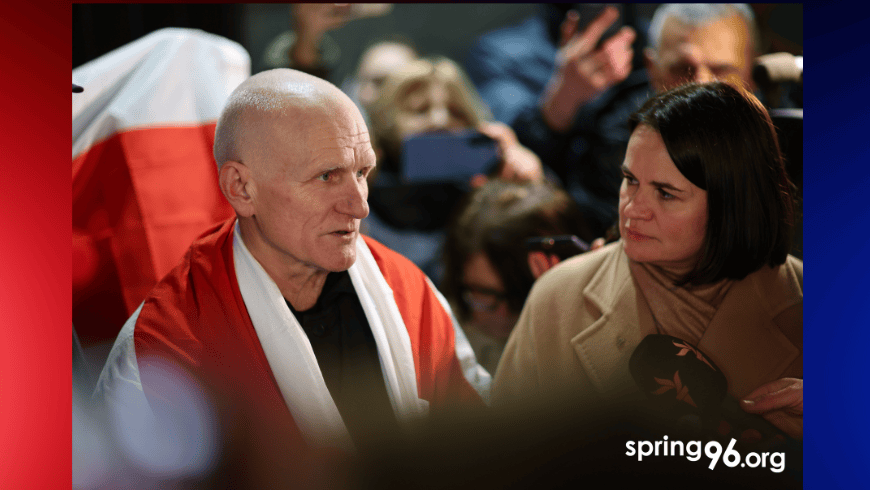
The undersigned organisations recall that Ales Bialiatski, and Uladzimir Labkovich were arbitrarily detained on 14 July 2021, prosecuted, and sentenced to 10 and 7 years in prison respectively on 3 March 2023 in retaliation for their legitimate and peaceful human rights activities. Their imprisonment constituted a grave violation of Belarus’ international human rights obligations, including the rights to freedom of expression, association, and fair trial.
While their release brings long-overdue relief to them, their families, their colleagues and the human rights community around the world, we stress that this step remains insufficient as long as hundreds of human rights defenders, journalists, lawyers, activists, and political opponents remain arbitrarily detained in Belarus on politically motivated charges solely for exercising their fundamental freedoms, and repressions against Belarusian dissidents continue unabated. In particular, Valiantsin Stefanovic, former Vice President of FIDH arrested along Ales Bialiatski and Uladzimir Labkovic in July 2021, women human rights defender and Viasna member Marfa Rabkova, detained since September 2020, and founder of Human Constanta woman human rights defender Nasta Loika, arbitrarily detained since September 2022, were not among the released political prisoners. Alongside them, numerous human rights journalists, lawyers, and trade union activists remain arbitrarily detained, including Andrzej Poczobut, Katsiaryna Andreyeva, Ihar Ilyash, Danil Palianski, Pavel Dabravolski, Andrei Aliaksandrau, and many others.
The undersigned organisations call on the Belarusian authorities to immediately and unconditionally release all political prisoners and all those arbitrarily detained, to put an end to judicial harassment and reprisals against civil society, and to repeal repressive legislation used to criminalise peaceful dissent and freedom of expression. The authorities must also ensure full rehabilitation, including the quashing of convictions and restoration of civil and political rights, for all those unlawfully detained for years.
The undersigned organisations further urge the international community to continue to closely monitor the situation in Belarus and to take all available legal, political, and diplomatic measures to ensure accountability for the grave human rights violations and international crimes, including by referring the situation to the International Criminal Court.
Signatories:
International Federation for Human Rights (FIDH), in the framework of the Observatory for the Protection of Human Rights Defenders
World Organisation Against Torture (OMCT), in the framework of the Observatory for the Protection of Human Rights Defenders
Human Rights Center Viasna
Human Rights Center, Georgia
ILI Foundation, Kazakhstan
Civil Society Institute, Armeniaia
Public Association “Dignity”, Kazakhstan
Promo-LEX Association, Moldova
Norwegian Helsinki Committee, Norway
Östgruppen (Swedish Initiative for Democracy and Human Rights)
Austausch e.V., Germany
Belarusian Helsinki Committee (BHC)
Hungarian Helsinki Committee, Hungary
Human Rights Center of Azerbaijan, Azerbaijan
aditus foundation, Malta
LIBERECO – Partnership for Human Rights, Germany/Switzerland
Redress
The International Bar Association’s Human Rights Institute (IBAHRI)
ARTICLE 19
People In Need
aditus foundation
Front Line Defenders
Bir Duino-Kyrgyzstan
European Platform for Democratic Elections (EPDE)
International Society for Fair Elections and Democracy (ISFED)
In the aftermath of conflict, dictatorship, or mass human rights violations, societies face the challenge of addressing past atrocities while rebuilding for the future. Transitional justice refers to a set of legal and social mechanisms designed to achieve justice, accountability, and reconciliation in such contexts. These processes include truth commissions, criminal prosecutions, reparations for victims, and institutional reforms aimed at preventing future abuses. Rooted in the principles of human rights and international law, transitional justice seeks to balance the need for justice and survivor healing with the complexities of political and social stability.
Across the world, many charities and non-governmental organisations (NGOs) play a crucial role in supporting transitional justice efforts. Whether by documenting human rights abuses, advocating for victims, or facilitating truth and reconciliation initiatives, these organisations help societies navigate the difficult journey toward justice and peace. This article by Barbara Listek explores some of the key NGOs working in the field, highlighting their impact in post-conflict and post-authoritarian contexts.
The International Center for Transitional Justice (ICTJ) supports societies recovering from mass human rights violations by helping them confront the past and build more just and inclusive futures. Working alongside victims, local communities, and institutions, ICTJ provides expertise on truth commissions, reparations, criminal accountability, and institutional reform. Whether advising on the creation of truth-seeking bodies or supporting prosecutions of those responsible for serious crimes, the organisation’s work is rooted in the belief that acknowledging harm and delivering justice are essential for healing and long-term peace.
Since its founding, ICTJ has played a key role in transitional justice processes across the globe, including in Colombia, Tunisia, and The Gambia. Its approach is deeply grounded in the lived experiences of survivors, ensuring that justice efforts are not only technically sound but also meaningful to those most affected. By focusing on systemic change and survivor-centred solutions, ICTJ works to prevent the recurrence of violence and strengthen democratic institutions in countries emerging from repression and conflict.
Redress is a London-based organisation founded by British businessman Keith Carmichael after he was unlawfully detained and tortured in Saudi Arabia. Frustrated by the lack of legal support and accountability available to survivors like himself, Carmichael launched REDRESS to fill a critical gap in access to justice. His personal experience became the driving force behind the charity’s mission: to secure justice and reparation for victims of torture and other grave human rights violations.
Now more than 30 years old, REDRESS continues to lead efforts globally to end impunity for torture. The organisation provides legal representation to survivors, supports strategic litigation before national and international courts, and advocates for stronger laws and policies that prevent torture and ensure reparations. By working directly with survivors, while also influencing governments and international institutions, REDRESS helps ensure that survivors’ voices are heard and that justice becomes a meaningful reality, central to any process of healing and transitional justice.
The Center for Justice and Accountability (CJA) is an organisation founded in 1998 on the principle, first used during the Nuremberg trials after World War II, that certain crimes are so egregious that they represent offences against all humankind. These crimes include genocide, crimes against humanity, extrajudicial killing and torture, and as CJA argues, they should never go unanswered.
CJA’s approach is survivor-led and collaborative. The organisation works closely with local partners and in-country prosecutors to build cases that centre the voices and experiences of those most affected. Alongside this, CJA advocates for stronger laws and policies that make it harder for abusers to escape justice and hold everyone accountable to the human rights standards.
The African Transitional Justice Legacy Fund (ATJLF) is an organisation launched in 2019 to support African-led responses to past atrocities, rooted in the belief that sustainable peace and justice must be shaped by those directly affected. Backed by the MacArthur Foundation and WellSpring Philanthropic Fund, the ATJLF emerged alongside the African Union’s Transitional Justice Policy, helping translate its goals into practical, community-driven action. Managed initially by the Ghana-based Institute for Democratic Governance, the Fund has since become a nine-year institutionalised effort supporting civil society across West Africa.
By empowering survivor-led groups and grassroots initiatives, the ATJLF has helped amplify voices often excluded from transitional justice processes. Since its inception, over $2.5 million has been distributed to 46 organisations working in countries including Guinea, Liberia, and The Gambia. As it enters its legacy phase (2024–2026), the Fund is scaling its efforts beyond West Africa and focusing on deeper, long-term partnerships to ensure the impact of its work endures well beyond its closure.
Impunity Watch is an international non-profit organisation working with victims of violence to deliver redress for grave human rights violations and to promote justice and peace. The organisation approaches transitional justice work through a victim-centred approach, taking into account the long-standing criticism of transitional justice not being sufficiently victim-centred. It is also their aim to overcome systemic impunity and its root causes in order to achieve transformative justice (here we could link the article I wrote on transformative justice, but it is not published yet).
For more information about the organisation, we recommend visiting their website for an abundant collection of resources and information, such as the charity’s 2023-2027 Strategic Plan, information about the complex work Impunity Watch does, as well as their multimedia resources section.
The Global Survivors Fund (GSF) is an international charity organisation based in Switzerland, that has it as its mission to enhance the access to reparations for survivors of conflict-related sexual violence around the globe. It was founded in 2019 by Dr Denis Mukwege and Nadia Murad – 2018 Nobel Peace Prize laureates.
The organisation’s work is centred around three core pillars: acting to provide interim reparative measures in situations where States or other parties are unable or unwilling to meet their responsibilities; advocating for the legally responsible parties (duty-bearers) and the international community to develop reparation programmes; and guiding States and civil society by providing expertise and technical support for designing reparation programmes.
To learn more about the organisation’s transformative work, donate or find information about positions openings, visit their website.
Founded in 2014, the Global Initiative for Justice, Truth and Reconciliation (GIJTR) is a consortium of nine global organisations dedicated to addressing the transitional justice needs of societies emerging from conflict or periods of authoritarian rule. The initiative collaborates with communities worldwide to amplify survivors’ voices and inspire collective action in confronting human rights violations. By addressing past traumas, GIJTR aims to pave the way for a more just and peaceful future.
Over the past decade, GIJTR has engaged with communities in over 70 countries, collaborating with more than 800 local civil society organisations and supporting over 500 grassroots projects. Its initiatives include documenting human rights abuses, providing technical assistance to civil society activists, and promoting reparative justice efforts. Notably, the organisation has worked alongside survivors of conflict-related sexual violence in contexts such as Bangladesh, Colombia, and Guinea, supporting them in advocating for their rights and developing community-based programs aimed at meeting survivors’ needs.
The International Coalition of Sites of Conscience is the only global network of historic sites, museums, and memory initiatives that connects past struggles to today’s human rights movements. With over 350 members in 65 countries, its mission is to ensure that the sites preserve the memory of past injustices while fostering dialogue and learning that prevent future violations.
Their slogan being “Remembering is a Form of Resistance,” the Coalition works with local communities, governments, and international partners to ensure that these sites serve as platforms for reconciliation, education, and activism. It convenes impactful projects and initiatives as well as training events that bring together site professionals, historians, and activists to develop best practices for memory‑based reconciliation and community empowerment
If you are interested in how museums can contribute to upholding human rights, or would like to visit one of such sites, we recommend checking out our article on “20 Human Rights Museums Around The World” to discover inspiring spaces that might be worth visiting (perhaps on your next trip!).
The Post-Conflict Research Center (PCRC) is a Sarajevo-based, women-led research centre and NGO, dedicated to advancing transitional justice and promoting peace in post-conflict societies. Founded in 2011 in Bosnia and Herzegovina, PCRC works on issues related to justice, accountability, reconciliation, and human rights. Its efforts include conducting research, providing education, and supporting projects aimed at improving social cohesion and fostering sustainable peace. PCRC is also involved in advocacy and works with local and international organisations to develop and implement policies that address the needs of survivors of conflict and promote justice for atrocities.
PCRC’s signature programmes include Balkan Diskurs, an online platform empowering young journalists to report on regional issues, and Ordinary Heroes, a multimedia project showcasing stories of rescue and courage to promote tolerance and reconciliation. Its work has earned international recognition, including the 2014–15 Intercultural Innovation Award from the UN Alliance of Civilizations and the BMW Group, and praise from the Council of Europe for its exemplary peace education model.
Are you inspired by PCRC’s blend of research and action? Learn what it takes to follow in their footsteps by reading our guide on “How to Become a Human Rights Researcher.”
Rights for Peace is a London-based international organisation that seeks to address the root causes of violence and promote peace through human rights advocacy and transitional justice. Focusing on countries in transition from conflict or repression, Rights for Peace engages with local communities to ensure that victims of violence are heard and that justice mechanisms are effective. It works to strengthen the rule of law, promote accountability, and support processes of social healing through legal reforms and community-led initiatives. By fostering a culture of peace and justice, the organisation aims to prevent the recurrence of violence and contribute to long-term stability.
Currently active in Sudan and South Sudan, Rights for Peace collaborates with local partners to strengthen rule‑of‑law institutions and ensure that victims’ voices shape accountability processes. Its casework includes monitoring identity‑based violations and developing strategic litigation to hold perpetrators accountable, reflecting the organisation’s commitment to survivor‑centred justice.
Patricia Egessa, Director of Global Communications, published this NGO assessment:
Looking back at the year 2000 from a gender justice perspective is sobering. The previous decade had famously been declared as ‘the end of history’ by Western male political pundits. But women knew better. As conflicts continued to rage with devastating and disproportionate impacts on women and families, gender justice activists decided history still had some way to go and demanded a central role in peacebuilding. Their efforts galvanized the adoption of the pathbreaking UN Resolution 1325, which established the Women, Peace and Security (WPS) agenda.
As the WPS agenda marks its 25th anniversary, civil society organizations are uniting to reaffirm the importance of women’s full and meaningful participation and leadership in global processes. The NGO Working Group on Women, Peace and Security has released its annual Open Letter calling on the international community to defend the core values of the WPS agenda amid growing threats to women’s rights globally. We cite just a part of that letter as a statement of our shared concern:
Yet, when we should be paying tribute to the hard-fought achievements of these feminist movements, we are instead confronting an alarming backlash against women’s autonomy and rights, and against those who advocate for them, at a time when the consequences of armed conflict and crises on the lives of women and girls could not be more devastating. The very term gender—a core concept in international human rights law mobilized by feminist movements for decades to challenge the systematic oppression of women and LGBTQIA+ people—is today being blatantly undermined by anti-gender movements globally, including at the United Nations (UN). Civil society and human rights defenders around the world, especially those defending gender equality, women’s rights, sexual and reproductive rights, and LGBTQIA+ rights, are being targeted for who they are and the work they do. Combined with rising militarism, erosion of respect for international law, capitalist exploitation and slashing of funding for gender equality and women’s rights organizations, these attacks have thrown our work and our movements into crisis, even as the vision of the WPS agenda is more necessary than ever.
ICRW has proudly signed on to this collective statement precisely for the reason so clearly articulated in this letter: to remain silent as the WPS agenda and those who advocate for it are attacked not only undermines decades of progress but jeopardizes peace and security for everyone. Twenty-five years after the adoption of the UN resolution, our work is unfinished. We join over 600 organizations worldwide in ensuring that our unified voice reaches the UN Security Council, governments, and the world’s citizens who understand and support a more peaceful world for our children.
On this International Day of Political Prisoners, the NGOs mentioned below stand together to affirm a simple truth: no one should be imprisoned for exercising their fundamental rights or for peacefully expressing their beliefs. Yet around the world, there are an estimated one million political prisoners, who are unjustly detained for political reasons. These individuals—journalists, human rights defenders, democratic opposition leaders, religious leaders, artists, and ordinary citizens—represent the conscience of their societies. Their imprisonment is an assault not only on their freedom, but on the shared principles of human dignity and justice.
The International Day of Political Prisoners originated in the Soviet Union in 1974, when political prisoners collectively held a one-day hunger strike. Soviet prisoners of conscience repeated this protest every October 30, supported by demonstrations of solidarity in major cities. In response to Vladimir Putin’s ongoing and deepening repression, Russian political prisoners rekindled the tradition in 2021. In the years since, it has become an international day of solidarity with political prisoners worldwide.
Political imprisonment corrodes the rule of law, silences dissent, undermines press freedom, and weakens the foundations of democracy. Authoritarian governments use it to suppress opposition, instill fear, and consolidate control. Each unjust detention sends a chilling message to others who seek to speak truth to power.
We, as organizations who advocate on behalf of those unjustly detained around the world, call on democratic governments to continue to make the release of political prisoners a global priority—to raise these cases consistently in bilateral and multilateral forums, to request information and specific actions be taken on the prisoners’ behalf, to support accountability mechanisms, and to continue to provide support to organizations that advocate on behalf of those unjustly detained and provide legal and humanitarian assistance to them and their families. Solidarity with the unjustly detained must be sustained, coordinated, and visible.
We also stand in solidarity with the families, lawyers, and civil-society organizations who continue to advocate for freedom in the face of repression. Their courage reminds us that the defense of liberty is a collective responsibility.
On this day, and every day, we reaffirm our shared commitment to the universal right to freedom of thought, expression, association, and belief. The world’s political prisoners must not be forgotten—and their freedom must remain a global cause.
Signed:
Freedom House
Free Russia Foundation
McCain Institute
National Endowment for Democracy
Abdorrahman Boroumand Center for Human Rights in Iran
Al-Tahreer Association for Development (TAD)
Amnesty International
Center for Civil Liberties
Committee to Protect Journalists
Freedom Now
George W. Bush Institute
Global Magnitsky Justice Campaign
Human Rights Center Viasna
Human Rights Defense Center Memorial
Human Rights First
Human Rights Foundation
Human Rights Watch
International Republican Institute
James W. Foley Legacy Foundation
Lantos Foundation for Human Rights & Justice
Oma Organization for Human Rights and Democracy Promotion
Organization for Community Civic Engagement
OVD-Info
Political and Governance Development Academy
Socio-Economic Rights and Accountability Project (SERAP)
Human Rights Watch stands with civil society and signed this letter, alongside more than 3700 other organizations, condemning the Trump administration’s attacks. It is a testament to our community’s solidarity.
“We are a coalition of nonprofit and nonpartisan organizations formed to champion causes dear to all Americans. We work in communities across the country to protect our air and water, our right to vote, to worship, and to organize; we fight for consumers, workers, and our children; we advocate for civil and human rights at home and abroad; we have made it safer to drive on our roads, easier to start a business, and healthier to live in our cities. We span the full ideological spectrum. And today, we stand together for our democracy and in solidarity with the nonprofit groups unjustly and illegally targeted by the Trump administration, including in a new September 25 presidential memorandum.
We of course unequivocally reject political violence. But we won’t mince words. No president–Democrat or Republican–should have the power to punish nonprofit organizations simply because he disagrees with them. That is not about protecting Americans or defending the public interest. It is about using unchecked power to silence opposition and voices he disagrees with. That is un-American and flies in the face of the Constitution, including the First Amendment bar on targeting organizations for their advocacy.
Charities perform crucial functions in every community across our country, including providing healthcare, housing, education, religious services, food and water, and so much more. Like other nonprofits, the organizations threatened by President Trump have a mission to serve the public good and are composed of everyday people fighting for dignity, safety, and opportunity.
This attack on nonprofits is not happening in a vacuum, but as a part of a wholesale offensive against organizations and individuals that advocate for ideas or serve communities that the president finds objectionable, and that seek to enforce the rule of law against the federal government. Whether the target is a church, an environmental or good government group, a refugee assistance organization, university, a law firm, or a former or current government official, weaponizing the executive branch to punish their speech or their views is illegal and wrong. It is also an attack on the very notion that government power must serve the people, not those in office.
Charitable organizations serve our communities in various ways, playing a central role in public protection, health, accountability, anti-discrimination, and in creating the moral fabric of our nation. That is, of course, precisely why this administration is targeting them. They know that the organizations they are attacking exist to lift up the voices of everyday Americans and shine the spotlight of accountability on those who seek to abuse power.
Political violence is unacceptable. But efforts by the president of the United States to defund, discredit, and dismantle nonprofit groups he simply disagrees with are reprehensible and dangerous—a violation of a fundamental freedom in America. This Administration is trying to bully people into silence but speaking out is, and has always been, our collective mission. We stand with those wrongly targeted and with each other. No exceptions.”
On 12 September, 2025 the seven rights groups described Khalid’s prolonged imprisonment as a “violation of his rights” and an instance of “selective persecution”, asserting that he was arrested on “politically motivated and spurious charges” on 13 September 2020.
Alongside Amnesty International, the signatories include: CIVICUS, FORUM-ASIA, Front Line Defenders. International Commission of Jurists, International Federation for Human Rights (FIDH) and World Organisation Against Torture (OMCT).
The statement expressed deep concern over the invocation of the anti-terror law UAPA (Unlawful Activities Prevention Act) and the repeated denial of bail to Khalid.
“These repeated bail denials combined with persistent delays, and the continued absence of trial proceedings, amount to a violation of his right to a fair trial, including speedy trial, guaranteed under the International Covenant on Civil and Political Rights (ICCPR), to which India is a state party, as well as under the Constitution of India,” the statement read.
The groups further highlighted the unequal application of bail standards, particularly in cases related to the 2020 Delhi riots and anti-CAA protests, saying:
“We are further concerned about the discriminatory application of bail standards in cases arising from the violence surrounding the CAA protests and more broadly in cases involving the UAPA. While similarly situated accused have been granted bail, Khalid continues to be denied relief. Such unequal treatment violates the principle of equality before the law and sets a deeply troubling precedent.”
The rights organizations also drew attention to the role of the Delhi Police and political leaders during the 2020 Delhi riots, where Khalid and other Muslim activists were implicated.
“Independent investigations, including by Amnesty International India, Human Rights Watch and Delhi Minorities Commission, have documented the role of the Delhi Police in human rights violations during the CAA protests and the ensuing violence,” the statement said. “Police officers were recorded engaging in beatings, torture and other ill-treatment, and arbitrary arrests, and in some cases standing by as mobs attacked protesters.”
The statement noted that Indian courts have repeatedly criticized the police investigations, describing them as: “Very poor,” “callous,” and “fraught with multiple flaws,” with documented instances of fabricated cases and manipulated records.
It further condemned the role of senior political leaders, who were seen delivering inflammatory hate speeches, branding protesters as “traitors” or “anti-nationals”, and openly inciting violence.
“Despite the existence of video and documentary evidence, no meaningful accountability measures have been taken against implicated political figures or police officials,” the statement added.
The rights groups emphasized that Khalid’s prolonged detention is not an isolated incident, but part of a larger pattern of repression against those exercising their constitutional rights to freedom of expression and association.
“Other students and human rights activists, including Gulfisha Fatima, Sharjeel Imam, Khalid Saifi, Shifa-ur-Rehman and Meeran Haider, also remain in detention for their peaceful opposition to the CAA, while police officials and political leaders responsible for incitement or complicity in violence continue to enjoy impunity,” the groups noted. “This selective prosecution erodes public trust in the justice system, entrenches impunity for state actors, and criminalises free expression.”
The seven international organizations demand:
The immediate and unconditional release of Umar Khalid
The equal application of bail standards
An end to the discriminatory treatment of human rights defenders
Accountability for police officers and political leaders implicated in incitement and violence
This year’s theme is Exploitation and trafficking of children Applications are open to individuals or non-governmental organisations involved in one or more field projects based on a human rights approach and aimed at preventing and combating child trafficking and exploitation. Preference will be given to applications that, in accordance with children’s rights, aim to:
provide comprehensive support for young people;
implement transformative and restorative actions;
ensure the active participation of the children themselves in the project.
The projects submitted will focus on defending and protecting children against trafficking and exploitation through programmes such as:
raising awareness among the general public and the authorities;
identifying and referring victims;
receiving, supporting and rehabilitating child victims;
training for stakeholders (police, justice, medical and social services, education, etc.);
advocacy for the implementation of legal tools or the development of public policies to combat and prevent trafficking;
access to justice and reparations.
Award
The five prize winners will be invited to Paris for the official ceremony. They will receive a medal and share a total sum of 70.000 €, awarded by the CNCDH, to be used to implement their projects. They may introduce themselves as 2025 laureates of the Human Rights Prize of the French Republic.
Five runners-up will be awarded a “special mention” medal by the French ambassador in their country of origin. Runners-up will not receive any financial endowment.
The application must be written in French and include:
a) A letter of application presented and signed by the president or legal representative of the NGO concerned, or by the individual candidate;
b) The application form, which is attached to this call for applications and can be
c) A presentation of the NGO (statutes, operations, etc.), where appropriate.
d) The postal address and bank details (included IBAN and SWIFT Code) of the NGO or individual candidate.
Candidates must send their complete application by the deadline of 14 September 2025 to the Secretariat-General of the CNCDH:CNCDH – for the attention of Cécile RIOU-BATISTA, TSA 40 720 – 20 avenue de Ségur, 75 007 PARIS – France or by email to: prixdesdroitsdelhomme@cncdh.fr
Once the panel has announced the results, the 2025 Prize will be awarded in Paris by the Prime Minister, or another French minister, around 10 December 2025.