Posts Tagged ‘news’

UN special rapporteur ‘dismayed’ at Turkey’s jailing of human rights lawyers

January 17, 2025

A United Nations special rapporteur on Thursday 16 January 2025 condemned Turkey’s continued use of counterterrorism laws to imprison human rights lawyers and activists, calling it a violation of international human rights obligations.

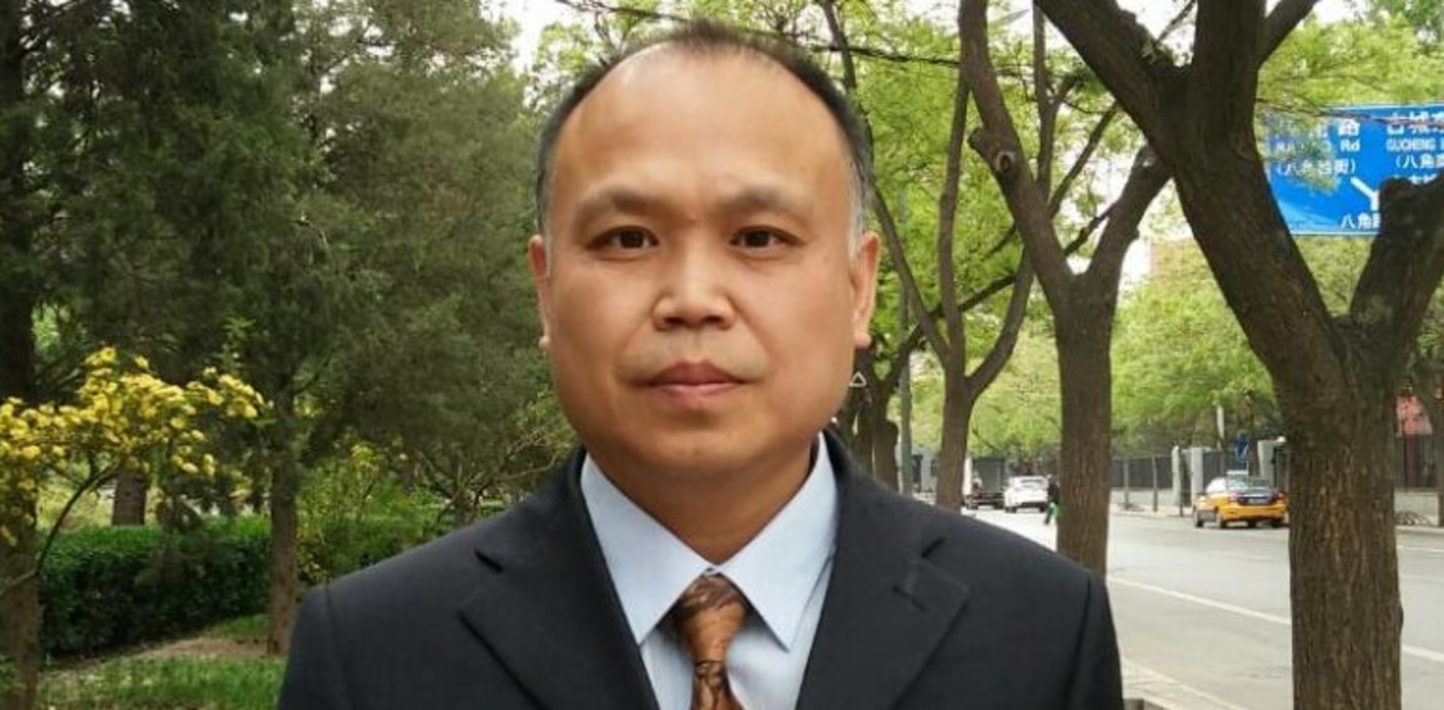
Mary Lawlor, the UN special rapporteur on human rights defenders, expressed alarm over the long-term detention of nine Turkish human rights lawyers and activists who were sentenced to lengthy prison terms on what she described as “spurious terrorism-related charges.”

[see also: https://humanrightsdefenders.blog/2019/02/07/turkey-not-a-good-place-to-be-a-lawyer-or-a-judge/]

The group includes eight members of the Progressive Lawyers’ Association (ÇHD) who were arrested between 2018 and 2019 and convicted under Turkey’s Anti-Terror Law: Barkın Timtik, Aytaç Ünsal, Özgür Yılmaz, Behiç Aşçı, Engin Gökoğlu, Süleyman Gökten, Selçuk Kozağaçlı and Oya Aslan. They were sentenced to up to 13 years in prison in what has been widely criticized as an unfair trial, known as the ÇHD II trial.

Another arrestee, lawyer Turan Canpolat of the Malatya Bar Association, was imprisoned in 2016 based on the testimony of a client who later admitted he had been coerced. Canpolat was convicted of alleged links to the Gülen movement, inspired by the late Turkish cleric Fethullah Gülen, which Ankara accuses of orchestrating a coup attempt in 2016, and sentenced to 10 years in prison. The Gülen movement denies involvement in the coup.

Canpolat was detained in 2016 after responding to a police search at a client’s residence, only to find himself accused based on doctored evidence and coerced testimony. Despite the dismissal of related charges against others implicated in his case and the recanting of key testimony, he remains in prison. His conviction was based on his legal representation of companies later closed by emergency decrees after the coup, a move critics argue criminalizes standard legal work. International legal groups have denounced his imprisonment as a miscarriage of justice, calling for his release.

All nine lawyers are currently held in high-security prisons, and Canpolat has reportedly been kept in solitary confinement for nearly three years without a disciplinary order, a practice the UN expert found “extremely disturbing.”

Lawlor has raised concerns about their cases since the beginning of her mandate in 2020, but Turkey has continued to criminalize their work. “I remain dismayed that the criminalization of their human rights work has not stopped,” she said.

She urged Turkish authorities to comply with international human rights law and guarantee fair appeal hearings for the detained lawyers. “I am ready to discuss this further with Turkish authorities,” she added.

The Turkish government has repeatedly been criticized for using broad anti-terror laws to silence political dissent and imprison journalists, lawyers and activists. Since the 2016 coup attempt, Turkey has arrested thousands on terrorism-related charges, often based on tenuous evidence such as social media posts or association with banned groups.

International human rights organizations, including Amnesty International and Human Rights Watch, have condemned Turkey for what they describe as politically motivated prosecutions and the erosion of due process. The European Court of Human Rights has ruled against Turkey in multiple cases, finding that it has violated the right to a fair trial and engaged in arbitrary detention.
https://www.turkishminute.com/2025/01/16/un-special-rapporteur-dismayed-at-turkeys-jailing-of-human-rights-lawyers-under-terrorism-laws4

seealsohttps://www.fidh.org/en/region/europe-central-asia/turkey/turkey-unacceptable-attacks-on-the-legal-profession

Urgent vacancy at FIDH for Delegate to the United Nations in Geneva

January 15, 2025

Posted on 6 January 2025 – Closing date 15 January 2025

The International Federation for Human Rights (FIDH) is an international non-governmental organisation (NGO) composed of nearly 200 national human rights organisations from more than 115 countries. FIDH is a nonpartisan, non-sectarian, apolitical, and not for profit organisation. Since 1922, FIDH has been defending all human rights – civil, political, economic, social, and cultural – as set out in the Universal Declaration of Human Rights.

https://www.fidh.org/en

FIDH are now recruiting : A Delegate to the United Nations (F∕M) – Indefinite-term contract based in FIDH Geneva office

The FIDH’s Delegation in Geneva

  • Represents FIDH before Geneva-based international organizations and institutions, the Office of the United Nations High Commissioner for Human Rights (OHCHR); in particular, the UN Human Rights Council (HRC) and the UN Human Rights Treaty Bodies;
  • Organizes the participation of FIDH’s member and partner organizations in the work of UN human rights bodies and mechanisms (support and assistance with regard to the submission of “parallel” or “alternative” reports, lobbying and advocacy, communication, etc.): mainly the UN Human Rights Council (including the Universal Periodic Review (UPR) mechanism), treaty monitoring bodies, and special procedures;
  • Prepares and implements the interventions of lobbying and advocacy at the Human Rights Council, and defines advocacy strategies;Feeds UN human rights protection bodies and mechanisms, in particular UN special procedures and OHCHR’s sections and branches, based on information from FIDH member and partner organizations and develops the strategic analysis of institutional developments and advocacy opportunities;

Relays and reports on activities and events to FIDH’s International Secretariat based in Paris.

Direct superviser : The representative, Head of the FIDH Delegation to the United Nations in Geneva

Applicants should send their CV and a brief cover letter (in English) by email recrutement@fidh.org quoting reference FIDH DELEGATE in the subject line.

https://reliefweb.int/job/4122938/delegate-united-nations-indefinite-term-contract-based-fidh-geneva-office

Yu Wensheng’s appeal rejected by Chinese court

January 8, 2025

Responding to the rejection of Chinese human rights lawyer see also:s appeal against his three-year prison sentence for “inciting subversion of state power”, Amnesty International’s Interim Regional Deputy Director for Research Kate Schuetze said on 6 January, 2025: “The charges against Yu Wensheng and his wife, activist Xu Yan – who was convicted of the same offence – are entirely baseless. They reveal the authorities’ inability to provide any legitimate justification for their imprisonment.

“The Chinese government has used Yu’s online comments and his numerous international human rights awards as an excuse to label him a threat to national security. But all this really demonstrates is Beijing’s deep fear of human rights defenders who dare to dissent.

“Yu Wensheng and Xu Yan have been imprisoned solely for exercising their right to freedom of expression and they must be released immediately and unconditionally.”

Yu Wensheng is the winner of the 2021 Martin Ennals Award. [https://www.trueheroesfilms.org/thedigest/laureates/69fc7057-b583-40c3-b6fa-b8603531248e]

See also: https://humanrightsdefenders.blog/tag/yu-wensheng/

Nigerian atheist Mubarak Bala freed from prison (but fear still persists)

January 8, 2025

The President of the Humanist Association of Nigeria, Mubarak Bala, was apprehended at his home in Kaduna State on 28 April 2020. See:

The prominent Nigerian atheist, who was freed on 8 January 2024 after serving more than four years in prison for blasphemy, is now living in a safe house as his legal team fear his life may be in danger…

In 2024, the UN Working Group on Arbitrary Detention (UNWGAD) released its opinion that the Nigerian State violated international law by detaining Bala. Concluding that he was wrongfully imprisoned for exercising his right to freedom of thought, conscience, religion or belief and that because of this violation no trial should have taken place.

Humanists International welcomes news of the release of Mubarak Bala, however, it reiterates that he should never have been detained in the first place. The organization once again thanks all those individuals and organizations without whose support this work would not have been possible. The organization hopes that Bala will one day be able to return to his homeland, and resume his work.

[https://humanists.international/]

Andrew Copson, President of Humanists International stated:

Today, we celebrate Mubarak Bala’s release – a hard-won victory that fills us with immense joy and relief. This triumph would not have been possible without the unwavering dedication of Humanists International’s staff, the tireless advocacy of Leo Igwe, the expertise of James Ibor and Bala’s legal team, and the invaluable support of our partner organizations. We extend our deepest gratitude to each and every one of them. While we rejoice in Mubarak’s freedom, we remain committed to fighting for the countless others who remain unjustly imprisoned for their beliefs. Their struggle is our struggle, and we will not relent until they too are free.”

https://www.bbc.com/news/articles/c62zpk4nnxdo

Amnesty Tech call for nominations for 3rd Digital Forensics Fellowship

January 6, 2025

On 2 January 2025 Amnesty Tech – a global collective of advocates, hackers, researchers, and technologists – announced the launch of the third Digital Forensics Fellowship (DFF).

This innovative Fellowship is an opportunity for 5 – 7 human rights defenders (HRDs), journalists, and/or technologists working in civil society organisations around the world to train with Amnesty Tech’s Security Lab to build skills and knowledge on advanced digital threats and forensic investigation techniques. This is a part-time Fellowship that will last 3-4 months and will come with a stipend.

Fellowship start and end date: The Fellowship is expected to run from April – July 2025.

Application Deadline, 23 January 2025 
Location: dependent upon the suitable applicant’s location.

Remuneration: Successful applicants will be given a stipend of £500/month for their time.

Background

Across the world, hard-won rights are being weakened and denied every day. Increasingly, much of the repression faced by HRDs and journalists begins online. Since 2017, Amnesty Tech’s investigations have exposed vast and well-orchestrated digital attacks against activists and journalists in countries such as Morocco, Egypt, Azerbaijan, Qatar, Serbia, Mexico and Pakistan.

Advanced technical capacity is needed in all world regions to tackle the mercenary spyware crisis. By fostering a more decentralised, global, and diverse network of well-trained incident responders and investigators, we can jointly contribute to more timely and effective protection of HRDs and journalists against unlawful surveillance.

The spyware landscape changes rapidly, and creativity and persistence are needed to research and identify new trends, tools, and tactics used to target civil society. The curriculum for the third edition of the DFF will be tailored to the cohort and will be future facing to prepare Fellows to work on current and future spyware threats. [see also: https://humanrightsdefenders.blog/2024/05/16/two-young-human-rights-defenders-raphael-mimoun-and-nikole-yanez-on-tech-for-human-rights/]

Objectives and deliverables

Participants in the Digital Forensics Fellowship will be expected to:

  • Attend an in-person, week-long convening where the majority of trainings will be conducted. This training will take place in June 2025, the exact location is set to be confirmed shortly.
  • Dedicate approximately 10 – 12 hours per month to the Fellowship, outside of the convening, by participating in remote training sessions and through independent work outside of scheduled sessions to deepen understanding of training topics.
  • Engage with the programme cohort and the Security Lab during the in-person and remote trainings, and in discussion groups on an ad-hoc basis.

Essential Requirements

  • An understanding of the technical threats, digital attacks and challenges faced by journalists, HRDs, and civil society organisations in their local contexts.
  • Demonstrated interest in conducting investigations to identify digital attacks against civil society, with the goal of building resilience among civil society actors in the face of surveillance after the Fellowship.
  • Familiarity using command line tools and basic knowledge of scripting languages like Bash and Python to analyse data.
  • An understanding of how internet infrastructure works, for example the role of IP addresses, TLS certificates, and DNS queries.
  • Technical familiarity with GNU/Linux operating systems, as well as Android and iPhone systems.
  • Engaging with the English language as the primary language throughout the Fellowship.
  • Application instructions:

To apply, applicants will be required to submit the following via our recruitment system eArcu – please upload all relevant documents to the CV section of the application portal.

  1. A copy of your most recent CV.
  2. A cover letter explaining your motivation and interest in the Fellowship and outlining how you meet the essential requirements outlined in the job description.

Applications must be in PDF, Word, PowerPoint or Excel format.

Application Process:

Shortlisted applicants will be invited to complete a record video interview week commencing 10th February, answering a series of pre-set questions via video, which allows us to learn more about you and your suitability for the Fellowship. Successful applicants from this process will be invited to a Microsoft Teams interview with the panel week commencing 3rd March.

How to apply;

Careers | Amnesty International

Amnesty International

The 7th Human Rights summit of Southern Defenders took place in November in Johannesburg – reports Puleng Motaug

December 23, 2024

ACTSA intern Puleng Motaung reports back on the 7th Human Rights summit of Southern Defenders

Being at the Southern Human Rights Defenders summit in Johannesburg was exceptional, I had a chance to meet with people who put others’ wellbeing before their own. People who sacrifice their lives for the benefit of others. The greatest part was hearing survivors tell their traumatic stories first hand, hearing about the challenges that civil societies face, and learning about Khenana community, in South Africa, the murders that take place there and the trauma that the kids are going through, seeing their parents killed in front of them.

I had an opportunity to network with people from different organisations and backgrounds, and the outstanding interaction was with a lady named Zanele from Eswatini who works for Swavisa a struggling organisation that focuses on helping the victims of the 2021 uprising who got injured and can’t afford medication to treat their injuries due to financial strains.

Across the Southern African region, the civic space continues to shrink as governments suppress and silence civil societies. Many defenders have been imprisoned, injured and even killed in the fight for equality and dignity. The issue of Israel was also raised and that all civil societies must stand in solidarity with Gaza.

I met Robson Chere, a teacher and trade unionist, and the Secretary General of the Amalgamated Rural Teachers Union (ARTUZ) in Zimbabwe, which advocates against teachers’ low wages, lack of electricity in rural schools and poor working conditions as well as unsafe learning conditions for students. Along with Namatai Kwekweza and Samuel Gwenzi, he was hauled off a plane by police on 31 July, then tortured and held without bail for 35 days by the Zimbabwe regime. Their release on bail only came after much international pressure.

When civil space is stifled, said Adriano Nuvunga, Chairperson of Southern Defenders, we lose the foundation of democracy. He continues that it is up to us to ensure that the elections across Southern Africa reflect true will of the people, fostering trust, inclusion and hope for a democratic future. “Together we must ensure that the future is one where justice, freedom and human rights prevail, where every voice is heard and every right is protected”.

Adriano Nuvunga’s statement had me wondering: what am I doing to better the future of the upcoming generation?

I learnt that being a Human Rights Defender (HRD) isn’t easy because of the traumatic experiences people go through, but Mary Lawlor, UN Special Rapporteur on the situation of Human Rights Defenders, said “don’t buy the narrative that it is the worst time ever to be a human rights defender”. The most important resources in civil space are networks, unity and trust. That gave me hope…

My takeaway as a young person is that I must stand up and lead the pack. It’s never been more necessary for people to band in solidarity with southern African Human Rights Defenders. We need to protect the civil space. It is about time we as young people go out and occupy spaces, because the youth are the heartbeat of the revolution.

Dejusticia 2025 fellowships for defenders from the Global South

December 20, 2024

Members of the 2024 cohort of our Global South Defenders program.

This opportunity allows human rights defenders from countries in the Global South who are in emergency or high-risk situations to develop their projects and participate in an academic and cultural exchange in a safe space.

There are 14 thematic areas within Dejusticia to whichyou can apply.

The fellowship will begin in the second semester of 2025.

Who is eligible to be part of the program?

We seek human rights defenders from the Global South who meet the following criteria:

  • They come from an emergency or high-risk context. This includes regions affected by armed conflict, civil unrest, or authoritarian regimes, where there is an imminent threat to the security of the grantee. This may involve situations where the grantee and/or their organization have been subjected to threats, intimidation, or populist propaganda, or where they have been excluded from funding due to government or private sector influence.
  • The grantee may be at risk of burnout and is seeking a quiet place to continue working on human rights issues, but in a different context.
  • They belong to human rights organizations in the Global South that are interested in engaging in exchanges and joint research or advocacy work with Dejusticia.
  • They aim to build lasting relationships with other fellows and with Dejusticia. This ensures that our fellowships function as acceleration hubs for connections that will make the human rights movement more cohesive and impactful.

What will fellows receive from Dejusticia?

Dejusticia will cover travel expenses (visa, tickets) and provide a monthly stipend based on the fellow’s profile and experience. Although Dejusticia will offer support at the beginning of the process, including a two-week training period on applied research and on the fellow’s specific work, it is important to note that fellows will be responsible for managing their stipend to cover housing, transportation, and food expenses.

What are the commitments of the Global South Fellow?

The fellow will allocate their time at Dejusticia as follows:

How to apply for the fellowship program?

Before January 31, 2025, please fill out the form

CF: 2024:

Canadian Minister Joly announces funding for child human rights defenders and independent media

December 17, 2024

As the world marked Human Rights Day, Canada reiterated the importance of the protection and promotion of human rights defenders and their critical work. Mélanie Joly, Minister of Foreign Affairs, announced $1.85 million in funding for two projects that support child human rights defenders and a free and independent media worldwide.

Canada is contributing $850,000 to a three-year project led by Child Rights Connect to empower, to protect and promote the rights of child human rights defenders, who are increasingly engaged in global human rights challenges, without the same legal protections as adults. This funding will help Child Rights Connect promote safe and sustainable human rights advocacy by child human rights defenders in Togo, Thailand, Moldova and Brazil.

Canada will also contribute an additional $1 million to the Global Media Defence Fund, bringing Canada’s total contribution to the fund to $4 million. Administered by UNESCO, the Global Media Defence Fund works to enhance the protection of journalists and media organizations so they can carry out their critical work without fear of violence, censorship or intimidation. The fund will also ensure public access to diverse and reliable sources of news and information. [see also: https://humanrightsdefenders.blog/2024/02/12/investigative-journalism-in-arab-states-the-threats-to-journalists/]

In the face of growing challenges to human rights globally, the work of human rights defenders and the protection of media freedom are more important than ever. Canada stands unwavering in its commitment to working with partners to safeguard and expand the protection and promotion of human rights defenders and journalists around the world.” – Mélanie Joly, Minister of Foreign Affairs

https://reliefweb.int/report/world/minister-joly-announces-support-human-rights-defenders-and-media-freedom

Nominations for the Rafto Prize 2025 open

December 13, 2024

See https://www.trueheroesfilms.org/thedigest/awards/A5043D5E-68F5-43DF-B84D-C9EF21976B18

Each year the Rafto award goes to a person or an organization who stands up for human rights and democracy. Please make a nomination. Annual deadline is 1 February.

Go to nomination form

Criteria

  • A candidate should be active in the struggle for the ideals and principles underlying the United Nations Universal Declaration of Human Rights.
  • A candidate’s struggle for human rights should represent a non-violent perspective.
  • A candidate may be a person or an organization, and two or more candidates may share the prize.

Deadline for nominations: 1 February.
Nominations received after 1 February will be taken into consideration for the Rafto Prize the following year.

Who makes the decision?

Nominations for the Rafto Prize are received and evaluated by the Prize Committee. Recipient(s) is selected by the Board of Directors.

When is the announcement the Rafto Prize?

Each year we announce the recipient of the Rafto Prize in the end of September at a press conference at the Rafto House in Bergen. The announcement is live streamed on our website and on Facebook.

Questions?

For questions regarding nominations, please contact the Secretary of the Committee, Liv Unni Stuhaug, livunni.stuhaug@rafto.no

https://www.rafto.no/en/rafto-prize/nominasjoner

10 December: Latin American bishops want to save human rights defenders

December 10, 2024

The “Life is hanging on by a thread” campaign will shine a light on the countless stories of human rights defenders and environmentalists who risk their lives for their causes.

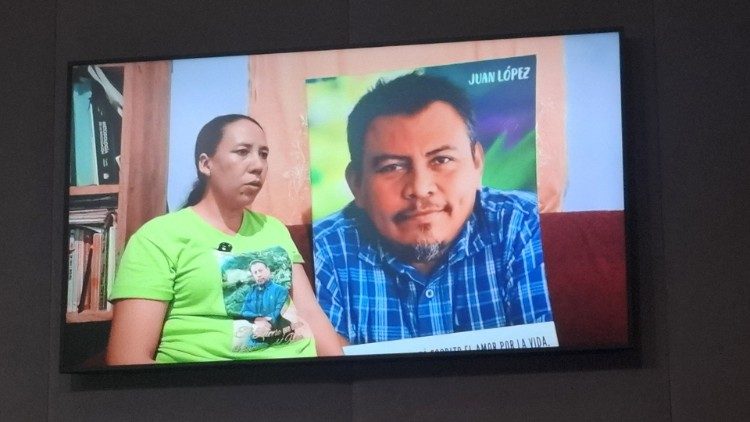
On September 14, Juan Antonio López, a city council member and environmental activist was murdered in Honduras. He was a member of the Mesoamerican Ecclesial Network and international organizations recognized his work. His assassination underscored the vulnerable situation of human rights defenders and leaders throughout Latin America.

In response, the Latin American Bishops’ Conference, together with the Platform for Peace, Democracy, and Human Rights and the Latin American Protection Community, is launching the campaign “Life is hanging on by a thread.” 

The official launch of the campaign is scheduled for December 10, which will be held virtually to bring representatives from all over Latin America. It will coincide with events being held in Honduras to honour López.

The goal of the “Life is hanging on by a thread” campaign is to shine a light on symbolic cases of human rights and environmental defenders in Latin America and the Caribbean. Various testimonies of people defending human rights and indigenous peoples will come to light.

Promoters of the campaign stress its importance because “situations like the murder of Juan Antonio López are not isolated events, but part of a systematic pattern in Latin America, one of the deadliest regions for environmental and human rights defenders.” Global Witness, an international NGO, reports that 85% of environmental defenders who were killed in 2023 took place in Latin America. Specifically, in Honduras, 18 environmentalists were murdered last year. [see: https://humanrightsdefenders.blog/2024/09/18/global-witness-2023-2024-annual-report-violent-erasure-of-land-and-environmental-defenders/]

Juan Antonio López was an environmentalist killed on September 14, 2024

Juan Antonio López was an environmentalist killed on September 14, 2024

The campaign will end on December 10, 2025, coinciding with the Jubilee of Hope.

https://www.vaticannews.va/en/church/news/2024-12/latin-america-bishops-environmentalists-campaign-human-rights.html

https://www.ucanews.com/news/latin-american-bishops-to-protect-rights-activists/107245