Posts Tagged ‘Narges Mohammadi’

Risks for Human Rights Defenders amid war in the Middle East

March 10, 2026

On 5 March 2026, Front Line Defenders expressed deep concern over the escalating hostilities across the Middle East and their devastating impact on civilians following US and Israeli air strikes on Iran and subsequent retaliatory strikes by Iran against Israel and several Gulf states. In line with our mandate, we are particularly alarmed by the heightened risks faced by human rights defenders across the region, including those arbitrarily detained for their peaceful human rights work…

Human rights defenders deprived of liberty are particularly vulnerable in such contexts. During periods of conflict, detained defenders may face increased risks of ill-treatment while access to medical care, family contact, legal representation, and independent monitoring may become further restricted. The risk of such violations increases if hostilities occur in close proximity to detention facilities.

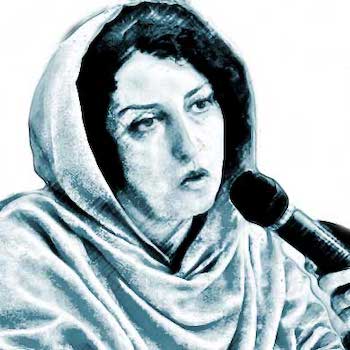
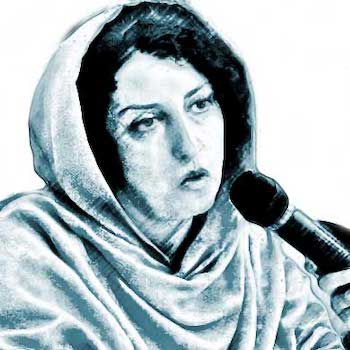
Woman human rights defender and Nobel Peace Laureate Narges Mohammadi, currently detained in Zanjan prison, reported severe explosions in close proximity following airstrikes. Golrokh Iraee, Sepideh Gholian, Shima Ghooseh, Sharifeh Mohammadi, Serveh Mohammadi, Mohammad Najafi, Mohammad Reza Faghihi, Reza Khandan, Ahmadreza Haeri, Taher Naghavi, Seyed Mehdi Karimi Farsi, Javad Alikordi, Abolfazl Ranjbari, Hashem Khastar, and Masoud Farhikhteh remain exposed to airstrikes. Their access to basic human needs are further restricted while detained in Tehran, Mashhad, Gilan, and other provinces.

Human rights groups are expressing concern over the deteriorating situation in Evin prison in Iran, where many human rights defenders are currently detained. Based on reports these groups have received from prisoners “the Security Ward 209 has been evacuated” and “anti-riot forces are stationed in the surrounding buildings.” Food distribution has reportedly also been disrupted. On the evening of 2 March 2026, the Israeli military forces reportedly issued an urgent evacuation order to people in the Evin neighbourhood. On 23 June 2025, during the twelve-day Israel-Iran conflict, Israeli forces attacked the Evin compound and Evin prison. Prisoners, including human rights defenders, were evacuated from the prison following the attacks. Iranian officials reported over 70 people killed from this attack on the Evin compound..

In Bahrain, there have been reports of strikes only kilometres from Jau prison where human rights defender Abdulhadi Al-Khawaja continues to serve a life sentence for his peaceful human rights work alongside fellow human rights defender Dr Abduljalil Al-Singace. Front Line Defenders is also concerned over reports of arrests of defenders linked to anti-war protests in Bahrain and calls on the authorities to respect the rights to freedom of expression and peaceful assembly.

All parties to the conflict must uphold their obligations under international human rights and humanitarian law, including the protection of civilians and those deprived of liberty. Hospitals, schools, and other sites protected under international humanitarian law, where human rights defenders and other civilians carry out essential work and provide humanitarian assistance, must not be targeted. Authorities should also immediately release detained human rights defenders and ensure they have access to adequate healthcare, contact with family members and legal counsel, and independent monitoring.

Front Line Defenders call on the international community, states, and multilateral organisations to remain attentive to the situation of human rights defenders in the region, raise protection concerns with the relevant authorities and provide concrete support and protection measures for human rights defenders at risk, if necessary through support with temporary relocation and emergency visa support.

Front Line Defenders stands in solidarity with human rights defenders across the region who continue their work under extremely difficult and dangerous circumstances.

https://www.frontlinedefenders.org/en/statement-report/heightened-risks-human-rights-defenders-amid-escalating-hostilities-middle-east

Many NGOs raise alarm over situation of detained human rights defenders in Iran and urge UN Human Rights Council to convene a special session

January 16, 2026

As mass repression of protests and dissent dramatically intensifies in Iran amidst an almost complete communications shutdown, the Free Narges Coalition and more than 30 undersigned organisations (including FIDH and OMCT in the framework of the Observatory for the Protection of Humans Rights Defenders) called on 15 January 2026 for urgent and concrete actions to circumvent internet censorship, as well as raising alarm regarding the grave threats to existing and newly-arrested detainees, particularly those jailed for their human rights work, journalism, expression, activism, or peaceful assembly.

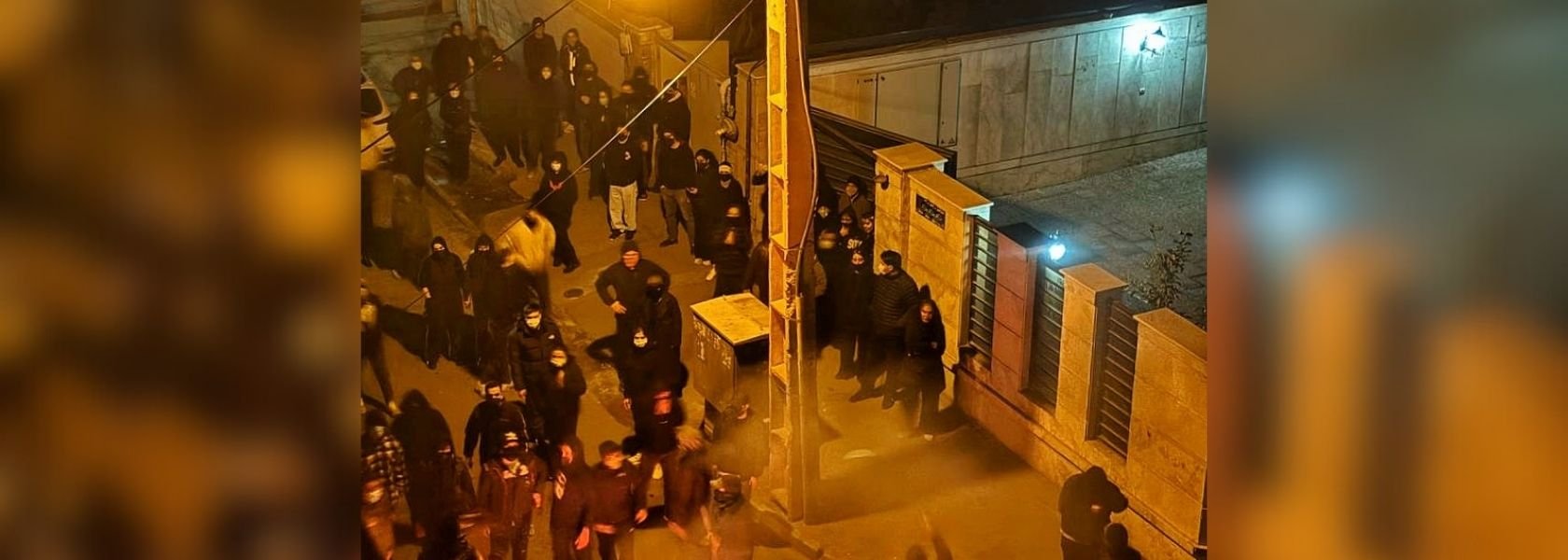
Iran is facing one of the most severe periods of repression in its recent history. Protests that began in Tehran’s Grand Bazar on December 28 against the collapse of the national currency grew in size and scope until authorities completely turned off Iran’s internet access to the outside world and began a more severe crackdown on January 8. Shocking images of dead protesters, doctors’ reports of overflowing hospitals and the lethal use of military-grade weapons and live ammunition, and the absence of access for journalists and independent media, have led to desperation of families missing loved ones, as well as grave concerns around the safety of thousands of those injured or detained. Human rights organisations and international media have been able to verify the killing of over 2,500 protesters, including children under the age of 18, and thousands injured, some severely while almost twenty thousand confirmed arrested. With the majority of the killings occurring since 8 January, amid a full-blown digital blackout that has made further verification impossible, current reports estimate the number of killings to be much higher, likely amounting to more than 6,000.

Meanwhile, in official statements, Tehran’s Prosecutor General has described protesters as vandals and threatened they will face moharebe (waging war against God), a charge that is punishable by death under Islamic Penal law. State media have also reported mass arrests of individuals they label as “rioters.”

According to NetBlocks, Iran has now experienced more than 140 hours of near-total internet shutdown since January 8. Such communications blackouts severely restrict access to independent reporting and sharing of essential and life-saving information, and create conditions in which grave human rights violations can be committed with impunity. Prior to the shutdown, human rights defenders and known dissidents both inside and outside of Iran had reported receiving threats, as authorities have attempted to suppress expressions of support for the protests online.

In this context, both recent and long-standing detainees–including human rights defenders, journalists, writers, and artists–face an acute and often overlooked risk. Past patterns in Iran demonstrate that periods of widespread unrest are accompanied by heightened abuses inside detention facilities, where these groups are particularly vulnerable to extrajudicial killing, enforced disappearance, torture, and other forms of ill-treatment. Those held in solitary confinement and denied contact with the outside world are at especially high risk.

Among those recently detained are prominent figures from Iran’s civil society, including Nobel Peace Prize Laureate Narges Mohammadi, Sepideh Gholian, Alieh Motalebzadeh, Javad Alikordi, Hasti Amiri, Pooran Nazemi, and other human rights defenders and journalists. They were violently arrested following the memorial ceremony for lawyer Khosrow Alikordi on 12 December in Mashhad, and have been held in solitary confinement, their whereabouts and condition unknown, for more than one month. Narges Mohammadi has been denied access to legal counsel and contact with her family, apart from a brief phone call on 14 December when she reported severe ill-treatment, including beatings to her head and neck with batons, as well as threats of further violence. On January 6, before the total internet shutdown, journalist and human rights defender Alieh Motalebzadeh, who has been diagnosed with cancer, was able to call her family. Her daughter reported in a video message that she did not sound well, stating that the detainees are under severe pressure. She was released on bail following deterioration of her health on 12 January. The health condition of Pouran Nazemi is reported to be dire while she remains detained. Narges Mohammadi has been hospitalized for three days after her violent arrest and arbitrary detention since 12 December. Due to the ongoing communications blackout, the families and lawyers have not been able to be in contact with them, including to inquire if their 30 day arbitrary detention order has been extended or not.

We, the undersigned organisations, express our deep concern over the escalation of the killing of protesters, as well as the serious risk of arbitrary legal charges, punishable by the death penalty, against those detained. We stress that the lives and safety of those more vulnerable under detention in Iran must not be forgotten. Human rights defenders, journalists, writers, artists, and those prosecuted due their exercise of freedom of assembly and expression are at the forefront of the peaceful struggle for fundamental human rights. They must be protected and immediately and unconditionally released, and we call for immediate actions from the international community to halt the escalating violations of human rights and humanity.

As reports of mass arrests, killings, and widespread violence continue to escalate, we stand in full solidarity with the people of Iran in their legitimate struggle for fundamental freedoms and democratic rights. We urge the international community to take urgent and concrete actions to prevent further loss of life and to ensure that Iran uphold its international human rights obligations, including through:

 Immediate and unconditional release of all those jailed in Iran for their peaceful activism or expression, including Nobel Peace Prize Laureate Narges Mohammadi, as well as human rights and women’s rights defenders, civil society activists, journalists, lawyers, writers, artists, representatives of religious and ethnic minorities, environmental and labour defenders, students, and all others detained or at risk for exercising their fundamental rights.

 Immediate restoration of full and unrestricted access to internet and telecommunications services, and an end to nationwide information blackouts that censor news reporting, facilitate repression, block the transmission of essential and life-saving communications including for medical personnel, and impede documentation of human rights violations.

 Independent, impartial, and transparent investigations into killings, torture, lethal use of force by security agents, enforced disappearances, and other serious human rights violations committed in the context of the ongoing protests, with a view to ensuring accountability in line with international law.

As every hour of inaction increases the risk of irreversible loss of human life and gross violations of human rights. The international community must act urgently to protect the detainees, ensure their safety and rights, and prevent further violations under international law.

https://www.fidh.org/en/region/asia/iran/iran-over-30-ngos-raise-alarm-over-dire-situation-for-detained-human

50 civil society organizations, urge the UN Human Rights Council to urgently convene a special session to address an unprecedented escalation in mass unlawful killings of protesters, amidst an ongoing internet shutdown imposed since 8 January to conceal grave human rights violations and crimes under international law by Iranian authorities. see:

https://ishr.ch/latest-updates/iran-calling-the-human-rights-council-to-convene-a-special-session

https://www.article19.org/resources/iran-joint-civil-society-call-for-a-hrc-special-session/

https://www.hrw.org/news/2026/01/16/joint-statement-to-member-states-of-the-united-nations-human-rights-council
Nobel laureates blast death of Iranian Somayeh Rashidi in prison as ‘state murder’

September 30, 2025

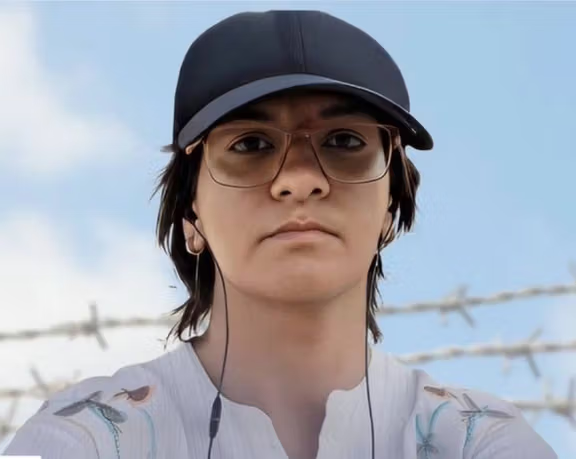
The death of a female Iranian political prisoner in hospital following a series of seizures has sparked outrage from Iran’s two Nobel laureates and right groups who have labeled her death a state-sponsored murder. Somayeh Rashidi died after several days in hospital following her transfer from Qarchak Prison near Tehran, Iran’s judiciary-affiliated Mizan news agency reported on Thursday.

Rashidi, born in 1983, was detained in April for allegedly writing anti-government graffiti slogans in Tehran’s Javadieh district.

Nobel Peace laureates Narges Mohammadi condemned her death in custody, describing it as part of a pattern of abuse in detention. “This devastating loss of Somayeh Rashidi is not an accident but the result of a systematic policy of neglect and cruelty inside Iranian prisons,” Mohammadi said in a post on X.

Rights groups and activists including Nobel laureate Shirin Ebadi had previously raised alarm about Rashidi’s deteriorating condition, highlighting her urgent need for medical attention.

Iran International reported earlier this month that Rashidi’s condition had severely declined, with doctors holding little hope for her recovery.

Iranian rapper Toomaj Salehi, who faced a death sentence and torture in prison but was ultimately released, called Rashidi’s death a deliberate act to suppress dissent. “Such deliberate disregard for political prisoners is an example of silent, systematic suppression and elimination of dissenters. Why should anyone be arrested for graffiti?” Salehi posted on X. [see also: https://humanrightsdefenders.blog/2024/05/25/vaclav-havel-international-prize-for-creative-dissent-2024-goes-to-iranian-hip-hop-artist-uyghur-poet-and-venezuelan-pianist/]

Former political prisoner and women’s rights defender Hasti Amiri said Rashidi’s case showed deliberate neglect.

Sources speaking anonymously to Iran International alleged that security officials pressured Rashidi’s family to describe her hospitalization as a suicide attempt, intensifying accusations of a cover-up.

Qarchak deaths mount

Human rights groups including the Norway-based Iran Human Rights (IHR) have publicly called for the closure of Qarchak, describing it as “one of the darkest symbols of systematic human rights violations in the Islamic Republic.” Rashidi death comes less than a week after another prisoner, Maryam Shahraki, died in Qarchak last Friday. According to Norway-based rights group Hengaw Organizattion, three women have already died in this facility this year due to lack of adequate medical care — Jamileh Azizi on September 19, Shahraki on September 13, and Farzaneh Bijanipour on Januar

https://www.iranintl.com/en/202509253807

True Heroes Films (THF) latest newsletter

December 14, 2023

It deals with the following topics:

Cities of Rights – 75th UDHR Anniversary: The city of Utrecht wants to be city of human rights

Mohammadi Narges is one of the most recognised Human Rights Defenders in the world. She has received 8 major human rights awards according to THF’s digest of human rights awards but no media outlets got it right…

More on the toolkit (available on website) to create workshops for youth about filmmaking and human rights.

HURIDOCS 40th anniversary

More on ISHR‘s #Right2DefendRights campaign for the 25th anniversary of the UN Declaration on HRDs .

Please feel free to spread the word!

https://mailchi.mp/2aebd6e2cb43/true-heroes-insights-2-2023?e=ed48709ac7

Jailed Iranian human rights defender Narges Mohammadi wins Nobel Peace Prize 2023

October 6, 2023

On 6 October, 2023, it was announced that imprisoned HRD Narges Mohammadi, who has campaigned for women’s rights, democracy and against the death penalty in Iran for years, has won the Nobel Peace Prize this year.

Mohammadi, 51, is one of the most recognised Human Rights Defenders in the world. She has received 8 major human rights awards according to THF’s digest of human rights awards [see: https://www.trueheroesfilms.org/thedigest/laureates/07C20809-99E2-BDC0-FDC3-E217FF91C126], but no media outlets got it right.

This prize is first and foremost a recognition of the very important work of a whole movement in Iran with with its undisputed leader, Nargis Mohammadi,” said Berit Reiss-Andersen, the chair of the Norwegian Nobel Committee who announced the prize in Oslo.

Mohammadi’s most recent incarceration began when she was detained in 2021 after she attended a memorial for a person killed in nationwide 2019 protests sparked by an increase in gasoline prices. She’s been held at Tehran’s notorious Evin Prison, whose inmates include those with Western ties and political prisoners. See also: https://humanrightsdefenders.blog/2016/09/30/iran-shameful-sentences-for-narges-mohammadi-issa-saharkhiz-arash-sadeghi-no-detente-in-human-rights/

Reiss-Andersen said Mohammadi has been imprisoned 13 times and convicted five times. In total, she has been sentenced to 31 years in prison.

She is the 19th woman to win the Nobel Peace Prize and the second Iranian woman, after human rights activist Shirin Ebadi won the award in 2003. [see: https://www.trueheroesfilms.org/thedigest/laureates/DCF78E6F-7015-4794-B6D9-1192BB84568C]

From behind bars, Mohammadi contributed an opinion piece for The New York Times. “What the government may not understand is that the more of us they lock up, the stronger we become,” she wrote.

https://apnews.com/article/nobel-peace-prize-oslo-776ca1bcf0fde827ad90af8a069907eb

https://www.abc.net.au/news/2023-10-06/nobel-peace-prize-2023-awarded-to-narges-mohammadi/102946290

https://www.cbc.ca/news/world/2023-nobel-peace-prize-1.6984334

https://edition.cnn.com/2023/10/06/middleeast/iran-narges-mohammadi-womens-rights-mime-intl-cmd/index.html

https://www.frontlinedefenders.org/en/profile/narges-mohammadi

https://www.usnews.com/news/us/articles/2023-10-06/un-expert-iran-is-unlawfully-detaining-human-rights-activists-including-new-nobel-peace-laureate

https://www.france24.com/en/live-news/20231007-nobel-winner-mohammadi-celebrates-prize-in-her-cell-family

and of course: https://www.iranintl.com/en/202310071010,

“The worthiest symbol of world peace was Qassem Soleimani,” declared the Foreign Minister of the Islamic Republic. Soleimani was a notorious military and intelligence operative who created and nursed various militant groups in the Middle East until he was killed in a US drone strike in 2020.

Winners of the 2022 Geneva international film festival

March 16, 2022
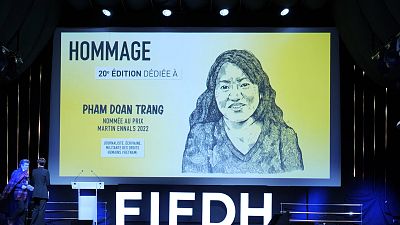
Women's rights, ecology and torture scoop top FIFDH 2022 awards

Over ten days, the 20th International Film Festival and Forum on Human Rights brought together artists, activists, journalists, and the public in Geneva for film and debate. After two pandemic-enforced digital editions, this year was also a chance for the festival to finally get back to some form of normality by meeting in person and welcoming back live audiences. The Grand Prize for Fiction was awarded to two films – Freda, by Haitian director Gessica Généus, and Vera Dreams of the Sea by Kosovan filmmaker Kaltrina Krasniqi.

Freda” Devastated by earthquakes, Haiti is a country buried under corruption, violence and colonial legacy. Freda lives with her mother and sister in Port-au-Prince and, at the age of 20, she refuses to give up and wants to believe in the future. But how can she stay when everything compels her to leave? Spotted in 2017 with The Sun Will Rise, Gessica Généus directs her debut feature film, shot in Creole and carried by extraordinary actresses. She tells the story of her country with love, sings its courage and celebrates the deep joy that persists despite the heartbreaking reality.

Vera Dreams of the Seatells the tale of a widow, forced to take on a ruthless rural patriarchy to claim an inheritance, for her, and her daughter and granddaughter. The film also won the Festival’s Youth Prize, an award Krasniqi told Euronews has particular significance. “You know, when you make a movie you think about audiences, of course, and then you think that people of a certain generation who resonate with issues but then getting a prize from youth meant quite a lot to me because that means the story resonates with other generations as well.”

See also: https://humanrightsdefenders.blog/2022/02/15/fifdh-dedicates-its-20th-edition-to-pham-doan-trang-and-ida-leblanc/

White Torture directed by Iranian lawyer and human rights activist Narges Mohammadi won the festival’s Grand Reportages category. It focuses on psychological torture and its destructive effect on victims. Mohammadi is currently imprisoned in Iran. Her friend, Nobel Peace Prize winner Shirin Ebadi, is the film’s ambassador. Sitting down with Euronews, she said: “In my opinion, this film represents the state’s repression of prisoners of conscience and political prisoners in Iran. But at the same time, it represents resistance, because the repression continues, but the resistance of the people also continues.

https://fifdh.org/en/2022/film/157-freda

https://www.euronews.com/culture/2022/03/15/women-s-rights-ecology-and-torture-scoop-top-fifdh-2022-awards

see also: https://medyanews.net/two-awards-for-the-movie-about-yazidi-genocide-angels-of-sinjar-at-the-20th-genevas-international-film-festival/

Iranian Human rights defender Narges Mohammadi sentenced to another 8 years prison and more than 70 lashes

January 25, 2022

On 24 January 2022 the prominent rights defender Narges Mohammadi, already serving time at Iran’s notorious Gharchak Prison, has been sentenced to another eight years in prison and more than 70 lashes, according to a tweet by her Paris-based husband. [winner of 5 human rights awards, see: https://www.trueheroesfilms.org/thedigest/laureates/07C20809-99E2-BDC0-FDC3-E217FF91C126]

Mohammadi’s new conviction was after a 5-minute trial, her husband Taghi Rahmani wrote. He stated she also had a two–year ban on “communication,” but that she has not contacted the family and he did not know the details of the trial or the new sentence.

The prominent activist’s latest conviction comes as the authorities intensify their efforts to squash growing dissent in Iran by imprisoning activists and human rights attorneys after grossly unfair trials, shooting to kill protesters in the street, imposing death sentences on dissidents and protesters, and causing the death of political prisoners by egregiously neglecting their medical needs. See e.g. https://humanrightsdefenders.blog/2020/06/24/list-of-lawyers-imprisoned-in-iran-for-defending-human-rights/

One by one, the Iranian authorities are trying to silence the voices of dissent in Iran, through imprisonment, torture, and even death,” said Hadi Ghaemi, executive director of the Center for Human Rights in Iran (CHRI). “The Iranian government fears these brave individuals because they speak truth to power and their voices carry great authority in Iranian society,”

Outrage at the government’s actions—not only the unjust imprisonments but also the treatment of political prisoners—is growing both inside and outside Iran’s prisons.

Seven political prisoners in Evin Prison’s Ward 8 went on a hunger strike on January 16, 2022, to protest the death of Baktash Abtin, who died after contracting COVID-19 in Iran’s overcrowded and unhygienic prisons, where even the most rudimentary precautions against the spread of the virus are not followed. They include: Sadegh Omidi, Peyman Pourdad, Moin Hajizadeh, Mehdi Dareyni, Hamid Haj Jafar Kashani, Aliasghar Hassani-Rad, and Mahmoud Alinaghi. The latter three were transferred to an unknown prison on January 23. See: https://humanrightsdefenders.blog/2022/01/10/iranian-dissident-poet-baktash-abtin-dies-of-covid-in-arbitrary-detention/

In solidarity with the hunger strikers, Shakila Monfared began a hunger strike in Gharchak Prison for women on January 17; Sina Beheshti joined the hunger strike on January 17 in the Greater Tehran Central Penitentiary; and Mohammad Abdolhassani joined the hunger strike on January 17 in the Greater Tehran Central Penitentiary.

Meanwhile, British-Iranian dual national Anoosheh Ashoori, who is being held in Iran on unsubstantiated spying charges, began a hunger strike in Evin Prison on January 23, to bring “global attention to the plight” of those unfairly held by Iran.

Outside Iran, In Vienna, journalist Jamshid Barzegar, began a hunger strike on January 18 in solidarity with hunger strikers in Iran, in front of the hotel where the nuclear talks are being held in Vienna. He has been joined by more than a dozen Iranian activists abroad. Former American hostage Barry Rosen was on hunger strike from January 16-24 in Vienna “to demand the release of all hostages being held by Iran.” Nizar Zakka, a Lebanese former hostage in Iran, joined the hunger strikers in Vienna on January 21.

These names are only part of a larger, rapidly growing group. A list from January 24 was published on Twitter that included names of more than 40 activists hunger-striking outside prison to demonstrate solidarity with the hunger strikers and protest the government’s actions.

Iran’s Foreign Ministry Spokesman Saeed Khatibzadeh, responding to a question on hunger strikers in Vienna at January 24 press conference in Tehran, said: “These matters are not very important. What’s important is to reach a reliable and stable agreement that satisfies Iran’s interests.”

Mohammadi has proved to be a particular thorn in the authorities’ side, refusing to be silent either in prison or during her brief periods of release between convictions. She had already been serving a 30-month sentence at Gharchak Prison after she organized a sit-in at Evin Prison’s Women’s Ward to condemn the killing of hundreds of protesters by state security forces during the November 2019 protests, and the unjust execution of wrestler Navid Afkari.

“Narges Mohammadi is only one of many individuals behind bars in Iran because of their peaceful dissent and the willingness of a judiciary to do the bidding of a brutal and unlawful security state,” Ghaemi added.

https://www.usnews.com/news/world/articles/2022-01-25/husband-says-iran-sentenced-activist-wife-to-prison-lashes

Franco-German Prize for Human Rights 2021

December 17, 2021

Germany and France honoured this year 15 people who have made outstanding contributions to the protection of human rights, campaigning for causes including women’s rights in Afghanistan, the freedom of the press in South Africa and children who are born as a result of rape in wartime.

On 10 December, international Human Rights Day, Foreign Minister Annalena Baerbock and French Foreign Minister Jean‑Yves Le Drian presented fifteen people with the Franco-German Prize for Human Rights. This award recognises the efforts of all those who work tirelessly every day to advance the causes of human rights and the rule of law. It is presented decentralised by the French and German missions in various locations around the world.

Chang Weiping a Chinese human rights lawyer.

Jake Epelle who works to combat the ongoing stigmatisation and discrimination faced by people with albinism in Nigeria.

Noelah Godfrey Msuya who promotes the rights of children and women in Tanzania.

Monika Borgmann who is a German-Lebanese documentary-maker.

Jacques Letang who is a judge and lawyer in Haiti.

Cristina Palabay from the Philippines who leads the national association Karapatan.

Alexandrine Victoire Saizonou who is an advocate for women’s and children’s rights in Benin.

Ajna Jusic from Bosnia discovered at the age of 15 that she was born as a result of rape during wartime, and since then she has advocated for others in the same situation.

Erika Lorena Aifán Dávila is a judge who has been the target of constant attacks from the authorities of Guatemala.

Nebahat Akkoc is the Managing Director of the NGO Kamer in Turkey.

The Venezuelan Education-Action Program on Human Rights or PROVEA.

Narges Mohammadi who is spokesperson and vice chairman of the Iranian organisation Defenders of Human Rights Center.

May Sabai Phyu is a Kachin activist from Myanmar/Burma.

Shaharzad Akbar is an Afghan human rights defender who campaigns in particular for the rights of women in Afghanistan.

Tabelo Timse is an investigative journalist and a member of an independent non‑profit media centre in South Africa.

https://www.auswaertiges-amt.de/en/aussenpolitik/themen/menschenrechte/franco-german-prize/2501086

Iranian human rights defender Narges Mohammadi released from jail, finally

October 8, 2020

Iranian opposition human rights activist, Narges Mohammadi, at the Defenders of Human Rights Center in Tehran (AFP/File photo) By MEE staff

Prominent Iranian human rights defender Narges Mohammadi has been released from prison, her husband confirmed on Thursday 8 October 2020. She had been serving a eight and a half years out of a10-year sentence for ‘forming and managing an illegal group’

Ismail Sadeghi Niaraki, prosecutor in Zanjan province, said a newly passed law reducing prison sentences included the activist and said she had been released on that basis, according to BBC Persian. Mohammadi, who was held in Zanjan Prison in northwestern Iran, was the spokeswoman for the Centre of Human Rights Defenders in Iran.

Originally serving a six-year sentence dating from 2011, she had been released on bail before being arrested again on new charges in 2015.

The mother of two was then sentenced to 16 years in prison for “forming and managing an illegal group” among other charges, with a minimum of 10 years having to be served. Coronavirus: Iran reports record high death numbers as it grapples with third wave

Her husband, Taghi Rahmani, confirmed the news on Twitter. “Narges was released from Zanjan prison at three in the morning,” he tweeted. “Wishing freedom for all prisoners.

UN rights experts in July called for Mohammadi’s release after she reportedly fell ill with Covid-19, warning her life was at stake.(see: https://www.ohchr.org/EN/NewsEvents/Pages/DisplayNews.aspx?NewsID=26118&LangID=E

“The Iranian authorities must act now before it is too late,” the 16 independent experts said in a statement.

Iran has released more than 100,000 prisoners since the coronavirus pandemic broke out in March, as a way of reducing infection.

See also: https://humanrightsdefenders.blog/2020/10/07/un-rights-chief-urges-iran-to-release-jailed-sotoudeh-and-other-human-rights-defenders-citing-covid-19-risk/

and https://humanrightsdefenders.blog/2020/08/06/exclusion-of-human-rights-defenders-from-covid-release-measures-is-the-norm/

https://www.middleeasteye.net/news/iran-narges-mohammadi-release-prison-human-rights

https://www.sfchronicle.com/news/article/Iran-frees-rights-activist-after-more-than-8-15630185.php

Exclusion of human rights defenders from COVID-release measures is the norm

August 6, 2020
Governments who were lauded for releasing prisoners in response to COVID-19 outbreaks have in fact excluded human rights defenders from the measures and continue to make new arrests of activists, journalists and critics.

In a new briefing, “Daring to Stand up for Human Rights in a Pandemic”, which documents attacks on human rights defenders during the pandemic, the organization highlights the hypocrisy of governments including Egypt, India, Iran and Turkey, who have left prisoners of conscience to languish in appalling conditions despite widely publicized prisoner release programmes.

“COVID-19 has been an added punishment for human rights defenders who are unjustly imprisoned, and has also been used as a pretext for further harassment, prosecution and even killings,” said Lisa Maracani, Amnesty International’s Researcher on Human Rights Defenders. “The exclusion of human rights defenders from release measures underscores the political nature of their imprisonment. In Turkey for example, journalists, lawyers, activists and opposition politicians held in pre-trial detention on baseless charges remain behind bars despite government measures that have seen over 100,000 people released since April. It is plain to see that the Turkish government still fears criticism more than the pandemic.”

The new briefing documents attacks on human rights defenders during the COVID-19 period in 46 countries, and shows how “fake news” laws, movement restrictions, reduced police protection and heightened intolerance to criticism have led to new crackdowns around the world, including against whistle-blowers in the health sector and those highlighting inadequate responses to the pandemic.

Amnesty International has identified 131 people who speak up for human rights globally who have been harassed, prosecuted, killed or imprisoned on COVID-19-related pretexts – this figure is likely to be the tip of the iceberg.

On 25 March 2020, the UN High Commissioner for Human Rights urged all states to release “every person detained without sufficient legal basis, including political prisoners, and those detained for critical, dissenting views” in response to the COVID-19 pandemic. However, several countries excluded human rights defenders from decongestion measures in prisons and other places of detention. [see also: https://humanrightsdefenders.blog/2020/05/30/virutal-human-rights-council-adopts-presidents-statement-on-implications-of-covid-19/]

In India, for example, many students and activists who had participated in peaceful protests against India’s discriminatory citizenship law continue to be unjustly detained.

In Egypt, the government failed to release human rights defenders detained solely for expressing their views, as well as thousands of other pre-trial detainees, many of whom are facing overly vague “terrorism”- related charges amid concerns over breaches of due process.

In Turkey, decongestion measures have explicitly excluded those who are held in pre-trial detention, and those who are on remand for or have been convicted of offences under Turkey’s overly broad anti-terrorism laws. They include political and human rights activists, journalists, academics, and others who have spoken out against the government.

In Iran, authorities announced that they had temporarily released 85,000 prisoners but many human rights defenders continue to be held on politically motivated charges in appalling conditions.

They include Narges Mohammadi, a human rights defender who suffers from serious pre-existing health conditions and is showing suspected COVID-19 symptoms. The authorities continue to deny Narges Mohammadi health care in prison, and refuse to inform her of the results of a COVID-19 test taken on 8 July. Note that today (6 Augusrt 2020) th Voice of America reported: “in a written message sent to VOA Persian on Tuesday, Mohammadi’s husband, Taghi Rahmani, living in exile in Paris, said the dangerous phase of his wife’s illness had passed. Rahmani said his wife had been at risk of serious health complications if the illness had spread to her lungs, which already had been hobbled by a preexisting disease.”[https://www.voanews.com/middle-east/voa-news-iran/jailed-iranian-journalist-mohammadi-out-danger-coronavirus-husband-says]

Amid the crisis, Iranian authorities have also continued to arbitrarily arrest and imprison human rights defenders. In other countries where prisons are already severely overcrowded, governments have continued to arrest human rights defenders on trumped-up charges, exacerbating the problem and putting more people at risk.  In Azerbaijan for example, the government has mounted a new wave of arrests and prosecutions of dozens of political activists, journalists and human rights defenders, often in response to their criticism of the government’s handling of the pandemic. Among those arrested are opposition activist Tofig Yagublu on bogus charges of hooliganism, and human rights defender Elchin Mammad, who was arrested on theft charges days after he published a report on the human rights situation in the country.

New arrests of human rights defenders have also been reported in Tunisia, Morocco, Niger, Zimbabwe and Angola, among others.

“International cooperation must also include pressuring governments to release people who are in prison simply for peacefully exercising their human rights, and who are now at serious risk of contracting COVID-19.” said AI/

In Honduras, the most serious recent incident includes the possible forced disappearance of five young men, four of whom are activists with the Black Fraternal Organisation of Honduras (OFRANEH). They were taken from their homes on 18 July by men wearing police uniforms and have not been seen since.

In Colombia, civil society organization INDEPAZ has reported 166 killings during the first six months of 2020. Among them was Carlota Isabel Salinas Pérez, a women’s rights activist killed outside her home in March. Carlota was a community leader and had been collecting foodstuffs for families in need on the day she was killed.

Now more than ever, the work of human rights defenders is essential in fighting for equal access to healthcare, food and shelter, and informing the public about the virus and ways to protect themselves. Governments who exploit this crisis to attack human rights defenders should know they are being closely watched,” said Lisa Maracani. “It is vital that governments provide effective protection to human rights defenders and ensure they are safe from those attempting to exploit the pandemic and silence them.”

https://www.amnesty.org/en/latest/news/2020/08/attacks-on-hrds-during-pandemic-report/