Posts Tagged ‘human rights’

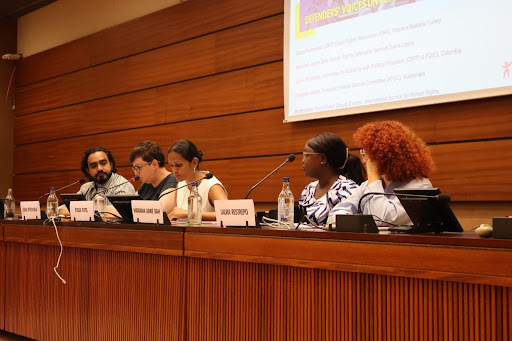
ISHR Executive Director Phil Lynch called on States to support the work of defenders and to pay their UN due

June 24, 2025

Watch a recording of the statement at an interactive dialogue on the annual report of the High Commissioner by ISHR Executive Director Phil Lynch

High Commissioner, this statement addresses four themes from your update.

First, the work of human rights defenders is essential for the realisation of all human rights. We deplore the criminalisation and arbitrary detention of defenders in all regions. We call for the release of Eduardo Torres in Venezuela, Ibrahim Metwally in Egypt, Mahmoud Khalil in the US, and Sophia Huang Xueqin in China, among thousands of defenders imprisoned globally for their work for freedom and justice.

Second, principled respect for international law protects us from tyranny. The failure of States with influence to end Israel’s genocide against Palestinians, and the double standards of States which fail to condemn Russia’s atrocity crimes in Ukraine, erode the foundations of peace, security and development everywhere.

Third, impunity for atrocity crimes denies justice to victims and fuels violations. This Council should mandate investigative mechanisms on Afghanistan and China. All States should respect international courts and sanction authorities – including US officials – who seek to pervert international justice.

Finally, no business, however efficient, can survive when customers don’t pay their bills. States which don’t pay their UN dues in full or on time, especially the US and China, benefit from the system while causing a liquidity crisis, with devastating human rights impacts. They should lose the right to vote at the General Assembly and the Security Council until they pay their dues. Humanity’s future depends on all States increasing their human rights investment.

Thank you.

https://ishr.ch/latest-updates/hrc59-humanitys-future-depends-on-all-states-increasing-their-human-rights-investment

EyeWitness to Atrocities: a Decade of Capturing Crimes

June 16, 2025

Mirage news of 14 June 2025 comes with an interesting assessment of eyeWitness to Atrocities (eyeWitness) which marks its tenth anniversary. The International Bar Association (IBA) applauds the work of the pioneering initiative it founded in 2015. The launch of the eyeWitness to Atrocities app for Android phones has harnessed the power of technology in the global fight for justice. The tamper-proof photo, video and audio footage captured using the eyeWitness app, and securely stored by IBA partner LexisNexis , meets the strict evidentiary criteria required to be admissible as evidence in legal proceedings.

Jaime Carey, President of the International Bar Association, stated: ‘As we mark a decade of eyeWitness to Atrocities, we celebrate ten years at the intersection of technology, law, and human rights. .. As President of the IBA, I am proud of our member organisations that have dedicated vast amounts of pro bono work analysing footage captured using the app and I reaffirm IBA support for this vital work and its enduring impact on the global pursuit of justice.’

Mark Ellis, Executive Director of the IBA, added: ‘Footage captured with the eyeWitness to Atrocities app is invaluable in securing justice and bridging the gap between activists and the law. By ensuring that visual evidence is authenticated, the app transforms raw documentation into legally admissible proof. In a world where impunity often thrives in the absence of credible evidence, eyeWitness plays a critical role in bringing truth to light and ensuring that justice is not just a distant ideal, but a real possibility.’

Over the past decade, the eyeWitness app has become an essential tool for human rights defenders, journalists and civil society organisations documenting grave human rights violations and atrocity crimes around the world. Key achievements include:

  • more than 85,000 photos, videos and audio recordings captured using the app;
  • more than 900 training sessions delivered globally, including in active conflict zones;
  • more than 55,000 hours spent reviewing visual evidence;
  • over 104 legal dossiers prepared and submitted to international accountability mechanisms, including United Nations bodies and the International Criminal Court

The impact of eyeWitness has been extensive. The content captured has contributed to numerous cases and reports globally, including:

Carrie Bowker, Director of eyeWitness to Atrocities, commented: ‘The path from documentation to justice is not always straightforward, and as we mark this milestone, we are deeply grateful to the courageous documenters capturing critical evidence of atrocity crimes, to the law firms that provide invaluable pro bono support and to LexisNexis for securely storing footage captured with the app. We aim to continue connecting frontline documenters with legal and investigative bodies that can act on the evidence they collect.’

In a 2023 outcome report the eyeWitness organisation highlighted areas of work including significant footage collection; increased and strengthened partnerships with global human rights organisations dedicated to active documentation for accountability; and expanded pro bono assistance in reviewing and analysing collected footage.

https://www.miragenews.com/eyewitness-to-atrocities-decade-of-capturing-1477953/

NGOs alarmed by draft law “TRANSPARENCY OF PUBLIC LIFE” in Hungary

May 27, 2025

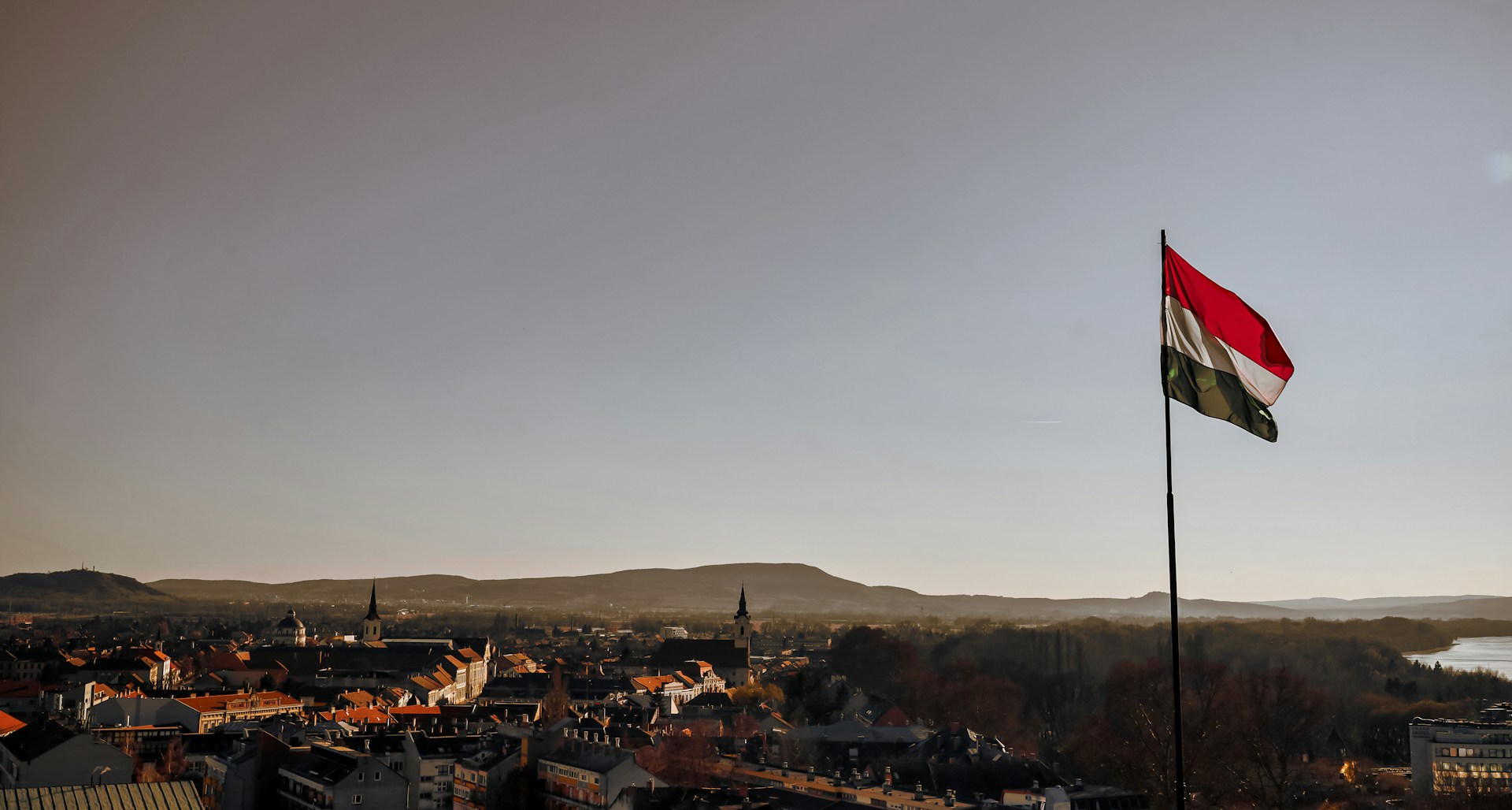
Human Rights Watch, Civil Rights Defenders and many, many other NGOs are deeply alarmed by a new legislative proposal in Hungary that, if passed, would institutionalise sweeping, opaque, and politically motivated repression of independent civil society, the press, and private organisations that receive foreign support or have any kind of income that the Hungarian government feels would threaten the country’s sovereignty. 

The draft law, which is deceptively titled ‘On the Transparency of Public Life’, would give the authorities unchecked powers, allowing it to recommend the registration of organisations deemed to be ‘influencing public life’ with foreign funding in ways that ‘threaten Hungary’s sovereignty’. Because this phrasing is vague and ideologically loaded, it risks including any kind of criticism of government policy, including the promotion of human rights, press freedom, gender equality, and the rule of law. 

Potential disastrous consequences

  • No legal remedy: If the government demands an organisation register itself, the organisation in question would not be able to appeal this decision. Once listed, organisations would have no access to effective legal redress; 
  • Broad definitions: ‘Foreign support’ is defined as any financial input, no matter how small, from practically any international source (including EU institutions and dual citizens) as well as commercial revenue; 
  • Sweeping prohibitions and sanctions: Listed organisations would have to seek permission from the tax authorities to receive foreign support. Financial institutions would be required to report and block transfers, meaning NGOs would effectively be permanently monitored; 
  • Loss of domestic support: Listed organisations would lose access to Hungary’s 1% income tax donation scheme, which would prevent them from receiving support from regular Hungarian citizens; 
  • Political targeting: Leaders of registered organisations would be labelled ‘politically exposed persons’, which would expose their private financial transactions to invasive scrutiny; 
  • Severe penalties: Any violations could lead to fines of up to 25 times the amount received, suspension of the organisation’s advocacy activities, and even forced closure.

EU must speak out against proposed law

Hungary’s draft law is not about transparency: it is a calculated attempt to criminalise dissent, silence watchdogs, and entrench one-party control over the democratic public sphere and civic space. If passed, the law would violate multiple provisions of the EU Charter of Fundamental Rights and the European Convention on Human Rights, including freedom of expression and association and the right to an effective remedy. 

In an open letter to President Ursula von der Leyen and Commissioner Michael McGrath of 22 May 2025, the NGOs urge to take the following immediate steps:

  • Immediately request the Court of Justice of the European Union (CJEU) to grant interim measures in the ongoing infringement procedure on the Law on the Defence of National Sovereignty (Case C-829/24). The Sovereignty Protection Office is crucial to the new bill and therefore this is an imminent and effective way to halt the progress and impact of the bill. Cognizant of the impending danger, the European Parliament and civil society have been calling for this step since 2024. Interim measures are designed to prevent irreparable harm — in this case, the effective paralysis of civil society organisations, independent media and dissenting voices – and with this new development comprehensive interim measures should be requested immediately.
  • At the same time, call on the Hungarian government to withdraw the bill and if unsuccessful, open a new infringement procedure on new violations that are not linked to the ongoing case on the Defence of National Sovereignty.
  • With the forthcoming Article 7 hearing on Hungary on 27 May 2025 and recognising the escalation of a systematic breakdown of the rule of law, support the Council of the EU to move to a vote on Article 7(1).

This new bill represents a severe and existential threat to democratic principles, human rights and the rule of law in Hungary and in the EU as a whole. If the existing tools are not effectively deployed, we risk an unravelling of the rules on which the EU was founded and a clear step towards authoritarian practices. We call on you to stand in solidarity with Hungarian civil society and their counterparts across the region and remain available to provide additional information and support.

https://www.hrw.org/news/2025/05/23/open-letter-hungarian-bill-entitled-transparency-public-life

https://www.coe.int/nb/web/commissioner/-/commissioner-asks-hungary-s-parliament-not-to-adopt-law-that-stifles-civil-society

Front Line Defenders’ Global Analysis 2024/25

May 13, 2025

Resilience of Human Rights Defenders a Source of Hope Amid Global Rollback on Rights – At least 324 defenders killed in 32 countries for their peaceful work in 2024

Frontline Defenders

On 6 May 2025 Front Line Defenders Global Analysis 2024/25 was published giving a detailed panorama of the violations against HRDs at risk in 105 countries in all regions. Despite an increasingly hostile world with expanded threats to their work, human rights defenders (HRDs) everywhere demonstrated a remarkable level of resilience and determination as they resisted a global rollback on human rights, Front Line Defenders said as it launched its flagship report.

The report also reveals statistics gathered and verified by the HRD Memorial – which Front Line Defenders coordinates – documenting the killings of at least 324 HRDs in 32 countries in 2024. HRDs working on land rights, citizen’s rights and Indigenous peoples’ rights each made up almost a fifth of the total, and the countries with the highest number of killings documented were Colombia (157), Mexico (32), Guatemala (29), Palestine (22) and Brazil (15). (See pp. 6-13 for complete data.)

Year on year, hundreds of human rights defenders pay the ultimate price when they are killed for their work, having a devastating impact on their families and communities. It is a grim reflection of the immense danger faced by those who work peacefully to defend human rights,” said Alan Glasgow, Executive Director of Front Line Defenders.“Other threats and risks are manifold. Front Line Defenders’ analysis shows that women’s rights defenders globally and HRDs working in situations of conflict were among those most targeted for their work. It is a remarkable sign of these defenders’ courage that they continue their struggle despite such immense danger. They are the best among us, who fervently believe a better world is worth fighting for.”

Arbitrary arrest/detention was the most commonly reported violation against HRDs around the world, followed by threats/other harassment, legal action, death threats and surveillance. Women HRDs reported slightly higher levels of threats/other harassment compared to their male counterparts, while trans and non gender-conforming HRDs reported this as the most common violation they faced overall.

Criminalisation of HRDs remained rife with 107 charges filed in 75 cases. The most commonly cited charges were linked to defamation (23.4%); national security (19.6%); other criminal charges (12.1%); public order offences (11.2%); and terrorism-related charges (11.2%). In every region, governments and non-state actors turned to the judicial system to disrupt, stymie, stigmatise, bankrupt and imprison HRDs, regardless of the human rights they were defending. Counter-terrorism legislation and “Foreign Agent” laws were among those weaponised for use against HRDs.

According to Front Line Defenders data, defenders working on women’s rights were among the most targeted globally in 2024, ranking in the top three for all regions except one. This trend played out in numerous ways, with women human rights defenders (WHRDs) subjected to smear campaigns, criminalisation, arbitrary arrest and detention, as well as targeted with threats – including threats of sexual and gender-based violence.

WHRDs played key roles in protest movements seeking more just societies – for example in Bangladesh – faced stark discrimination in countries like Afghanistan and Iran, and shouldered heavy burdens in conflict and crisis situations, ranging from Gaza to Colombia, DRC, Myanmar, Sudan and Ukraine.

Dr. Mahrang Baloch, an outspoken WHRD from Pakistan’s Balochistan region, faced ongoing risks throughout the year, including travel bans, smear campaigns and arbitrary detention. At the time of publication she remains jailed in Quetta after being arbitrarily arrested for leading a peaceful protest. In a foreword provided to Front Line Defenders, she described why HRDs persist in their struggle:

We must continue to resist. Because human rights defenders are the ones standing on the frontlines, risking everything so that others may find their missing loved ones, so that everyone can go to school, so that the silenced can speak, so that women raped in refugee camps can find justice, so that those fighting alone in their homes, their villages, their cities can know they are not alone. We must stand with them, and we must stand together. Not for a nation. Not for a religion. Not for a race. But for humanity. Because if we do not, who will?

For last year’s, CF: https://humanrightsdefenders.blog/2024/05/22/front-line-defenders-launches-global-analysis-2023-24-on-human-rights-defenders/

For more information or to receive a full copy of the report, please contact:

Conor Fortune
Frontline Defenders
+353 85 802 0895
cfortune@frontlinedefenders.org

https://www.frontlinedefenders.org/en/resource-publication/global-analysis-202425

https://www.wric.com/business/press-releases/ein-presswire/808917521/remarkable-resilience-of-human-rights-defenders-a-source-of-hope-amid-global-rollback-on-rights/

Environmental defenders and the Escazú Agreement

April 28, 2025

From 7-10 April, the Latin American and Caribbean Forum on Environmental Human Rights Defenders brought together environmental defenders, Indigenous Peoples, civil society, and government representatives in Basseterre, Saint Kitts and Nevis.

The Escazú Agreement is a landmark regional human rights treaty that guarantees access to environmental information, public participation and justice in Latin America and the Caribbean. Article 9 describes States’ obligation to protect human rights defenders in environmental matters and guarantee their rights, including those related to access to information, participation, and justice, as set forth in the agreement.  

As of today, 17 countries are parties to the agreement, while other key countries in the region still haven’t signed or ratified it. In February 2025, Special Procedures mandate holders sent a communication to these countries urging them to sign and ratify the agreement.  

The 2024 Action Plan adopted by the parties to the Escazú Agreement aims to implement practical protections for human rights defenders in environmental matters. It outlines capacity building and assessment, calling for urgent national action to address immediate threats and ensure the continuity of defenders’ work.

Since April 2024, individuals who believe that a State is not complying with its obligations as a party to the Escazú Agreement can send information (‘communications’) to the treaty’s Implementation and Compliance Support Committee. At a 2024 Conference of the Parties (COP) to the Agreement, States agreed to incorporate a gender perspective within the Escazú Agreement, recognising the unique risks faced by women human rights defenders in environmental matters.

This decision further requires States to consider gender-based violence and ensure women’s participation, enhancing security and effectiveness for all defenders. 

At the Forum on Environmental Human Rights Defenders, the #EscazuEnlaCorteIDH initiative was presented during the Third Forum. This initiative seeks to ensure that Escazú standards are included in the Inter-American Court’s forthcoming advisory opinion on the climate emergency.

A central piece of this effort was the amicus brief co-submitted by ISHR. 

see also: https://humanrightsdefenders.blog/tag/escazu-agreement/

https://ishr.ch/latest-updates/better-protection-and-participation-of-environmental-human-rights-defenders-through-effective-implementation-of-the-escazu-agreement

China’s tactics to block voices of human rights defenders at the UN – major report

April 28, 2025

In a new report, ISHR analyses China’s tactics to restrict access for independent civil society actors in UN human rights bodies. The report provides an analysis of China’s membership of the UN Committee on NGOs, the growing presence of Chinese Government-Organised NGOs (GONGOs), and patterns of intimidation and reprisals by the Chinese government.

In the report, published on 28 April 2025 the International Service for Human Rights (ISHR) uncovers the tactics deployed by the Chinese government to restrict access to UN human rights bodies to independent civil society actors and human rights defenders, and intimidate and retaliate against those who do so.  

These tactics include using its membership of the UN Committee on NGOs to systematically defer NGO applications, increasing the presence of GONGOs to limit space for independent NGOs and advance pro-government narratives, systematically committing acts of intimidation and reprisals against those seeking to cooperate with the UN, weaponising procedural tactics to silence NGO speakers and threatening diplomats not to meet with them, and opposing reform initiatives and efforts at norm-setting on safe and unhindered civil society participation at the Human Rights Council. 

These tactics strongly contrast China’s stated commitment to being a reliable multilateral leader. They stem from the Chinese Party-State’s primary foreign policy objective of shielding itself from human rights criticism and enhancing its international image by restricting and deterring critical civil society voices, crowding out civil society space with GONGOs, and stalling and diverting reform initiatives. 

While China is the focus of this report, the issues addressed are systemic. Based on this report’s findings, ISHR puts forward a set of targeted recommendations to UN bodies and Member States, aimed at protecting civil society space from interference and restrictions. The recommendations are designed to strengthen UN processes and prevent any State from manipulating international mechanisms to suppress independent voices. These include: 

  • Reforming the Committee on NGOs to increase transparency, limit abuse of deferrals, and ensure fair access to UN bodies for independent NGOs;
  • Strengthening protection mechanisms against reprisals, including rapid response to incidents inside UN premises, public accountability for perpetrators, and consistent long-term follow-up on unresolved cases; 
  • Curbing the influence of GONGOs by distinguishing clearly between independent and State-organised NGOs, and better documenting their presence and impact; and, 
  • Strengthening measures at the Human Rights Council and other UN bodies to make civil society participation safer, more inclusive, and less vulnerable to obstruction

The report has been featured prominently in a global investigation by the International Consortium of Investigative Journalists (ICIJ) launched on 28 April 2025.

See also the earlier report in February 2023: https://humanrightsdefenders.blog/2023/02/08/ngo-report-on-chinas-influencing-of-un-human-rights-bodies/

https://ishr.ch/defenders-toolbox/resources/un-access-china-report

https://www.france24.com/en/live-news/20250428-china-deploys-army-of-fake-ngos-at-un-to-intimidate-critics-media-probe

Venice School for Human Rights Defenders 2025

April 25, 2025

The Global Campus of Human Rights is accepting applications for the Venice School for Human Rights Defenders 2025. The School, organised in cooperation with the European Parliament, will take place in Venice, at the Global Campus Headquarters, from 15 to 21 June 2025.

The Venice School is devoted to developing human rights defenders’ advocacy skills and expertise and exploring today’s challenges in the field of human rights or other topical issues, allowing participants to examine their causes and possible solutions.

The programme hosts the 2025 selected Sakharov Fellows and will include lectures by Sakharov laureates and Right Livelihood laureates, internationally renowned academics, experts and activists coming from academia, international organisations, civil society and NGOs.

During the training programme, participants will be able to:

  • Share knowledge and expertise which human rights defenders can use to ensure their voice is central in international human rights decision-making processes
  • Develop strategies and techniques to increase the potential of human rights defenders’ national and regional advocacy work
  • Discuss best practices and ways forward through the mutual exchange of experiences
  • Develop networks among Sakharov fellows and other human rights defenders.

Fee information

€ 1,400 (VAT included) that includes:
Tuition fee
Welcome aperitif
Lunches and coffee breaks on class days
Reading material and access to the School’s online learning platform
Certificate of attendance upon completion of the programme
All expenses related to transportation, accommodation and subsistence and any additional cost not listed above must be arranged and covered by the participant.

How to register

Application deadline: 4 May 2025

To apply, fill in the form at this link: https://www.gchumanrights.org/training-and-courses/venice-school-for-human-rights-defenders/venice-school-for-human-rights-defenders-application-form/

Target audience: The training programme is addressed to human rights practitioners from all over the world as well as to graduate students from all academic backgrounds willing to deepen and improve their knowledge in human rights topics.

For more information, contact us at veniceschool@gchumanrights.org or visit https://www.gchumanrights.org/school.

https://reliefweb.int/training/4147334/venice-school-human-rights-defenders-2025

NGOs demand end to crackdown on peaceful Human Rights Defenders in Turkey

April 10, 2025

On 4 April 2025 a joint statement by 13 international, regional and national civil society organisations, strongly condemned violations of the right to protest in Turkey, including police brutality, ill-treatment that may amount to torture, mass arbitrary detentions, and the systematic persecution of human rights defenders. 

Mass protests erupted across Turkey on 19 March 2025, following the detention of more than 100 individuals —including the Mayor of Istanbul, Ekrem İmamoğlu. These arrests, made as part of investigations into allegations of “corruption” and “terrorism”, and their timing have raised widespread concerns that the charges are politically motivated – just days before İmamoğlu’s    expected presidential candidacy. 

In the immediate aftermath of the arrests, authorities imposed sweeping restrictions, including days-long blanket bans on gatherings across multiple cities, restricted access to several social media platforms curbing access and preventing the dissemination of information, and shut down major public transportation routes in İstanbul, all in a systematic effort to suppress dissent and mobilisations. 

Despite these measures, thousands have continued to gather in protest across the country since 19 March. While protests have been overwhelmingly peaceful, journalists and civil society organisations have documented grave human rights violations in several locations, and particularly in Saraçhane, Istanbul, including an indiscriminate and disproportionate display of police violence and brutality that may amount to torture and other ill-treatment, including beatings with batons, demonstrators being kicked while subdued on the ground, close-range targeting with Kinetic Impact Projectiles (KIPs), as well as the indiscriminate use of chemical irritants and water cannons. Based on widely circulated footage and public testimonies, and in line with the UN Committee Against Torture’s recommendations to Turkey following its periodic review in 2024, the Human Rights Foundation of Turkey (TİHV) has also denounced the use of restraint methods that inflict unnecessary pain, such as prolonged handcuffing behind the back and stress positions. These practices, known to cause serious health consequences, have at times been publicised by police officers themselves via personal accounts, seemingly as a tactic of intimidation.

Reports have stated that protesters who have been met with excessive police force have suffered grave and long-lasting injuries such as head trauma and eye damage due to tear gas cartridges and KIPs, burns and respiratory issues due to the indiscriminate and widespread use of tear gas and water cannons, which in some cases resulted in their hospitalisation. The full extent of the injuries, as well as the physical and psychological toll on protesters’ health, will only become clear in the following months. 

According to the report of Human Rights Association (İHD), as of 27 March 2025, a total of 1,879 people—including children, lawyers, journalists, students, union leaders and human rights defenders—have been taken into custody during protests and house raids on the grounds of inciting protests, engaging in violence, concealing their faces with masks, and using bats or other objects. Over 260 of them have been placed in pre-trial detention, while judicial control measures have been imposed on 468 individuals simply for exercising their right to peaceful protest. Istanbul Bar Association Child Rights Committee reported that among the arrested in İstanbul, 20 were under the age of 18

Progressive Lawyers Association (ÇHD) also highlights incidents of torture, ill-treatment and sexual violence in detention facilities.  Lawyers have denounced the treatment of seven female detainees who were subjected to beatings as well as unjustified strip searches while in custody. According to a released testimony, another female victim reported being groped by a police officer while handcuffed behind the back and forcefully pinned to the ground and that she soiled herself out of fear during the ordeal. She was reportedly placed under house arrest after her testimony. The Turkish Medical Association has recalled the importance of medical examinations upon entry in custody and detention to prevent and document torture and other ill-treatment.

Human rights defenders, including those monitoring the protests, have also become targets of State repression during the protests. Journalists and media organisations covering protests have also been persecuted, infringing on the right to freedom of expression and the right to information. As of 28 March, at least 14  journalists were detained after covering the protest. 

Lawyers representing those who were arbitrarily detained in the context of protests, were also targeted. At least 14 lawyers were detained, including the lawyer of İmamoğlu, demonstrating the State authorities’ disregard for the rule of law and the right to defence, due process and justice. In the midst of the protests as part of the general intimidation strategy against lawyers, on 21 March the Istanbul Bar Association’s executive board was dismissed by the decision of İstanbul 2nd Civil Court of First Instance- a move that raises serious concerns of further attacks on the independence of the legal profession and the detainees’ right to legal representation. Following the decision, police interfered as lawyers attempted to march from the courthouse in Çağlayan to the Istanbul Bar Association building in Taksim to protest the decision.

Signatories:

  • ARTICLE 19
  • Asociación Unidad de Defensa Jurídica, Registro y Memoria para Nicaragua (AUDJUDRNIC)
  • CIVICUS: World Alliance for Citizen Participation
  • EuroMed Rights
  • Front Line Defenders
  • Gulf Centre for Human Rights (GCHR)
  • ILGA-Europe
  • United Against Torture Consortium (UATC), through its following members:
    • The International Rehabilitation Council for Torture Victims (IRCT)
    • Omega Research Foundation
    • Redress
    • And the World Organisation Against Torture (OMCT)
  • Unidad de Protección a Defensoras y Defensores de Derechos Humanos – Guatemala (UDEFEGUA)
  • Within the framework of the Observatory for the Protection of Human Rights Defenders:
    • International Federation for Human Rights (FIDH)
    • World Organisation Against Torture (OMCT)

see also: https://humanrightsdefenders.blog/tag/turkey/

https://www.frontlinedefenders.org/en/statement-report/end-brutal-crackdown-peaceful-protest-and-human-rights-defenders

Important Resolution on Human rights Defenders adopted by UN Human Rights Council

April 7, 2025

Led by Norway, the resolution crucially covers new grounds and further develops States’ obligations to protect human rights defenders in the digital age. It also considers the needs expressed by human rights defenders during the consultative process leading to its negotiation and approval. 

For the first time and in a major win for the human rights defenders movement, the resolution includes a reference to the Declaration +25 and is very much in line with its content. 

‘The Declaration +25 is a ground-breaking initiative,’ said Phil Lynch, Executive Director at ISHR. ‘Civil society organisations worldwide have united to produce this authoritative articulation of the international legal framework for the protection of human rights defenders. We are very pleased that the Human Rights Council recognised it,’ Lynch added.

For example, the resolution calls on States to forgo the use of biometric mass surveillance and to refrain from or cease the use or transfer of new and emerging technologies, including artificial intelligence applications and spyware to actors that are not liable to operating these in full compliance with international human rights law. 

Initially, the resolution included a reference to transnational repression but this was removed in the final version.  

‘While we welcome the reference to types of transnational repression referred to in the resolution, we stress that transnational repression is not only about actions taken by a State, but also its proxies, to deter, silence or punish people and groups who engage in dissent, critique or human rights advocacy from abroad, in relation to that State,’ said ISHR’s Lynch and civil society partners in their end of session statement. 

Indeed, transnational repression includes acts targeted directly against human rights defenders, journalists or activists, as well as acts targeting them indirectly by threatening their families, representatives or associates. Particularly vulnerable are nationals or former nationals, members of diaspora communities and those living in exile. ISHR will continue to push for States to publicly recognise and acknowledge this form of harassment. 

Another lost opportunity is the lack of explicit recognition of the positive role of child human rights defenders in promoting human rights and fostering change in societies, including their active role in the digital space. The resolution also doesn’t tackle the specific challenges and risks they face because of their age and their civic engagement, as highlighted by the Special Rapporteur on human rights defenders in her 2024 report.

The resolution fell short of reaffirming States commitments from UNGA A/RES/78/216, to enhance protection measures for child defenders and to provide a safe, enabling and empowering environment for children and young people online and offline. 

The negotiation of the resolution was a hard and long process: 12 informal sessions were needed to agree on a text. In a regrettable move, some States presented amendments to the tabled text trying to undermine and weaken it. The text was finally adopted without a vote.

OHCHR is now mandated to convene three regional workshops and a report to assess risks created by digital technologies to human rights defenders and best practices to respond to these concerns.

https://ishr.ch/latest-updates/hrc58-states-adopt-substantive-resolution-on-human-rights-defenders-emerging-technologies

https://mailchi.mp/ishr/ishr-hrc58-april-8900949?e=d1945ebb90

https://www.apc.org/en/news/digital-milestone-new-resolution-human-rights-defenders-and-new-technologies-adopted-un-human

MEA Laureate Mario Joseph dies in accident in Haiti

April 7, 2025

On 4 April, 2025 the Miami Herald reported that Haiti-based human rights lawyer Mario Josep died in a car accident.

In a country where justice is often elusive, Mario Joseph was a fearless crusader who didn’t care whether his opponent was the Haitian government or the international community as he defended political prisoners and poor victims of human rights abuses in his Caribbean homeland. Joseph died Monday night from injuries sustained in a car accident last week as he pulled into his house. His death was confirmed by his longtime friend Brian Concannon and the Boston-based nonprofit Institute for Justice & Democracy in Haiti. He was 62. Concannon said in a statement. “The global human rights movement has lost an inspirational leader when the notion of human rights itself is under broad attack.” 

Since 1996 Joseph had served as the attorney for the Bureau des Avocats Internationaux, or Bureau of International Lawyers, in Port-au-Prince. The organization represented victims of human rights violations, trained Haitian law students and worked with U.S. law schools clinics, while also closely collaborating with the Institute for Justice & Democracy in Haiti. His high-profile cases included championing the rights of 5,000 victims of waterborne-cholera who blamed the United Nations for its introduction into Haiti after the 2010 earthquake.

Among Jospeh’s many accolades over the years was the Judith Lee Stronach Human Rights Award from the Center for Justice & Accountability in San Francisco, the Alexander Human Rights Award from Santa Clara University, and honorary doctorates from the University of San Francisco and Indiana University School of Law. He was also a finalist for the 2013 Martin Ennals Human Rights Defenders Award.
[see: https://humanrightsdefenders.blog/2013/04/24/breaking-news-final-nominees-martin-ennals-award-2013-made-public/]

https://www.trueheroesfilms.org/thedigest/laureates/3bb30bee-dd32-4668-9079-89dd464e5eff

https://www.miamiherald.com/news/nation-world/world/americas/haiti/article303281216.html

https://www.blackagendareport.com/remembering-mario-joseph-bai-managing-attorney